Socialization
Socialization refer to the lifelong/
continuing process whereby an individual
acquires a personal identity and learns
the norms, values, behavior, and social
skills appropriate to his or her social
position
Types of Socialization
1. Primary Socialization – when a
child learns the attitude, values,
and actions appropriate to
individuals as members of a
particular culture.
2. Secondary Socialization –
process of learning on what is
the appropriate behavior as a
member of a smaller group within
the larger society.
3. Anticipatory Socialization –
process of socialization in which a
person “rehearses” for future
positions, occupations and social
relationship
4. Re-socialization – process of
discarding former behavior
patterns and reflexes, accepting
new ones as part of a transition in
one’s life.
5. Organizational Socialization –
process whereby an employee
learns the knowledge and skills
necessary to assume his or her
organizational role.
6. Group Socialization – individual’s
peer groups rather than parental
figures, influences his or her
personality and behavior in
adulthood.
7. Gender Socialization – learning
of behavior and attitudes
considered appropriate for a given
gender.
8. Racial Socialization – define as “the
developmental processes” by which
children acquire the behaviors,
perceptions, values and attitudes of
an ethnic group, and come to see
themselves and others as members
of the group.
9. Planned Socialization – when
other people take actions
designed to teach or train others.
10. Natural Socialization – when
infants and youngster explore,
play and discover the social world
around them.
11. Positive Socialization – based
on pleasurable and exciting
experiences.
12. Negative Socialization – when others
use punishment, harsh criticisms or
anger to try to “teach us lesson;” and
often we come to dislike both negative
socialization and the people who
impose it on us.
Socialization – “LEARN from OTHERS”
 Primary
 Secondary
 Anticipatory
 Re-socialization
 Organizational
 Group
 Gender
 Racial
 Planned
 Natural
 Positive
 Negative
Development of
Identity
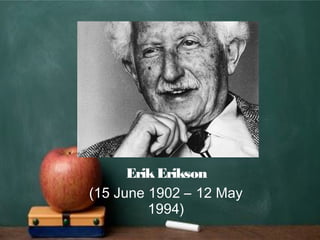
ErikErikson
(15 June 1902 – 12 May
1994)
Erik Erikson’s
Psychosocial Theory of
Development
What is
Psychosocial
Development?
1. Infancy: Birth – 18 Months Old
Basic Trust vs. Mistrust – Hope
2. Toddler/Early Childhood
Years:
18 Months to 3 Years Old
Autonomy vs. Shame – Will
3. Preschooler: 3 to 5 Years
Old
Initiative vs. Guilt – Purpose
4. School Age Child:
6 to 12 Years Old
Industry vs. Inferiority –
Competence
5. Adolescent: 12 to 18 Years
Old
Identity vs. Role Confusion –
Fidelity
6. Young Adult: 18 to 35 Years
Old
Intimacy and Solidarity vs.
Isolation – Love
7. Middle Age Adult:
35 to 55 or65 Years Old
Generativity vs. Self
Absorption orStagnation –
Care
8. Late Adulthood:
55 to 65 Years Old to Death
Integrity vs. Despair-
Wisdom
 
James Marcia

Commitment
Crisis
Four Identity
Phases

1. Identity
Foreclosure
2. Moratorium
3. Identity
Achiever
4. Identity Diffusion
Promoting a Sense of
Identity
Ingredients that make up an

optimal sense of personal
identity
1. Inner confidence about self
competence and ability to learn and
master new tasks.
2. Ample opportunity to try out new
roles either in one’s fantasy or in
actual practice.
3 . Support from parents and adults.
Self Identity
Types of Identity
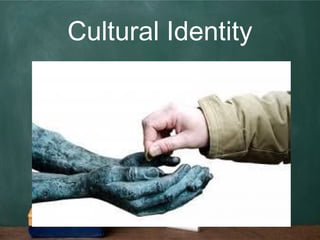
Cultural Identity
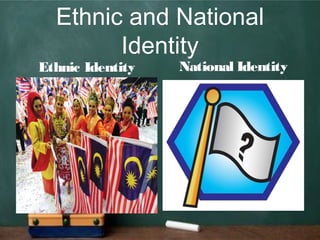
Ethnic and National
Identity
Ethnic Identity National Identity
Religious Identity
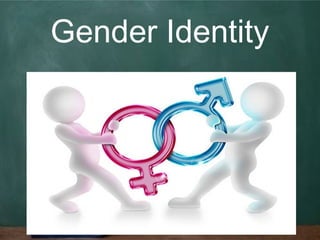
Gender Identity
Interpersonal Identity
Development
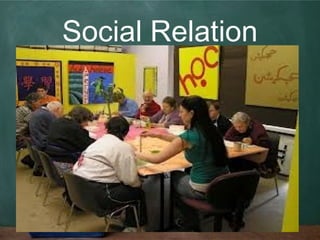
Social Relation
• Collective Identity- a sense of belonging
to a group that is so strong that a
person who identifies with the group will
dedicate his/her life to the group over
individual identity.
• Social Support- individual gain a
social identity and group identity by
their affiliation.
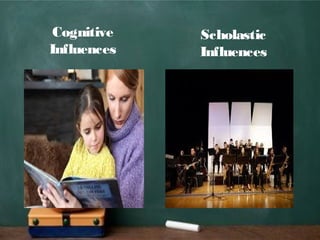
Influences on Identity
Cognitive
Influences
Scholastic
Influences
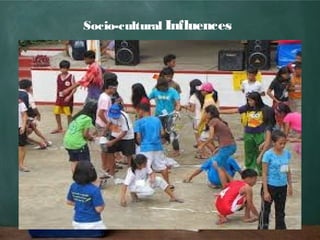
Socio-cultural Influences
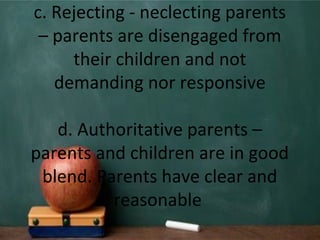
PARENTING
KINDS OF PARENTING
a. Authoritarian - rules are set by
parents
b. Permissive - parents are warm
and caring but appear to be
uninvolved and uninterested.
c. Rejecting - neclecting parents
– parents are disengaged from
their children and not
demanding nor responsive
d. Authoritative parents –
parents and children are in good
blend. Parents have clear and
reasonable
References
• Child and Adolescent Development (Lorimar
Publishing)
• http://www.education.com/reference/article/identity-
development/
• http://www.learning-theories.com/ericksons-stages-of-
development.html
• http://en.wikipedia.org/wiki/Identity_formation
• http://en.wikipedia.org/wiki/Socialization
• http://dictionary.reference.com/browse/socialization

Child and Adolescent Development (Socialization)