




Chapter 3 Cell Division
Two Types of Cells Composing the Body 1. Somatic cells-  pertains to the cell composing the bulk of the body such as the nerve cell, muscle cells, kidney cell, etc. 2. Germ cells  – pertains to the reproductive cells such as the ova of female and the spermatocytes of male.
Types of Cell Division A. Mitosis  -  division in somatic cells and produces two identical daughter cells during prophase, prometaphase, metaphase, anaphase, and telophase. Consist of two phases 1. nuclear division (Karyokinesis) plus  2. cytoplasm division (cytokinesis),  Interphase  is often included in discussions of mitosis, but interphase is technically not part of mitosis, but rather encompasses stages G1, S, and G2 of the cell cycle
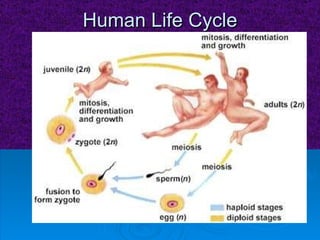
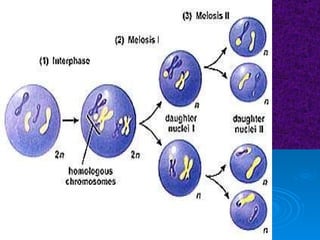
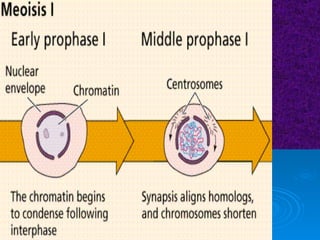
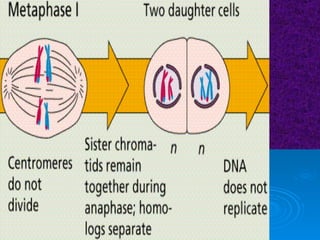
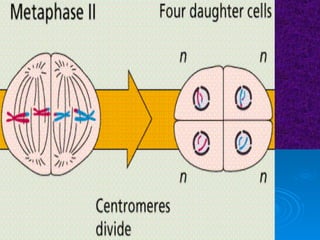
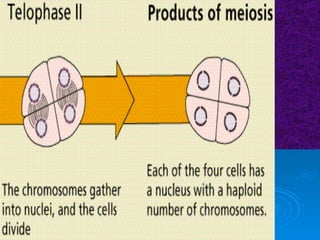
B. Meiosis  – division in reproductive cells producing four daughter cells Meiosis differs from mitosis in that cell division begins with a cell that has a full complement of chromosomes and ends with  gamete cells , such as  sperm and eggs , that have only half the complement of chromosomes.  When a sperm and egg unite during fertilization, the cell resulting from the union, called a  zygote , contains the full number of chromosomes
 
46 Chromosomes (23 pairs) 1. Autosome (22 pairs) 2. Sex Chromosomes (a Pair) X chromosomes – female XY chromosomes - male
The human body, for example, consists of an estimated  20 to 30 trillion cells Human cells also display a variety of sizes, from small red blood cells that measure 0.00076 mm (0.00003 in) to liver cells that may be ten times larger.  About  10,000  average-sized  human cells can fit on the head of a pin.
Multicellular organisms use mitosis for  growth, cell repair, and cell replacement.  In the human body, for example, an estimated  25 million mitotic cell divisions occur every second  in order to replace cells that have completed their normal life cycles.  Cells of the  liver, intestine, and skin may be replaced every few days.   Recent research indicates that even  brain cells , once thought to be incapable of mitosis,  undergo cell division in the part of the brain associated with memory.
Regulation of the cell cycle is accomplished in several ways.  Some cells divide rapidly. Beans, for example take 19 hours for the complete cycle; Red blood cells must divide at a rate of  2.5 million per second.   Liver cells will divide if part of the liver is removed. The  division continues until the liver reaches its former size . Some cells, such as liver cells, retain but do not normally utilize their capacity for division. Others, such as nerve cells, lose their capability to divide once they reach maturity.
 
 
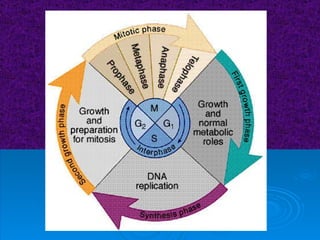
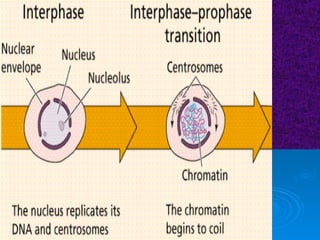
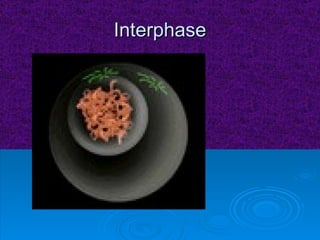
Cells go through two basic phases:  Mitosis, Interphase INTERPHASE G0 phase – normal cell functions  G1 phase – prepares for cell division,  duplicates organelles,  centriole replication  S phase –  DNA replication Chromosome duplication  G2 phase –  protein synthesis,  centriole replication completed
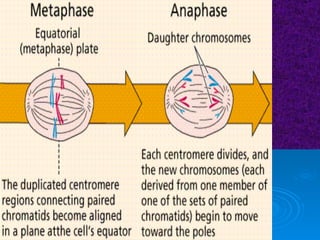
Karyokinesis 1.  prophase 2. metaphase 3. anaphase 4. telophase
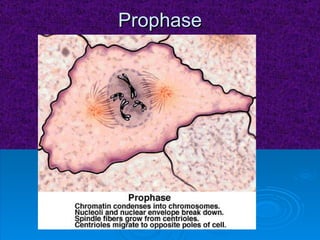
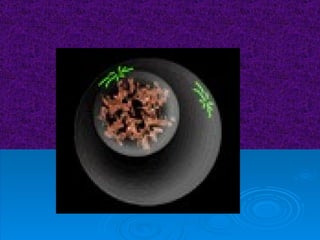
Prophase
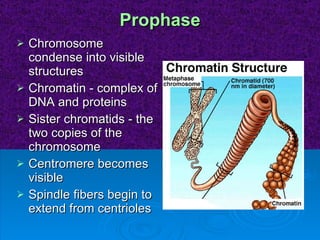
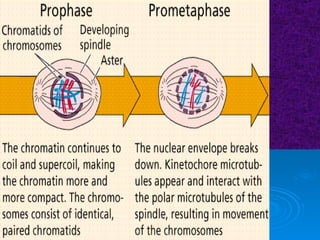
Prophase Chromosome condense into visible structures Chromatin - complex of DNA and proteins Sister chromatids - the two copies of the chromosome  Centromere becomes visible  Spindle fibers begin to extend from centrioles
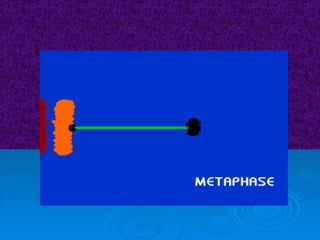
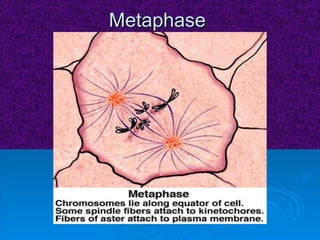
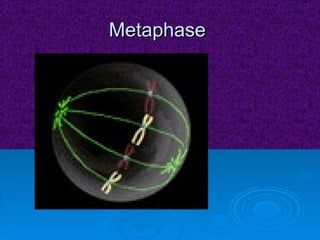
Metaphase
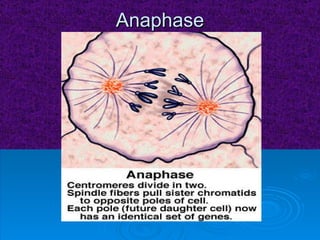
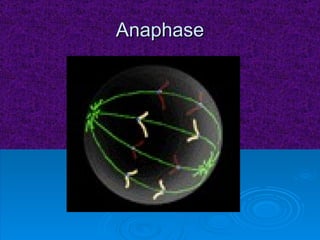
Anaphase
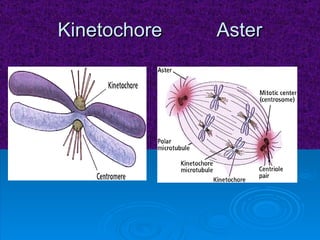
Kinetochore  Aster
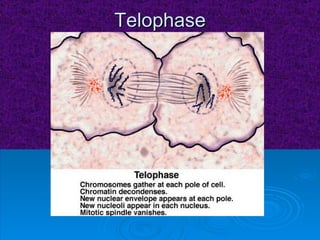
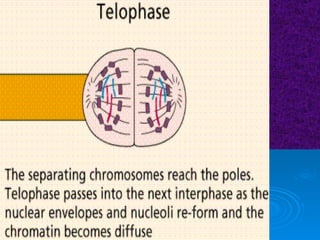
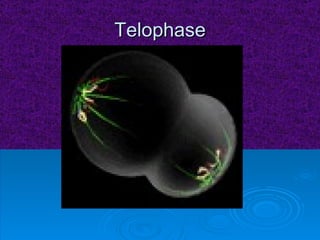
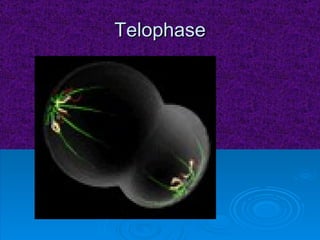
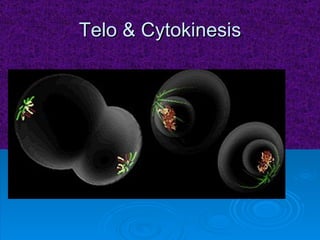
Telophase
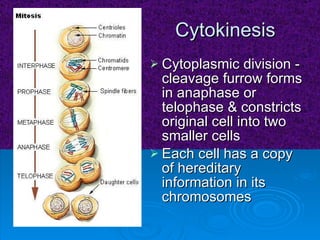
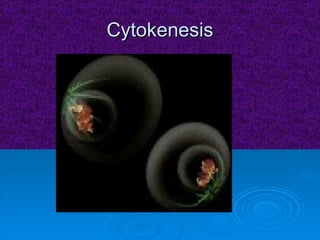
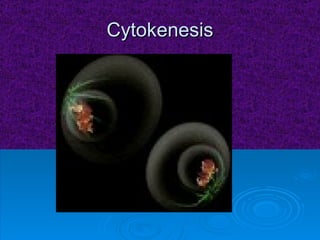
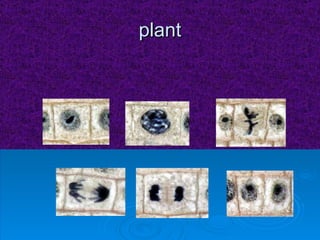
Cytokinesis Cytoplasmic division - cleavage furrow forms in anaphase or telophase & constricts original cell into two smaller cells  Each cell has a copy of hereditary information in its chromosomes
 
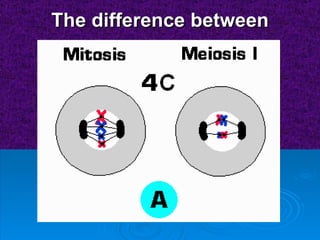
The difference between
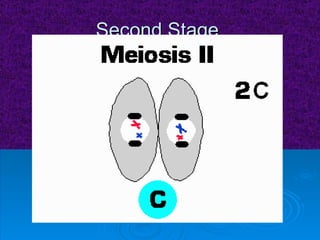
Second Stage
 
Human Life Cycle
End of presentation Exam next meeting!


Telophase
Cytokenesis


Interphase
 
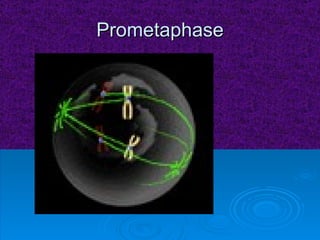
Prometaphase
Metaphase
Anaphase
Telophase
Cytokenesis
 
Which of the following statements is NOT true of mitosis?  A. A single nucleus gives rise to two identical daughter nuclei . B. The daughter nuclei are genetically identical to the parent nucleus . C. The centromeres divide at the onset of anaphase . D. Homologous chromosomes synapse in prophase .
Cytokinesis in a plant cell is characterized by:  A. the equal division of homologous chromosomes . B. a pinching off of the cell membrane to divide the cell . C. the formation of a cell plate in the cytoplasm . D. the movement of the chromosomes from the metaphase plate The first stage of mitosis when chromosomes start becoming visible in the microscope is called:  A. anaphase B. prophase C. telophase D. metaphase
Which of the following features of cell division are very different for animal and plant cells?  A. prophase B. metaphase C. anaphase D. cytokinesis The stage of the cell cycle where each chromosome is composed of two chromatids in preparation for mitosis.  A. G1 B. S C. M D. G2
The stage of the cell cycle where the cell is preparing to begin DNA replication is called:  A. G1 B. G2 C. S D. M
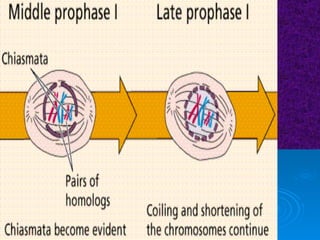
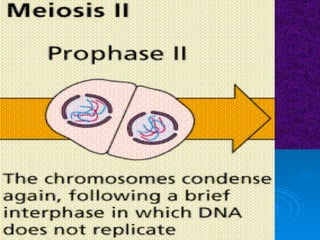
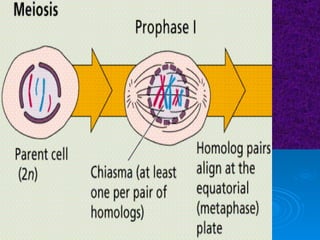
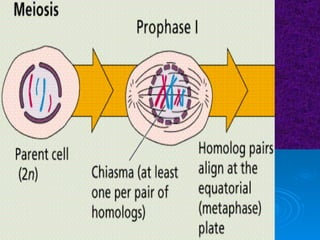
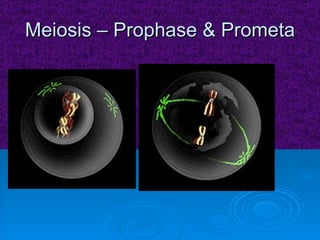
Meiosis – Prophase & Prometa
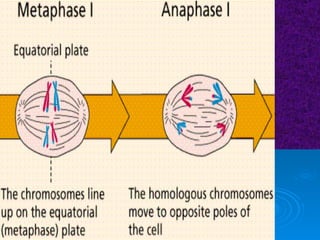
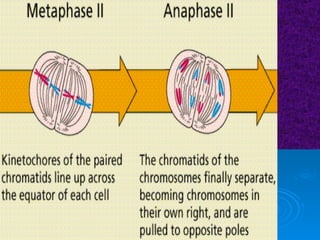
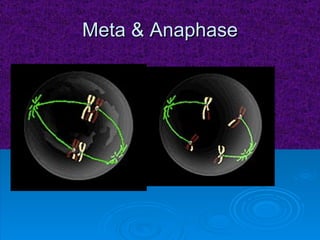
Meta & Anaphase
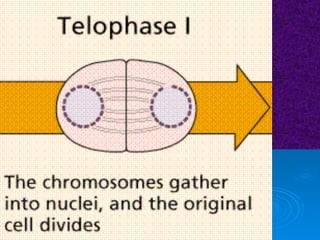
Telo & Cytokinesis
plant
 

Chapter 3 cell division

  • 1.
  • 2.
    Two Types ofCells Composing the Body 1. Somatic cells- pertains to the cell composing the bulk of the body such as the nerve cell, muscle cells, kidney cell, etc. 2. Germ cells – pertains to the reproductive cells such as the ova of female and the spermatocytes of male.
  • 3.
    Types of CellDivision A. Mitosis - division in somatic cells and produces two identical daughter cells during prophase, prometaphase, metaphase, anaphase, and telophase. Consist of two phases 1. nuclear division (Karyokinesis) plus 2. cytoplasm division (cytokinesis), Interphase is often included in discussions of mitosis, but interphase is technically not part of mitosis, but rather encompasses stages G1, S, and G2 of the cell cycle
  • 4.
    B. Meiosis – division in reproductive cells producing four daughter cells Meiosis differs from mitosis in that cell division begins with a cell that has a full complement of chromosomes and ends with gamete cells , such as sperm and eggs , that have only half the complement of chromosomes. When a sperm and egg unite during fertilization, the cell resulting from the union, called a zygote , contains the full number of chromosomes
  • 5.
  • 6.
    46 Chromosomes (23pairs) 1. Autosome (22 pairs) 2. Sex Chromosomes (a Pair) X chromosomes – female XY chromosomes - male
  • 7.
    The human body,for example, consists of an estimated 20 to 30 trillion cells Human cells also display a variety of sizes, from small red blood cells that measure 0.00076 mm (0.00003 in) to liver cells that may be ten times larger. About 10,000 average-sized human cells can fit on the head of a pin.
  • 8.
    Multicellular organisms usemitosis for growth, cell repair, and cell replacement. In the human body, for example, an estimated 25 million mitotic cell divisions occur every second in order to replace cells that have completed their normal life cycles. Cells of the liver, intestine, and skin may be replaced every few days. Recent research indicates that even brain cells , once thought to be incapable of mitosis, undergo cell division in the part of the brain associated with memory.
  • 9.
    Regulation of thecell cycle is accomplished in several ways. Some cells divide rapidly. Beans, for example take 19 hours for the complete cycle; Red blood cells must divide at a rate of 2.5 million per second. Liver cells will divide if part of the liver is removed. The division continues until the liver reaches its former size . Some cells, such as liver cells, retain but do not normally utilize their capacity for division. Others, such as nerve cells, lose their capability to divide once they reach maturity.
  • 10.
  • 11.
  • 12.
    Cells go throughtwo basic phases:  Mitosis, Interphase INTERPHASE G0 phase – normal cell functions G1 phase – prepares for cell division, duplicates organelles, centriole replication S phase – DNA replication Chromosome duplication G2 phase – protein synthesis, centriole replication completed
  • 13.
    Karyokinesis 1. prophase 2. metaphase 3. anaphase 4. telophase
  • 14.
  • 15.
    Prophase Chromosome condenseinto visible structures Chromatin - complex of DNA and proteins Sister chromatids - the two copies of the chromosome Centromere becomes visible Spindle fibers begin to extend from centrioles
  • 16.
  • 17.
  • 18.
  • 19.
  • 20.
    Cytokinesis Cytoplasmic division- cleavage furrow forms in anaphase or telophase & constricts original cell into two smaller cells Each cell has a copy of hereditary information in its chromosomes
  • 21.
  • 22.
  • 23.
  • 24.
  • 25.
  • 26.
    End of presentationExam next meeting!
  • 27.
  • 28.
  • 29.
  • 30.
  • 31.
  • 32.
  • 33.
  • 34.
  • 35.
  • 36.
  • 37.
  • 38.
  • 39.
  • 40.
  • 41.
  • 42.
  • 43.
  • 44.
  • 45.
  • 46.
  • 47.
  • 48.
  • 49.
  • 50.
  • 51.
  • 52.
  • 53.
  • 54.
    Which of thefollowing statements is NOT true of mitosis? A. A single nucleus gives rise to two identical daughter nuclei . B. The daughter nuclei are genetically identical to the parent nucleus . C. The centromeres divide at the onset of anaphase . D. Homologous chromosomes synapse in prophase .
  • 55.
    Cytokinesis in aplant cell is characterized by: A. the equal division of homologous chromosomes . B. a pinching off of the cell membrane to divide the cell . C. the formation of a cell plate in the cytoplasm . D. the movement of the chromosomes from the metaphase plate The first stage of mitosis when chromosomes start becoming visible in the microscope is called: A. anaphase B. prophase C. telophase D. metaphase
  • 56.
    Which of thefollowing features of cell division are very different for animal and plant cells? A. prophase B. metaphase C. anaphase D. cytokinesis The stage of the cell cycle where each chromosome is composed of two chromatids in preparation for mitosis. A. G1 B. S C. M D. G2
  • 57.
    The stage ofthe cell cycle where the cell is preparing to begin DNA replication is called: A. G1 B. G2 C. S D. M
  • 58.
  • 59.
  • 60.
  • 61.
  • 62.