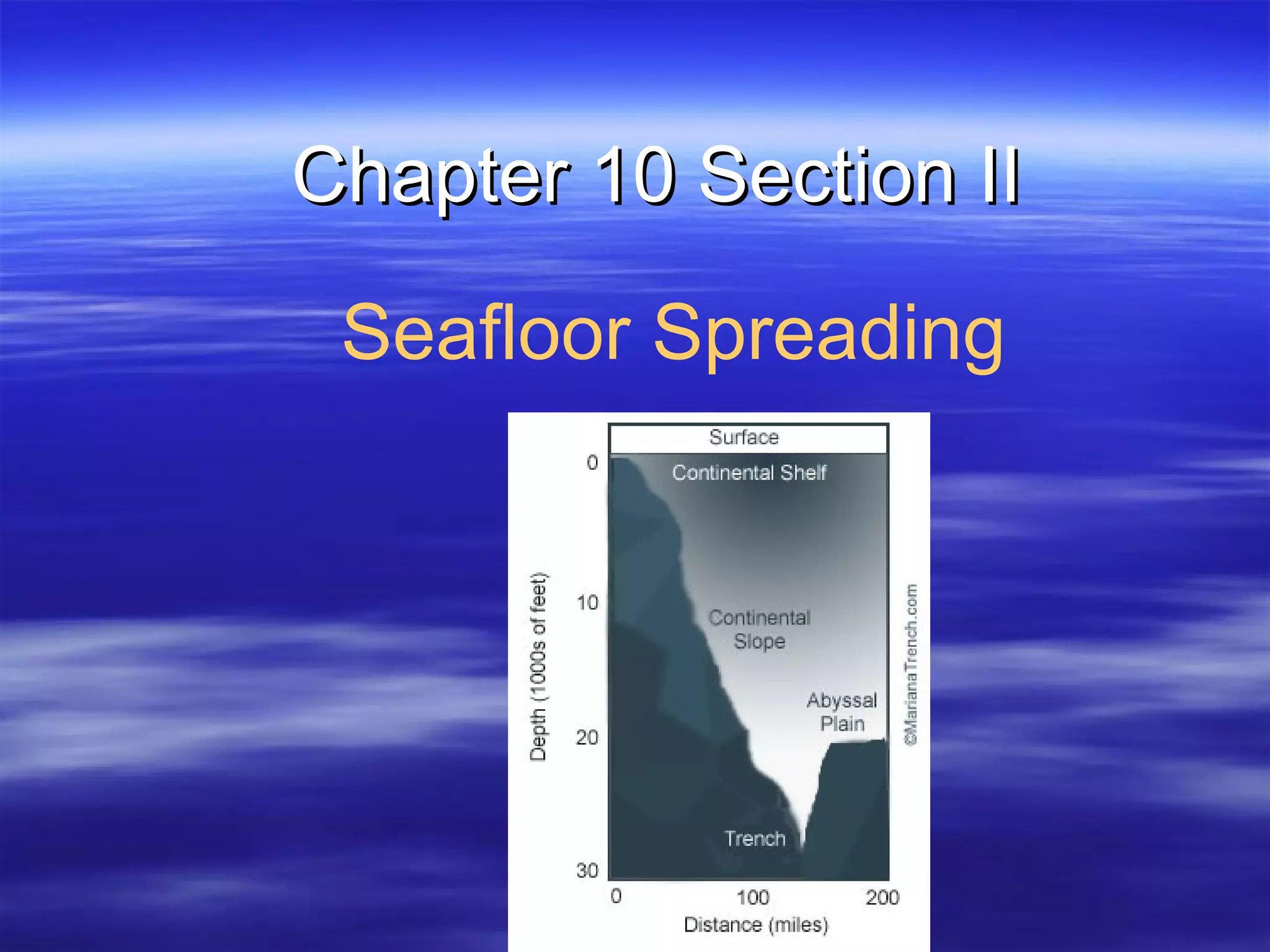
Chapter 10 Section II Seafloor Spreading
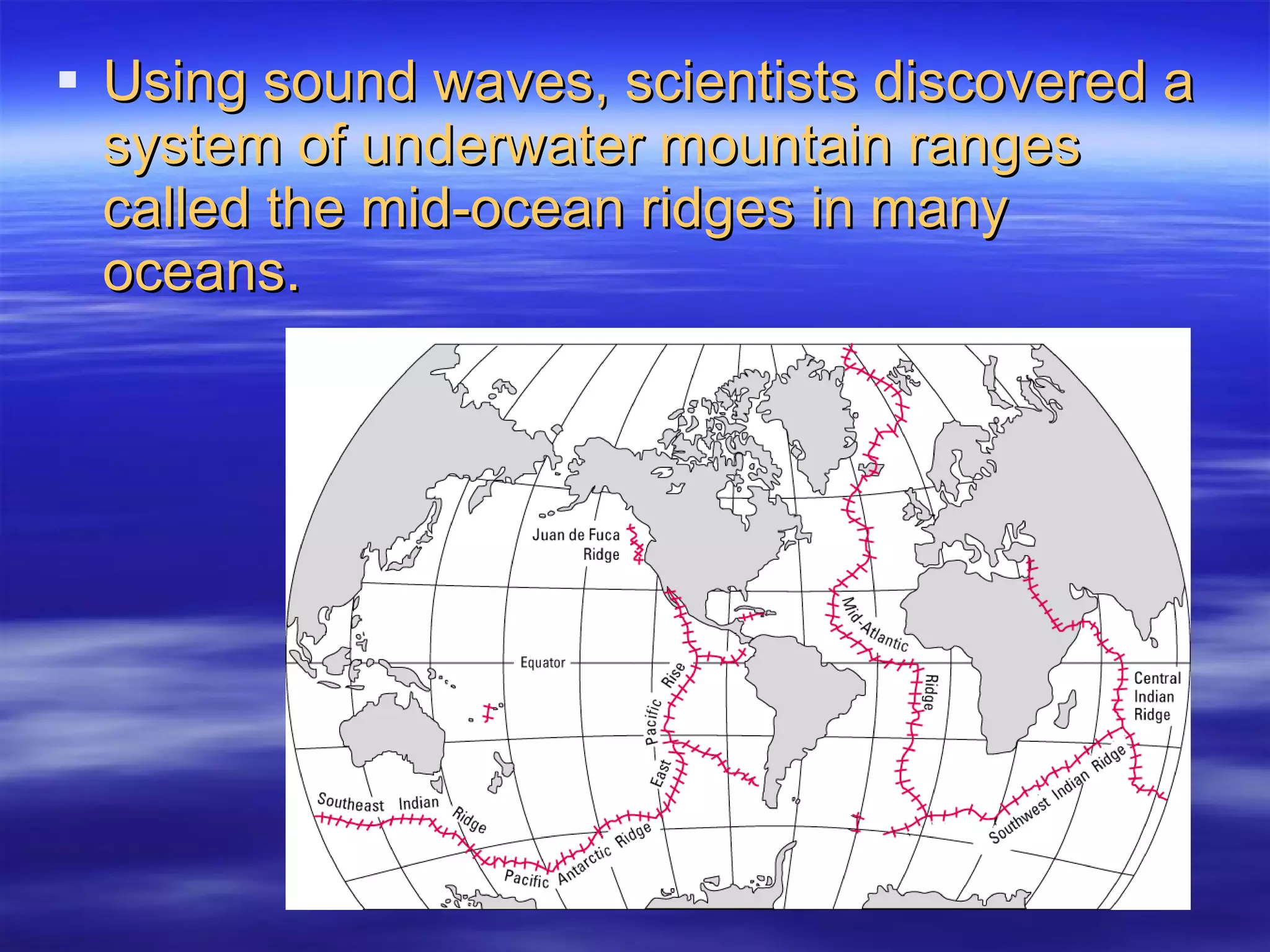
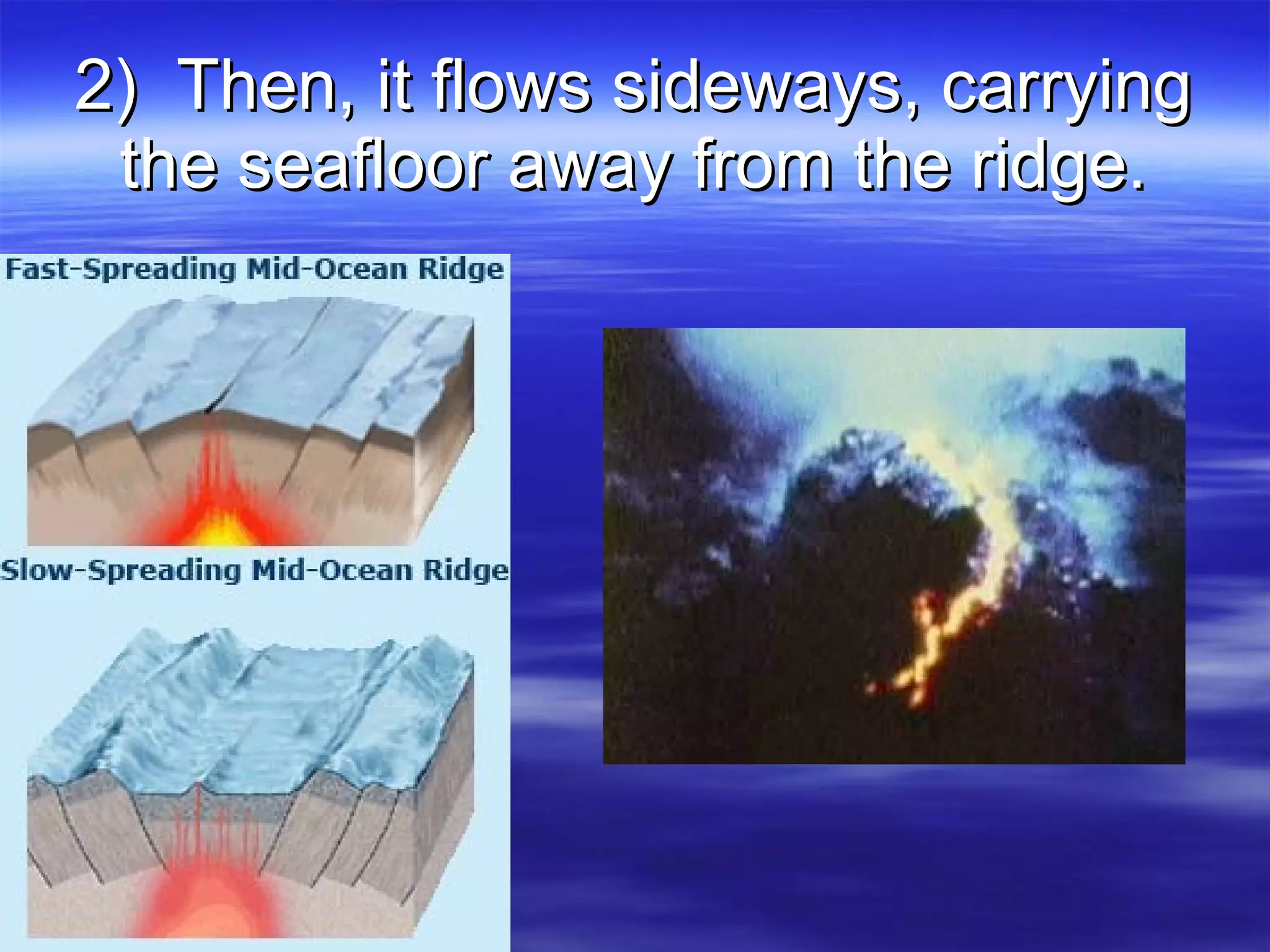
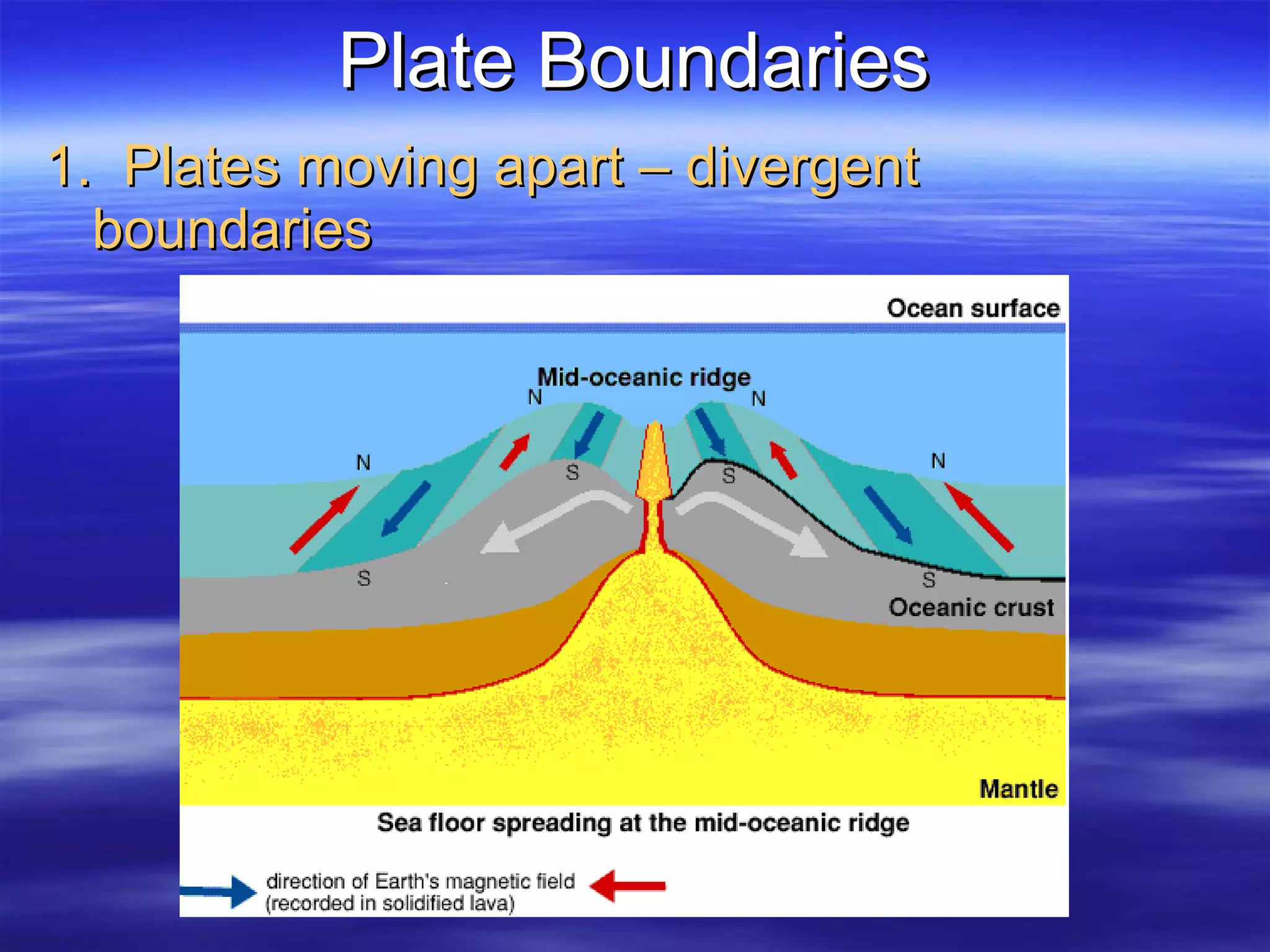
Using sound waves, scientists discovered a system of underwater mountain ranges called the mid-ocean ridges in many oceans.
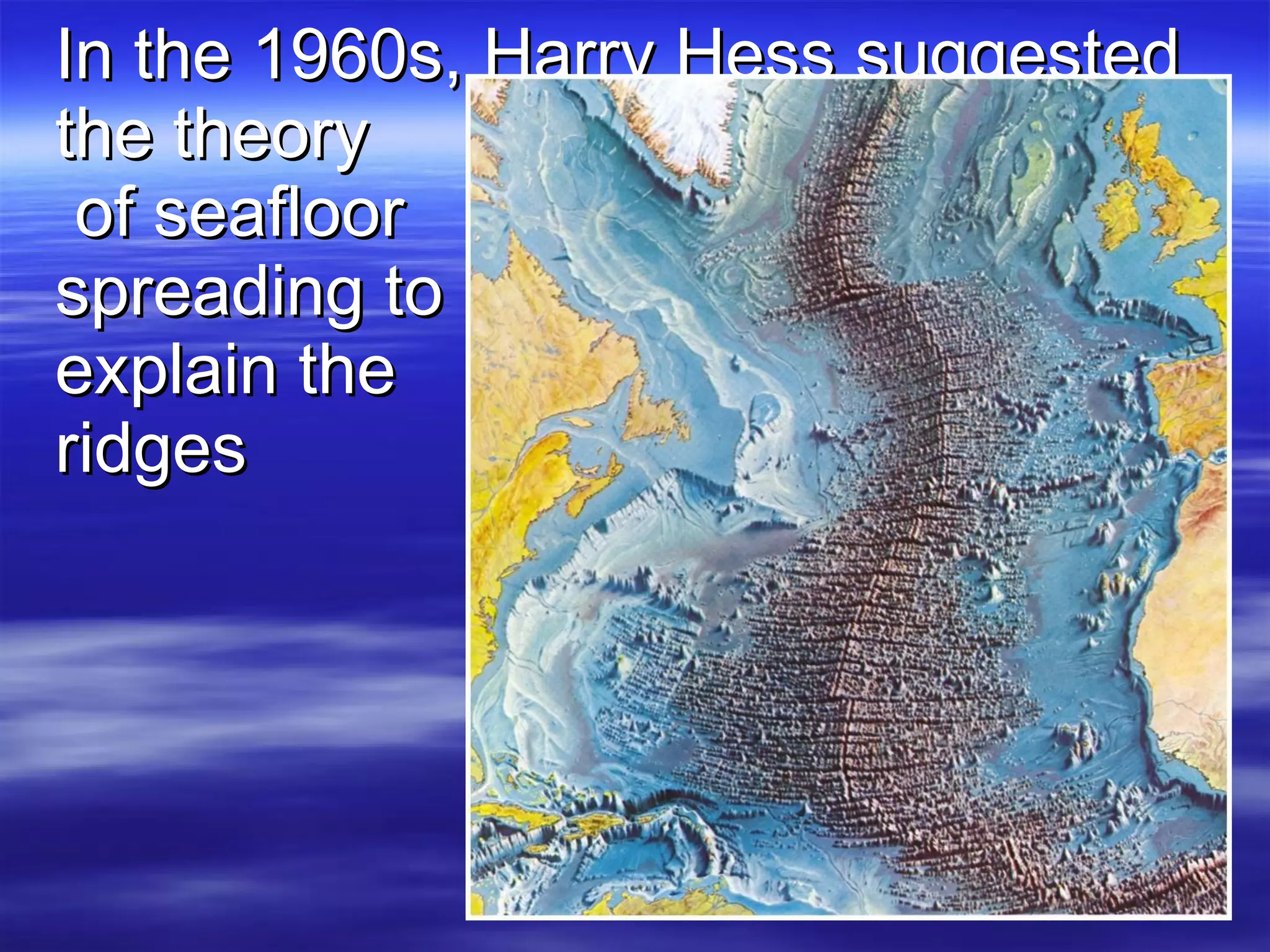
In the 1960s, Harry Hess suggested the theory  of seafloor  spreading to  explain the  ridges
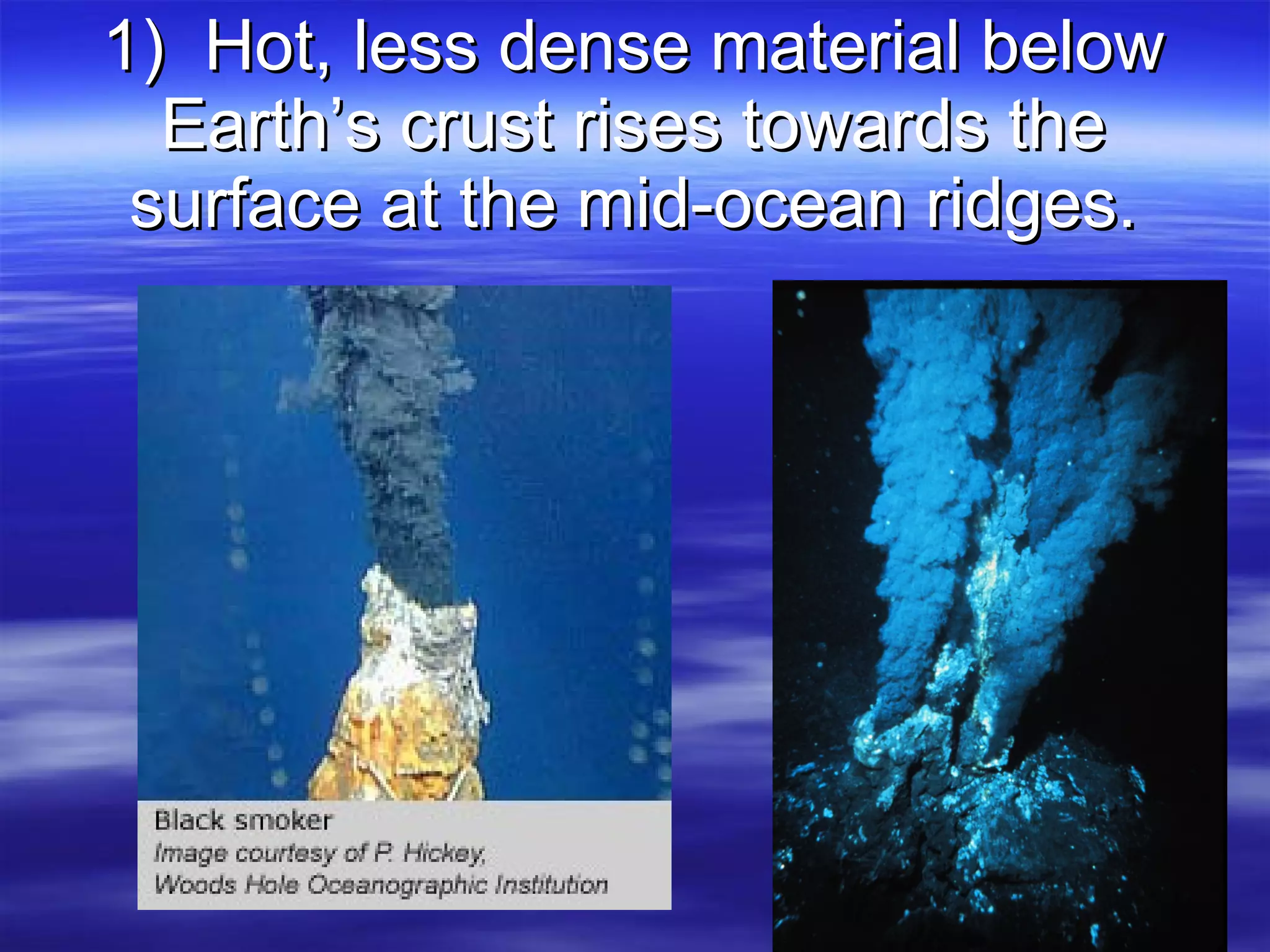
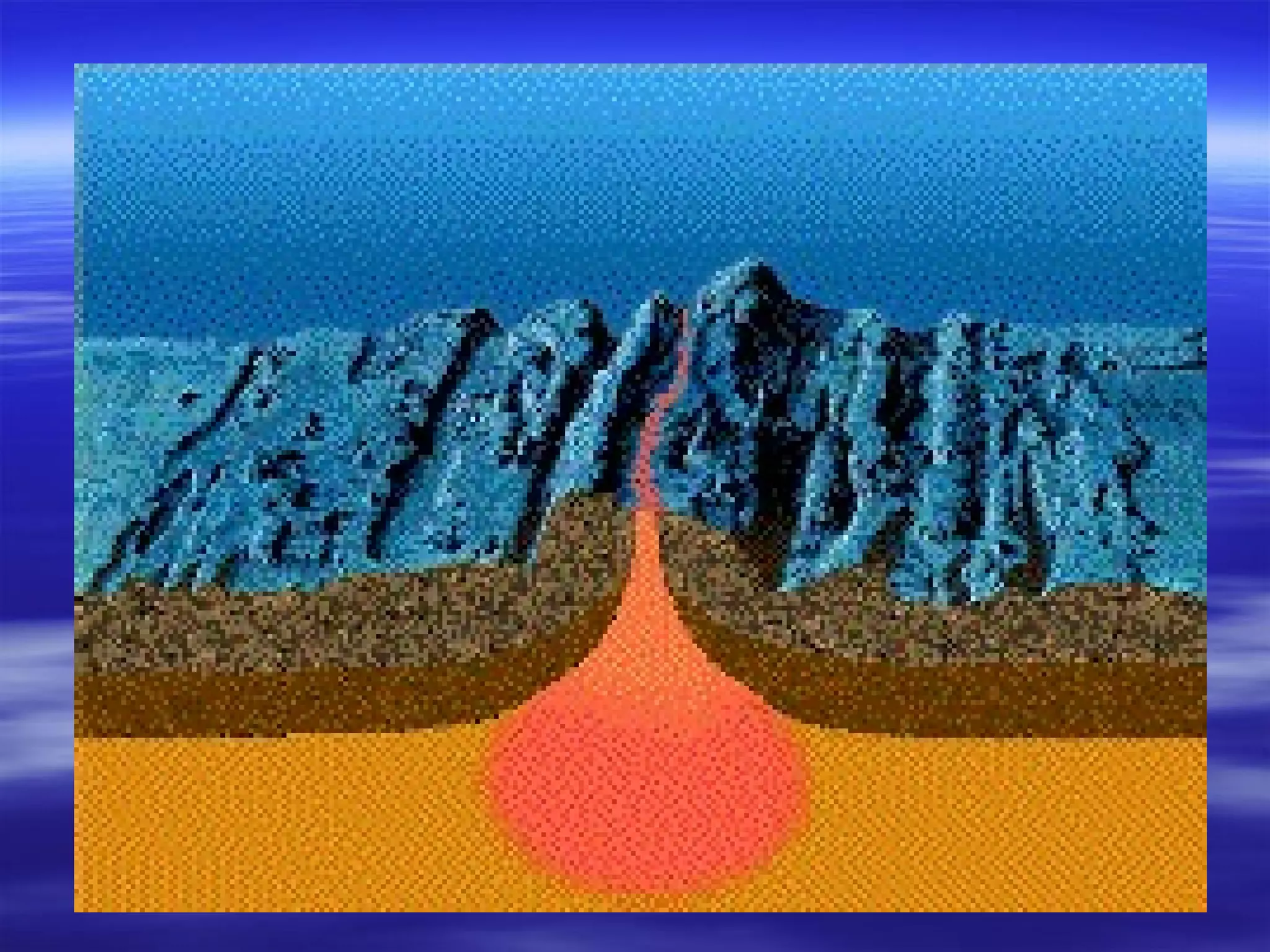
1)  Hot, less dense material below Earth’s crust rises towards the surface at the mid-ocean ridges.
2)  Then, it flows sideways, carrying the seafloor away from the ridge.
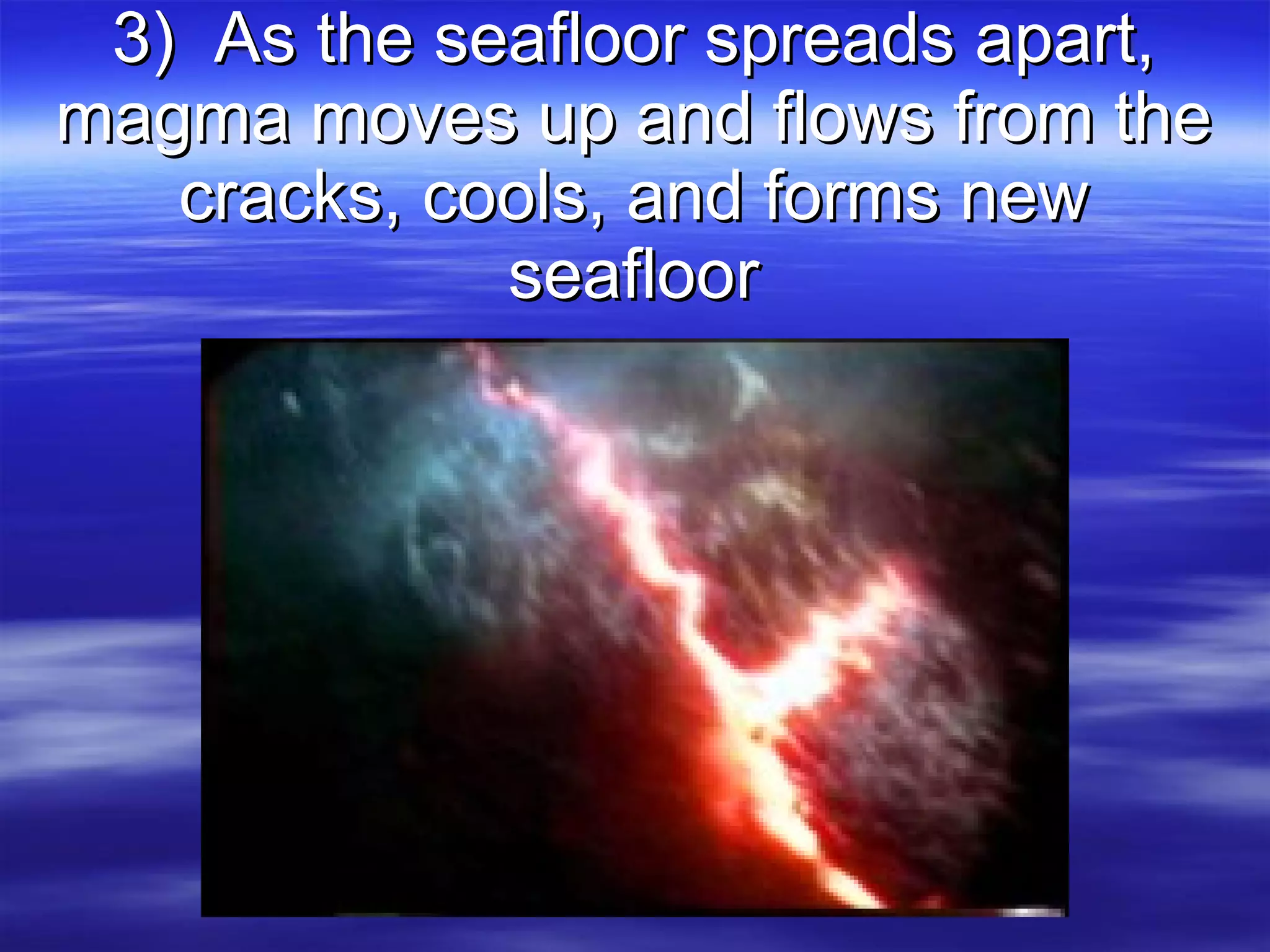
3)  As the seafloor spreads apart, magma moves up and flows from the cracks, cools, and forms new seafloor
 
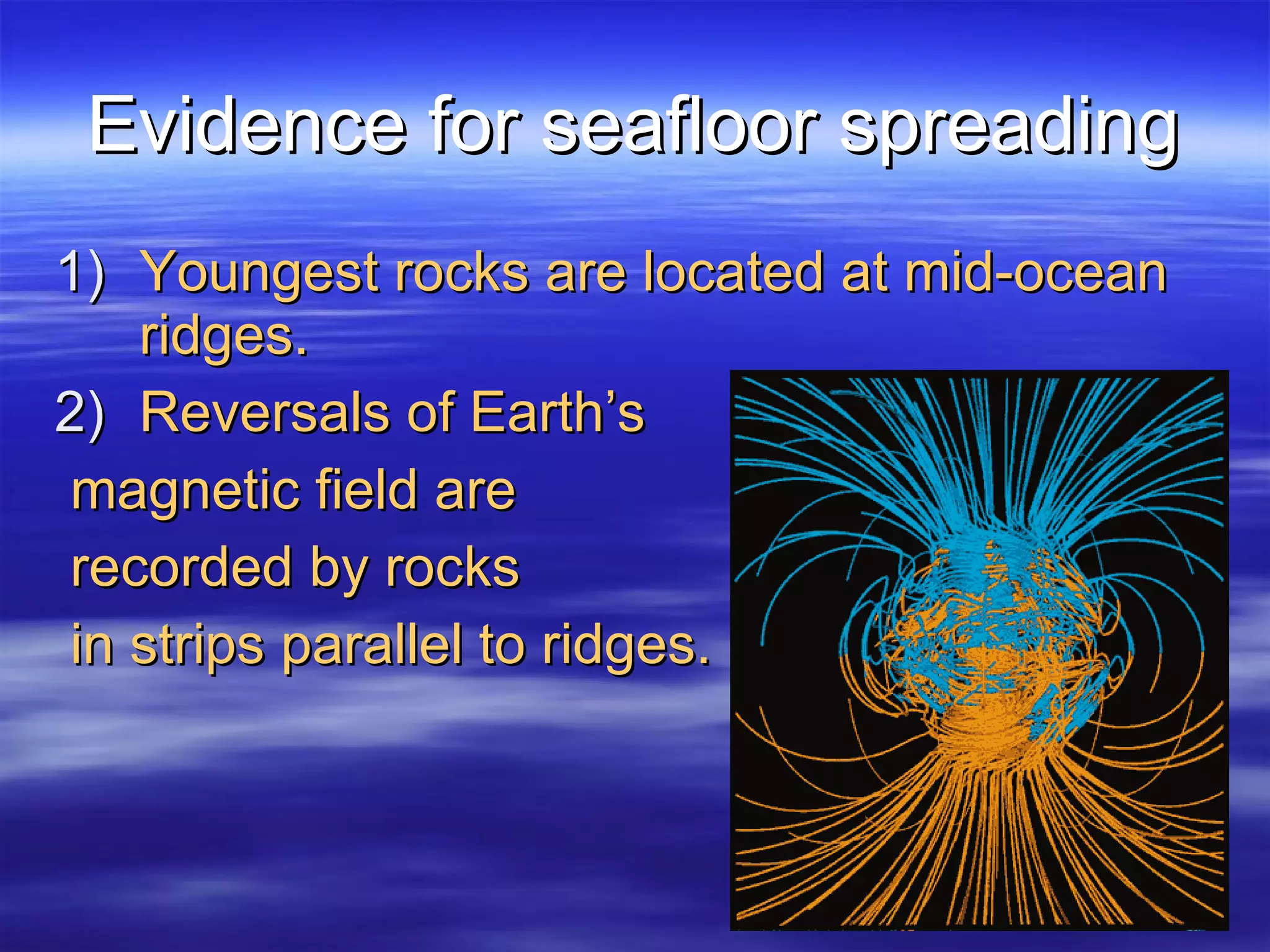
Evidence for seafloor spreading Youngest rocks are located at mid-ocean ridges. Reversals of Earth’s magnetic field are recorded by rocks in strips parallel to ridges.
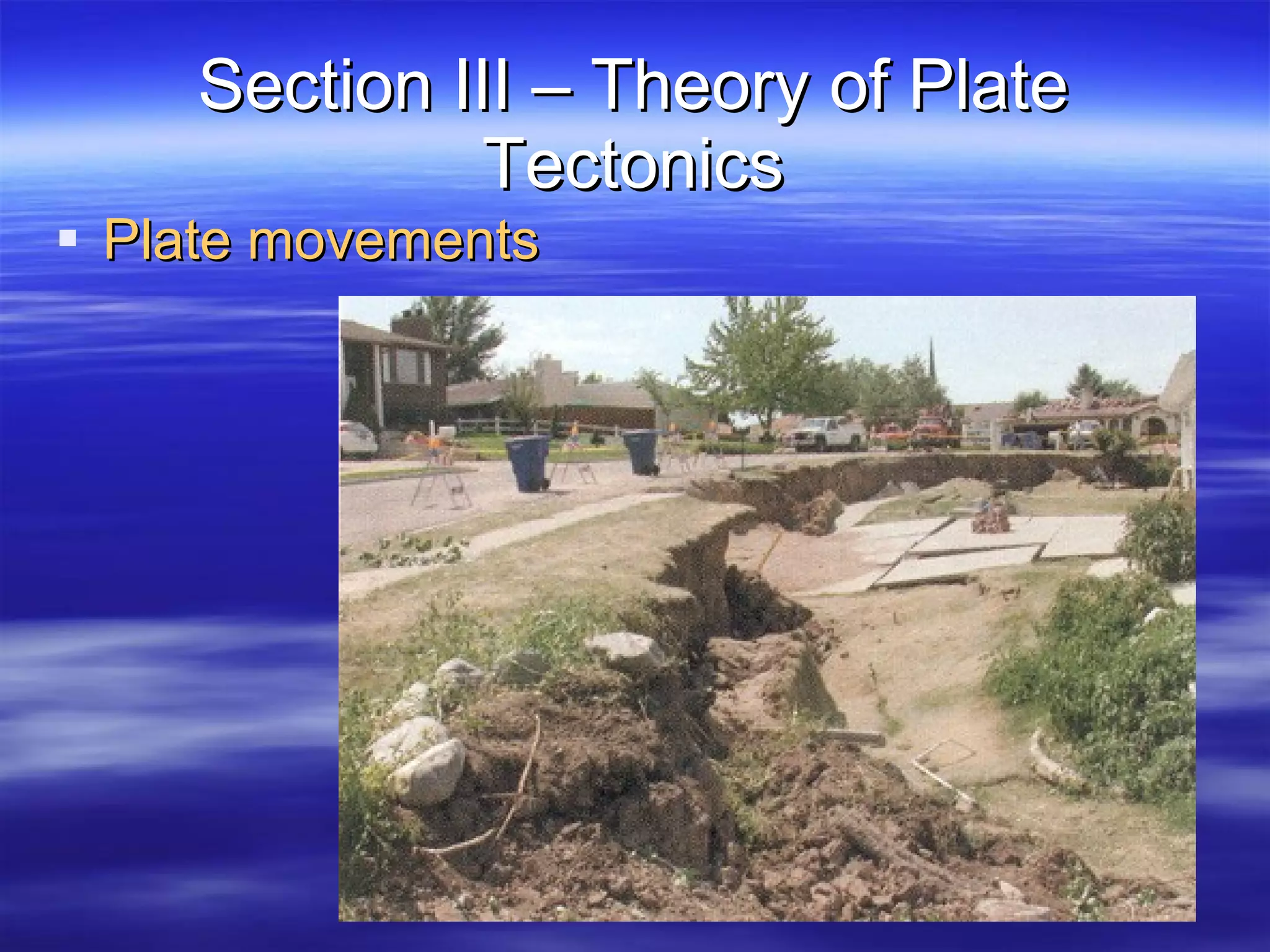
Section III – Theory of Plate Tectonics Plate movements
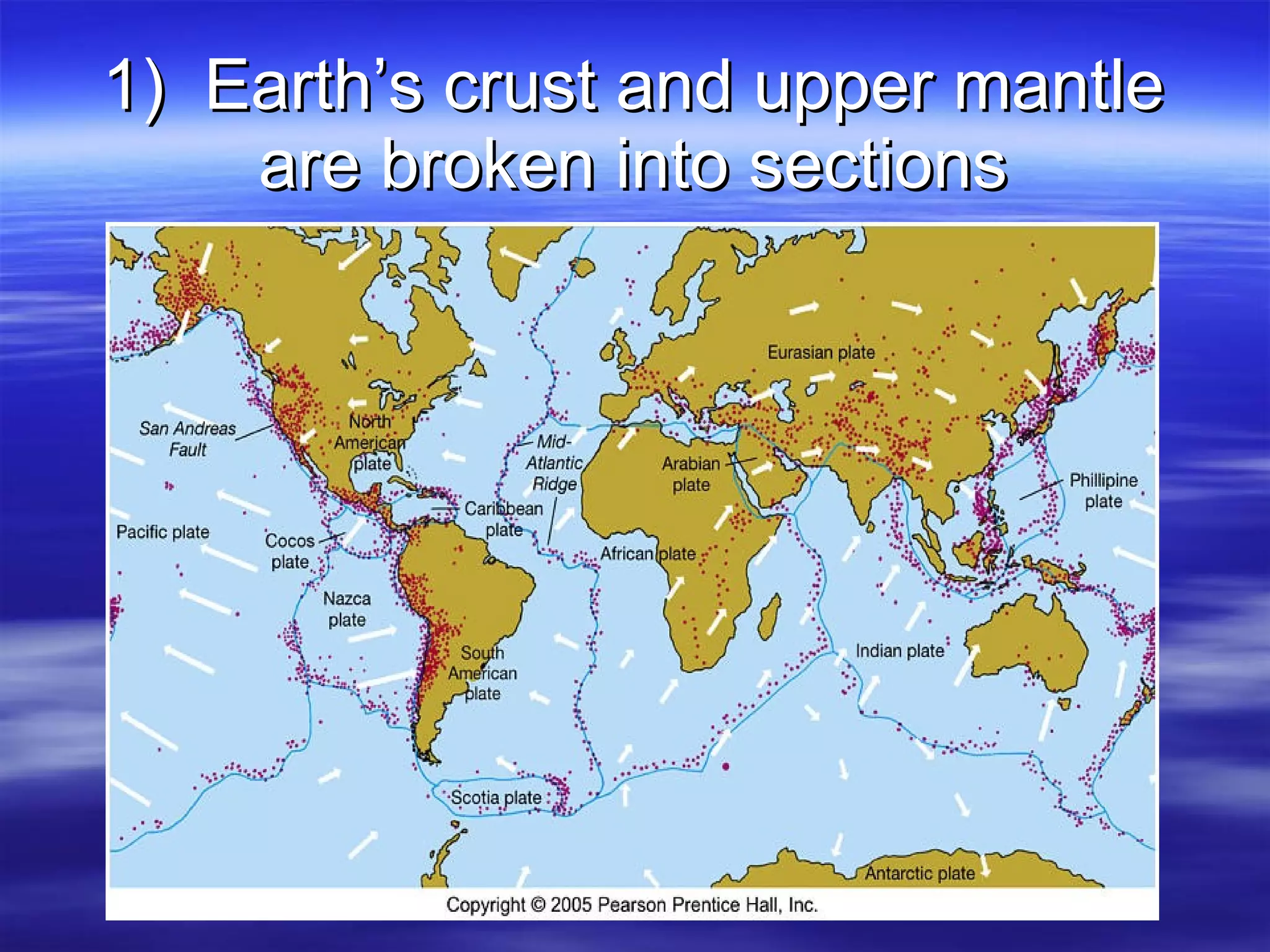
1)  Earth’s crust and upper mantle are broken into sections
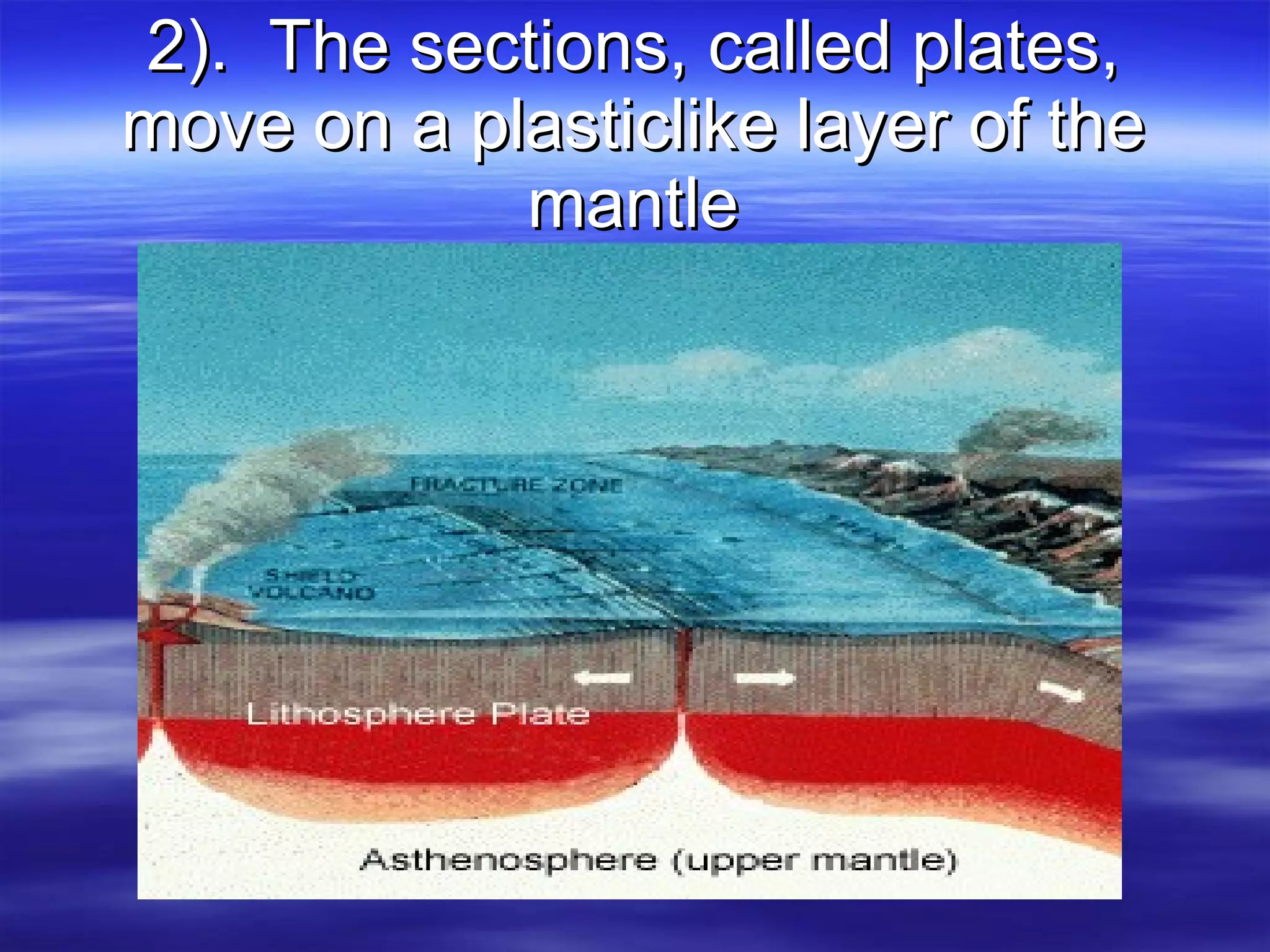
2).  The sections, called plates, move on a plasticlike layer of the mantle
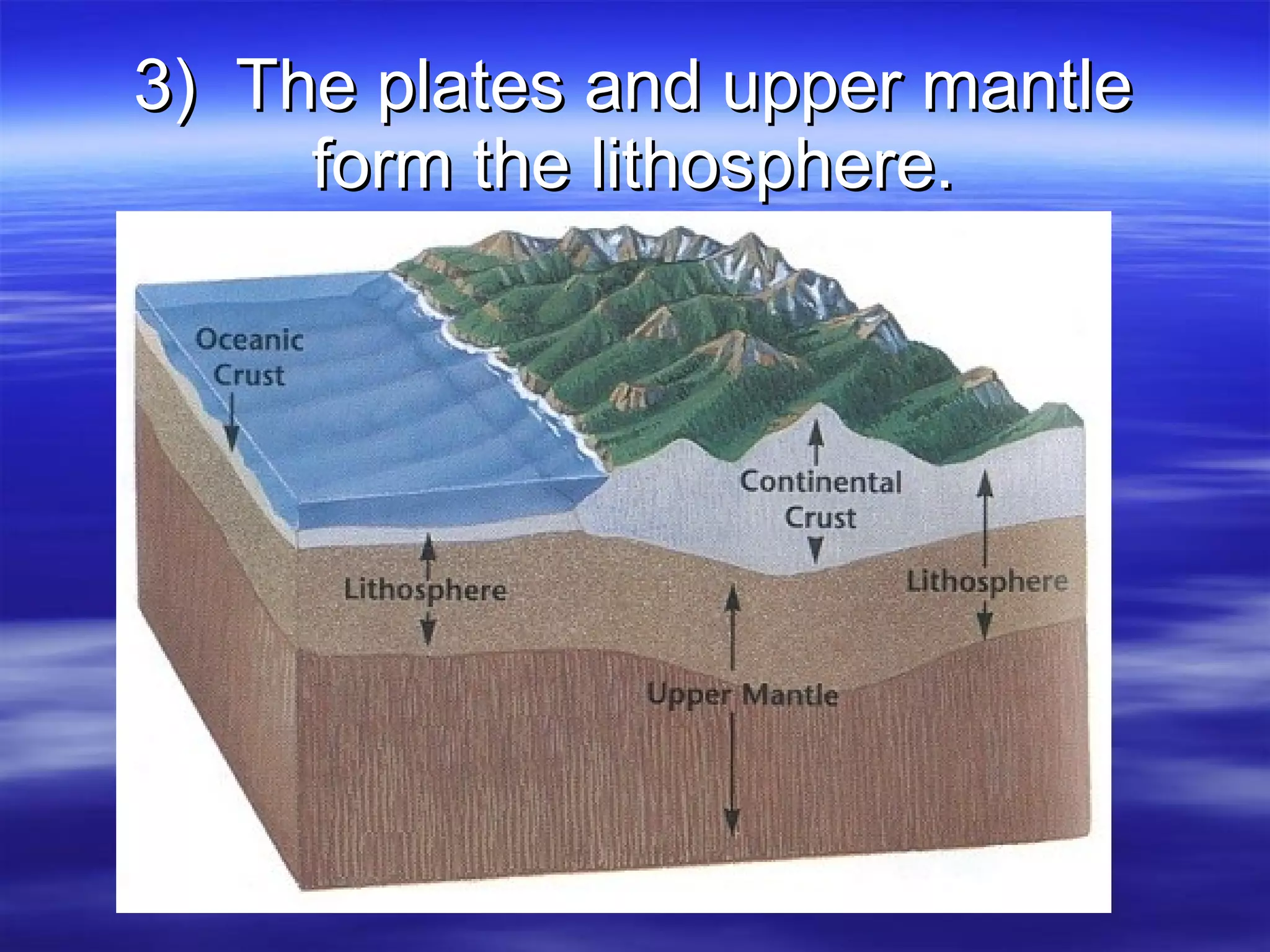
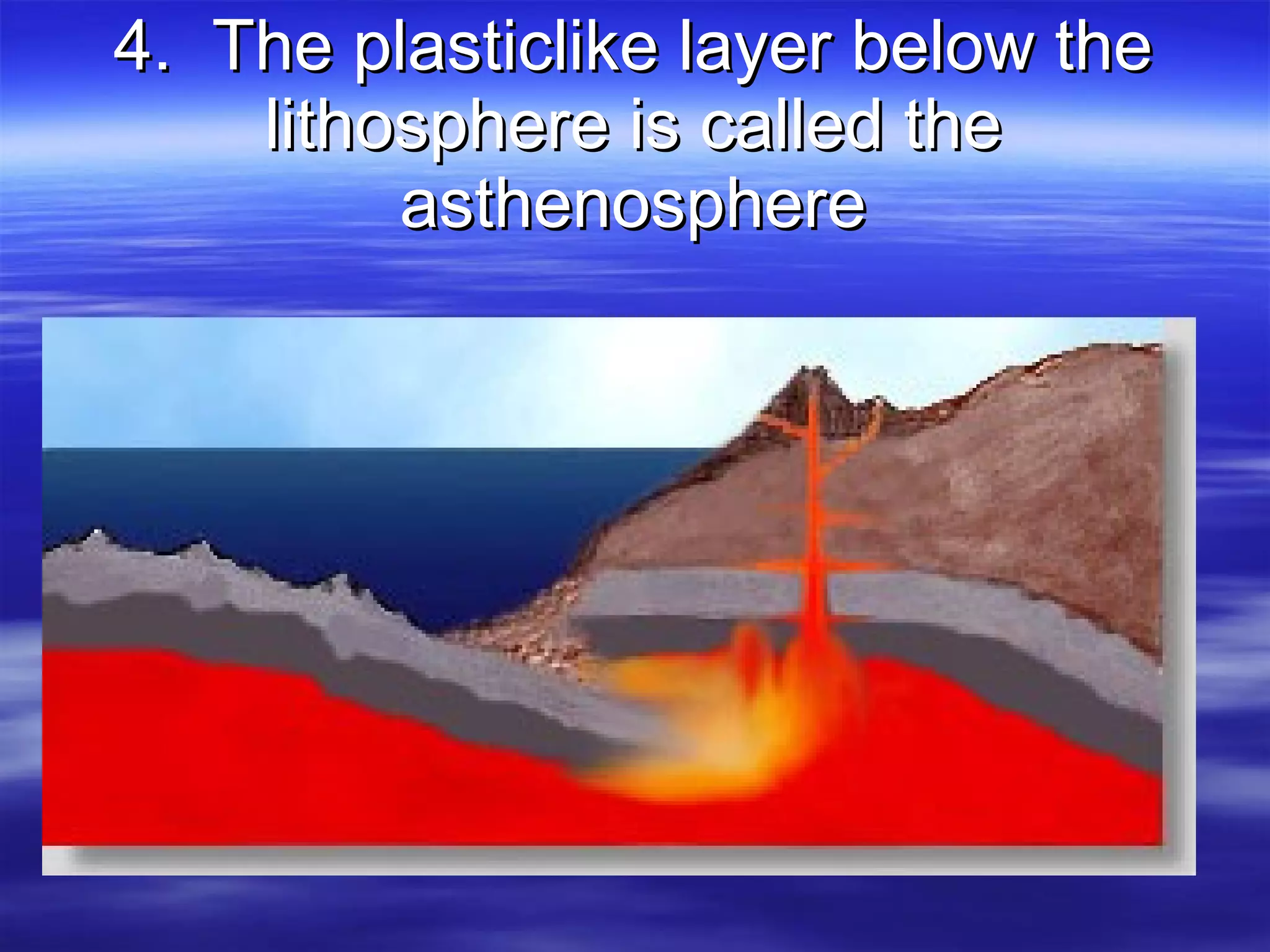
3)  The plates and upper mantle form the lithosphere.
4.  The plasticlike layer below the lithosphere is called the asthenosphere
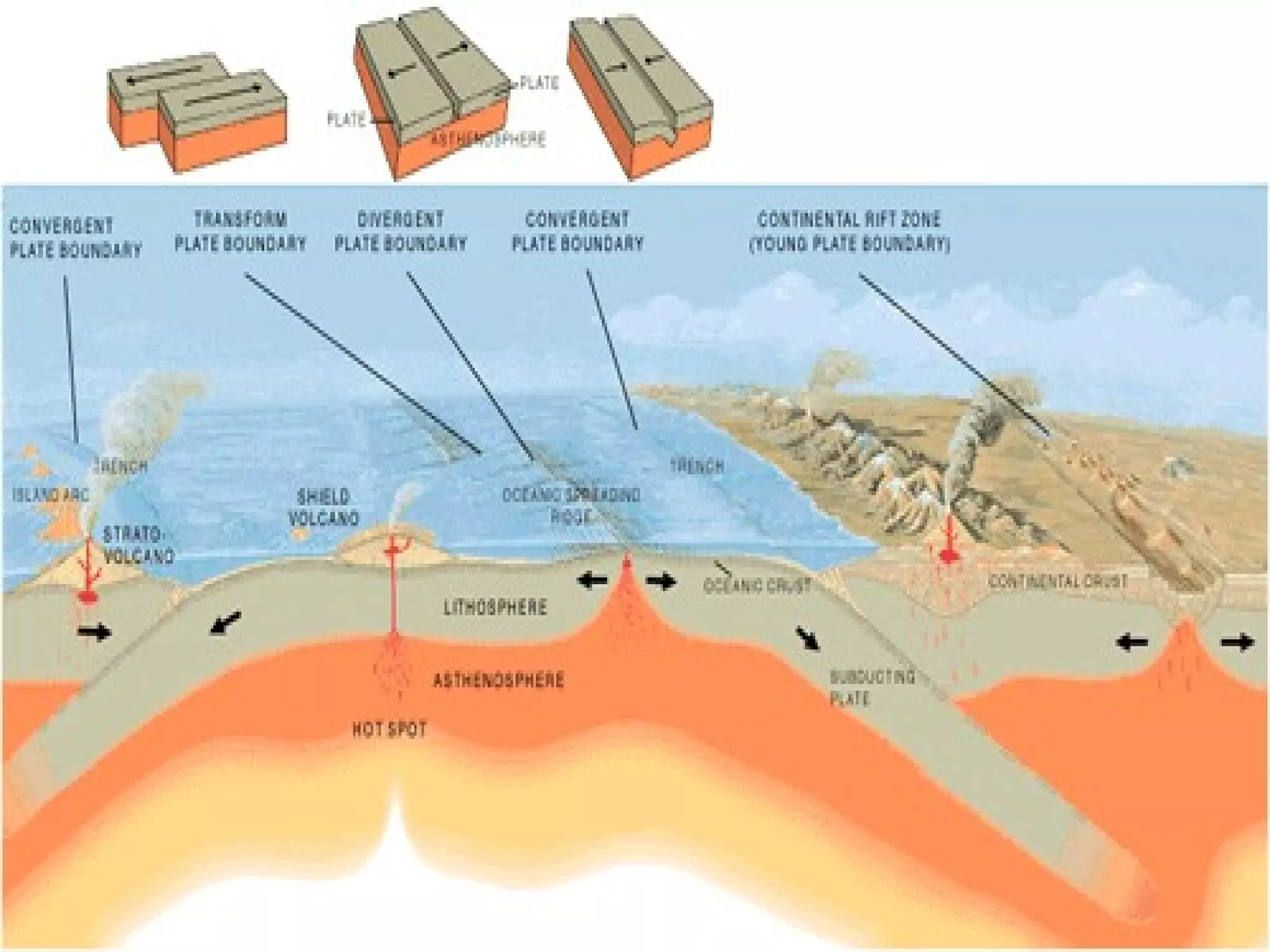
Plate Boundaries 1.  Plates moving apart – divergent boundaries
Movie
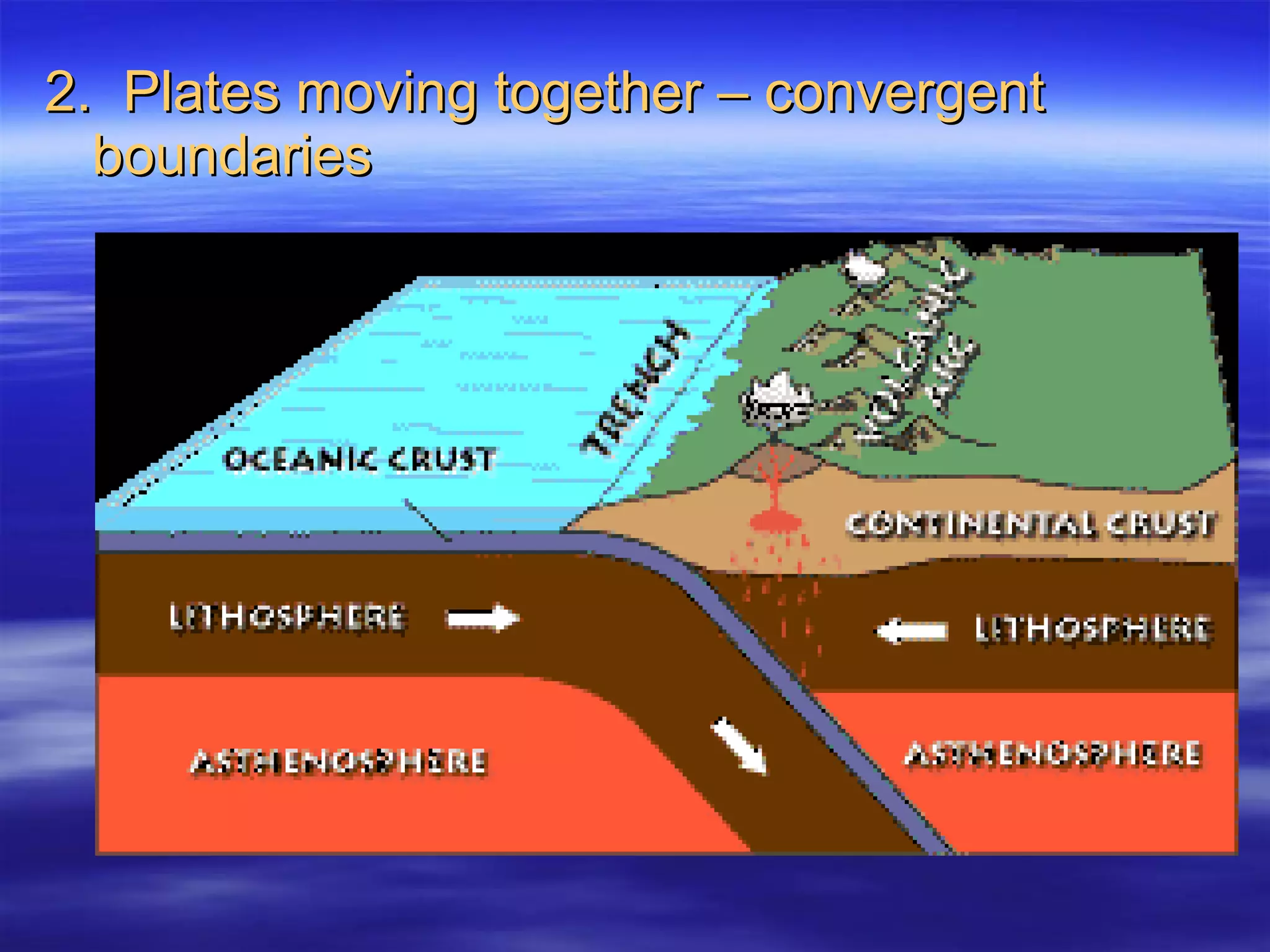
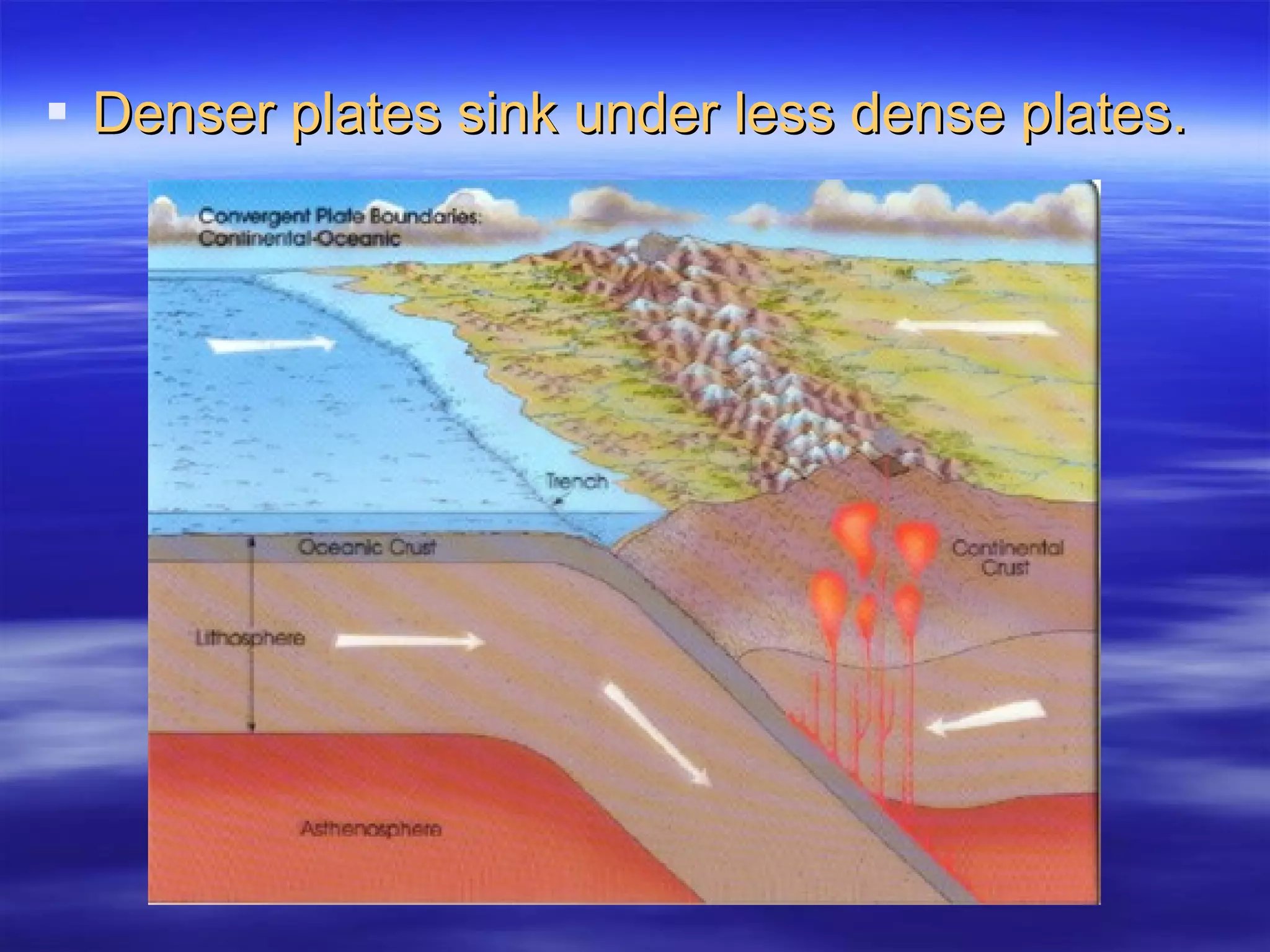
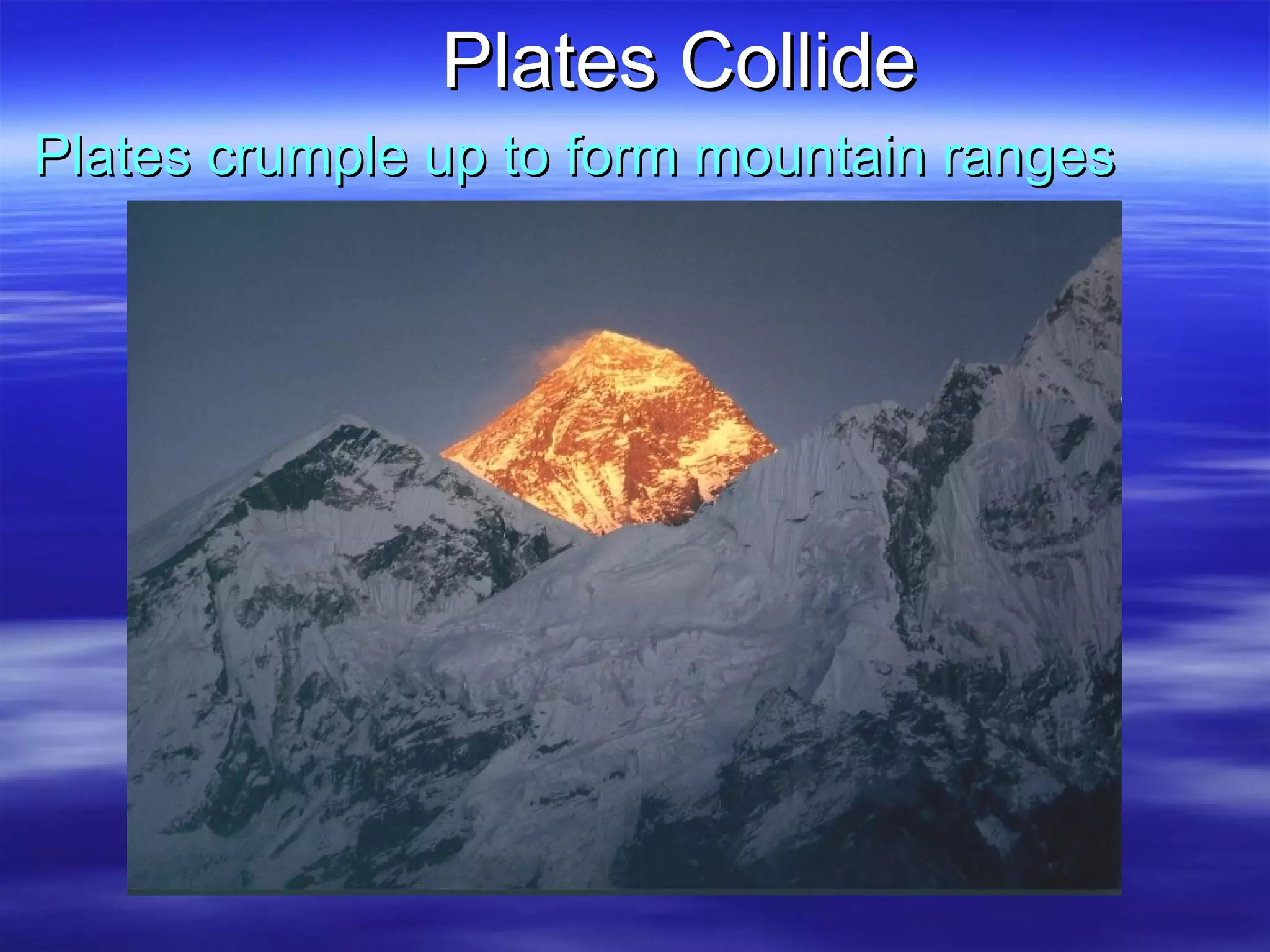
2.  Plates moving together – convergent boundaries
Denser plates sink under less dense plates.
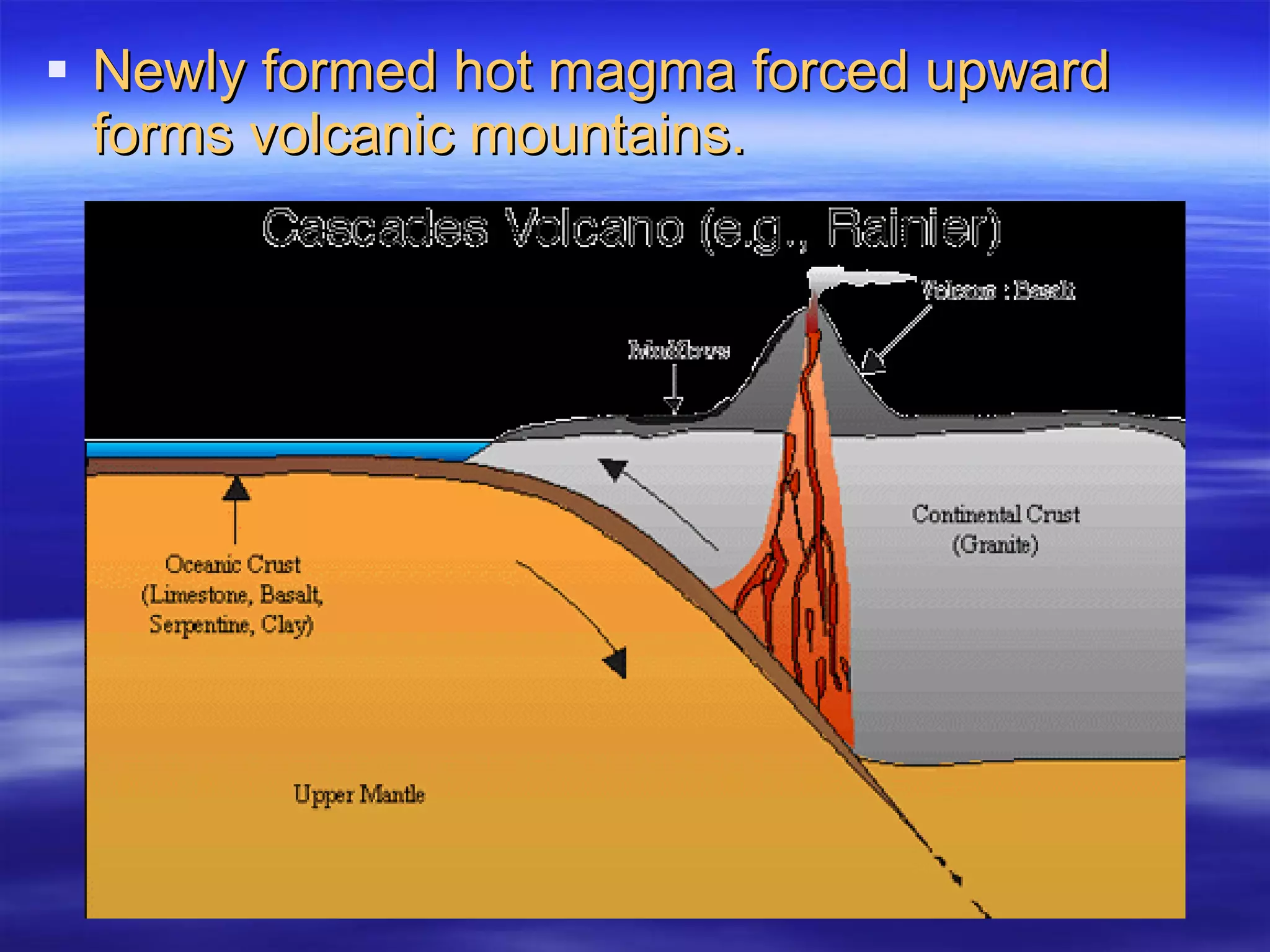
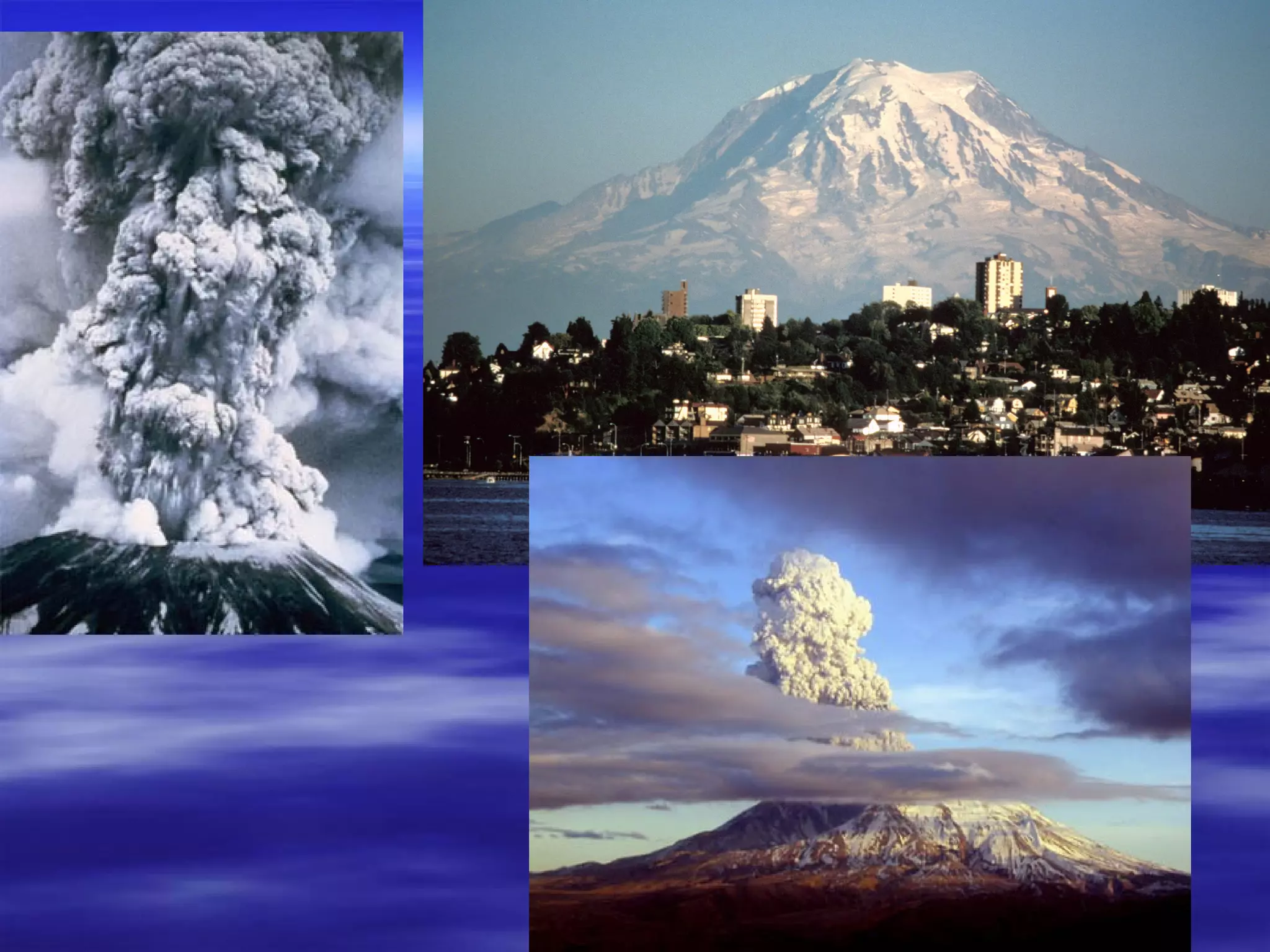
Newly formed hot magma forced upward forms volcanic mountains.
 
Plates Collide Plates crumple up to form mountain ranges
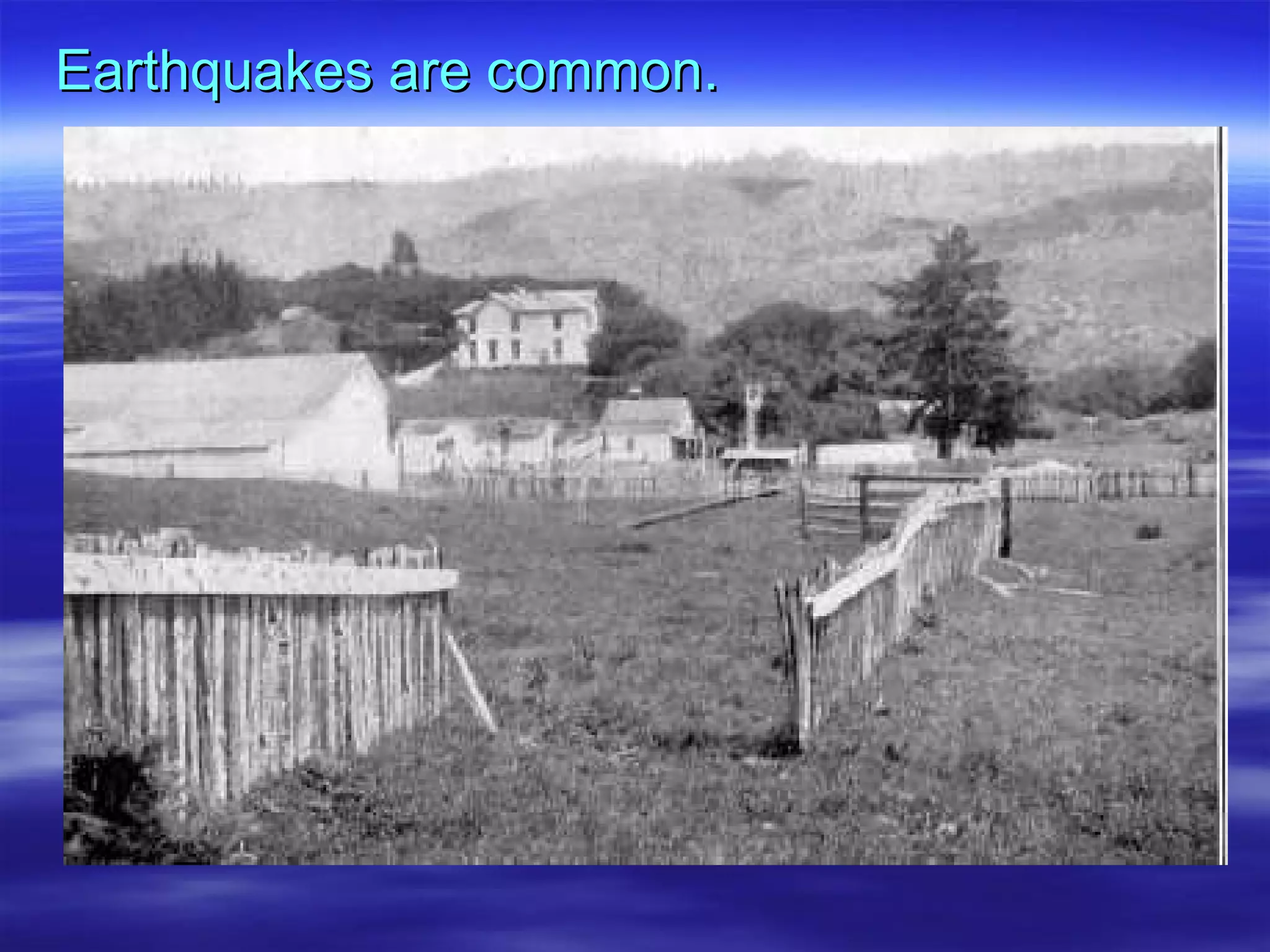
Earthquakes are common.
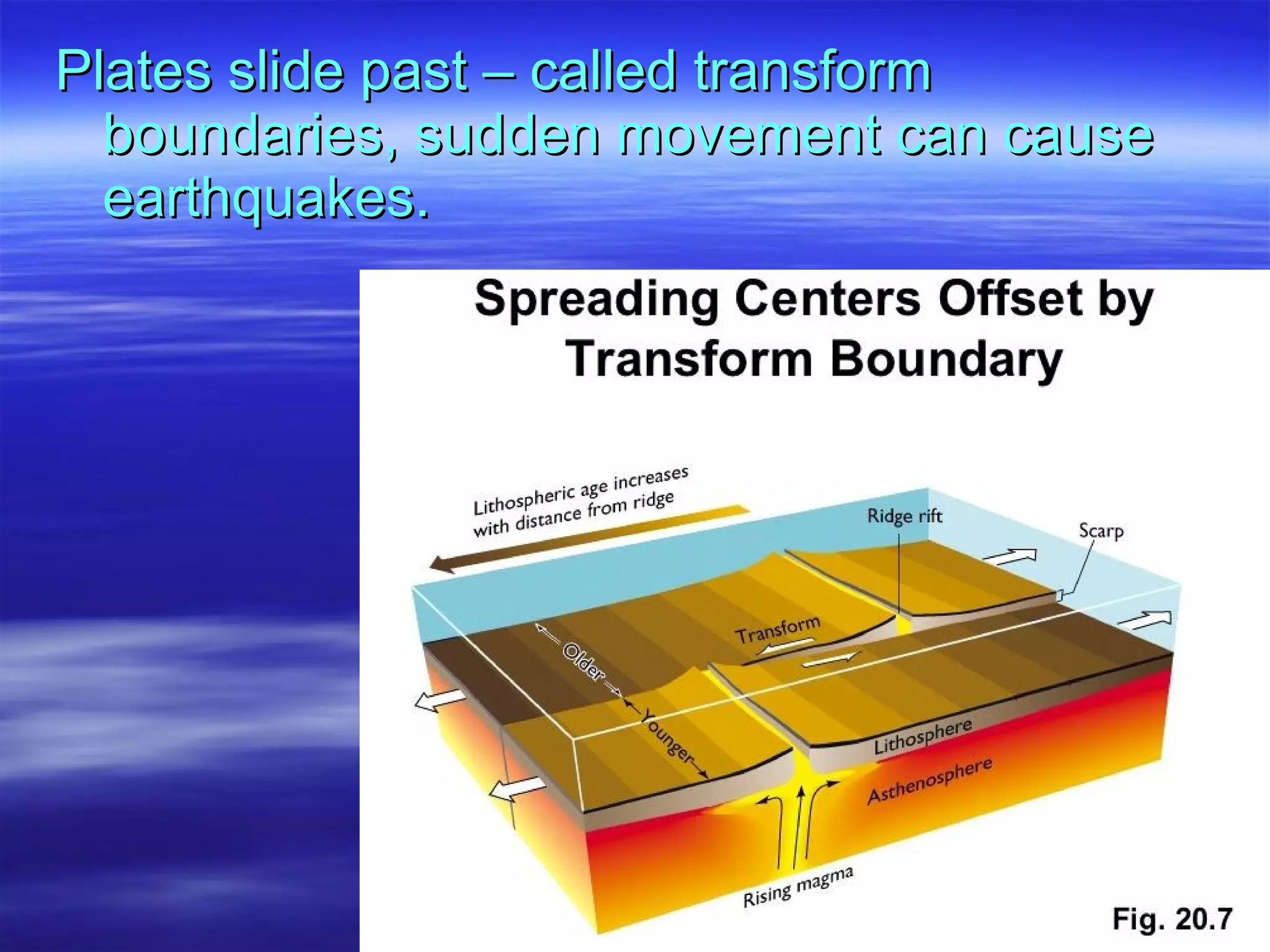
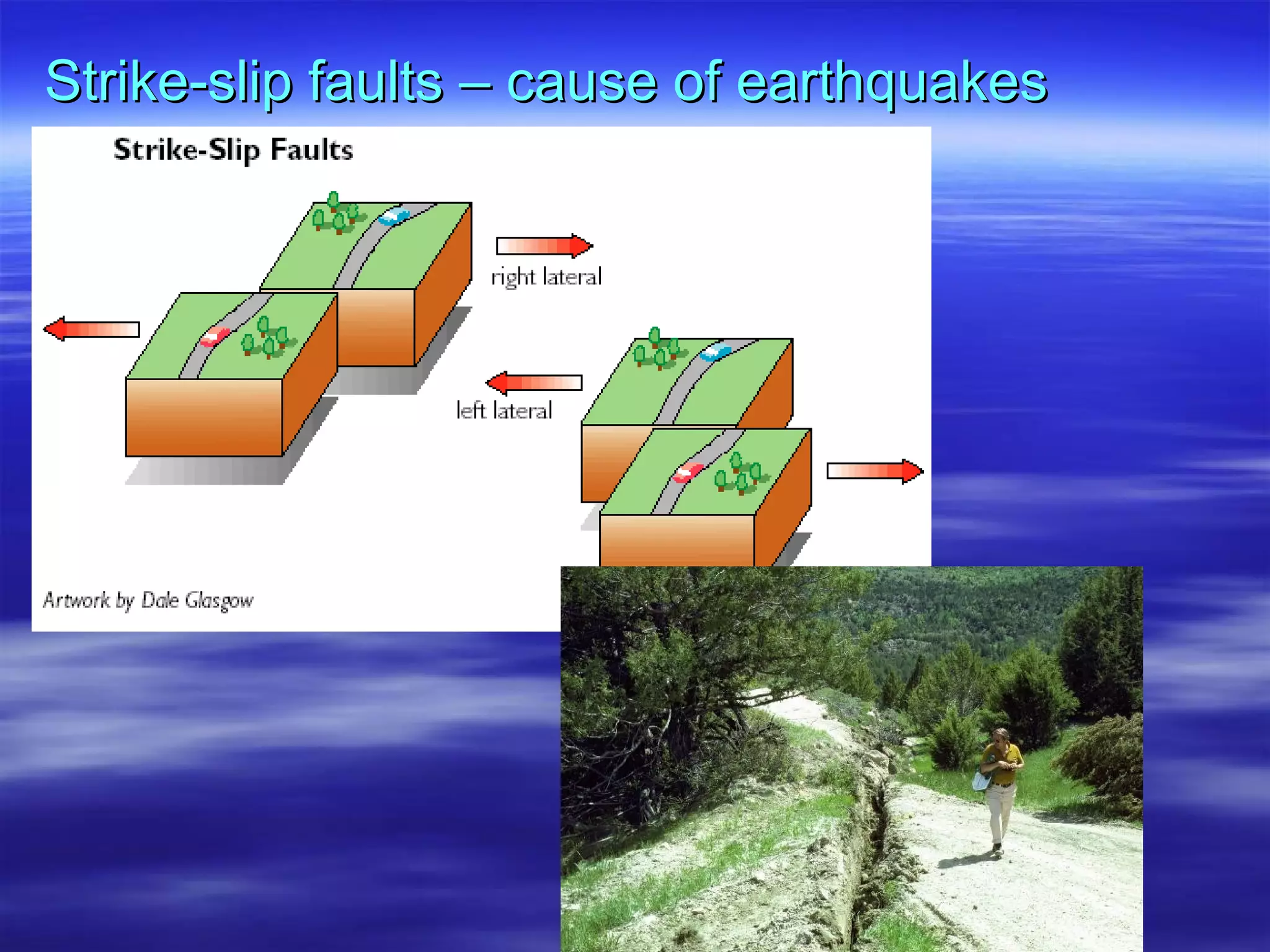
Plates slide past – called transform boundaries, sudden movement can cause earthquakes.
 
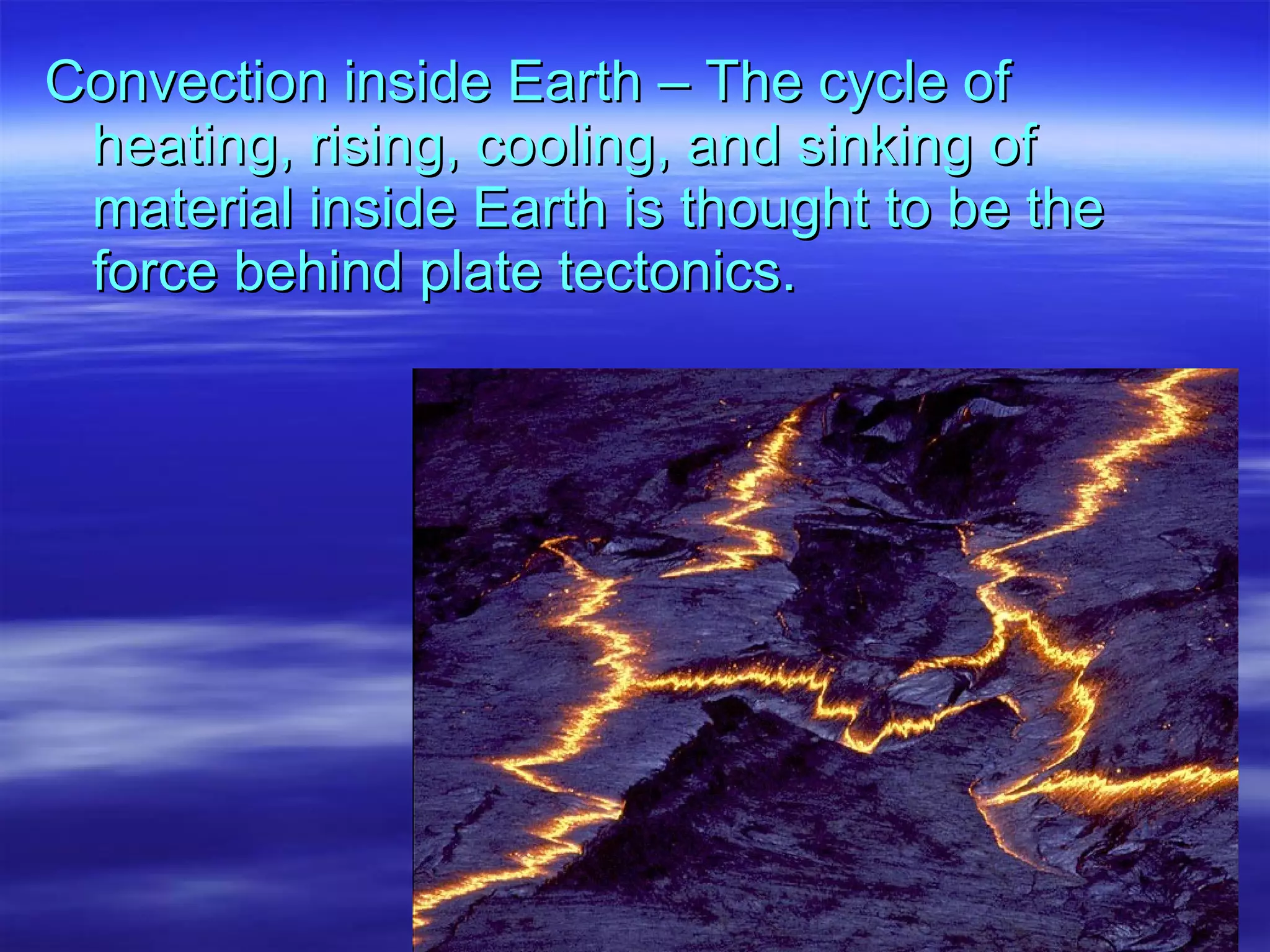
Convection inside Earth – The cycle of heating, rising, cooling, and sinking of material inside Earth is thought to be the force behind plate tectonics.
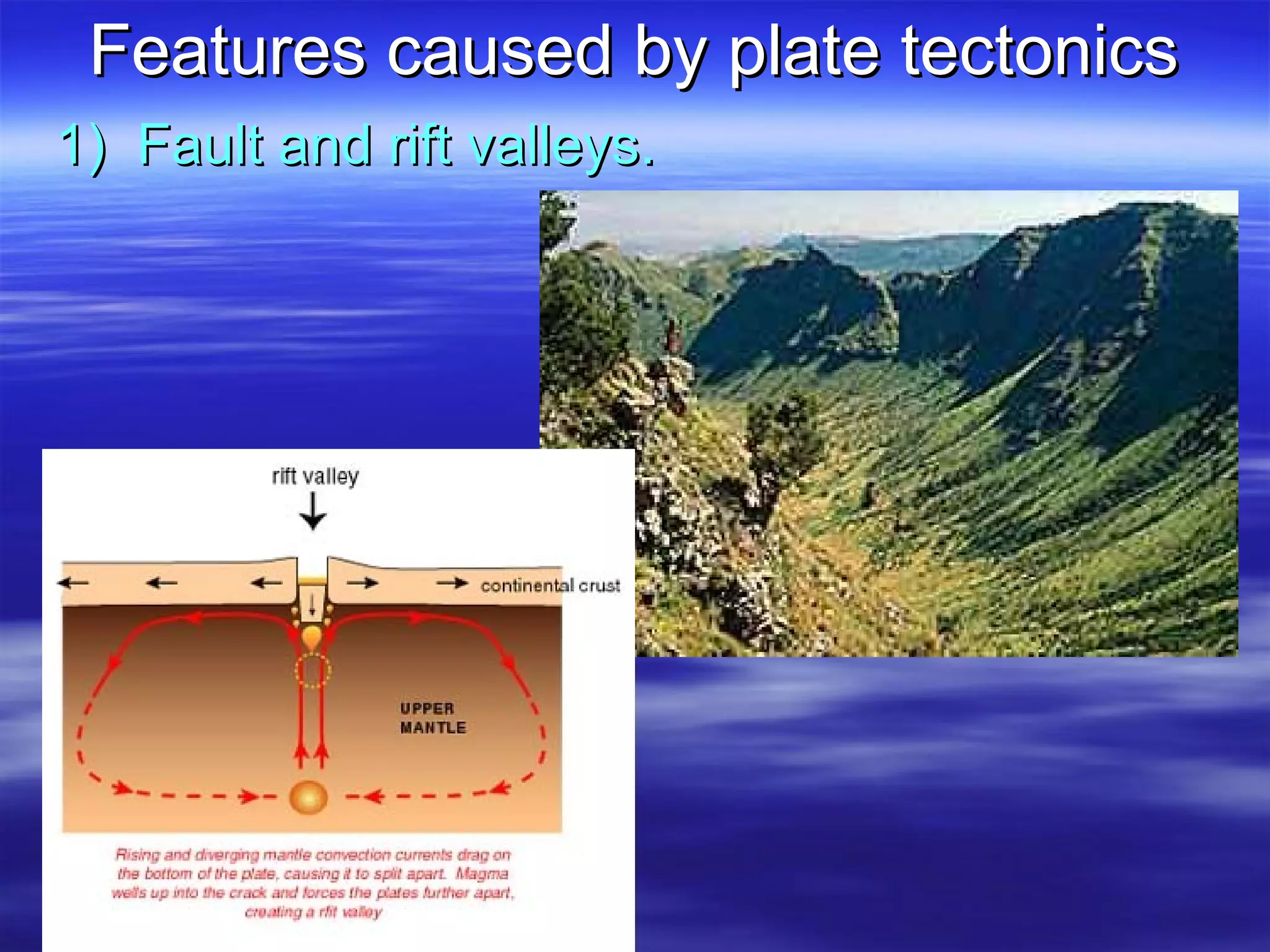
Features caused by plate tectonics 1)  Fault and rift valleys.
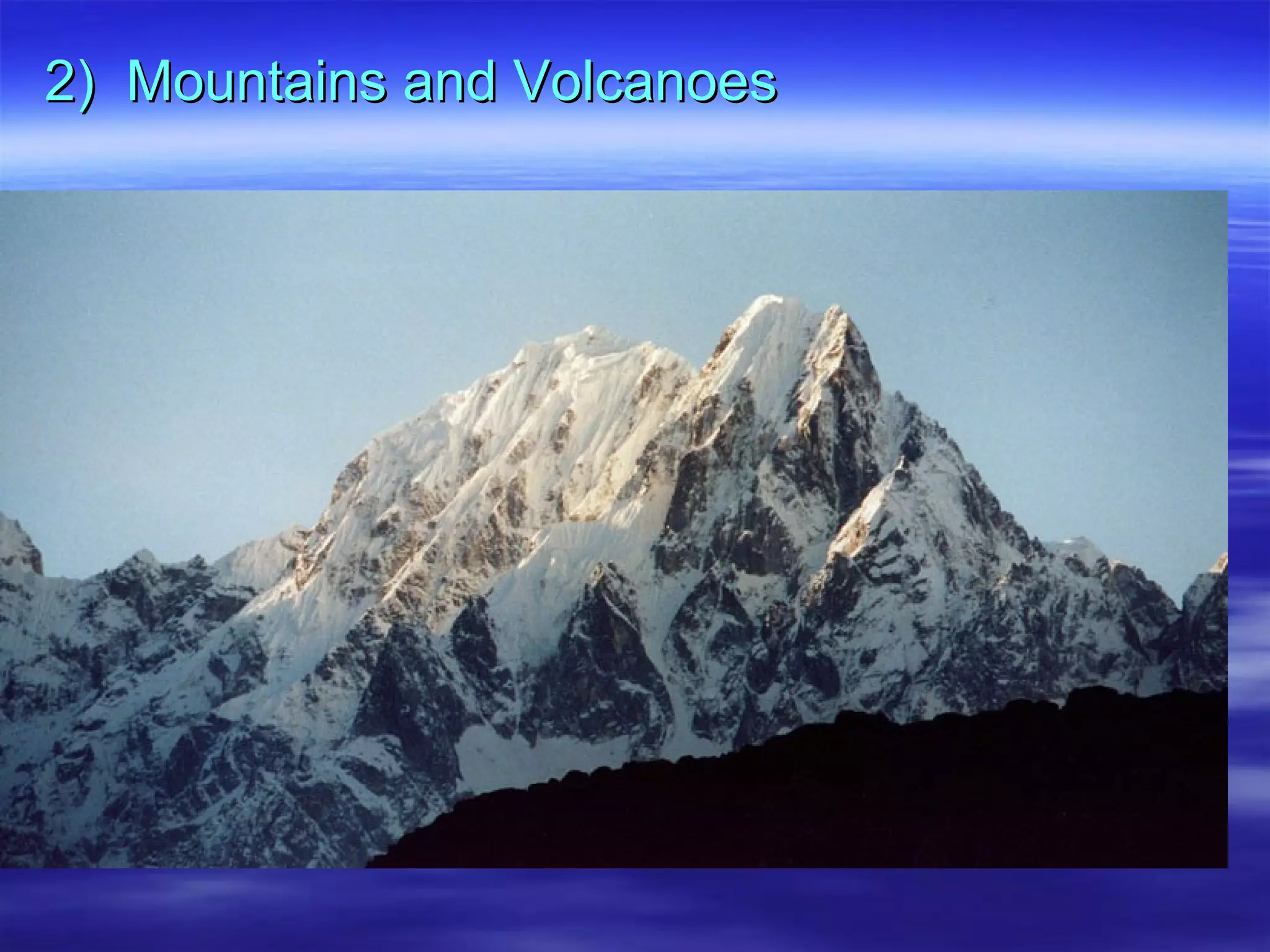
2)  Mountains and Volcanoes
Strike-slip faults – cause of earthquakes
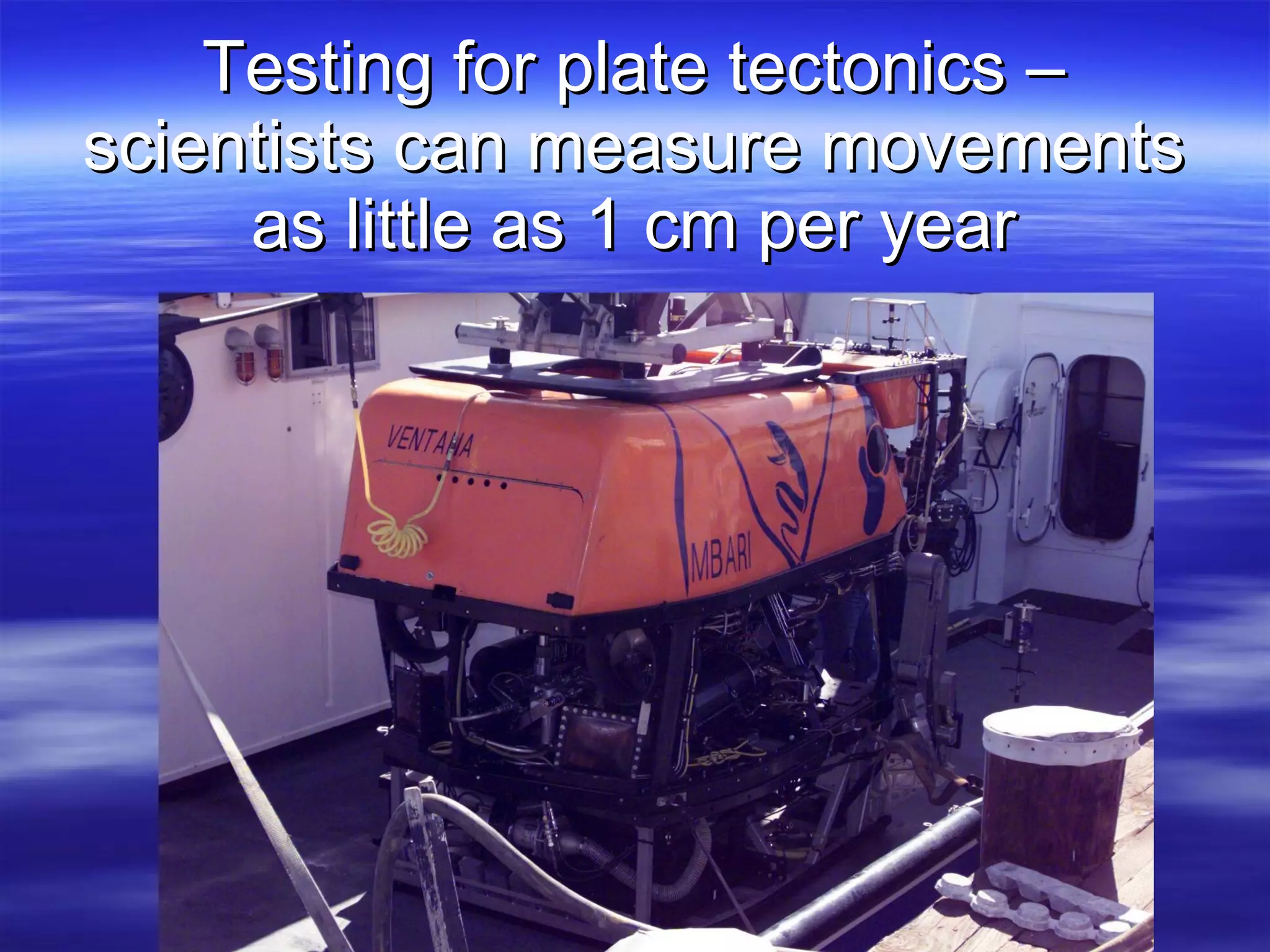
Testing for plate tectonics – scientists can measure movements as little as 1 cm per year

Chapter 10 ii

  • 1.
    Chapter 10 SectionII Seafloor Spreading
  • 2.
    Using sound waves,scientists discovered a system of underwater mountain ranges called the mid-ocean ridges in many oceans.
  • 3.
    In the 1960s,Harry Hess suggested the theory of seafloor spreading to explain the ridges
  • 4.
    1) Hot,less dense material below Earth’s crust rises towards the surface at the mid-ocean ridges.
  • 5.
    2) Then,it flows sideways, carrying the seafloor away from the ridge.
  • 6.
    3) Asthe seafloor spreads apart, magma moves up and flows from the cracks, cools, and forms new seafloor
  • 7.
  • 8.
    Evidence for seafloorspreading Youngest rocks are located at mid-ocean ridges. Reversals of Earth’s magnetic field are recorded by rocks in strips parallel to ridges.
  • 9.
    Section III –Theory of Plate Tectonics Plate movements
  • 10.
    1) Earth’scrust and upper mantle are broken into sections
  • 11.
    2). Thesections, called plates, move on a plasticlike layer of the mantle
  • 12.
    3) Theplates and upper mantle form the lithosphere.
  • 13.
    4. Theplasticlike layer below the lithosphere is called the asthenosphere
  • 14.
    Plate Boundaries 1. Plates moving apart – divergent boundaries
  • 15.
  • 16.
    2. Platesmoving together – convergent boundaries
  • 17.
    Denser plates sinkunder less dense plates.
  • 18.
    Newly formed hotmagma forced upward forms volcanic mountains.
  • 19.
  • 20.
    Plates Collide Platescrumple up to form mountain ranges
  • 21.
  • 22.
    Plates slide past– called transform boundaries, sudden movement can cause earthquakes.
  • 23.
  • 24.
    Convection inside Earth– The cycle of heating, rising, cooling, and sinking of material inside Earth is thought to be the force behind plate tectonics.
  • 25.
    Features caused byplate tectonics 1) Fault and rift valleys.
  • 26.
    2) Mountainsand Volcanoes
  • 27.
    Strike-slip faults –cause of earthquakes
  • 28.
    Testing for platetectonics – scientists can measure movements as little as 1 cm per year