Erosional Forces FACTORS SUCH AS WIND AND WATER MOVE MATERIALS !
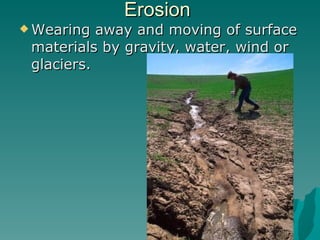
Erosion Wearing away and moving of surface materials by gravity, water, wind or glaciers.
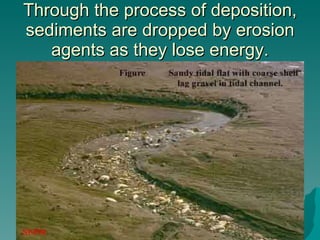
Through the process of deposition, sediments are dropped by erosion agents as they lose energy.
Mass movement occurs as gravity moves materials down a slope as one large mass.
Slump:  material slips down a curved surface as one large mass.
Sediments slowly shift down hill in the process of creep.
Rockfalls and rock slides occur when rocks break off or slip suddenly down a hill.
A mudflow is a thick mixture of water and sediments flowing downhill.
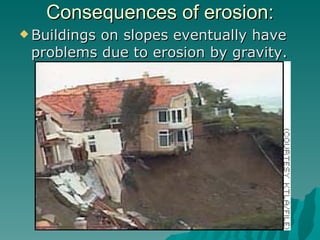
Consequences of erosion: Buildings on slopes eventually have problems due to erosion by gravity.
Sometimes builders and residents make slopes ,more unstable by making them steeper.
Another source of instability is the removal of vegetation.
 
Steep slopes can be made safer with vegetation, drainage pipes, and walls of concrete or railroad ties.
Glacier:  large mass of ice and snow; moves slowly
Glaciers are the most powerful erosion agent.
As glaciers move they pick up boulders, gravel and sand in an erosion process called plucking.
Plucked rocks at the base of the glacier scour the soil and bedrock. Dragged rock fragments leave scars on bedrock called grooves.
Striations are shallower scars on bedrock Grooves and striations indicate the direction a glacier moved
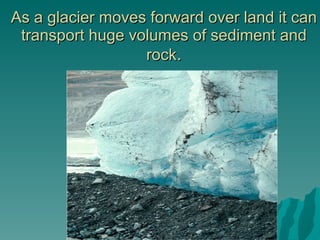
As a glacier moves forward over land it can transport huge volumes of sediment and rock .
When glaciers melt and retreat they leave behind till (boulders, sand, clay and silt)
A moraine is a ridge, or pile, of deposit left at the end of a glacier
Outwash:  material deposited in layers by the meltwater of a glacier, with largest pieces closer to the glacier.
Esker:  type of outwash deposit formed as meltwater rivers within the ice deposit sand and gravel within their channels.
Continental glacier:  huge masses of ice and snow now covering only about 10% of Earth in areas near the poles.
In the past, as much as 28% of Earth was covered with glaciers.
Ice ages:  periods of widespread glaciation over the last 2 million to 3 million years.
The average air temperature on Earth was about 5 degrees Celsius lower during ice ages than today
The last major ice age was about 18,000 years ago.
Valley glaciers exist in mountains.
Cirques:  bowl-shaped basins in the sides of mountains, created by valley glaciers.
Arete:  long ridge that forms when two valley glaciers erode a mountain side by side.
Horn:  forms when valley glaciers erode a mountain from several directions.
Glacially eroded valleys have a U shape, as opposed to the V shape left by stream erosion.
Glaciers have changed, and continue to change, the shape of Earth’s surface.
Wind Erosion Can scatter dust or volcanic ash over thousands of kilometers
Deflation Wind removes small particles of loose sediment, leaving behind heavier materials
Wind behaves like a sandblaster blowing sand grains against rocks wearing them down and pitting them in the process of abrasion
Deflation and abrasion happen most often in areas where there is little vegetation to hold sediment in place
 
When strong winds blow in the deserts, beaches, or dry riverbeds, an airborne sand cloud or sandstorm occurs
 
 
Dust storms occur when winds blow dry topsoil from open fields, overgrazed areas, or places with little or no vegetation
Reducing Wind Erosion Plant vegetation Windbreaks – rows of trees can slow down wind reducing erosion; they can also trap snow and increase moisture
Roots fibrous root system plants such as grasses help anchor soil particles
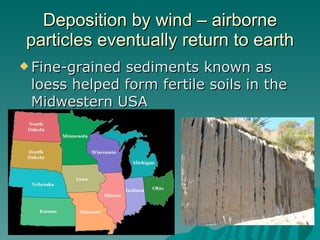
Deposition by wind – airborne particles eventually return to earth Fine-grained sediments known as loess helped form fertile soils in the Midwestern USA
A mound of sediments drifted by the wind is called a dune
Dunes move as the wind continues to blow against them the more gently sloping side of a dune faces the wind
Dunes have different shapes, such as crescents, lines, or stars This is based on sediments, wind speed and direction, and vegetation

Erosional forces

  • 1.
    Erosional Forces FACTORSSUCH AS WIND AND WATER MOVE MATERIALS !
  • 2.
    Erosion Wearing awayand moving of surface materials by gravity, water, wind or glaciers.
  • 3.
    Through the processof deposition, sediments are dropped by erosion agents as they lose energy.
  • 4.
    Mass movement occursas gravity moves materials down a slope as one large mass.
  • 5.
    Slump: materialslips down a curved surface as one large mass.
  • 6.
    Sediments slowly shiftdown hill in the process of creep.
  • 7.
    Rockfalls and rockslides occur when rocks break off or slip suddenly down a hill.
  • 8.
    A mudflow isa thick mixture of water and sediments flowing downhill.
  • 9.
    Consequences of erosion:Buildings on slopes eventually have problems due to erosion by gravity.
  • 10.
    Sometimes builders andresidents make slopes ,more unstable by making them steeper.
  • 11.
    Another source ofinstability is the removal of vegetation.
  • 12.
  • 13.
    Steep slopes canbe made safer with vegetation, drainage pipes, and walls of concrete or railroad ties.
  • 14.
    Glacier: largemass of ice and snow; moves slowly
  • 15.
    Glaciers are themost powerful erosion agent.
  • 16.
    As glaciers movethey pick up boulders, gravel and sand in an erosion process called plucking.
  • 17.
    Plucked rocks atthe base of the glacier scour the soil and bedrock. Dragged rock fragments leave scars on bedrock called grooves.
  • 18.
    Striations are shallowerscars on bedrock Grooves and striations indicate the direction a glacier moved
  • 19.
    As a glaciermoves forward over land it can transport huge volumes of sediment and rock .
  • 20.
    When glaciers meltand retreat they leave behind till (boulders, sand, clay and silt)
  • 21.
    A moraine isa ridge, or pile, of deposit left at the end of a glacier
  • 22.
    Outwash: materialdeposited in layers by the meltwater of a glacier, with largest pieces closer to the glacier.
  • 23.
    Esker: typeof outwash deposit formed as meltwater rivers within the ice deposit sand and gravel within their channels.
  • 24.
    Continental glacier: huge masses of ice and snow now covering only about 10% of Earth in areas near the poles.
  • 25.
    In the past,as much as 28% of Earth was covered with glaciers.
  • 26.
    Ice ages: periods of widespread glaciation over the last 2 million to 3 million years.
  • 27.
    The average airtemperature on Earth was about 5 degrees Celsius lower during ice ages than today
  • 28.
    The last majorice age was about 18,000 years ago.
  • 29.
    Valley glaciers existin mountains.
  • 30.
    Cirques: bowl-shapedbasins in the sides of mountains, created by valley glaciers.
  • 31.
    Arete: longridge that forms when two valley glaciers erode a mountain side by side.
  • 32.
    Horn: formswhen valley glaciers erode a mountain from several directions.
  • 33.
    Glacially eroded valleyshave a U shape, as opposed to the V shape left by stream erosion.
  • 34.
    Glaciers have changed,and continue to change, the shape of Earth’s surface.
  • 35.
    Wind Erosion Canscatter dust or volcanic ash over thousands of kilometers
  • 36.
    Deflation Wind removessmall particles of loose sediment, leaving behind heavier materials
  • 37.
    Wind behaves likea sandblaster blowing sand grains against rocks wearing them down and pitting them in the process of abrasion
  • 38.
    Deflation and abrasionhappen most often in areas where there is little vegetation to hold sediment in place
  • 39.
  • 40.
    When strong windsblow in the deserts, beaches, or dry riverbeds, an airborne sand cloud or sandstorm occurs
  • 41.
  • 42.
  • 43.
    Dust storms occurwhen winds blow dry topsoil from open fields, overgrazed areas, or places with little or no vegetation
  • 44.
    Reducing Wind ErosionPlant vegetation Windbreaks – rows of trees can slow down wind reducing erosion; they can also trap snow and increase moisture
  • 45.
    Roots fibrous rootsystem plants such as grasses help anchor soil particles
  • 46.
    Deposition by wind– airborne particles eventually return to earth Fine-grained sediments known as loess helped form fertile soils in the Midwestern USA
  • 47.
    A mound ofsediments drifted by the wind is called a dune
  • 48.
    Dunes move asthe wind continues to blow against them the more gently sloping side of a dune faces the wind
  • 49.
    Dunes have differentshapes, such as crescents, lines, or stars This is based on sediments, wind speed and direction, and vegetation