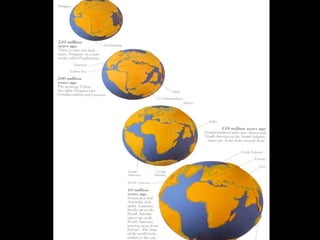
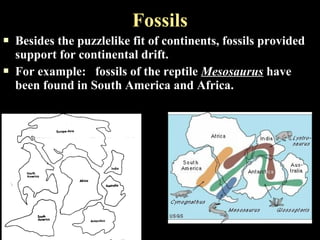
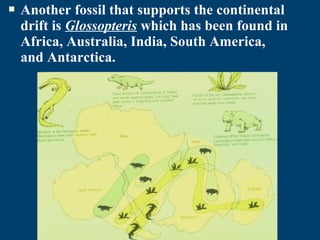
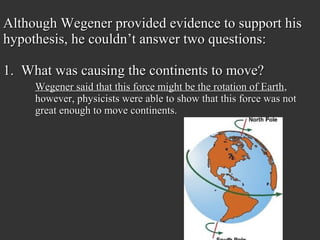
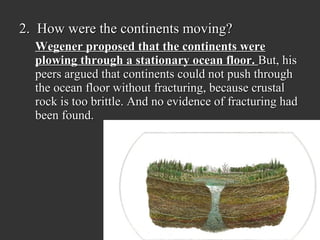
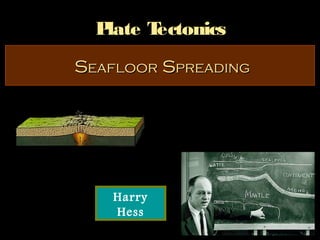
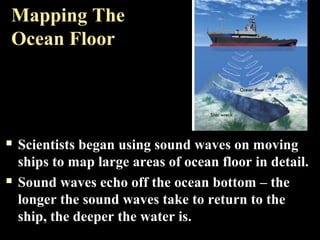
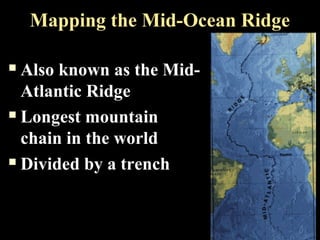
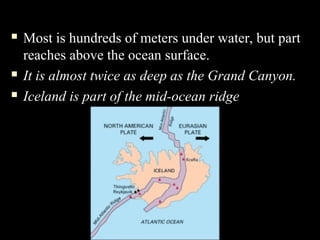
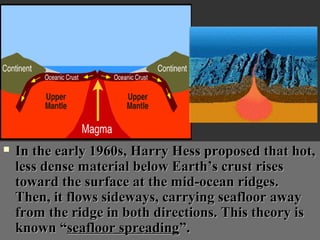
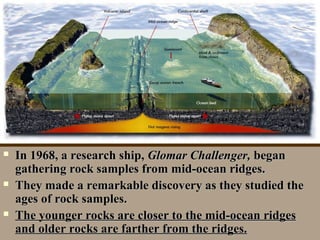
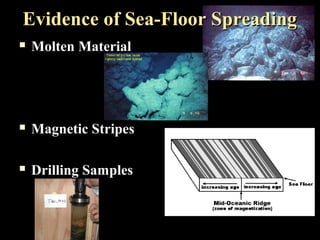
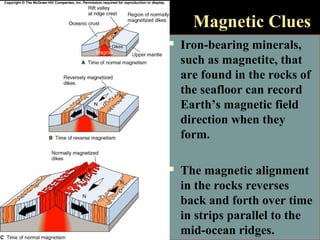
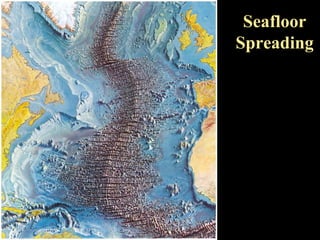
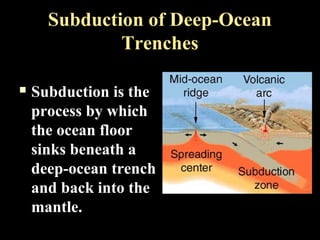
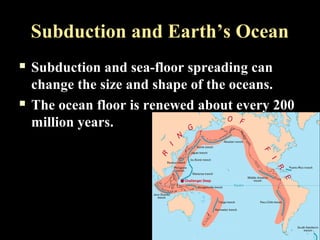
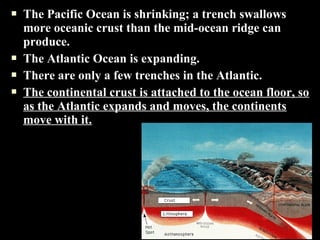
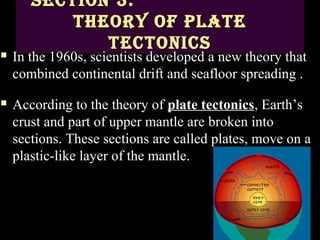
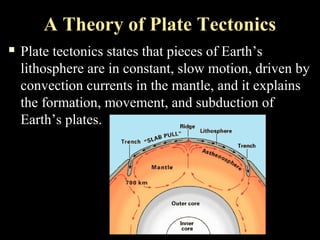
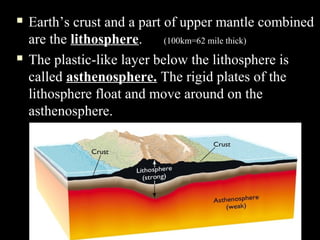
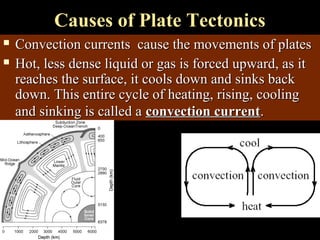
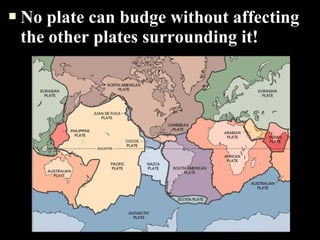
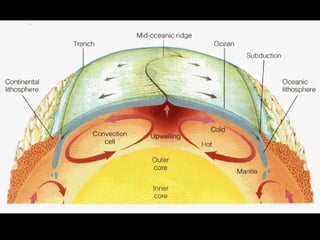
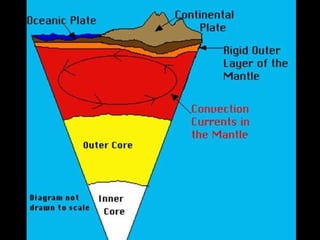
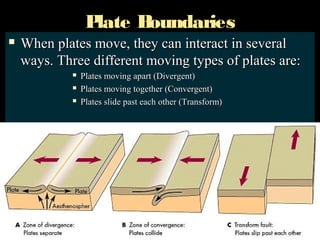
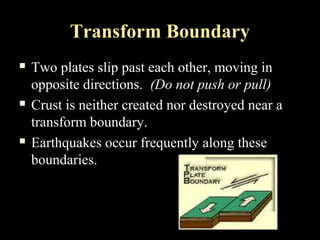
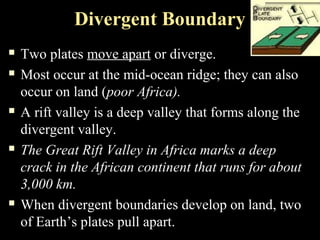
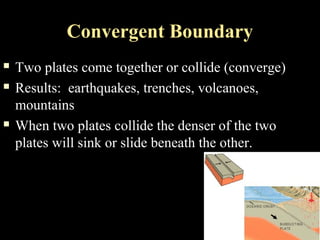
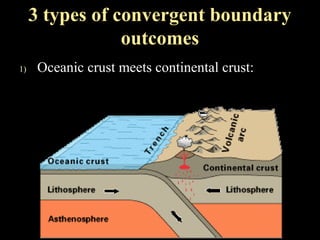
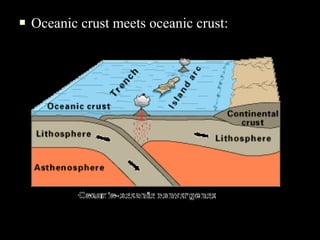
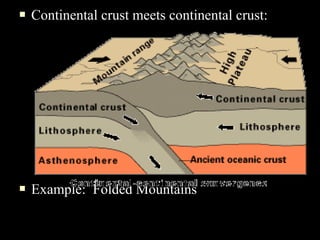
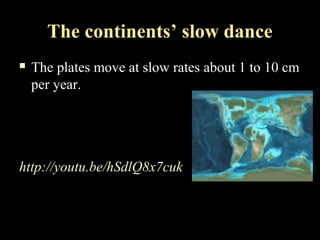
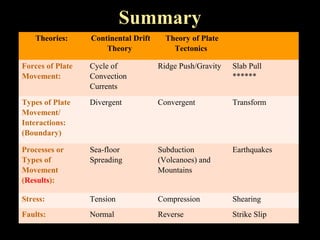
Plate tectonics theory proposes that Earth's outermost layer is broken into rigid tectonic plates that constantly move atop the asthenosphere in response to convection currents in the mantle, interacting along plate boundaries through divergent, convergent, and transform motion that creates geologic features like mid-ocean ridges, trenches, volcanoes, and earthquakes. Mapping of the seafloor revealed evidence like magnetic stripes and the ages of rocks that supported seafloor spreading and subduction, leading scientists in the 1960s to combine these ideas with continental drift into the unified theory of plate tectonics.