The Solar System Section I The Solar System
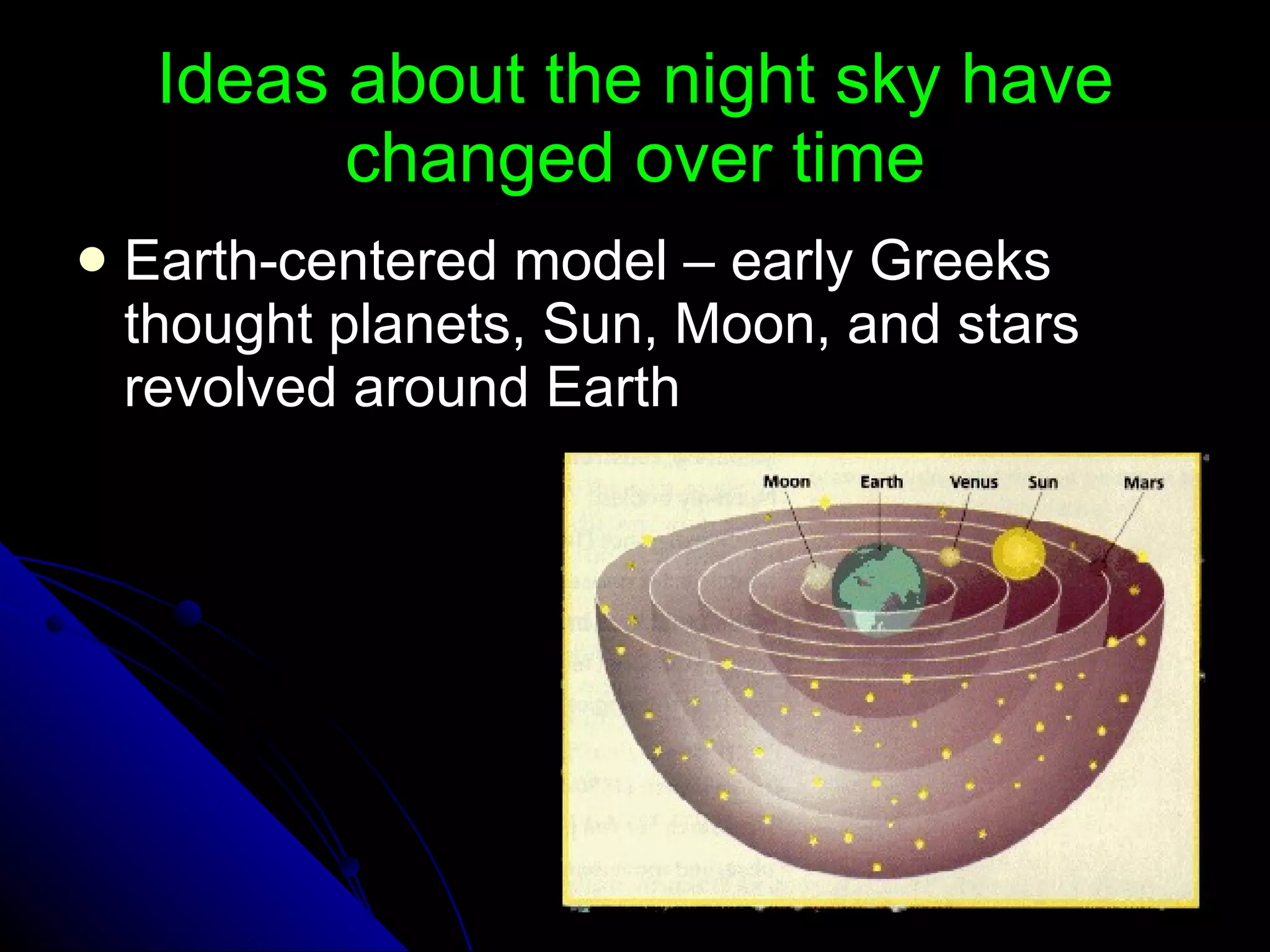
Ideas about the night sky have changed over time Earth-centered model – early Greeks thought planets, Sun, Moon, and stars revolved around Earth
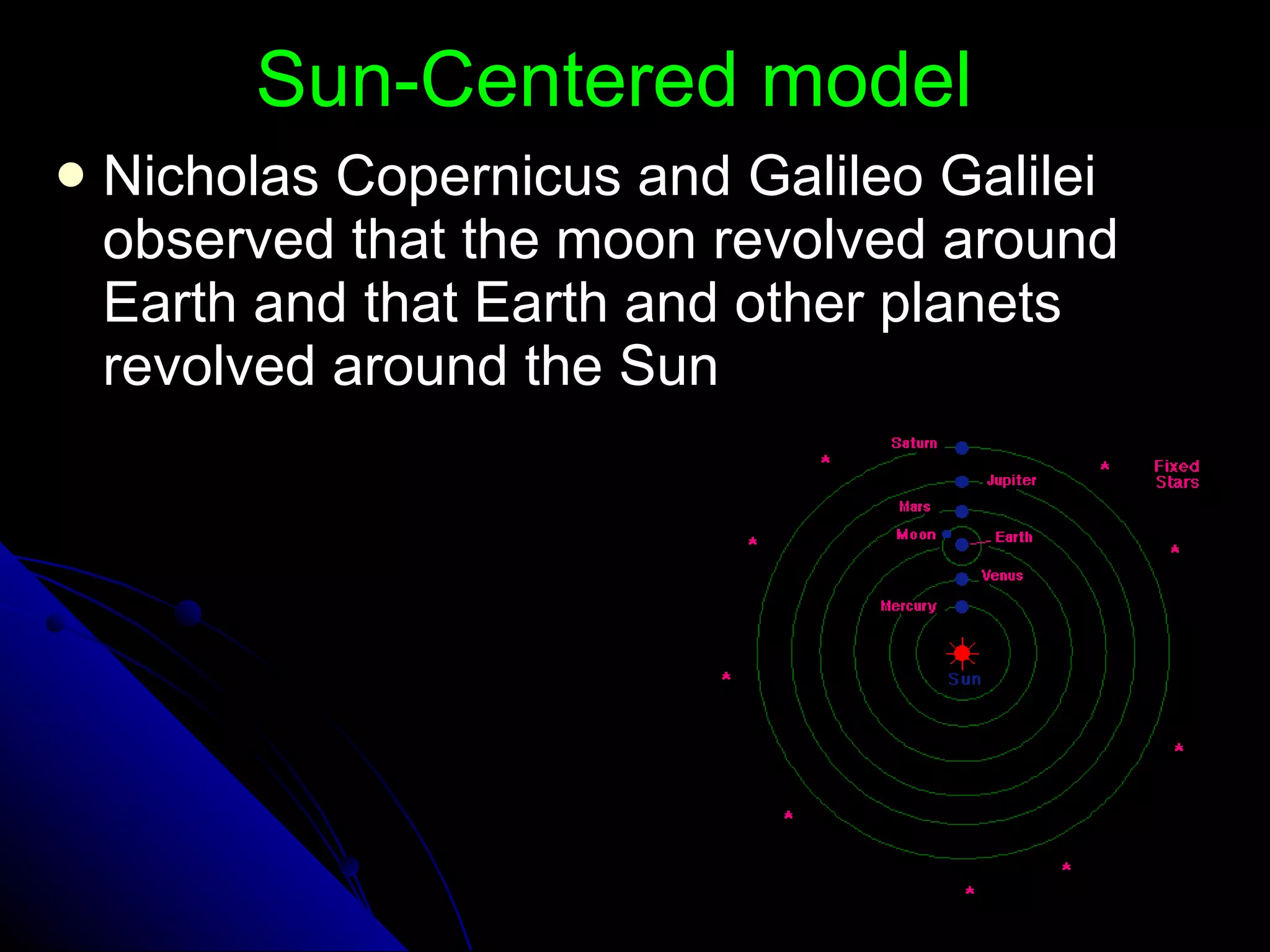
Sun-Centered model Nicholas Copernicus and Galileo Galilei observed that the moon revolved around Earth and that Earth and other planets revolved around the Sun
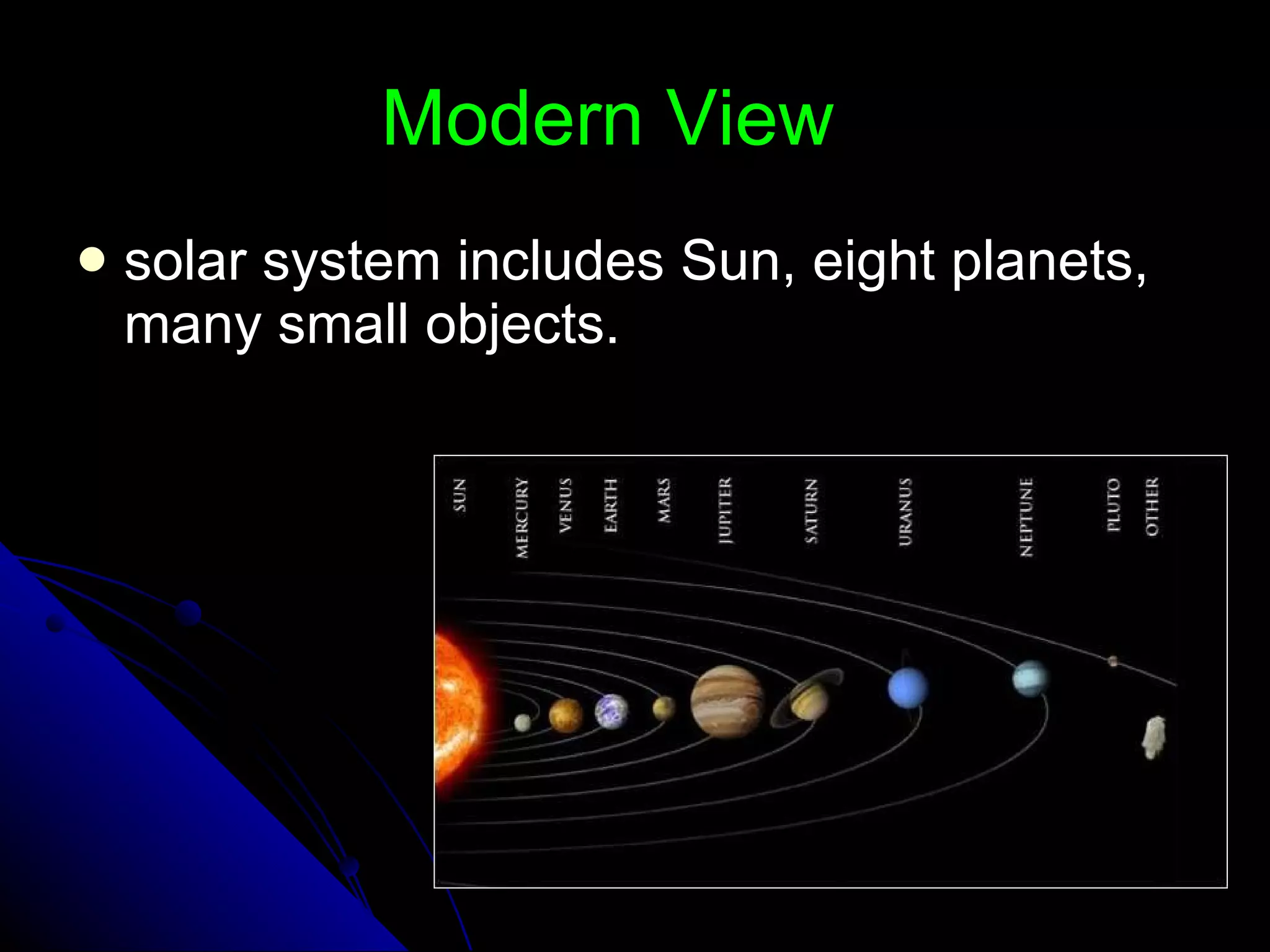
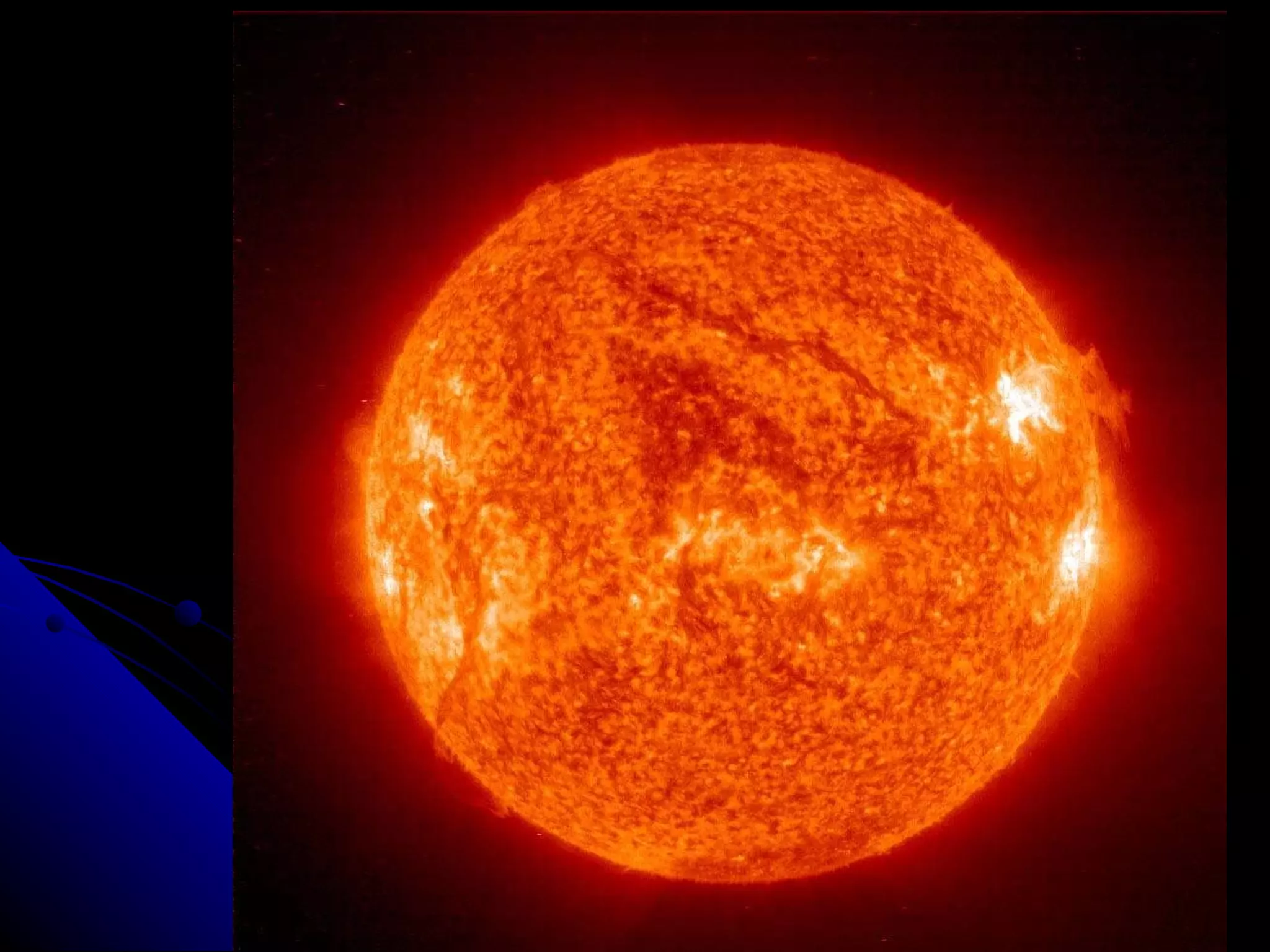
Modern View solar system includes Sun, eight planets, many small objects.
 
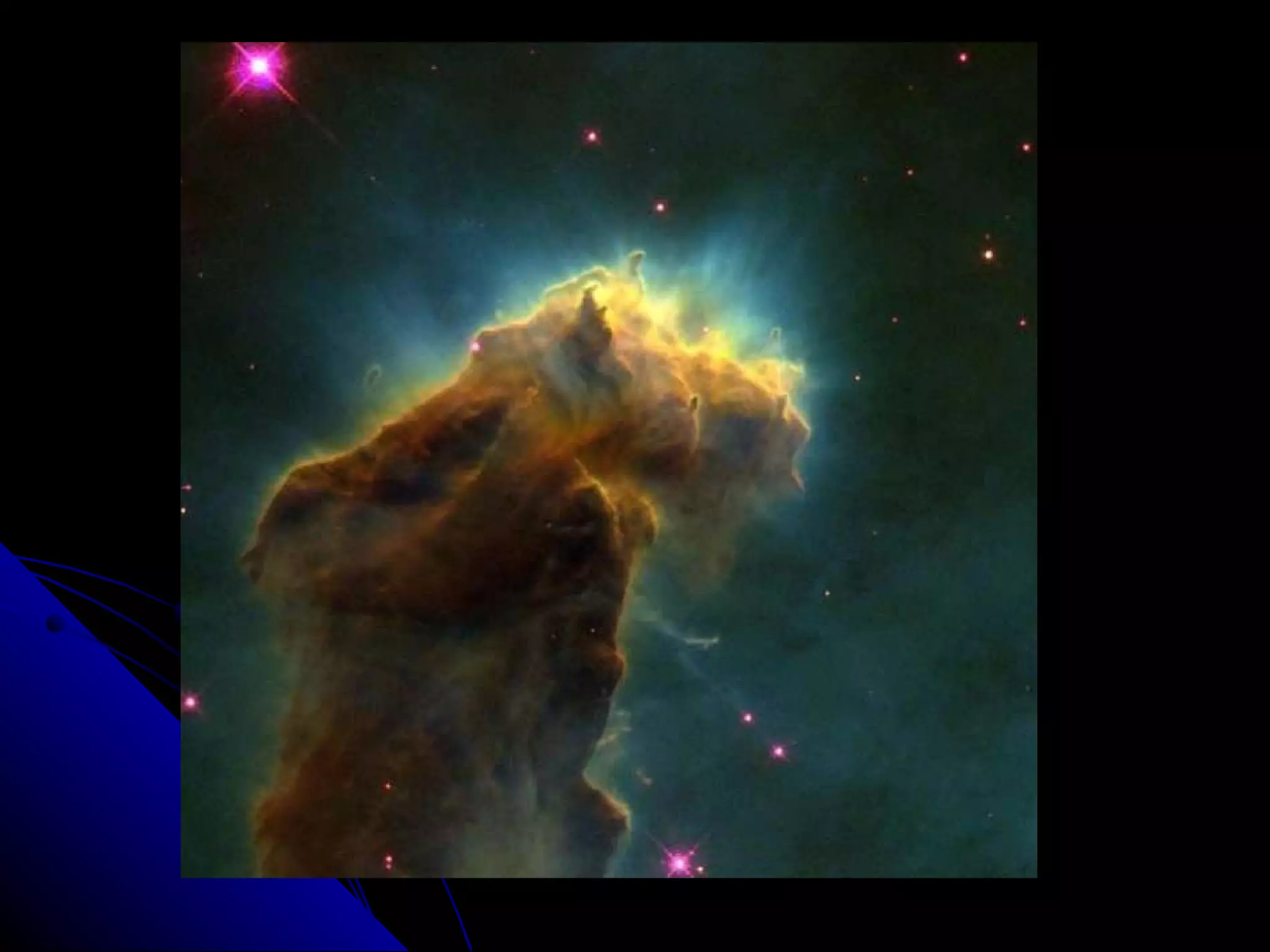
NEBULA THEORY (origin of solar system) a nebula of gas, ice, and dust slowly formed in space
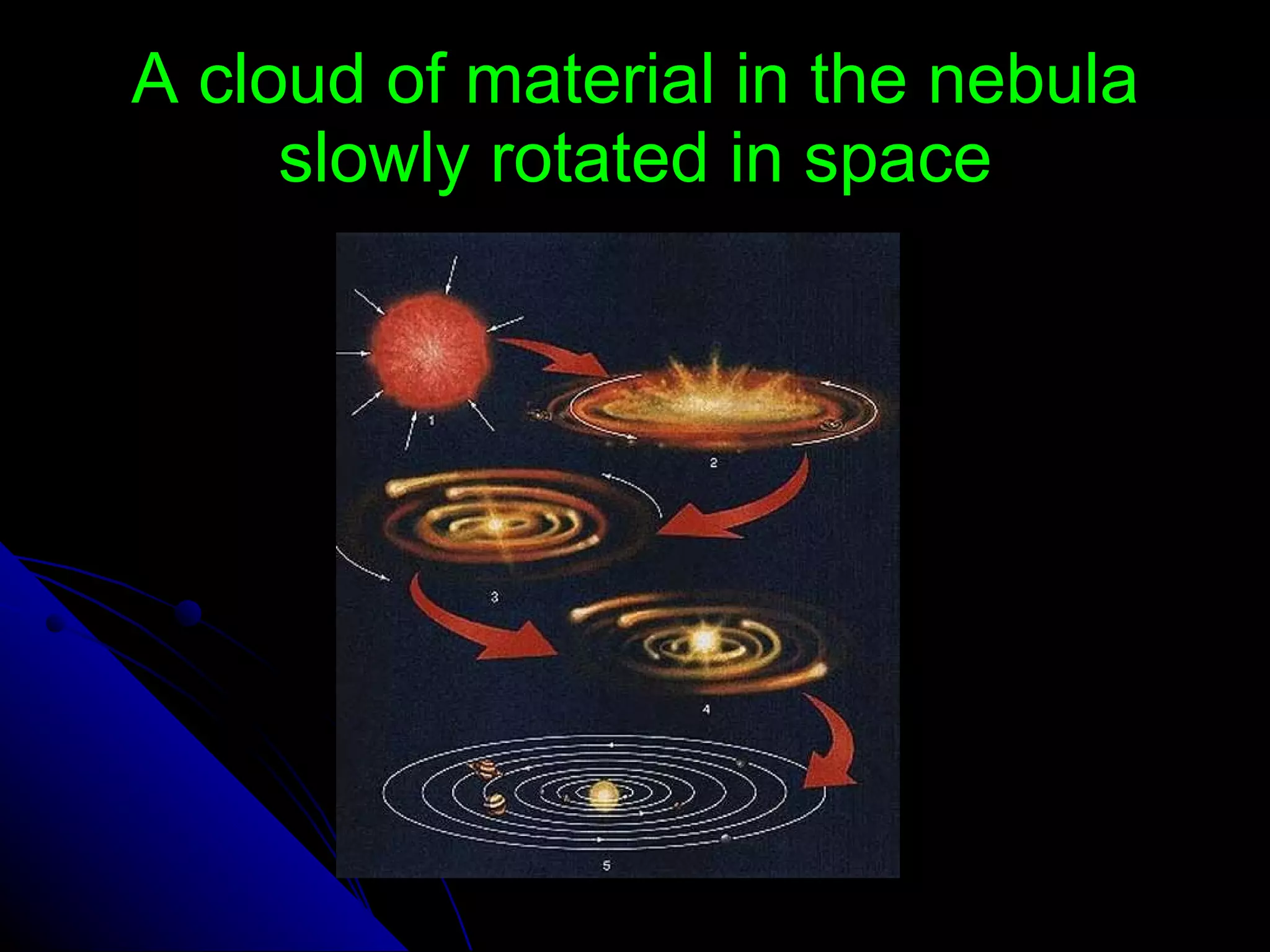
A cloud of material in the nebula slowly rotated in space
 
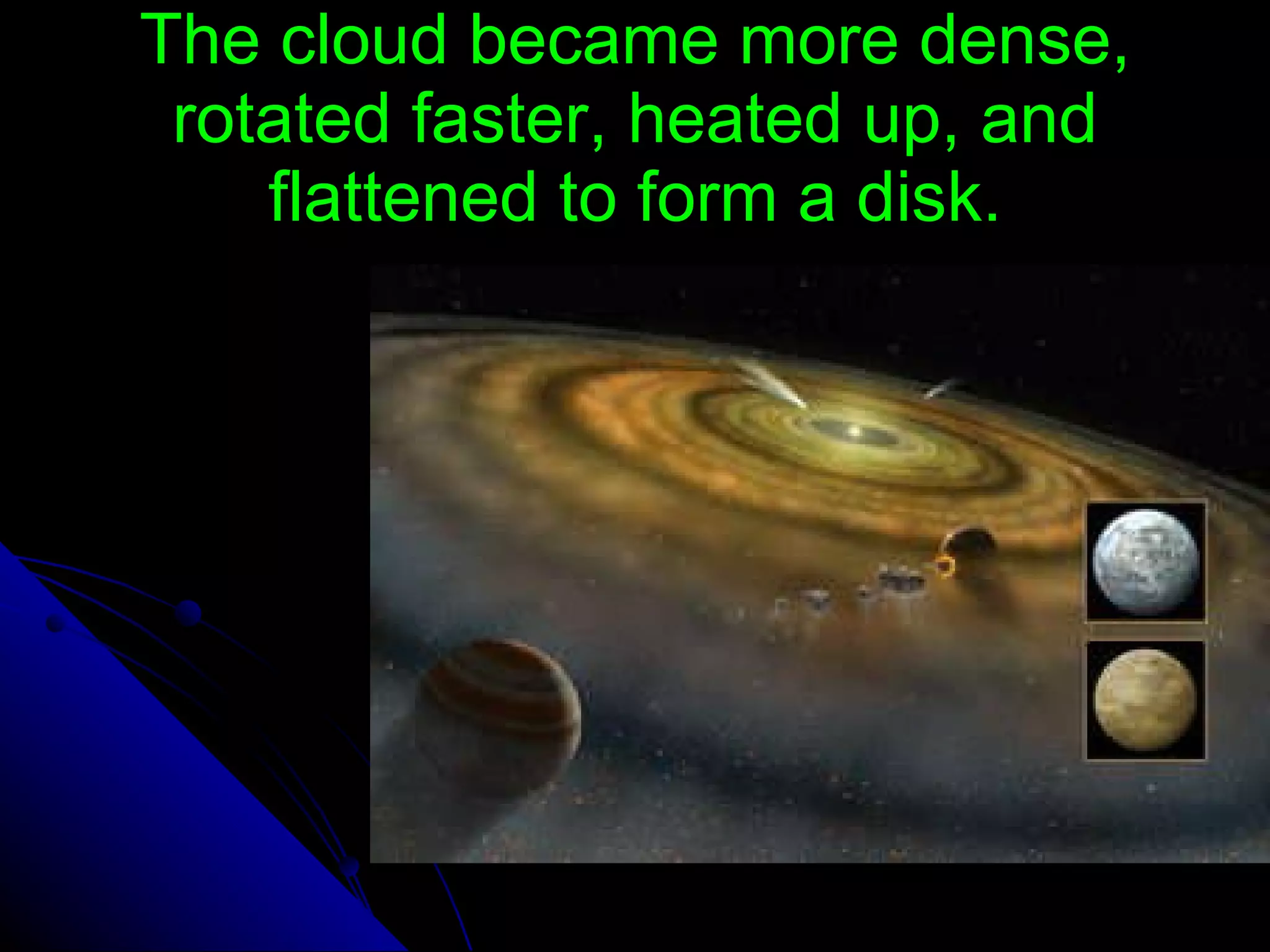
The cloud became more dense, rotated faster, heated up, and flattened to form a disk.
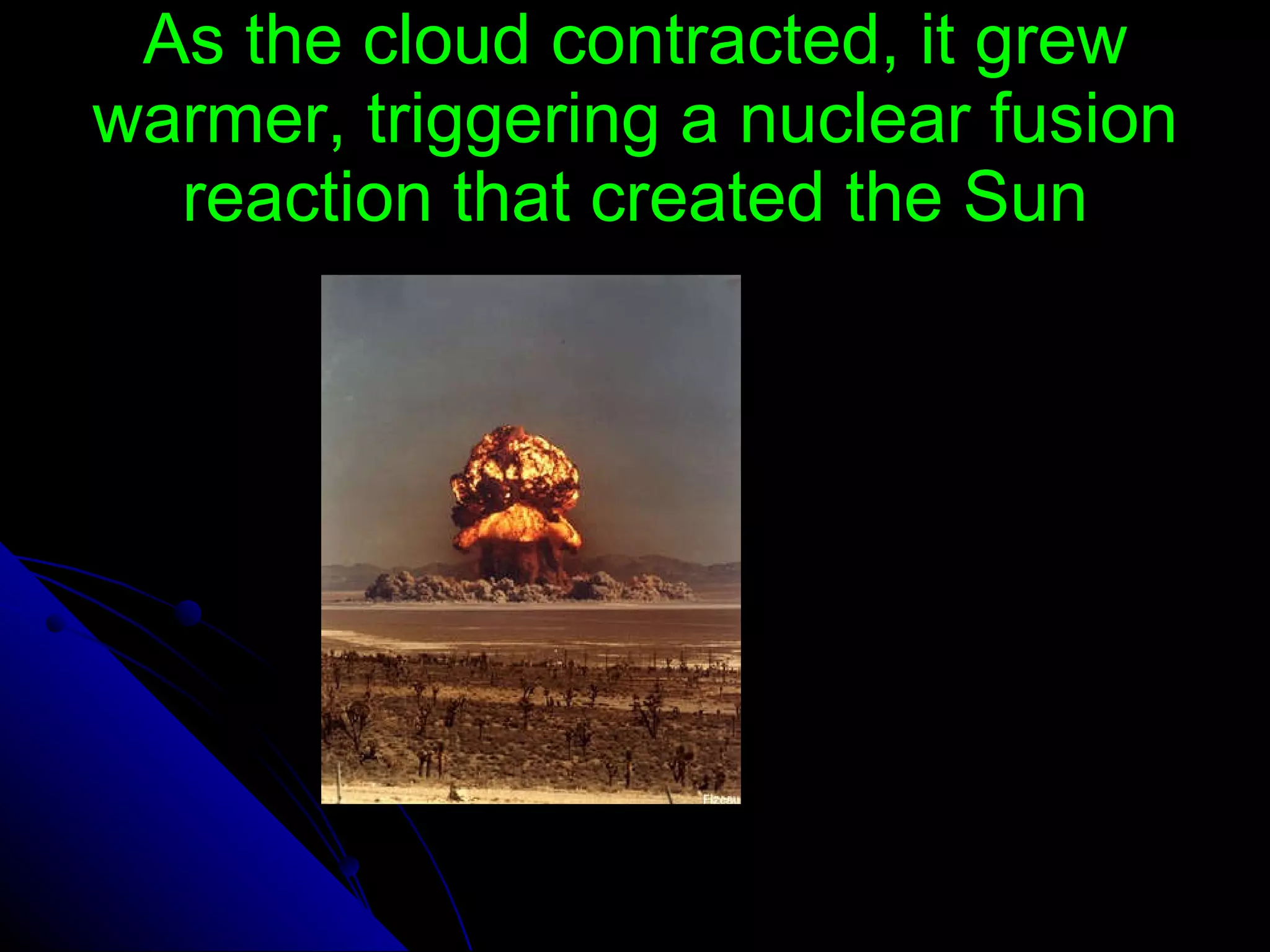
As the cloud contracted, it grew warmer, triggering a nuclear fusion reaction that created the Sun
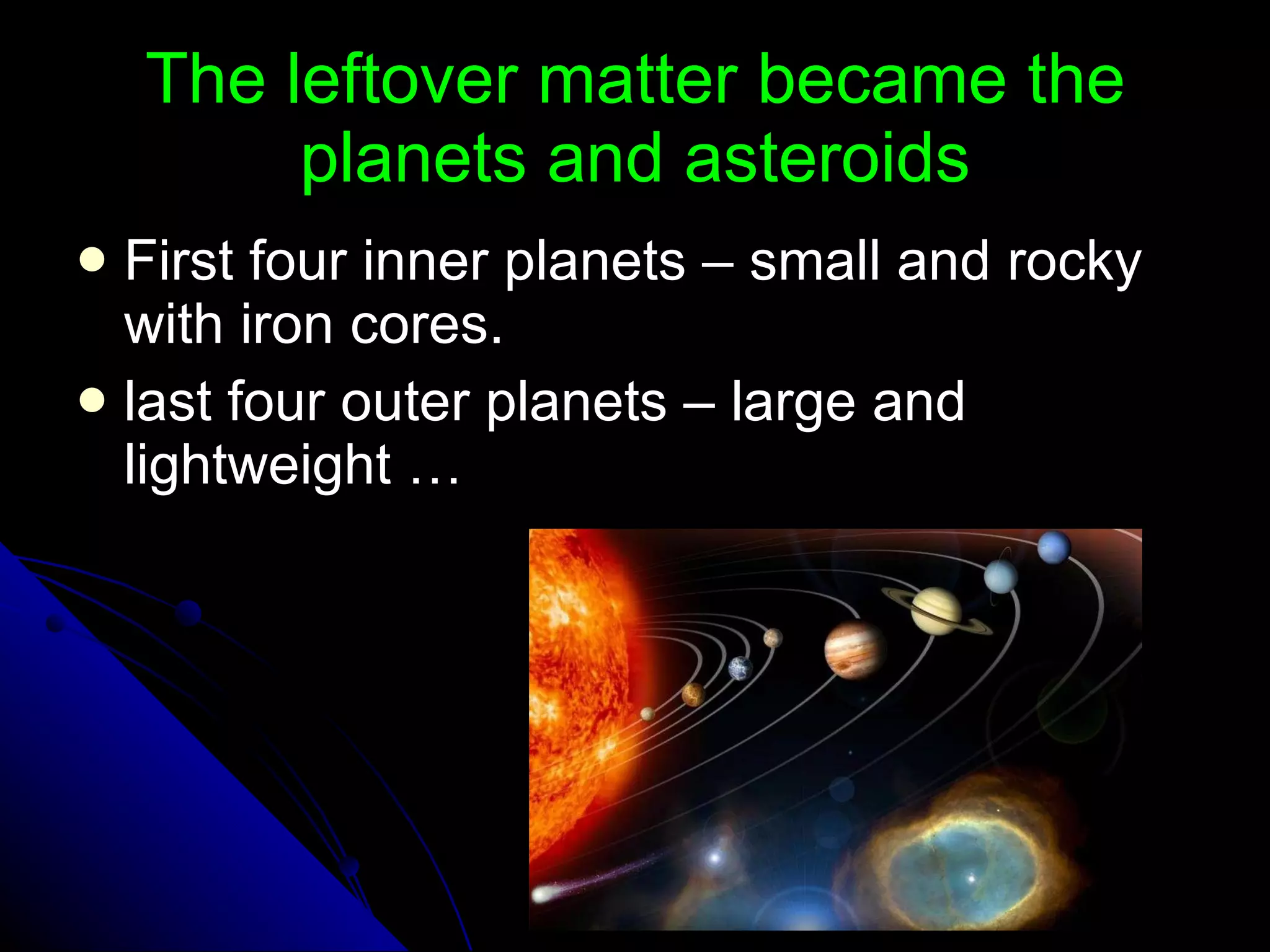
The leftover matter became the planets and asteroids First four inner planets – small and rocky with iron cores. last four outer planets – large and lightweight …
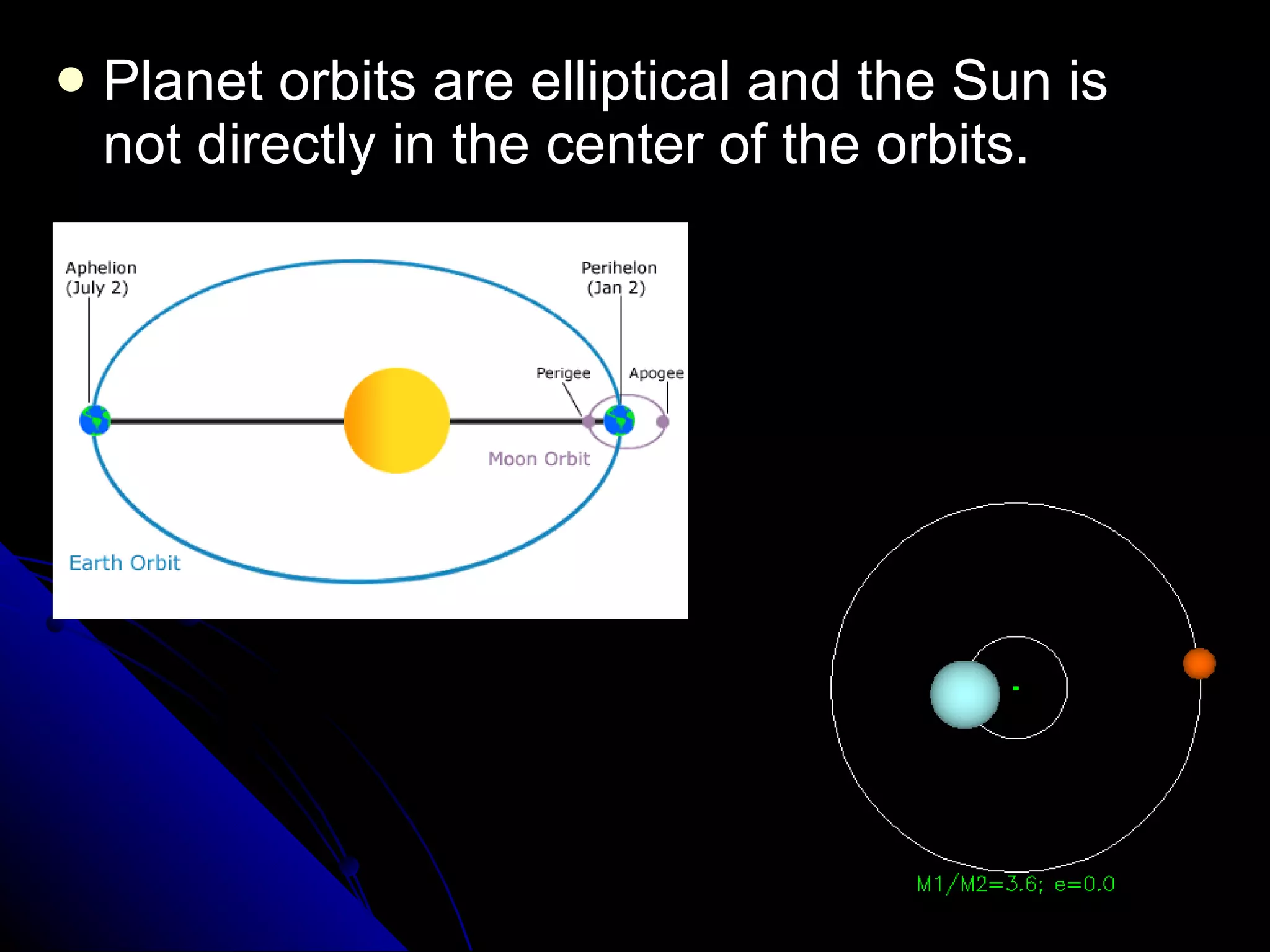
Planet orbits are elliptical and the Sun is not directly in the center of the orbits.
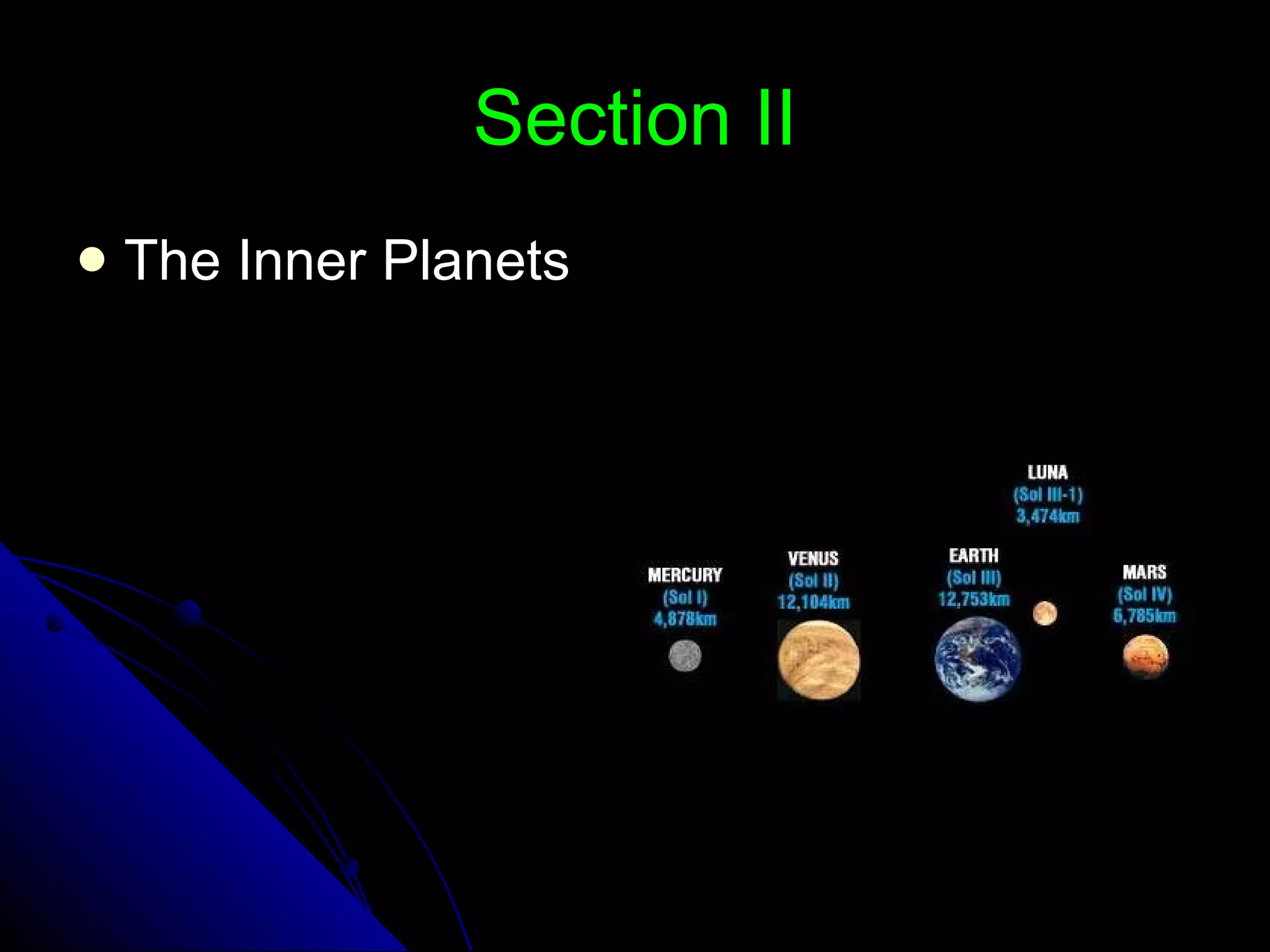
Section II The Inner Planets
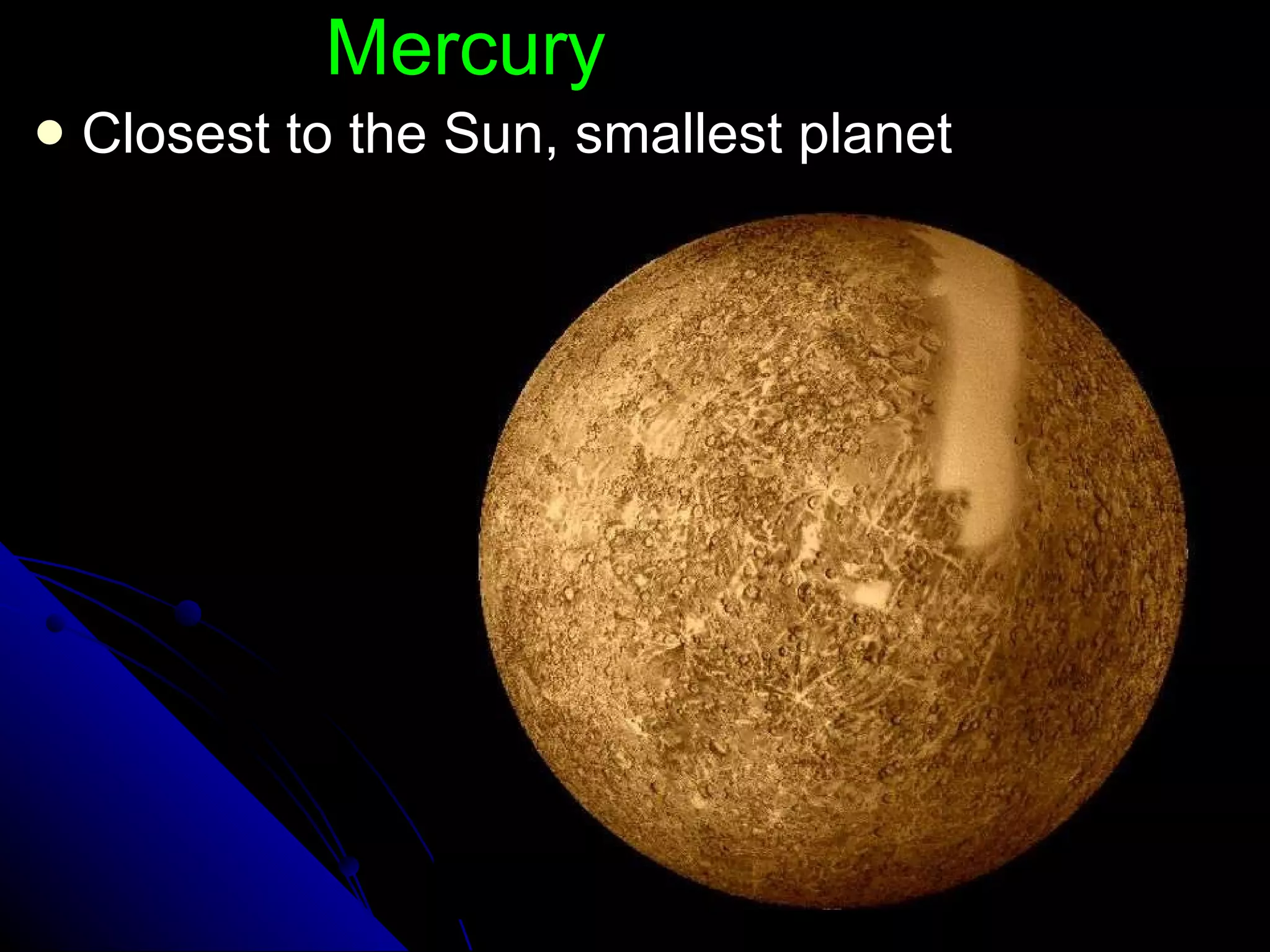
Mercury Closest to the Sun, smallest planet
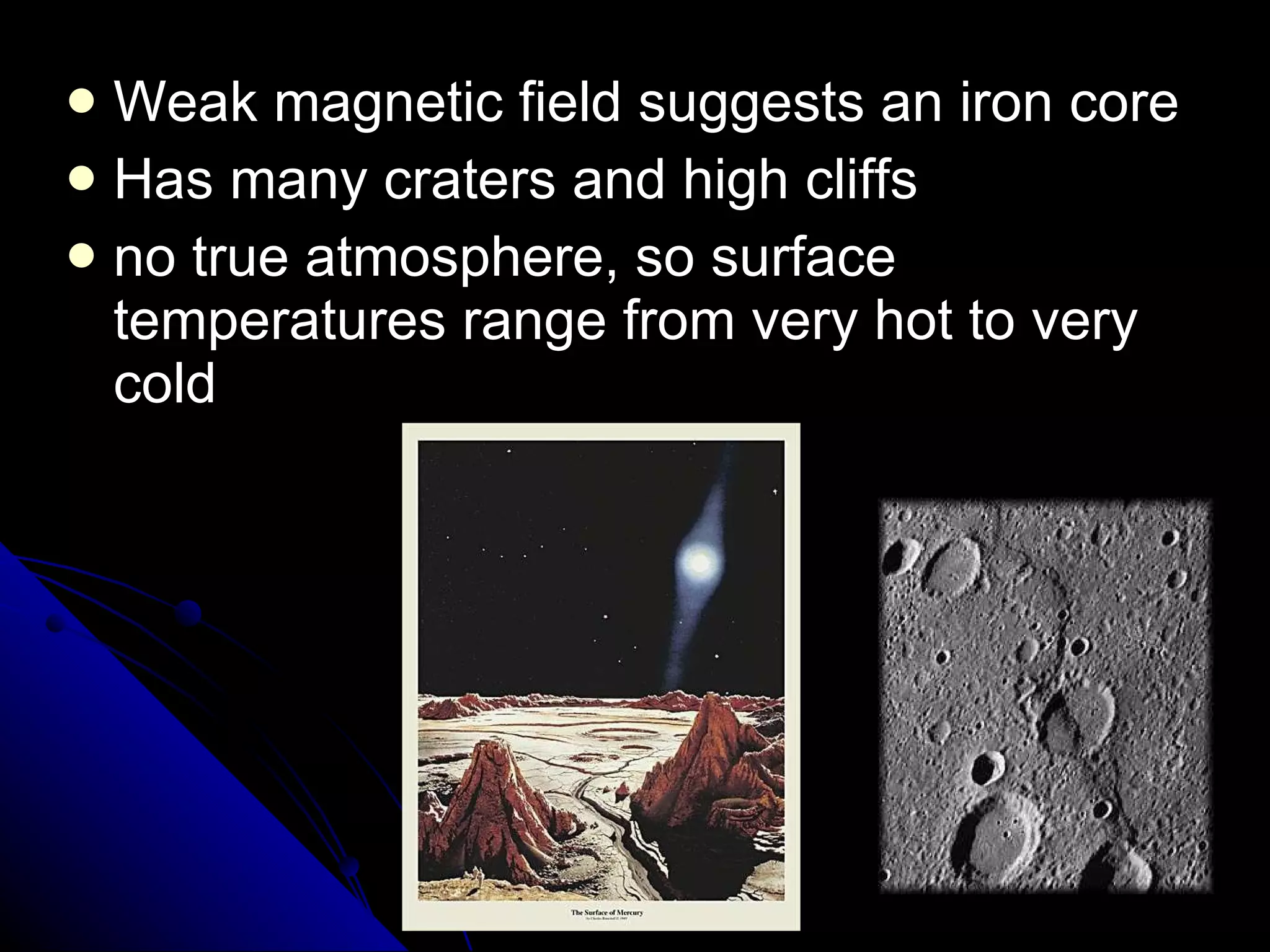
Weak magnetic field suggests an iron core Has many craters and high cliffs no true atmosphere, so surface temperatures range from very hot to very cold
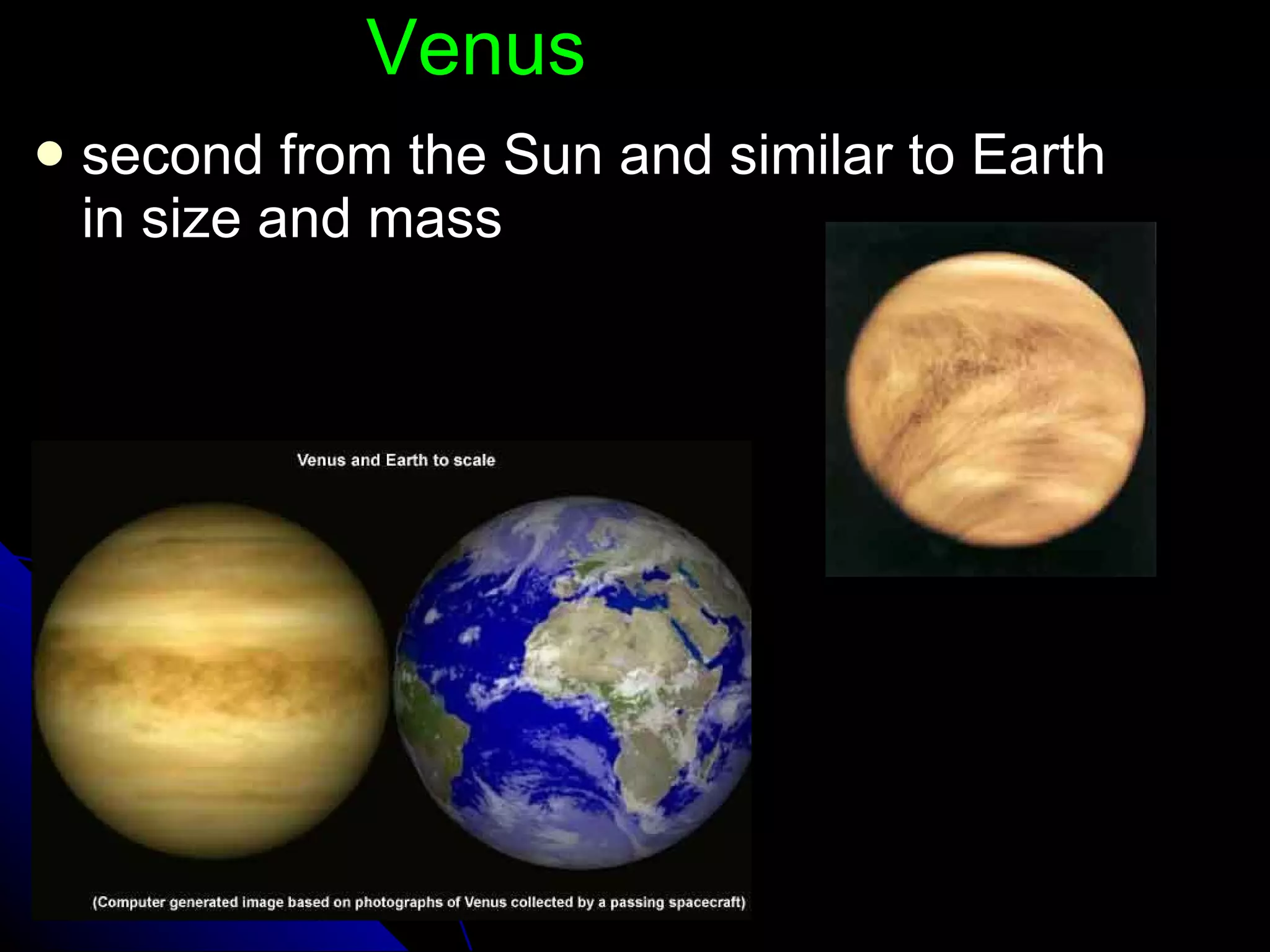
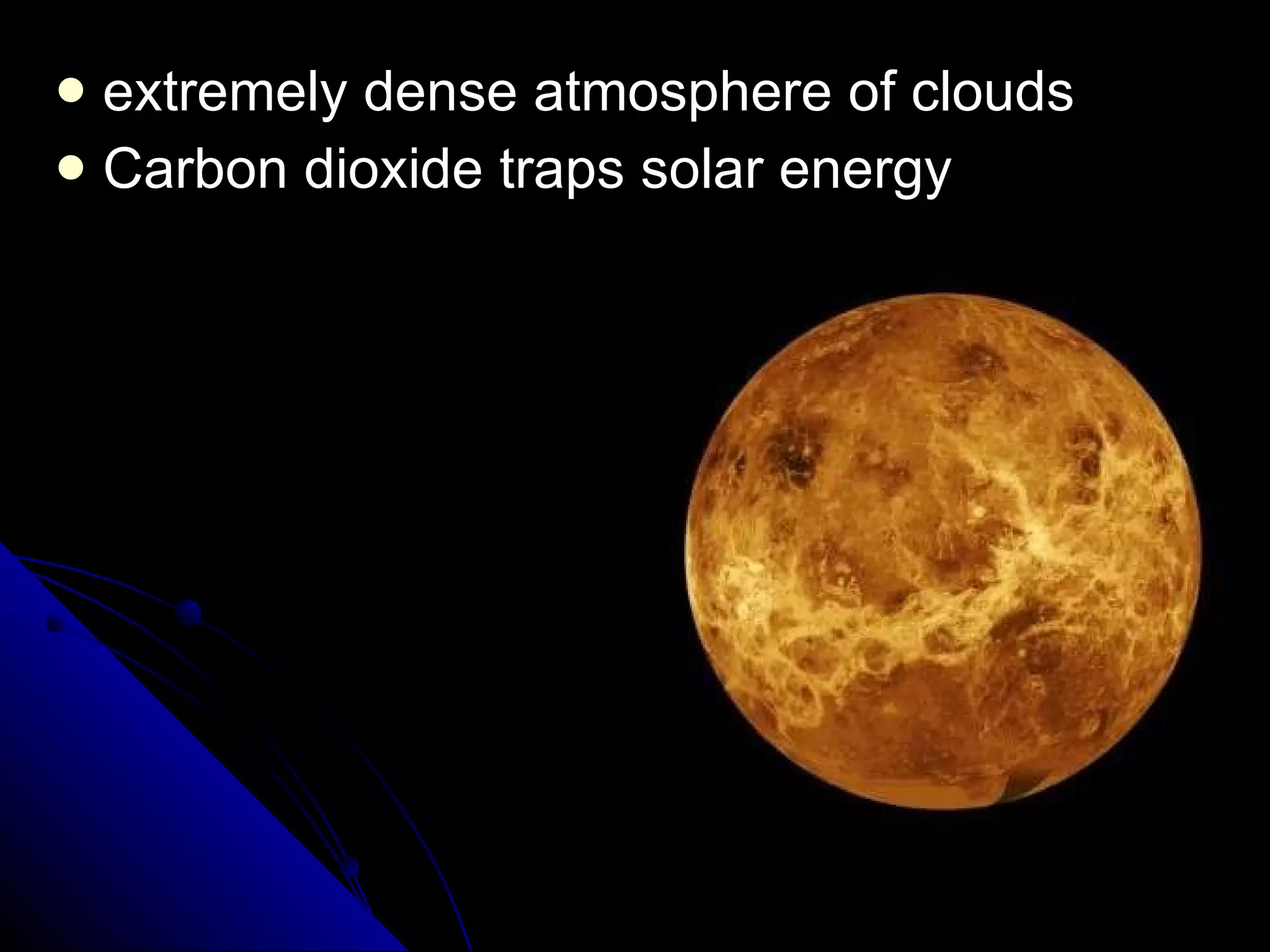
Venus second from the Sun and similar to Earth in size and mass
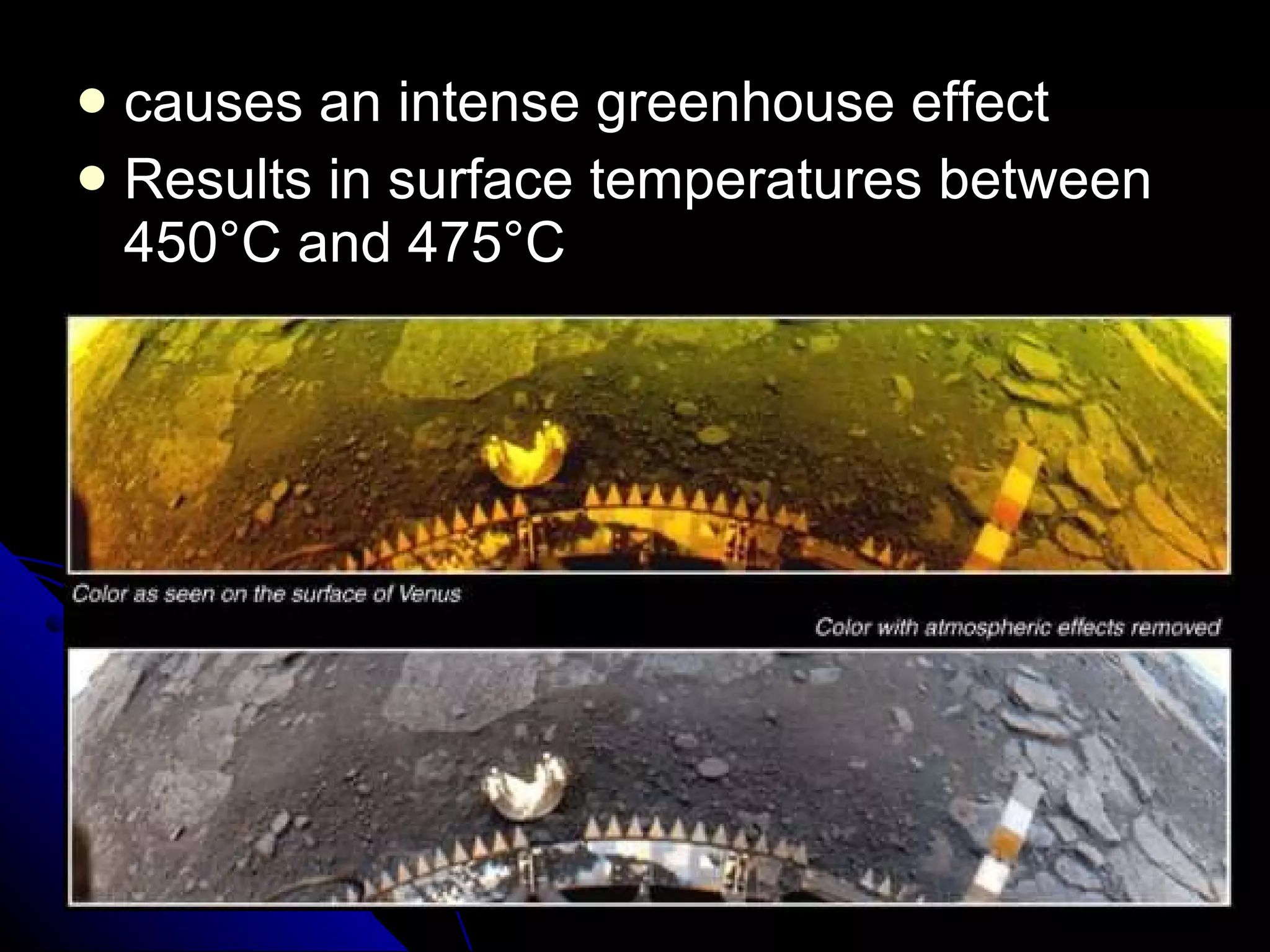
extremely dense atmosphere of clouds Carbon dioxide traps solar energy
causes an intense greenhouse effect Results in surface temperatures between 450 °C and 475°C
Earth average distance between Earth and the Sun is 150 million km Water exists on surface as solid, liquid, and gas
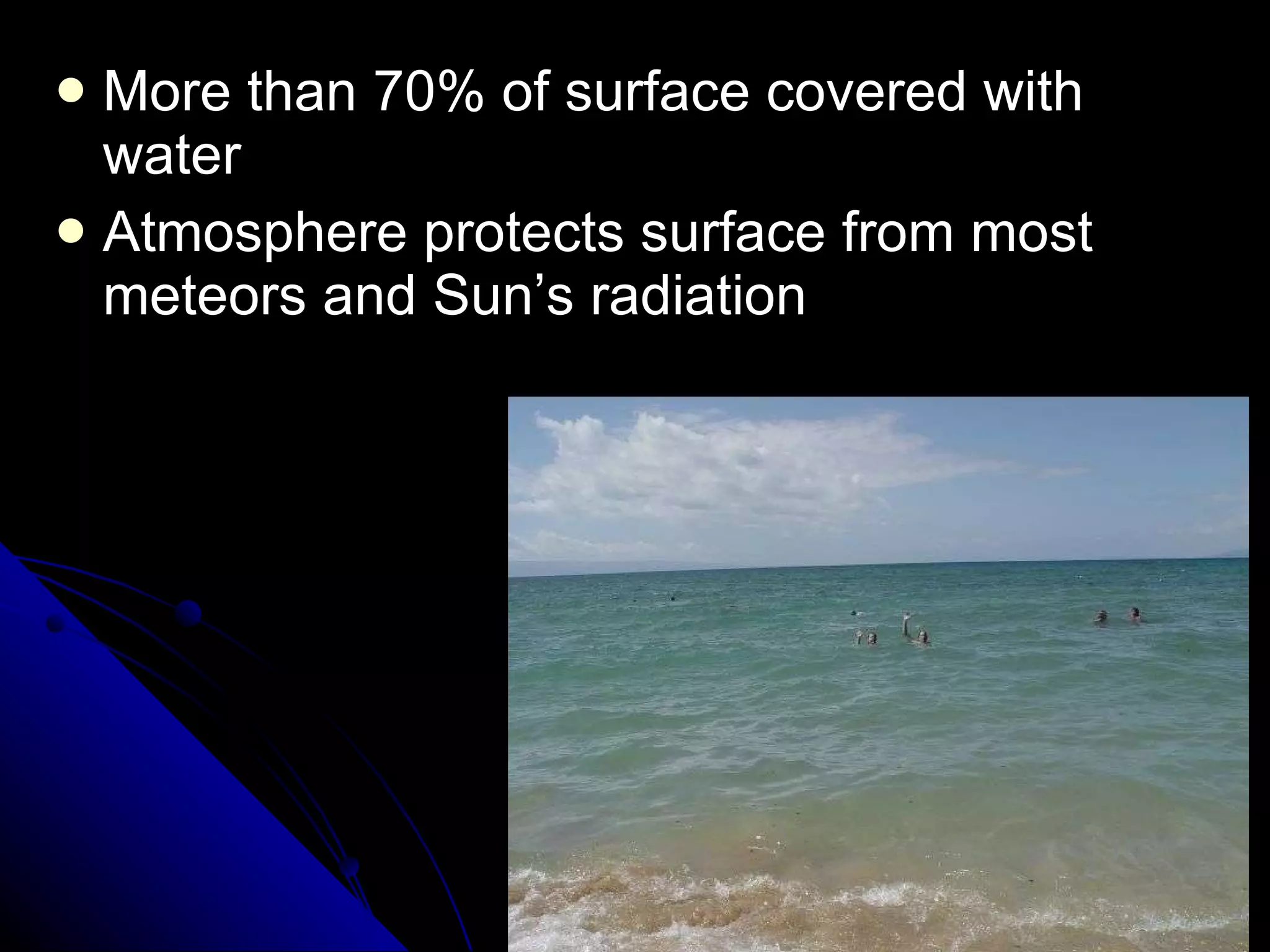
More than 70% of surface covered with water Atmosphere protects surface from most meteors and Sun’s radiation
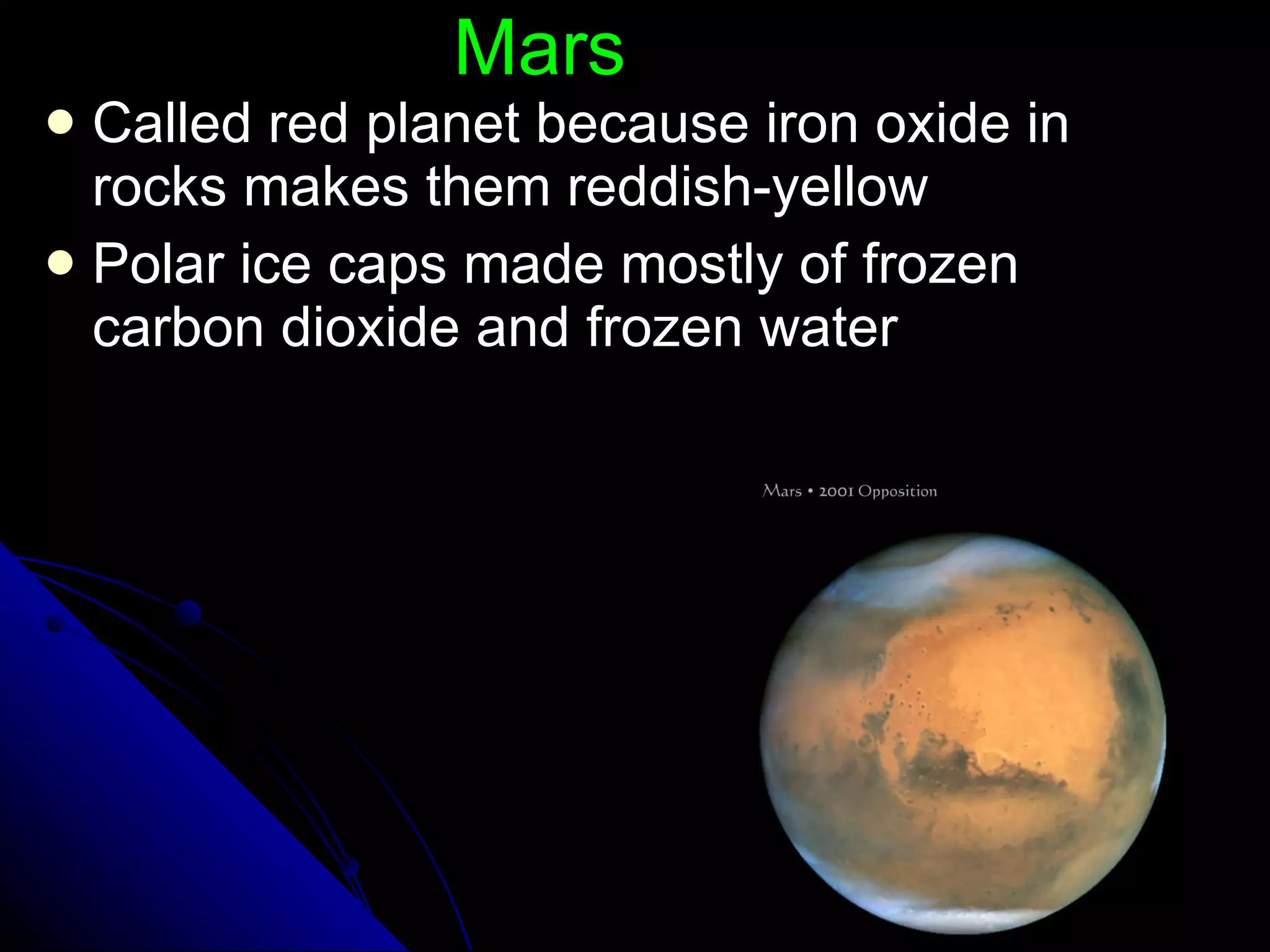
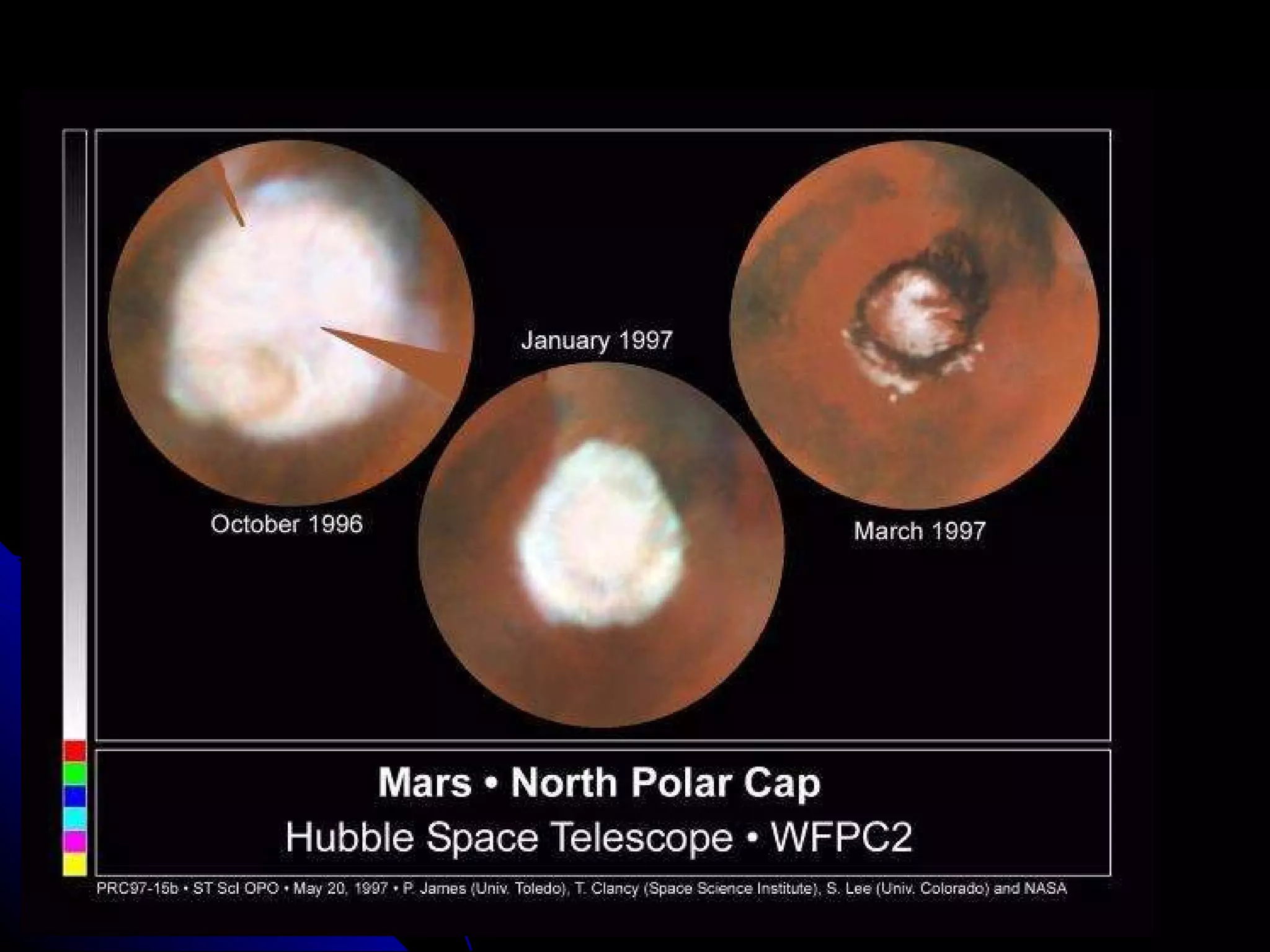
Mars Called red planet because iron oxide in rocks makes them reddish-yellow Polar ice caps made mostly of frozen carbon dioxide and frozen water
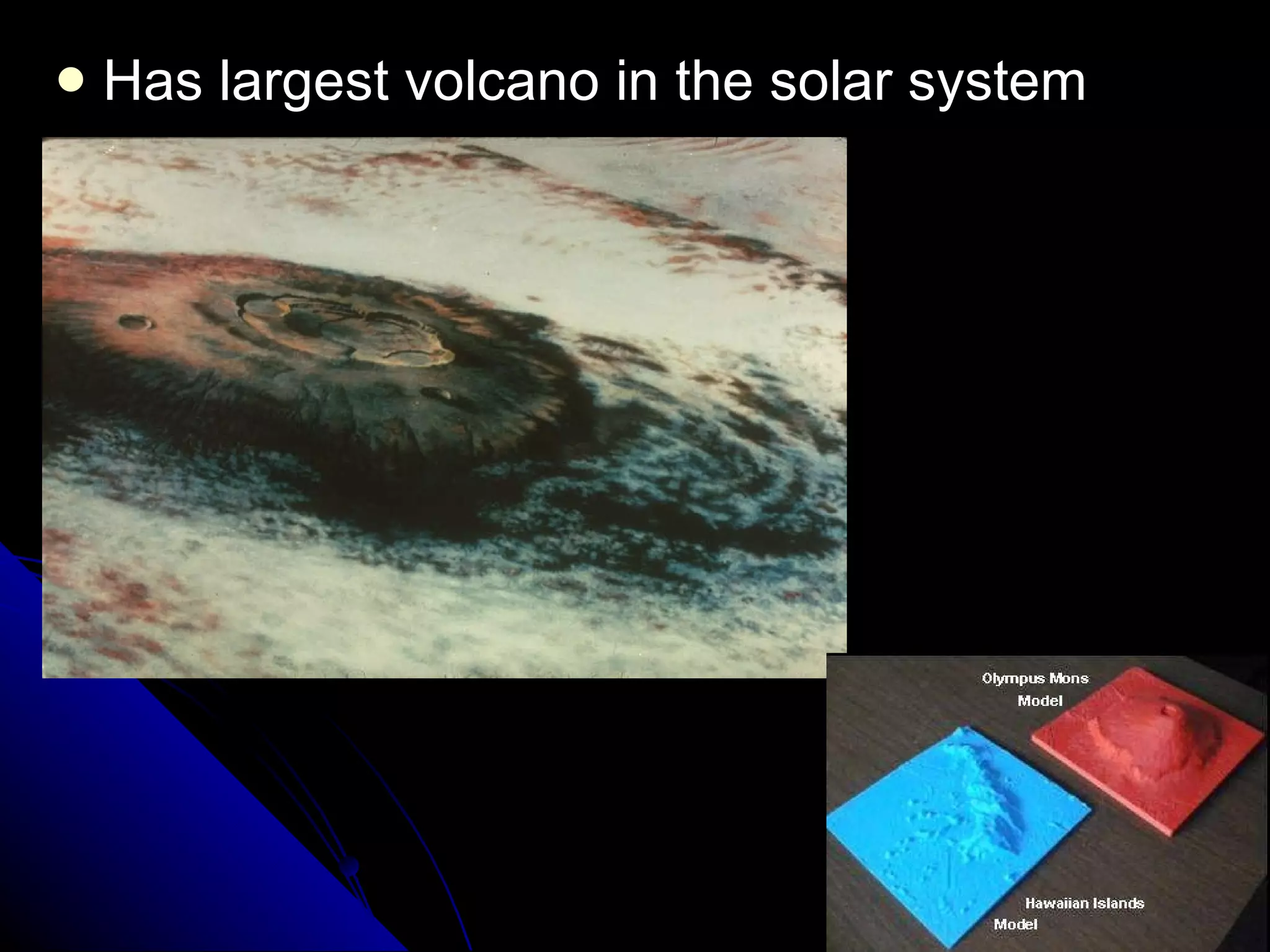
Has largest volcano in the solar system
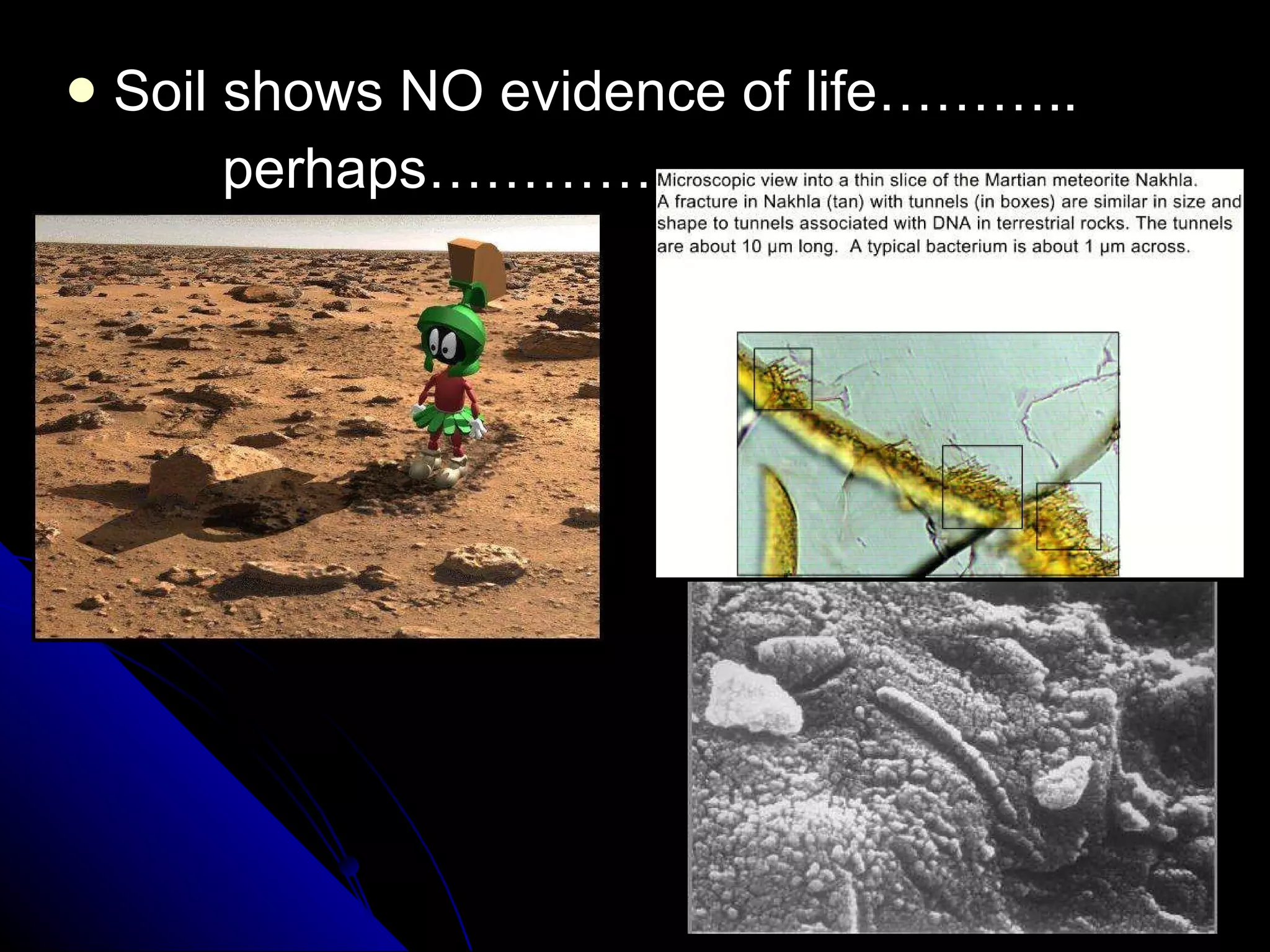
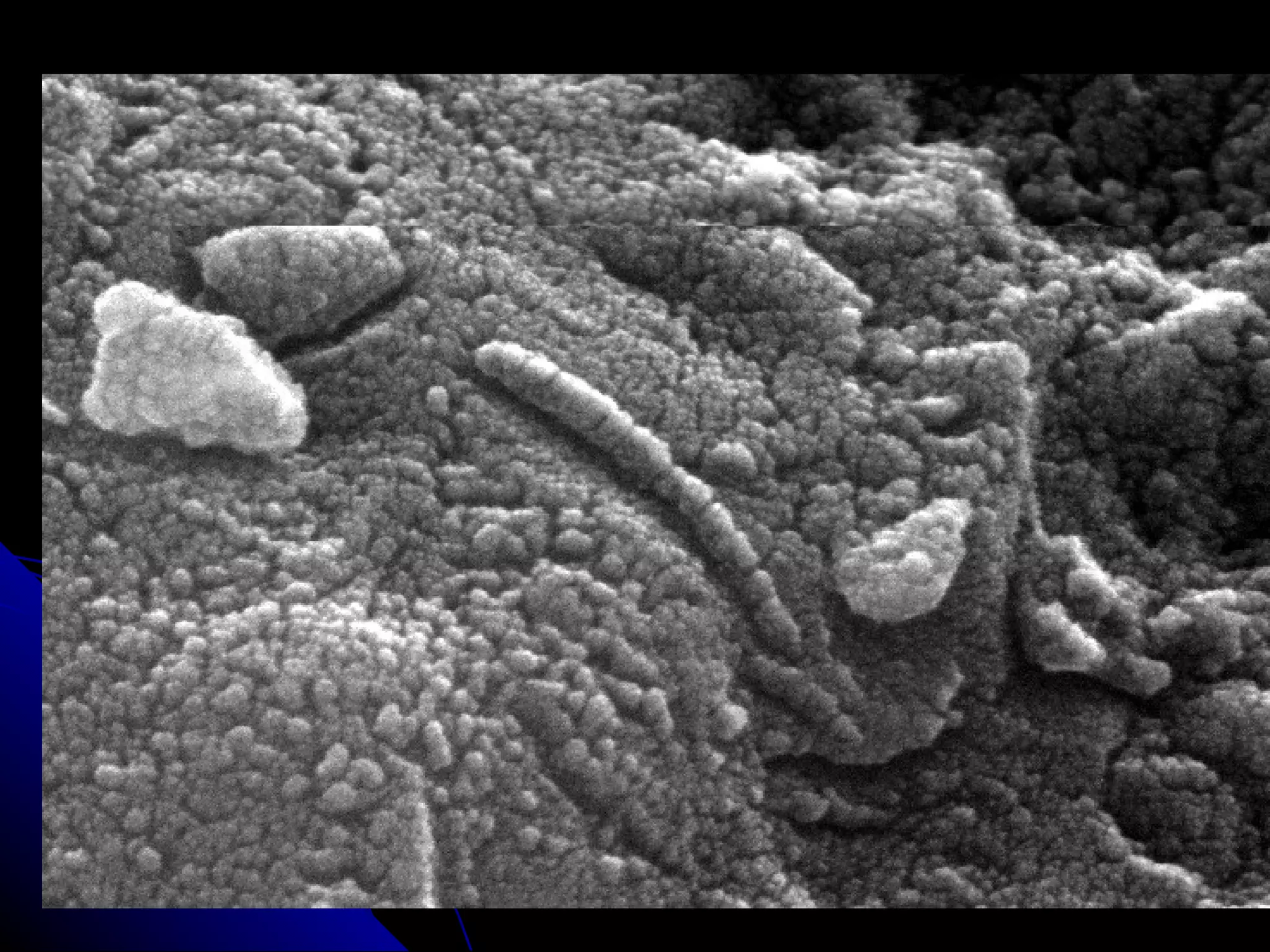
Soil shows NO evidence of life……….. perhaps……………
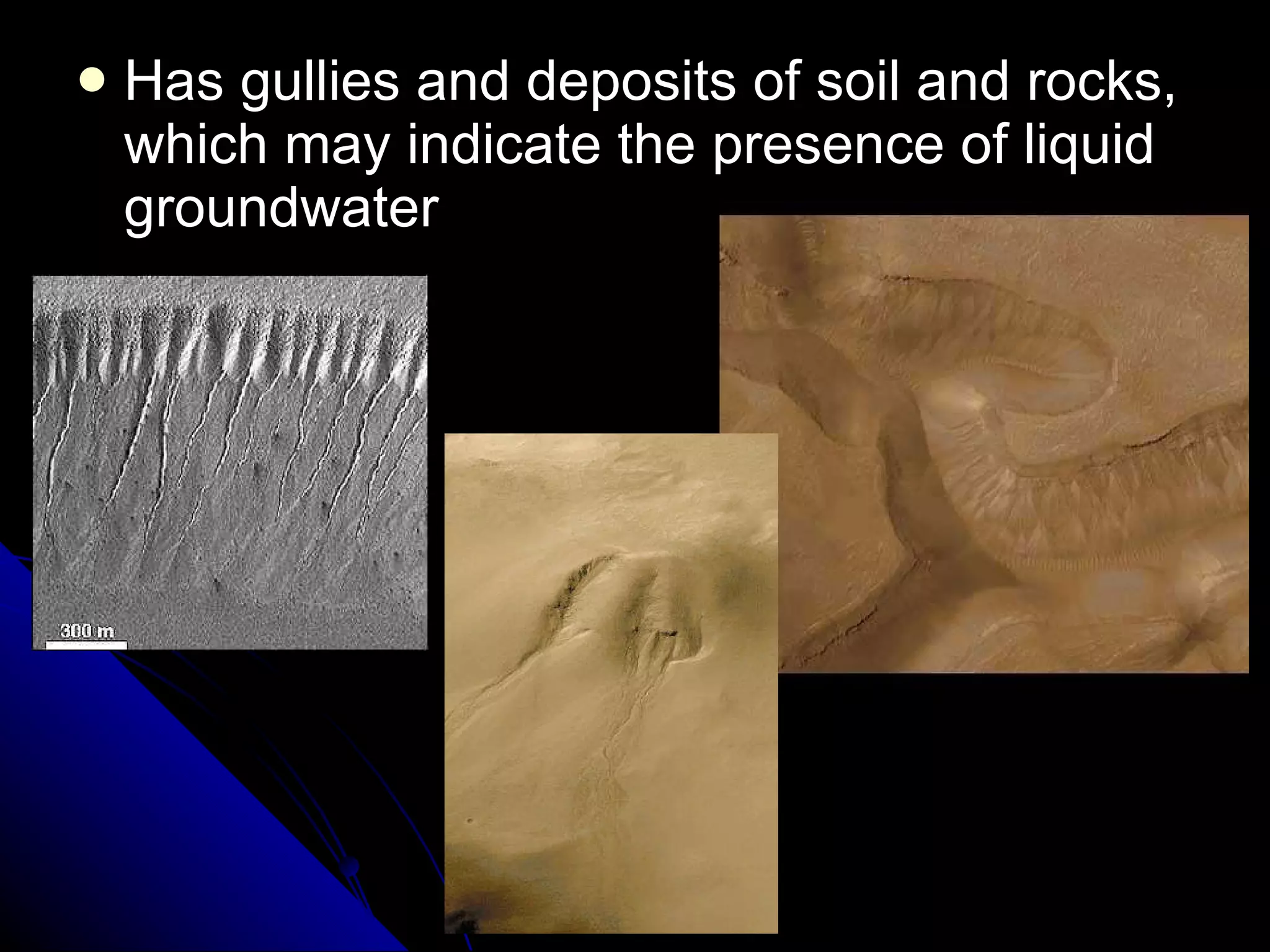
Has gullies and deposits of soil and rocks, which may indicate the presence of liquid groundwater
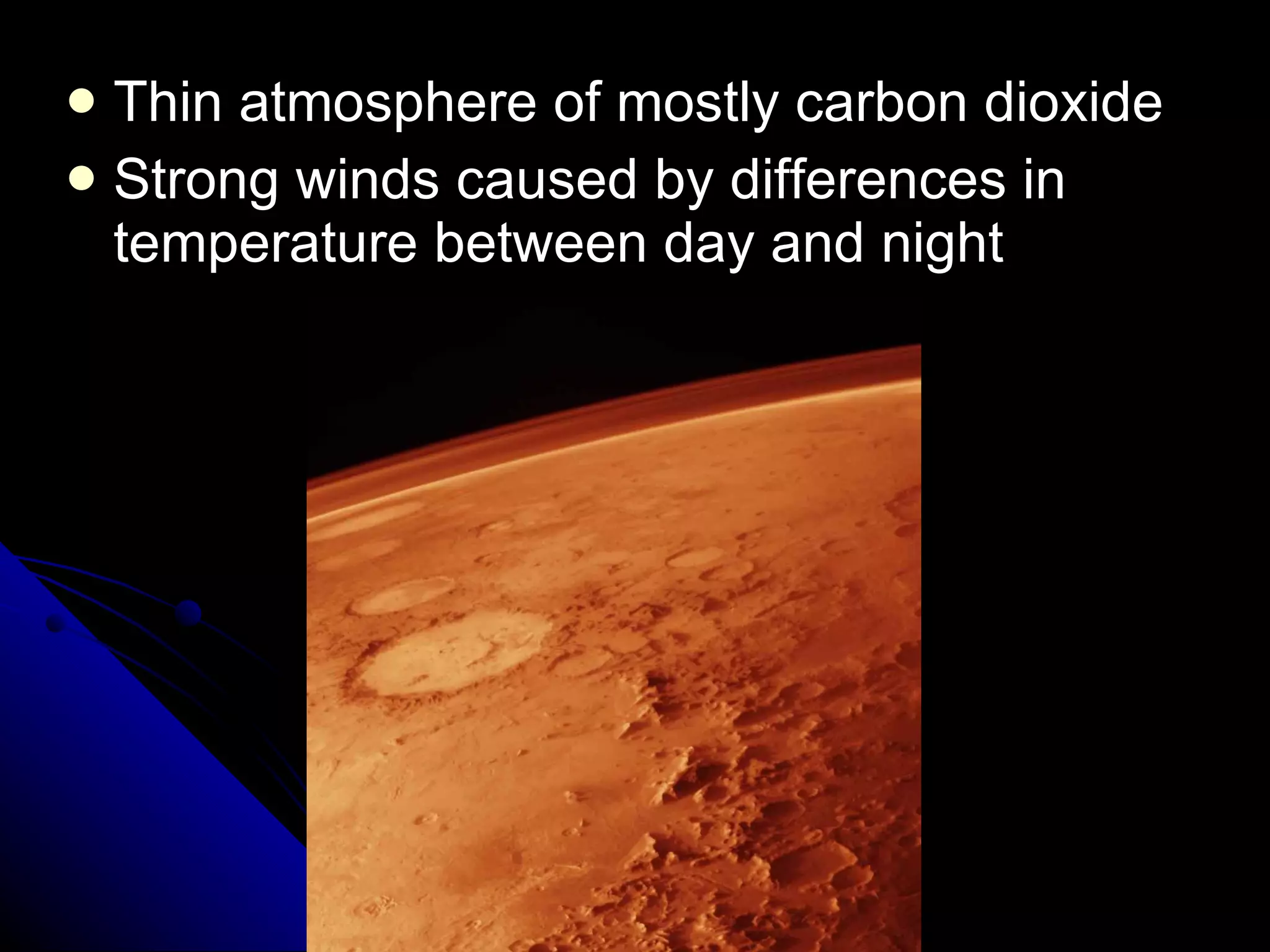
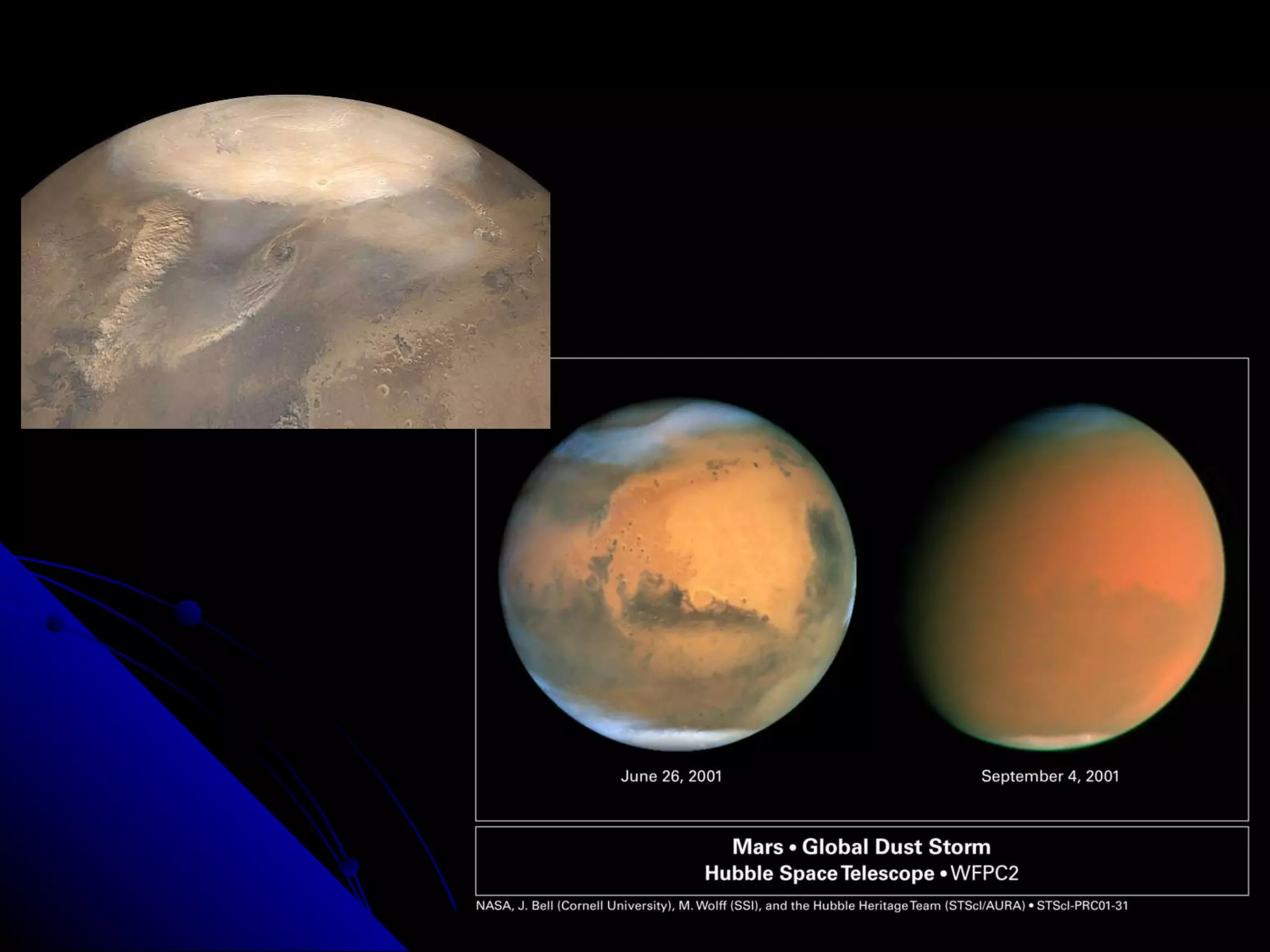
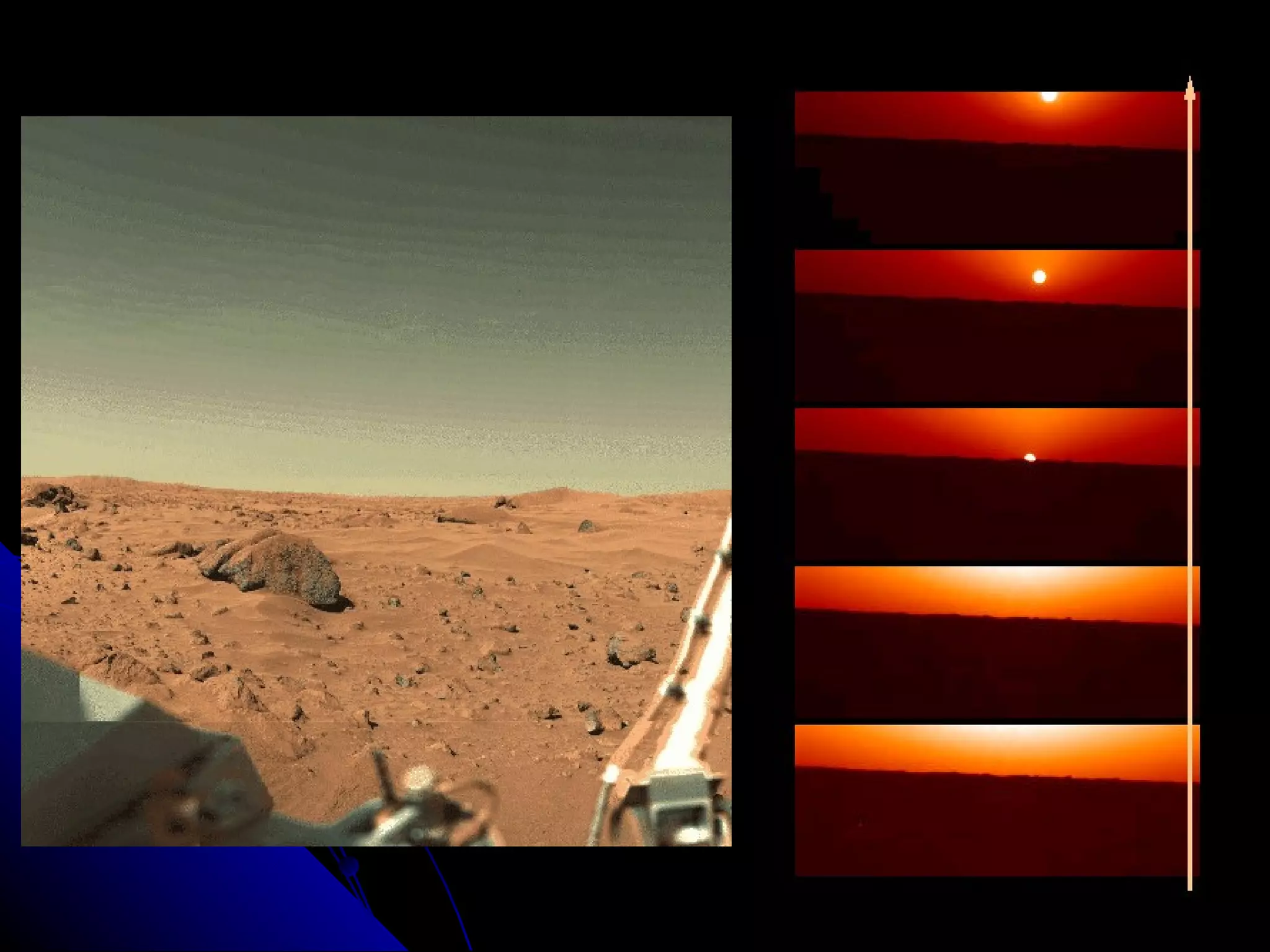
Thin atmosphere of mostly carbon dioxide Strong winds caused by differences in temperature between day and night
 
 
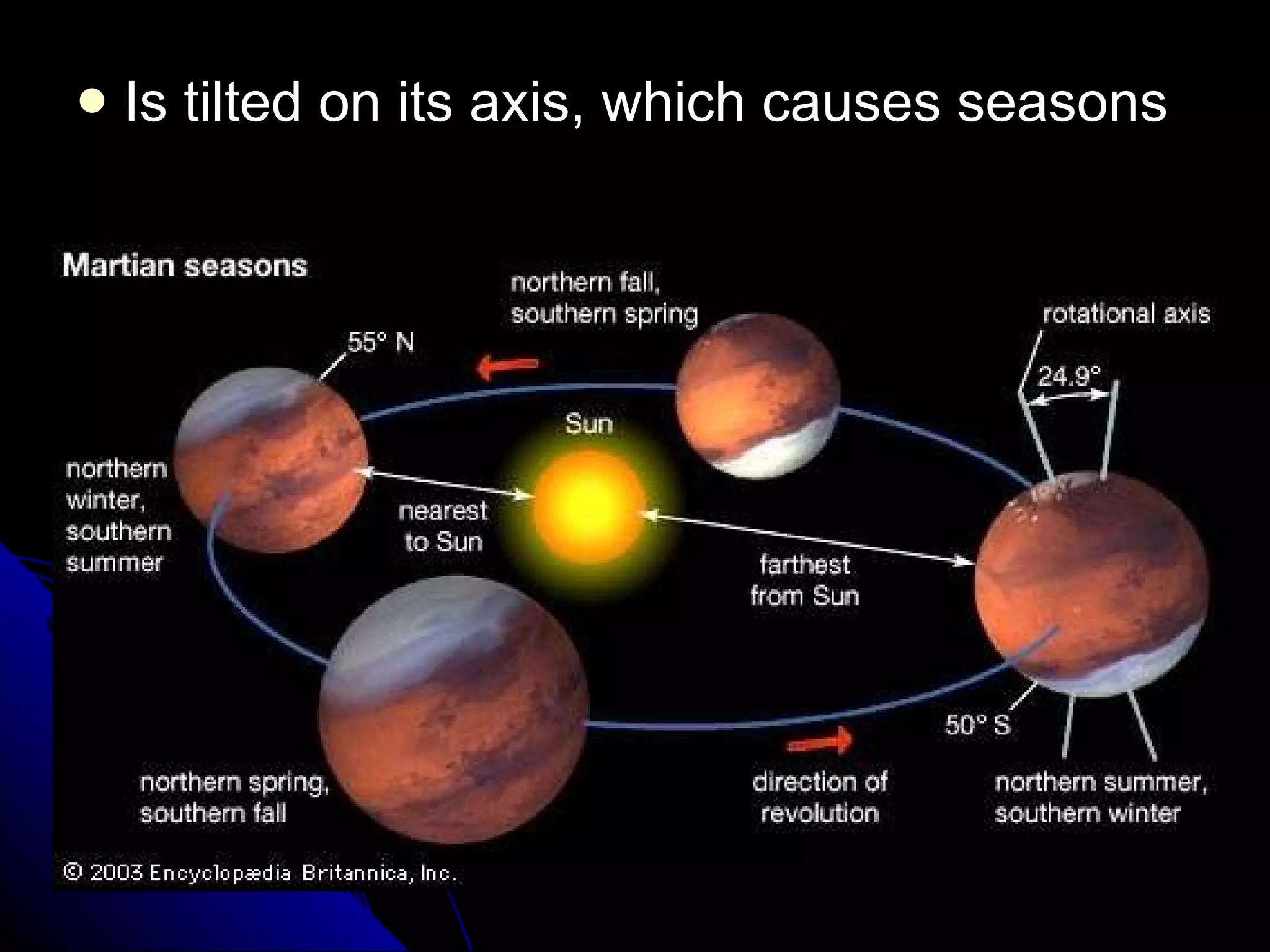
Is tilted on its axis, which causes seasons
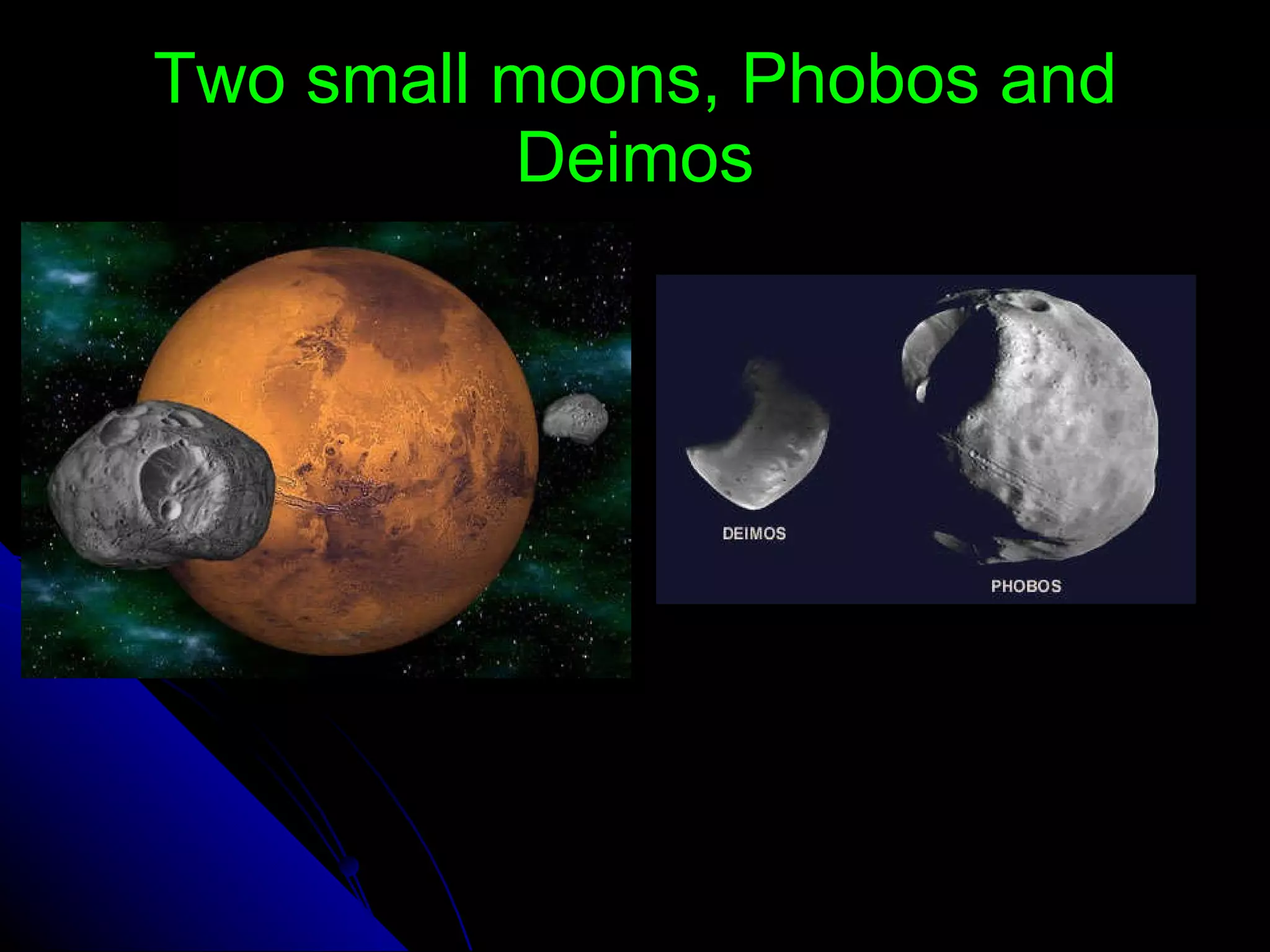
Two small moons, Phobos and Deimos
 
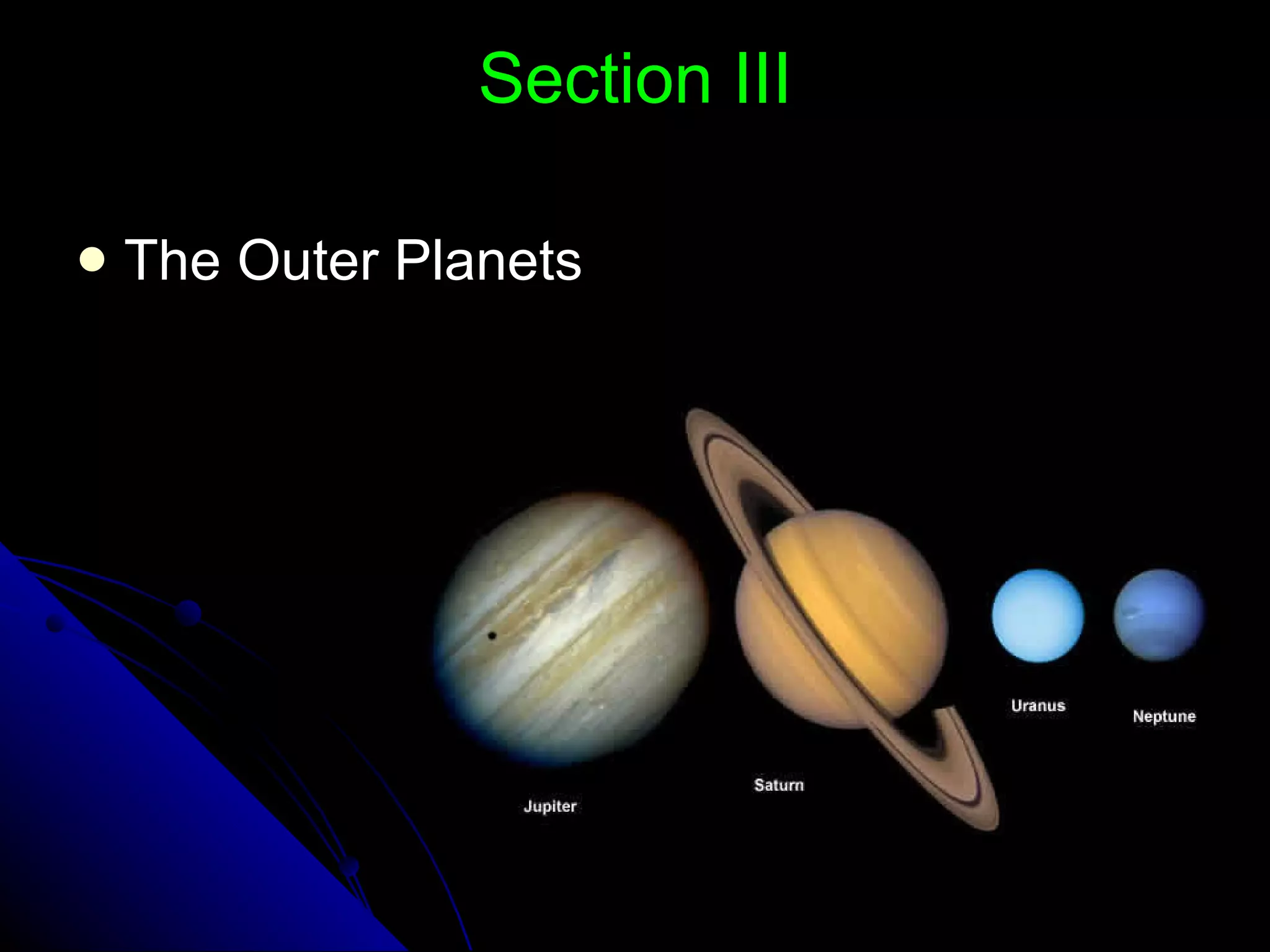
Section III The Outer Planets
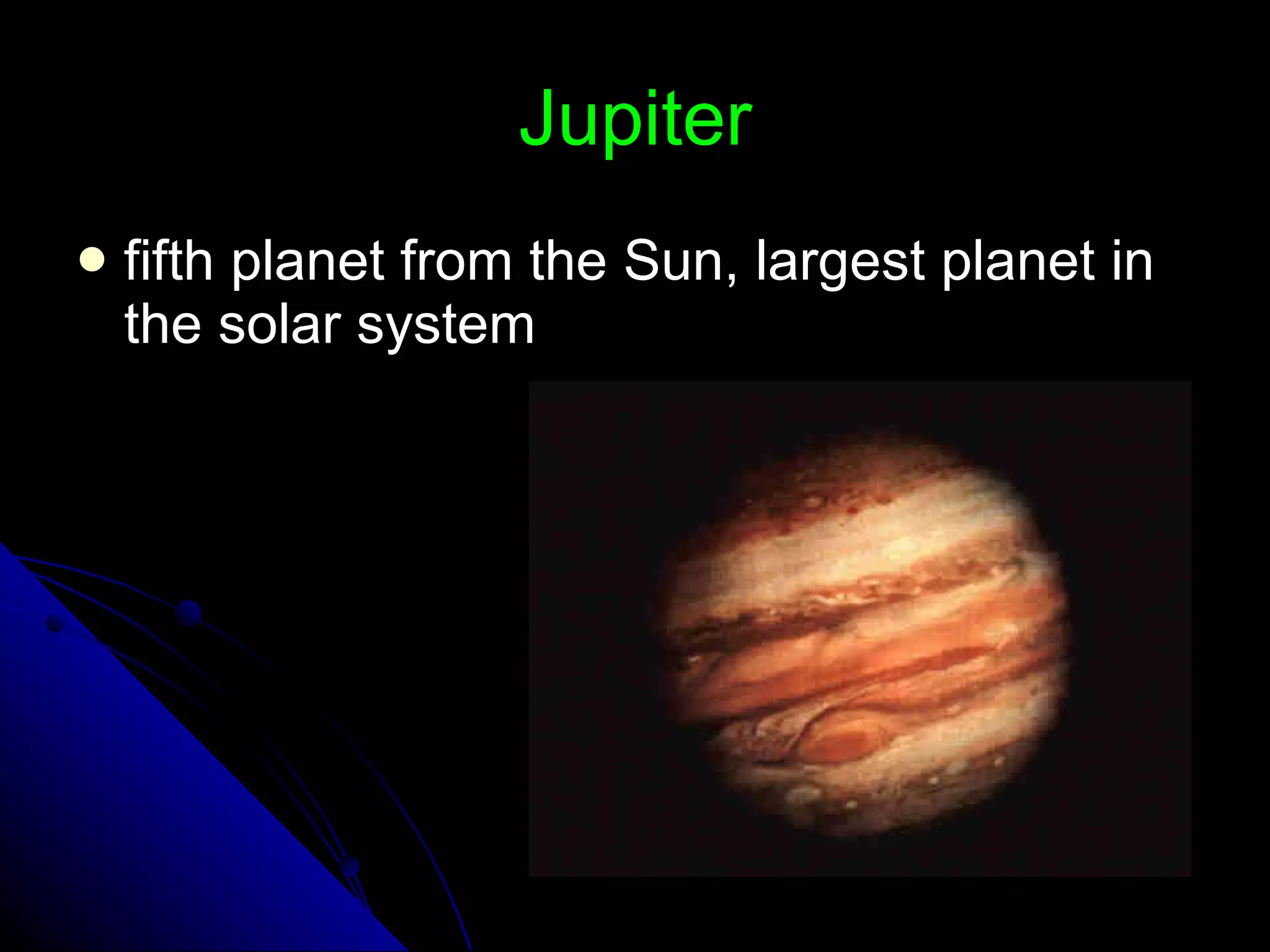
Jupiter fifth planet from the Sun, largest planet in the solar system
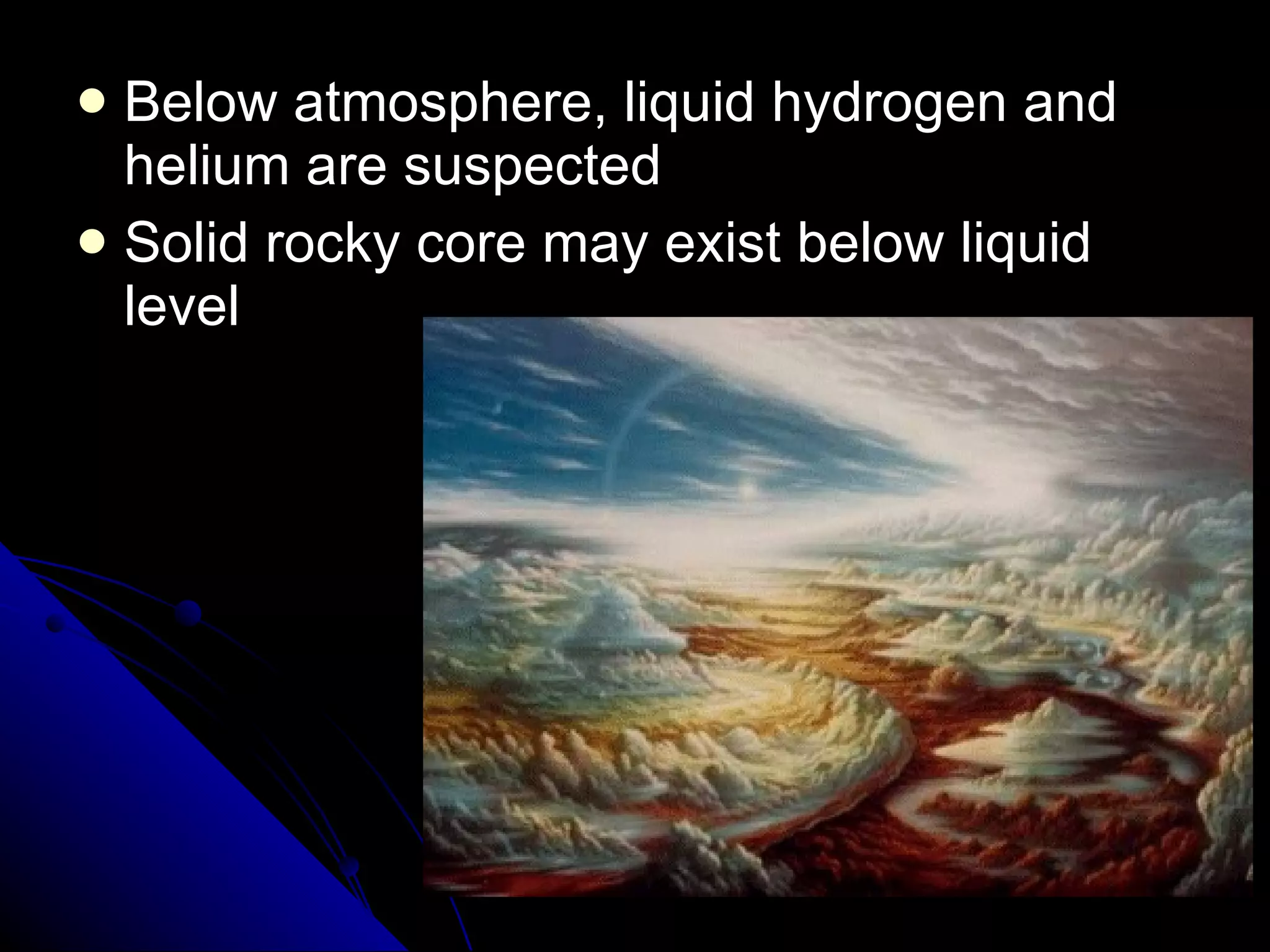
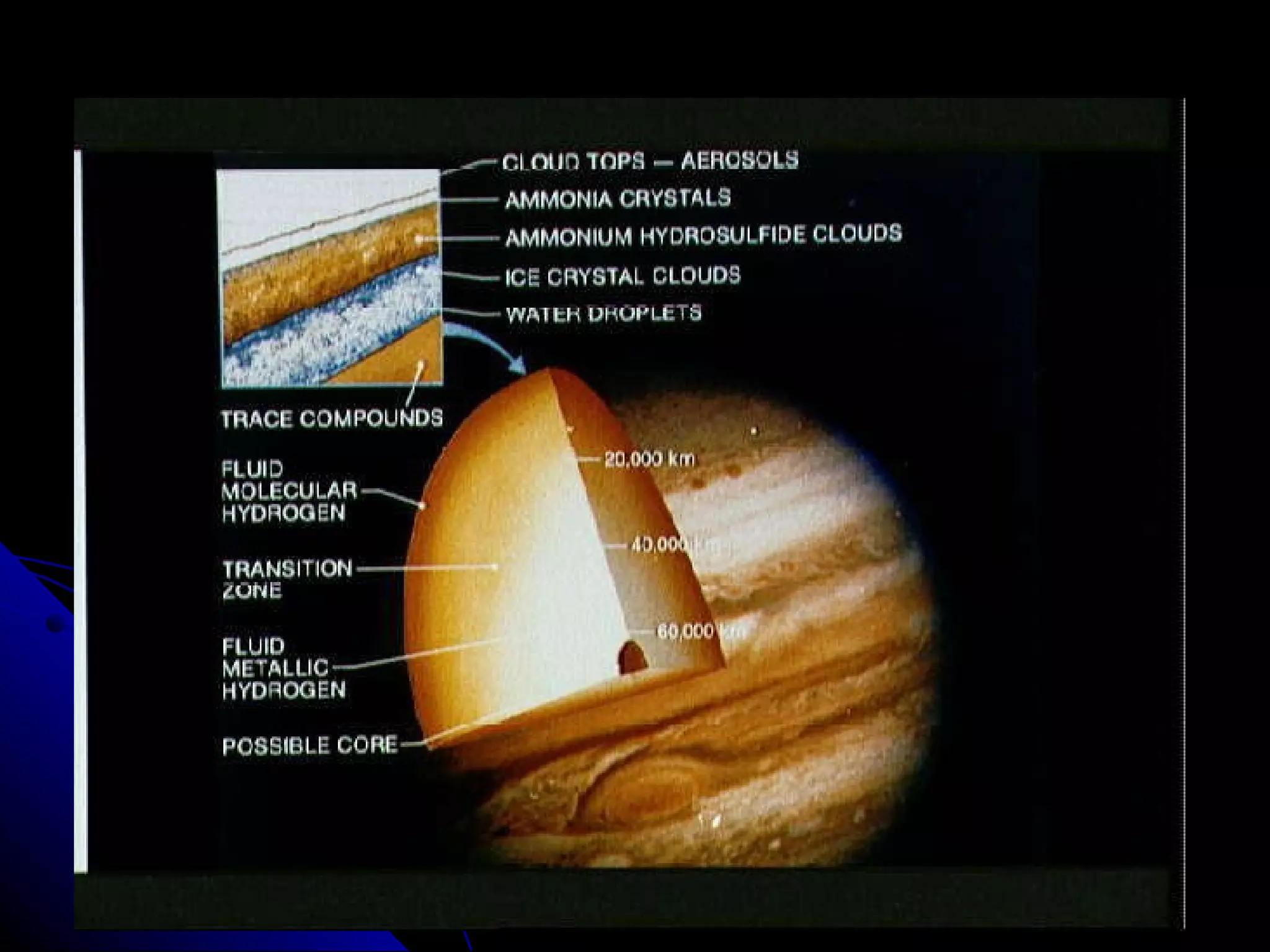
Below atmosphere, liquid hydrogen and helium are suspected Solid rocky core may exist below liquid level
 
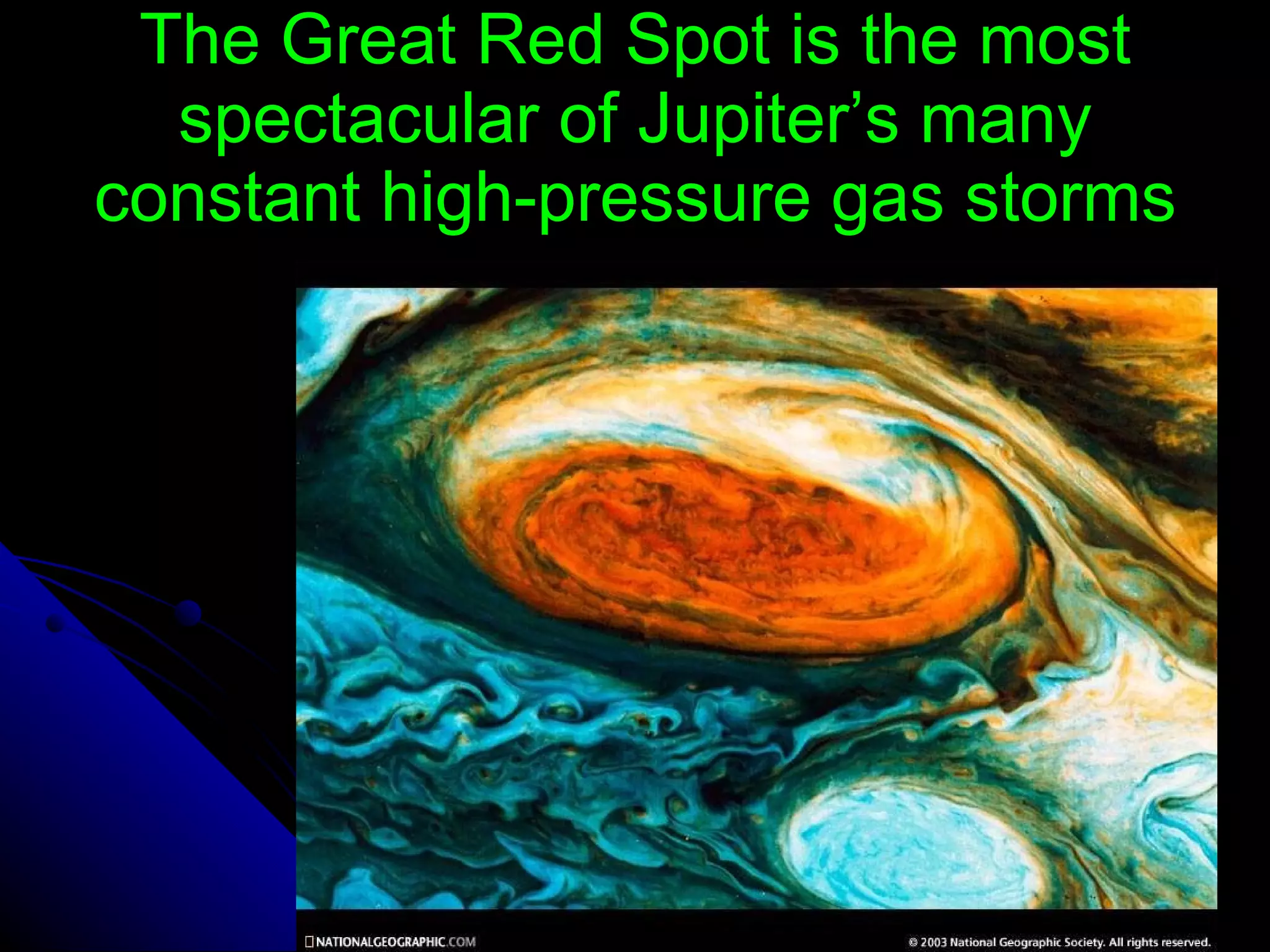
The Great Red Spot is the most spectacular of Jupiter’s many constant high-pressure gas storms
 
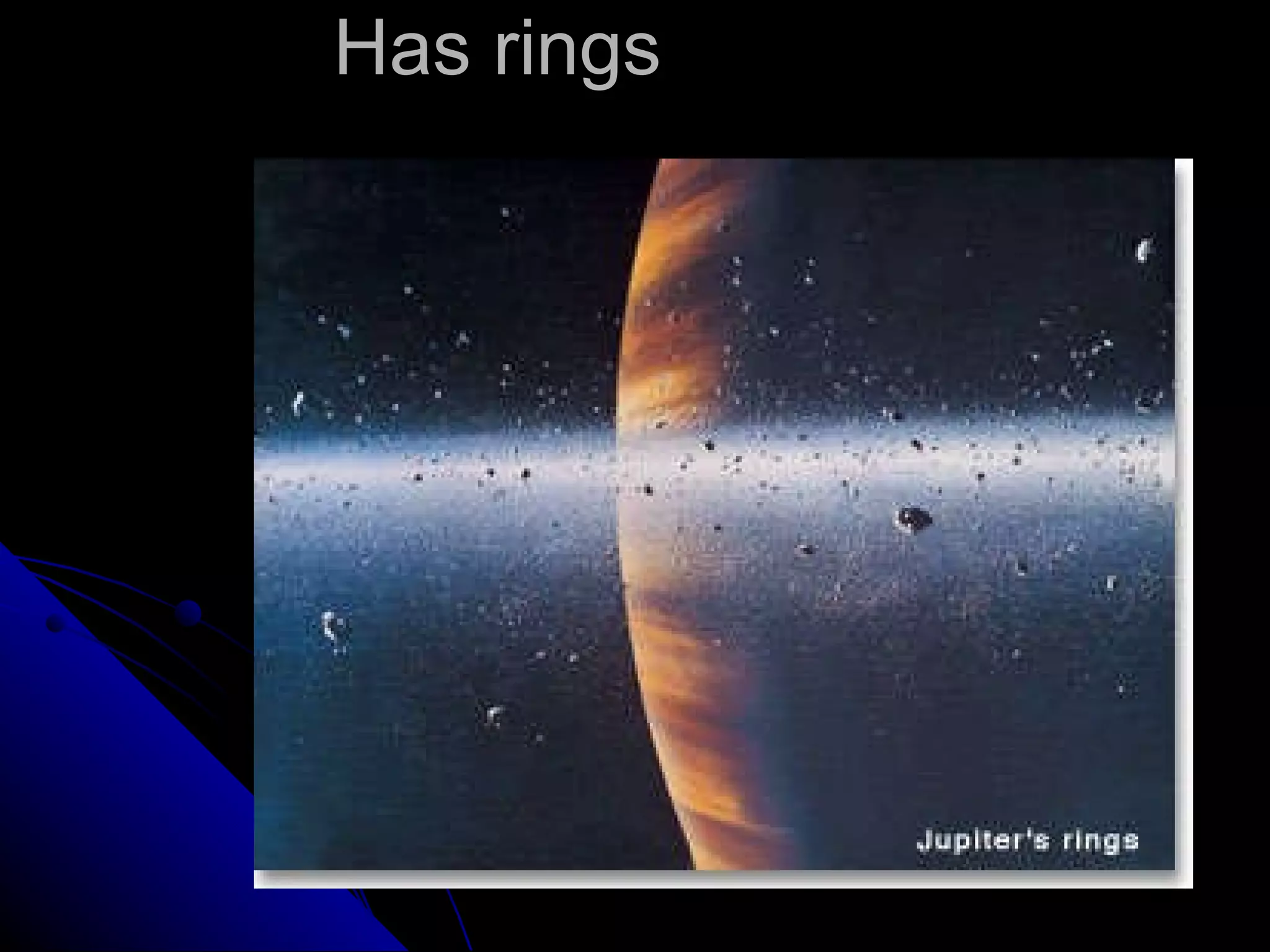
Has rings
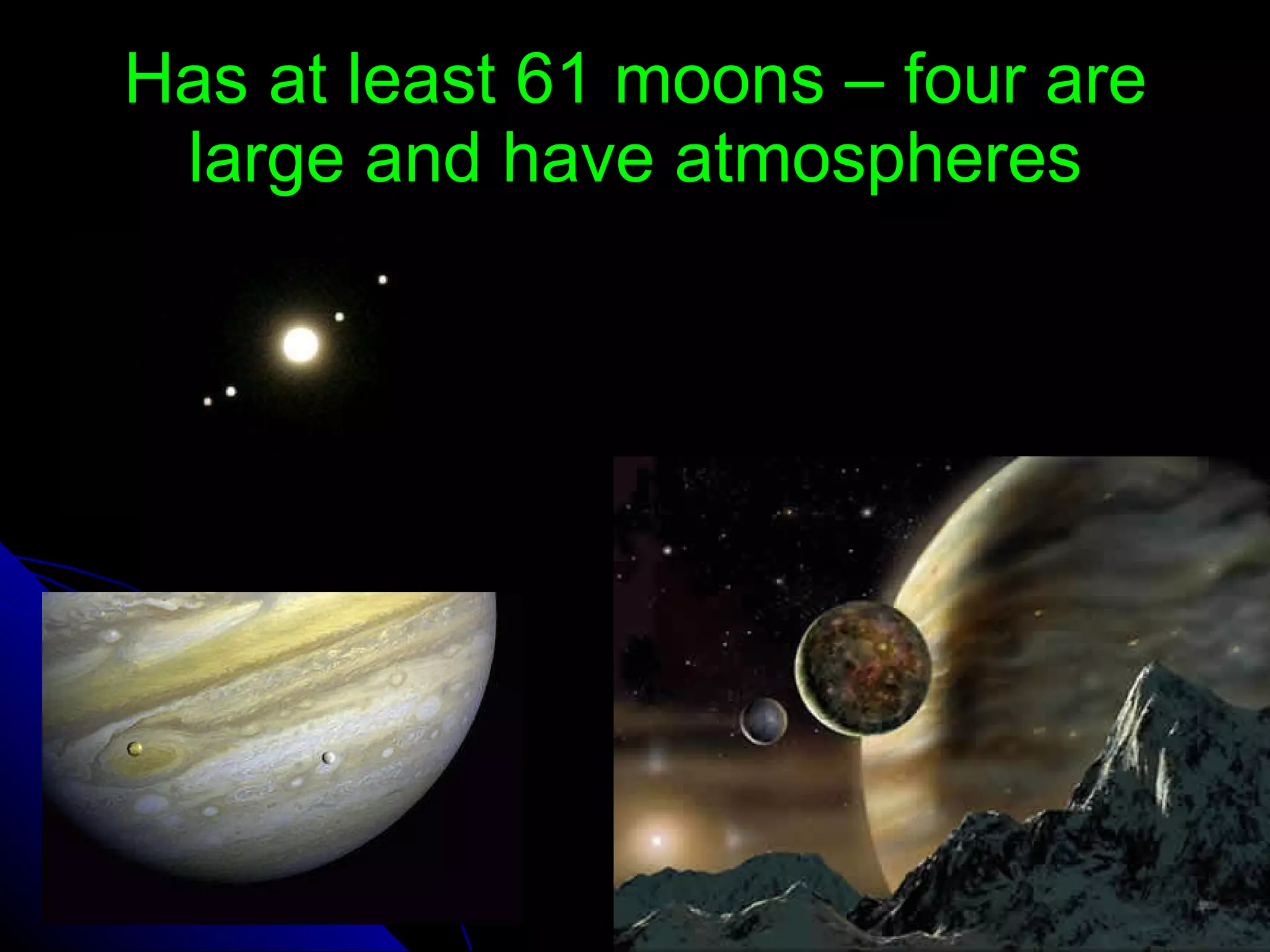
Has at least 61 moons – four are large and have atmospheres
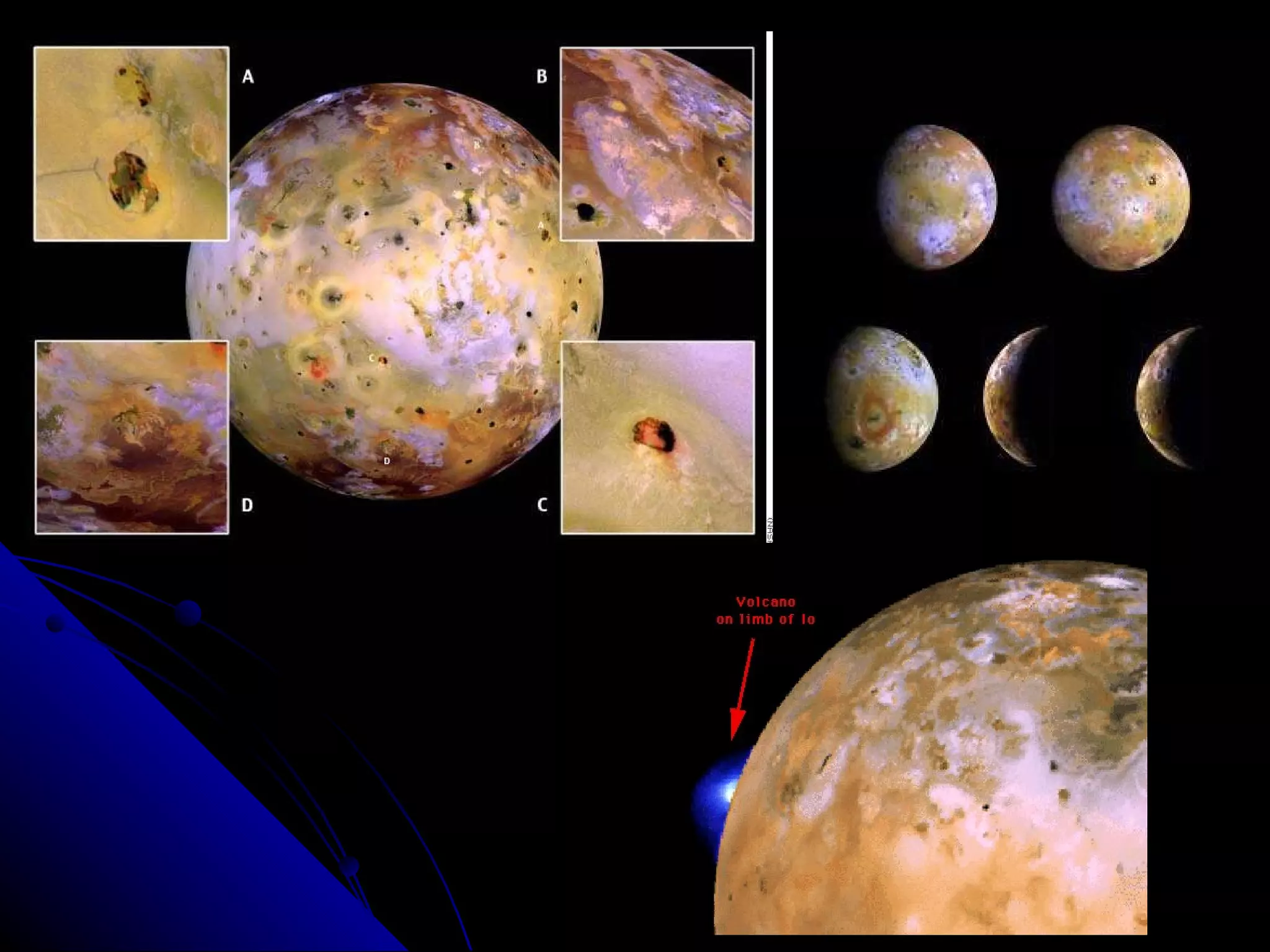
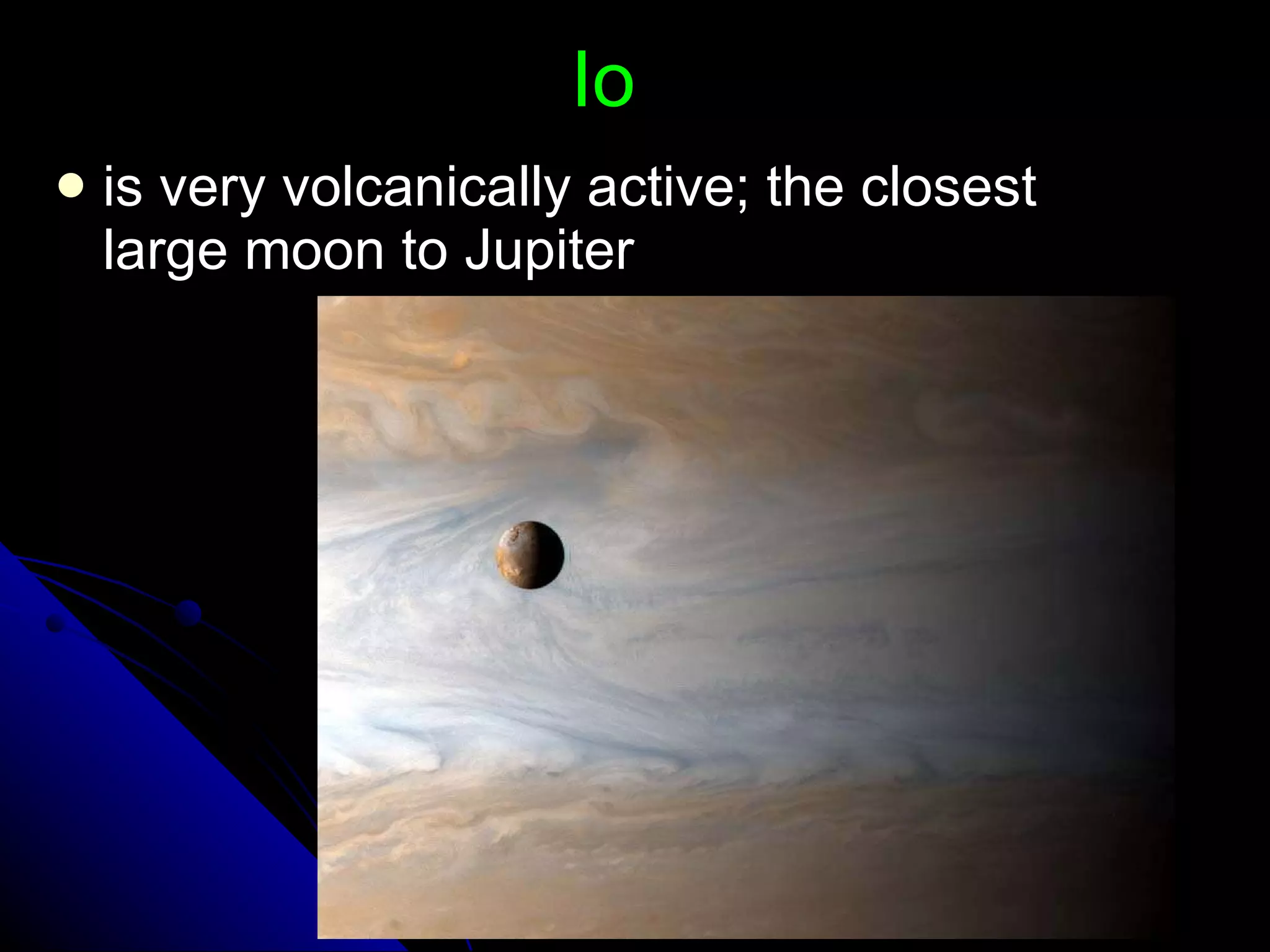
Io is very volcanically active; the closest large moon to Jupiter
 
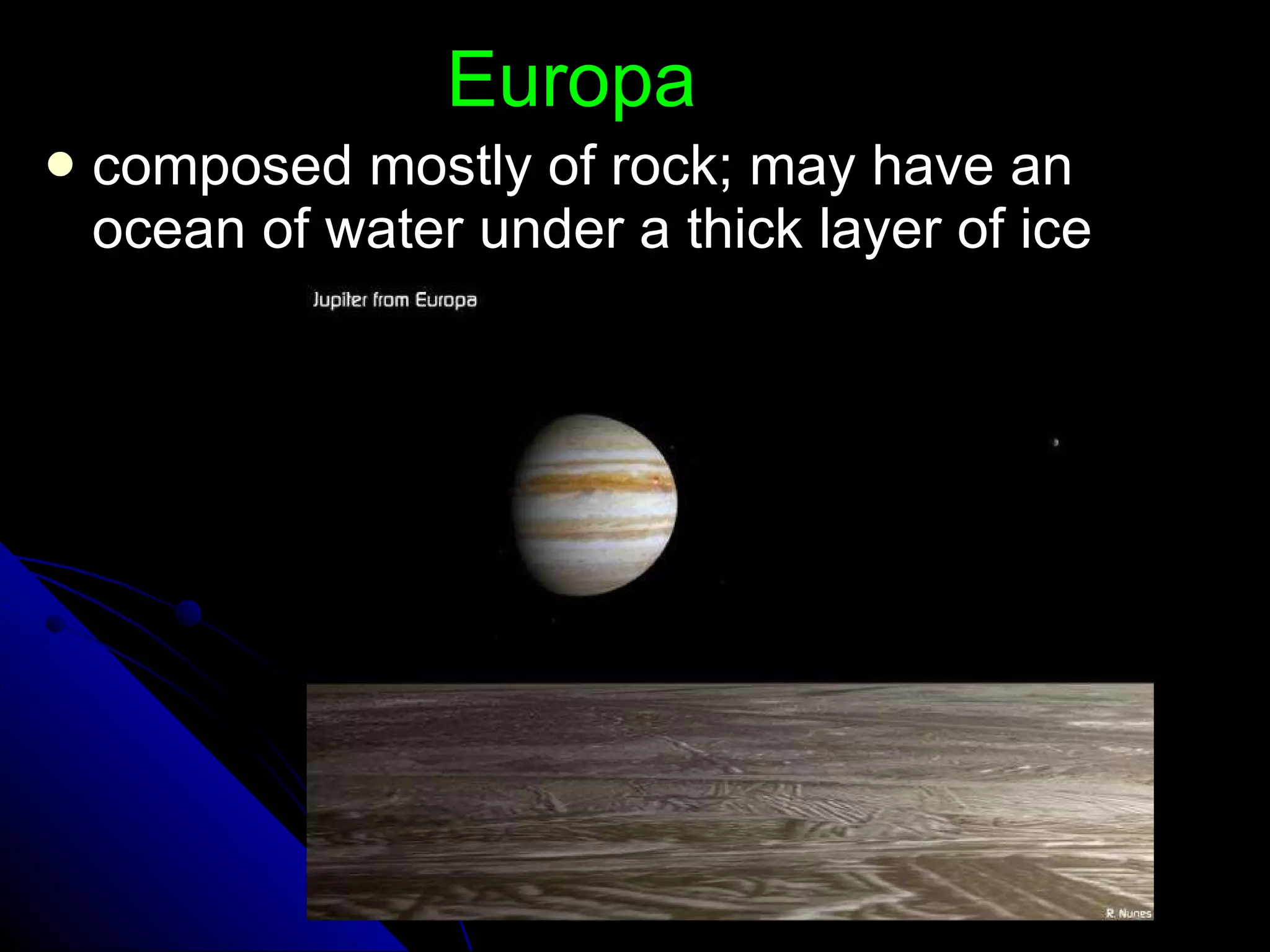
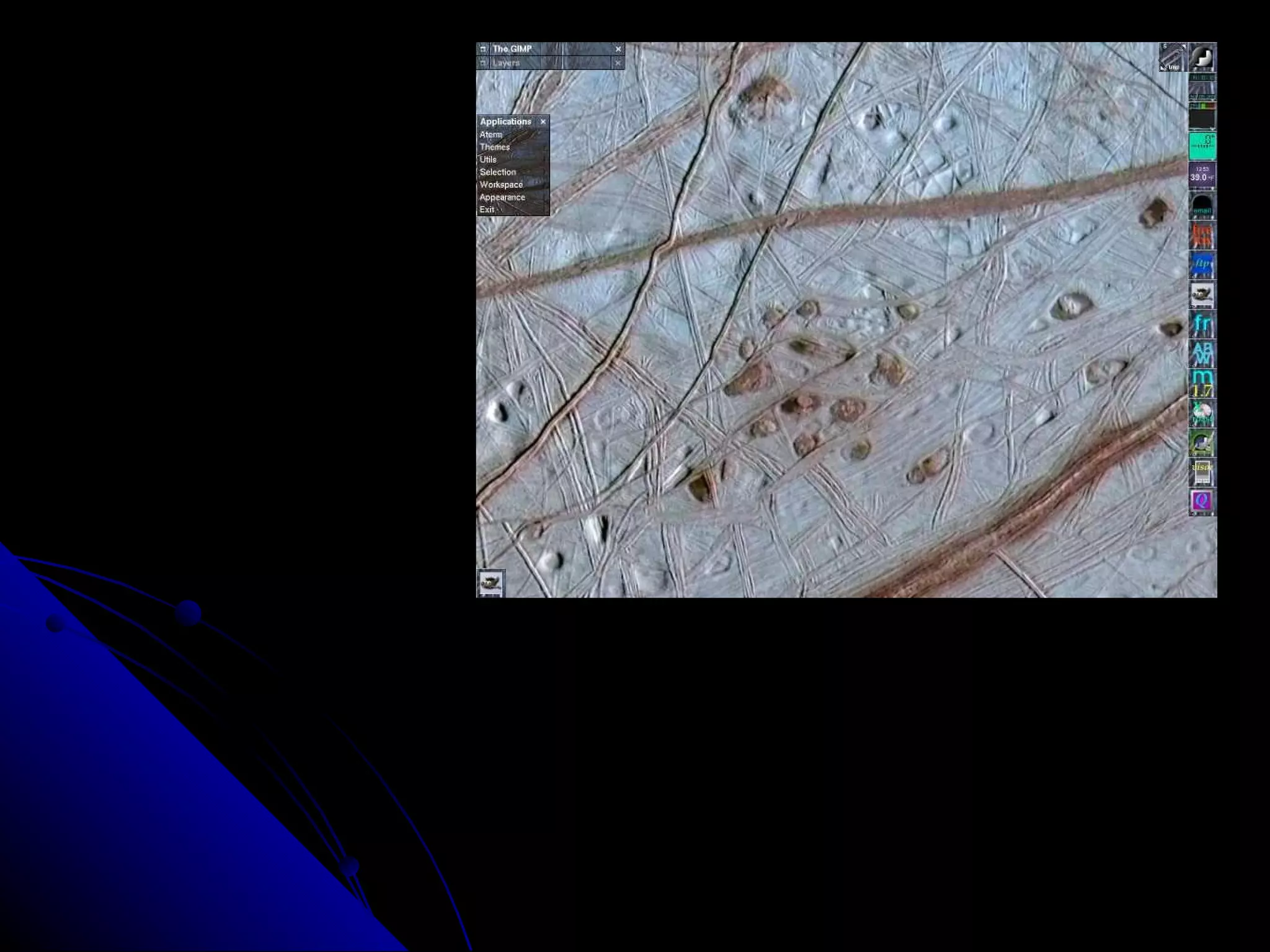
Europa composed mostly of rock; may have an ocean of water under a thick layer of ice
 
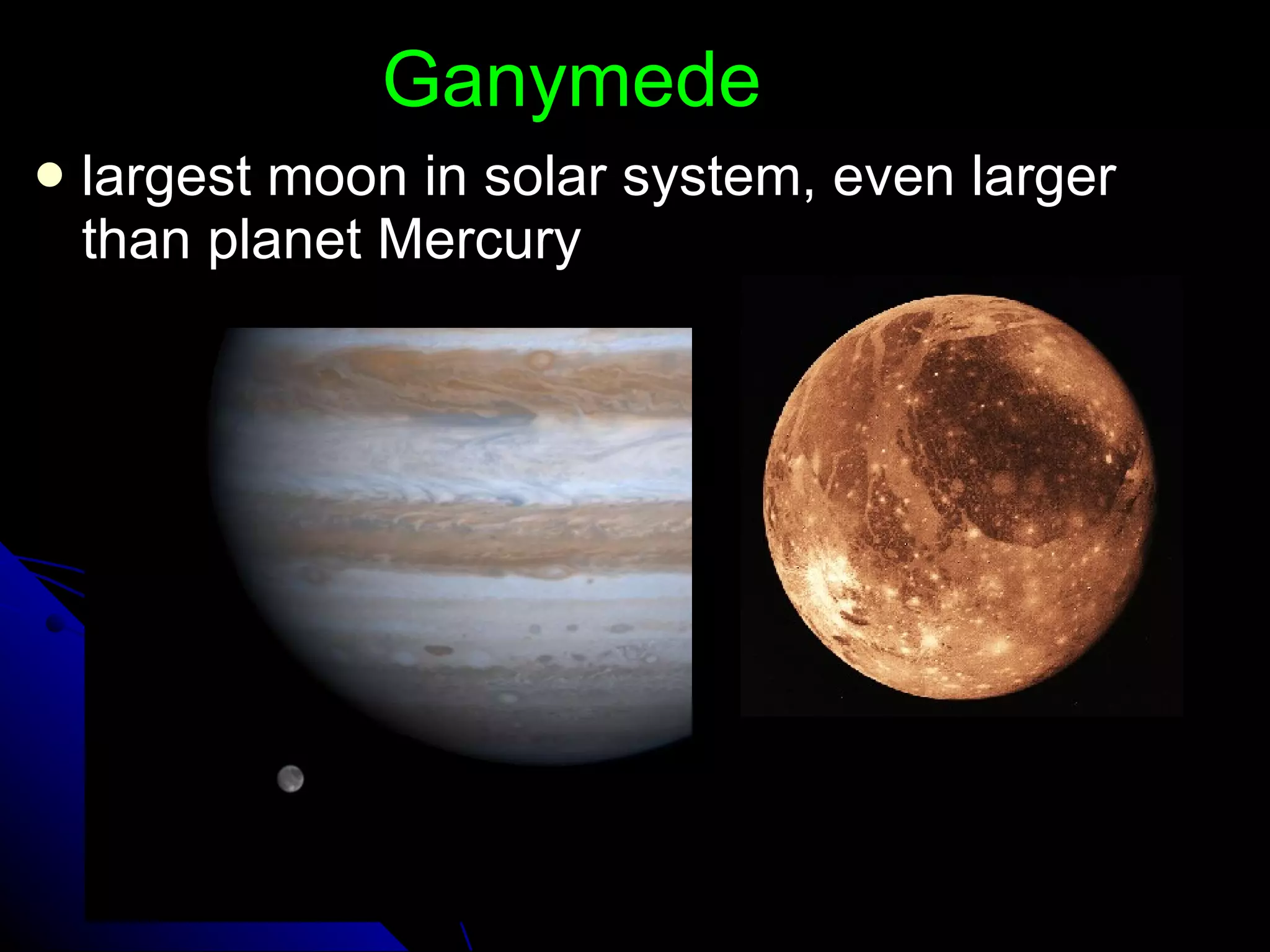
Ganymede largest moon in solar system, even larger than planet Mercury
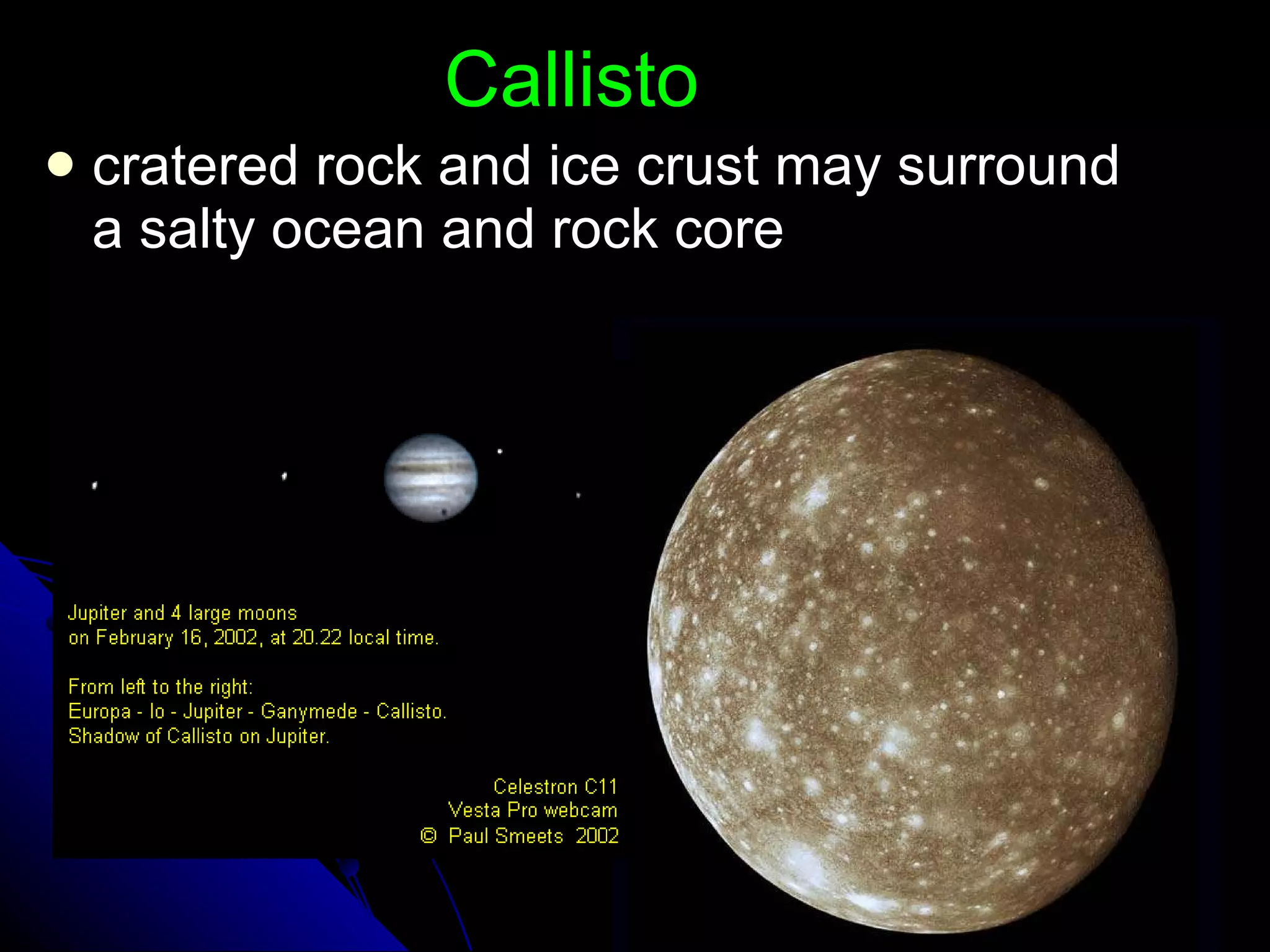
Callisto cratered rock and ice crust may surround a salty ocean and rock core
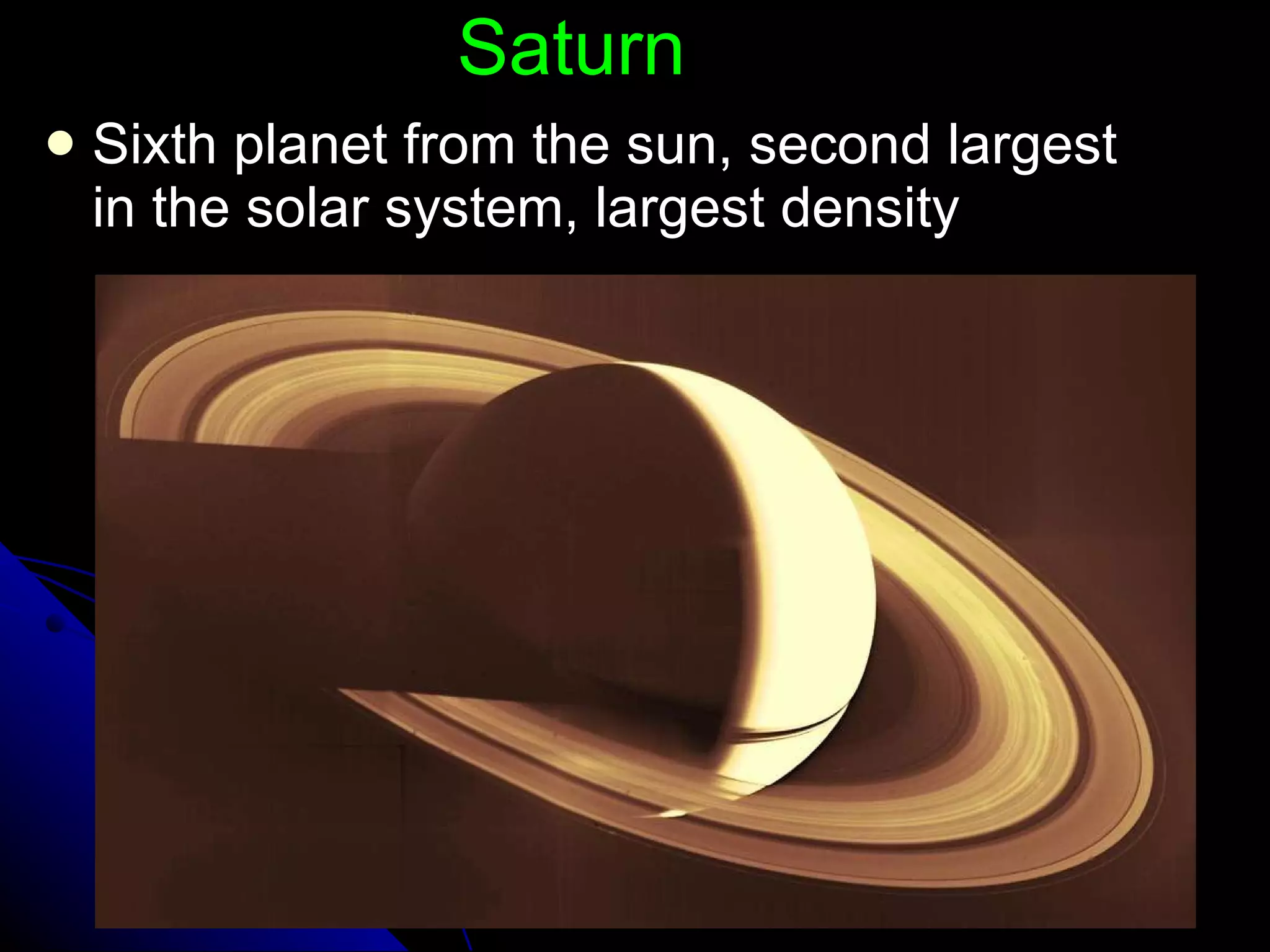
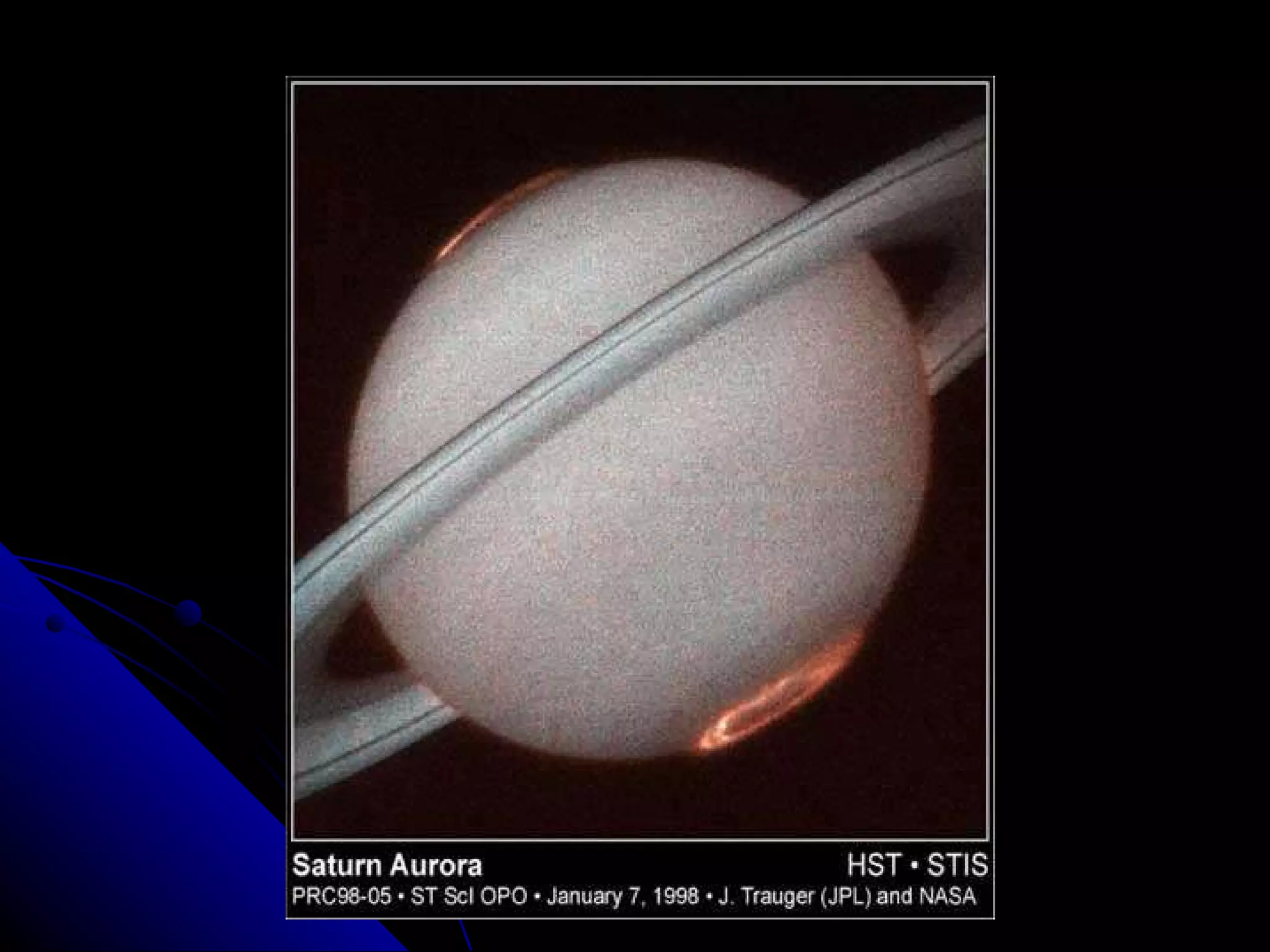
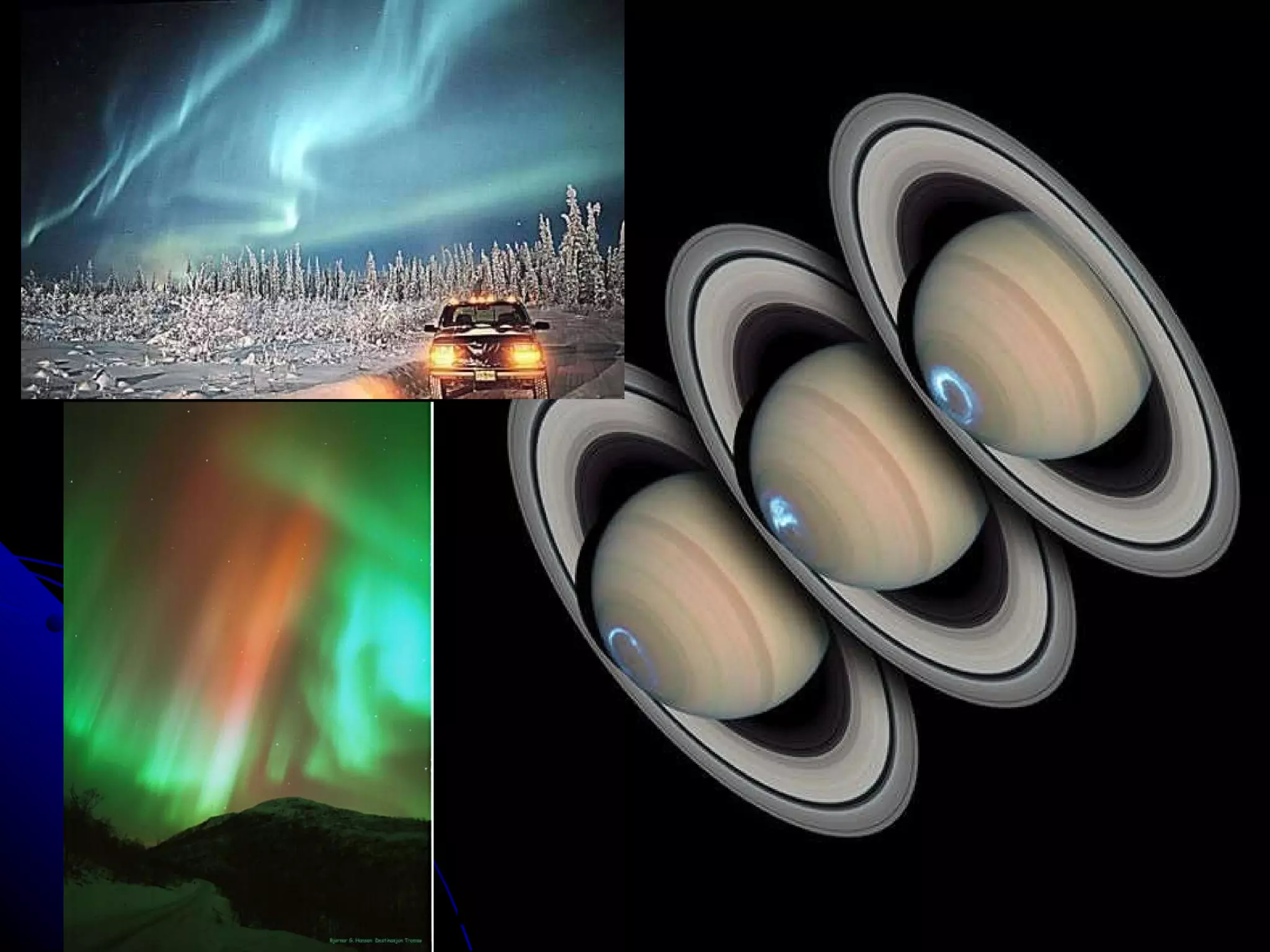
Saturn Sixth planet from the sun, second largest in the solar system, largest density
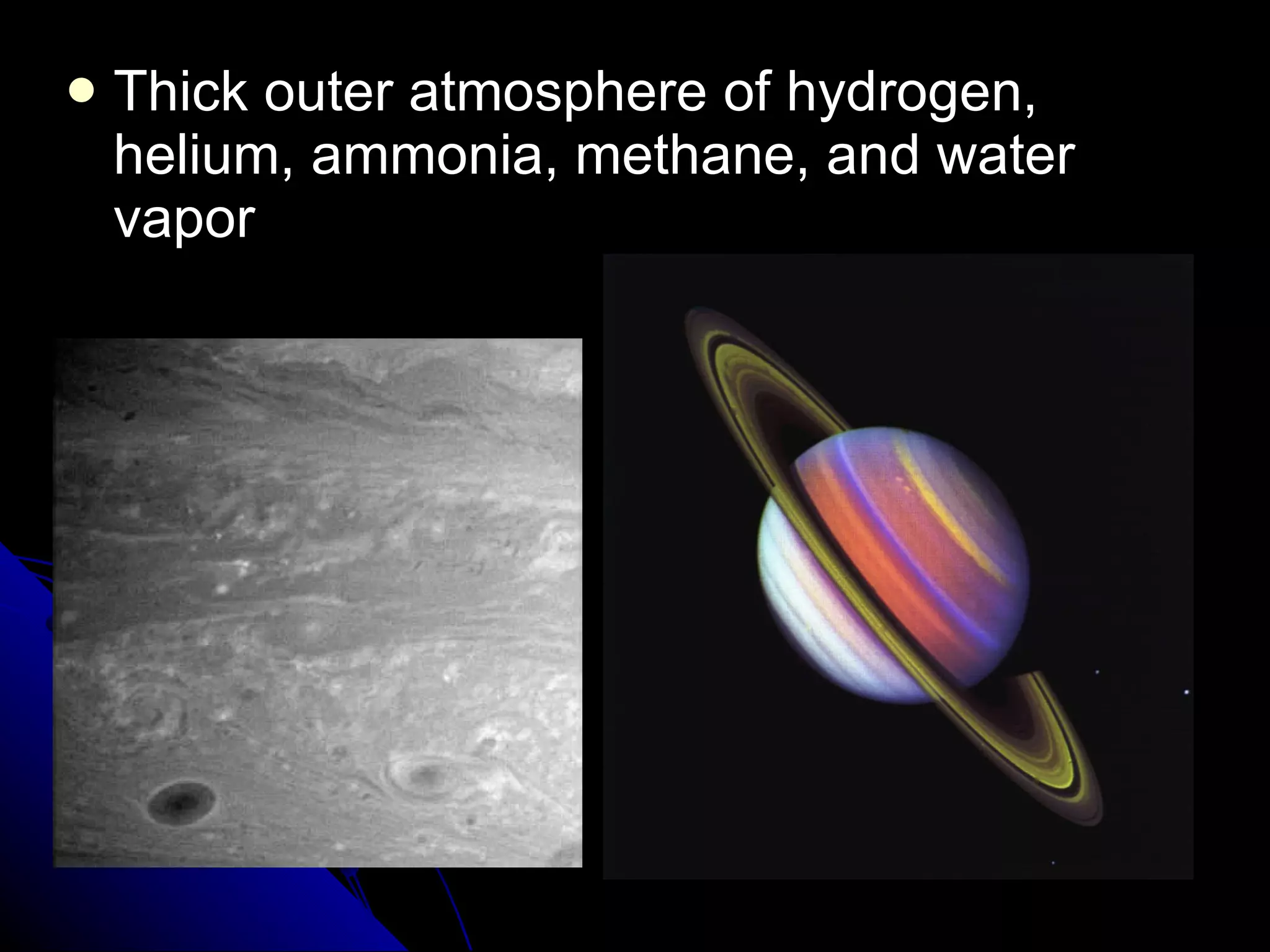
Thick outer atmosphere of hydrogen, helium, ammonia, methane, and water vapor
 
 
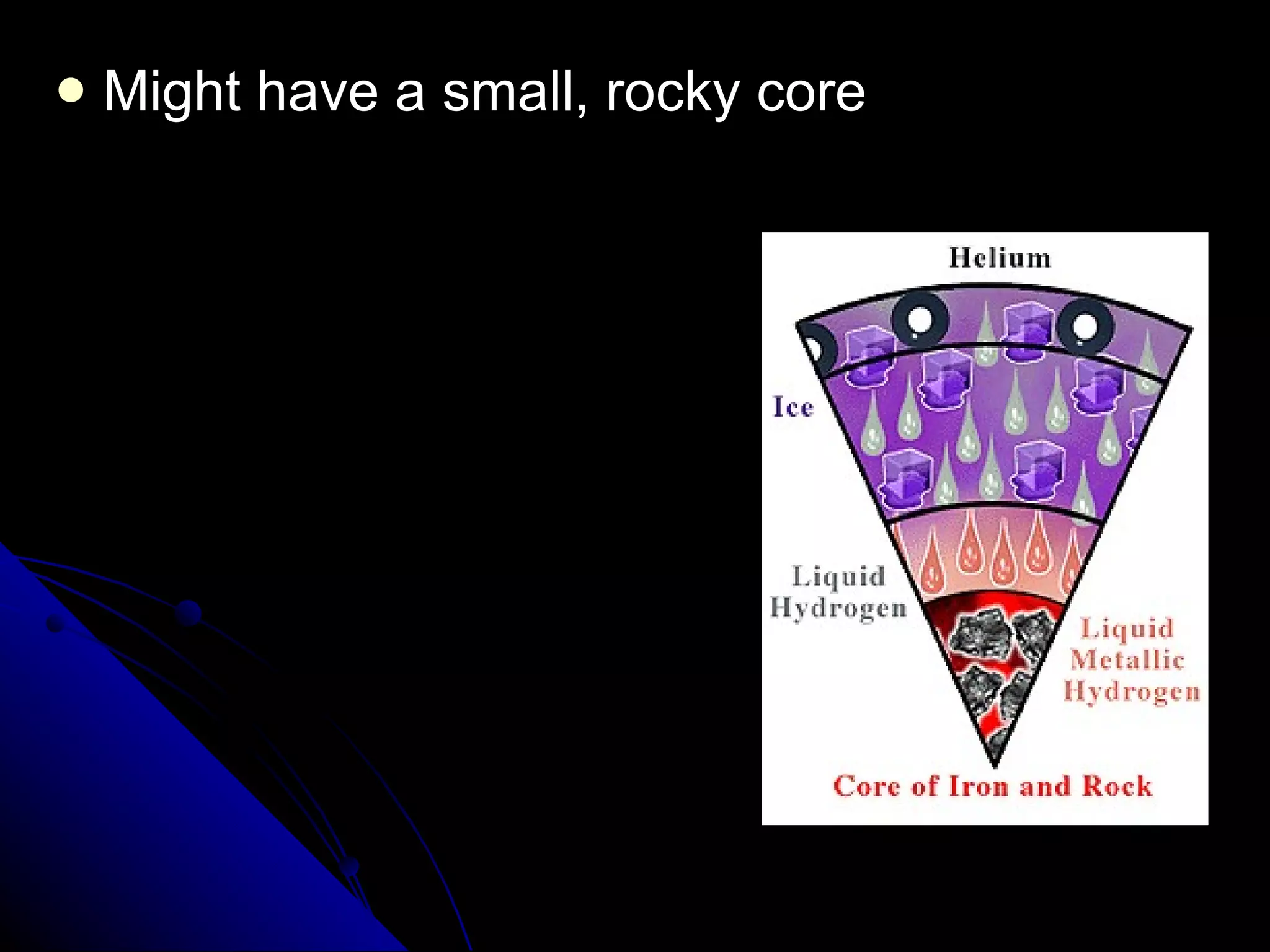
Might have a small, rocky core
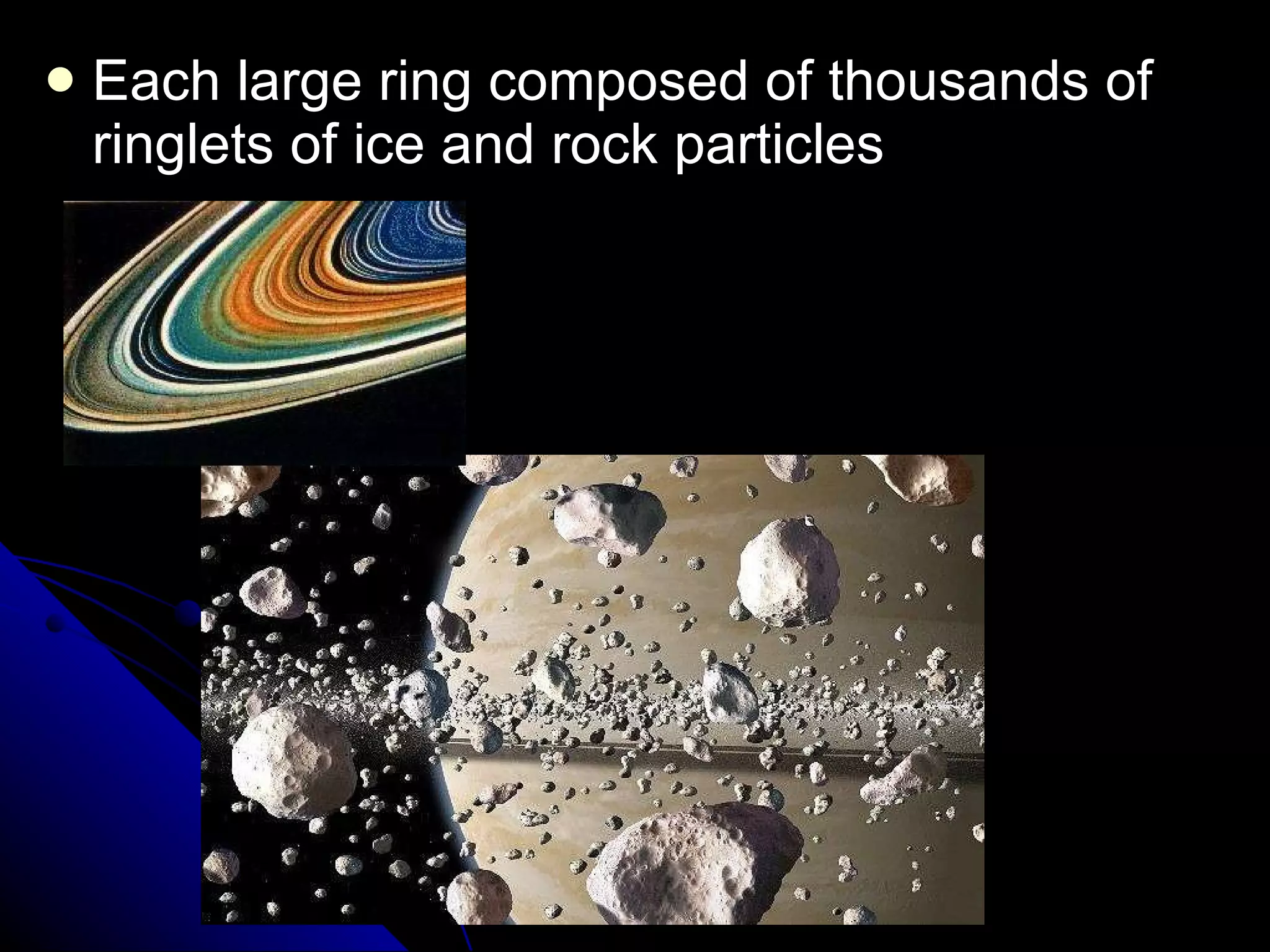
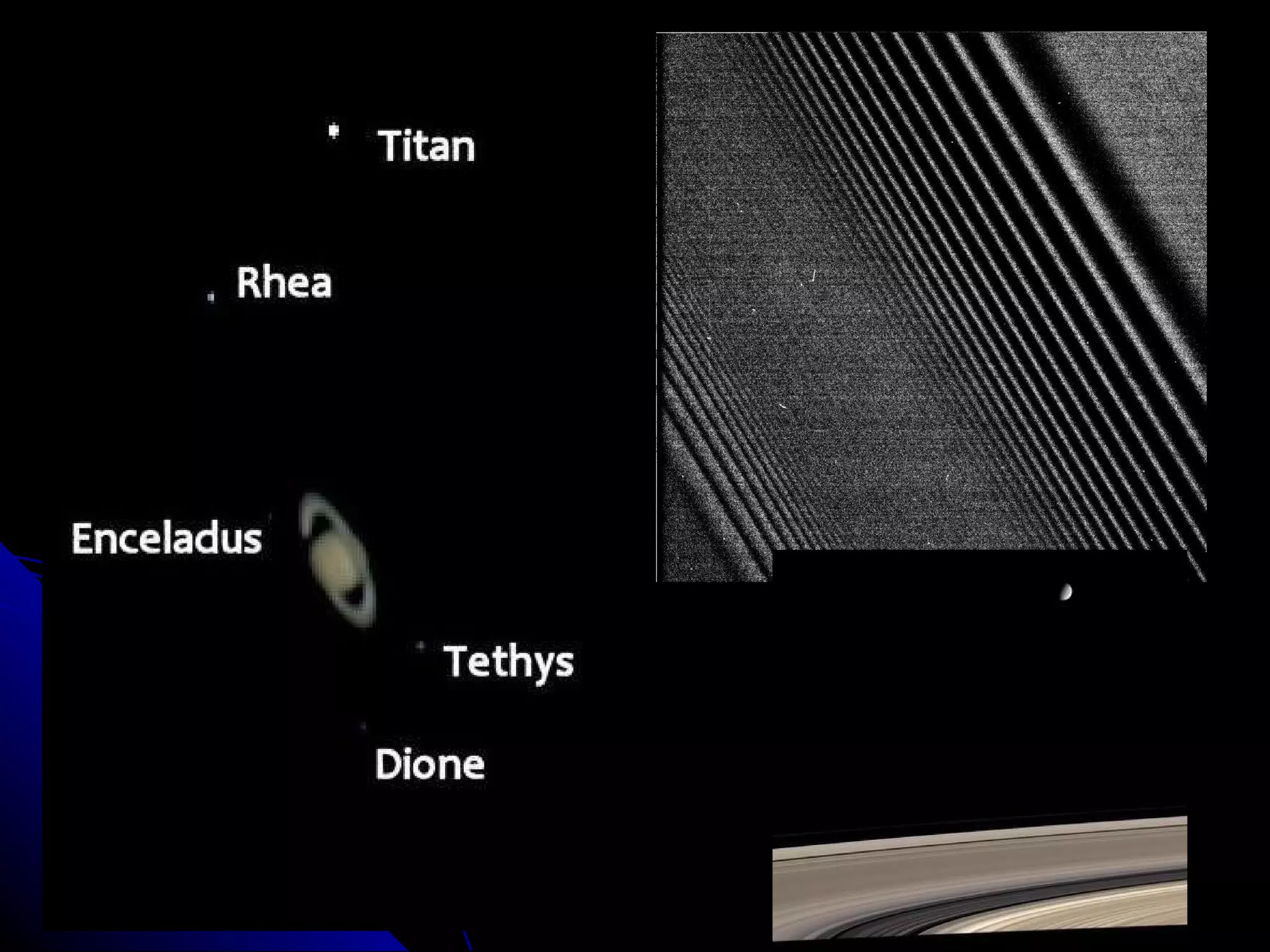
Each large ring composed of thousands of ringlets of ice and rock particles
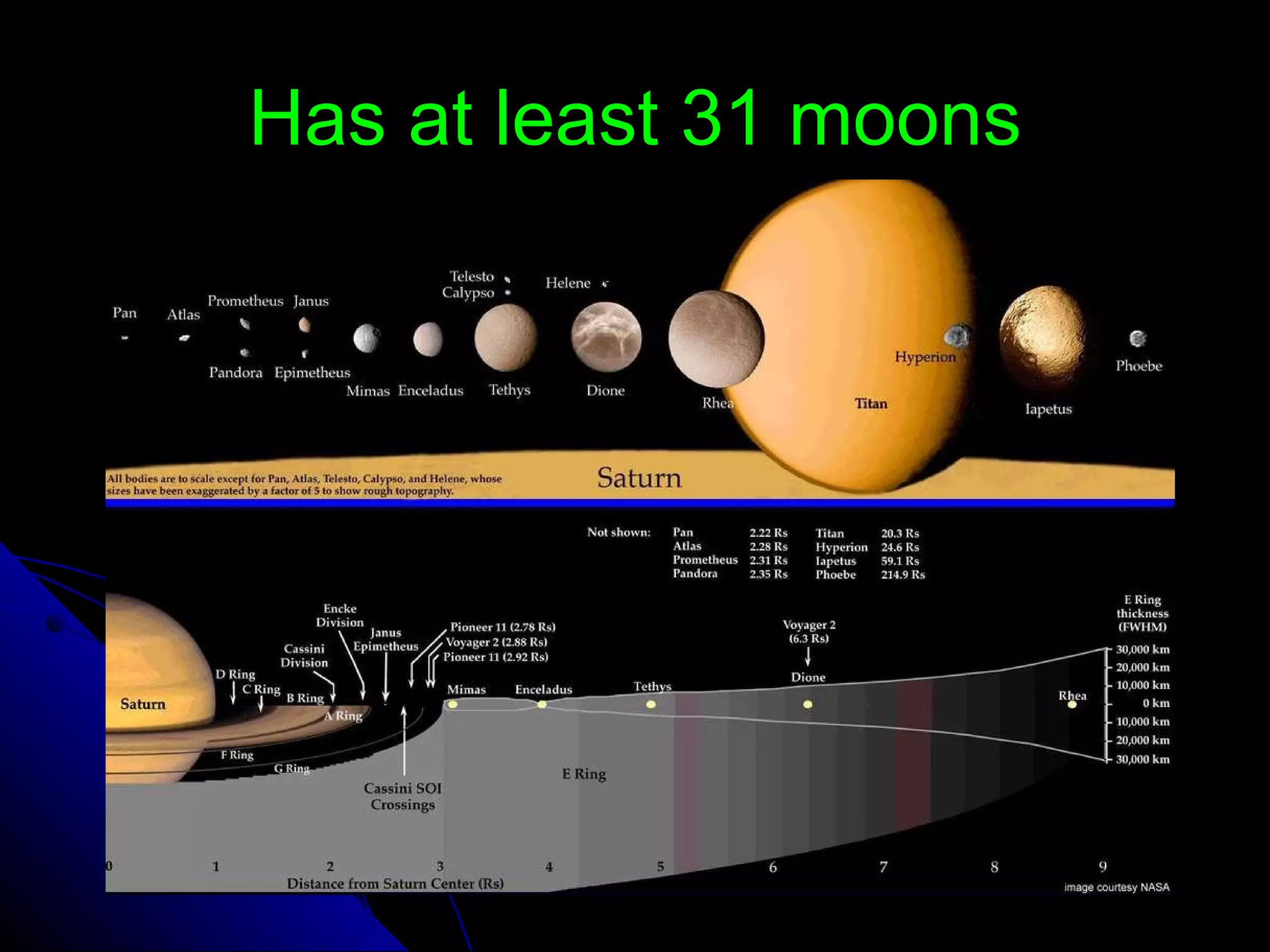
Has at least 31 moons
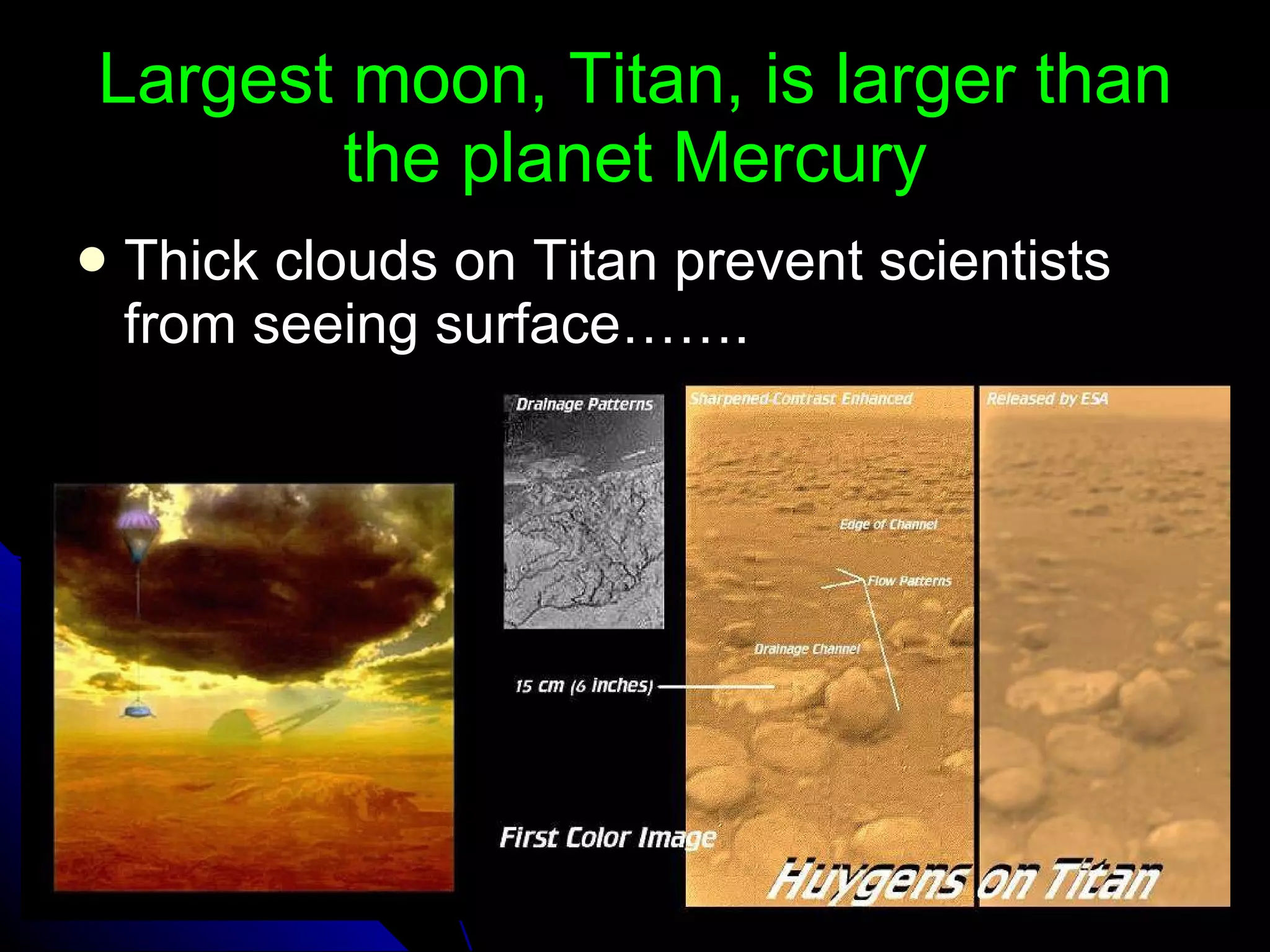
Largest moon, Titan, is larger than the planet Mercury Thick clouds on Titan prevent scientists from seeing surface…….
 
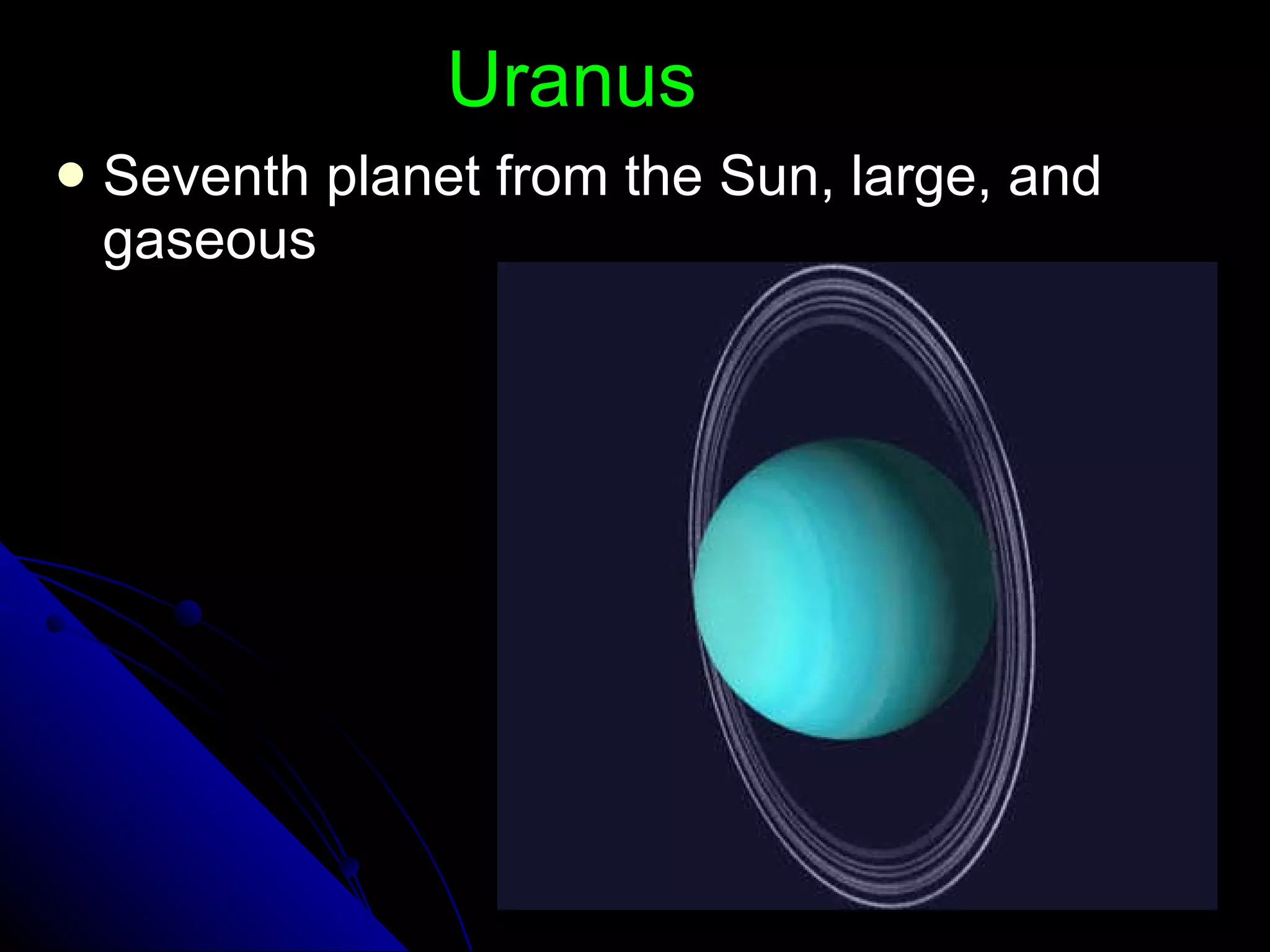
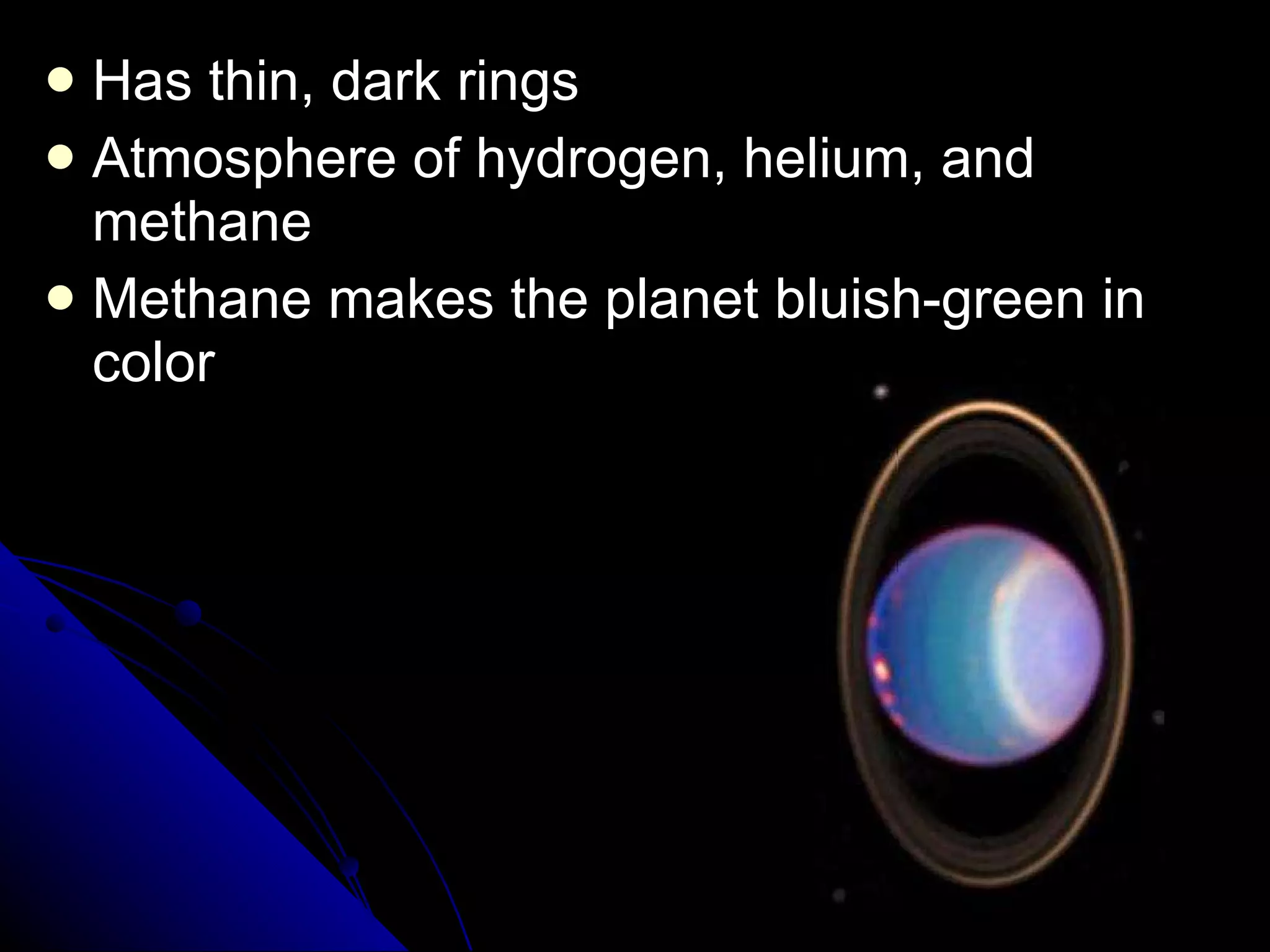
Uranus Seventh planet from the Sun, large, and gaseous
Has thin, dark rings Atmosphere of hydrogen, helium, and methane Methane makes the planet bluish-green in color
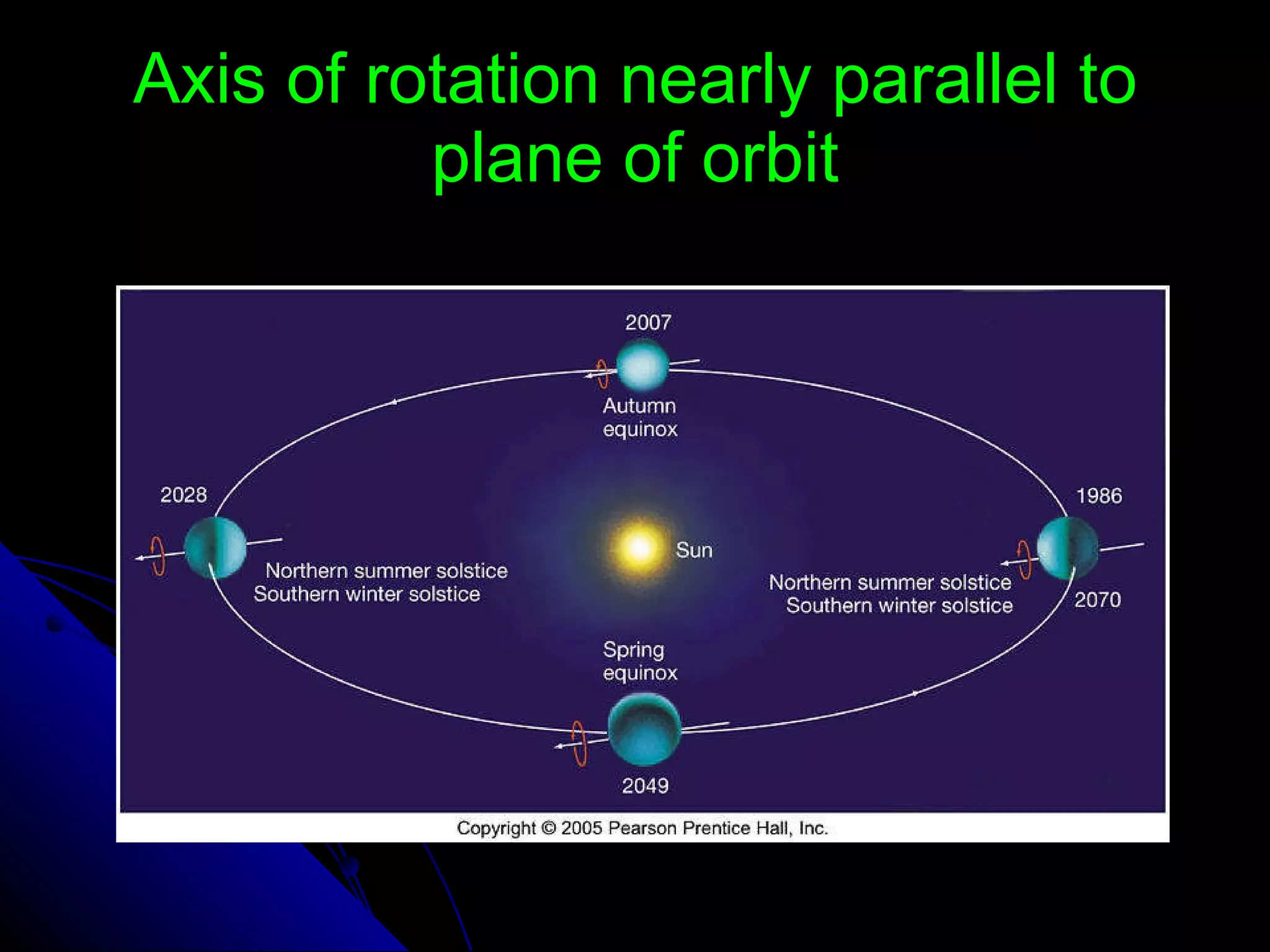
Axis of rotation nearly parallel to plane of orbit
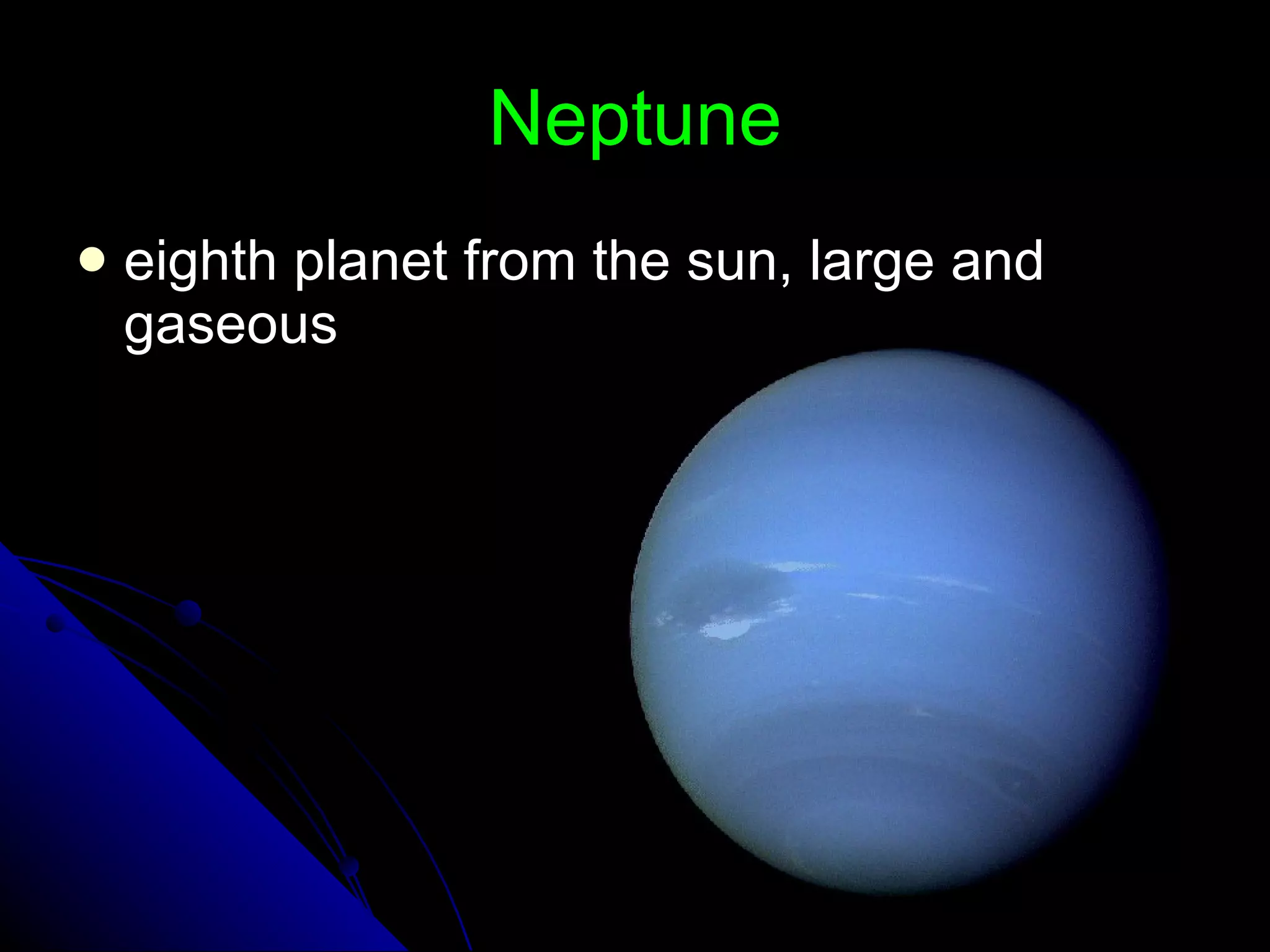
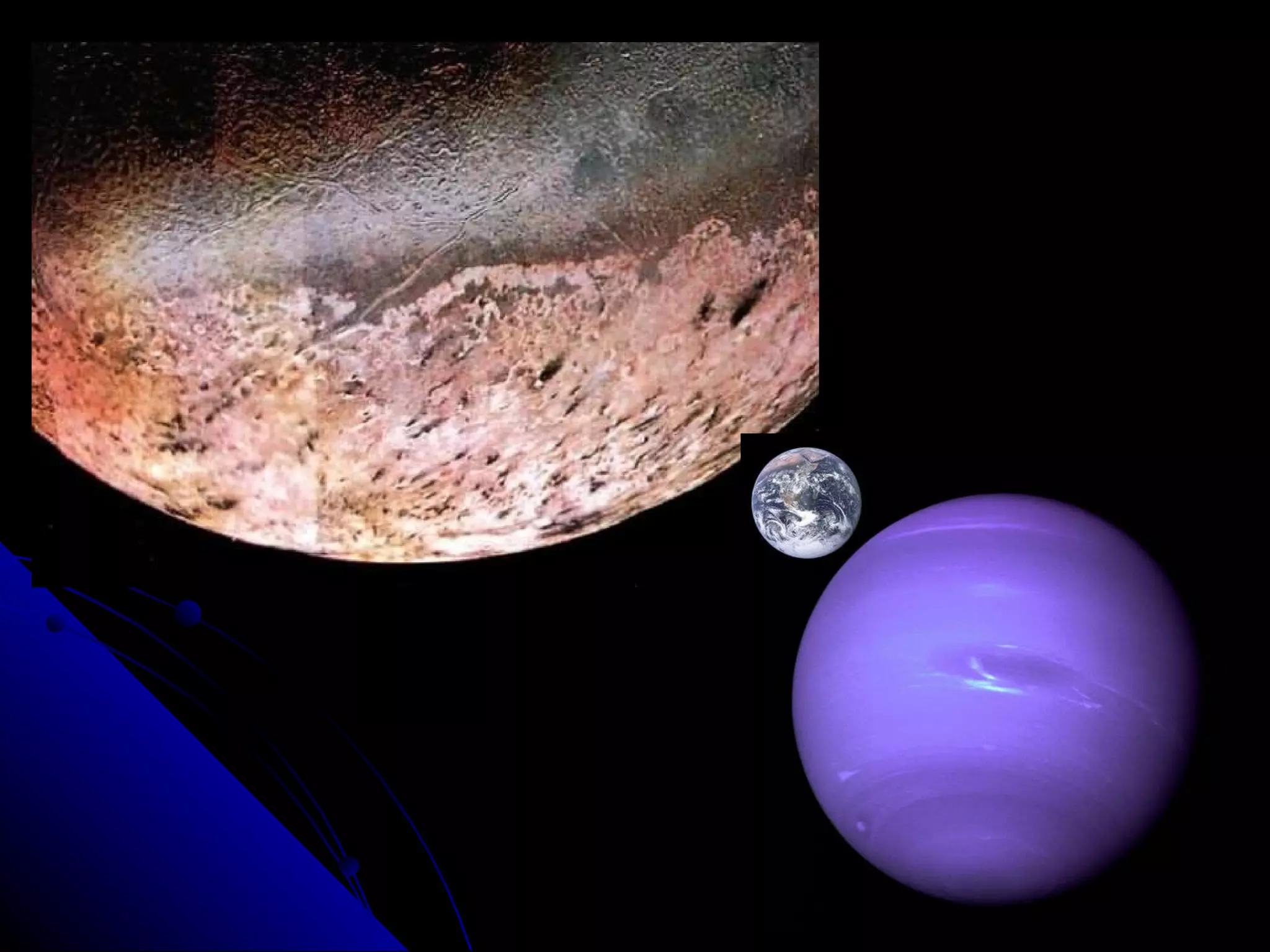
Neptune eighth planet from the sun, large and gaseous
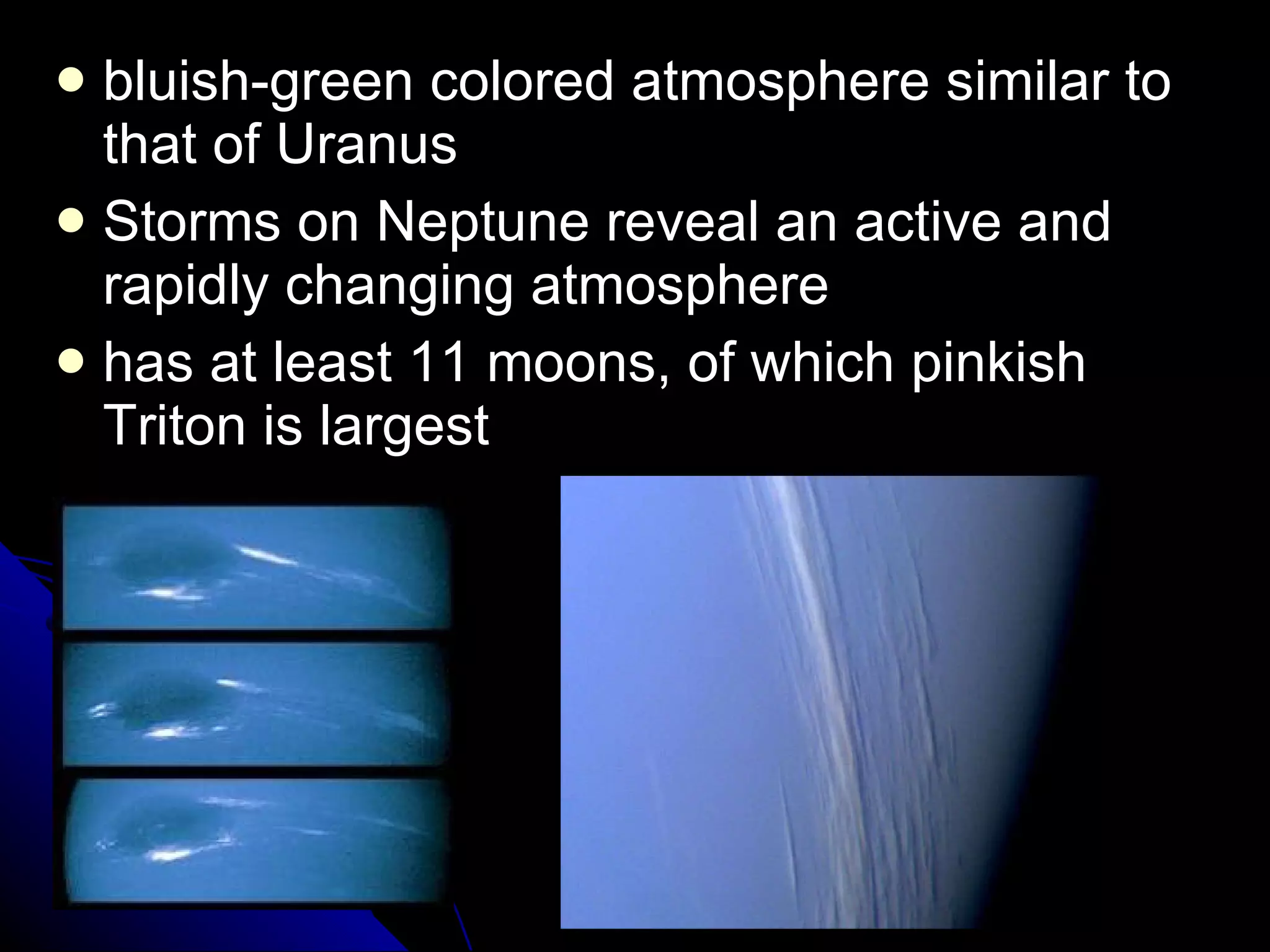
bluish-green colored atmosphere similar to that of Uranus Storms on Neptune reveal an active and rapidly changing atmosphere has at least 11 moons, of which pinkish Triton is largest
 
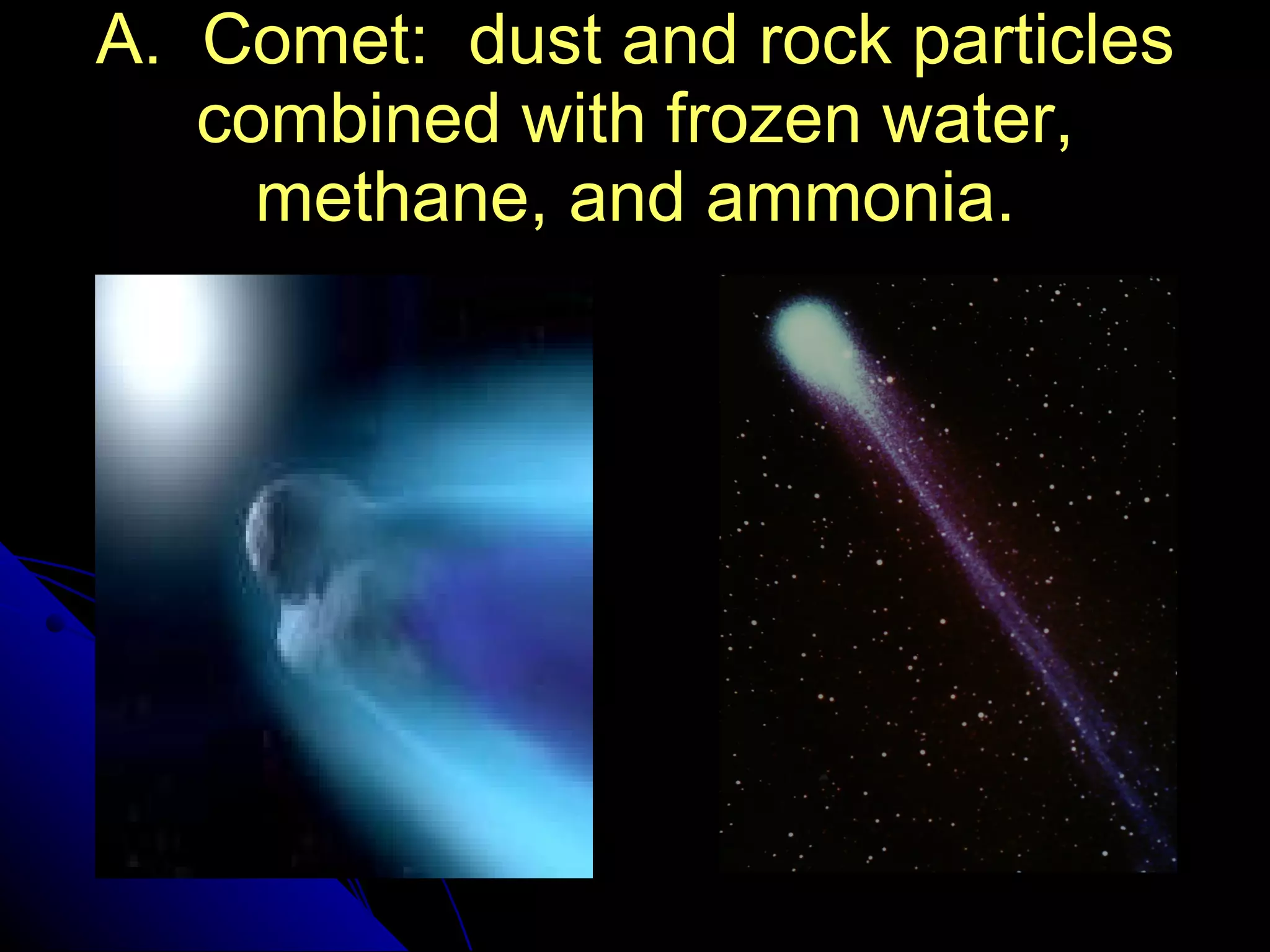
A.  Comet:  dust and rock particles combined with frozen water, methane, and ammonia.
1.  Halley’s comet:  orbits Sun every 76 years.
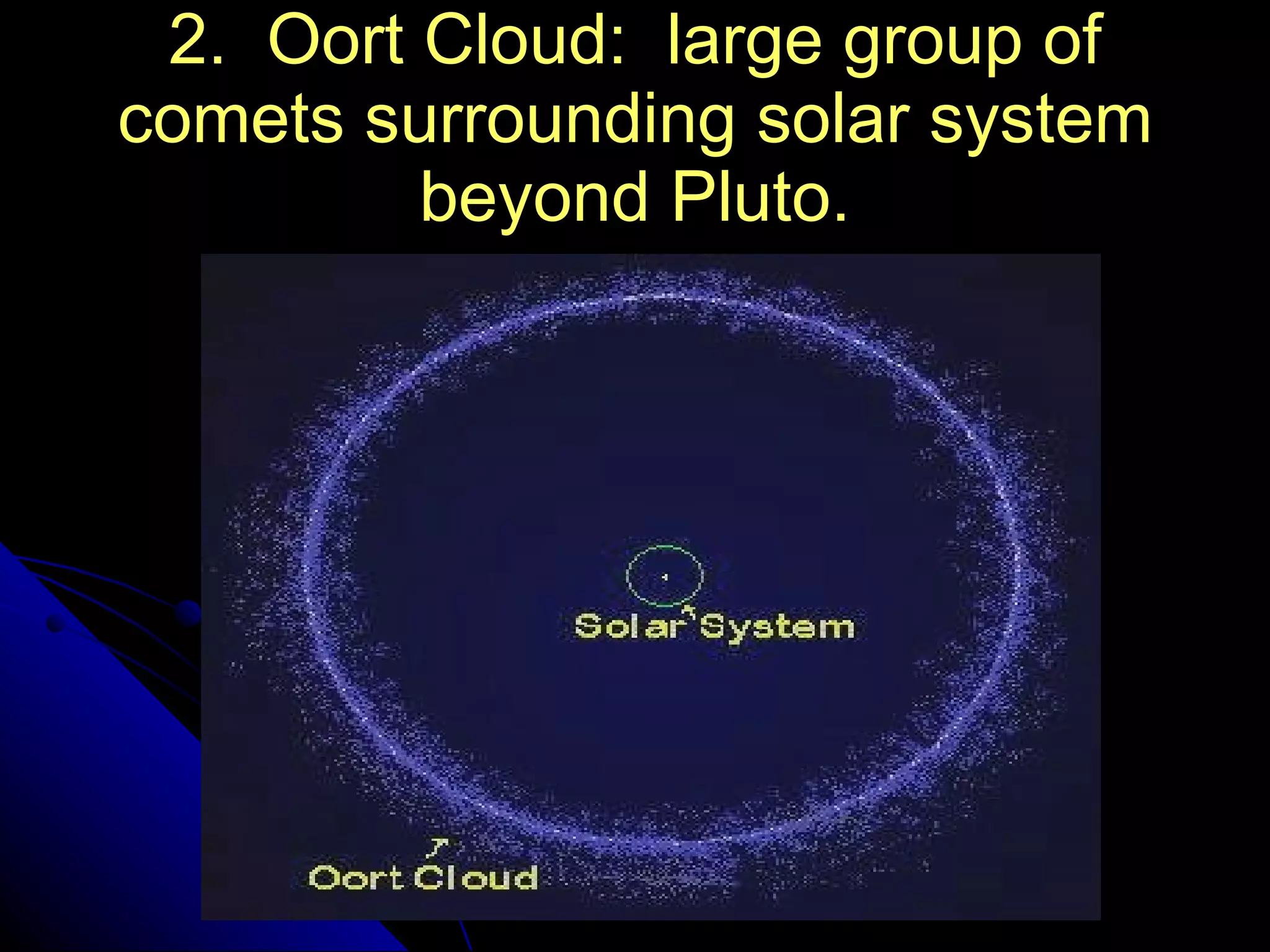
2.  Oort Cloud:  large group of comets surrounding solar system beyond Pluto.
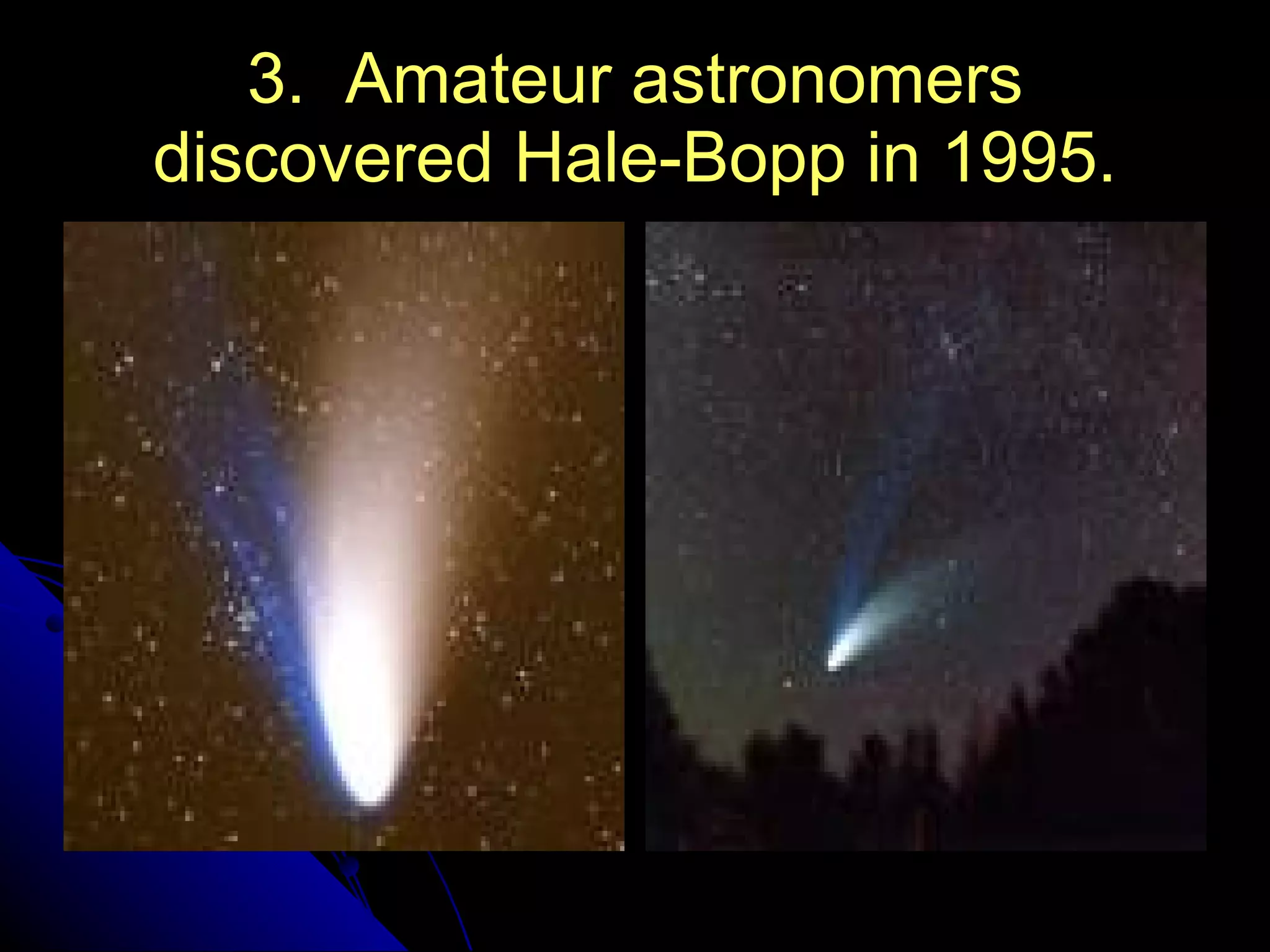
3.  Amateur astronomers discovered Hale-Bopp in 1995.
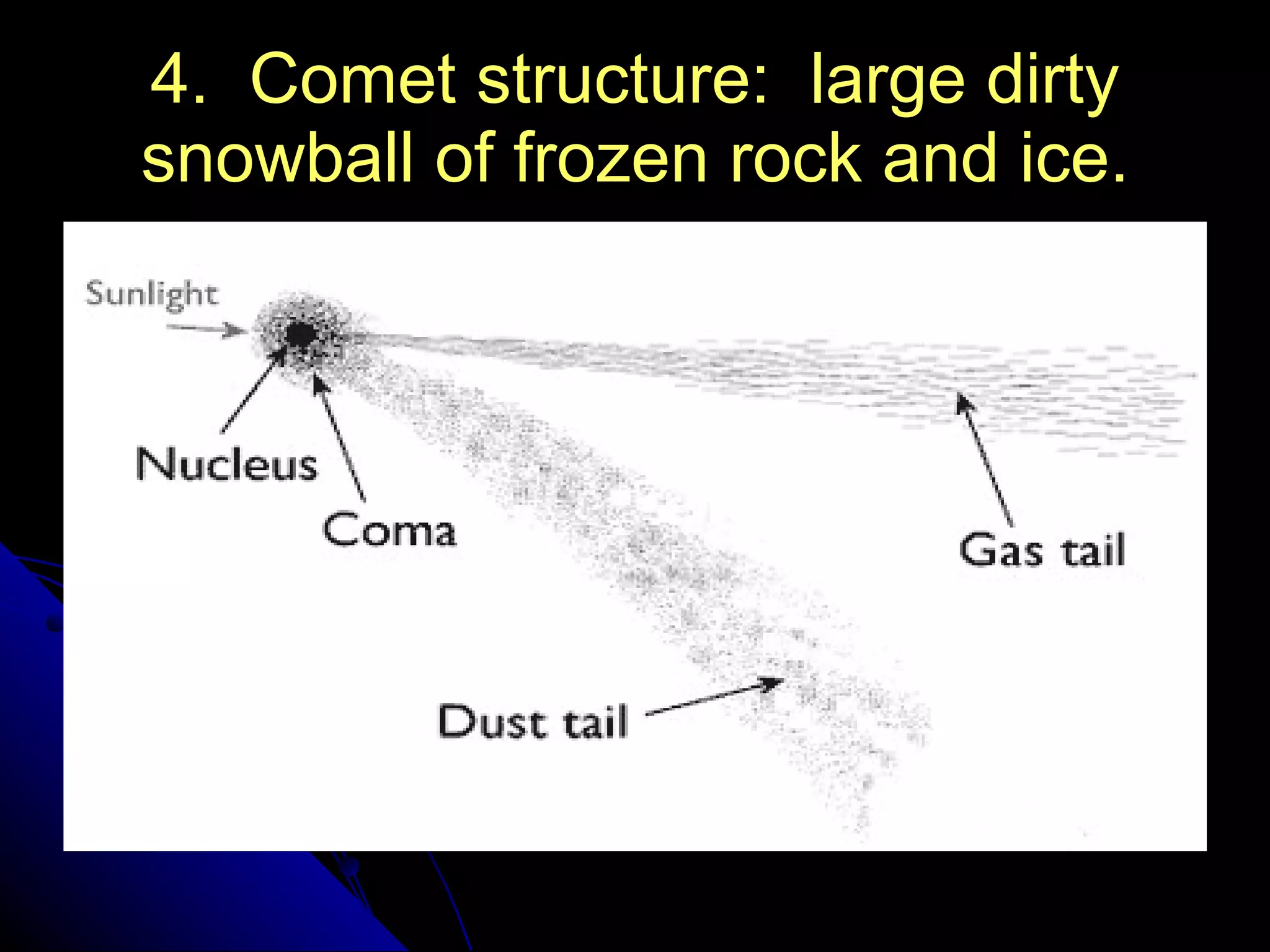
4.  Comet structure:  large dirty snowball of frozen rock and ice.
Comets a.  Ice and dust vaporize as comet nears Sun. b.  Vaporized material forms bright cloud called coma around comet nucleus. c.  Solar wind pushes on gas and dust in the coma, causing the particles to form a tail that always points away from the Sun. d.  Eventually, most of the ice in the comet’s nucleus vaporizes, leaving only small particles.
Comets vaporize and break up after passing close to the Sun several times.  When the nucleus breaks up, pieces spread out.  The dust and rock fragments are called  Meteoroids .
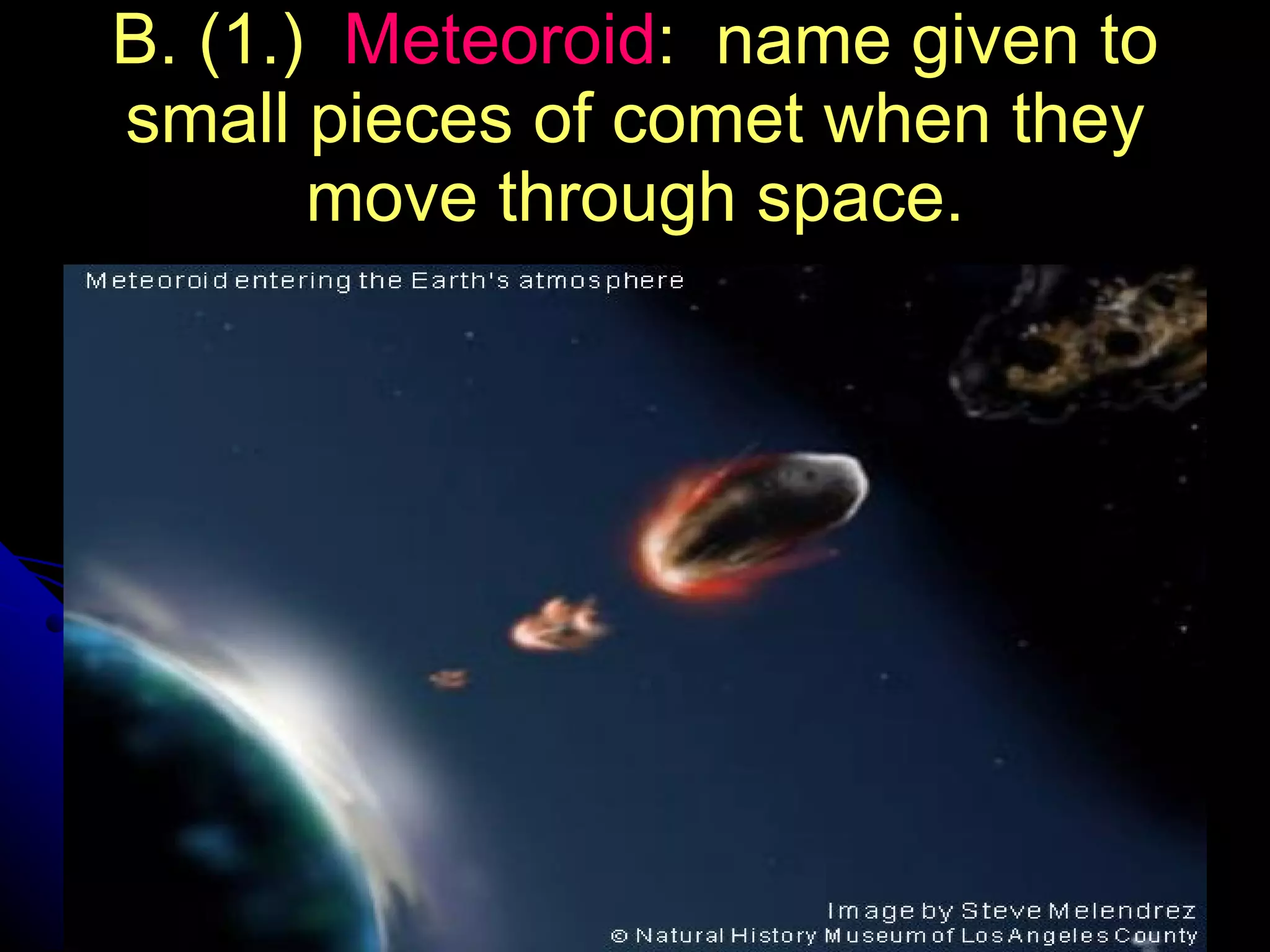
B. (1.)  Meteoroid :  name given to small pieces of comet when they move through space.
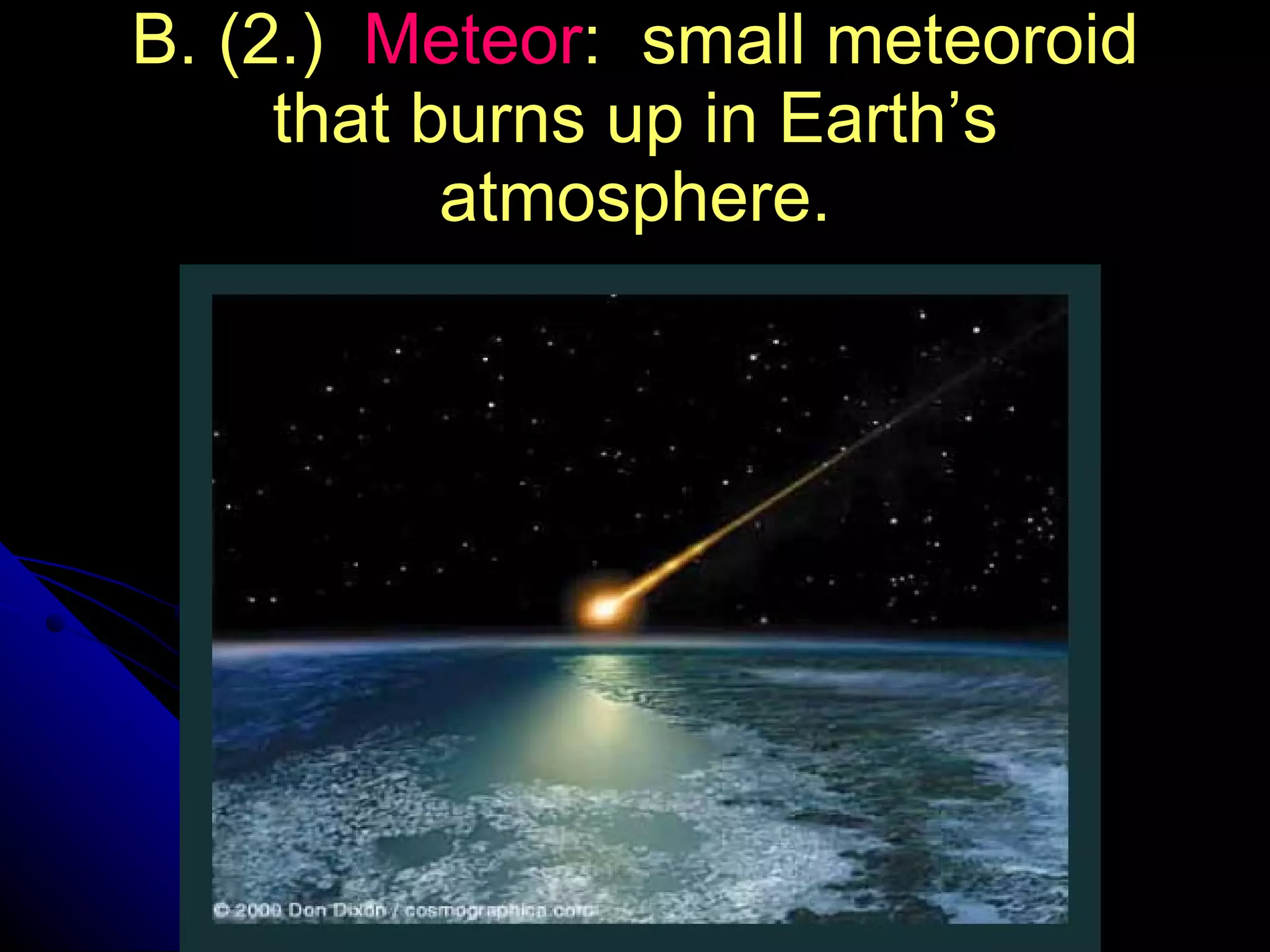
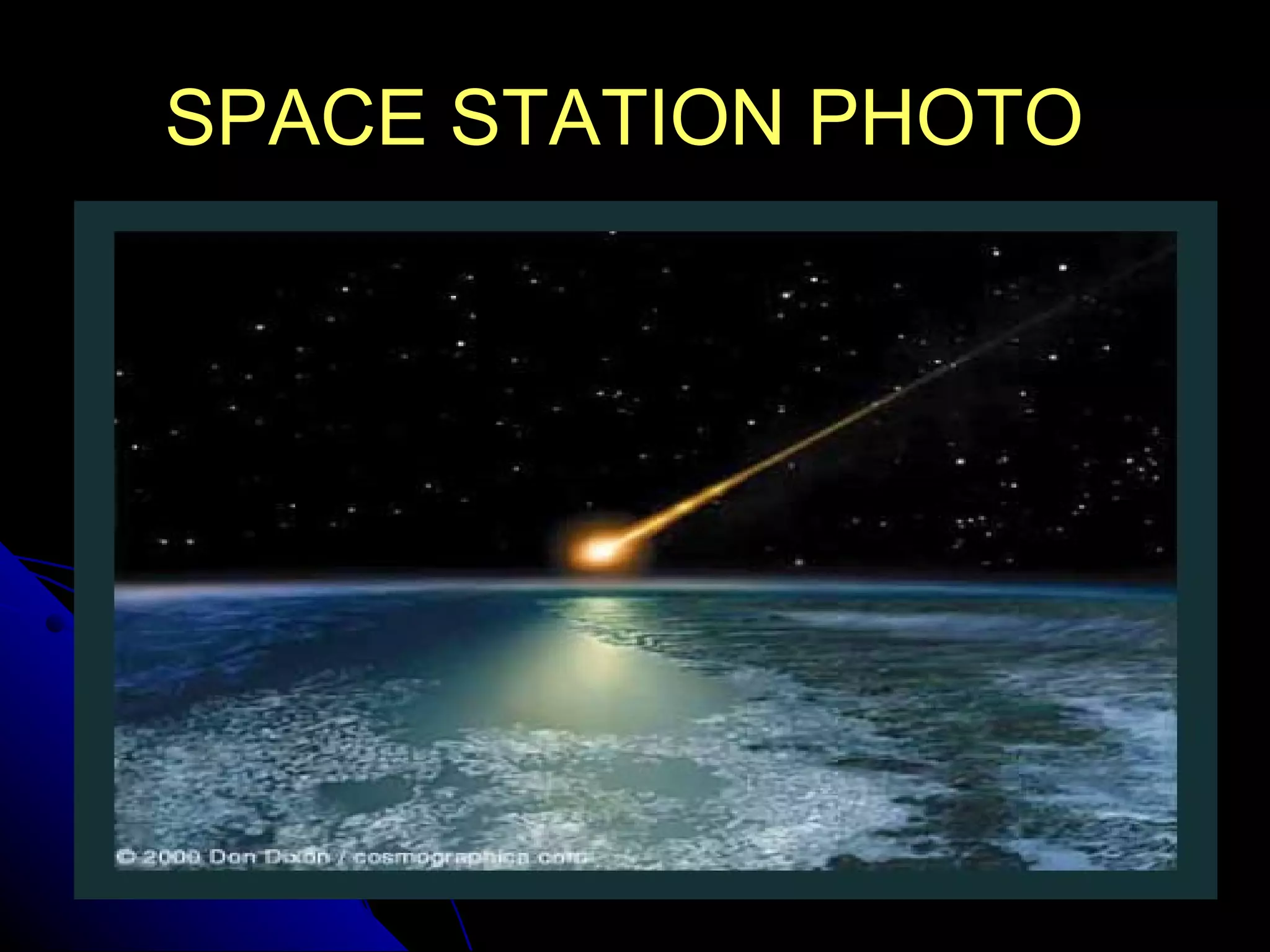
B. (2.)  Meteor :  small meteoroid that burns up in Earth’s atmosphere.
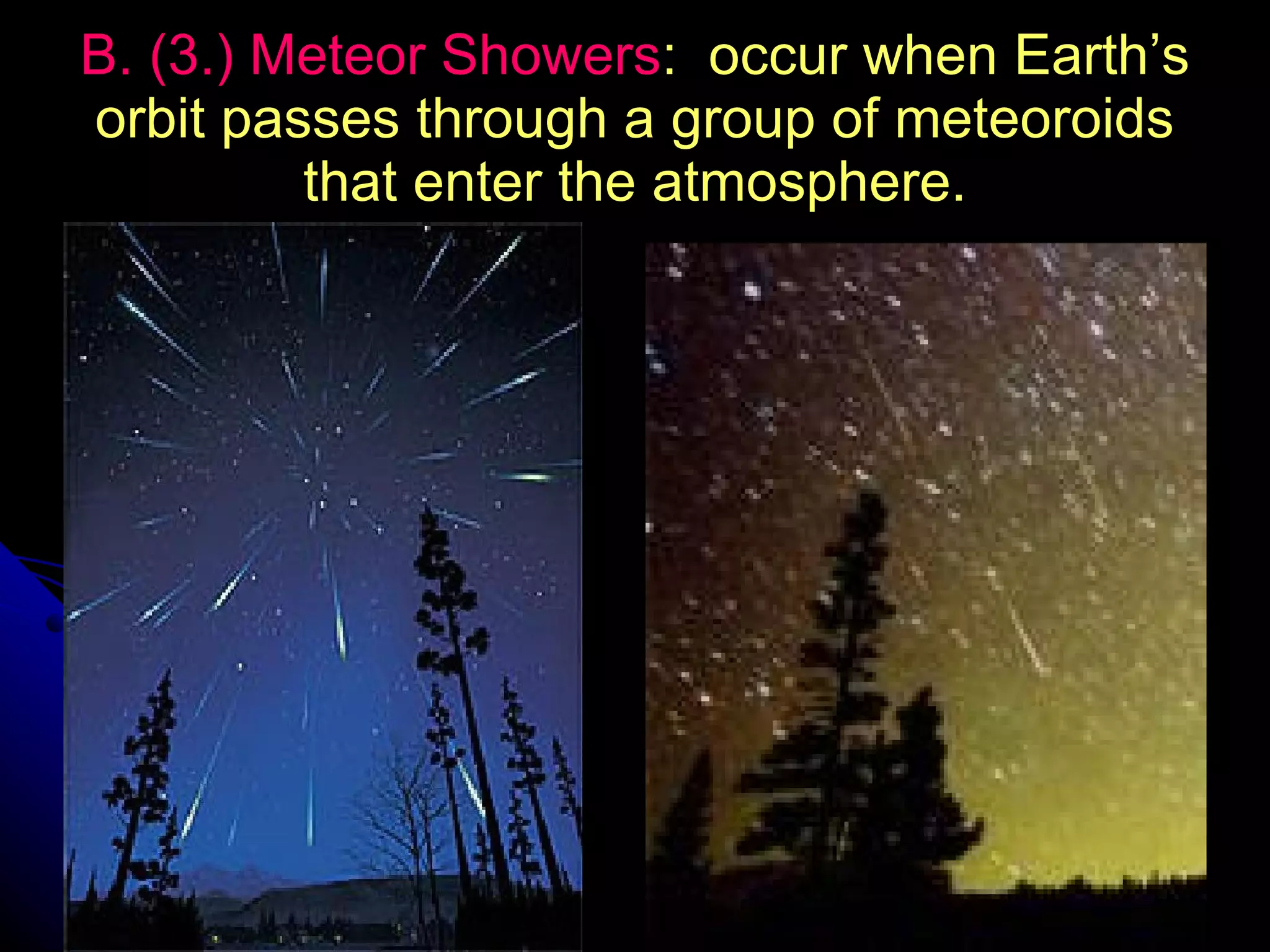
B. (3.) Meteor Showers :  occur when Earth’s orbit passes through a group of meteoroids that enter the atmosphere.
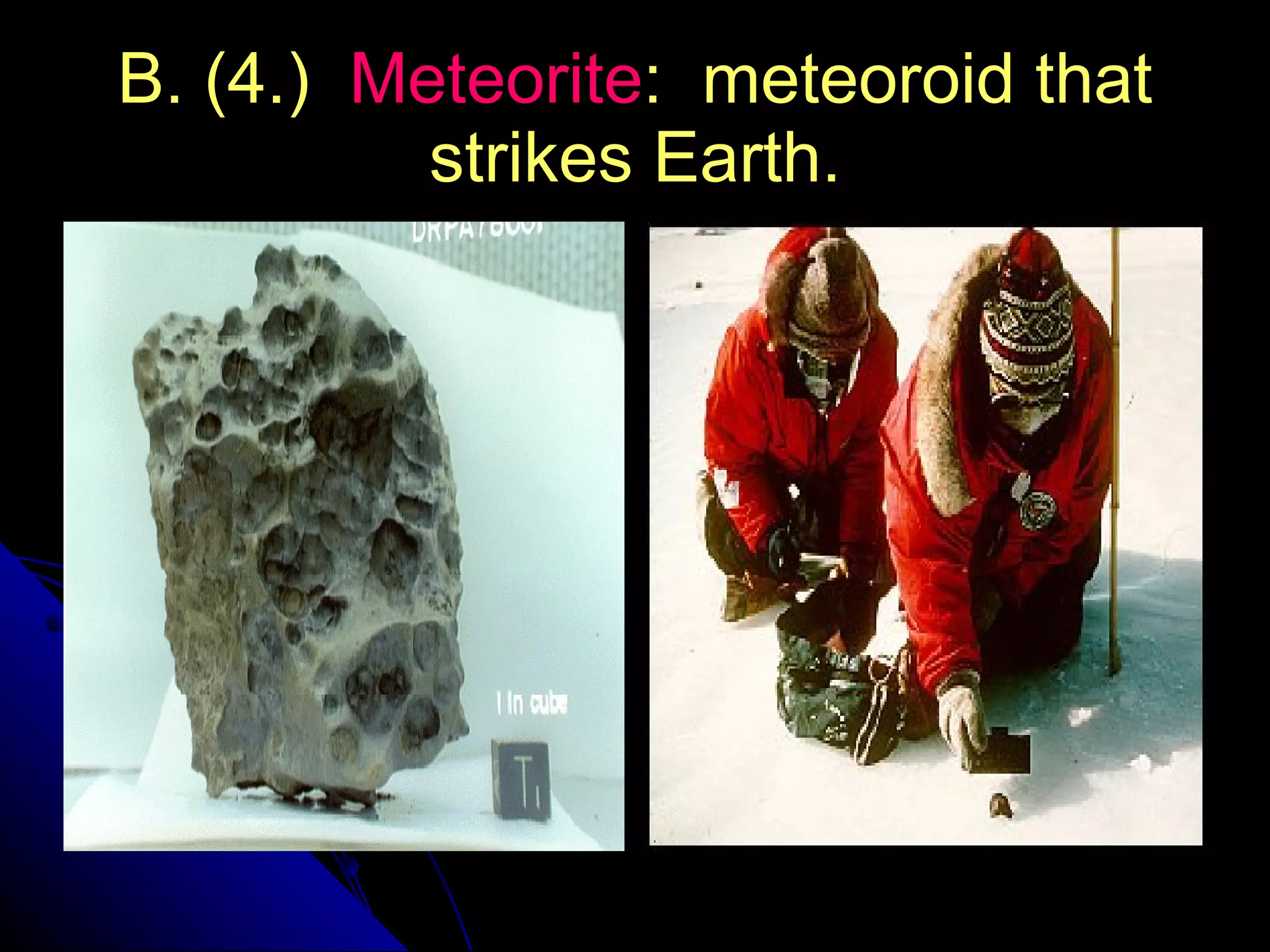
B. (4.)  Meteorite :  meteoroid that strikes Earth.
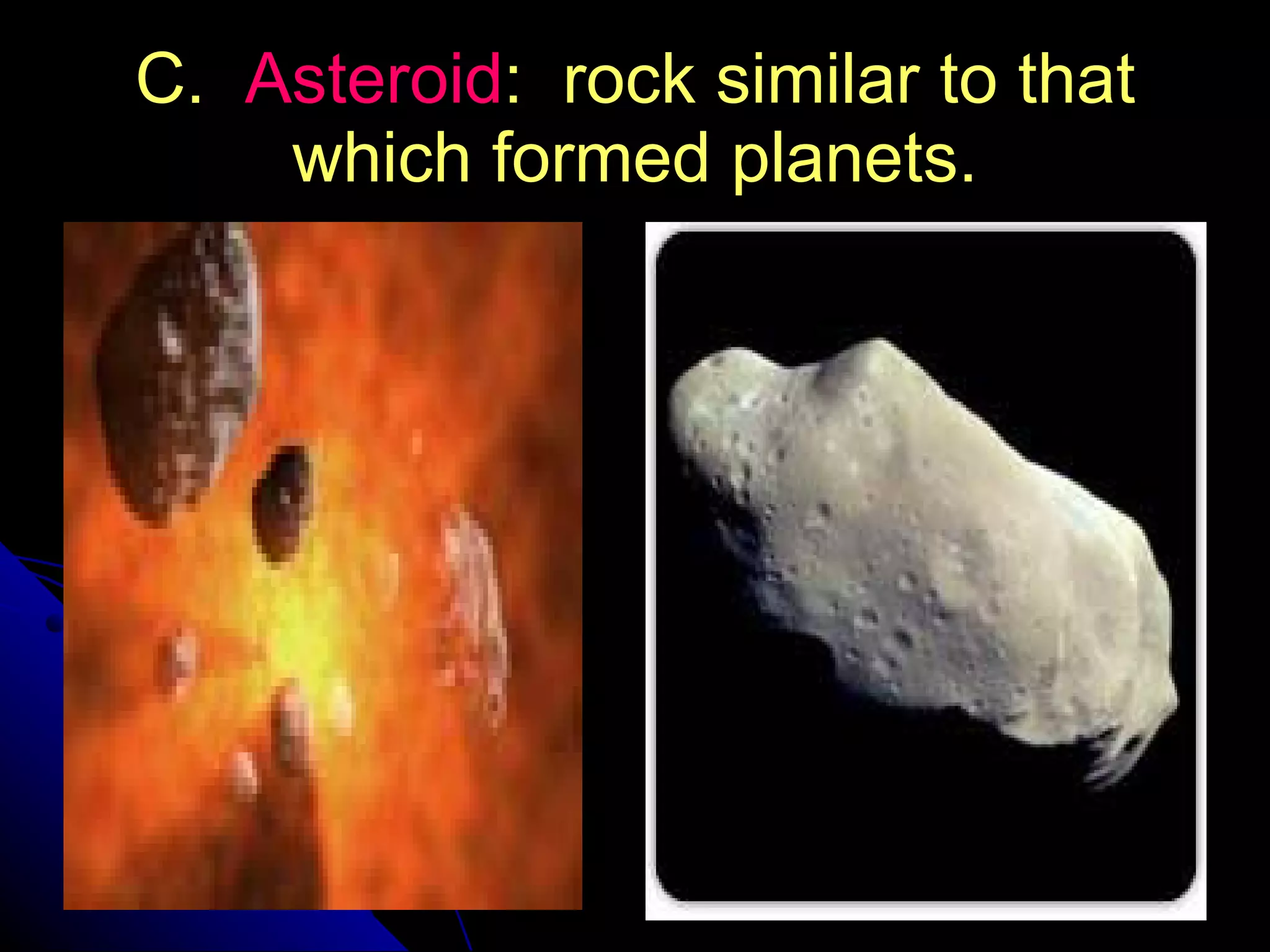
C.  Asteroid :  rock similar to that which formed planets.
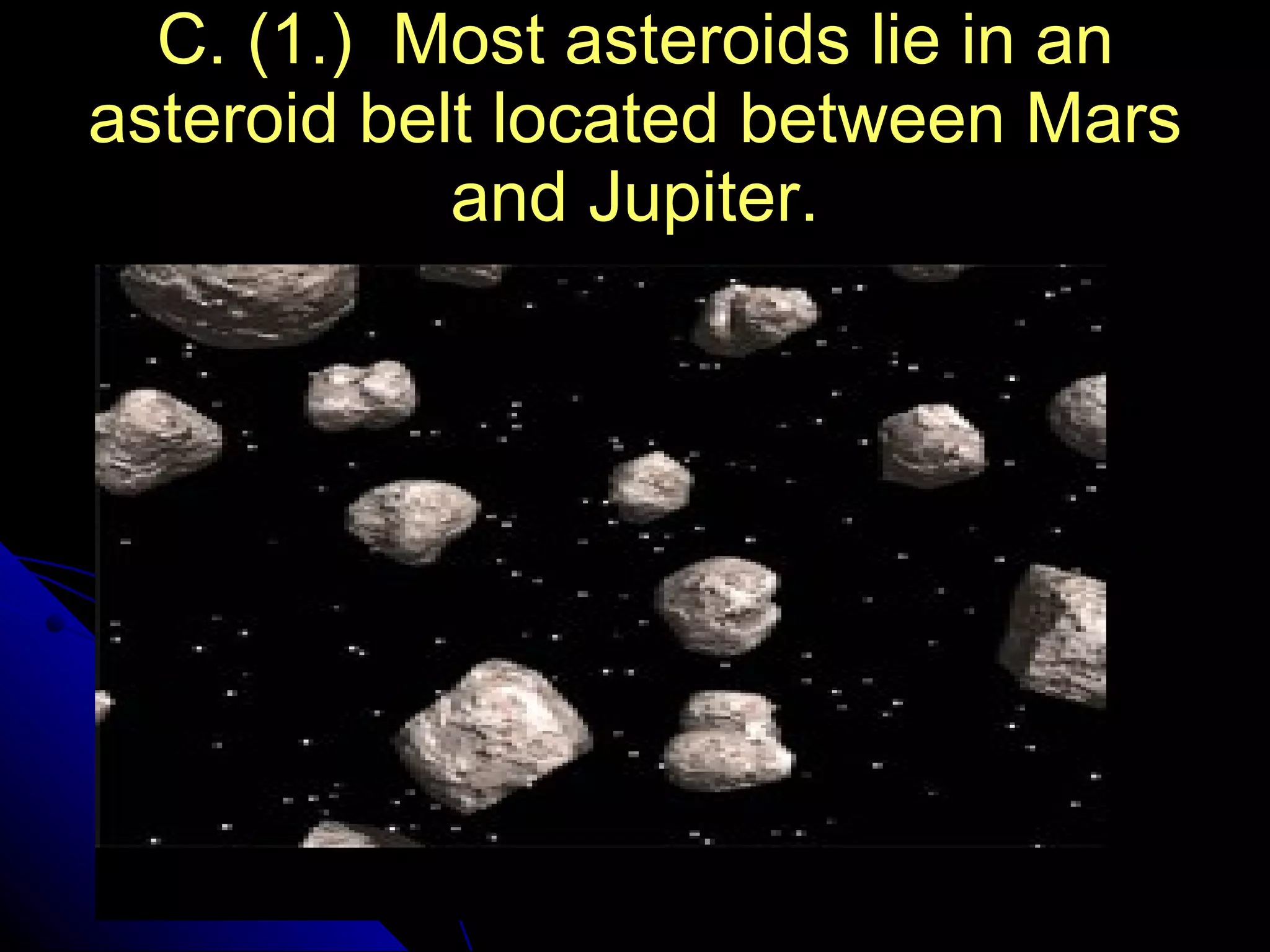
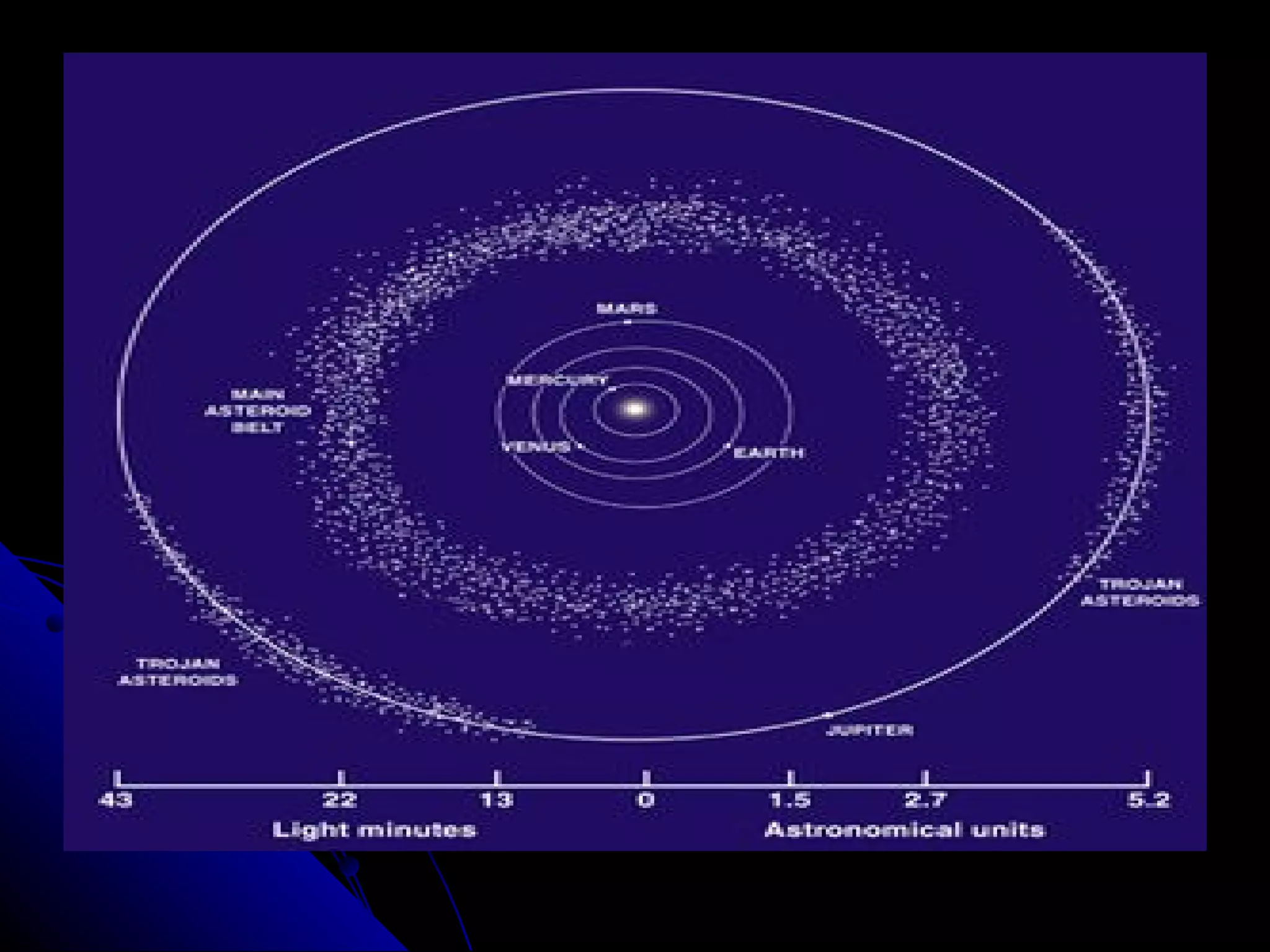
C. (1.)  Most asteroids lie in an asteroid belt located between Mars and Jupiter.
 
Asteroid Info: Jupiter’s gravity may have kept these asteroids from forming a planet. some planets’ moons may be asteroids pulled from the asteroid belt. asteroid sizes range from very tiny to 940 km in diameter.
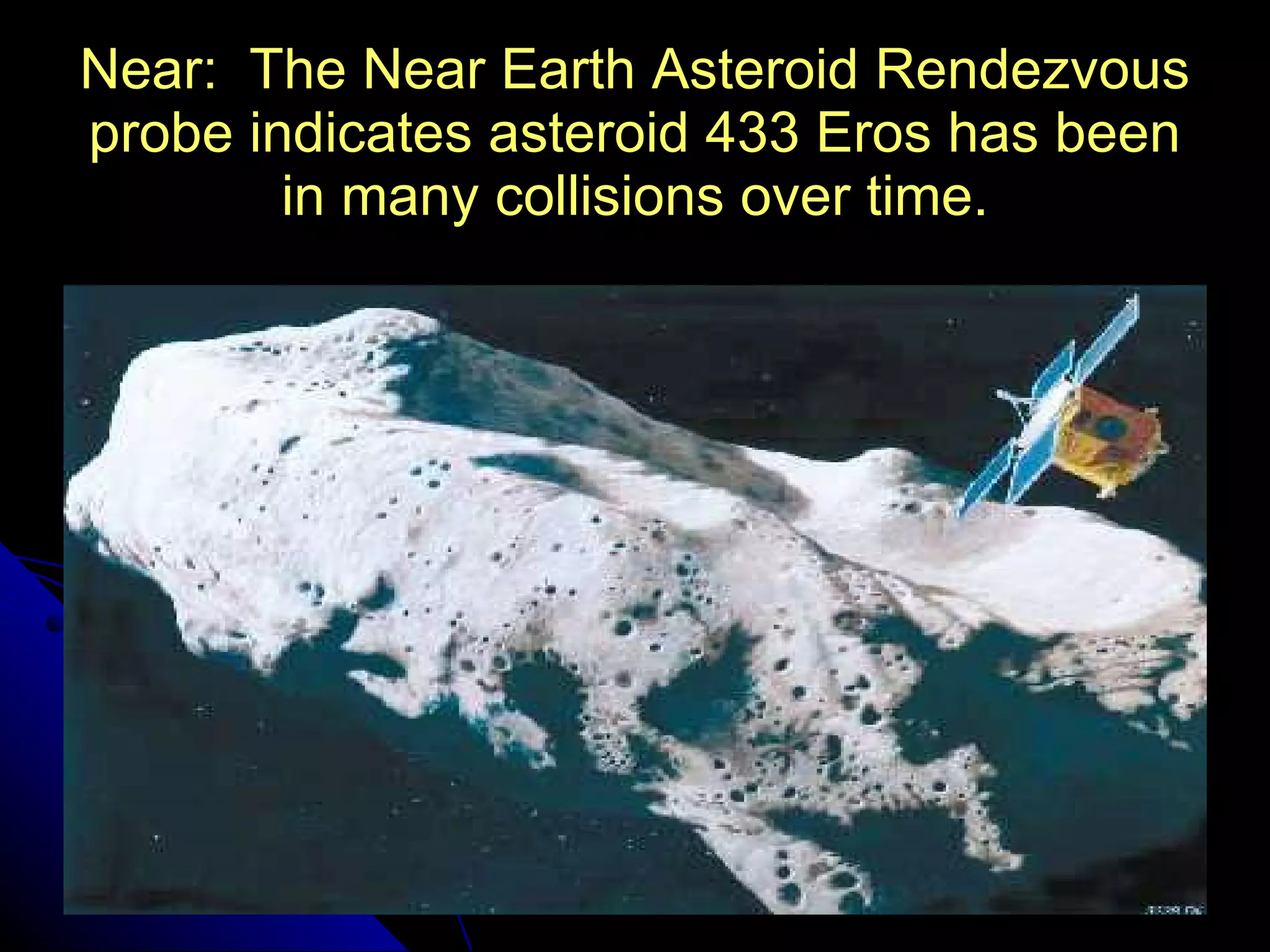
Near:  The Near Earth Asteroid Rendezvous probe indicates asteroid 433 Eros has been in many collisions over time.
What is a shooting star? It is NOT a star!!
SPACE STATION PHOTO
QUIZ BONUS WHY DO SCIENTISTS THINK WATER WAS/ IS PRESENT ON MARS IN GREAT QUANTITY ?


Chapter 24

  • 1.
    The Solar SystemSection I The Solar System
  • 2.
    Ideas about thenight sky have changed over time Earth-centered model – early Greeks thought planets, Sun, Moon, and stars revolved around Earth
  • 3.
    Sun-Centered model NicholasCopernicus and Galileo Galilei observed that the moon revolved around Earth and that Earth and other planets revolved around the Sun
  • 4.
    Modern View solarsystem includes Sun, eight planets, many small objects.
  • 5.
  • 6.
    NEBULA THEORY (originof solar system) a nebula of gas, ice, and dust slowly formed in space
  • 7.
    A cloud ofmaterial in the nebula slowly rotated in space
  • 8.
  • 9.
    The cloud becamemore dense, rotated faster, heated up, and flattened to form a disk.
  • 10.
    As the cloudcontracted, it grew warmer, triggering a nuclear fusion reaction that created the Sun
  • 11.
    The leftover matterbecame the planets and asteroids First four inner planets – small and rocky with iron cores. last four outer planets – large and lightweight …
  • 12.
    Planet orbits areelliptical and the Sun is not directly in the center of the orbits.
  • 13.
    Section II TheInner Planets
  • 14.
    Mercury Closest tothe Sun, smallest planet
  • 15.
    Weak magnetic fieldsuggests an iron core Has many craters and high cliffs no true atmosphere, so surface temperatures range from very hot to very cold
  • 16.
    Venus second fromthe Sun and similar to Earth in size and mass
  • 17.
    extremely dense atmosphereof clouds Carbon dioxide traps solar energy
  • 18.
    causes an intensegreenhouse effect Results in surface temperatures between 450 °C and 475°C
  • 19.
    Earth average distancebetween Earth and the Sun is 150 million km Water exists on surface as solid, liquid, and gas
  • 20.
    More than 70%of surface covered with water Atmosphere protects surface from most meteors and Sun’s radiation
  • 21.
    Mars Called redplanet because iron oxide in rocks makes them reddish-yellow Polar ice caps made mostly of frozen carbon dioxide and frozen water
  • 22.
    Has largest volcanoin the solar system
  • 23.
    Soil shows NOevidence of life……….. perhaps……………
  • 24.
    Has gullies anddeposits of soil and rocks, which may indicate the presence of liquid groundwater
  • 25.
    Thin atmosphere ofmostly carbon dioxide Strong winds caused by differences in temperature between day and night
  • 26.
  • 27.
  • 28.
    Is tilted onits axis, which causes seasons
  • 29.
    Two small moons,Phobos and Deimos
  • 30.
  • 31.
    Section III TheOuter Planets
  • 32.
    Jupiter fifth planetfrom the Sun, largest planet in the solar system
  • 33.
    Below atmosphere, liquidhydrogen and helium are suspected Solid rocky core may exist below liquid level
  • 34.
  • 35.
    The Great RedSpot is the most spectacular of Jupiter’s many constant high-pressure gas storms
  • 36.
  • 37.
  • 38.
    Has at least61 moons – four are large and have atmospheres
  • 39.
    Io is veryvolcanically active; the closest large moon to Jupiter
  • 40.
  • 41.
    Europa composed mostlyof rock; may have an ocean of water under a thick layer of ice
  • 42.
  • 43.
    Ganymede largest moonin solar system, even larger than planet Mercury
  • 44.
    Callisto cratered rockand ice crust may surround a salty ocean and rock core
  • 45.
    Saturn Sixth planetfrom the sun, second largest in the solar system, largest density
  • 46.
    Thick outer atmosphereof hydrogen, helium, ammonia, methane, and water vapor
  • 47.
  • 48.
  • 49.
    Might have asmall, rocky core
  • 50.
    Each large ringcomposed of thousands of ringlets of ice and rock particles
  • 51.
    Has at least31 moons
  • 52.
    Largest moon, Titan,is larger than the planet Mercury Thick clouds on Titan prevent scientists from seeing surface…….
  • 53.
  • 54.
    Uranus Seventh planetfrom the Sun, large, and gaseous
  • 55.
    Has thin, darkrings Atmosphere of hydrogen, helium, and methane Methane makes the planet bluish-green in color
  • 56.
    Axis of rotationnearly parallel to plane of orbit
  • 57.
    Neptune eighth planetfrom the sun, large and gaseous
  • 58.
    bluish-green colored atmospheresimilar to that of Uranus Storms on Neptune reveal an active and rapidly changing atmosphere has at least 11 moons, of which pinkish Triton is largest
  • 59.
  • 60.
    A. Comet: dust and rock particles combined with frozen water, methane, and ammonia.
  • 61.
    1. Halley’scomet: orbits Sun every 76 years.
  • 62.
    2. OortCloud: large group of comets surrounding solar system beyond Pluto.
  • 63.
    3. Amateurastronomers discovered Hale-Bopp in 1995.
  • 64.
    4. Cometstructure: large dirty snowball of frozen rock and ice.
  • 65.
    Comets a. Ice and dust vaporize as comet nears Sun. b. Vaporized material forms bright cloud called coma around comet nucleus. c. Solar wind pushes on gas and dust in the coma, causing the particles to form a tail that always points away from the Sun. d. Eventually, most of the ice in the comet’s nucleus vaporizes, leaving only small particles.
  • 66.
    Comets vaporize andbreak up after passing close to the Sun several times. When the nucleus breaks up, pieces spread out. The dust and rock fragments are called Meteoroids .
  • 67.
    B. (1.) Meteoroid : name given to small pieces of comet when they move through space.
  • 68.
    B. (2.) Meteor : small meteoroid that burns up in Earth’s atmosphere.
  • 69.
    B. (3.) MeteorShowers : occur when Earth’s orbit passes through a group of meteoroids that enter the atmosphere.
  • 70.
    B. (4.) Meteorite : meteoroid that strikes Earth.
  • 71.
    C. Asteroid: rock similar to that which formed planets.
  • 72.
    C. (1.) Most asteroids lie in an asteroid belt located between Mars and Jupiter.
  • 73.
  • 74.
    Asteroid Info: Jupiter’sgravity may have kept these asteroids from forming a planet. some planets’ moons may be asteroids pulled from the asteroid belt. asteroid sizes range from very tiny to 940 km in diameter.
  • 75.
    Near: TheNear Earth Asteroid Rendezvous probe indicates asteroid 433 Eros has been in many collisions over time.
  • 76.
    What is ashooting star? It is NOT a star!!
  • 77.
  • 78.
    QUIZ BONUS WHYDO SCIENTISTS THINK WATER WAS/ IS PRESENT ON MARS IN GREAT QUANTITY ?
  • 79.
  • 80.