Chapter 
10 
Pretrial 
and Trial 
Procedures
Ar rest and Bail
Procedures Following 
Arrest 
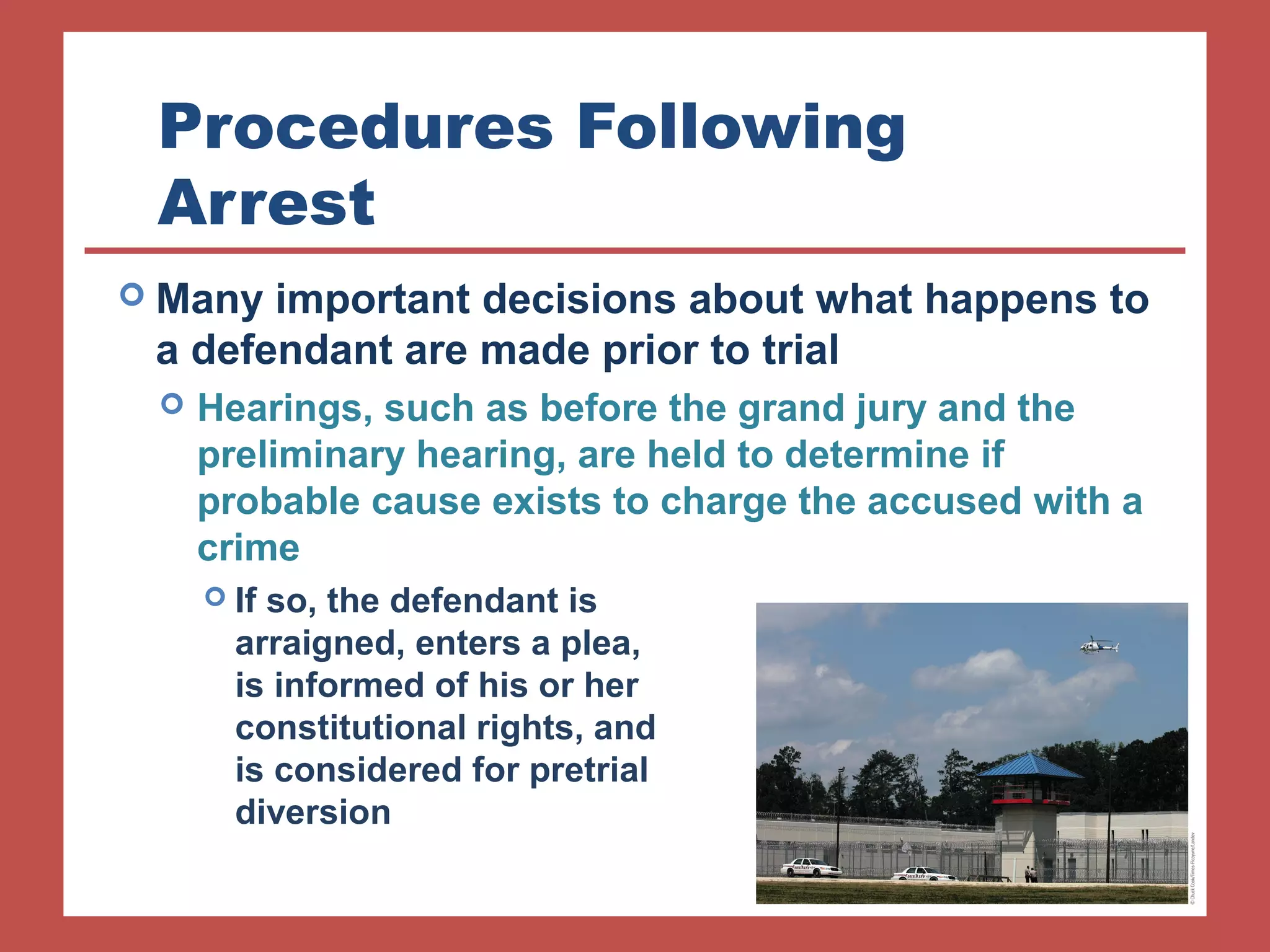
 Many important decisions about what happens to 
a defendant are made prior to trial 
 Hearings, such as before the grand jury and the 
preliminary hearing, are held to determine if 
probable cause exists to charge the accused with a 
crime 
 If so, the defendant is 
arraigned, enters a plea, 
is informed of his or her 
constitutional rights, and 
is considered for pretrial 
diversion
Bail 
Bail 
 A form of security, usually a sum of money 
that is put up or exchanged to secure the 
release of an arrested person before the 
trial begins 
Majority of criminal defendants are released 
on bail prior to trial 
The Eighth Amendment 
 Prohibits both cruel and unusual 
punishment and excessive bail
Bail 
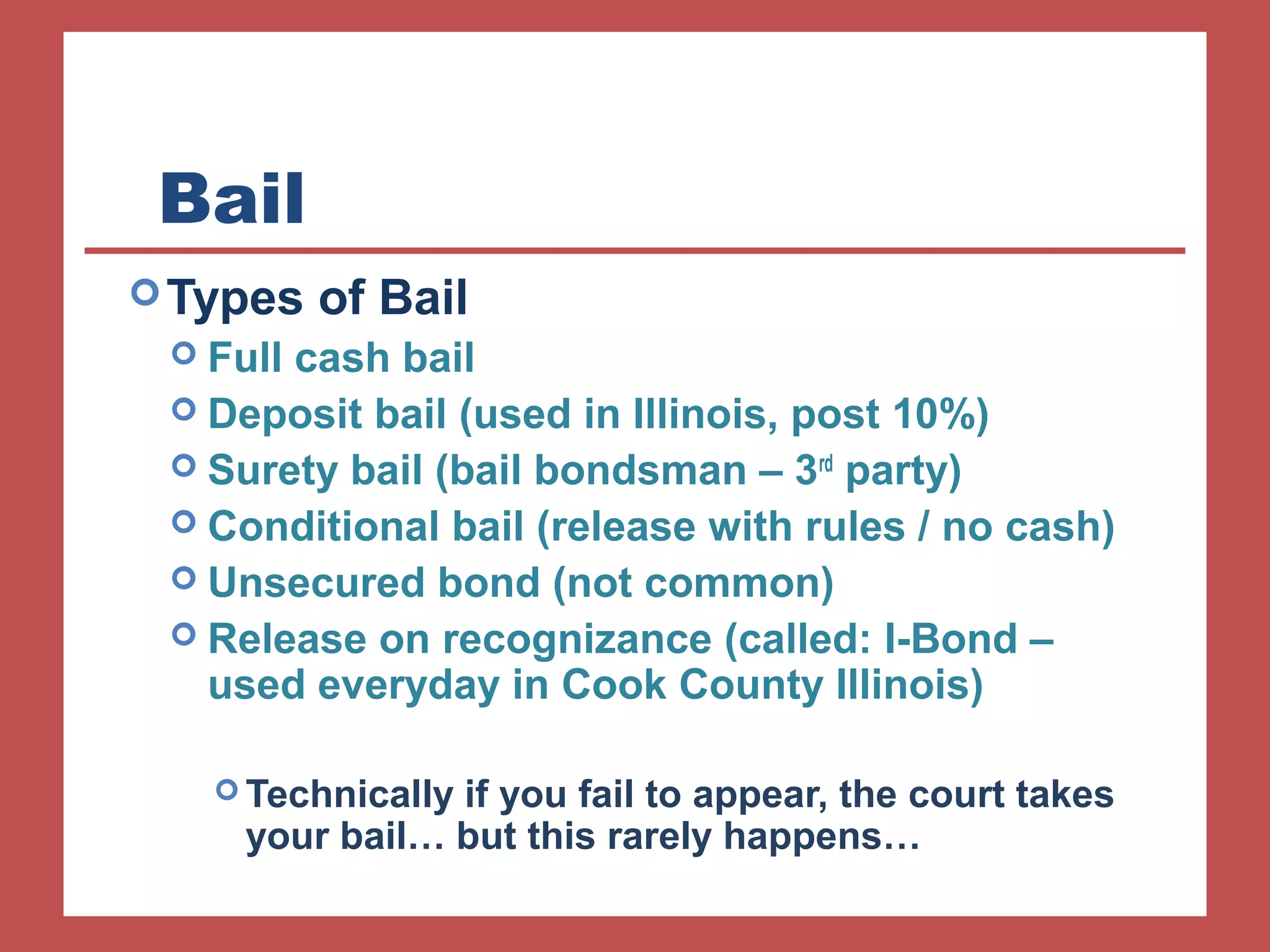
Types of Bail 
 Full cash bail 
 Deposit bail (used in Illinois, post 10%) 
 Surety bail (bail bondsman – 3rd party) 
 Conditional bail (release with rules / no cash) 
 Unsecured bond (not common) 
 Release on recognizance (called: I-Bond – 
used everyday in Cook County Illinois) 
Technically if you fail to appear, the court takes 
your bail… but this rarely happens…
Bail 
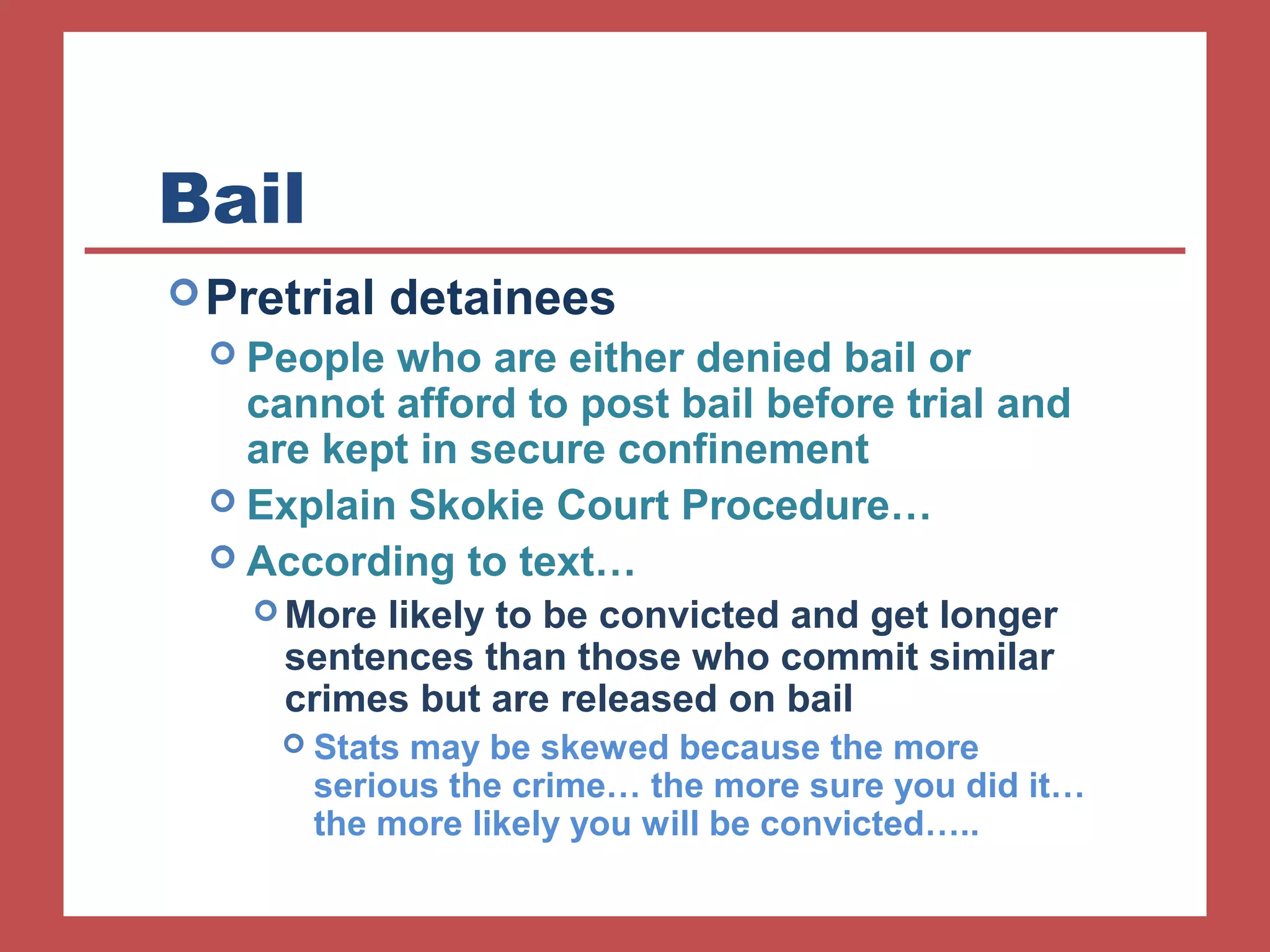
Pretrial detainees 
 People who are either denied bail or 
cannot afford to post bail before trial and 
are kept in secure confinement 
 Explain Skokie Court Procedure… 
 According to text… 
More likely to be convicted and get longer 
sentences than those who commit similar 
crimes but are released on bail 
 Stats may be skewed because the more 
serious the crime… the more sure you did it… 
the more likely you will be convicted…..
Bail 
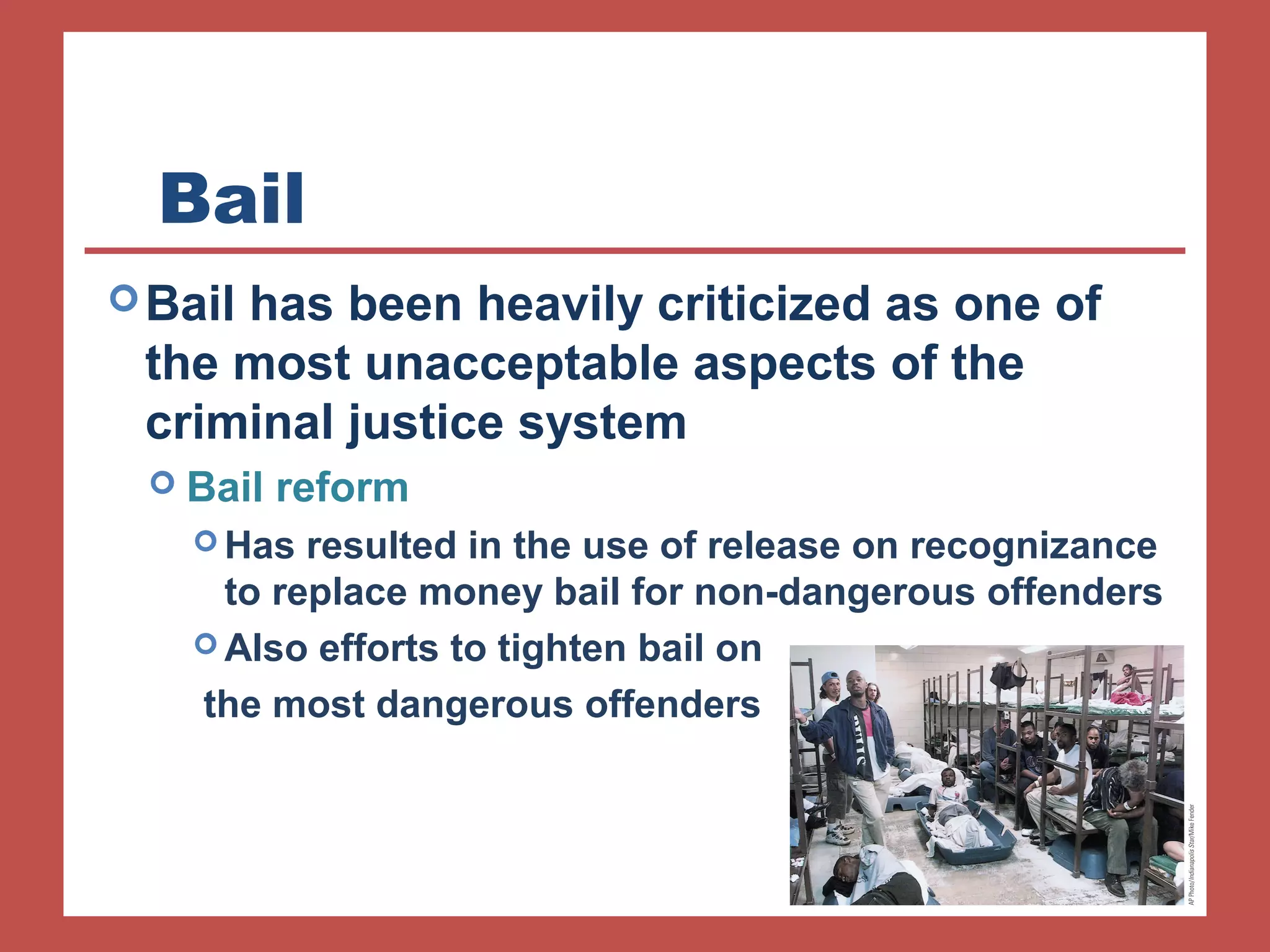
Bail has been heavily criticized as one of 
the most unacceptable aspects of the 
criminal justice system 
 Bail reform 
Has resulted in the use of release on recognizance 
to replace money bail for non-dangerous offenders 
Also efforts to tighten bail on 
the most dangerous offenders
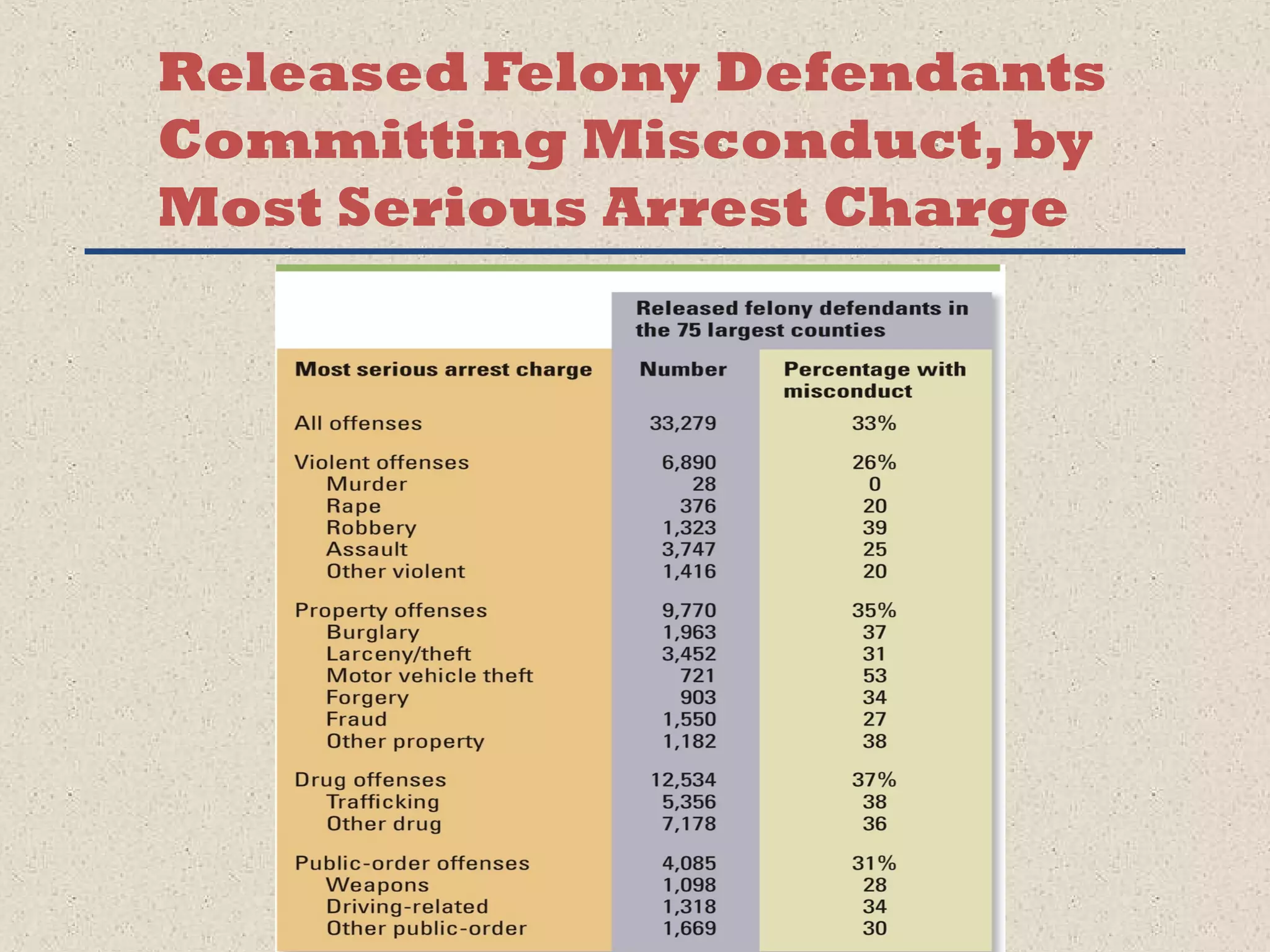
Released Felony Defendants 
Committing Misconduct, by 
Most Serious Arrest Charge
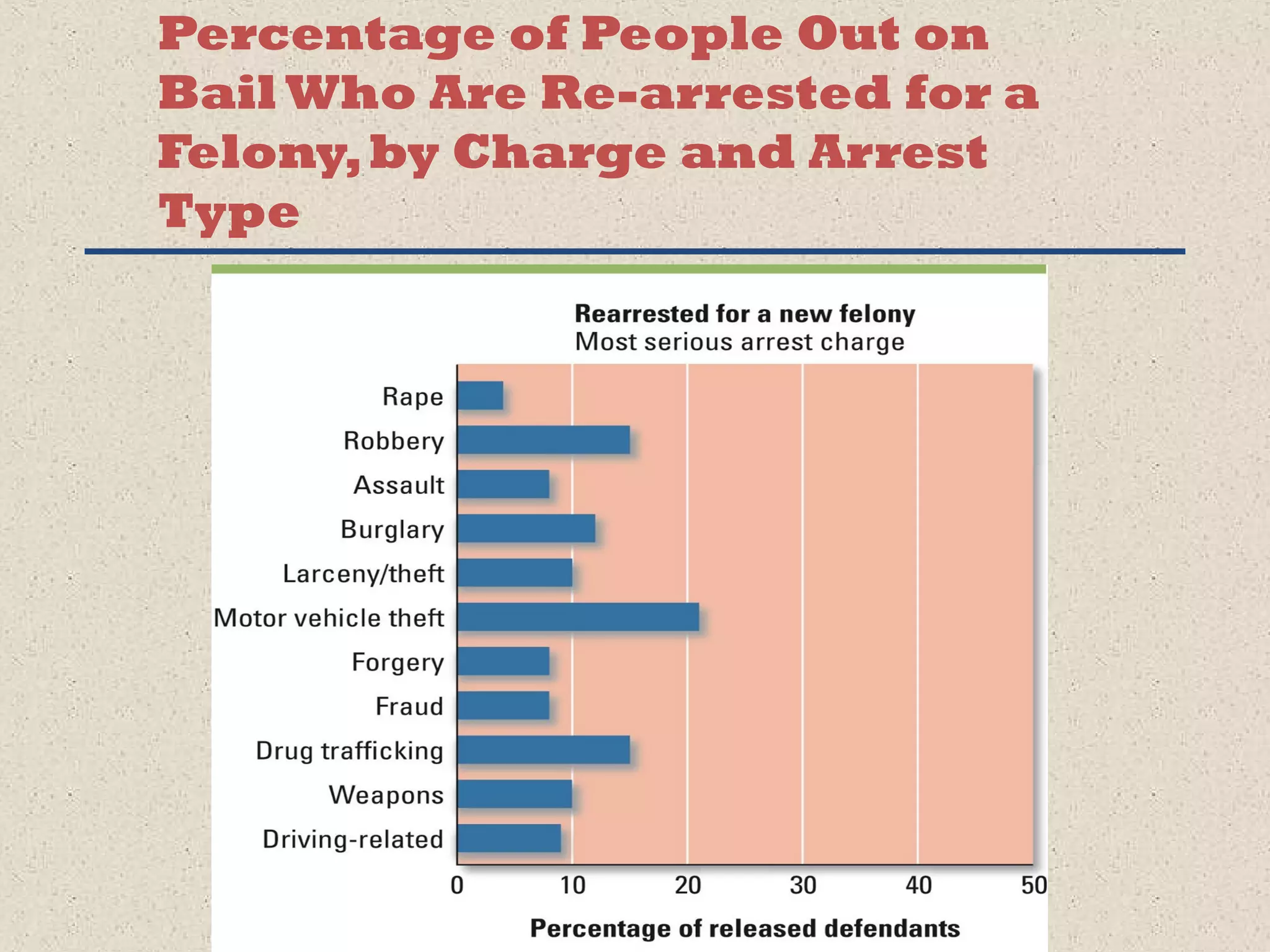
Percentage of People Out on 
Bail Who Are Re-arrested for a 
Felony, by Charge and Arrest 
Type
Pretrial and Charges
Pretrial Services 
Programs that provide a number of 
services to those released into the 
community prior to their trial dates 
 Determine which defendants can safely be 
released on bail pending trial 
Gather and verify information about arrestees 
Assess likelihood of failure to appear/arrest 
Provide supervision for defendants 
Special needs
Charging the 
Defendant 
The Grand Jury 
 Presentment – (Used by special grand juries 
like the one in Ferguson) 
 True Bill 
Grand Jury saying YES - indict 
 Indictment 
The formal charge the grand jury decides 
 No Bill 
Very rare, but this is when the Grand Jury says 
no.
Charging the Defendant 
The Preliminary Hearing 
 (if we don’t use the grand jury) 
 Presided over and decided by a Judge 
 Prosecution presents Evidence 
 Defense can Cross-examination 
Waiving the preliminary hearing 
 Sometimes a lawyer will waive if the 
charge is disturbing… or if there is no 
question as to guilt…..
Video: Pleas
Charging the Defendant 
At arraignment the defendant is informed 
of the charges against him/her and 
appoints counsel if one has not yet been 
retained 
 A plea is entered at arraignment: 
Guilty 
Not guilty 
Nolo contendere (rare – not accepted in all areas)
Plea Bargaining
Plea Bargaining 
Most cases never go to trial but are 
bargained out of the system 
 Bargains can be made for a plea of guilty in 
exchange for: 
A reduced sentence 
Dropping charges 
Lowering charges 
Substituting a negative charge for one with more 
socially acceptable connotations
Plea Bargaining 
Pros of Plea Bargaining 
 The overall costs of the criminal prosecution are 
reduced 
 The administrative efficiency of the courts is 
greatly improved 
 The prosecution can devote more time to more 
serious cases 
 The defendant avoids possible detention and an 
extended trial and may receive a reduced 
sentence 
 Resources can be devoted more efficiently to 
cases that need greater attention
Plea Bargaining 
Cons of Plea Bargaining 
 Defendants waive constitutional right to trial 
 Allow dangerous offenders to receive lenient 
sentences 
 Danger that an innocent person will be 
convicted of a crime 
 Prosecutors are given a free hand 
 Possible that innocent persons will admit guilt
Plea Bargaining 
The Problem of False Confessions 
 Why do innocent people confess? 
 Duress 
 Coercion 
 Intoxication 
 Diminished capacity 
 Mental impairment 
 Ignorance of the law 
 Fear of violence 
 The actual infliction of harm 
 The threat of a harsh sentence 
 Misunderstanding the situation
Plea Bargaining 
 Legal Issues in Plea Bargaining 
 Effective assistance of counsel 
 Pleas must be made voluntarily 
 Prosecutor promises must be kept 
 Defendant promises must be kept 
 Due process rights must not be violated 
 Guilty pleas from persons who claim innocence is 
valid 
 Use of plea bargaining statements at trial
Plea Bargaining 
Few states have placed limits on the 
discretion of prosecutors in plea 
bargaining situations 
 A court will not accept a guilty plea unless: 
The defendant has been properly advised by 
counsel 
AND 
The court has determined that the plea is 
voluntary and has a factual basis
Plea Bargaining 
The role of the defense counsel in plea 
bargaining 
 Advisory 
 Explanatory 
 Informative 
Know the facts of the case and the law and and 
advise your client of the available alternatives
Plea Bargaining 
Although plea bargaining has been criticized, 
efforts to control it have not met with much 
success 
Jurisdictional safeguards 
 Judge questions defendant 
 Cook County – Is this plea of your own free will? - was anything 
promised in exchange for our plea? - are you being forced to plea?... 
 Defense counsel is present 
 Open discussion of plea 
 Cook County - Defendant states plea out loud 
 Full and frank information about defendant 
 Cook County - Defendant signs a jury waiver
Pretrial 
& 
Trial
Pretrial Diversion 
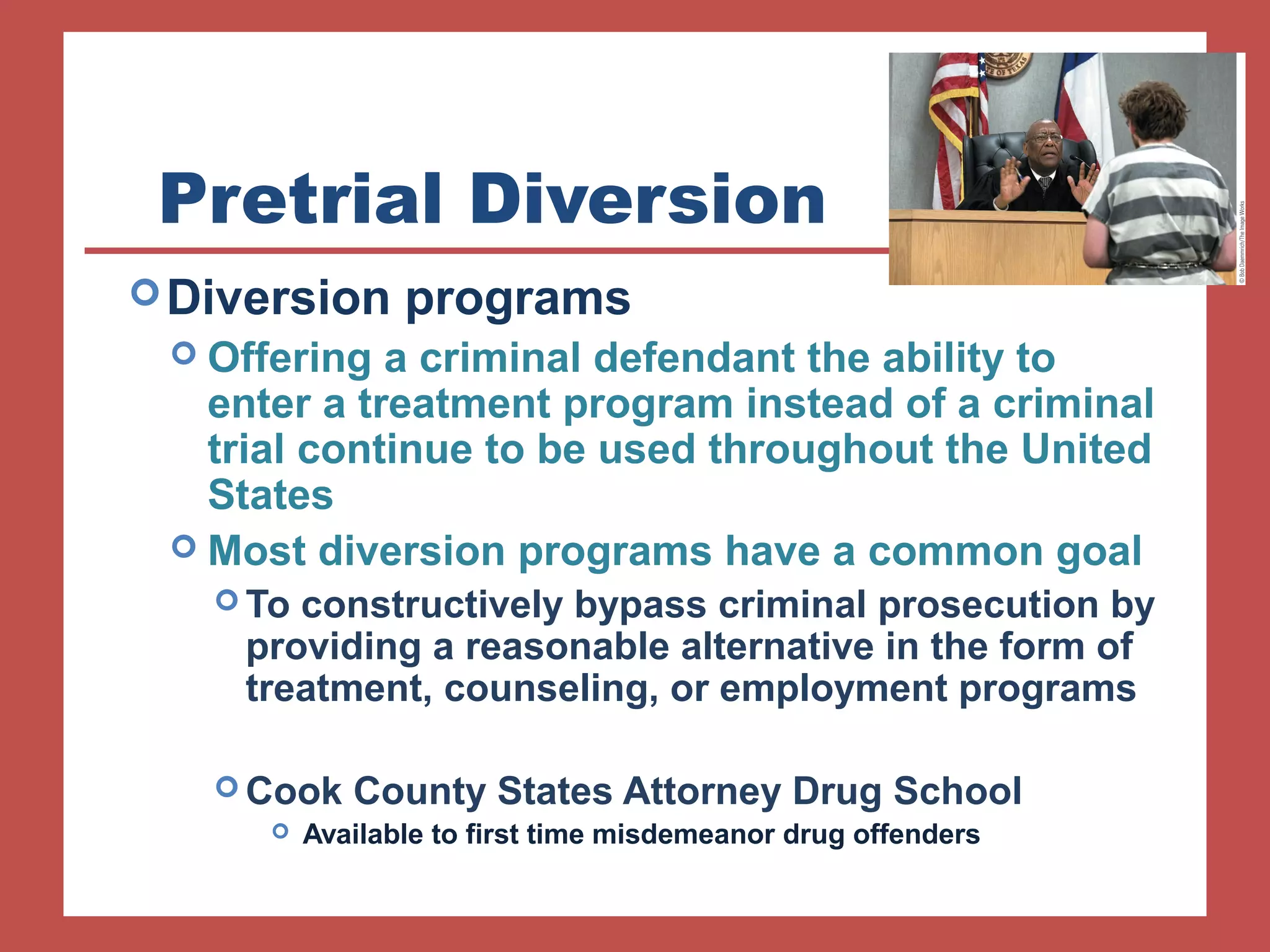
Diversion programs 
 Offering a criminal defendant the ability to 
enter a treatment program instead of a criminal 
trial continue to be used throughout the United 
States 
 Most diversion programs have a common goal 
To constructively bypass criminal prosecution by 
providing a reasonable alternative in the form of 
treatment, counseling, or employment programs 
Cook County States Attorney Drug School 
 Available to first time misdemeanor drug offenders
The Trial 
An open and public hearing designed to 
examine the facts of the case brought by 
the state against the accused 
 Most formal trials are heard by a jury, although 
some defendants request a bench trial. 
 (I believe this is FALSE) 
 Not open to witnesses such as police.
Legal Rights During Trial 
Counsel 
Speedy trial 
Public trial 
Convicted by 
proof beyond a 
reasonable 
doubt 
Impartial judge 
Right to be competent 
Confront witnesses 
Compulsory process 
Impartial jury
Jury Selection 
Voir dire 
 The process in which a potential jury 
panel is questioned to select jurors 
Peremptory challenge 
 The dismissal of a prospective juror by 
either the prosecution or the defense for 
unexplained, discretionary reasons
Jury Selection 
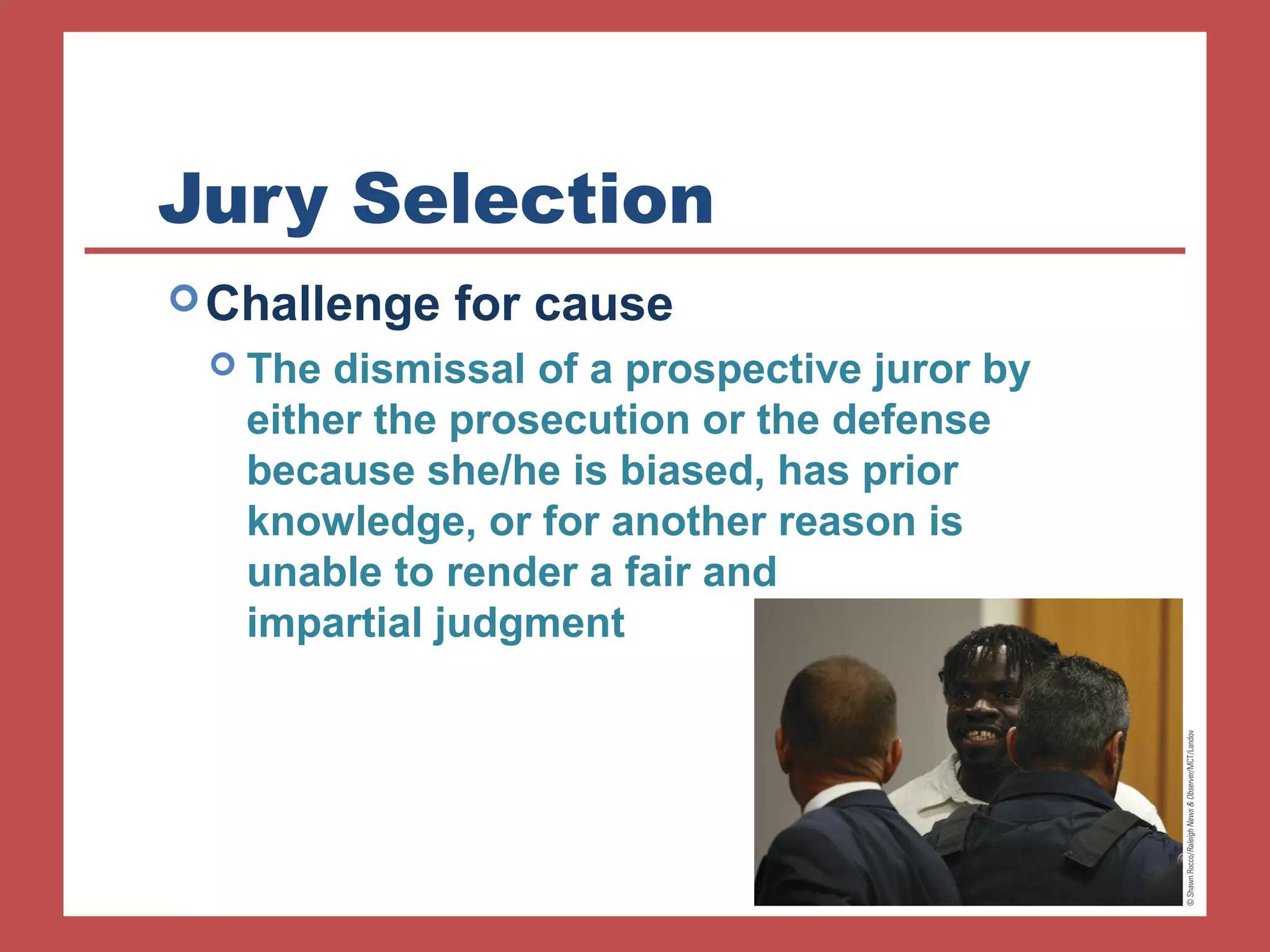
Challenge for cause 
 The dismissal of a prospective juror by 
either the prosecution or the defense 
because she/he is biased, has prior 
knowledge, or for another reason is 
unable to render a fair and 
impartial judgment
The Trial Process 
An established order of steps is 
followed throughout a criminal trial: 
 Selection of a jury 
 Opening statements 
 Introduction of evidence (prosecution and 
defense) 
 Closing arguments 
 Instructions to the jury 
 Juror deliberations 
 Verdict
The Trial 
Jury nullification 
 A jury’s refusal to render a verdict 
according to the law and fact regardless of 
the evidence presented 
Imposition of the sentence is the 
responsibility of the trial judge 
 The defense may petition an appellate 
court to review the procedures used 
during the trial once a verdict has been 
rendered

Chapter 10

  • 1.
    Chapter 10 Pretrial and Trial Procedures
  • 2.
  • 3.
    Procedures Following Arrest  Many important decisions about what happens to a defendant are made prior to trial  Hearings, such as before the grand jury and the preliminary hearing, are held to determine if probable cause exists to charge the accused with a crime  If so, the defendant is arraigned, enters a plea, is informed of his or her constitutional rights, and is considered for pretrial diversion
  • 4.
    Bail Bail A form of security, usually a sum of money that is put up or exchanged to secure the release of an arrested person before the trial begins Majority of criminal defendants are released on bail prior to trial The Eighth Amendment  Prohibits both cruel and unusual punishment and excessive bail
  • 5.
    Bail Types ofBail  Full cash bail  Deposit bail (used in Illinois, post 10%)  Surety bail (bail bondsman – 3rd party)  Conditional bail (release with rules / no cash)  Unsecured bond (not common)  Release on recognizance (called: I-Bond – used everyday in Cook County Illinois) Technically if you fail to appear, the court takes your bail… but this rarely happens…
  • 6.
    Bail Pretrial detainees  People who are either denied bail or cannot afford to post bail before trial and are kept in secure confinement  Explain Skokie Court Procedure…  According to text… More likely to be convicted and get longer sentences than those who commit similar crimes but are released on bail  Stats may be skewed because the more serious the crime… the more sure you did it… the more likely you will be convicted…..
  • 7.
    Bail Bail hasbeen heavily criticized as one of the most unacceptable aspects of the criminal justice system  Bail reform Has resulted in the use of release on recognizance to replace money bail for non-dangerous offenders Also efforts to tighten bail on the most dangerous offenders
  • 8.
    Released Felony Defendants Committing Misconduct, by Most Serious Arrest Charge
  • 9.
    Percentage of PeopleOut on Bail Who Are Re-arrested for a Felony, by Charge and Arrest Type
  • 10.
  • 11.
    Pretrial Services Programsthat provide a number of services to those released into the community prior to their trial dates  Determine which defendants can safely be released on bail pending trial Gather and verify information about arrestees Assess likelihood of failure to appear/arrest Provide supervision for defendants Special needs
  • 12.
    Charging the Defendant The Grand Jury  Presentment – (Used by special grand juries like the one in Ferguson)  True Bill Grand Jury saying YES - indict  Indictment The formal charge the grand jury decides  No Bill Very rare, but this is when the Grand Jury says no.
  • 13.
    Charging the Defendant The Preliminary Hearing  (if we don’t use the grand jury)  Presided over and decided by a Judge  Prosecution presents Evidence  Defense can Cross-examination Waiving the preliminary hearing  Sometimes a lawyer will waive if the charge is disturbing… or if there is no question as to guilt…..
  • 14.
  • 15.
    Charging the Defendant At arraignment the defendant is informed of the charges against him/her and appoints counsel if one has not yet been retained  A plea is entered at arraignment: Guilty Not guilty Nolo contendere (rare – not accepted in all areas)
  • 16.
  • 17.
    Plea Bargaining Mostcases never go to trial but are bargained out of the system  Bargains can be made for a plea of guilty in exchange for: A reduced sentence Dropping charges Lowering charges Substituting a negative charge for one with more socially acceptable connotations
  • 18.
    Plea Bargaining Prosof Plea Bargaining  The overall costs of the criminal prosecution are reduced  The administrative efficiency of the courts is greatly improved  The prosecution can devote more time to more serious cases  The defendant avoids possible detention and an extended trial and may receive a reduced sentence  Resources can be devoted more efficiently to cases that need greater attention
  • 19.
    Plea Bargaining Consof Plea Bargaining  Defendants waive constitutional right to trial  Allow dangerous offenders to receive lenient sentences  Danger that an innocent person will be convicted of a crime  Prosecutors are given a free hand  Possible that innocent persons will admit guilt
  • 20.
    Plea Bargaining TheProblem of False Confessions  Why do innocent people confess?  Duress  Coercion  Intoxication  Diminished capacity  Mental impairment  Ignorance of the law  Fear of violence  The actual infliction of harm  The threat of a harsh sentence  Misunderstanding the situation
  • 21.
    Plea Bargaining Legal Issues in Plea Bargaining  Effective assistance of counsel  Pleas must be made voluntarily  Prosecutor promises must be kept  Defendant promises must be kept  Due process rights must not be violated  Guilty pleas from persons who claim innocence is valid  Use of plea bargaining statements at trial
  • 22.
    Plea Bargaining Fewstates have placed limits on the discretion of prosecutors in plea bargaining situations  A court will not accept a guilty plea unless: The defendant has been properly advised by counsel AND The court has determined that the plea is voluntary and has a factual basis
  • 23.
    Plea Bargaining Therole of the defense counsel in plea bargaining  Advisory  Explanatory  Informative Know the facts of the case and the law and and advise your client of the available alternatives
  • 24.
    Plea Bargaining Althoughplea bargaining has been criticized, efforts to control it have not met with much success Jurisdictional safeguards  Judge questions defendant  Cook County – Is this plea of your own free will? - was anything promised in exchange for our plea? - are you being forced to plea?...  Defense counsel is present  Open discussion of plea  Cook County - Defendant states plea out loud  Full and frank information about defendant  Cook County - Defendant signs a jury waiver
  • 25.
  • 26.
    Pretrial Diversion Diversionprograms  Offering a criminal defendant the ability to enter a treatment program instead of a criminal trial continue to be used throughout the United States  Most diversion programs have a common goal To constructively bypass criminal prosecution by providing a reasonable alternative in the form of treatment, counseling, or employment programs Cook County States Attorney Drug School  Available to first time misdemeanor drug offenders
  • 27.
    The Trial Anopen and public hearing designed to examine the facts of the case brought by the state against the accused  Most formal trials are heard by a jury, although some defendants request a bench trial.  (I believe this is FALSE)  Not open to witnesses such as police.
  • 28.
    Legal Rights DuringTrial Counsel Speedy trial Public trial Convicted by proof beyond a reasonable doubt Impartial judge Right to be competent Confront witnesses Compulsory process Impartial jury
  • 29.
    Jury Selection Voirdire  The process in which a potential jury panel is questioned to select jurors Peremptory challenge  The dismissal of a prospective juror by either the prosecution or the defense for unexplained, discretionary reasons
  • 30.
    Jury Selection Challengefor cause  The dismissal of a prospective juror by either the prosecution or the defense because she/he is biased, has prior knowledge, or for another reason is unable to render a fair and impartial judgment
  • 31.
    The Trial Process An established order of steps is followed throughout a criminal trial:  Selection of a jury  Opening statements  Introduction of evidence (prosecution and defense)  Closing arguments  Instructions to the jury  Juror deliberations  Verdict
  • 32.
    The Trial Jurynullification  A jury’s refusal to render a verdict according to the law and fact regardless of the evidence presented Imposition of the sentence is the responsibility of the trial judge  The defense may petition an appellate court to review the procedures used during the trial once a verdict has been rendered

Editor's Notes

  • #3 Learning Objective Two
  • #4 Learning Objective One
  • #5 Learning Objective Two
  • #6 Learning Objective Three
  • #7 Learning Objective Three
  • #8 Learning Objective Four - Jails can be overcrowded and dangerous. Sometimes it takes a court order to improve conditions. Prisoners at Marion County Lockup in Indianapolis sleep on the floor. Many state prison systems have been using some form of early release to reduce the number of inmates. Despite early releases, crowding at the Marion County Lockup is still under scrutiny as its population continues to soar.
  • #9 Figure 10.2 Released Felony Defendants Committing Misconduct, by Most Serious Arrest Charge
  • #10 Figure 10.3 Percentage of People Out on Bail Who Are Rearrested for a Felony, by Charge and Arrest Type
  • #11 Learning Objective Two
  • #12 Learning Objective Five
  • #13 Learning Objective Six
  • #14 Learning Objective Six
  • #15 Learning Objective Seven
  • #16 Learning Objective Seven
  • #17 Learning Objective Two
  • #18 Learning Objective Eight
  • #19 Learning Objective Nine
  • #20 Learning Objective Nine
  • #21 Learning Objective Nine
  • #22 Learning Objective Nine - Mbarek Lafrem, 30, of Norwood, Pennsylvania, is escorted by officials after being charged with brutally beating a woman in a New York City bar after she allegedly rejected his advances. He pleaded guilty.
  • #23 Learning Objective Ten
  • #24 Learning Objective Ten
  • #25 Learning Objective Ten
  • #26 Learning Objective Two
  • #27 Learning Objective Eleven - Drug courts are often active in the diversion process. In Austin, Texas, a judge presides over the weekly meeting of the Drug Diversion Court, a yearlong program for defendants who have been arrested for felony possession of a controlled substance. The program relies on frequent drug screening, offers classes and treatment referrals, and can result in dismissal of charges if the defendant completes the program successfully.
  • #28 Judge Susan Criss of the Texas District Court in Galveston discovered on Facebook that a lawyer who had requested a trial delay because of a death was drinking, not grieving, after the funeral.
  • #29 Learning Objective Twelve
  • #30 Learning Objective Twelve
  • #31 Death row inmate Marcus Robinson smiles toward his family after Cumberland County Senior Resident Superior Court Judge Greg Weeks found that racial bias played a role in his trial and sentencing on April 20, 2012, in Fayetteville, North Carolina. The historic ruling means Robinson’s sentence was immediately converted to life without possibility for parole. It was the first case to be decided under North Carolina’s Racial Justice Act.
  • #33 Learning Objective Twelve