Chapter 
12 
Community 
Sentences: 
Probation & 
Intermediate 
Sanctions
Community Sentencing
Community Sentencing 
Community sentences are popular 
because: 
 Less costly 
 Help the offender maintain family and 
community ties 
 Can be structured to maximize security 
and maintain public safety 
 Scaled in severity to correspond to the 
seriousness of the crime 
 Can feature restoration and reintegration 
 Can act as a “second chance”
Probation
Probation 
John Augustus: 
 From Boston 
 1840’s-1900’s 
Was a leading reformer of probation in the 
United States 
 Credited with originating the modern 
probation concept 
 His work inspired Massachusetts legislature 
to appoint paid probation officers
Probation 
Probation 
 A sentence entailing the conditional 
release of a convicted offender into the 
community under the supervision 
of the court, subject to certain 
conditions for a specified 
time
Probation 
The common law practice of judicial 
reprieve 
 Allowed judges to suspend punishment so that 
convicted offenders could seek a pardon, 
gather new evidence, or demonstrate that they 
had reformed their behavior 
The practice of recognizance 
 Enabled convicted offenders to remain free if 
they agreed to enter into a debt obligation with 
the state
Probation 
Currently about 4 million people are 
on probation 
 More than 2 million people are being 
placed on probation annually – a slightly 
larger number than exit their probation 
sentence 
Probation rules are a set of conditions or 
restrictions mandated by the court that must 
be obeyed by a probationer
Probation 
Revocation 
 An administrative act performed by a 
parole authority that removes a person 
from parole due to a violation on part of 
the parolee. 
 Probation may be revoked if a probationer 
fails to comply with rules and disobeys 
reasonable requests to meet their 
treatment obligations
Probation 
Probation officers usually 
have five tasks: 
a. Investigation 
 Presentence investigation serves as the basis 
for sentencing 
a. Intake 
b. Diagnosis 
 Used to select appropriate treatment modes 
a. Treatment supervision 
b. Risk classification 
 Assessment of the risk level probationers pose 
to the community and themselves
Probation 
The U.S. Supreme Court has ruled 
that probationers have a unique 
status and they are entitled to fewer 
constitutional protections than other 
citizens 
 Minnesota v. Murphy 
 Griffin v. Wisconsin 
 United States v. Knights
Probation 
Because placing a person on probation 
implies that probation will continue 
unless the probationer commits a major 
violation, the defendant has been given 
certain procedural due process rights at 
this stage of the criminal process 
 Mempa v. Rhay 
 Morrissey v. Brewer 
 Gagnon v. Scarpelli 
 Beardon v. Georgia 
 United States v. Granderson
Probation 
 United States v. Granderson (1994) 
Significant case in that it helped clarify what 
can happen to a probationer whose community 
sentence is revoked 
 Granderson was eligible for a 6 month prison 
sentence but was given 60 months probation 
instead. 
 He tested positive for drugs his probation was 
revoked. 
 Statute required he serve 1/3 of his sentence so 
the trial court gave him 20 months in prison 
 He appealed and Supreme Court found it unfair, 
ruled he should have been given 1/3 of the 6 
months (2 months), not 60 months.
Probation 
Probation is cost effective 
 Annual cost of incarceration: 
Approximately $25,000 
 Annual cost of probation: 
 Approximately $2,000 
 National research suggests: 
60% of probationers successfully complete 
their probationary sentence 
40% are arrested, violate probationary rules, 
or abscond
Probation 
Even the most serious criminals who 
receive probation are less likely to 
recidivate than those who are sent to 
prison for committing similar crimes 
 Young males who are unemployed or who 
have a very low income, a prior criminal 
record, and a history of instability are 
most likely to be rearrested
Probation 
Current initiatives that may shape the 
future of probation 
 Making probationers pay 
 Hot spot probation 
 Area needs 
 Specialized probation 
 Privatization 
 Swift and sure 
punishment
Intermediate Sanctions
Intermediate Sanctions 
Intermediate sanctions include programs 
that are usually administered by probation 
departments 
 Group of punishments falling between 
probation and prison 
House arrest 
Intensive supervision 
 Serve as alternatives to incarceration
Intermediate Sanctions 
Advantages of Intermediate Sanctions 
 Cost benefits 
 Equitable community sentences 
 Increased control 
 Reduced overcrowding 
 Use with different classes 
of offenders
Intermediate Sanctions 
Fine 
 Money owed by offenders to compensate society 
for their misdeeds 
A day fine (common in European nations) 
 Geared to the average daily income of the 
convicted offender in an effort to bring equity to 
the sentencing process 
Many judges continue to incarcerate 
offenders for noncompliance with financial 
orders, despite the U.S. Supreme Court 
ruling 
 Tate v. Short (1971)
Intermediate Sanctions 
Forfeiture 
 The seizure of personal property by the 
state as a civil or criminal penalty 
More than 100 federal statutes use forfeiture 
of property as a punishment
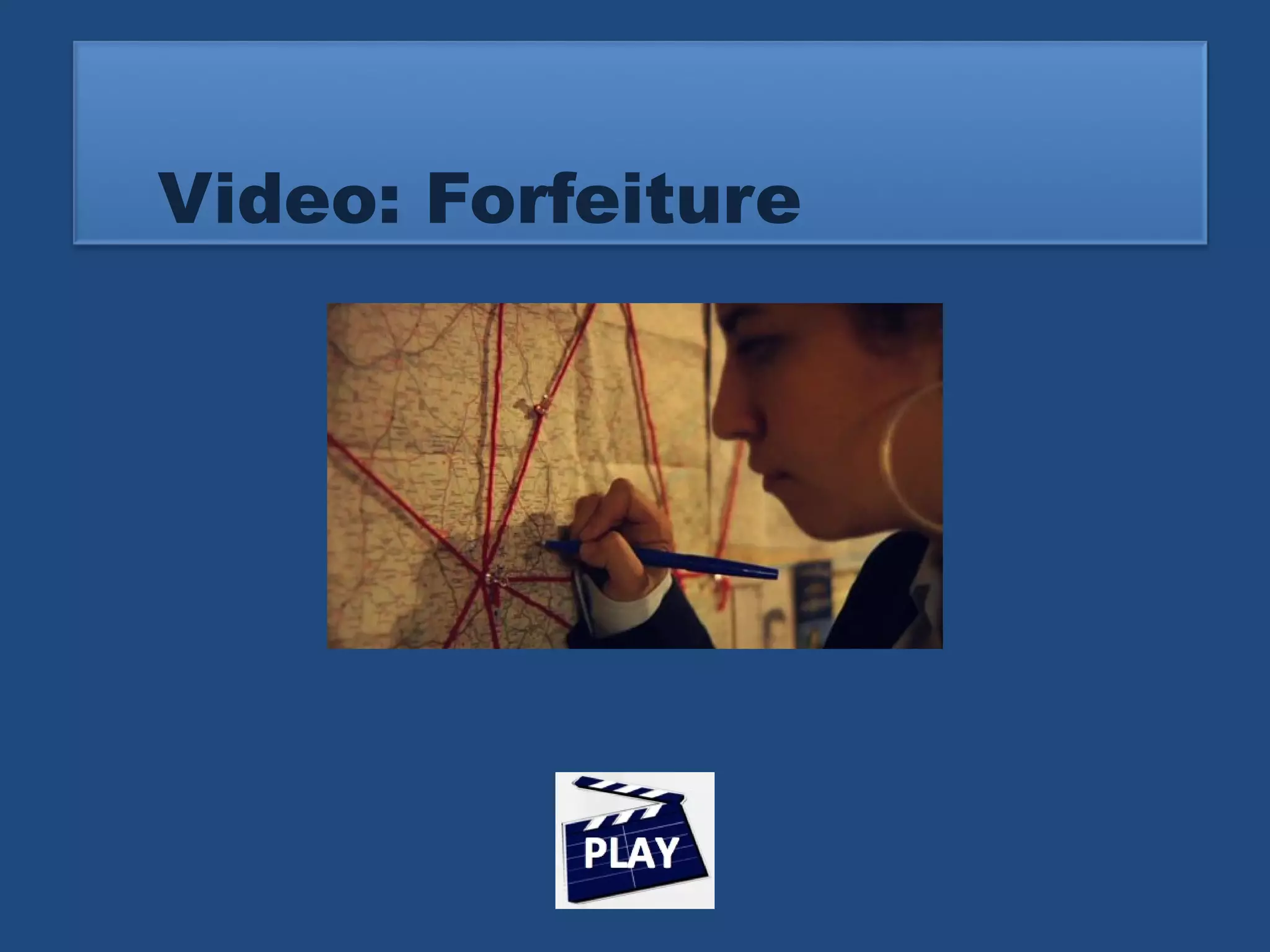
Video: Forfeiture
Video: Discussion 
Questions 
When can the government 
seize assets? 
Why is the government allowed 
to seize assets in some 
criminal justice cases? 
 Can you see this being a useful 
criminal justice sanction in 
any circumstances?
Intermediate Sanctions 
Restitution 
 A condition of probation in which the offender 
repays society or the victim of the crime for 
the trouble the offender inflicted 
May be monetary or in the form of community 
service restitution 
Restitution does not reduce recidivism 
What about the wealthy… 
 To avoid wealthy individuals from merely writing a 
check, judges can order that compensation be paid 
from income derived from low paying social service 
or public works jobs.
Intermediate Sanctions 
 Shock probation and split sentences 
 Alternative sanctions designed to allow judges to 
grant offenders community release only after they 
have sampled prison life 
 A split sentence 
 Requires convicted criminals to spend a portion of 
their sentence behind bars and the remainder in 
the community 
 Shock probation 
 Puts offenders in prison for a short term before 
they begin probation, to impress them with the 
pains of imprisonment
Intermediate Sanctions 
Intensive probation supervision 
 Involves small probation caseloads and 
strict monitoring on a daily or weekly 
basis 
 Goals are typically: 
Decarceration 
Control 
Reintegration
Intermediate Sanctions 
The house arrest concept 
 Requires convicted offenders to spend 
extended periods of time in their own 
home as an alternative to an incarceration 
sentence 
Electronic monitoring frequently 
accompanies house arrest to ensure 
compliance
Intermediate Sanctions 
Residential community corrections 
facility sentence 
 This is a nonsecure facility that houses 
probationers who need a more secure 
environment 
Day reporting centers 
 Nonresidential community based 
treatment programs

Chapter 12

  • 1.
    Chapter 12 Community Sentences: Probation & Intermediate Sanctions
  • 2.
  • 3.
    Community Sentencing Communitysentences are popular because:  Less costly  Help the offender maintain family and community ties  Can be structured to maximize security and maintain public safety  Scaled in severity to correspond to the seriousness of the crime  Can feature restoration and reintegration  Can act as a “second chance”
  • 4.
  • 5.
    Probation John Augustus:  From Boston  1840’s-1900’s Was a leading reformer of probation in the United States  Credited with originating the modern probation concept  His work inspired Massachusetts legislature to appoint paid probation officers
  • 6.
    Probation Probation A sentence entailing the conditional release of a convicted offender into the community under the supervision of the court, subject to certain conditions for a specified time
  • 7.
    Probation The commonlaw practice of judicial reprieve  Allowed judges to suspend punishment so that convicted offenders could seek a pardon, gather new evidence, or demonstrate that they had reformed their behavior The practice of recognizance  Enabled convicted offenders to remain free if they agreed to enter into a debt obligation with the state
  • 8.
    Probation Currently about4 million people are on probation  More than 2 million people are being placed on probation annually – a slightly larger number than exit their probation sentence Probation rules are a set of conditions or restrictions mandated by the court that must be obeyed by a probationer
  • 9.
    Probation Revocation An administrative act performed by a parole authority that removes a person from parole due to a violation on part of the parolee.  Probation may be revoked if a probationer fails to comply with rules and disobeys reasonable requests to meet their treatment obligations
  • 10.
    Probation Probation officersusually have five tasks: a. Investigation  Presentence investigation serves as the basis for sentencing a. Intake b. Diagnosis  Used to select appropriate treatment modes a. Treatment supervision b. Risk classification  Assessment of the risk level probationers pose to the community and themselves
  • 11.
    Probation The U.S.Supreme Court has ruled that probationers have a unique status and they are entitled to fewer constitutional protections than other citizens  Minnesota v. Murphy  Griffin v. Wisconsin  United States v. Knights
  • 12.
    Probation Because placinga person on probation implies that probation will continue unless the probationer commits a major violation, the defendant has been given certain procedural due process rights at this stage of the criminal process  Mempa v. Rhay  Morrissey v. Brewer  Gagnon v. Scarpelli  Beardon v. Georgia  United States v. Granderson
  • 13.
    Probation  UnitedStates v. Granderson (1994) Significant case in that it helped clarify what can happen to a probationer whose community sentence is revoked  Granderson was eligible for a 6 month prison sentence but was given 60 months probation instead.  He tested positive for drugs his probation was revoked.  Statute required he serve 1/3 of his sentence so the trial court gave him 20 months in prison  He appealed and Supreme Court found it unfair, ruled he should have been given 1/3 of the 6 months (2 months), not 60 months.
  • 14.
    Probation Probation iscost effective  Annual cost of incarceration: Approximately $25,000  Annual cost of probation:  Approximately $2,000  National research suggests: 60% of probationers successfully complete their probationary sentence 40% are arrested, violate probationary rules, or abscond
  • 15.
    Probation Even themost serious criminals who receive probation are less likely to recidivate than those who are sent to prison for committing similar crimes  Young males who are unemployed or who have a very low income, a prior criminal record, and a history of instability are most likely to be rearrested
  • 16.
    Probation Current initiativesthat may shape the future of probation  Making probationers pay  Hot spot probation  Area needs  Specialized probation  Privatization  Swift and sure punishment
  • 17.
  • 18.
    Intermediate Sanctions Intermediatesanctions include programs that are usually administered by probation departments  Group of punishments falling between probation and prison House arrest Intensive supervision  Serve as alternatives to incarceration
  • 19.
    Intermediate Sanctions Advantagesof Intermediate Sanctions  Cost benefits  Equitable community sentences  Increased control  Reduced overcrowding  Use with different classes of offenders
  • 20.
    Intermediate Sanctions Fine  Money owed by offenders to compensate society for their misdeeds A day fine (common in European nations)  Geared to the average daily income of the convicted offender in an effort to bring equity to the sentencing process Many judges continue to incarcerate offenders for noncompliance with financial orders, despite the U.S. Supreme Court ruling  Tate v. Short (1971)
  • 21.
    Intermediate Sanctions Forfeiture  The seizure of personal property by the state as a civil or criminal penalty More than 100 federal statutes use forfeiture of property as a punishment
  • 22.
  • 23.
    Video: Discussion Questions When can the government seize assets? Why is the government allowed to seize assets in some criminal justice cases?  Can you see this being a useful criminal justice sanction in any circumstances?
  • 24.
    Intermediate Sanctions Restitution  A condition of probation in which the offender repays society or the victim of the crime for the trouble the offender inflicted May be monetary or in the form of community service restitution Restitution does not reduce recidivism What about the wealthy…  To avoid wealthy individuals from merely writing a check, judges can order that compensation be paid from income derived from low paying social service or public works jobs.
  • 25.
    Intermediate Sanctions Shock probation and split sentences  Alternative sanctions designed to allow judges to grant offenders community release only after they have sampled prison life  A split sentence  Requires convicted criminals to spend a portion of their sentence behind bars and the remainder in the community  Shock probation  Puts offenders in prison for a short term before they begin probation, to impress them with the pains of imprisonment
  • 26.
    Intermediate Sanctions Intensiveprobation supervision  Involves small probation caseloads and strict monitoring on a daily or weekly basis  Goals are typically: Decarceration Control Reintegration
  • 27.
    Intermediate Sanctions Thehouse arrest concept  Requires convicted offenders to spend extended periods of time in their own home as an alternative to an incarceration sentence Electronic monitoring frequently accompanies house arrest to ensure compliance
  • 28.
    Intermediate Sanctions Residentialcommunity corrections facility sentence  This is a nonsecure facility that houses probationers who need a more secure environment Day reporting centers  Nonresidential community based treatment programs

Editor's Notes

  • #7 Learning Objective One
  • #10 Learning Objective One & Two
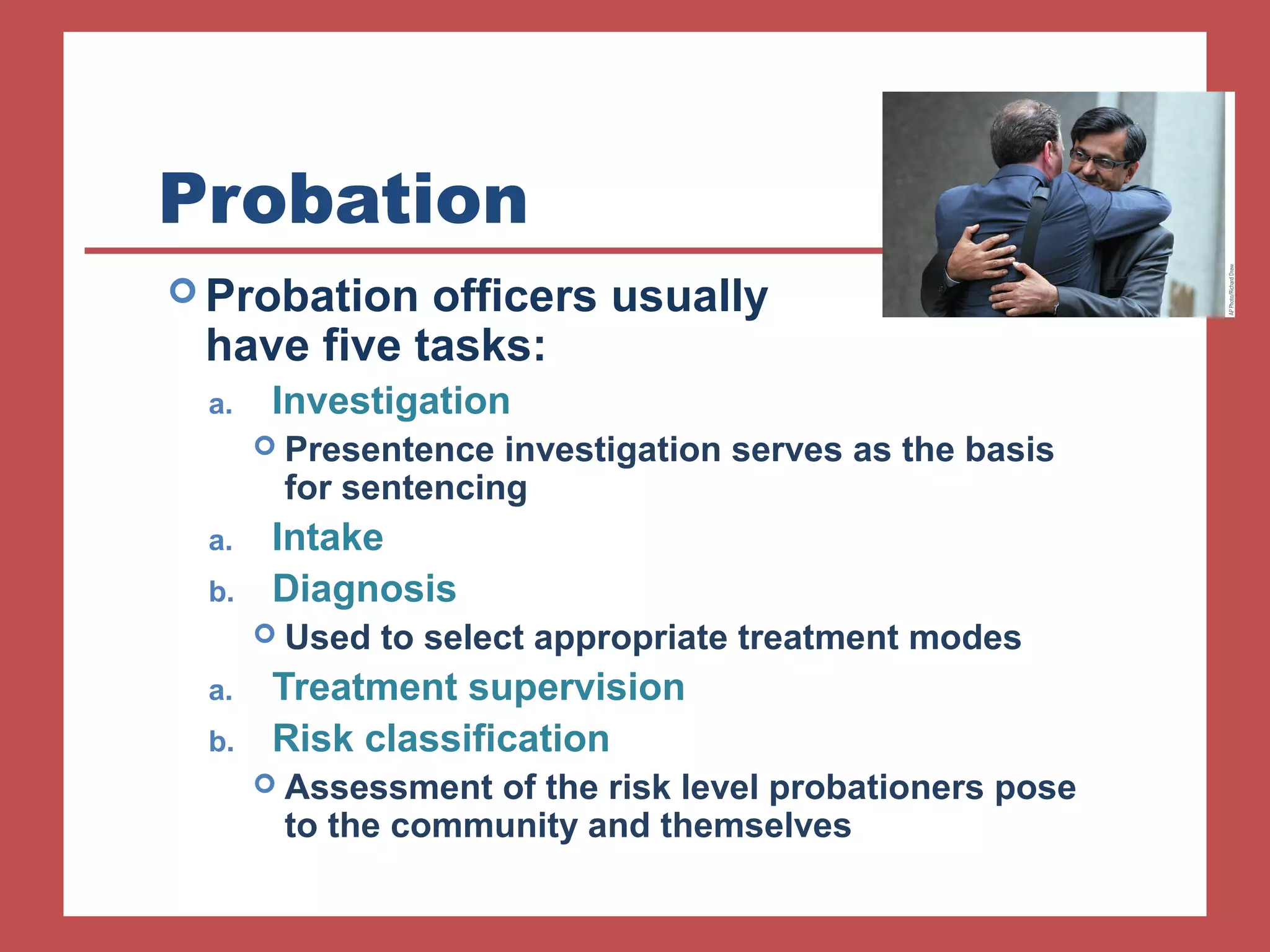
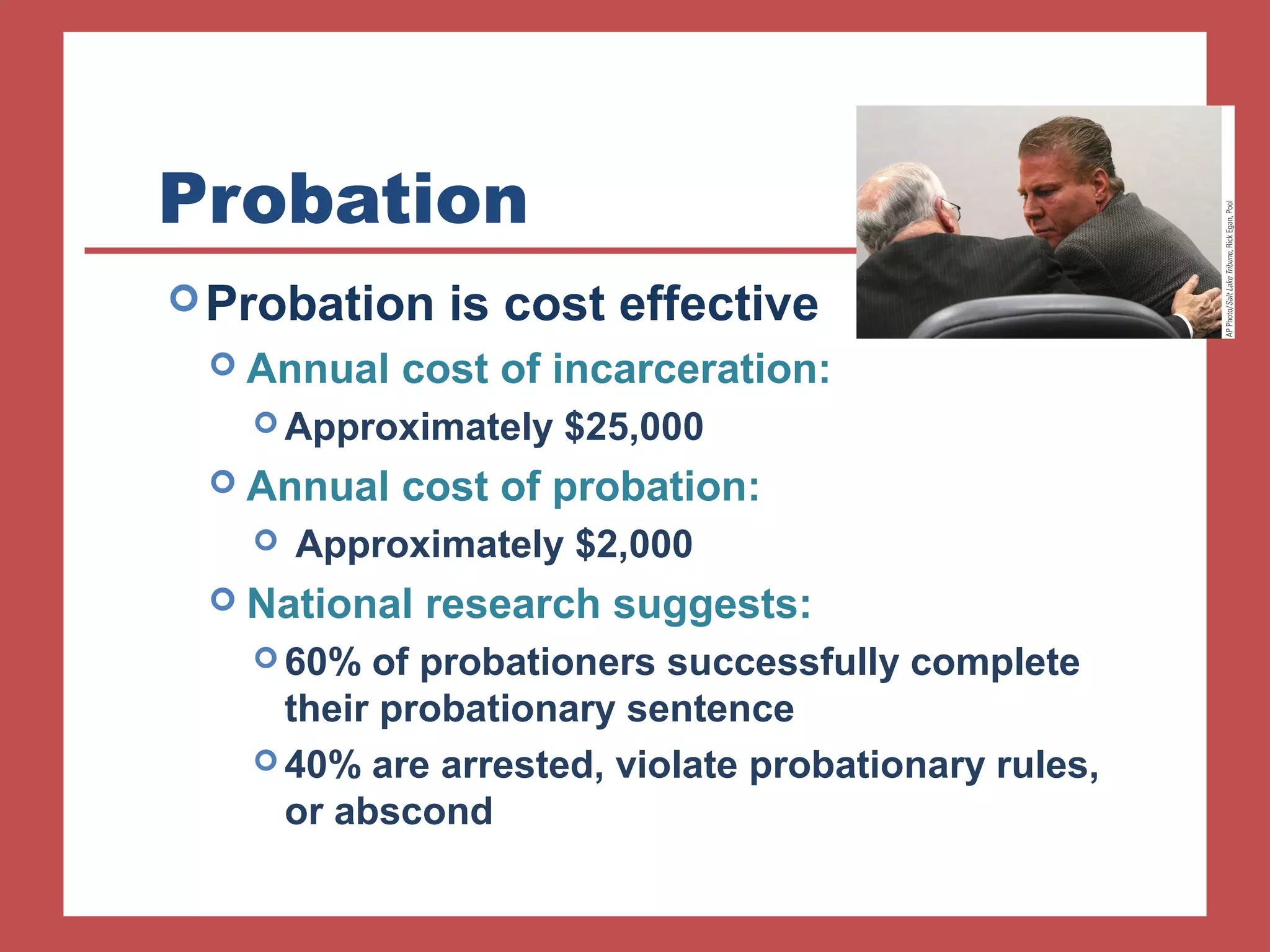
  • #11 Anil Kumar (right) hugs his lawyer as he leaves the federal court after being sentenced in New York on July 19, 2012. Kumar received a probation sentence for testifying in a securities scheme fraud case. Do you believe it is ethical to reward a defendant with a more lenient sentence in exchange for their testimony against other conspirators? Might this allow more serious offenders to get off lightly while minor actors wind up in prison?
  • #12 Learning Objective Seven
  • #15 Learning Objective Eight - Attorney Dean Zabriskie, left, appears with his client, Joseph Berg, for his sentencing hearing at the 4th District Court in Provo, Utah. Berg, who last year kidnapped and assaulted his longtime girlfriend, was sentenced to 180 days in jail followed by 36 months of probation, including anger management and substance abuse treatment. Such treatment outcomes are not unusual in domestic violence cases.
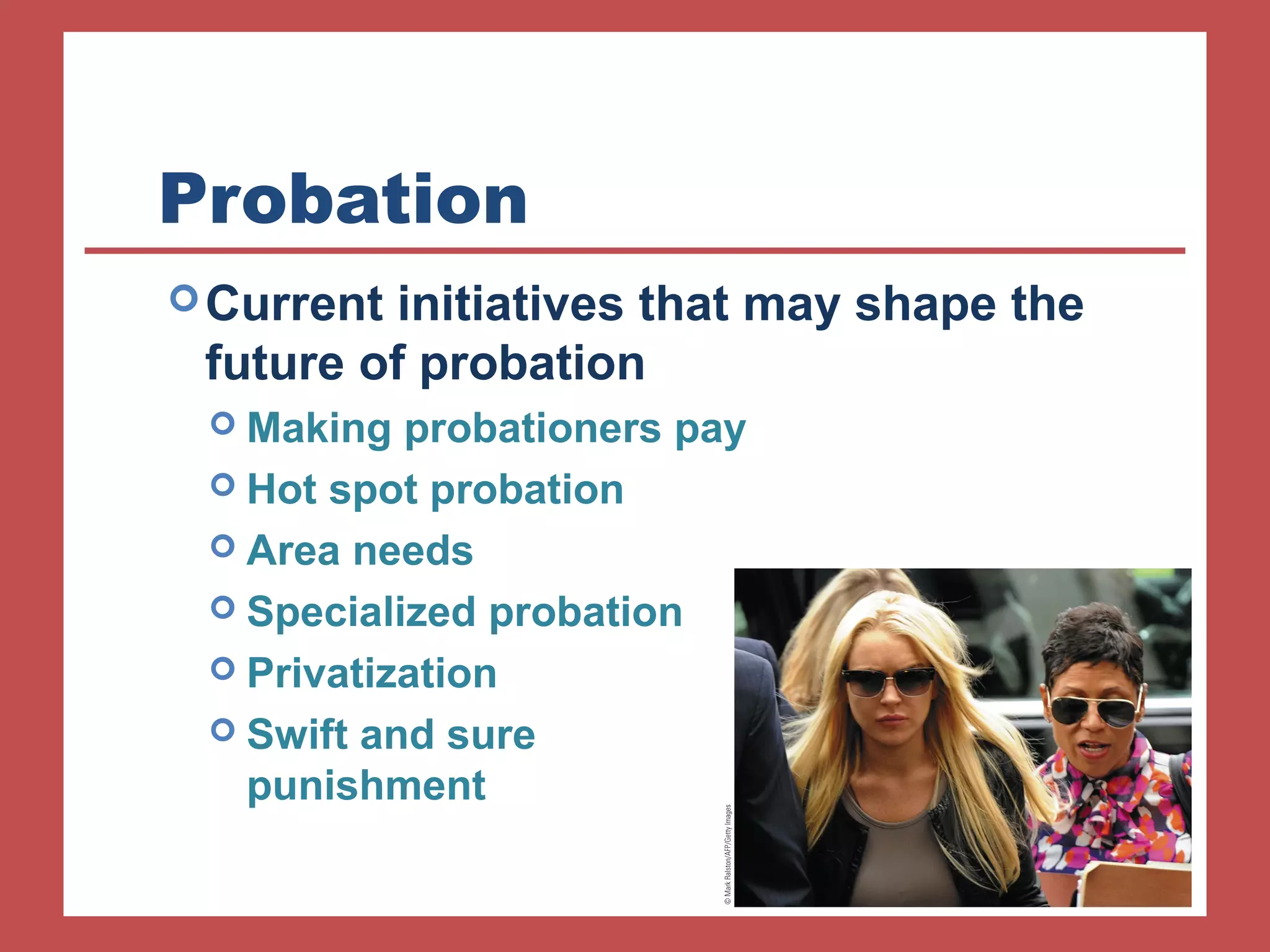
  • #17 Learning Objective Eight - People fail on probation for many reasons. Many are drug and alcohol abusers who find it difficult to confront their habits. On July 20, 2010, Lindsay Lohan arrives at the courthouse in Beverly Hills, California, with her lawyer Shawn Chapman Holley, right, to begin a 90-day jail sentence. Lohan was arrested for driving under the influence and thereby violating the terms of her probation in connection with a prior (2007) DUI conviction. In accordance with a policy of early release of nonviolent offenders to reduce jail overcrowding, however, she was released after serving 14 days of the sentence. She was immediately taken to an inpatient rehabilitation facility, where she was expected to stay another 90 days. Lohan was instead released after serving 23 days, but she was required to undergo outpatient therapy, to submit to random drug and alcohol screenings, and to attend psychotherapy and behavior therapy twice a week. On March 29, 2012, Lohan was released from her probation order (though she will remain on informal probation for taking a necklace without permission in 2011). At her final hearing, she told the judge, “I just want to say thank you for being fair. It’s really opened a lot of doors for me.”
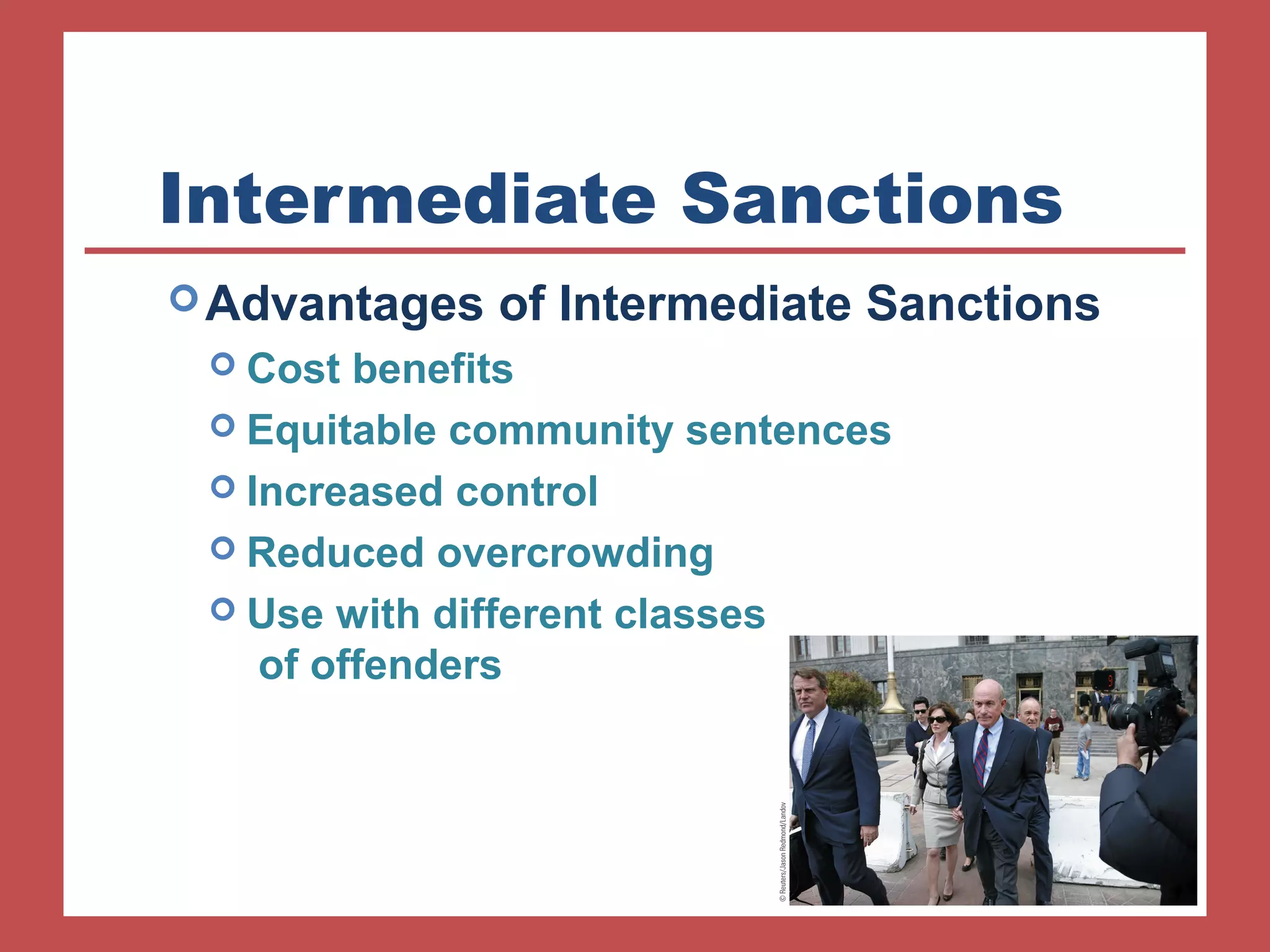
  • #20 Learning Objective Nine - Intermediate sanctions are often used when those convictions do not pose a danger to society. Here, former KB Home chief executive Bruce Karatz, his wife, philanthropist Lilly Tartikoff, and his attorney, John Keker, leave U.S. District Court after Karatz’s conviction on four criminal charges following an investigation into alleged stock manipulation in Los Angeles. Karatz was sentenced to five years of probation and eight months of home detention with electronic monitoring for a stock- option backdating scam.
  • #21 Learning Objective Nine
  • #23 Learning Objective Nine
  • #25 Restitution is sometimes used as a part of sentence to compensate the injured parties. Here, in a Los Angeles Criminal Court, former student midwife Katharine McCall, right, listens as she is sentenced to three years of probation for practicing medicine without a license after she delivered a baby without supervision. McCall was ordered to complete 280 hours of community service and pay $10,000 in restitution.