Difference between Cyber
Forensics and Digital Forensics
By-Yukta Guglot
Secretary of Applied Forensic Research Sciences
Content:
• Introductio to Cyber Forensics
• What is Cyber Crime
• Introduction to Digital Forensics
• Difference between Cyber Forensics and Digital Forensics
• Collection and Preservation of Digital Evidence
Introduction to Cyber Forensics:
• Cyber forensics is a branch of forensic science which deals with the
investigation, analysis techniques on computers.
• Cyber Forensic is also referred as Computer Forensic as it includes
computer system indulged in Cyber Crime.
• Cyber Forensic aids in an investigation, collection and preservation of
Evidences for legal purposes.
What is Cyber Crime:
• Cybercrime is a criminal activity that uses a computer or a computer
network or a networked device. Cybercrime is carried out by an
individual or organizations to gain profit or to make damage to an
individual or organization.
• There are three major categories that cybercrime falls into:
a)Individual
b) Property
c) government.
Introduction to Digital Forensics:
• Digital Forensic is a branch of Forensic Science which deals with the
investigation, recovery and analysis of data from Digital devices.
• Digital forensics includes any digital device, such as computer, digital
networks, digital phones, digital watch, digital calculator, flash drive,
etc.
• Devices which understand and works on the language 0 and 1 are
considered as Digital devices.
Difference between Cyber Forensics and
Digital Forensics:
Cyber Forensics
• It includes computer system for
the commission of cyber crime.
• It involves network i.e., internet
in various crimes.
Digital Forensics
• It includes not only computer but
also other digital devices tlfor the
commission of cyber crime.
• It can also work in the absence of
internet.
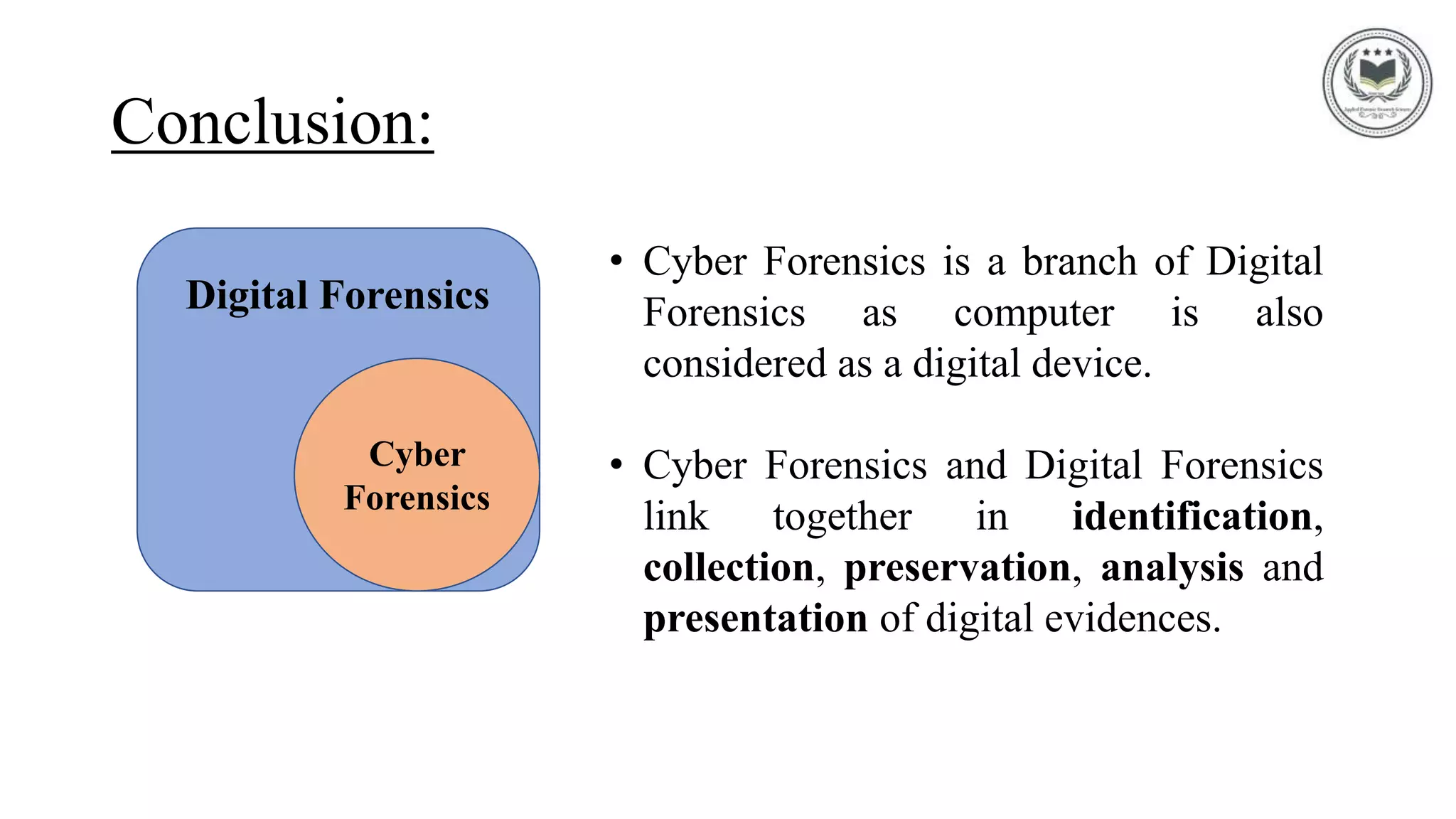
Conclusion:
Digital Forensics
Cyber
Forensics
• Cyber Forensics is a branch of Digital
Forensics as computer is also
considered as a digital device.
• Cyber Forensics and Digital Forensics
link together in identification,
collection, preservation, analysis and
presentation of digital evidences.
Collection and Preservation of Digital
Evidence:
• Determine the device is in On or OFF condition.
• Videograph and photograph the device.
• Note down the device model number and serial number.
• If any destructive device is suspected, remove the main plug
immediately without shutting it down.
• Investigator must also look for CD, DVD, Flash drives, note pads, etc.
• Pack the collected devices in anti-static bag to prevent any kind of
radiations.
Collection and Preservation of Digital
Evidence:
• Place the devices in boxes or evidence bags and label them.
• Keep the devices safe and secure from magnets, extreme temperatures
and other damages.
• Once all the evidences are collected and preserved, it can be sent to
laboratory for further analysis.
Thankyou

Difference between Cyber and digital Forensic.pptx

  • 1.
    Difference between Cyber Forensicsand Digital Forensics By-Yukta Guglot Secretary of Applied Forensic Research Sciences
  • 2.
    Content: • Introductio toCyber Forensics • What is Cyber Crime • Introduction to Digital Forensics • Difference between Cyber Forensics and Digital Forensics • Collection and Preservation of Digital Evidence
  • 3.
    Introduction to CyberForensics: • Cyber forensics is a branch of forensic science which deals with the investigation, analysis techniques on computers. • Cyber Forensic is also referred as Computer Forensic as it includes computer system indulged in Cyber Crime. • Cyber Forensic aids in an investigation, collection and preservation of Evidences for legal purposes.
  • 4.
    What is CyberCrime: • Cybercrime is a criminal activity that uses a computer or a computer network or a networked device. Cybercrime is carried out by an individual or organizations to gain profit or to make damage to an individual or organization. • There are three major categories that cybercrime falls into: a)Individual b) Property c) government.
  • 5.
    Introduction to DigitalForensics: • Digital Forensic is a branch of Forensic Science which deals with the investigation, recovery and analysis of data from Digital devices. • Digital forensics includes any digital device, such as computer, digital networks, digital phones, digital watch, digital calculator, flash drive, etc. • Devices which understand and works on the language 0 and 1 are considered as Digital devices.
  • 6.
    Difference between CyberForensics and Digital Forensics: Cyber Forensics • It includes computer system for the commission of cyber crime. • It involves network i.e., internet in various crimes. Digital Forensics • It includes not only computer but also other digital devices tlfor the commission of cyber crime. • It can also work in the absence of internet.
  • 7.
    Conclusion: Digital Forensics Cyber Forensics • CyberForensics is a branch of Digital Forensics as computer is also considered as a digital device. • Cyber Forensics and Digital Forensics link together in identification, collection, preservation, analysis and presentation of digital evidences.
  • 8.
    Collection and Preservationof Digital Evidence: • Determine the device is in On or OFF condition. • Videograph and photograph the device. • Note down the device model number and serial number. • If any destructive device is suspected, remove the main plug immediately without shutting it down. • Investigator must also look for CD, DVD, Flash drives, note pads, etc. • Pack the collected devices in anti-static bag to prevent any kind of radiations.
  • 9.
    Collection and Preservationof Digital Evidence: • Place the devices in boxes or evidence bags and label them. • Keep the devices safe and secure from magnets, extreme temperatures and other damages. • Once all the evidences are collected and preserved, it can be sent to laboratory for further analysis.
  • 10.