Cell Adaptations
Dr.Mubashir Rahim
Objectives
 Basic knowledge and pathology of Cell adaptation.
 Understanding concept of
 Hypertropy
 Hyperplasia
 Atrophy
 Metaplasia
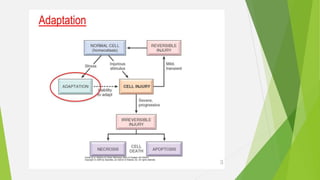
Adaptation to Environmental Stress
 Cells are constantly adjusting/adapting their structure and function to
accommodate changing demands.
 Adaptations are reversible changes in number, size, phenotype, metabolic
activity or functions of cells in response to changes in their environment.
 The principle adapting responses are
i. Hypertrophy
ii. Hyperplasia
iii. Atrophy
iv. Metaplasia
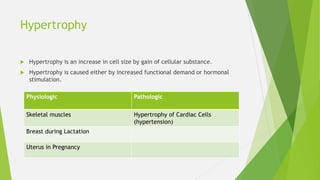
Hypertrophy
 Hypertrophy is an increase in cell size by gain of cellular substance.
 Hypertrophy is caused either by increased functional demand or hormonal
stimulation.
Physiologic Pathologic
Skeletal muscles Hypertrophy of Cardiac Cells
(hypertension)
Breast during Lactation
Uterus in Pregnancy
Hyperplasia
Hyperplasia is an increase in number of cells.
Hyperplasia take place in cells capable of
replication.
Can be physiologic or pathologic.
A. Physiologic Hyperplasia: Two types
 Hormonal Hyperplasia e.g. proliferation of glands of female breast at puberty
and during pregnancy
 Compensatory Hyperplasia e.g. when portion of liver is partially resected, the
remaining cells multiply and restore the liver to its original size.
B. Pathologic Hyperplasia caused by abnormal excessive stimulation of cells
by hormone or growth factors e.g. excess estrogen hormone leads to
endometrial hyperplasia in uterus which causes abnormal menstrual bleeding.
 Pathologic hyperplasia as platform for cancer e.g. endometrial cancer.
Hypertrophy and Hypertrophy
Hypertrophy and hyperplasia can occur together
e.g.
Uterus during pregnancy:There is both hypertrophy
and hyperplasia of smooth muscles of uterus.
Prostate in elderly:There is both hypertrophy and
hyperplasia of prostate gland and stroma(BPH)
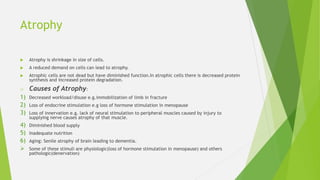
Atrophy
 Atrophy is shrinkage in size of cells.
 A reduced demand on cells can lead to atrophy.
 Atrophic cells are not dead but have diminished function.In atrophic cells there is decreased protein
synthesis and increased protein degradation.
o Causes of Atrophy:
1) Decreased workload/disuse e.g.immobilization of limb in fracture
2) Loss of endocrine stimulation e.g loss of hormone stimulation in menopause
3) Loss of innervation e.g. lack of neural stimulation to peripheral muscles caused by injury to
supplying nerve causes atrophy of that muscle.
4) Diminished blood supply
5) Inadequate nutrition
6) Aging: Senile atrophy of brain leading to dementia.
 Some of these stimuli are physiologic(loss of hormone stimulation in menopause) and others
pathologic(denervation)
Metaplasia
 Metaplasia is reversible change in which one adult cell type is replaced by
another adult cell type.
 Metalastic cells are better able to handle new stress.
 Metaplasia can be:
 Squamous Metaplasia
 Columnar Metaplasia
 Osseous Mataplasia
 Myeloid Mataplasia
Metaplasia and Vit.A Deficiency
Vit.A is necessary for differentiation of specialized
epithelial cells such as conjunctiva of eye.
In vit.A deficiency the thin squamous lining of
conjunctiva undergoes metaplasia into stratified
keratinizing squamous epithelium called
keratomalacia.
Cell Adaptations.pptxCell Adaptations.pptx

Cell Adaptations.pptxCell Adaptations.pptx

  • 1.
  • 2.
    Objectives  Basic knowledgeand pathology of Cell adaptation.  Understanding concept of  Hypertropy  Hyperplasia  Atrophy  Metaplasia
  • 3.
    Adaptation to EnvironmentalStress  Cells are constantly adjusting/adapting their structure and function to accommodate changing demands.  Adaptations are reversible changes in number, size, phenotype, metabolic activity or functions of cells in response to changes in their environment.  The principle adapting responses are i. Hypertrophy ii. Hyperplasia iii. Atrophy iv. Metaplasia
  • 5.
    Hypertrophy  Hypertrophy isan increase in cell size by gain of cellular substance.  Hypertrophy is caused either by increased functional demand or hormonal stimulation. Physiologic Pathologic Skeletal muscles Hypertrophy of Cardiac Cells (hypertension) Breast during Lactation Uterus in Pregnancy
  • 7.
    Hyperplasia Hyperplasia is anincrease in number of cells. Hyperplasia take place in cells capable of replication. Can be physiologic or pathologic.
  • 8.
    A. Physiologic Hyperplasia:Two types  Hormonal Hyperplasia e.g. proliferation of glands of female breast at puberty and during pregnancy  Compensatory Hyperplasia e.g. when portion of liver is partially resected, the remaining cells multiply and restore the liver to its original size. B. Pathologic Hyperplasia caused by abnormal excessive stimulation of cells by hormone or growth factors e.g. excess estrogen hormone leads to endometrial hyperplasia in uterus which causes abnormal menstrual bleeding.  Pathologic hyperplasia as platform for cancer e.g. endometrial cancer.
  • 9.
    Hypertrophy and Hypertrophy Hypertrophyand hyperplasia can occur together e.g. Uterus during pregnancy:There is both hypertrophy and hyperplasia of smooth muscles of uterus. Prostate in elderly:There is both hypertrophy and hyperplasia of prostate gland and stroma(BPH)
  • 10.
    Atrophy  Atrophy isshrinkage in size of cells.  A reduced demand on cells can lead to atrophy.  Atrophic cells are not dead but have diminished function.In atrophic cells there is decreased protein synthesis and increased protein degradation. o Causes of Atrophy: 1) Decreased workload/disuse e.g.immobilization of limb in fracture 2) Loss of endocrine stimulation e.g loss of hormone stimulation in menopause 3) Loss of innervation e.g. lack of neural stimulation to peripheral muscles caused by injury to supplying nerve causes atrophy of that muscle. 4) Diminished blood supply 5) Inadequate nutrition 6) Aging: Senile atrophy of brain leading to dementia.  Some of these stimuli are physiologic(loss of hormone stimulation in menopause) and others pathologic(denervation)
  • 11.
    Metaplasia  Metaplasia isreversible change in which one adult cell type is replaced by another adult cell type.  Metalastic cells are better able to handle new stress.  Metaplasia can be:  Squamous Metaplasia  Columnar Metaplasia  Osseous Mataplasia  Myeloid Mataplasia
  • 15.
    Metaplasia and Vit.ADeficiency Vit.A is necessary for differentiation of specialized epithelial cells such as conjunctiva of eye. In vit.A deficiency the thin squamous lining of conjunctiva undergoes metaplasia into stratified keratinizing squamous epithelium called keratomalacia.