CELLULAR ADAPTATION
      Lecture 4
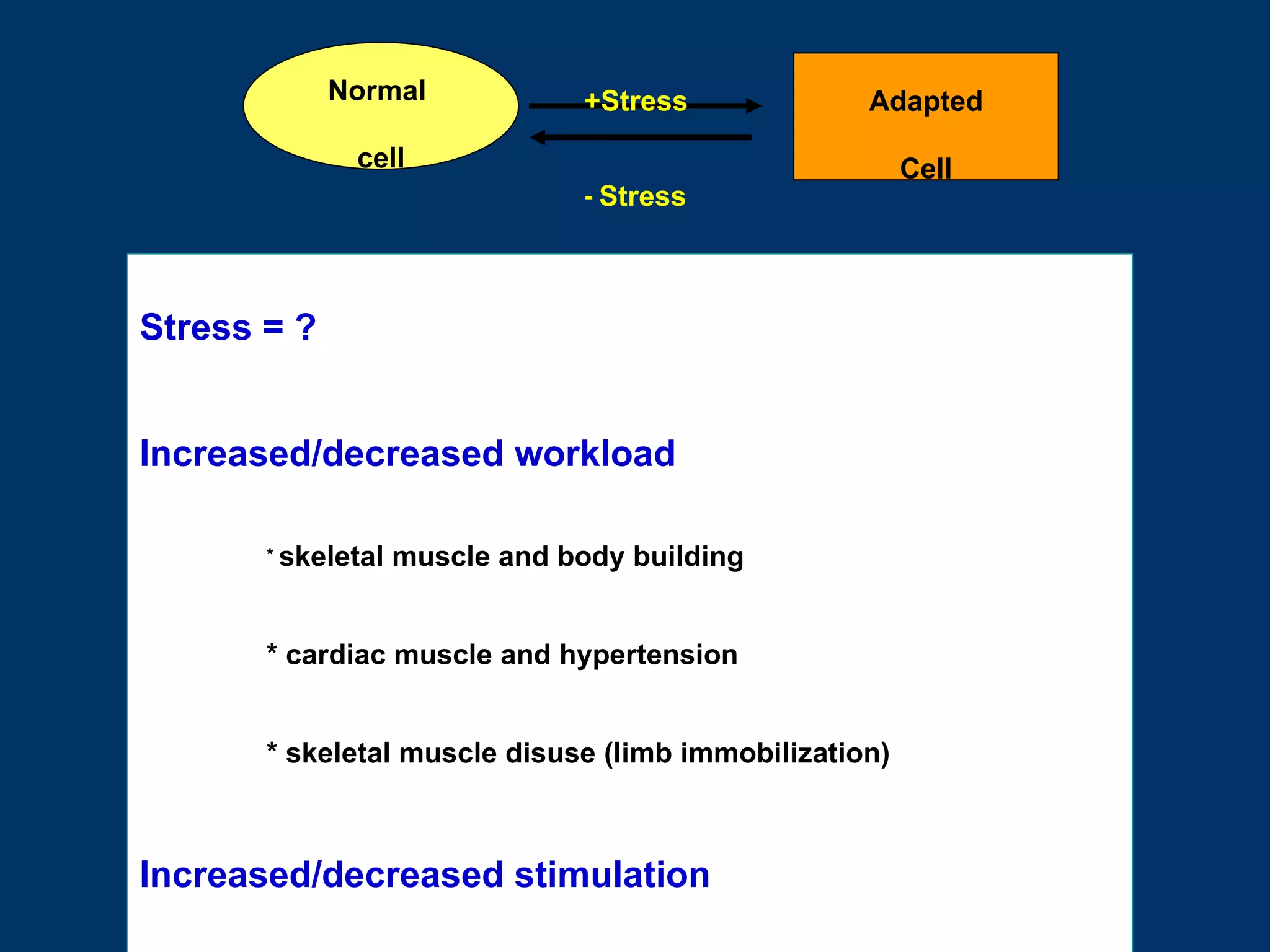
Normal              +Stress           Adapted
              cell                                      Cell
                                 - Stress


Stress = ?


Increased/decreased workload

       * skeletal   muscle and body building


       * cardiac muscle and hypertension


       * skeletal muscle disuse (limb immobilization)


Increased/decreased stimulation
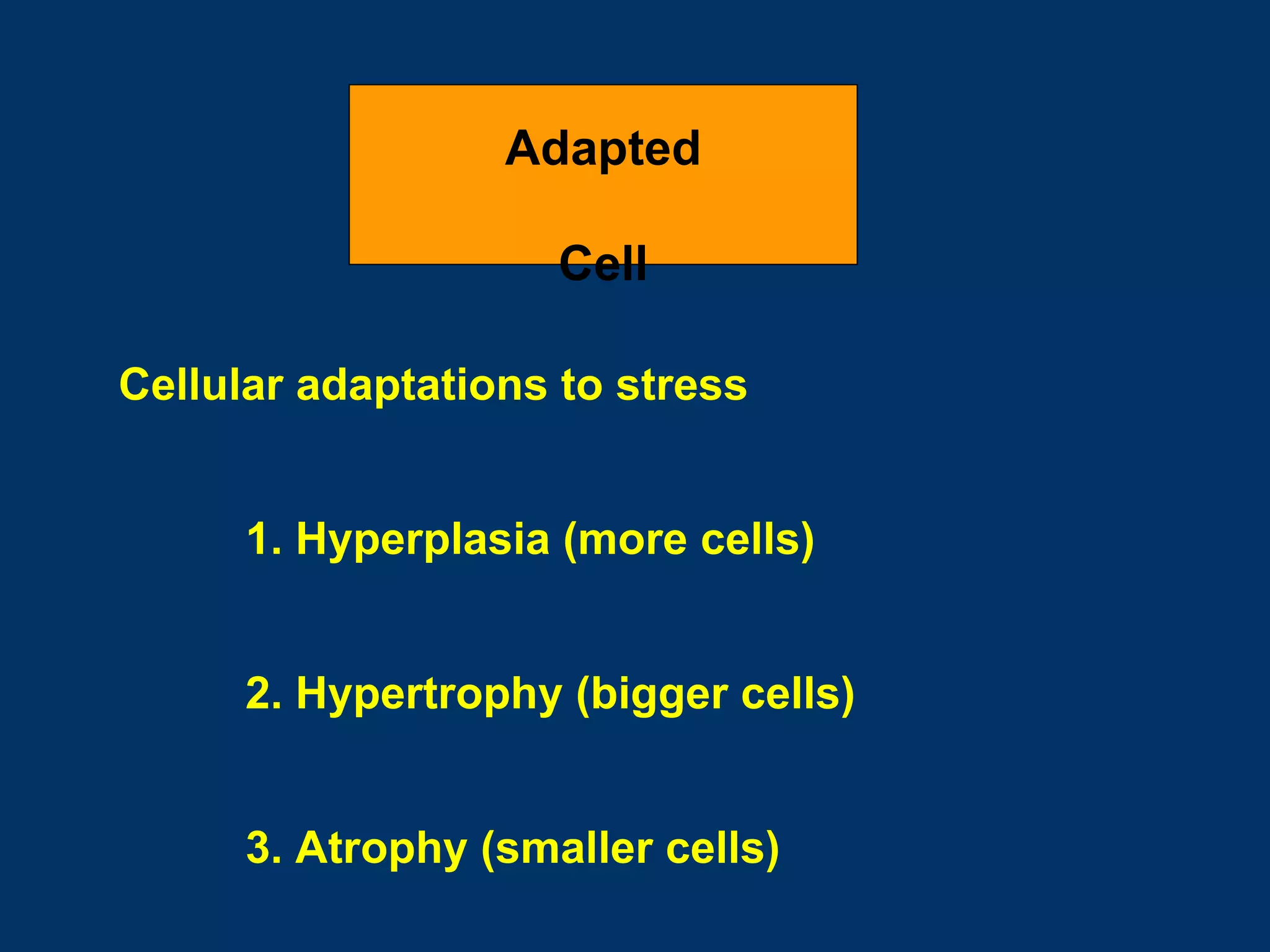
Adapted

                     Cell

Cellular adaptations to stress


      1. Hyperplasia (more cells)


      2. Hypertrophy (bigger cells)


      3. Atrophy (smaller cells)
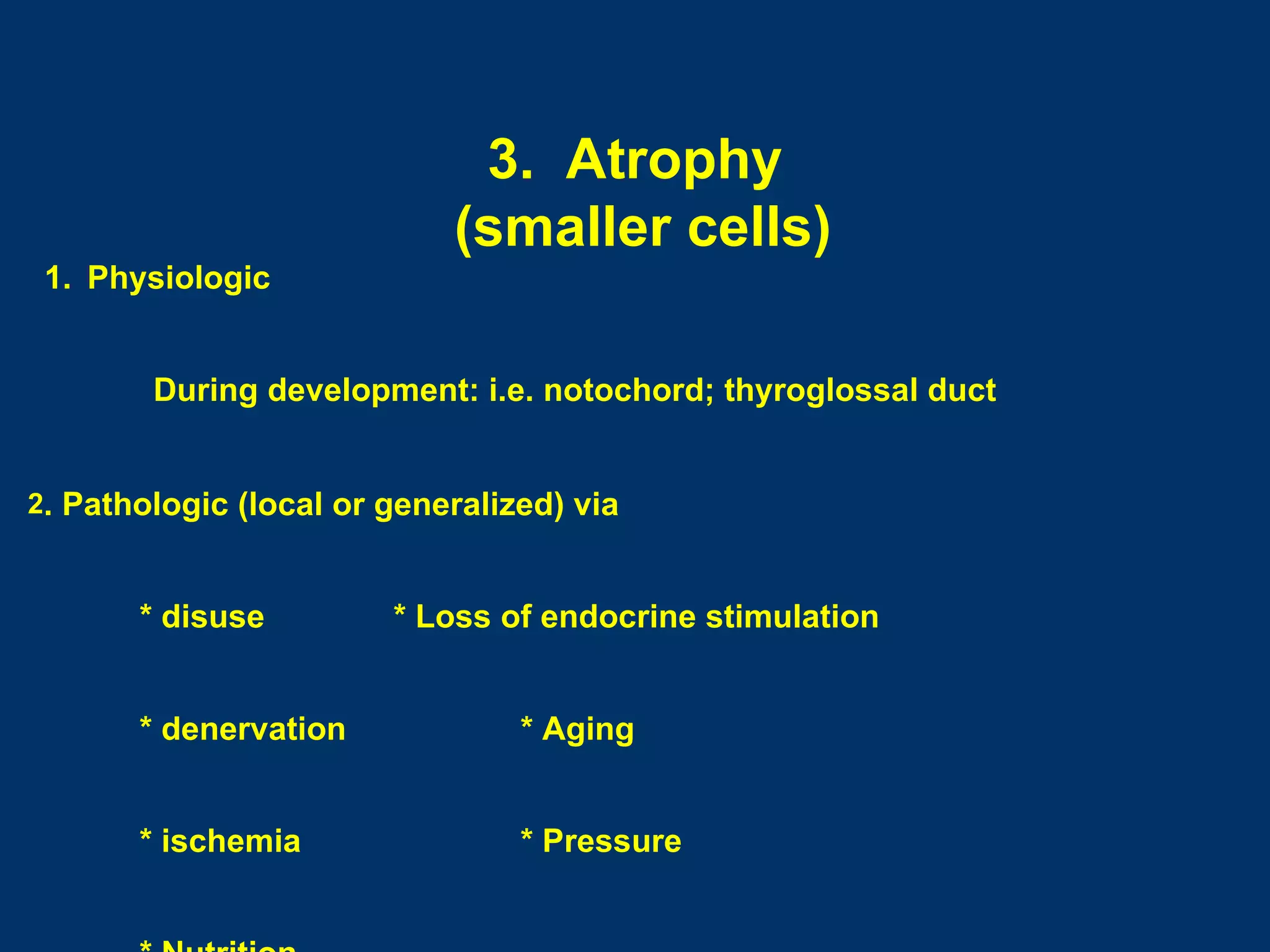
3. Atrophy
                            (smaller cells)
 1. Physiologic


        During development: i.e. notochord; thyroglossal duct


2. Pathologic (local or generalized) via


       * disuse         * Loss of endocrine stimulation


       * denervation             * Aging


       * ischemia                * Pressure
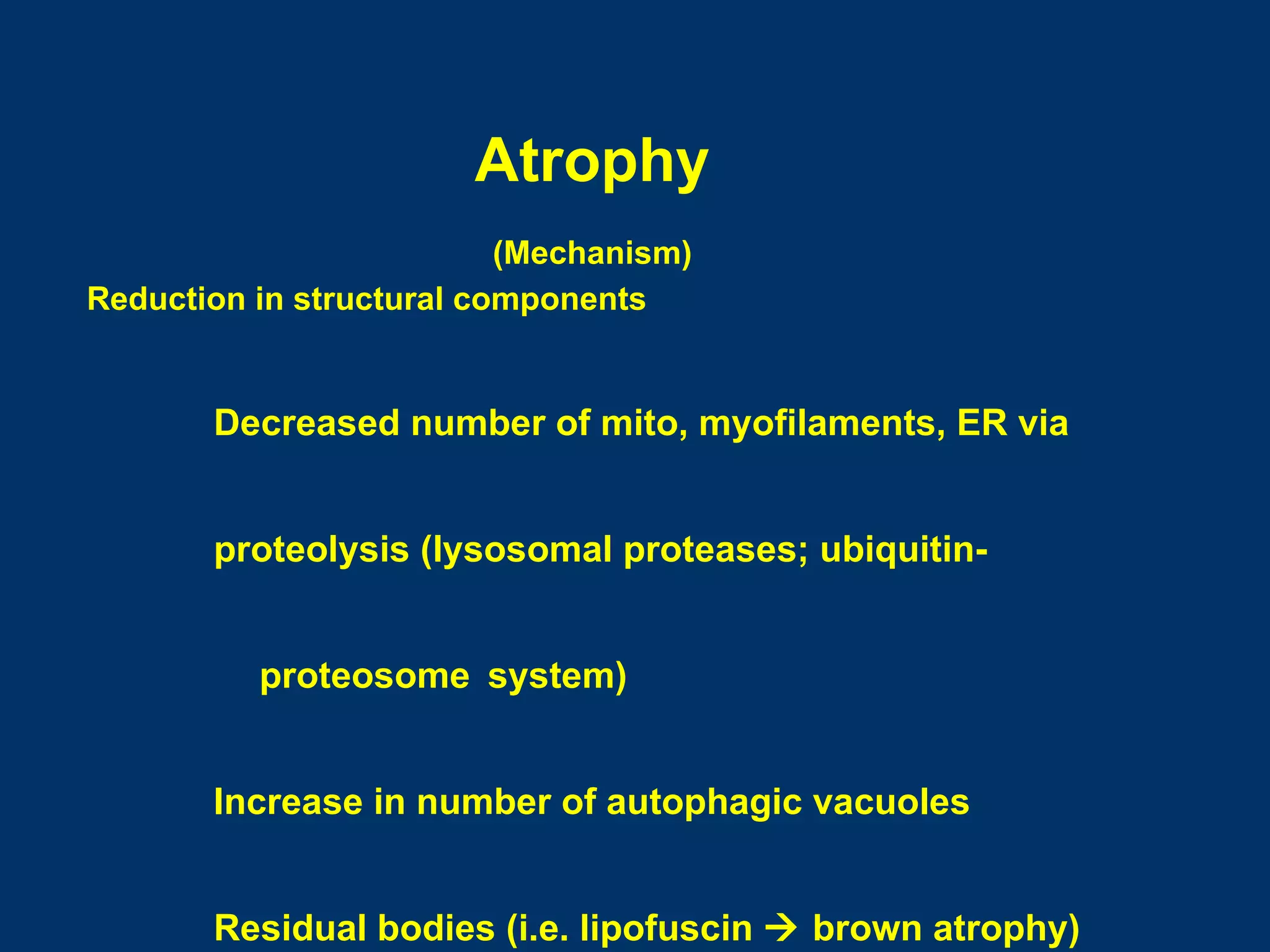
Atrophy
                          (Mechanism)
Reduction in structural components


       Decreased number of mito, myofilaments, ER via


       proteolysis (lysosomal proteases; ubiquitin-


          proteosome system)


       Increase in number of autophagic vacuoles

       Residual bodies (i.e. lipofuscin  brown atrophy)
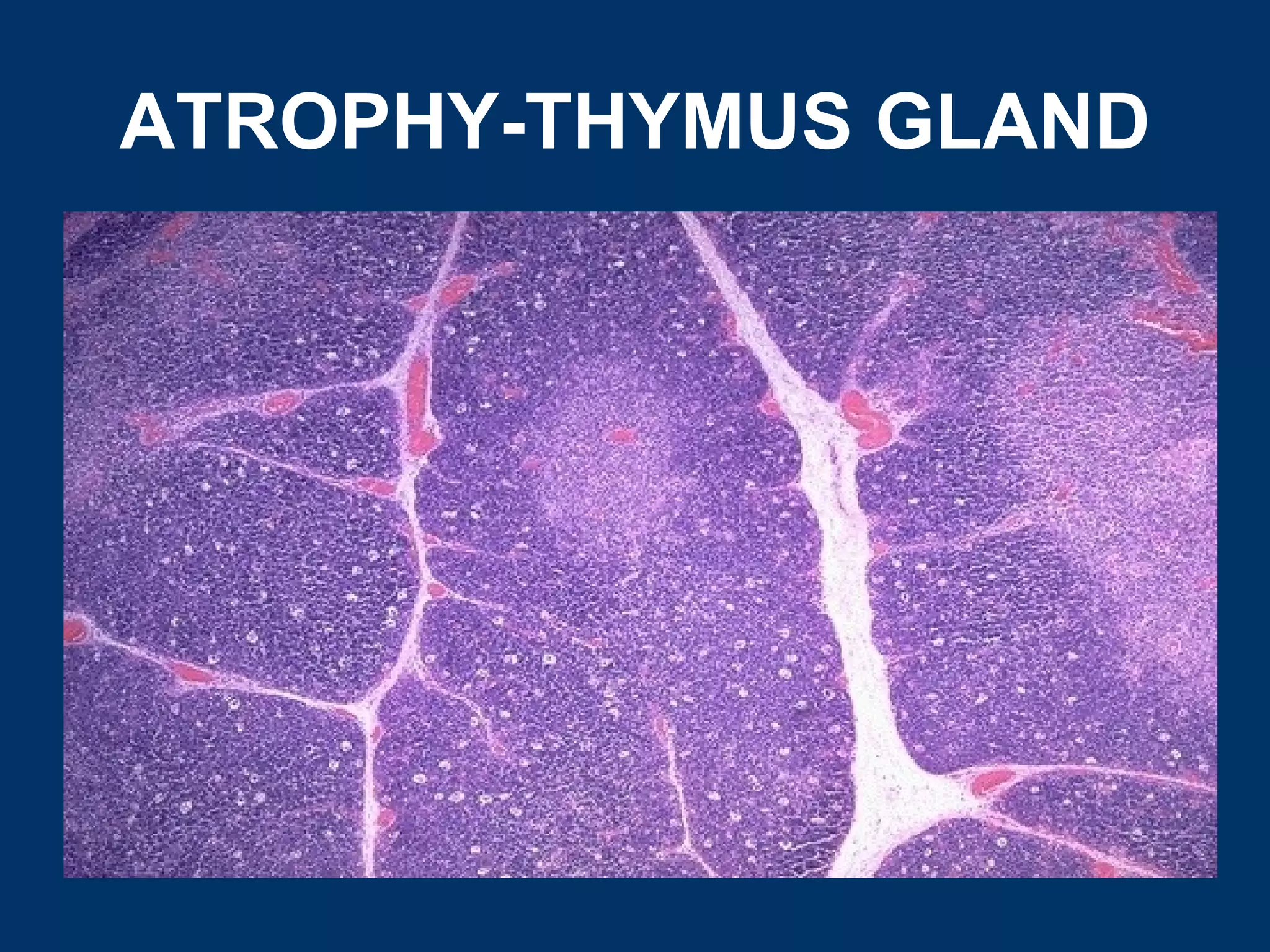
ATROPHY-THYMUS GLAND
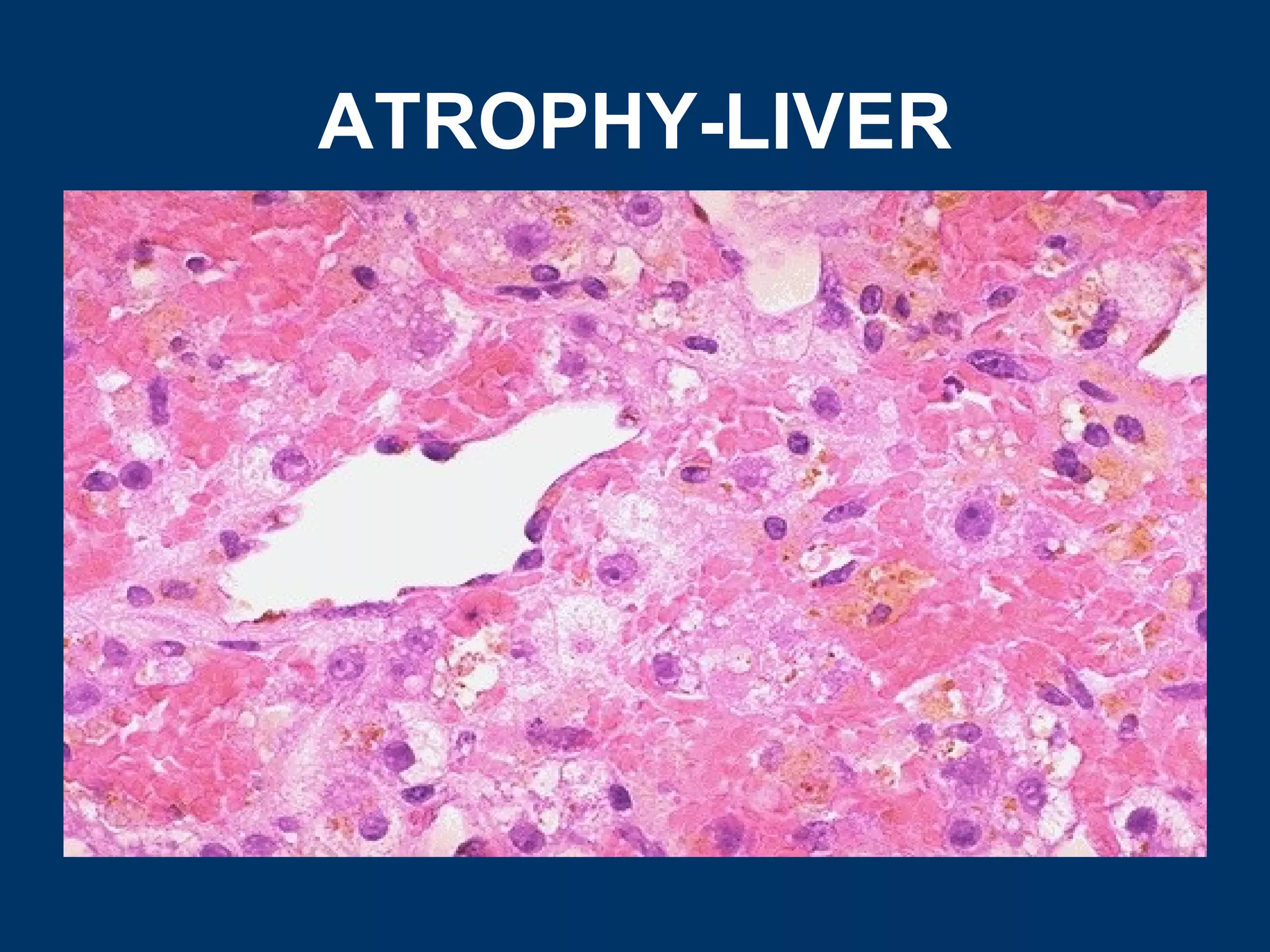
ATROPHY-LIVER
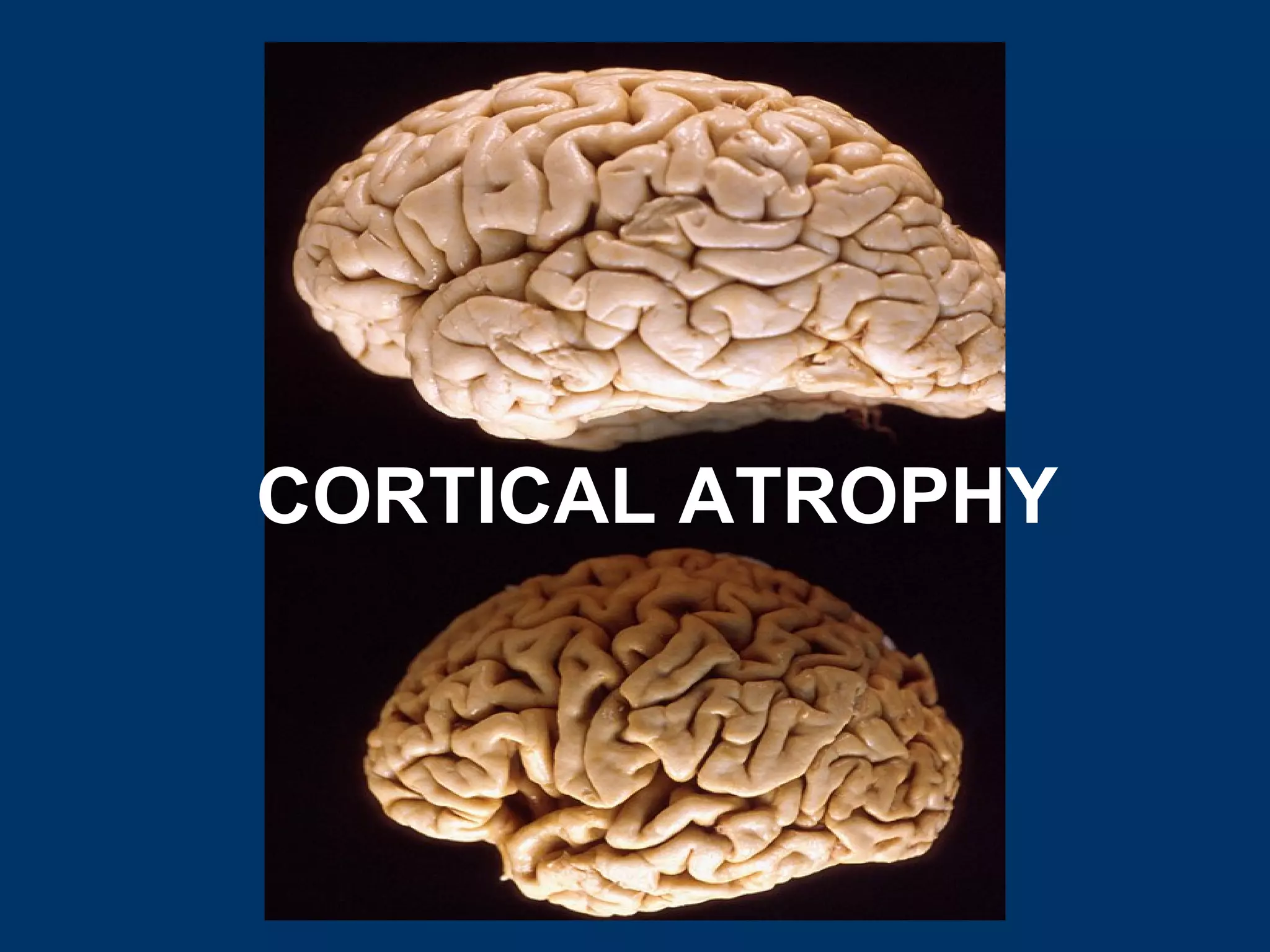
CORTICAL ATROPHY
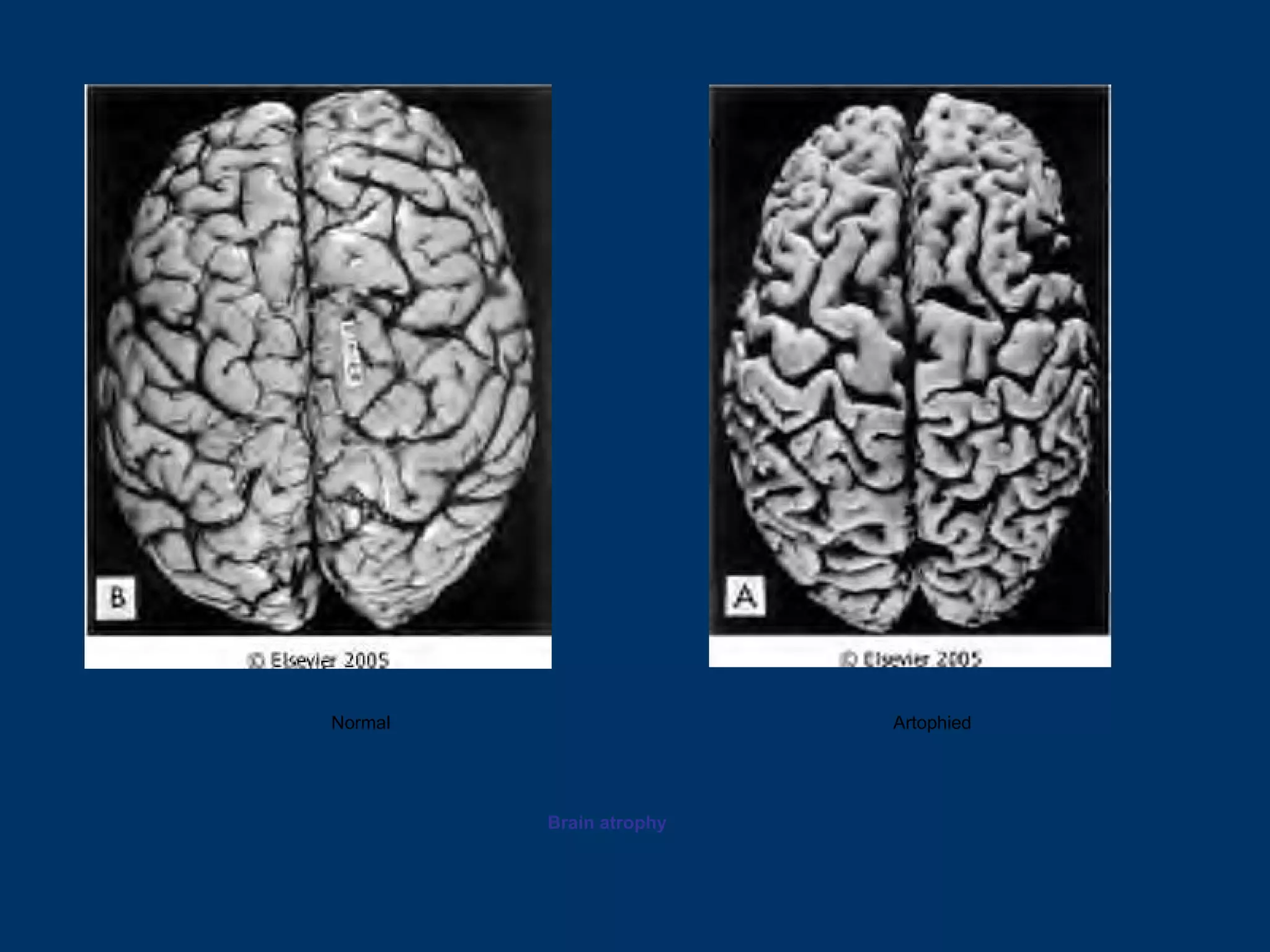
Normal                   Artophied


         Brain atrophy
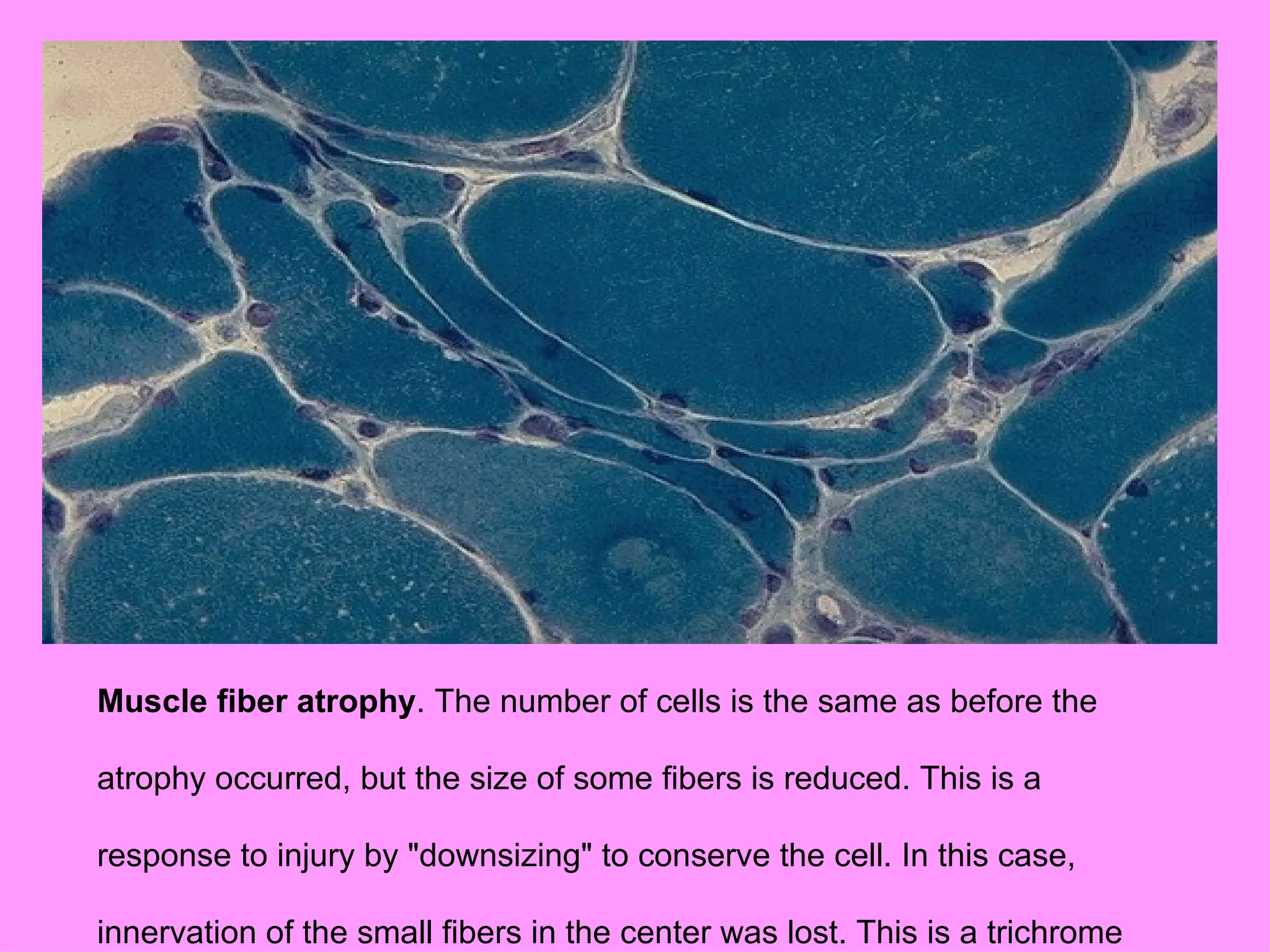
Muscle fiber atrophy. The number of cells is the same as before the

atrophy occurred, but the size of some fibers is reduced. This is a

response to injury by "downsizing" to conserve the cell. In this case,

innervation of the small fibers in the center was lost. This is a trichrome
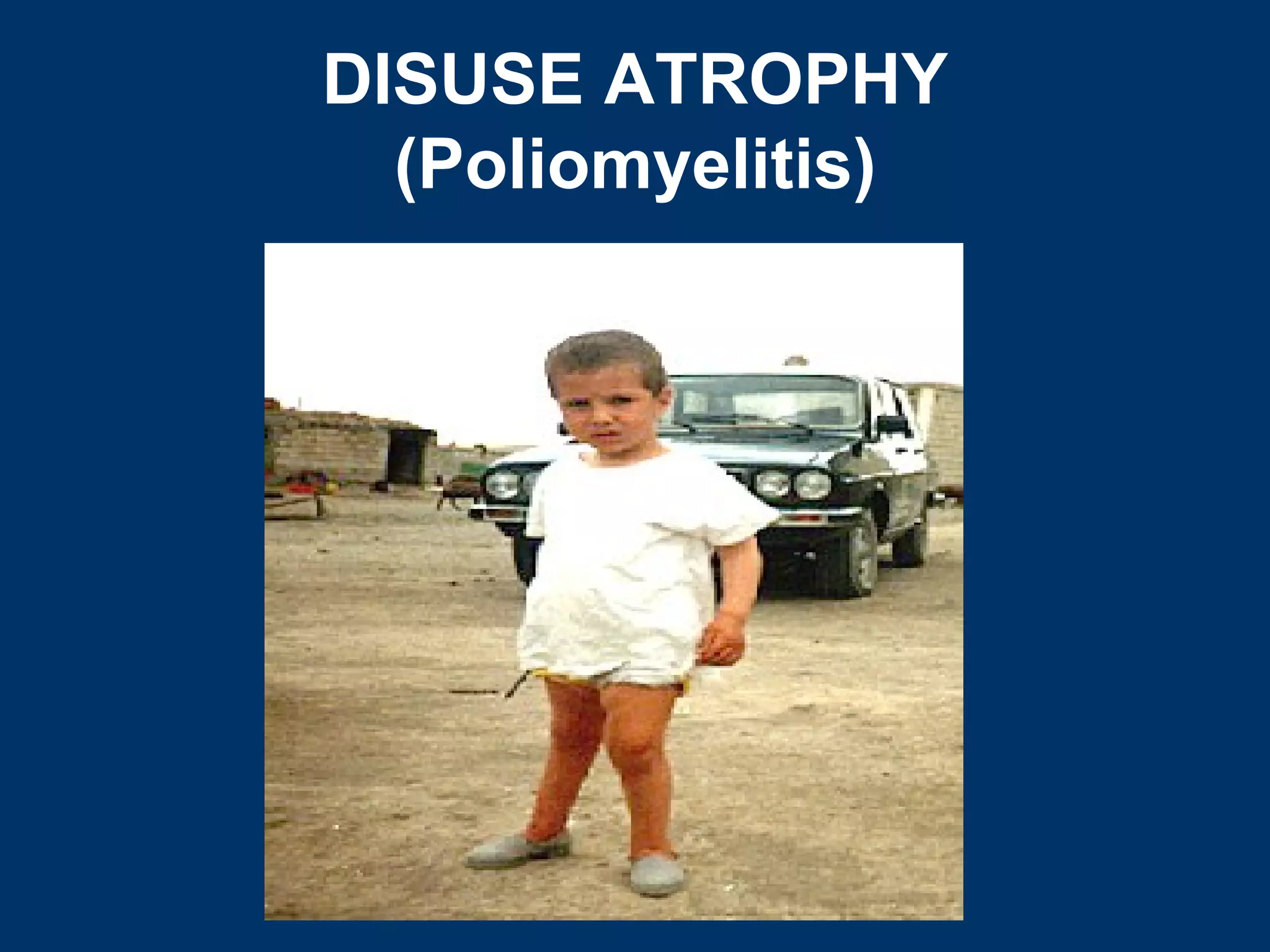
DISUSE ATROPHY
  (Poliomyelitis)
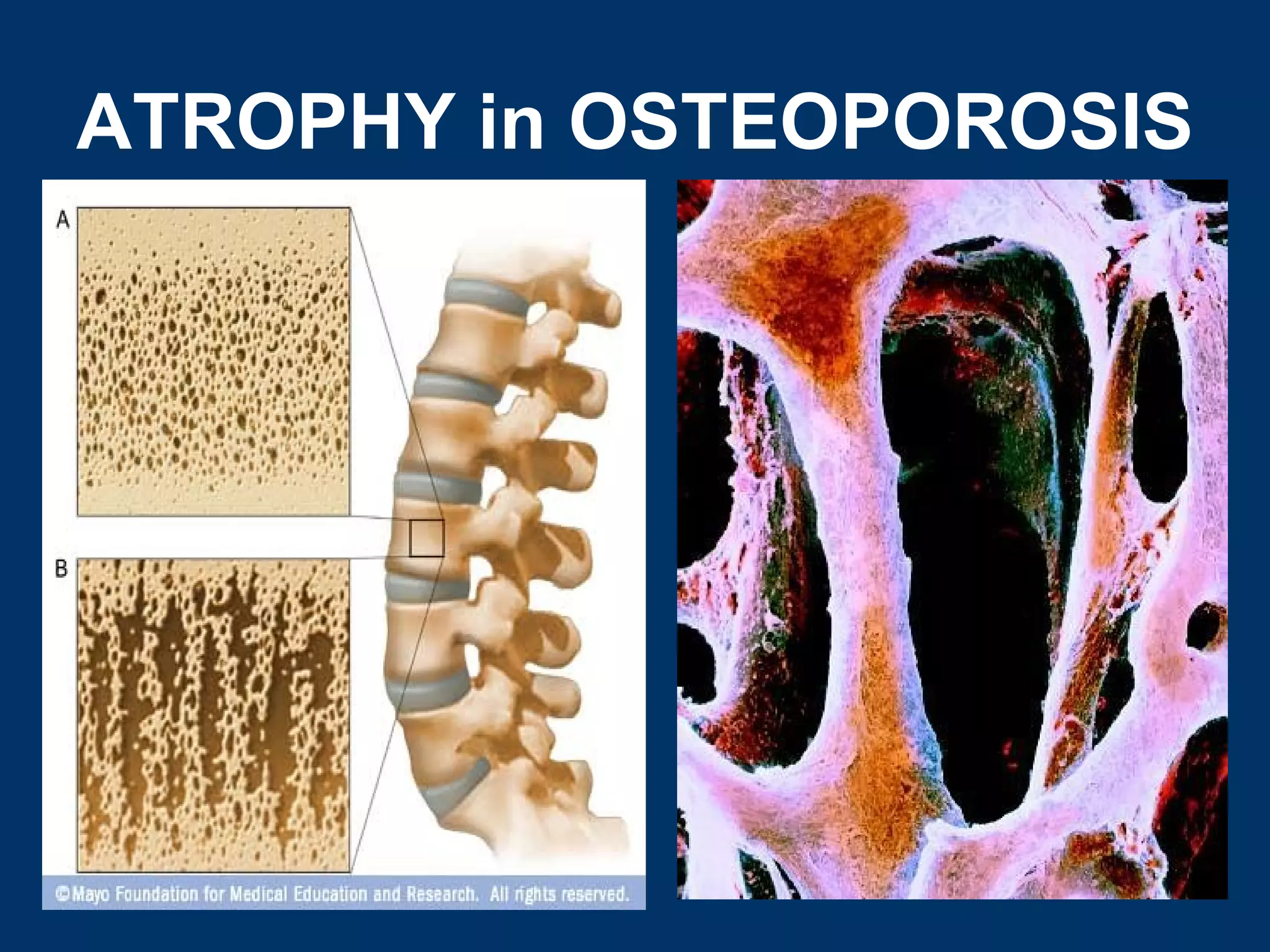
ATROPHY in OSTEOPOROSIS
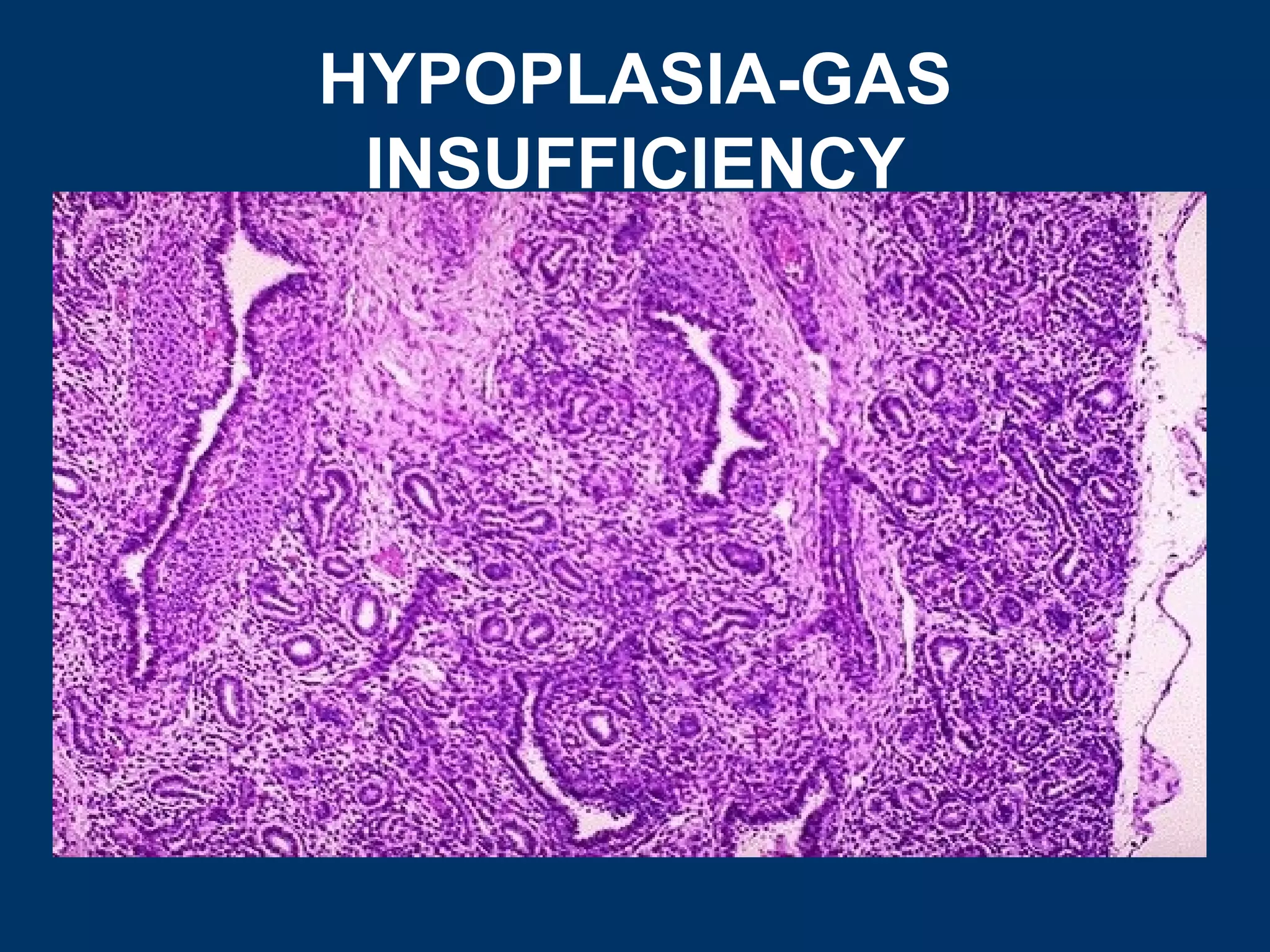
HYPOPLASIA-GAS
 INSUFFICIENCY
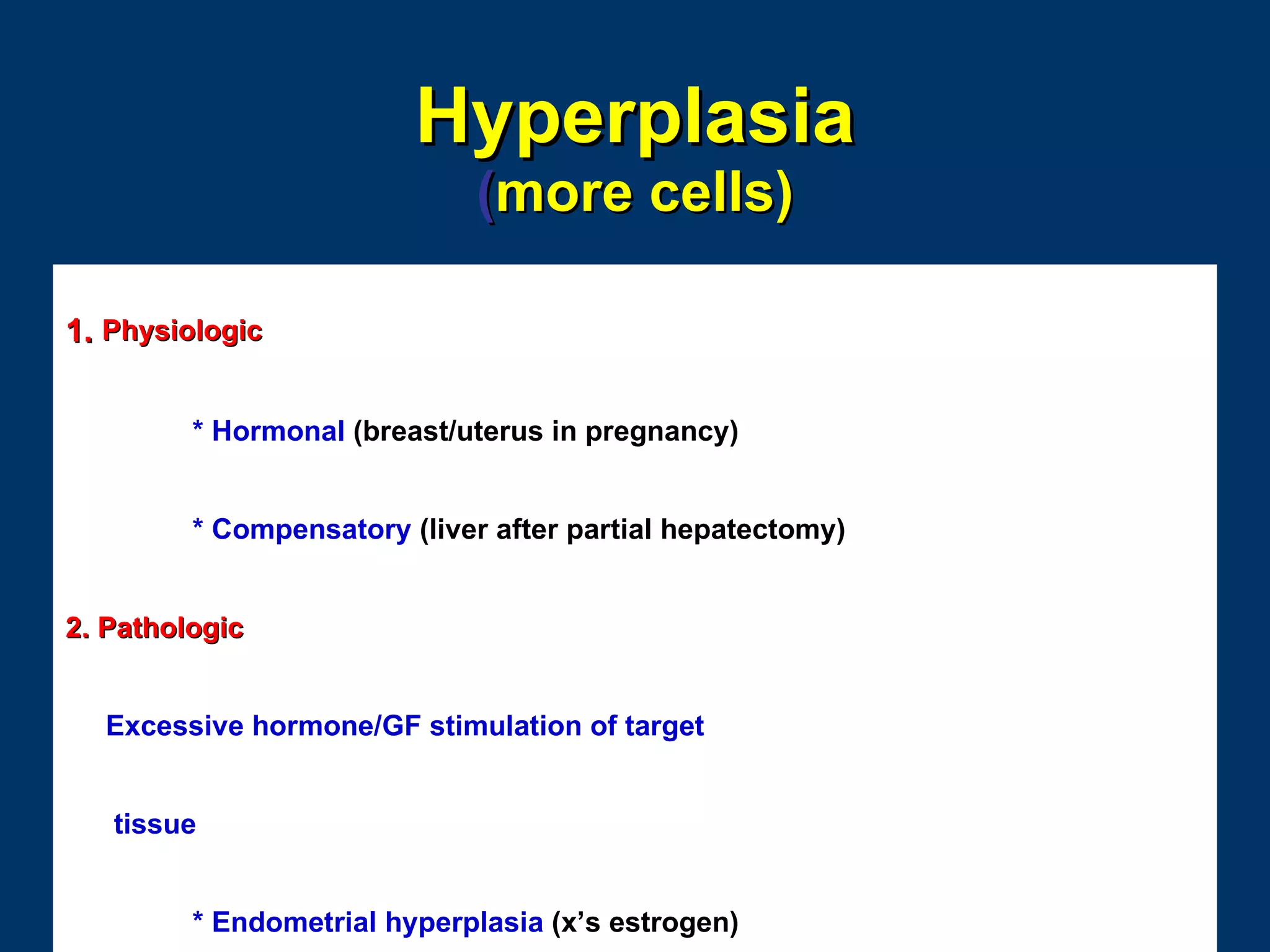
Hyperplasia
                             (more cells)

1. Physiologic


         * Hormonal (breast/uterus in pregnancy)


         * Compensatory (liver after partial hepatectomy)


2. Pathologic


  Excessive hormone/GF stimulation of target


   tissue


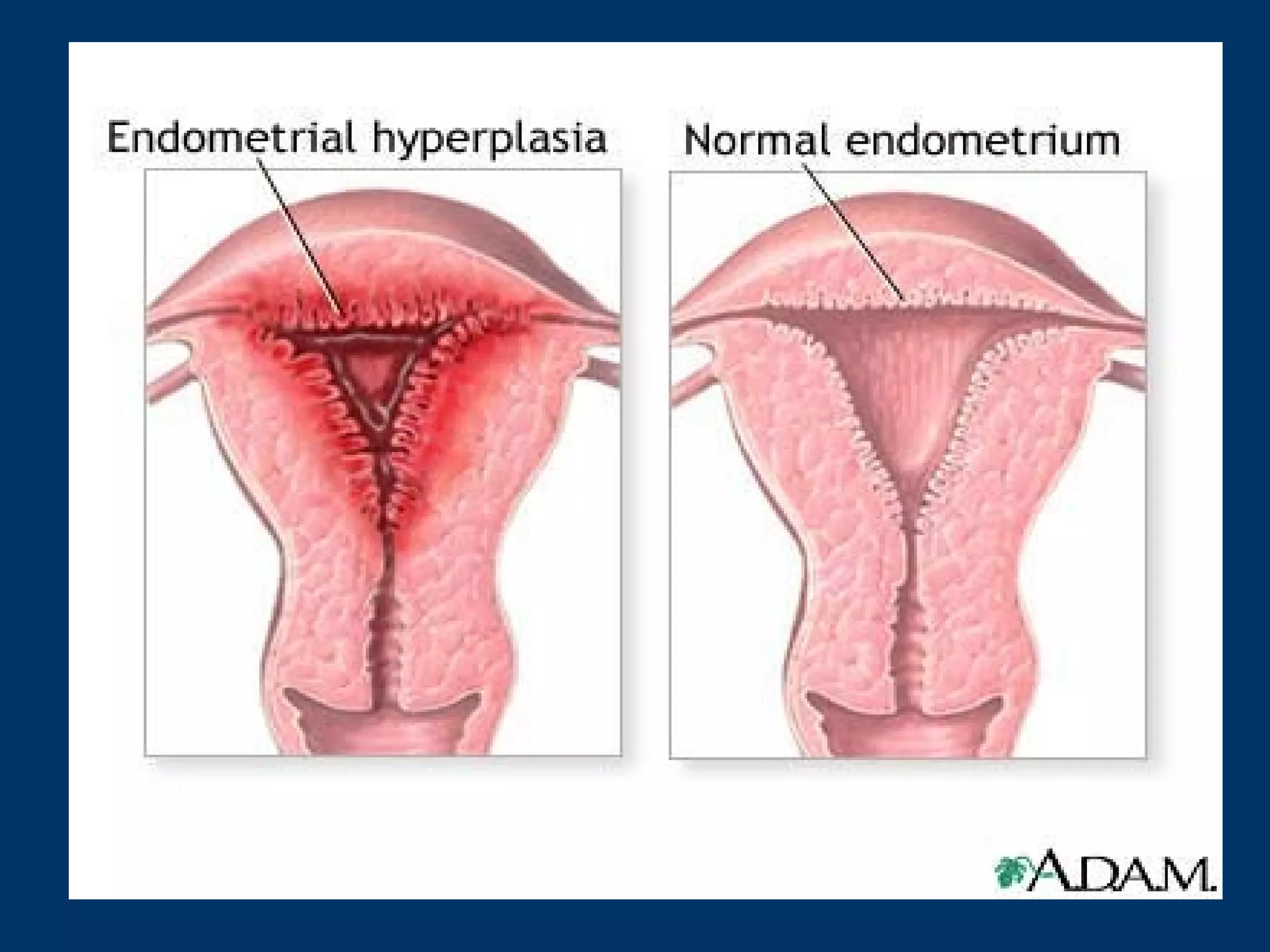
         * Endometrial hyperplasia (x’s estrogen)
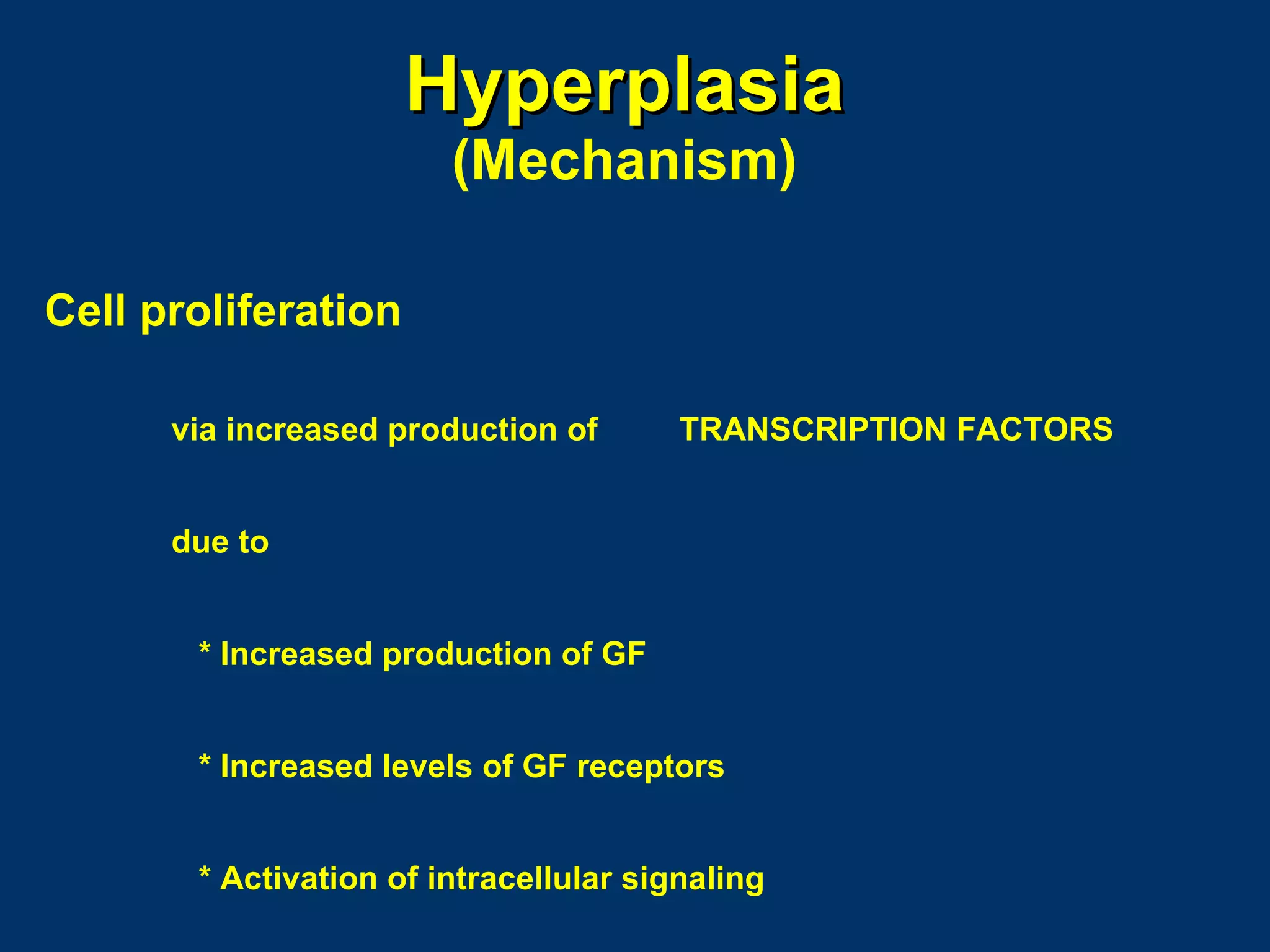
Hyperplasia
                        (Mechanism)

Cell proliferation

      via increased production of       TRANSCRIPTION FACTORS


      due to


       * Increased production of GF


       * Increased levels of GF receptors


       * Activation of intracellular signaling
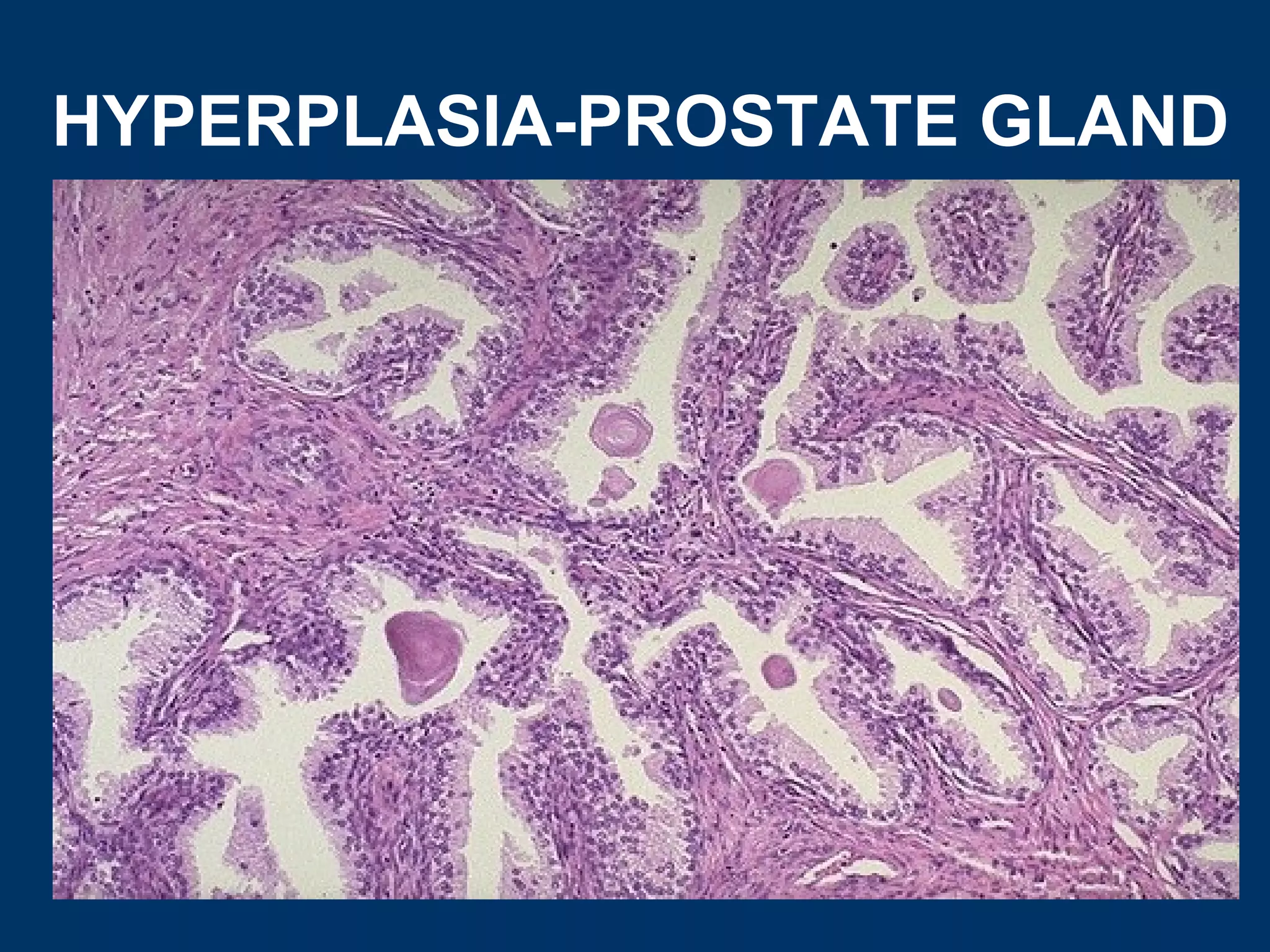
HYPERPLASIA-PROSTATE GLAND
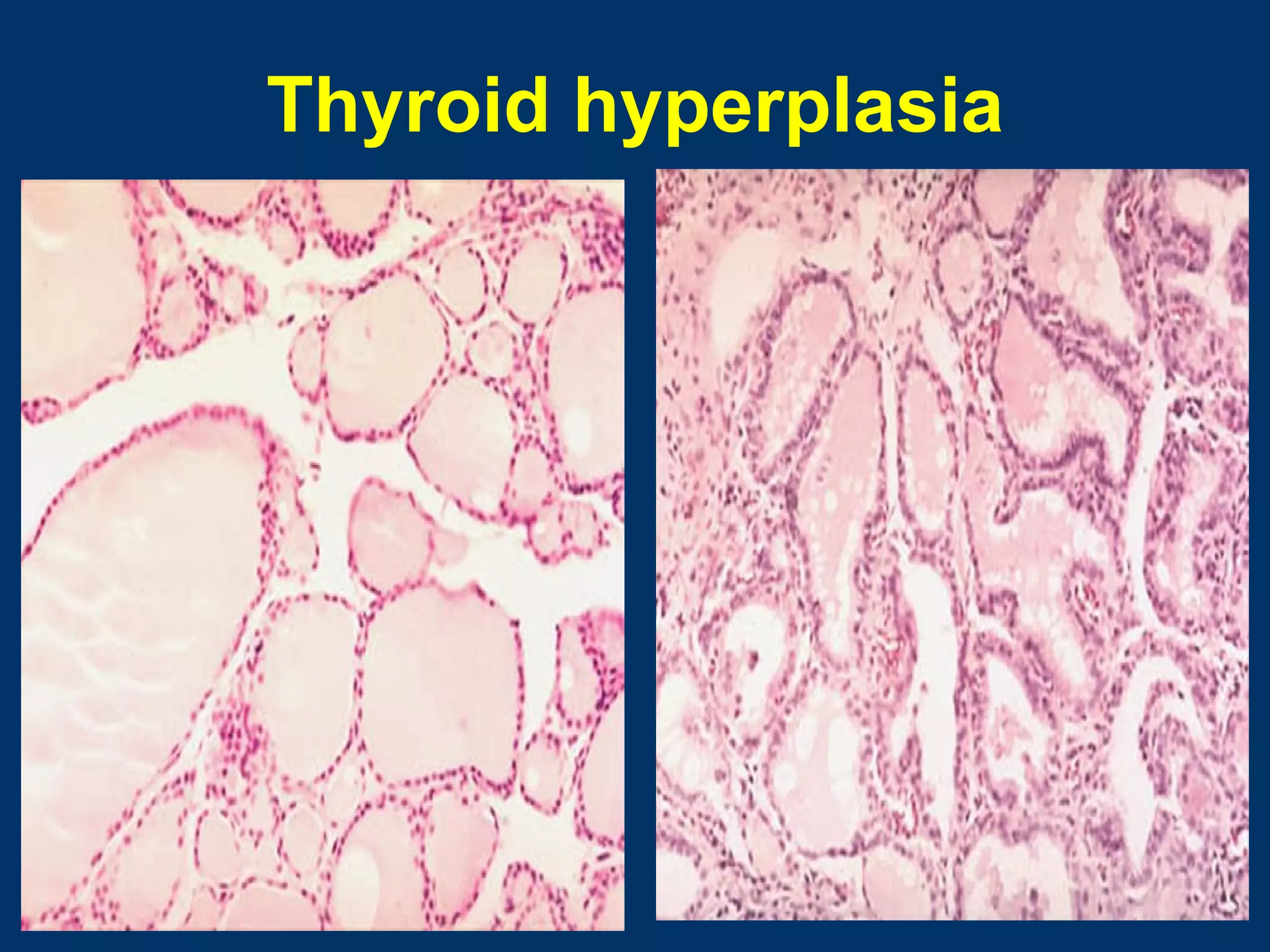
Thyroid hyperplasia
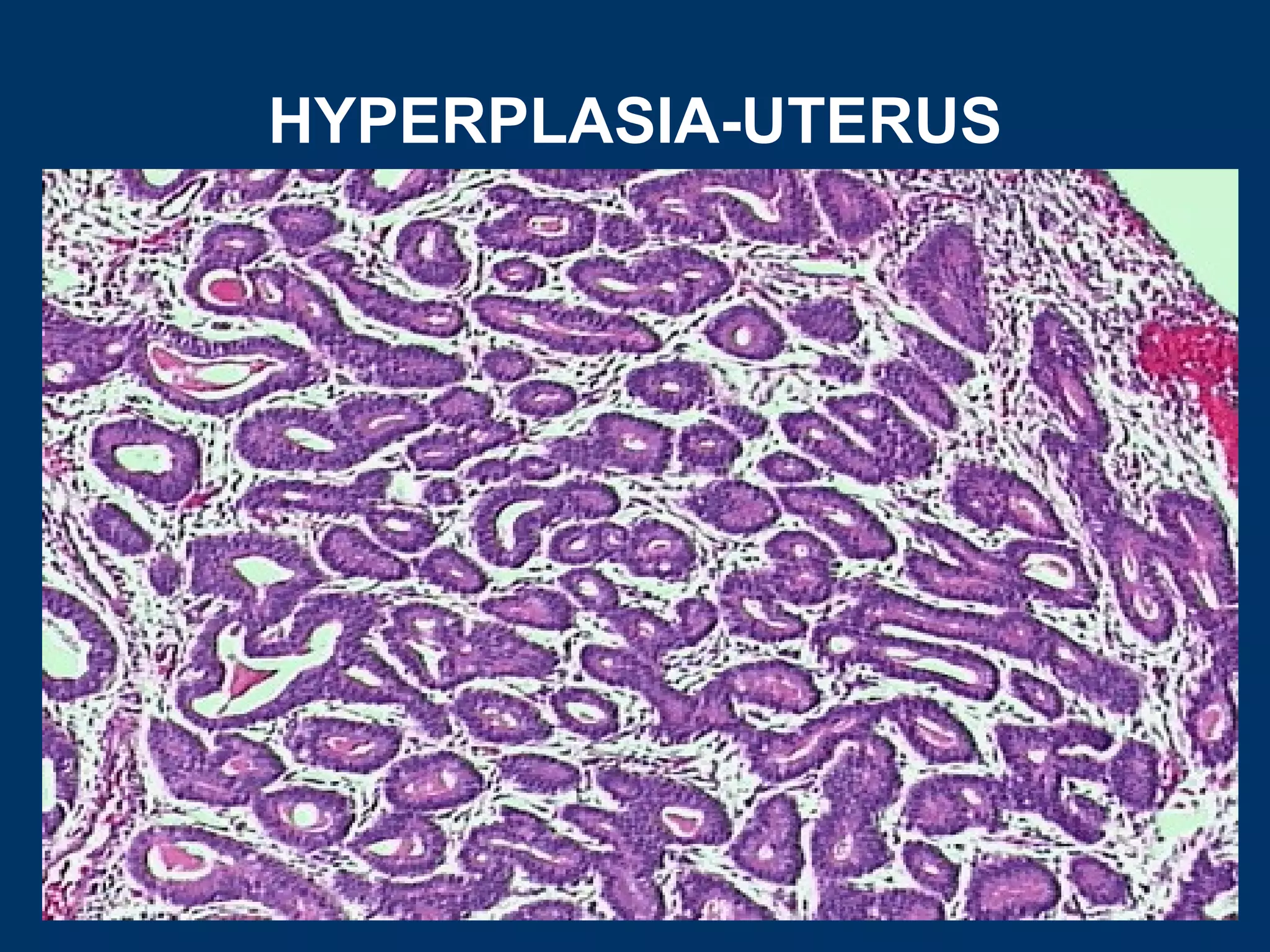
HYPERPLASIA-UTERUS
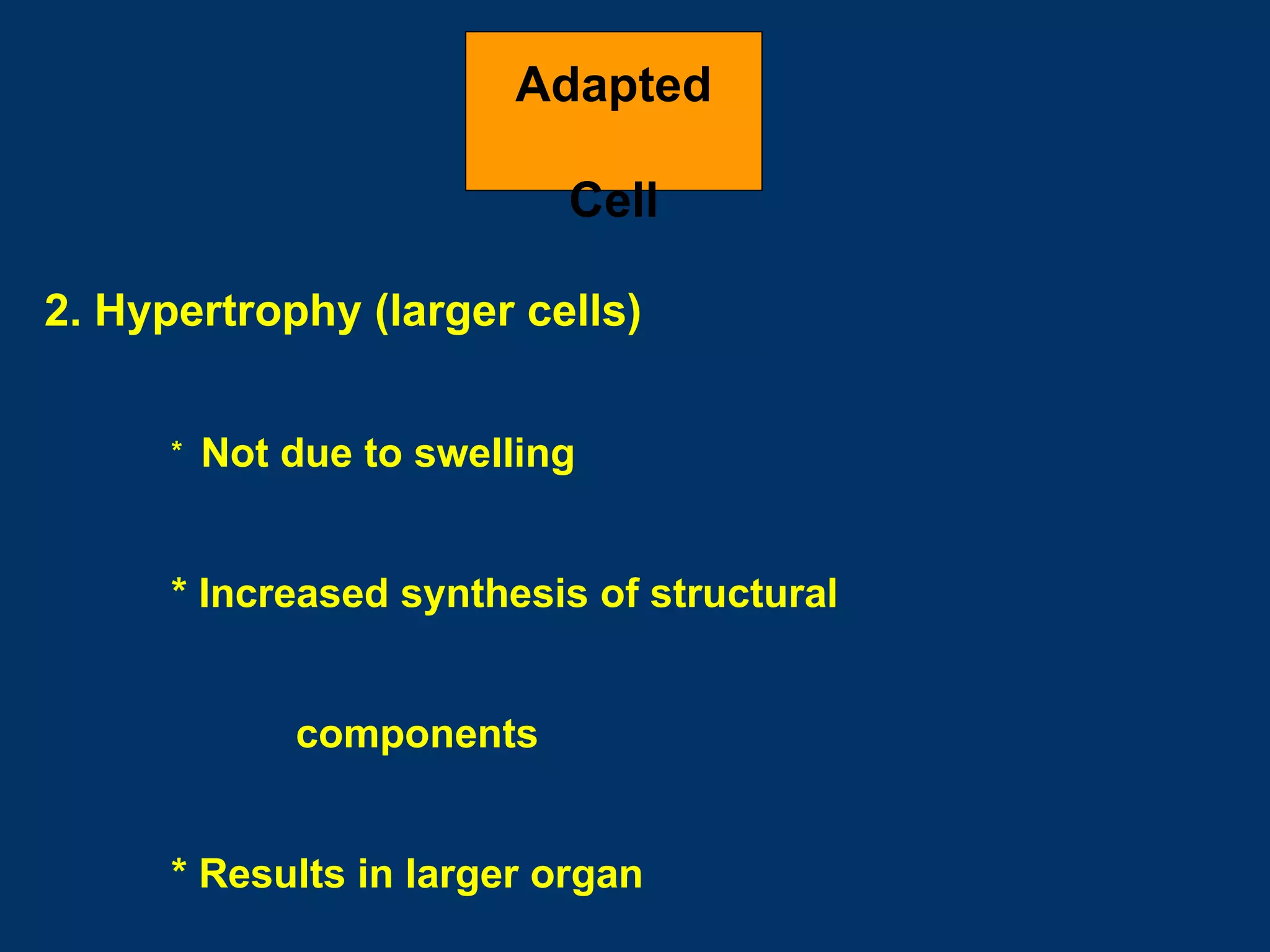
Adapted

                            Cell

2. Hypertrophy (larger cells)


      *   Not due to swelling


      * Increased synthesis of structural


              components


      * Results in larger organ
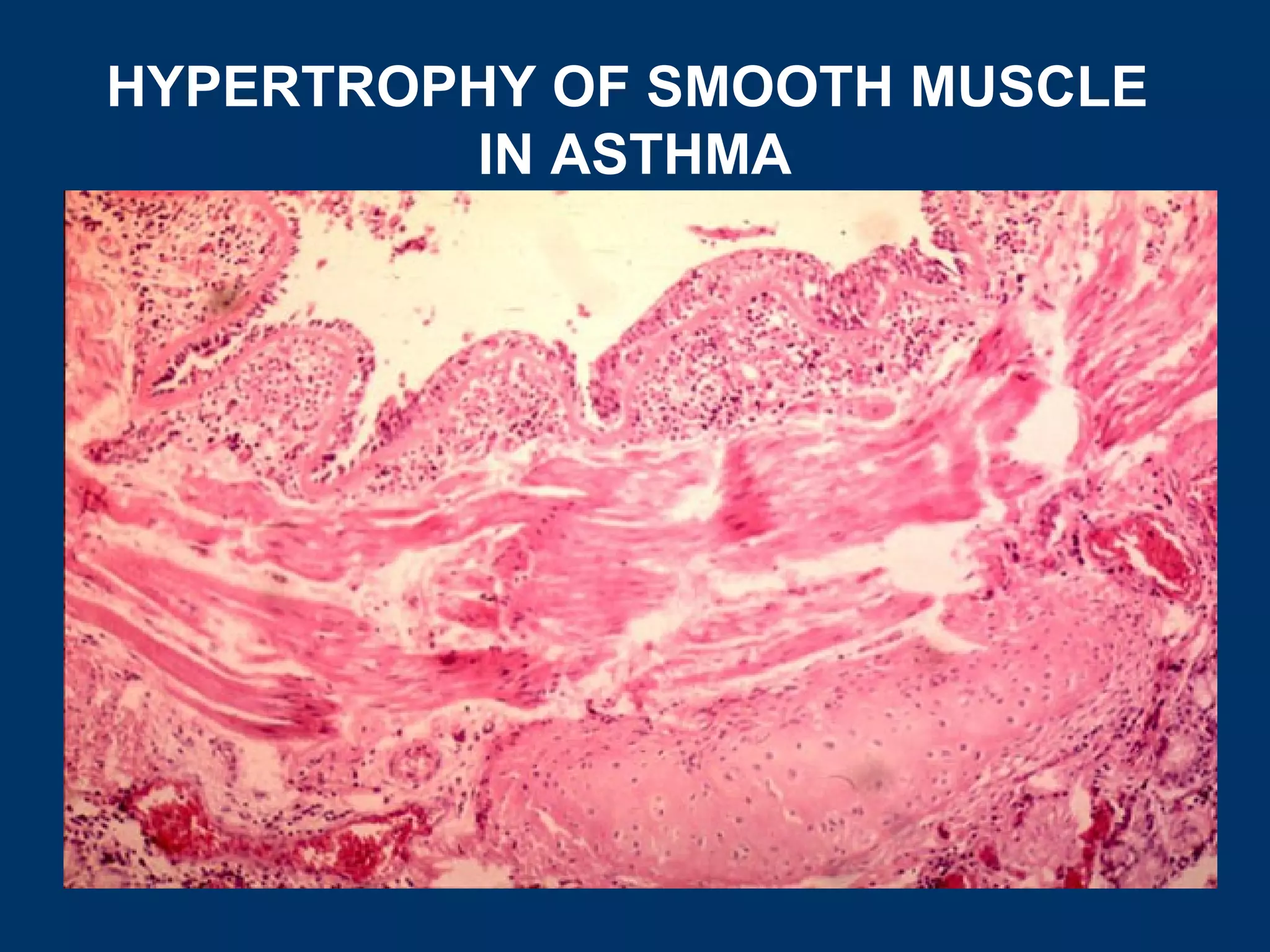
HYPERTROPHY OF SMOOTH MUSCLE
         IN ASTHMA
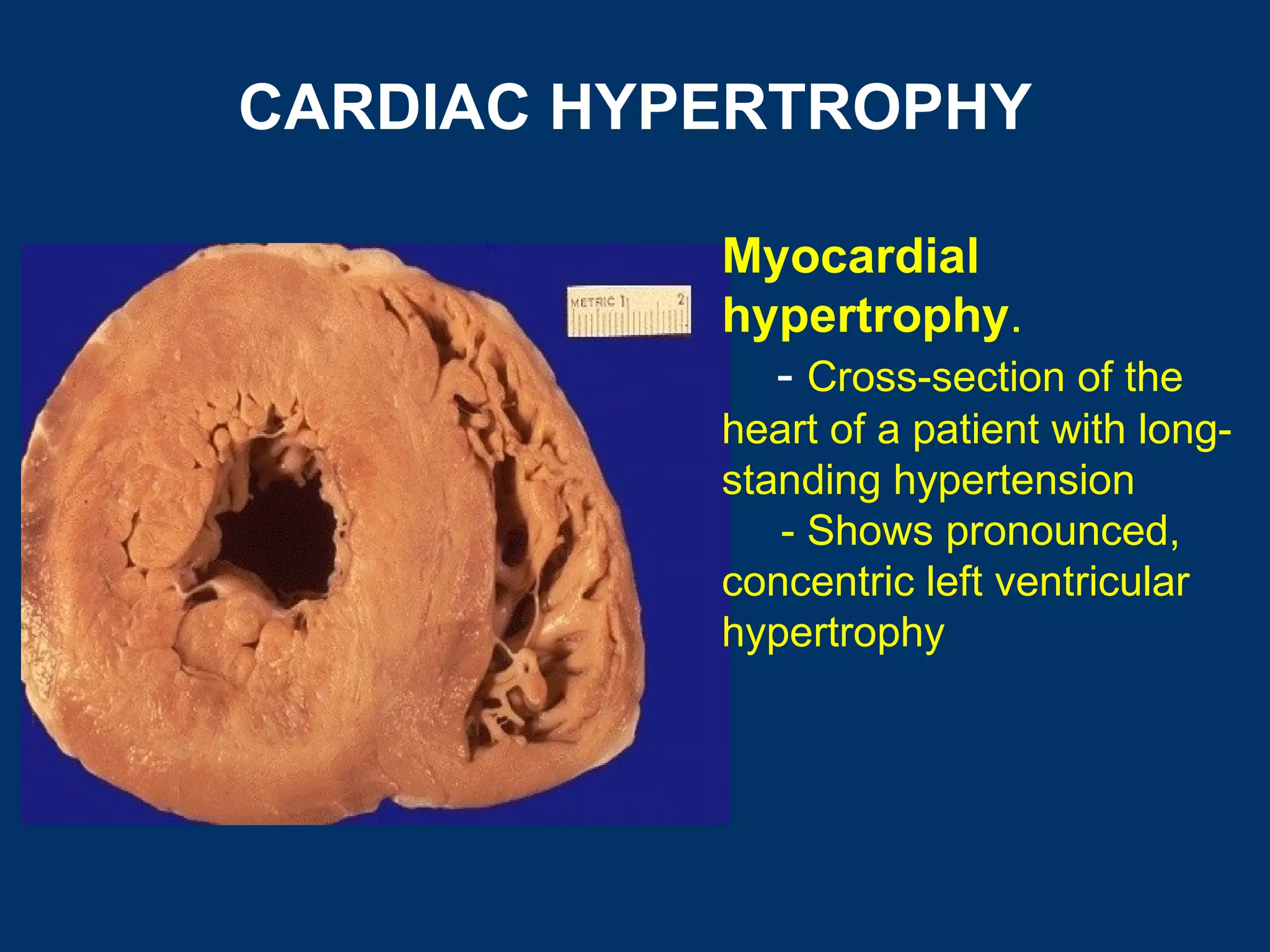
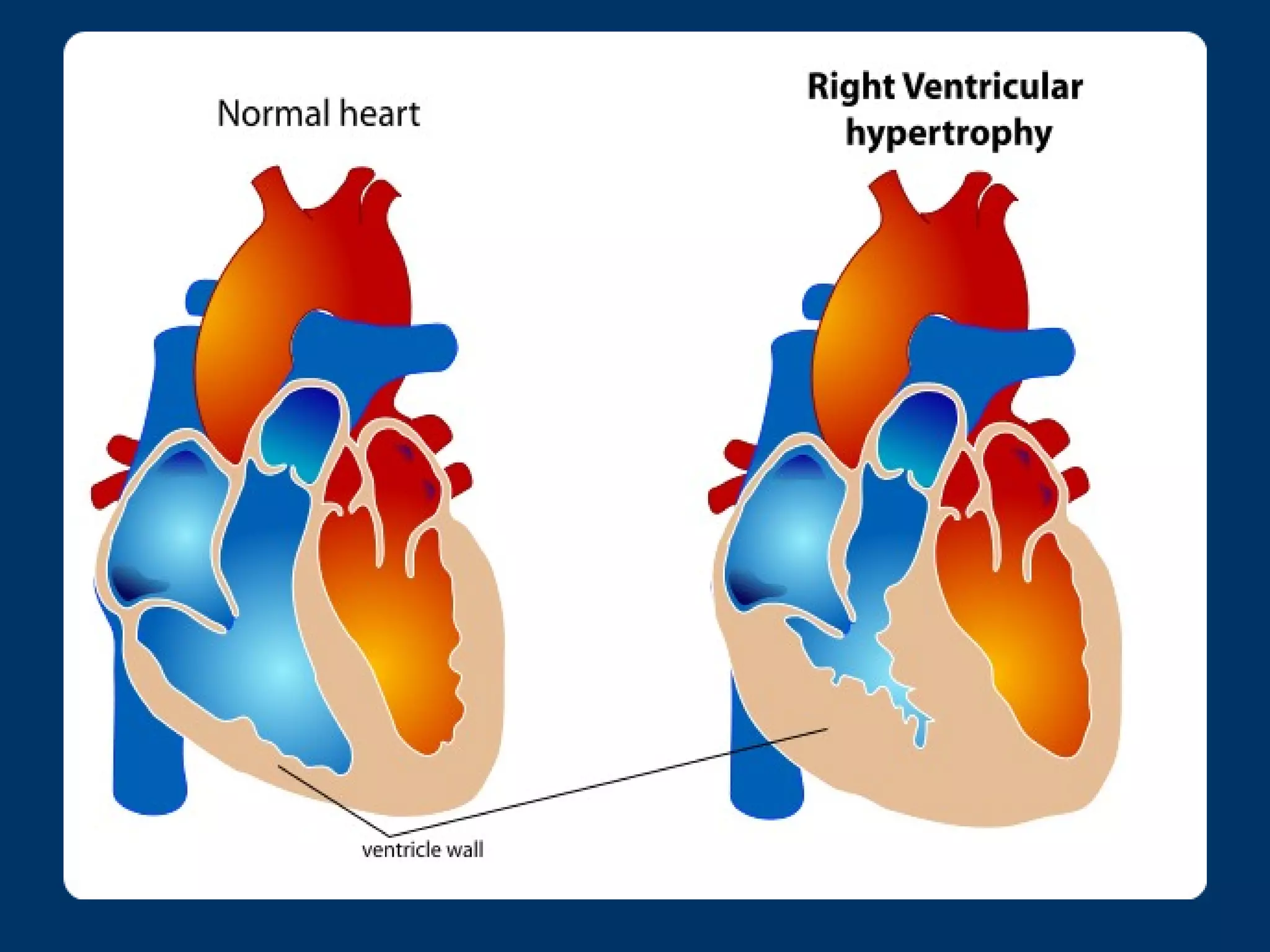
CARDIAC HYPERTROPHY

           Myocardial
           hypertrophy.
             - Cross-section of the
           heart of a patient with long-
           standing hypertension
              - Shows pronounced,
           concentric left ventricular
           hypertrophy
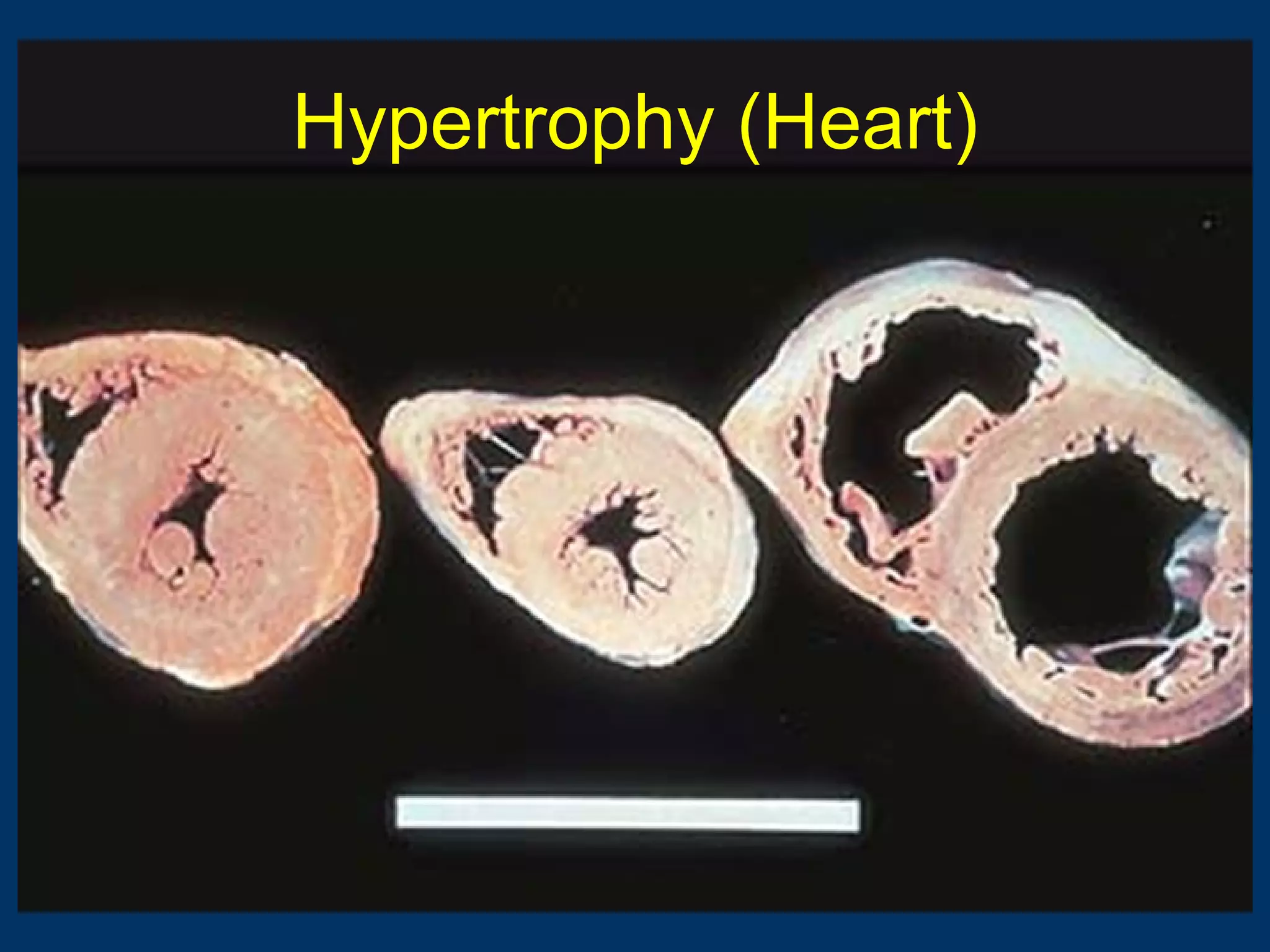
Hypertrophy (Heart)
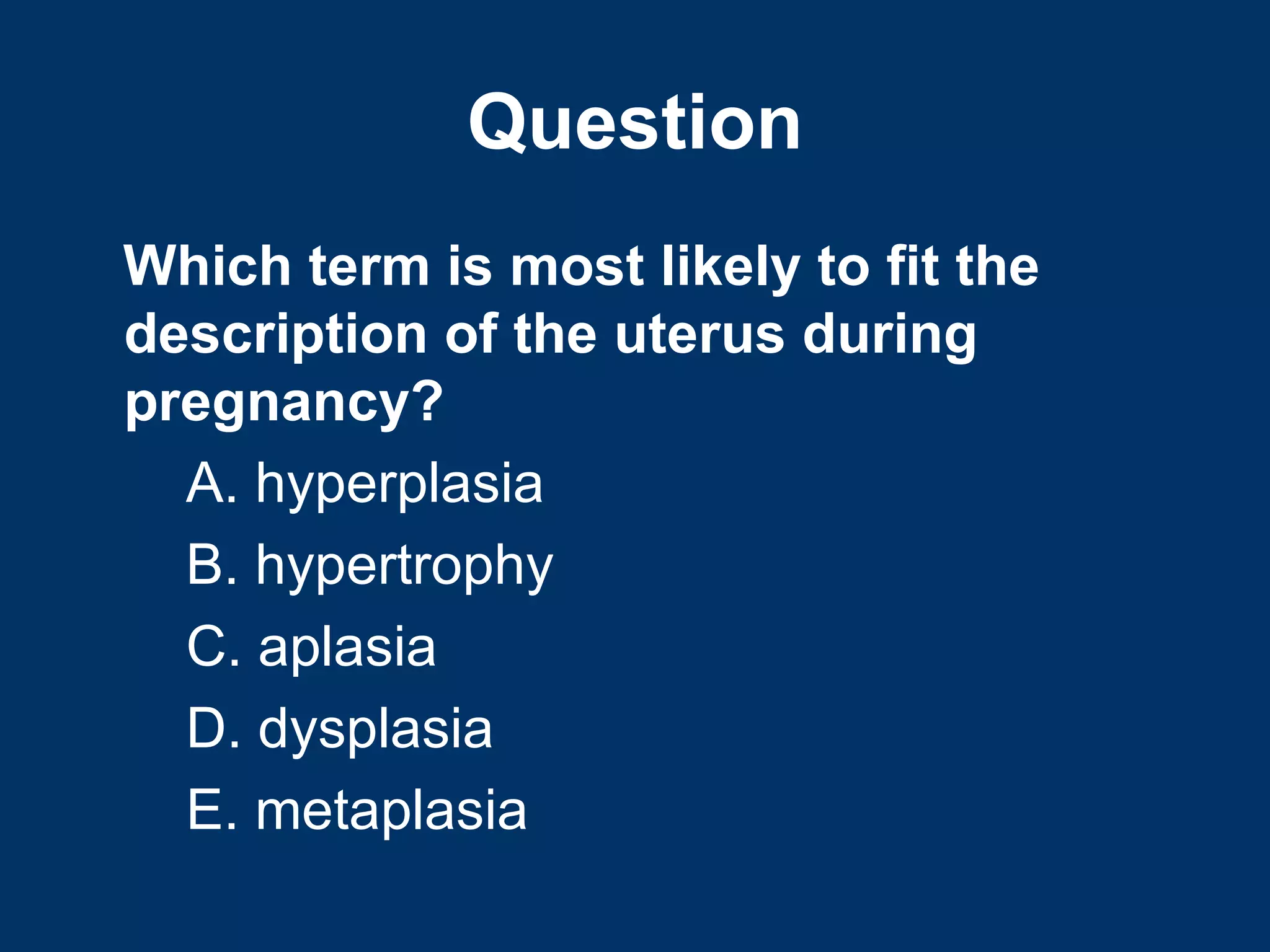
Question
Which term is most likely to fit the
description of the uterus during
pregnancy?
  A. hyperplasia
  B. hypertrophy
  C. aplasia
  D. dysplasia
  E. metaplasia
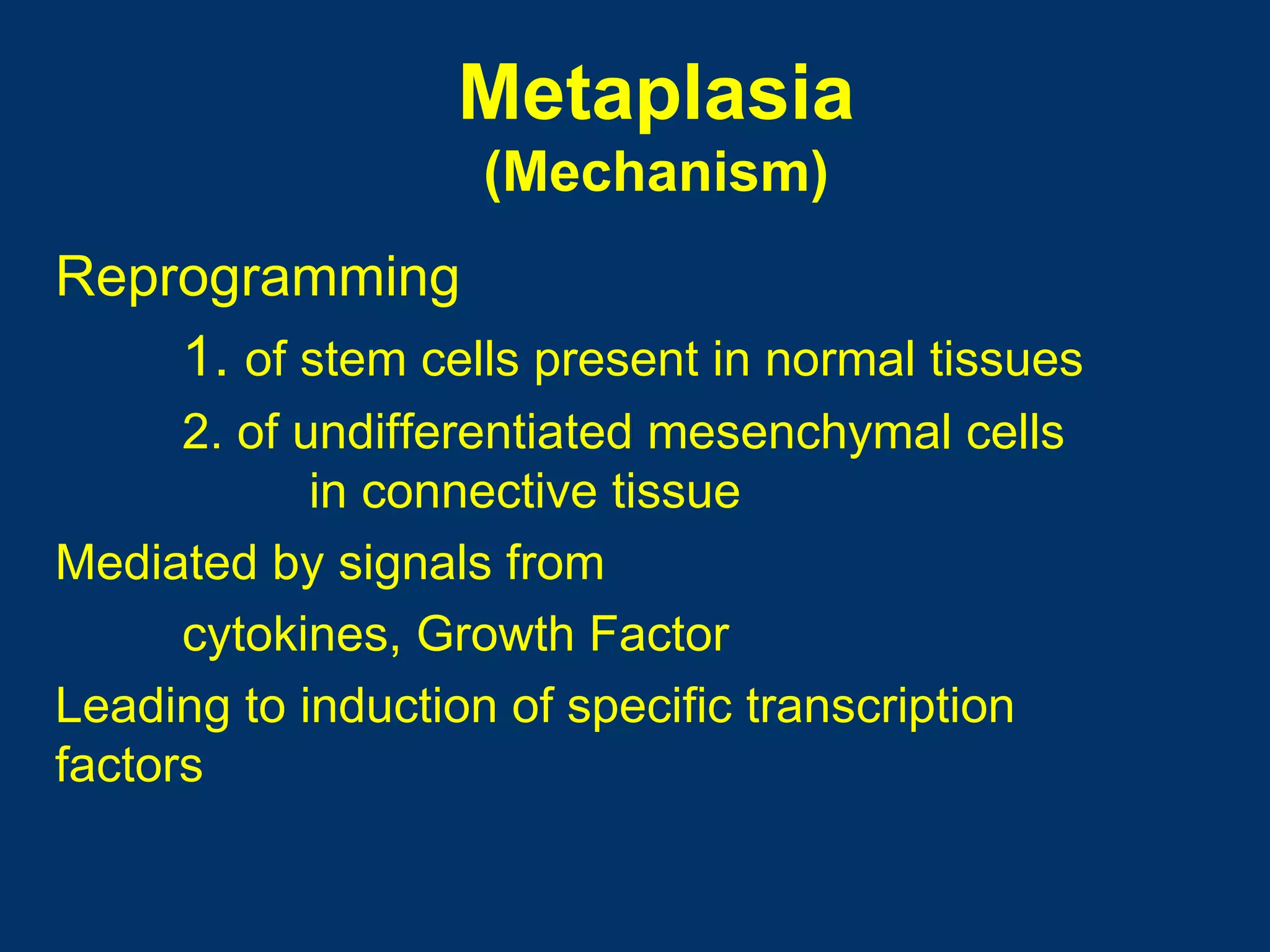
Metaplasia
                   (Mechanism)
Reprogramming
    1. of stem cells present in normal tissues
      2. of undifferentiated mesenchymal cells
             in connective tissue
Mediated by signals from
      cytokines, Growth Factor
Leading to induction of specific transcription
factors
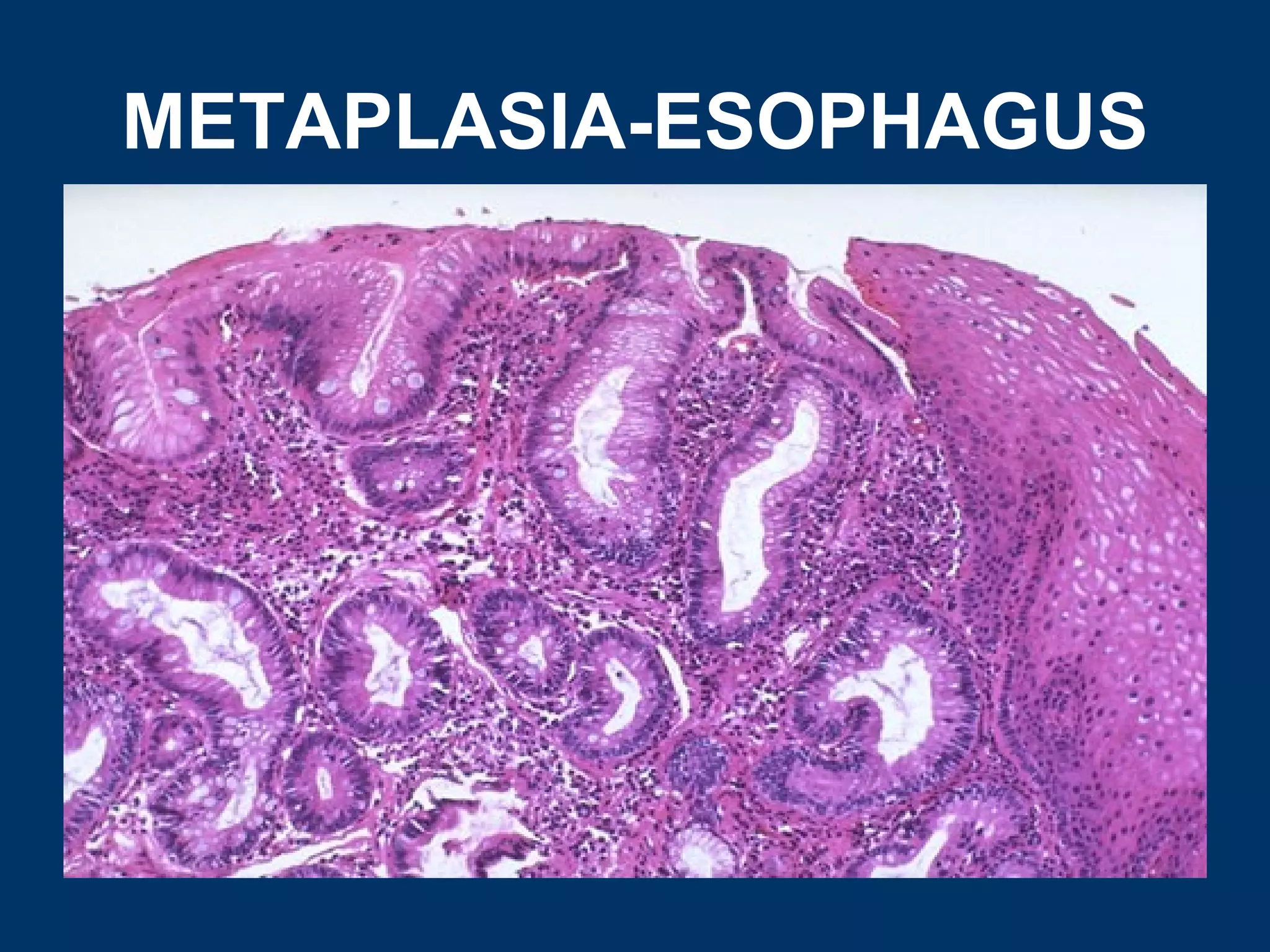
METAPLASIA-ESOPHAGUS
4. Metaplasia
  **One adult cell type replaces another**


Reversible


Columnar to squamous epithelium (most common epithelial -type of

metaplasia)


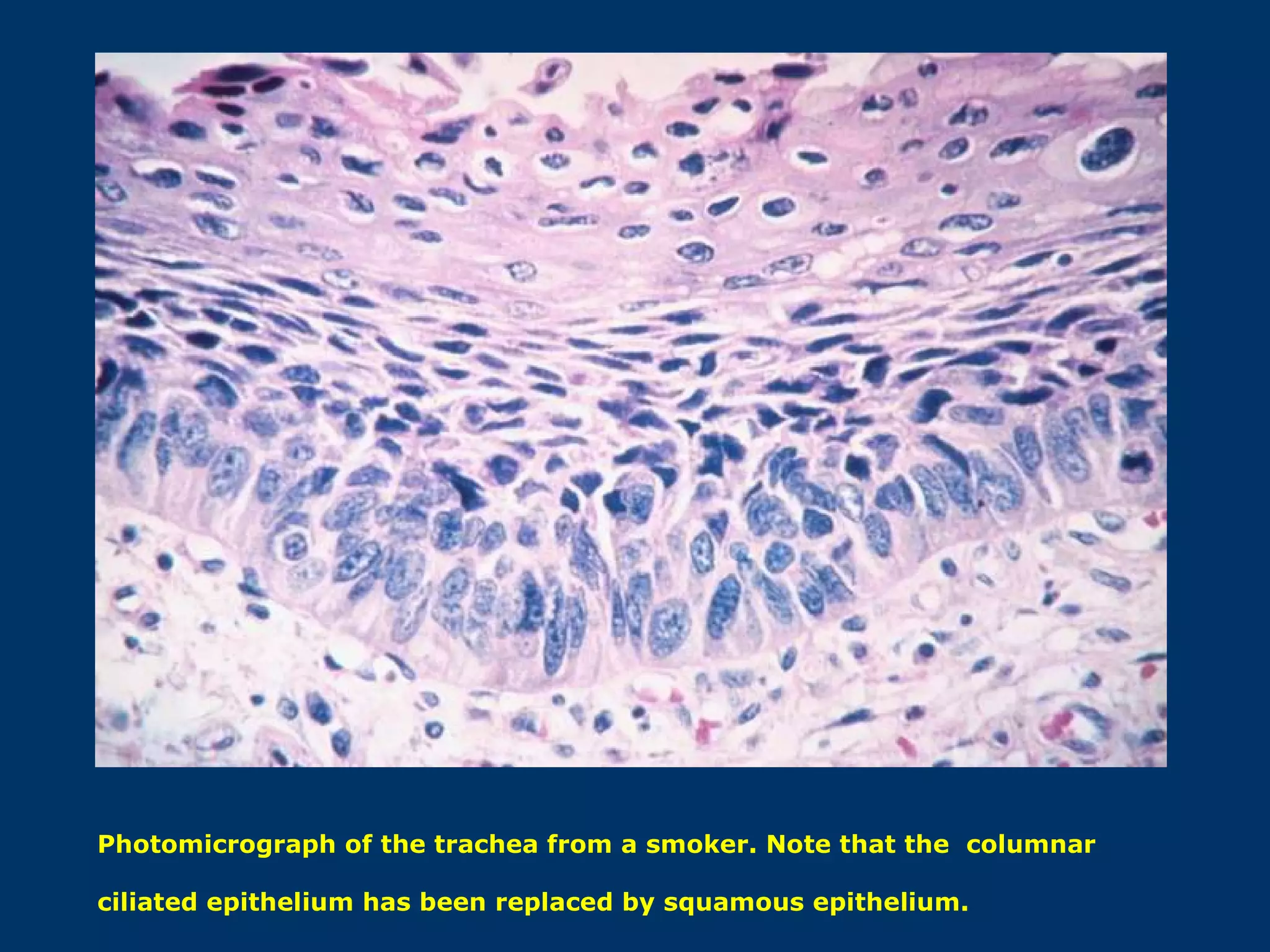
Chronic irritation i.e. (in trachea and bronchi of smokers)


Vit A deficiency squamous metaplasia in respiratory      epithelium
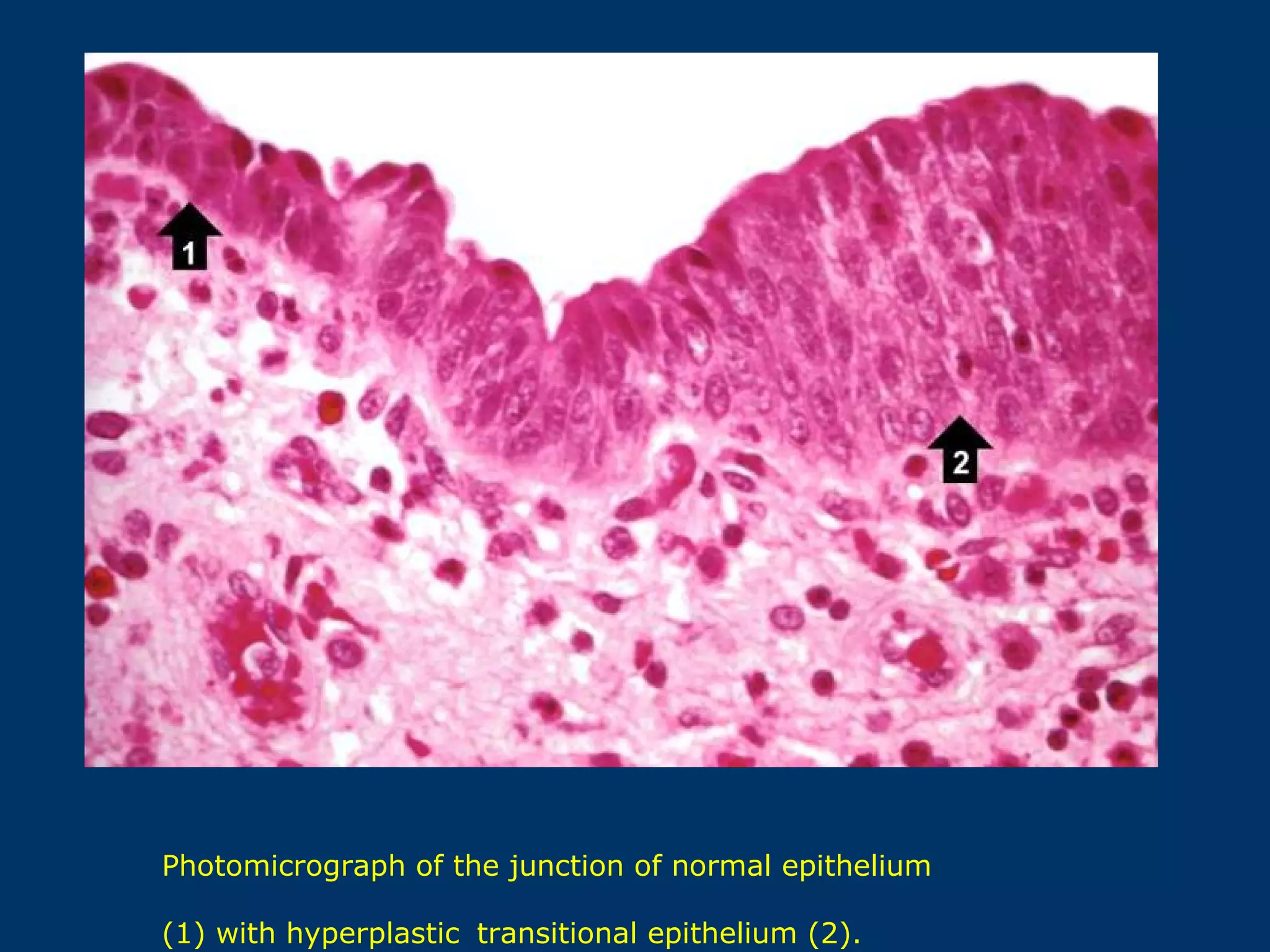
Photomicrograph of the junction of normal epithelium

(1) with hyperplastic transitional epithelium (2).
Photomicrograph of the trachea from a smoker. Note that the columnar

ciliated epithelium has been replaced by squamous epithelium.
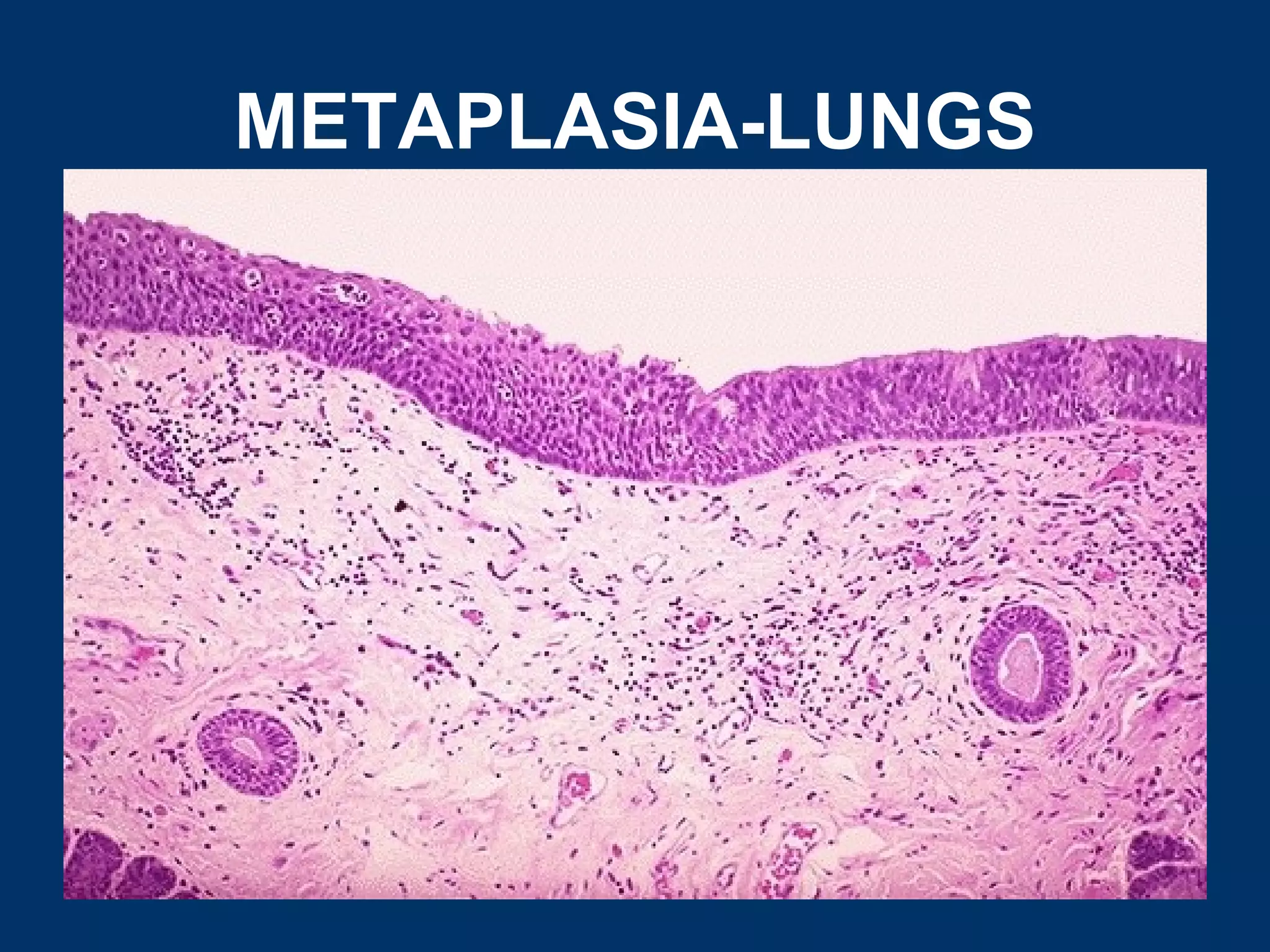
METAPLASIA-LUNGS
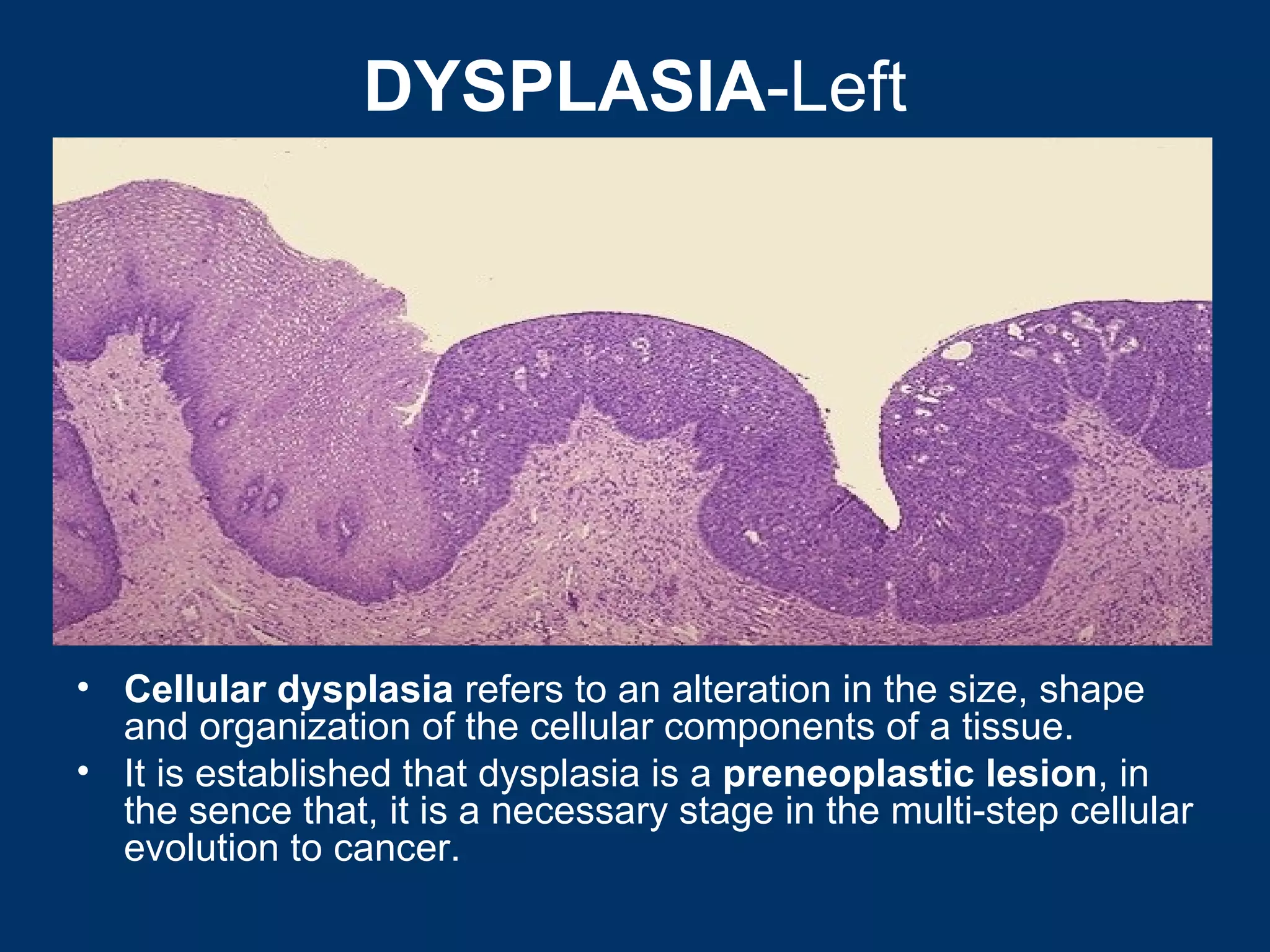
DYSPLASIA-Left


• Cellular dysplasia refers to an alteration in the size, shape
  and organization of the cellular components of a tissue.
• It is established that dysplasia is a preneoplastic lesion, in
  the sence that, it is a necessary stage in the multi-step cellular
  evolution to cancer.
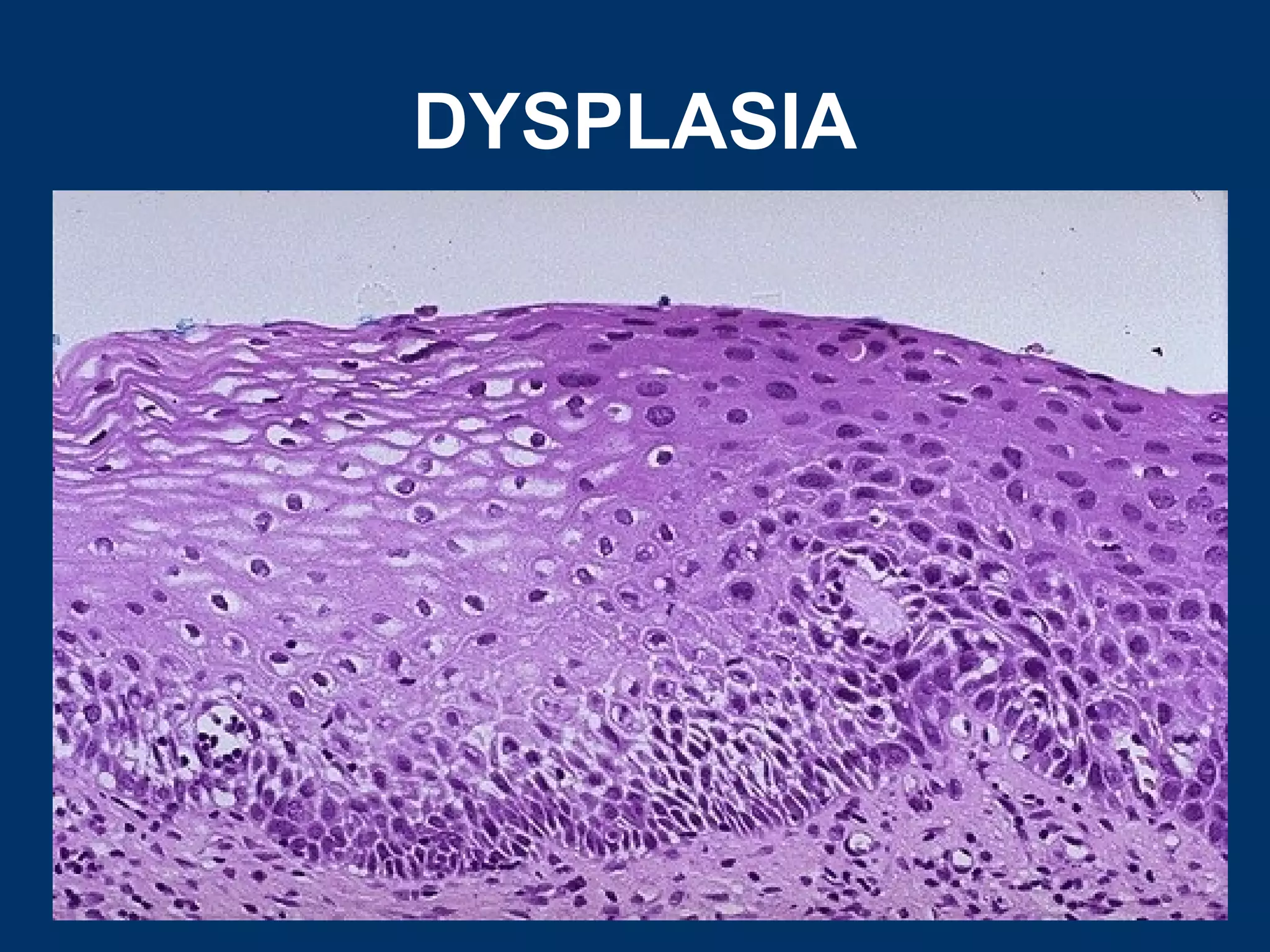
DYSPLASIA
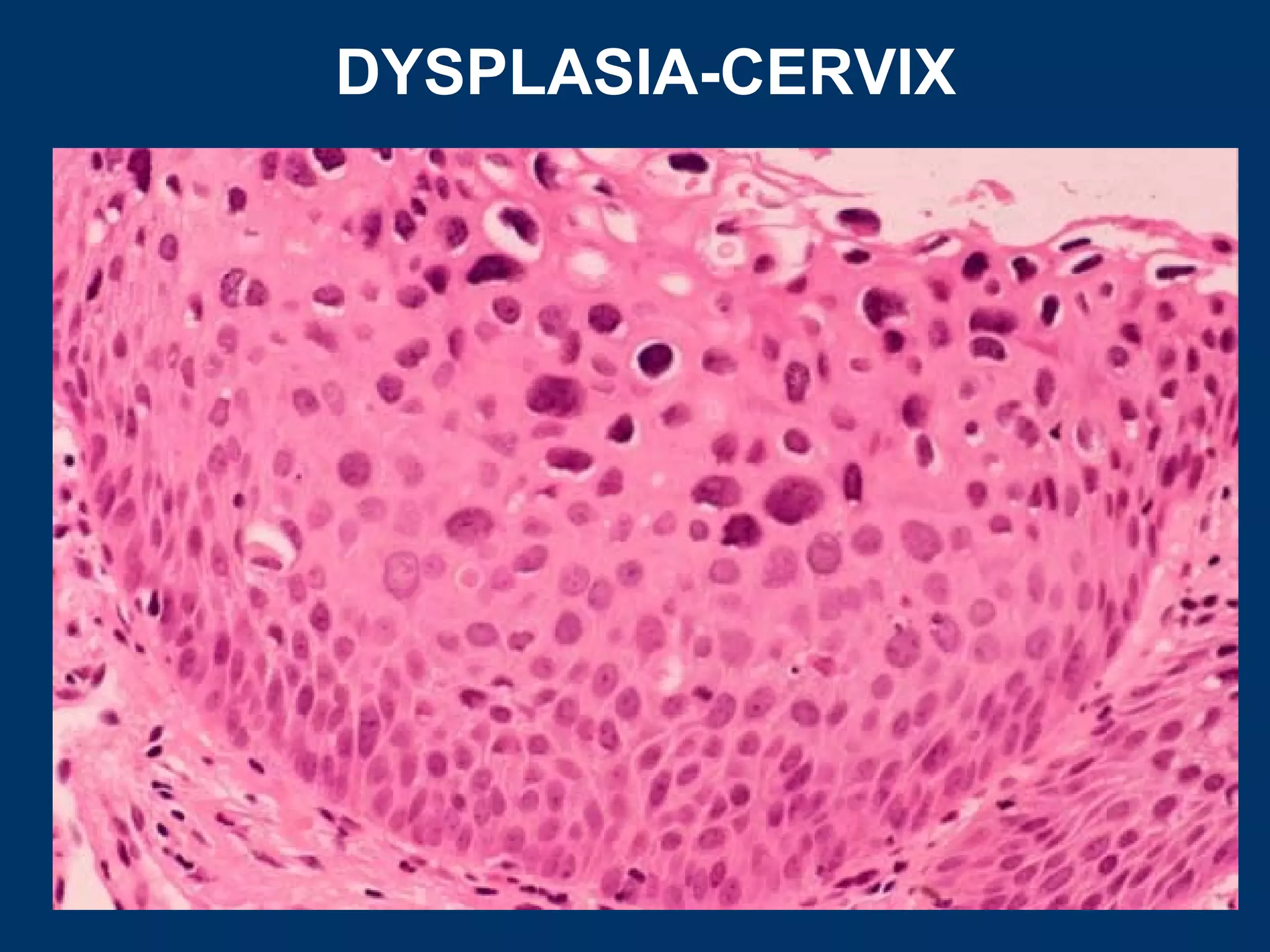
DYSPLASIA-CERVIX
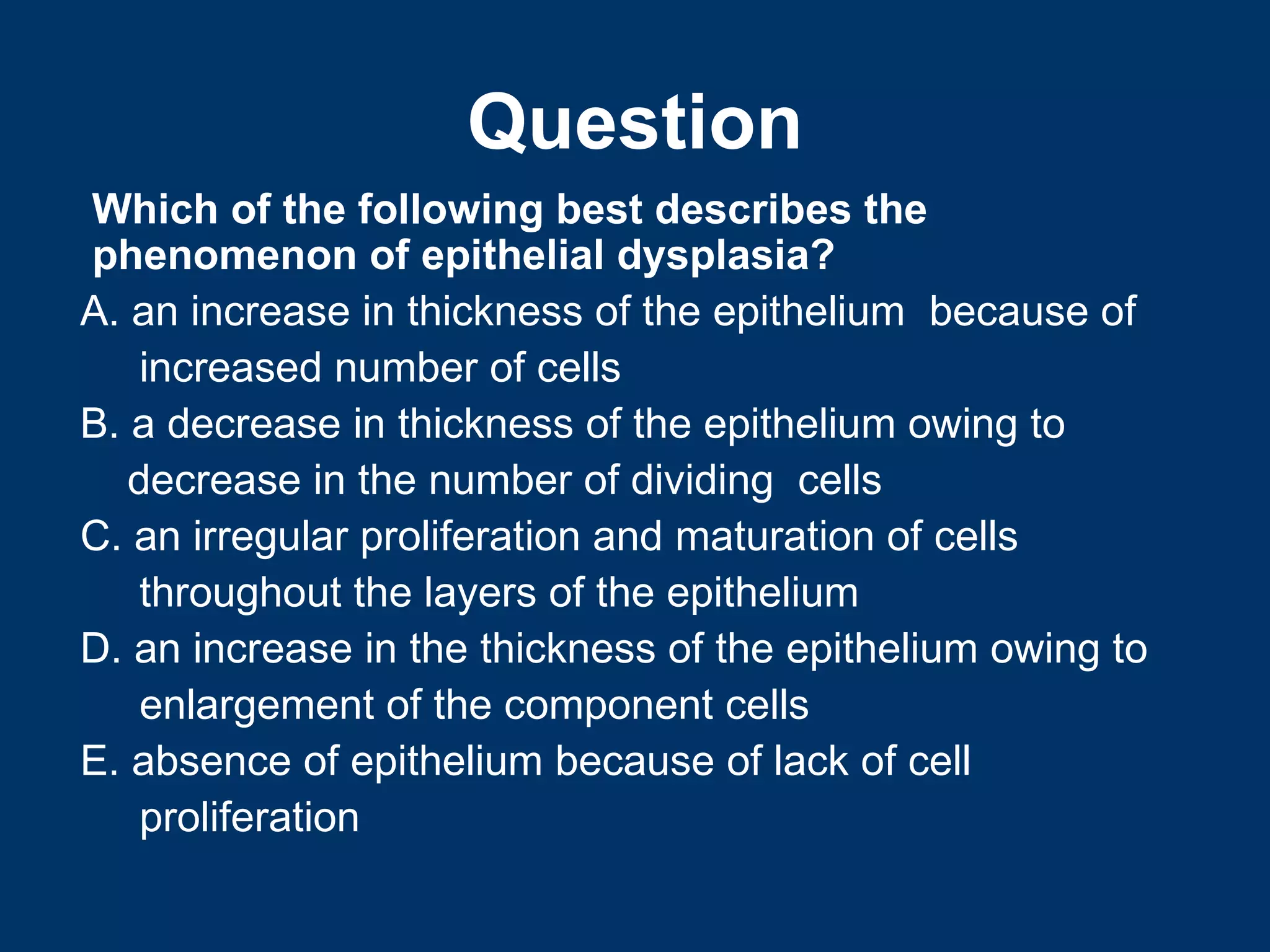
Question
Which of the following best describes the
phenomenon of epithelial dysplasia?
A. an increase in thickness of the epithelium because of
    increased number of cells
B. a decrease in thickness of the epithelium owing to
   decrease in the number of dividing cells
C. an irregular proliferation and maturation of cells
    throughout the layers of the epithelium
D. an increase in the thickness of the epithelium owing to
    enlargement of the component cells
E. absence of epithelium because of lack of cell
    proliferation
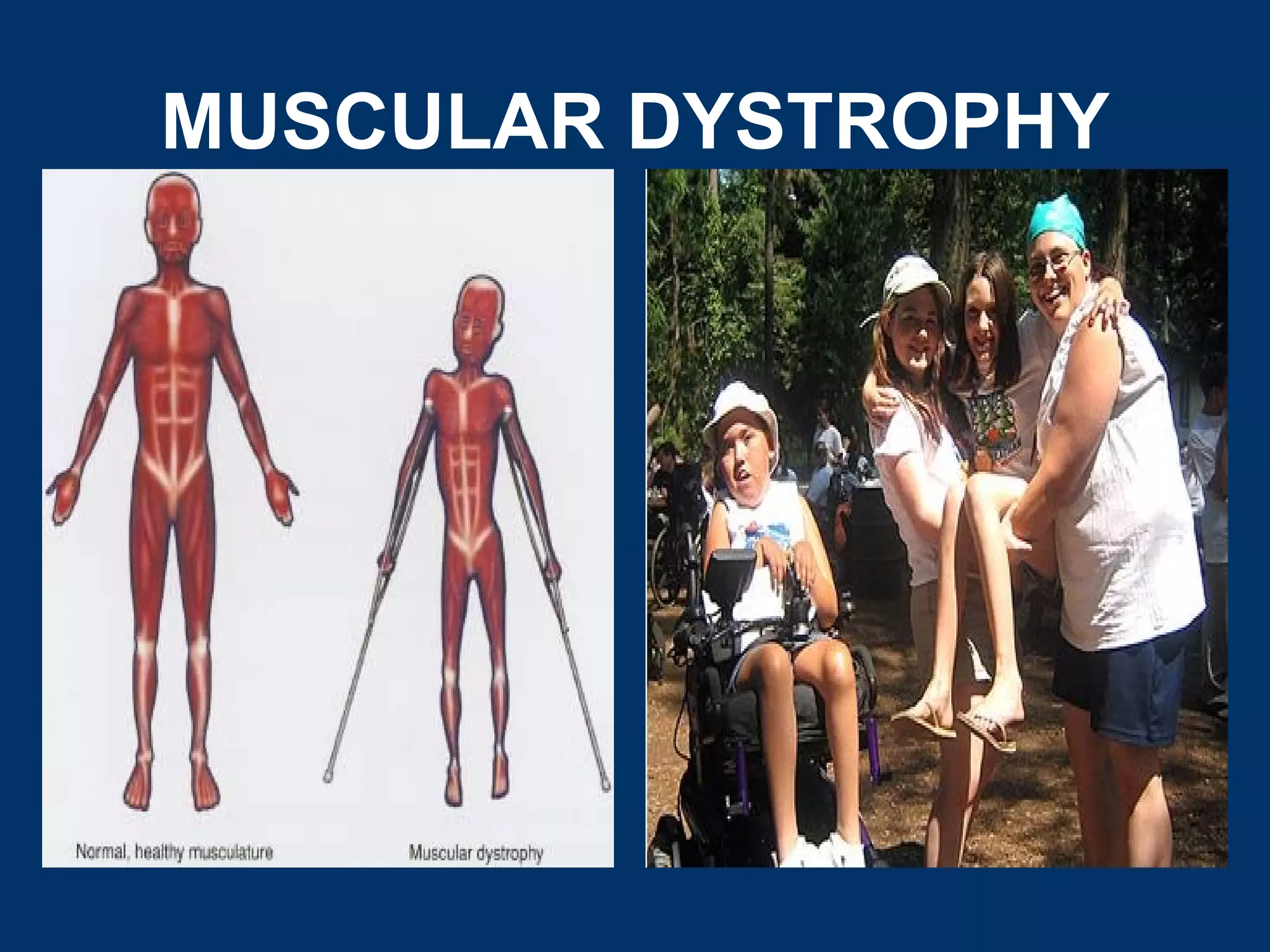
MUSCULAR DYSTROPHY
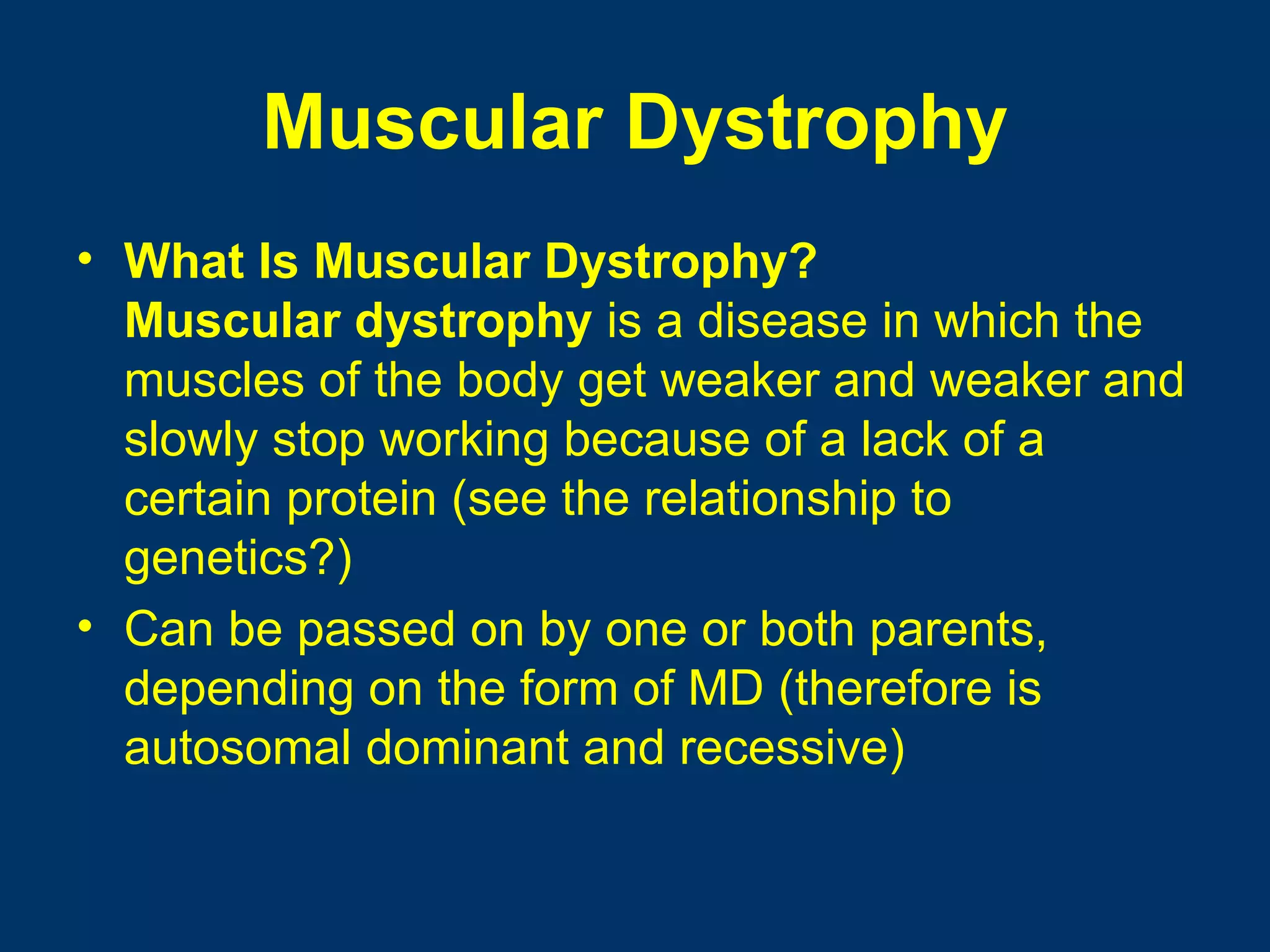
Muscular Dystrophy
• What Is Muscular Dystrophy?
  Muscular dystrophy is a disease in which the
  muscles of the body get weaker and weaker and
  slowly stop working because of a lack of a
  certain protein (see the relationship to
  genetics?)
• Can be passed on by one or both parents,
  depending on the form of MD (therefore is
  autosomal dominant and recessive)
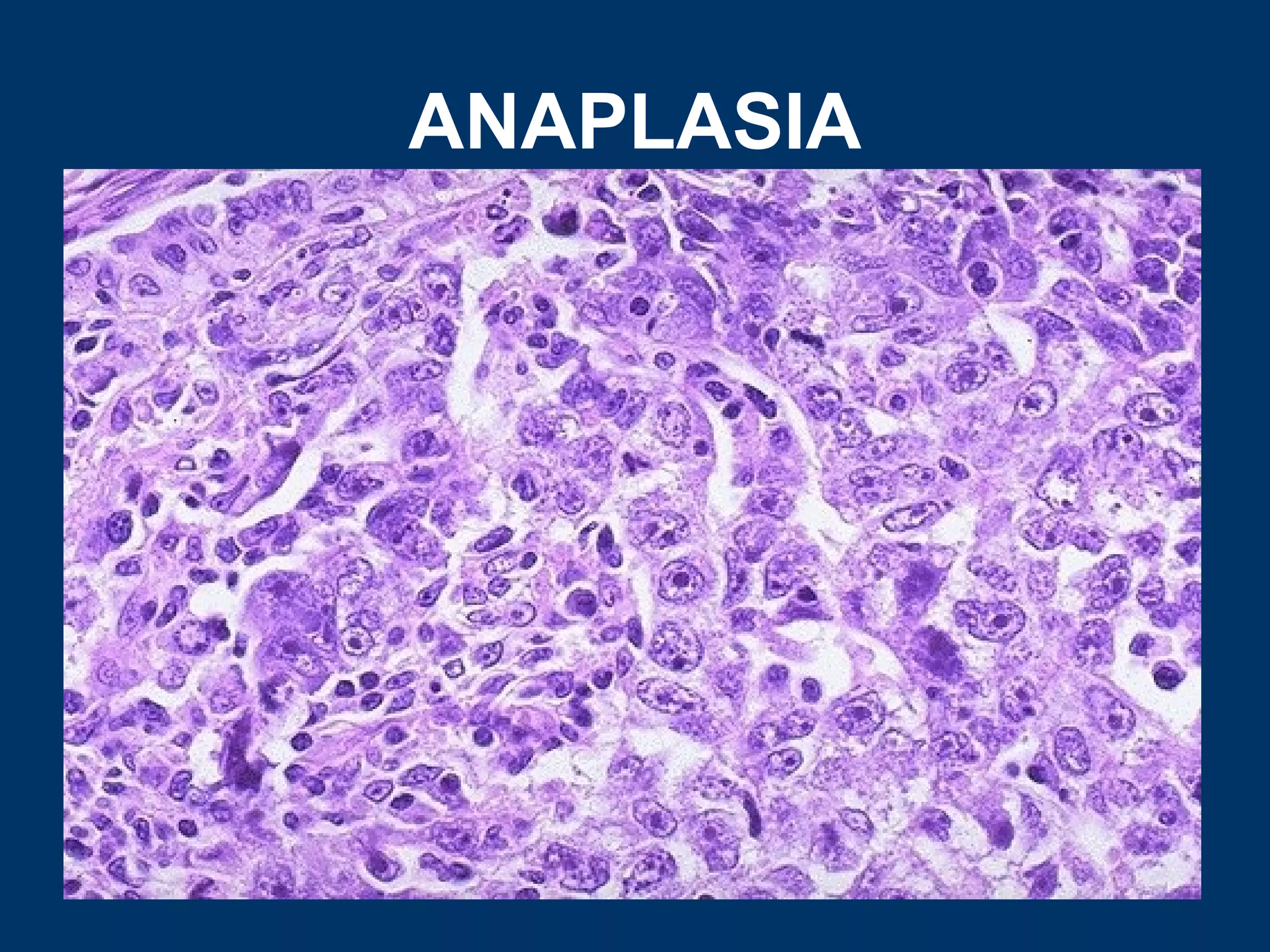
ANAPLASIA
• Next Meeting:
• Study Inflammation and Repair

General pathology lecture 4 cellular adaptation

  • 1.
  • 2.
    Normal +Stress Adapted cell Cell - Stress Stress = ? Increased/decreased workload * skeletal muscle and body building * cardiac muscle and hypertension * skeletal muscle disuse (limb immobilization) Increased/decreased stimulation
  • 3.
    Adapted Cell Cellular adaptations to stress 1. Hyperplasia (more cells) 2. Hypertrophy (bigger cells) 3. Atrophy (smaller cells)
  • 4.
    3. Atrophy (smaller cells) 1. Physiologic During development: i.e. notochord; thyroglossal duct 2. Pathologic (local or generalized) via * disuse * Loss of endocrine stimulation * denervation * Aging * ischemia * Pressure
  • 5.
    Atrophy (Mechanism) Reduction in structural components Decreased number of mito, myofilaments, ER via proteolysis (lysosomal proteases; ubiquitin- proteosome system) Increase in number of autophagic vacuoles Residual bodies (i.e. lipofuscin  brown atrophy)
  • 6.
  • 7.
  • 9.
  • 10.
    Normal Artophied Brain atrophy
  • 11.
    Muscle fiber atrophy.The number of cells is the same as before the atrophy occurred, but the size of some fibers is reduced. This is a response to injury by "downsizing" to conserve the cell. In this case, innervation of the small fibers in the center was lost. This is a trichrome
  • 12.
    DISUSE ATROPHY (Poliomyelitis)
  • 13.
  • 14.
  • 15.
    Hyperplasia (more cells) 1. Physiologic * Hormonal (breast/uterus in pregnancy) * Compensatory (liver after partial hepatectomy) 2. Pathologic Excessive hormone/GF stimulation of target tissue * Endometrial hyperplasia (x’s estrogen)
  • 16.
    Hyperplasia (Mechanism) Cell proliferation via increased production of TRANSCRIPTION FACTORS due to * Increased production of GF * Increased levels of GF receptors * Activation of intracellular signaling
  • 17.
  • 19.
  • 20.
  • 21.
    Adapted Cell 2. Hypertrophy (larger cells) * Not due to swelling * Increased synthesis of structural components * Results in larger organ
  • 22.
    HYPERTROPHY OF SMOOTHMUSCLE IN ASTHMA
  • 23.
    CARDIAC HYPERTROPHY Myocardial hypertrophy. - Cross-section of the heart of a patient with long- standing hypertension - Shows pronounced, concentric left ventricular hypertrophy
  • 24.
  • 26.
    Question Which term ismost likely to fit the description of the uterus during pregnancy? A. hyperplasia B. hypertrophy C. aplasia D. dysplasia E. metaplasia
  • 27.
    Metaplasia (Mechanism) Reprogramming 1. of stem cells present in normal tissues 2. of undifferentiated mesenchymal cells in connective tissue Mediated by signals from cytokines, Growth Factor Leading to induction of specific transcription factors
  • 28.
  • 29.
    4. Metaplasia **One adult cell type replaces another** Reversible Columnar to squamous epithelium (most common epithelial -type of metaplasia) Chronic irritation i.e. (in trachea and bronchi of smokers) Vit A deficiency squamous metaplasia in respiratory epithelium
  • 30.
    Photomicrograph of thejunction of normal epithelium (1) with hyperplastic transitional epithelium (2).
  • 31.
    Photomicrograph of thetrachea from a smoker. Note that the columnar ciliated epithelium has been replaced by squamous epithelium.
  • 32.
  • 33.
    DYSPLASIA-Left • Cellular dysplasiarefers to an alteration in the size, shape and organization of the cellular components of a tissue. • It is established that dysplasia is a preneoplastic lesion, in the sence that, it is a necessary stage in the multi-step cellular evolution to cancer.
  • 34.
  • 35.
  • 36.
    Question Which of thefollowing best describes the phenomenon of epithelial dysplasia? A. an increase in thickness of the epithelium because of increased number of cells B. a decrease in thickness of the epithelium owing to decrease in the number of dividing cells C. an irregular proliferation and maturation of cells throughout the layers of the epithelium D. an increase in the thickness of the epithelium owing to enlargement of the component cells E. absence of epithelium because of lack of cell proliferation
  • 37.
  • 38.
    Muscular Dystrophy • WhatIs Muscular Dystrophy? Muscular dystrophy is a disease in which the muscles of the body get weaker and weaker and slowly stop working because of a lack of a certain protein (see the relationship to genetics?) • Can be passed on by one or both parents, depending on the form of MD (therefore is autosomal dominant and recessive)
  • 39.
  • 40.
    • Next Meeting: •Study Inflammation and Repair

Editor's Notes

  • #5 Diminished function but not dead.
  • #6 Glucocorticoids, thyroid hormone and TNF stim proteosome-mediated protein degradation; insulin opposes
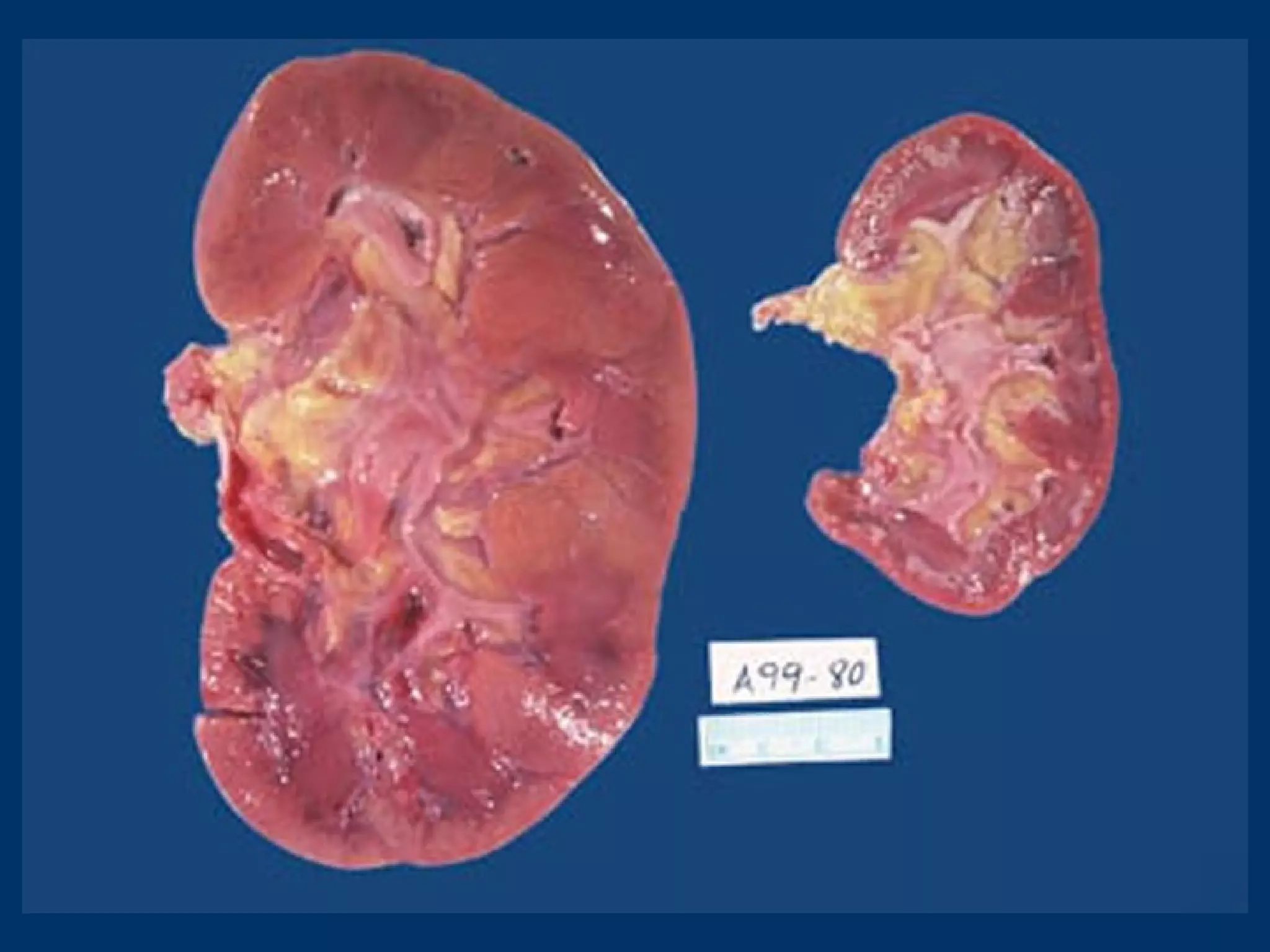
  • #9 Kidney: atrophy via renal artery stenosis. NB: decrease in cortex (most metabolically active cells)
  • #16 Hormonal: Breast at puberty; breast and uterus during pregnancy Compensatory: regeneration of liver after partial hepatectomy NB; hyperplasia regresses if stim removed; difference with cancer
  • #20 Lft: normal thyroid gland: rings of epithelial cells surrounding colloid. Rt: hyperplasia/hypertrophy of Graves d; note epithelial projections into colloid.
  • #22 Hypertrophy
  • #25 Middle = normal heart; left = hypertrophied heart due to hypertension; rt = dilated heart due to inability to adapt to continued stress
  • #30 Squamous thought to be more durable cell type Squamous epithelium don’t  mucus Acid reflux  col to squamous metaplasia (Barrett esophagus) Connective tissue metaplasia = formation of bone, cart, or adipose tissue in tissues that normally don’t contain them