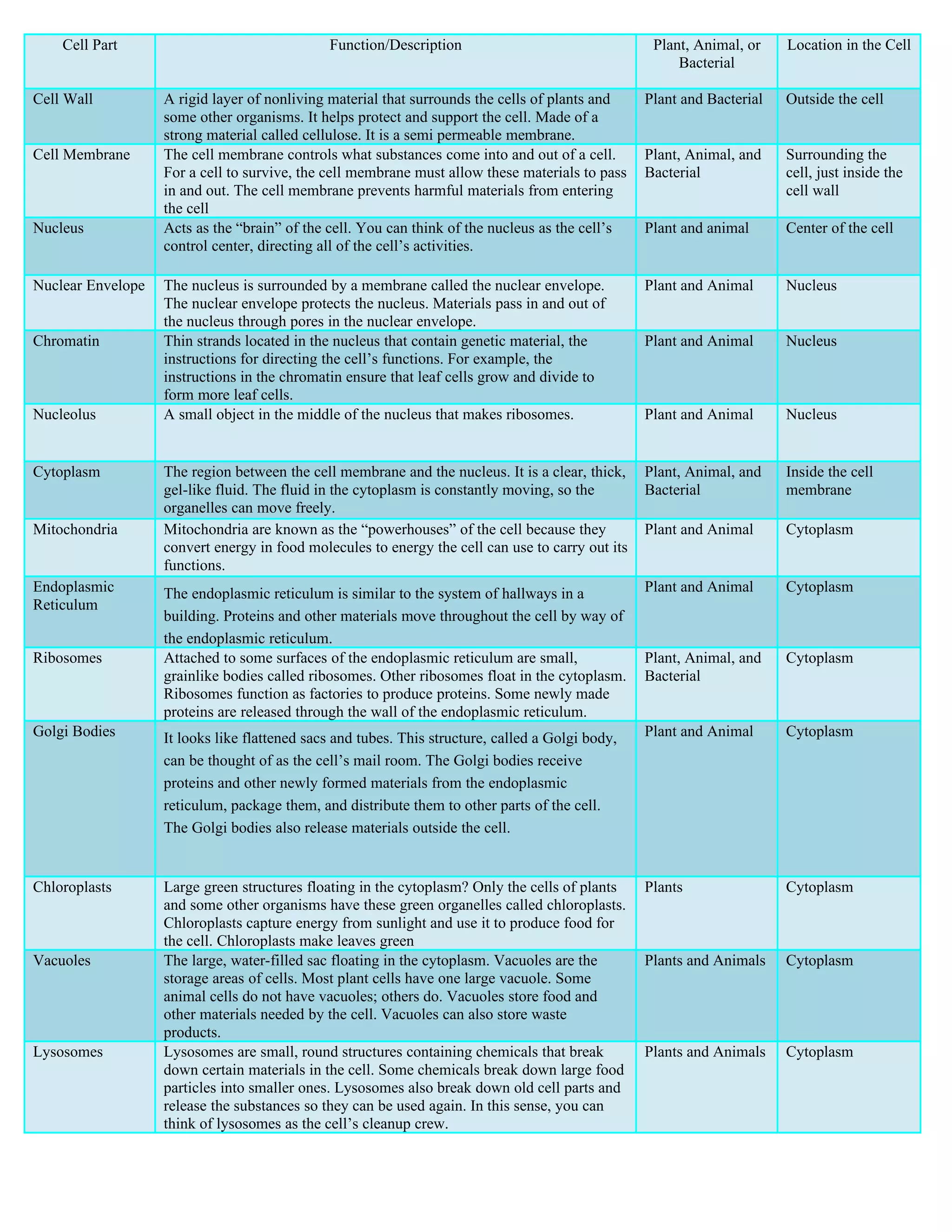
Cell Part                                 Function/Description                                 Plant, Animal, or    Location in the Cell
                                                                                                       Bacterial

Cell Wall          A rigid layer of nonliving material that surrounds the cells of plants and     Plant and Bacterial   Outside the cell
                   some other organisms. It helps protect and support the cell. Made of a
                   strong material called cellulose. It is a semi permeable membrane.
Cell Membrane      The cell membrane controls what substances come into and out of a cell.        Plant, Animal, and    Surrounding the
                   For a cell to survive, the cell membrane must allow these materials to pass    Bacterial             cell, just inside the
                   in and out. The cell membrane prevents harmful materials from entering                               cell wall
                   the cell
Nucleus            Acts as the “brain” of the cell. You can think of the nucleus as the cell’s    Plant and animal      Center of the cell
                   control center, directing all of the cell’s activities.

Nuclear Envelope   The nucleus is surrounded by a membrane called the nuclear envelope.           Plant and Animal      Nucleus
                   The nuclear envelope protects the nucleus. Materials pass in and out of
                   the nucleus through pores in the nuclear envelope.
Chromatin          Thin strands located in the nucleus that contain genetic material, the         Plant and Animal      Nucleus
                   instructions for directing the cell’s functions. For example, the
                   instructions in the chromatin ensure that leaf cells grow and divide to
                   form more leaf cells.
Nucleolus          A small object in the middle of the nucleus that makes ribosomes.              Plant and Animal      Nucleus


Cytoplasm          The region between the cell membrane and the nucleus. It is a clear, thick,    Plant, Animal, and    Inside the cell
                   gel-like fluid. The fluid in the cytoplasm is constantly moving, so the        Bacterial             membrane
                   organelles can move freely.
Mitochondria       Mitochondria are known as the “powerhouses” of the cell because they           Plant and Animal      Cytoplasm
                   convert energy in food molecules to energy the cell can use to carry out its
                   functions.
Endoplasmic        The endoplasmic reticulum is similar to the system of hallways in a            Plant and Animal      Cytoplasm
Reticulum
                   building. Proteins and other materials move throughout the cell by way of
                   the endoplasmic reticulum.
Ribosomes          Attached to some surfaces of the endoplasmic reticulum are small,              Plant, Animal, and    Cytoplasm
                   grainlike bodies called ribosomes. Other ribosomes float in the cytoplasm.     Bacterial
                   Ribosomes function as factories to produce proteins. Some newly made
                   proteins are released through the wall of the endoplasmic reticulum.
Golgi Bodies       It looks like flattened sacs and tubes. This structure, called a Golgi body,   Plant and Animal      Cytoplasm
                   can be thought of as the cell’s mail room. The Golgi bodies receive
                   proteins and other newly formed materials from the endoplasmic
                   reticulum, package them, and distribute them to other parts of the cell.
                   The Golgi bodies also release materials outside the cell.


Chloroplasts       Large green structures floating in the cytoplasm? Only the cells of plants     Plants                Cytoplasm
                   and some other organisms have these green organelles called chloroplasts.
                   Chloroplasts capture energy from sunlight and use it to produce food for
                   the cell. Chloroplasts make leaves green
Vacuoles           The large, water-filled sac floating in the cytoplasm. Vacuoles are the        Plants and Animals    Cytoplasm
                   storage areas of cells. Most plant cells have one large vacuole. Some
                   animal cells do not have vacuoles; others do. Vacuoles store food and
                   other materials needed by the cell. Vacuoles can also store waste
                   products.
Lysosomes          Lysosomes are small, round structures containing chemicals that break          Plants and Animals    Cytoplasm
                   down certain materials in the cell. Some chemicals break down large food
                   particles into smaller ones. Lysosomes also break down old cell parts and
                   release the substances so they can be used again. In this sense, you can
                   think of lysosomes as the cell’s cleanup crew.

Organelle Chart Key

  • 1.
    Cell Part Function/Description Plant, Animal, or Location in the Cell Bacterial Cell Wall A rigid layer of nonliving material that surrounds the cells of plants and Plant and Bacterial Outside the cell some other organisms. It helps protect and support the cell. Made of a strong material called cellulose. It is a semi permeable membrane. Cell Membrane The cell membrane controls what substances come into and out of a cell. Plant, Animal, and Surrounding the For a cell to survive, the cell membrane must allow these materials to pass Bacterial cell, just inside the in and out. The cell membrane prevents harmful materials from entering cell wall the cell Nucleus Acts as the “brain” of the cell. You can think of the nucleus as the cell’s Plant and animal Center of the cell control center, directing all of the cell’s activities. Nuclear Envelope The nucleus is surrounded by a membrane called the nuclear envelope. Plant and Animal Nucleus The nuclear envelope protects the nucleus. Materials pass in and out of the nucleus through pores in the nuclear envelope. Chromatin Thin strands located in the nucleus that contain genetic material, the Plant and Animal Nucleus instructions for directing the cell’s functions. For example, the instructions in the chromatin ensure that leaf cells grow and divide to form more leaf cells. Nucleolus A small object in the middle of the nucleus that makes ribosomes. Plant and Animal Nucleus Cytoplasm The region between the cell membrane and the nucleus. It is a clear, thick, Plant, Animal, and Inside the cell gel-like fluid. The fluid in the cytoplasm is constantly moving, so the Bacterial membrane organelles can move freely. Mitochondria Mitochondria are known as the “powerhouses” of the cell because they Plant and Animal Cytoplasm convert energy in food molecules to energy the cell can use to carry out its functions. Endoplasmic The endoplasmic reticulum is similar to the system of hallways in a Plant and Animal Cytoplasm Reticulum building. Proteins and other materials move throughout the cell by way of the endoplasmic reticulum. Ribosomes Attached to some surfaces of the endoplasmic reticulum are small, Plant, Animal, and Cytoplasm grainlike bodies called ribosomes. Other ribosomes float in the cytoplasm. Bacterial Ribosomes function as factories to produce proteins. Some newly made proteins are released through the wall of the endoplasmic reticulum. Golgi Bodies It looks like flattened sacs and tubes. This structure, called a Golgi body, Plant and Animal Cytoplasm can be thought of as the cell’s mail room. The Golgi bodies receive proteins and other newly formed materials from the endoplasmic reticulum, package them, and distribute them to other parts of the cell. The Golgi bodies also release materials outside the cell. Chloroplasts Large green structures floating in the cytoplasm? Only the cells of plants Plants Cytoplasm and some other organisms have these green organelles called chloroplasts. Chloroplasts capture energy from sunlight and use it to produce food for the cell. Chloroplasts make leaves green Vacuoles The large, water-filled sac floating in the cytoplasm. Vacuoles are the Plants and Animals Cytoplasm storage areas of cells. Most plant cells have one large vacuole. Some animal cells do not have vacuoles; others do. Vacuoles store food and other materials needed by the cell. Vacuoles can also store waste products. Lysosomes Lysosomes are small, round structures containing chemicals that break Plants and Animals Cytoplasm down certain materials in the cell. Some chemicals break down large food particles into smaller ones. Lysosomes also break down old cell parts and release the substances so they can be used again. In this sense, you can think of lysosomes as the cell’s cleanup crew.