
Downloaded 124 times
![Pravin V Jadhav, PhD
Assistant Professor, MB & GE
Biotechnology Centre
Dr. Panjabrao Deshmukh Krishi Vidyapeeth ,Akola
GP 508 [2+1]
Cell Biology and Molecular genetics](https://image.slidesharecdn.com/introductiontothecell-150806100501-lva1-app6892/85/Introduction-to-the-cell-1-320.jpg)
![Pravin V Jadhav, PhD
Assistant Professor, MB & GE
Biotechnology Centre
Dr. Panjabrao Deshmukh Krishi Vidyapeeth ,Akola
GP 508 [2+1]
Cell Biology and Molecular genetics](https://image.slidesharecdn.com/introductiontothecell-150806100501-lva1-app6892/75/Introduction-to-the-cell-1-2048.jpg)
![Prokaryotes v. Eukaryotes
A Prokaryotic cell (bacterium) A Eukaryotic cell (plant)
Prokaryotes Eukaryotes
Typical organisms bacteria fungi, plants, animals
Typical size ~ 1-10 µm ~ 10-100 µm (sperm cells) apart from the tail, are smaller)
Type of nucleus Nuclear body [No nucleus] real nucleus with nuclear envelope
DNA circular (ccc DNA) linear molecules (chromosomes) with histone proteins
Ribosomes 70S 80S
Cytoplasmatic structure very few structures highly structured by membranes and a cytoskeleton
Cell movement Flagellae/cilia made of flagellin flagellae and cilia made of tubulin
Mitochondria none 1 - 100 (though RBC’s have none)
Chloroplasts none in algae and plants
Organization usually single cells single cells, colonies, higher multicellular organisms with specialized
cells
9](https://image.slidesharecdn.com/introductiontothecell-150806100501-lva1-app6892/85/Introduction-to-the-cell-9-320.jpg)
![Plastids
• Contain pigments or
storage products
1. Chloroplasts
2. Elioplasts [fat]
3. Amyloplasts [starch]
4. Leucoplast [terpens]
5. Protenoplast [proteins]
• Processing of circular
dsDNA
35](https://image.slidesharecdn.com/introductiontothecell-150806100501-lva1-app6892/85/Introduction-to-the-cell-35-320.jpg)
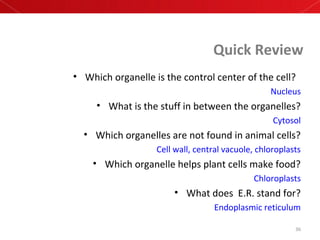
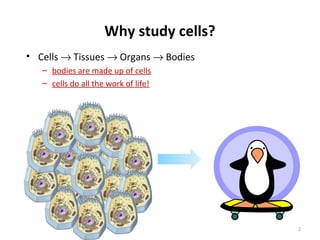
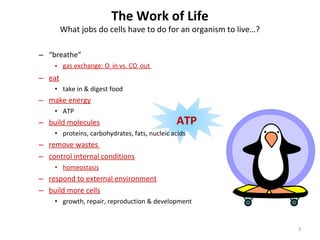
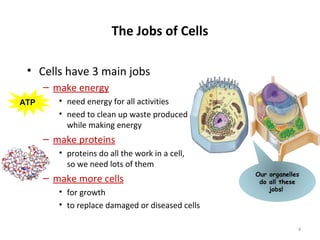
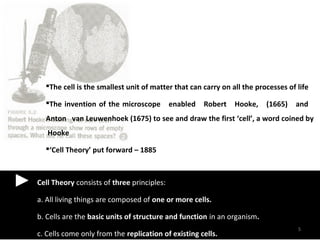
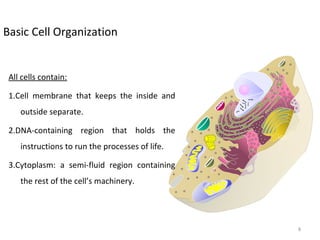
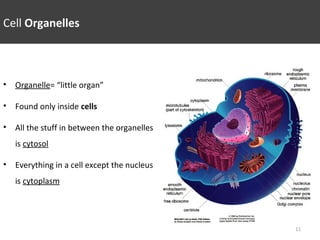
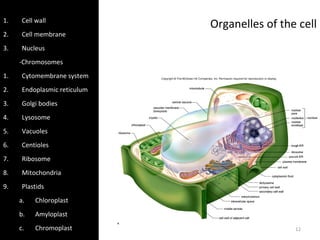
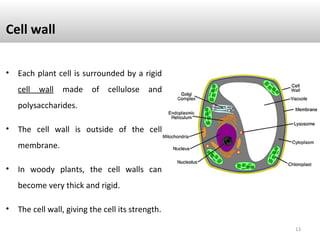
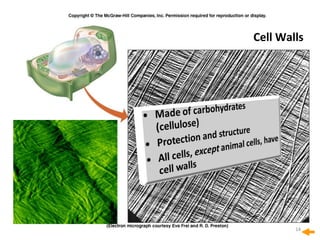
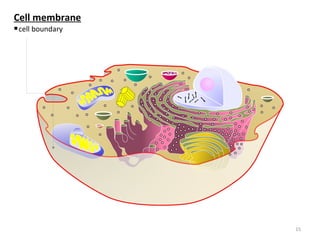
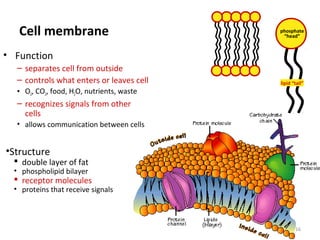
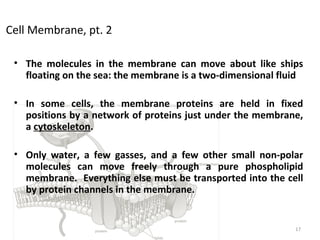
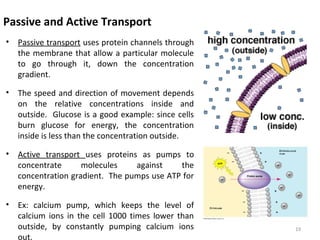
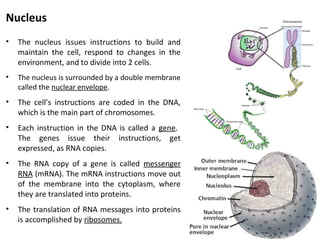
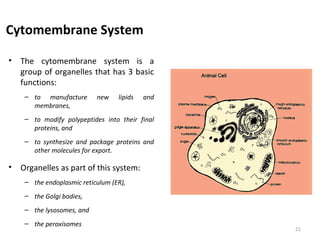
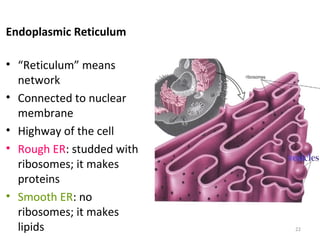
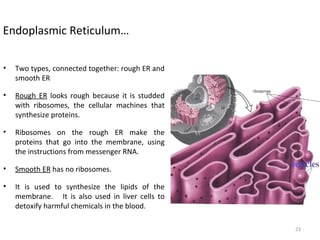
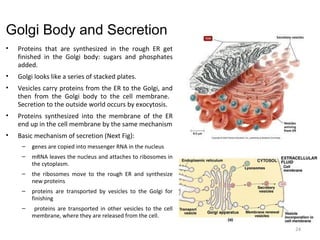
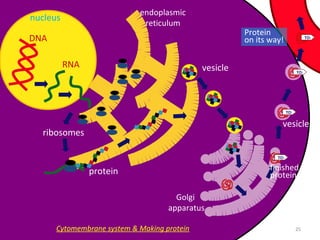
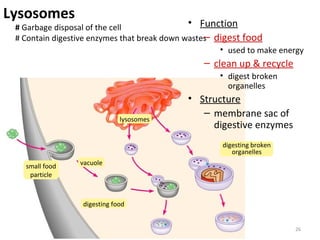
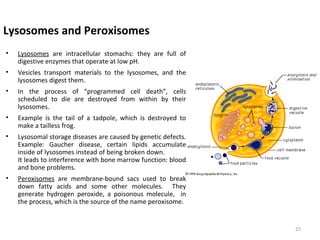
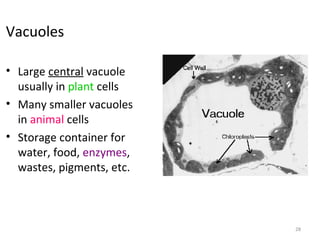
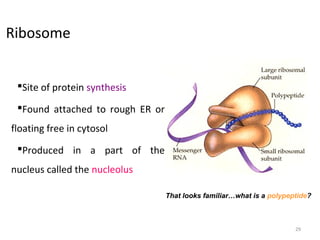
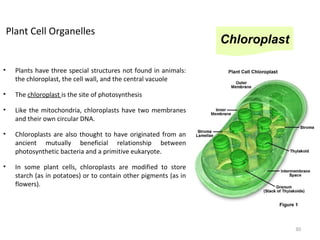
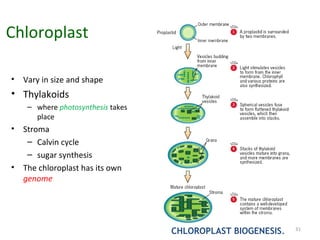
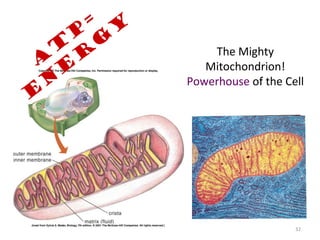
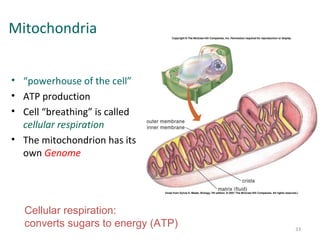
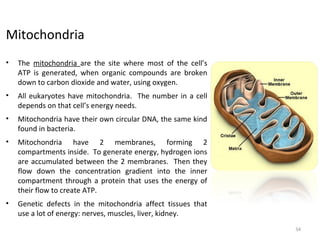
Cells have several organelles that allow them to perform essential functions for life. The nucleus contains DNA and controls the cell. The mitochondria produces ATP for energy. Plant cells also contain chloroplasts for photosynthesis, a cell wall, and a central vacuole. Other organelles include the endoplasmic reticulum for protein production, Golgi for packaging proteins, lysosomes for waste digestion, and ribosomes for protein synthesis. Together these organelles allow cells to obtain energy, make proteins, and reproduce themselves.


