MITOSIS
MITOSIS 
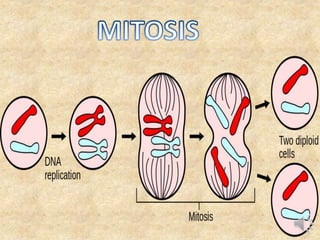
Mitosis is a type of cell division 
that results in two daughter cells 
each having the same number and 
kind of chromosomes as the parent 
nucleus, typical of ordinary tissue 
growth.
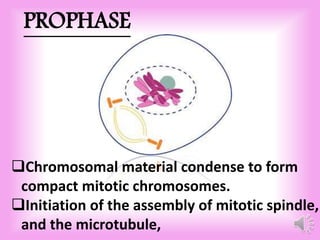
PROPHASE 
Chromosomal material condense to form 
compact mitotic chromosomes. 
Initiation of the assembly of mitotic spindle, 
and the microtubule,
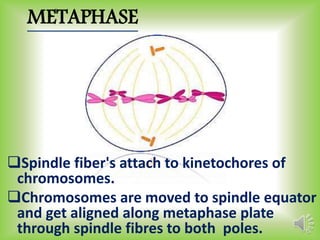
METAPHASE 
Spindle fiber's attach to kinetochores of 
chromosomes. 
Chromosomes are moved to spindle equator 
and get aligned along metaphase plate 
through spindle fibres to both poles.
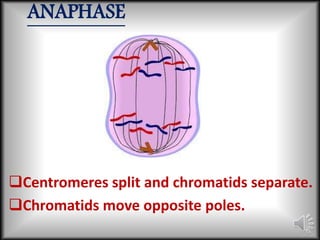
ANAPHASE 
Centromeres split and chromatids separate. 
Chromatids move opposite poles.
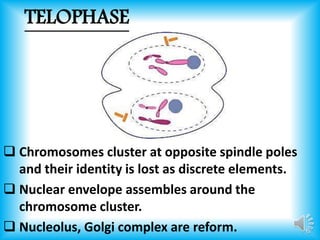
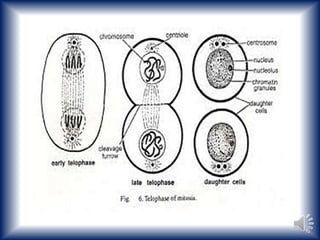
TELOPHASE 
 Chromosomes cluster at opposite spindle poles 
and their identity is lost as discrete elements. 
 Nuclear envelope assembles around the 
chromosome cluster. 
 Nucleolus, Golgi complex are reform.
CYTOKINESIS 
Mitosis accomplish not only 
the segregation of duplicated 
chromosomes into daughter nuclei 
(kariokinesis), but the cell itself is 
divided into daughter cells by the 
separation of cytoplasm, the process is 
called cytokinesis at the end of which 
cell division is complete.
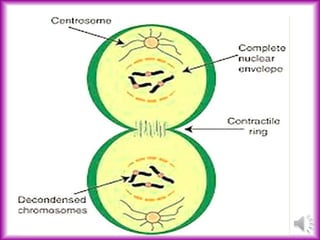
CYTOKINESIS IN ANIMAL CELL 
 In animal cell cytokinesis is 
done the appearance of a 
furrow in he plasma 
membrane. The furrow 
gradually disappear and 
ultimately joins in the center 
dividing the cell cytoplasm into 
two.
CYTOKINESIS IN 
PLANT TISSUE 
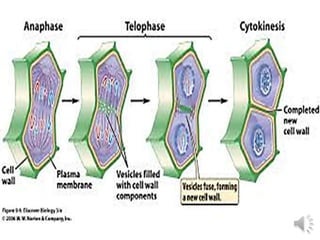
 Plant cell build a cell membrane 
and cell wall at the center of the 
dividing cell. This structure is called 
cell plate. Which grows outward to 
the existing lateral cell wall.
SIGNIFICANCE OF MITOSIS 
1. Mitosis involves division of a parent cell into two 
daughter cells with identical genetic material. 
2. Growth of multicellular organisms are due to 
mitosis. 
3. Mitosis provides healthy cells for replacement of 
cells that have become worm out or damaged. 
4. Mitosis maintain the chromosome number of all 
cells in the body constant. 
5. It is the basis of asexual reproduction in lower 
organisms like Amoeba.

Mitosis

  • 1.
  • 2.
    MITOSIS Mitosis isa type of cell division that results in two daughter cells each having the same number and kind of chromosomes as the parent nucleus, typical of ordinary tissue growth.
  • 4.
    PROPHASE Chromosomal materialcondense to form compact mitotic chromosomes. Initiation of the assembly of mitotic spindle, and the microtubule,
  • 5.
    METAPHASE Spindle fiber'sattach to kinetochores of chromosomes. Chromosomes are moved to spindle equator and get aligned along metaphase plate through spindle fibres to both poles.
  • 6.
    ANAPHASE Centromeres splitand chromatids separate. Chromatids move opposite poles.
  • 7.
    TELOPHASE  Chromosomescluster at opposite spindle poles and their identity is lost as discrete elements.  Nuclear envelope assembles around the chromosome cluster.  Nucleolus, Golgi complex are reform.
  • 8.
    CYTOKINESIS Mitosis accomplishnot only the segregation of duplicated chromosomes into daughter nuclei (kariokinesis), but the cell itself is divided into daughter cells by the separation of cytoplasm, the process is called cytokinesis at the end of which cell division is complete.
  • 9.
    CYTOKINESIS IN ANIMALCELL  In animal cell cytokinesis is done the appearance of a furrow in he plasma membrane. The furrow gradually disappear and ultimately joins in the center dividing the cell cytoplasm into two.
  • 12.
    CYTOKINESIS IN PLANTTISSUE  Plant cell build a cell membrane and cell wall at the center of the dividing cell. This structure is called cell plate. Which grows outward to the existing lateral cell wall.
  • 14.
    SIGNIFICANCE OF MITOSIS 1. Mitosis involves division of a parent cell into two daughter cells with identical genetic material. 2. Growth of multicellular organisms are due to mitosis. 3. Mitosis provides healthy cells for replacement of cells that have become worm out or damaged. 4. Mitosis maintain the chromosome number of all cells in the body constant. 5. It is the basis of asexual reproduction in lower organisms like Amoeba.