CHROMOSOME
 Chromosome means: chroma - colour; some - body)
 A chromosome is a thread-like self-replicating genetic structure containing organized DNA
molecule package found in the nucleus of the cell.
 First described by Strausberger in 1875.
 The term “Chromosome”, however was first used by Waldeyer in 1888.
 Chromosomes are seen during metaphase stage of mitosis when the cells are stained with
suitable basic dye and viewed under light microscope.
Chromosomes are of two types
 Autosomes: that control characters other than sex characters or carry genes for somatic
characters.
 Sex chromosomes (Gonosomes) – Chromosomes involved in sex determination.
Chromosome Number
Diploid and Haploid chromosome number
 Diploid cells (2N where N- chromosome number) have two homologous copies of each
chromosome. The body cells of animals are diploid.
 Haploid cells (N) have only one copy of each chromosome.
Structure of chromosome
Centromere
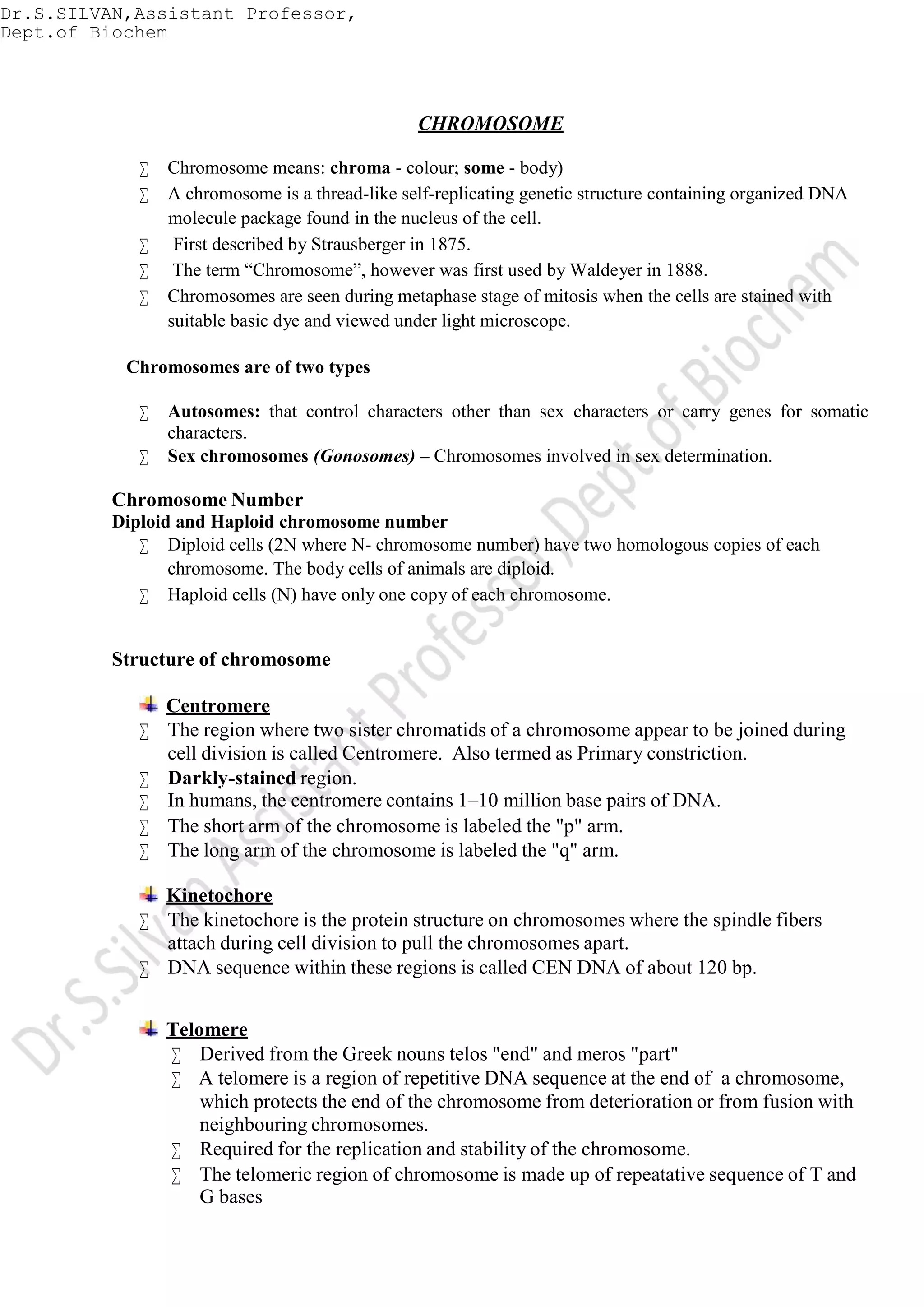
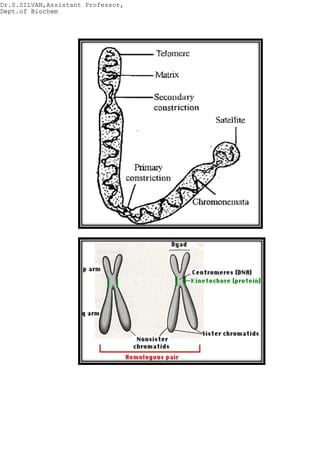
 The region where two sister chromatids of a chromosome appear to be joined during
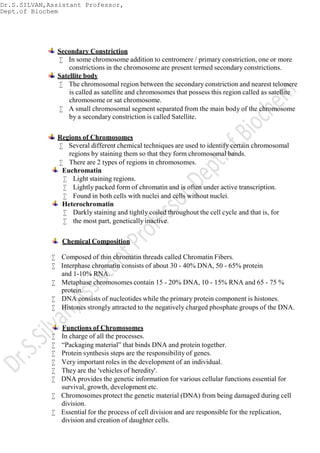
cell division is called Centromere. Also termed as Primary constriction.
 Darkly-stained region.
 In humans, the centromere contains 1–10 million base pairs of DNA.
 The short arm of the chromosome is labeled the "p" arm.
 The long arm of the chromosome is labeled the "q" arm.
Kinetochore
 The kinetochore is the protein structure on chromosomes where the spindle fibers
attach during cell division to pull the chromosomes apart.
 DNA sequence within these regions is called CEN DNA of about 120 bp.
Telomere
 Derived from the Greek nouns telos "end" and merοs "part"
 A telomere is a region of repetitive DNA sequence at the end of a chromosome,
which protects the end of the chromosome from deterioration or from fusion with
neighbouring chromosomes.
 Required for the replication and stability of the chromosome.
 The telomeric region of chromosome is made up of repeatative sequence of T and
G bases
Dr.S.SILVAN,Assistant Professor,
Dept.of Biochem
Secondary Constriction
 In some chromosome addition to centromere / primary constriction, one or more
constrictions in the chromosome are present termed secondary constrictions.
Satellite body
 The chromosomal region between the secondary constriction and nearest telomere
is called as satellite and chromosomes that possess this region called as satellite
chromosome or sat chromosome.
 A small chromosomal segment separated from the main body of the chromosome
by a secondary constriction is called Satellite.
Regions of Chromosomes
 Several different chemical techniques are used to identify certain chromosomal
regions by staining them so that they form chromosomal bands.
 There are 2 types of regions in chromosomes.
Euchromatin
 Light staining regions.
 Lightly packed form of chromatin and is often under active transcription.
 Found in both cells with nuclei and cells without nuclei.
Heterochromatin
 Darkly staining and tightly coiled throughout the cell cycle and that is, for
 the most part, genetically inactive.
Chemical Composition
 Composed of thin chromatin threads called Chromatin Fibers.
 Interphase chromatin consists of about 30 - 40% DNA, 50 - 65% protein
and 1-10% RNA.
 Metaphase chromosomes contain 15 - 20% DNA, 10 - 15% RNA and 65 - 75 %
protein.
 DNA consists of nucleotides while the primary protein component is histones.
 Histones strongly attracted to the negatively charged phosphate groups of the DNA.
Functions of Chromosomes
 In charge of all the processes.
 “Packaging material” that binds DNA and protein together.
 Protein synthesis steps are the responsibility of genes.
 Very important roles in the development of an individual.
 They are the 'vehicles of heredity'.
 DNA provides the genetic information for various cellular functions essential for
survival, growth, development etc.
 Chromosomes protect the genetic material (DNA) from being damaged during cell
division.
 Essential for the process of cell division and are responsible for the replication,
division and creation of daughter cells.
Dr.S.SILVAN,Assistant Professor,
Dept.of Biochem
Dr.S.SILVAN,Assistant Professor,
Dept.of Biochem
Dr.S.SILVAN,Assistant Professor,
Dept.of Biochem

Structure of chromosome

  • 1.
    CHROMOSOME  Chromosome means:chroma - colour; some - body)  A chromosome is a thread-like self-replicating genetic structure containing organized DNA molecule package found in the nucleus of the cell.  First described by Strausberger in 1875.  The term “Chromosome”, however was first used by Waldeyer in 1888.  Chromosomes are seen during metaphase stage of mitosis when the cells are stained with suitable basic dye and viewed under light microscope. Chromosomes are of two types  Autosomes: that control characters other than sex characters or carry genes for somatic characters.  Sex chromosomes (Gonosomes) – Chromosomes involved in sex determination. Chromosome Number Diploid and Haploid chromosome number  Diploid cells (2N where N- chromosome number) have two homologous copies of each chromosome. The body cells of animals are diploid.  Haploid cells (N) have only one copy of each chromosome. Structure of chromosome Centromere  The region where two sister chromatids of a chromosome appear to be joined during cell division is called Centromere. Also termed as Primary constriction.  Darkly-stained region.  In humans, the centromere contains 1–10 million base pairs of DNA.  The short arm of the chromosome is labeled the "p" arm.  The long arm of the chromosome is labeled the "q" arm. Kinetochore  The kinetochore is the protein structure on chromosomes where the spindle fibers attach during cell division to pull the chromosomes apart.  DNA sequence within these regions is called CEN DNA of about 120 bp. Telomere  Derived from the Greek nouns telos "end" and merοs "part"  A telomere is a region of repetitive DNA sequence at the end of a chromosome, which protects the end of the chromosome from deterioration or from fusion with neighbouring chromosomes.  Required for the replication and stability of the chromosome.  The telomeric region of chromosome is made up of repeatative sequence of T and G bases Dr.S.SILVAN,Assistant Professor, Dept.of Biochem
  • 2.
    Secondary Constriction  Insome chromosome addition to centromere / primary constriction, one or more constrictions in the chromosome are present termed secondary constrictions. Satellite body  The chromosomal region between the secondary constriction and nearest telomere is called as satellite and chromosomes that possess this region called as satellite chromosome or sat chromosome.  A small chromosomal segment separated from the main body of the chromosome by a secondary constriction is called Satellite. Regions of Chromosomes  Several different chemical techniques are used to identify certain chromosomal regions by staining them so that they form chromosomal bands.  There are 2 types of regions in chromosomes. Euchromatin  Light staining regions.  Lightly packed form of chromatin and is often under active transcription.  Found in both cells with nuclei and cells without nuclei. Heterochromatin  Darkly staining and tightly coiled throughout the cell cycle and that is, for  the most part, genetically inactive. Chemical Composition  Composed of thin chromatin threads called Chromatin Fibers.  Interphase chromatin consists of about 30 - 40% DNA, 50 - 65% protein and 1-10% RNA.  Metaphase chromosomes contain 15 - 20% DNA, 10 - 15% RNA and 65 - 75 % protein.  DNA consists of nucleotides while the primary protein component is histones.  Histones strongly attracted to the negatively charged phosphate groups of the DNA. Functions of Chromosomes  In charge of all the processes.  “Packaging material” that binds DNA and protein together.  Protein synthesis steps are the responsibility of genes.  Very important roles in the development of an individual.  They are the 'vehicles of heredity'.  DNA provides the genetic information for various cellular functions essential for survival, growth, development etc.  Chromosomes protect the genetic material (DNA) from being damaged during cell division.  Essential for the process of cell division and are responsible for the replication, division and creation of daughter cells. Dr.S.SILVAN,Assistant Professor, Dept.of Biochem
  • 3.