Cash – features
 It is a legal medium of exchange
 It is free from restrictions and is negotiable
 It includes notes, coins, cheques, drafts,
postal orders, savings and bank deposits
 But in actual practice money and near money
are referred to as cash
It includes
 The collection, concentration and
disbursement of cash
 Level of liquidity of a business
 Management of cash balance
 Short term investment strategies
 Prevents bankruptcy
 Improves profitability and
 Reduces the risk of the firm
 To adhere to the Ageing Schedule and make
payments accordingly for wages, salaries, taxes
etc
 To minimise the cash holdings because of the
impact of excess/ deficit cash on the profitability
of the firm
 (i) Preparation of Cash Budget
 (ii) Collection Processes
 (a) Concentration Banking:-
 Different collection centre will be opened in
different places to prevent postal delays.
 The centres will be opened closer to the
debtors to reduce time in despatch and
collection
 Customers mail their payments to these
centres rather than central office
 Cheques from regional collection centres deposited in
local banks for collection
 Surplus funds from local bank accounts transferred to
a concentration account at one of the Principal Banks
of the firm
 Wide network of collection centres helps to collect
funds quickly
 Periodical audits help to identify the bottlenecks in
collection
 Any deviation from the set rules easily
identified
 Selection of Collection Centres depend on the
volume of business generated in an area
 It involves a cost in terms of the Centre and
the minimum balances to be maintained in
the Current Accounts in banks.
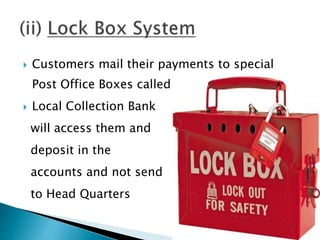
 Customers mail their payments to special
Post Office Boxes called as Lock Box
 Local Collection Bank
will access them and
deposit in the
accounts and not send
to Head Quarters
 Cheques collected by the local banks once or
more times in a day and directly deposited in
local bank accounts.
 Statement furnished to the firm after deposit
of cheques
MERITS
 Reduces the time as the collection and
processing period
 Cheques are deposited in the local bank accounts
and so time is saved in cheque clearance
 This system is not popular in India
 Benefits from accelerated receipts should exceed
the incremental cost of setting up a lock box.
 Accelerating collections and delaying the
payments
 Payments to be made only on the due date and
not before that
 Increased use of B/E rather than cheques helps in
maximising playing the float
 Issuing more cheques and having only the
minimum balance to meet them
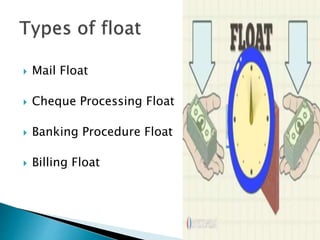
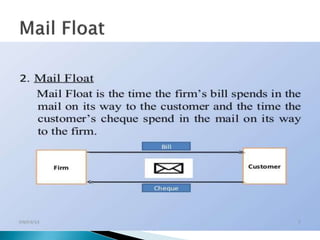
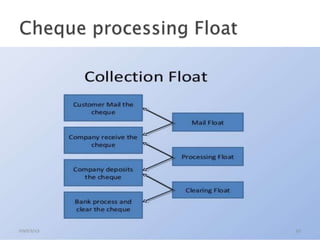
 Mail Float
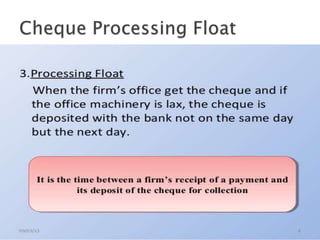
 Cheque Processing Float
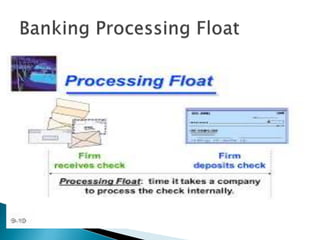
 Banking Procedure Float
 Billing Float
 An invoice is a formal document that the seller
prepares and forwards to the purchaser as a payment
request for the sale of goods/ services provided.
 The time lag between the sale
 and the mailing of the invoice
 is the billing float.
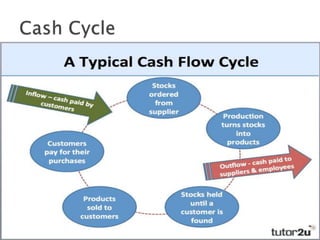
 It is the length of time between the purchase of
raw materials and the receipt of sales revenue.
 Formula for Cash Cycle is:-
Average Age of Inventory + Average Age of
Receivables – Average Age of Payments
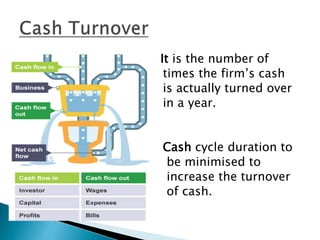
 It is the number of
times the firm’s cash
is actually turned over
in a year.
Cash cycle duration to
be minimised to
increase the turnover
of cash.
 Cash Turnover = No. of days in the operation
period ÷ Duration of cash cycle (in days)

Cash management

  • 2.
    Cash – features It is a legal medium of exchange  It is free from restrictions and is negotiable  It includes notes, coins, cheques, drafts, postal orders, savings and bank deposits  But in actual practice money and near money are referred to as cash
  • 3.
    It includes  Thecollection, concentration and disbursement of cash  Level of liquidity of a business  Management of cash balance  Short term investment strategies  Prevents bankruptcy  Improves profitability and  Reduces the risk of the firm
  • 4.
     To adhereto the Ageing Schedule and make payments accordingly for wages, salaries, taxes etc  To minimise the cash holdings because of the impact of excess/ deficit cash on the profitability of the firm
  • 5.
     (i) Preparationof Cash Budget  (ii) Collection Processes  (a) Concentration Banking:-  Different collection centre will be opened in different places to prevent postal delays.  The centres will be opened closer to the debtors to reduce time in despatch and collection  Customers mail their payments to these centres rather than central office
  • 6.
     Cheques fromregional collection centres deposited in local banks for collection  Surplus funds from local bank accounts transferred to a concentration account at one of the Principal Banks of the firm  Wide network of collection centres helps to collect funds quickly  Periodical audits help to identify the bottlenecks in collection
  • 7.
     Any deviationfrom the set rules easily identified  Selection of Collection Centres depend on the volume of business generated in an area  It involves a cost in terms of the Centre and the minimum balances to be maintained in the Current Accounts in banks.
  • 8.
     Customers mailtheir payments to special Post Office Boxes called as Lock Box  Local Collection Bank will access them and deposit in the accounts and not send to Head Quarters
  • 9.
     Cheques collectedby the local banks once or more times in a day and directly deposited in local bank accounts.  Statement furnished to the firm after deposit of cheques
  • 10.
    MERITS  Reduces thetime as the collection and processing period  Cheques are deposited in the local bank accounts and so time is saved in cheque clearance  This system is not popular in India  Benefits from accelerated receipts should exceed the incremental cost of setting up a lock box.
  • 11.
     Accelerating collectionsand delaying the payments  Payments to be made only on the due date and not before that  Increased use of B/E rather than cheques helps in maximising playing the float  Issuing more cheques and having only the minimum balance to meet them
  • 12.
     Mail Float Cheque Processing Float  Banking Procedure Float  Billing Float
  • 17.
     An invoiceis a formal document that the seller prepares and forwards to the purchaser as a payment request for the sale of goods/ services provided.  The time lag between the sale  and the mailing of the invoice  is the billing float.
  • 19.
     It isthe length of time between the purchase of raw materials and the receipt of sales revenue.  Formula for Cash Cycle is:- Average Age of Inventory + Average Age of Receivables – Average Age of Payments
  • 20.
     It isthe number of times the firm’s cash is actually turned over in a year. Cash cycle duration to be minimised to increase the turnover of cash.
  • 21.
     Cash Turnover= No. of days in the operation period ÷ Duration of cash cycle (in days)