



Presented by:sai kiran
(12NAIE0036)




In narrow sense: currency and generally
accepted equivalents of cash like cheques,
drafts etc.
In broad sense: includes near-cash assets, such
as marketable securities and time deposits in
banks.
They can be readily sold and converted into cash.
 Can serve as a reserve pool of liquidity.
 Also provide short term investment outlet for excess
cash.



Cash management is concerned with the
managing of:
cash flows into and out of the firm,
 cash flows within the firm, and
 cash balances held by the firm at a point of time by
financing deficit or investing surplus cash






Cash planning
Managing the cash flows
Optimum cash level
Investing surplus cash





Transaction motive
Precautionary motive
Speculative motive
compensating motive




Holding of cash to meet routine cash
requirements to finance the transactions which
a firm carries on in the ordinary course of
business.
Cash is held to pay for goods or services.  It is
useful for conducting our everyday
transactions or purchases.
•

•

The cash balances held in reserve for random
and unforeseen fluctuations in cash flows.
A cushion to meet unexpected contingencies.
Floods, strikes and failure of imp customers
– Unexpected slowdown in collection of accounts receivable
– Sharp increase in cost of raw materials
– Cancellation of some order of goods
–

•

Defensive in nature





Is a motive for holding cash/near-cash to
quickly take advantage of opportunities
typically outside the normal course of business.
Positive and aggressive approach
Helps to take advantage of:
An opportunity to purchase raw materials at
reduced price
 Make purchase at favorable prices
 Delay purchase on anticipation of decline in prices
 Buying securities when interest rate is expected to
decline





Is a motive for holding cash/near-cash to
compensate banks for providing certain
services or loans.
Clients are supposed to maintain a minimum
balance of cash at the bank which they cannot
use themselves.
•

Meeting payments schedule
–
–
–
–
–
–
–

•

It prevents insolvency
relationship with bank is not constrained
Helps in fostering good relationships
Cash discount can be availed
Strong credit rating
Take advantage of business opportunities
Can meet unanticipated cash expenditure with a minimum
of strain.

Minimizing funds committed to cash balances
High level of cash: large funds remain idle
– Low level of cash: failure to meet payment schedule
–



Accelerating Cash Collections
Controlling Disbursements
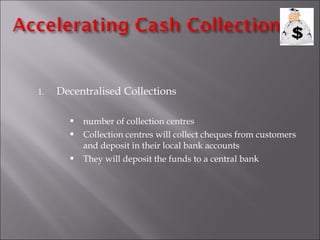
1.

Decentralised Collections




number of collection centres
Collection centres will collect cheques from customers
and deposit in their local bank accounts
They will deposit the funds to a central bank
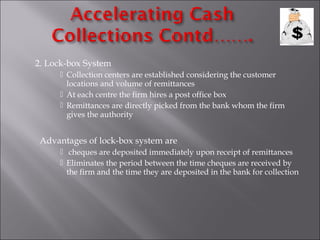
2. Lock-box System
 Collection centers are established considering the customer
locations and volume of remittances
 At each centre the firm hires a post office box
 Remittances are directly picked from the bank whom the firm
gives the authority

Advantages of lock-box system are
 cheques are deposited immediately upon receipt of remittances
 Eliminates the period between the time cheques are received by
the firm and the time they are deposited in the bank for collection
It means delay the payments as much as possible. Can
help the firm in conserving cash and reducing the
financial requirements.
Disbursement or Payment Float


How quickly and cheaply a organization can raise cash
when needed.



How accurately managers can predict cash
requirements.
Cash budget helps in this .



How much precautionary cash the managers need for
emergencies.
•

Availability of (short-term) investment opportunities
– e.g. money market funds, CDs, commercial paper

•

Expected return on investment opportunities.
– e.g. If expected returns are high, organizations
should be quick to invest excess cash

•

Transaction cost of withdrawing cash and making an
investment

•

Demand for Cash for daily transactions
Cash management hi fi

Cash management hi fi

  • 1.
  • 2.
      In narrow sense:currency and generally accepted equivalents of cash like cheques, drafts etc. In broad sense: includes near-cash assets, such as marketable securities and time deposits in banks. They can be readily sold and converted into cash.  Can serve as a reserve pool of liquidity.  Also provide short term investment outlet for excess cash. 
  • 3.
     Cash management isconcerned with the managing of: cash flows into and out of the firm,  cash flows within the firm, and  cash balances held by the firm at a point of time by financing deficit or investing surplus cash 
  • 4.
        Cash planning Managing thecash flows Optimum cash level Investing surplus cash
  • 5.
  • 6.
      Holding of cashto meet routine cash requirements to finance the transactions which a firm carries on in the ordinary course of business. Cash is held to pay for goods or services.  It is useful for conducting our everyday transactions or purchases.
  • 7.
    • • The cash balancesheld in reserve for random and unforeseen fluctuations in cash flows. A cushion to meet unexpected contingencies. Floods, strikes and failure of imp customers – Unexpected slowdown in collection of accounts receivable – Sharp increase in cost of raw materials – Cancellation of some order of goods – • Defensive in nature
  • 8.
       Is a motivefor holding cash/near-cash to quickly take advantage of opportunities typically outside the normal course of business. Positive and aggressive approach Helps to take advantage of: An opportunity to purchase raw materials at reduced price  Make purchase at favorable prices  Delay purchase on anticipation of decline in prices  Buying securities when interest rate is expected to decline 
  • 9.
      Is a motivefor holding cash/near-cash to compensate banks for providing certain services or loans. Clients are supposed to maintain a minimum balance of cash at the bank which they cannot use themselves.
  • 10.
    • Meeting payments schedule – – – – – – – • Itprevents insolvency relationship with bank is not constrained Helps in fostering good relationships Cash discount can be availed Strong credit rating Take advantage of business opportunities Can meet unanticipated cash expenditure with a minimum of strain. Minimizing funds committed to cash balances High level of cash: large funds remain idle – Low level of cash: failure to meet payment schedule –
  • 11.
  • 12.
    1. Decentralised Collections    number ofcollection centres Collection centres will collect cheques from customers and deposit in their local bank accounts They will deposit the funds to a central bank
  • 13.
    2. Lock-box System Collection centers are established considering the customer locations and volume of remittances  At each centre the firm hires a post office box  Remittances are directly picked from the bank whom the firm gives the authority Advantages of lock-box system are  cheques are deposited immediately upon receipt of remittances  Eliminates the period between the time cheques are received by the firm and the time they are deposited in the bank for collection
  • 14.
    It means delaythe payments as much as possible. Can help the firm in conserving cash and reducing the financial requirements. Disbursement or Payment Float
  • 15.
     How quickly andcheaply a organization can raise cash when needed.  How accurately managers can predict cash requirements. Cash budget helps in this .  How much precautionary cash the managers need for emergencies.
  • 16.
    • Availability of (short-term)investment opportunities – e.g. money market funds, CDs, commercial paper • Expected return on investment opportunities. – e.g. If expected returns are high, organizations should be quick to invest excess cash • Transaction cost of withdrawing cash and making an investment • Demand for Cash for daily transactions