INTRODUCTION
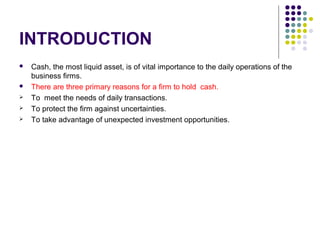
 Cash, the most liquid asset, is of vital importance to the daily operations of the
business firms.
 There are three primary reasons for a firm to hold cash.
 To meet the needs of daily transactions.
 To protect the firm against uncertainties.
 To take advantage of unexpected investment opportunities.
CASH MANAGEMENT
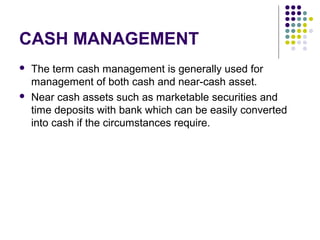
 The term cash management is generally used for
management of both cash and near-cash asset.
 Near cash assets such as marketable securities and
time deposits with bank which can be easily converted
into cash if the circumstances require.
MOTIVES FOR HOLDING CASH
 TRANSACTION MOTIVE- Cash balance is kept by the firms with the motive of
meeting routine activities.
 PRECAUTIONARY MOTIVE- A firm keep cash balance to meet unexpected
cash needs arising out of unexpected contingencies such as floods, strikes etc.
 SPECULATIVE MOTIVE- A firm also keep cash balance to take advantage of
unexpected opportunities, typically outside the normal course of the business.
OBJECTIVES OF CASH MANAGEMENT
 MEETING CASH DISBURSEMENTS- The business has to make
payment for purchase of raw materials, wages, taxes, purchase of plant
etc.
 MINIMISING FUNDS LOCKED UP AS CASH BALANCES-
 A higher cash balance ensures proper payment with all its advantages.
but this will result in a large balance of cash remaining idle.
 Low level of cash balance may result in failure of the firm to meet the
payment schedule.
CASH MANAGEMENT-BASIC PROBLEMS
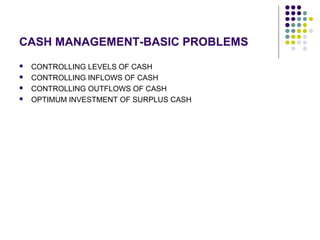
 CONTROLLING LEVELS OF CASH
 CONTROLLING INFLOWS OF CASH
 CONTROLLING OUTFLOWS OF CASH
 OPTIMUM INVESTMENT OF SURPLUS CASH
CONTROLLING LEVELS OF CASH
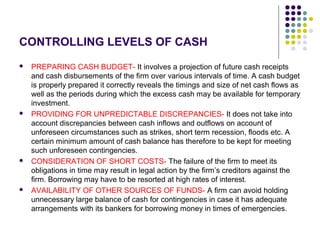
 PREPARING CASH BUDGET- It involves a projection of future cash receipts
and cash disbursements of the firm over various intervals of time. A cash budget
is properly prepared it correctly reveals the timings and size of net cash flows as
well as the periods during which the excess cash may be available for temporary
investment.
 PROVIDING FOR UNPREDICTABLE DISCREPANCIES- It does not take into
account discrepancies between cash inflows and outflows on account of
unforeseen circumstances such as strikes, short term recession, floods etc. A
certain minimum amount of cash balance has therefore to be kept for meeting
such unforeseen contingencies.
 CONSIDERATION OF SHORT COSTS- The failure of the firm to meet its
obligations in time may result in legal action by the firm’s creditors against the
firm. Borrowing may have to be resorted at high rates of interest.
 AVAILABILITY OF OTHER SOURCES OF FUNDS- A firm can avoid holding
unnecessary large balance of cash for contingencies in case it has adequate
arrangements with its bankers for borrowing money in times of emergencies.
CONTROLLING INFLOWS OF CASH
 CONCENTRATION BANKING- A large number of collection centers are
established by the firm in different areas selected on geographical basis. The
firm opens its bank accounts in local collection centers.
Advantages:
 The mailing time is reduced.
 The time required to collect cheques is also reduced.
 LOCK BOX SYSTEM- The firm hires a post office box and instructs its
customers to mail their remittances to the box.
Advantages:
 All remittances are handled by the banks even prior to their deposit with them at
a very low cost.
 The collection process starts much earlier than concentration banking
CONTROL OVER CASH OUTFLOWS
 Slow down the disbursement as much as possible. The combination fast
collection and slow disbursement will result in maximum availability of funds.
Advantages:
 Centralized system of disbursement should be followed. All payments
should be made from a single control account.
 Payment should be made on the due date.
INVESTING SURPLUS CASH
Two basic problems;
1. Determination of the amount of surplus cash
2. Determination of the channels of investment
1.DETERMINING OF SURPLUS CASH
 DETERMINING SAFETY LEVEL FOR CASH
The finance manager determines the safety level of cash separately both for normal
periods and peak periods.
2.DETERMINATION OF CHANNELS OF
INVESTMENT
 Temporary cash surplus consists of funds which are available for investment
on a short term basis.
 Permanent cash surplus consists of funds which are kept by the firm to avail
some unforeseen profitable opportunity of expansion or acquisition of some
asset.
CRITERIA FOR INVESTMENT:
1. Security
2. Liquidity
3. Yield
4. maturity

Cash management

  • 1.
    INTRODUCTION  Cash, themost liquid asset, is of vital importance to the daily operations of the business firms.  There are three primary reasons for a firm to hold cash.  To meet the needs of daily transactions.  To protect the firm against uncertainties.  To take advantage of unexpected investment opportunities.
  • 2.
    CASH MANAGEMENT  Theterm cash management is generally used for management of both cash and near-cash asset.  Near cash assets such as marketable securities and time deposits with bank which can be easily converted into cash if the circumstances require.
  • 3.
    MOTIVES FOR HOLDINGCASH  TRANSACTION MOTIVE- Cash balance is kept by the firms with the motive of meeting routine activities.  PRECAUTIONARY MOTIVE- A firm keep cash balance to meet unexpected cash needs arising out of unexpected contingencies such as floods, strikes etc.  SPECULATIVE MOTIVE- A firm also keep cash balance to take advantage of unexpected opportunities, typically outside the normal course of the business.
  • 4.
    OBJECTIVES OF CASHMANAGEMENT  MEETING CASH DISBURSEMENTS- The business has to make payment for purchase of raw materials, wages, taxes, purchase of plant etc.  MINIMISING FUNDS LOCKED UP AS CASH BALANCES-  A higher cash balance ensures proper payment with all its advantages. but this will result in a large balance of cash remaining idle.  Low level of cash balance may result in failure of the firm to meet the payment schedule.
  • 5.
    CASH MANAGEMENT-BASIC PROBLEMS CONTROLLING LEVELS OF CASH  CONTROLLING INFLOWS OF CASH  CONTROLLING OUTFLOWS OF CASH  OPTIMUM INVESTMENT OF SURPLUS CASH
  • 6.
    CONTROLLING LEVELS OFCASH  PREPARING CASH BUDGET- It involves a projection of future cash receipts and cash disbursements of the firm over various intervals of time. A cash budget is properly prepared it correctly reveals the timings and size of net cash flows as well as the periods during which the excess cash may be available for temporary investment.  PROVIDING FOR UNPREDICTABLE DISCREPANCIES- It does not take into account discrepancies between cash inflows and outflows on account of unforeseen circumstances such as strikes, short term recession, floods etc. A certain minimum amount of cash balance has therefore to be kept for meeting such unforeseen contingencies.  CONSIDERATION OF SHORT COSTS- The failure of the firm to meet its obligations in time may result in legal action by the firm’s creditors against the firm. Borrowing may have to be resorted at high rates of interest.  AVAILABILITY OF OTHER SOURCES OF FUNDS- A firm can avoid holding unnecessary large balance of cash for contingencies in case it has adequate arrangements with its bankers for borrowing money in times of emergencies.
  • 7.
    CONTROLLING INFLOWS OFCASH  CONCENTRATION BANKING- A large number of collection centers are established by the firm in different areas selected on geographical basis. The firm opens its bank accounts in local collection centers. Advantages:  The mailing time is reduced.  The time required to collect cheques is also reduced.  LOCK BOX SYSTEM- The firm hires a post office box and instructs its customers to mail their remittances to the box. Advantages:  All remittances are handled by the banks even prior to their deposit with them at a very low cost.  The collection process starts much earlier than concentration banking
  • 8.
    CONTROL OVER CASHOUTFLOWS  Slow down the disbursement as much as possible. The combination fast collection and slow disbursement will result in maximum availability of funds. Advantages:  Centralized system of disbursement should be followed. All payments should be made from a single control account.  Payment should be made on the due date.
  • 9.
    INVESTING SURPLUS CASH Twobasic problems; 1. Determination of the amount of surplus cash 2. Determination of the channels of investment
  • 10.
    1.DETERMINING OF SURPLUSCASH  DETERMINING SAFETY LEVEL FOR CASH The finance manager determines the safety level of cash separately both for normal periods and peak periods.
  • 11.
    2.DETERMINATION OF CHANNELSOF INVESTMENT  Temporary cash surplus consists of funds which are available for investment on a short term basis.  Permanent cash surplus consists of funds which are kept by the firm to avail some unforeseen profitable opportunity of expansion or acquisition of some asset. CRITERIA FOR INVESTMENT: 1. Security 2. Liquidity 3. Yield 4. maturity