CARDIAC TISSUE
ENGINEERING
BY
MARYAM IDRIS MUSA (20142926)
Overview
 Introduction
 Biomaterials
 Cells
 Biomolecule
 TE product requirements
 Heart valves
 Blood vessels
 Myocardium
Introduction
 Heart disease is the leading cause of death and disability all over the world accounting for
approximately 40% of all human mortality
 Treatment limitations:
 Cardiomyocytes cannot divide to replace injured cells
 Restricted intrinsic capacity of the heart
 Lack of organs for transplantation and
 Complications associated with immune suppressive treatments
 The main targets for tissue engineering
 Blood vessels
 Heart muscles- myocardium and
 Heart valve
Biomaterials
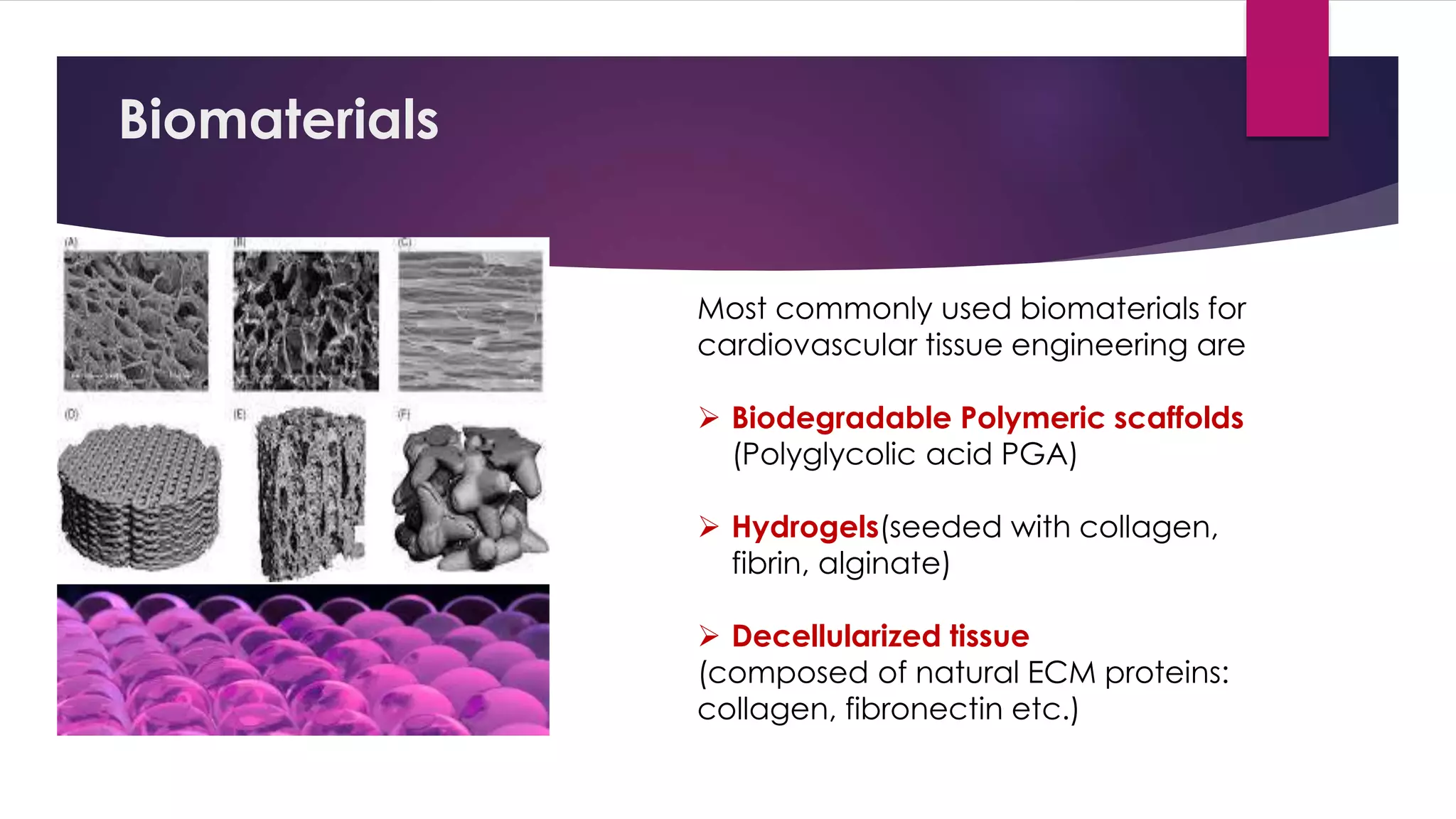
Most commonly used biomaterials for
cardiovascular tissue engineering are
 Biodegradable Polymeric scaffolds
(Polyglycolic acid PGA)
 Hydrogels(seeded with collagen,
fibrin, alginate)
 Decellularized tissue
(composed of natural ECM proteins:
collagen, fibronectin etc.)
Biomaterials-Scaffolds
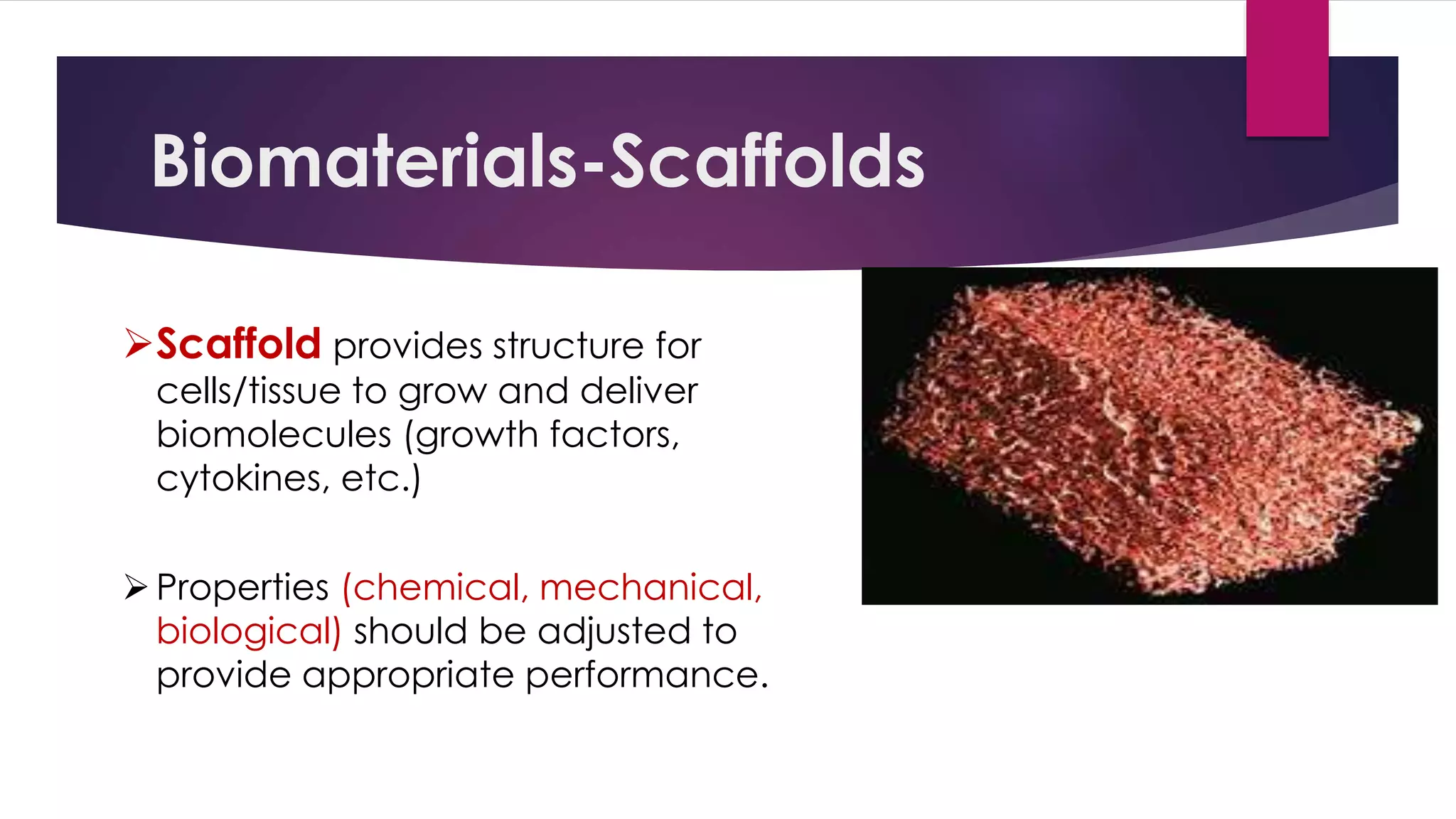
Scaffold provides structure for
cells/tissue to grow and deliver
biomolecules (growth factors,
cytokines, etc.)
Properties (chemical, mechanical,
biological) should be adjusted to
provide appropriate performance.
Cells
Cell types most commonly used for cardiac tissue
engineering (smart 2008)
 Embryonic stem cells
 Bone marrow- derived mesenchymal stem cells
 Skeletal myoblasts
 Induced pluripotent stem cells
 Multipotient adult germline stem cells
 Endothelial progenitor stem cells
 Very small embryonic-like stem cells
 Endogenous cardiac stem cells
Mesenchymal Stem Cells
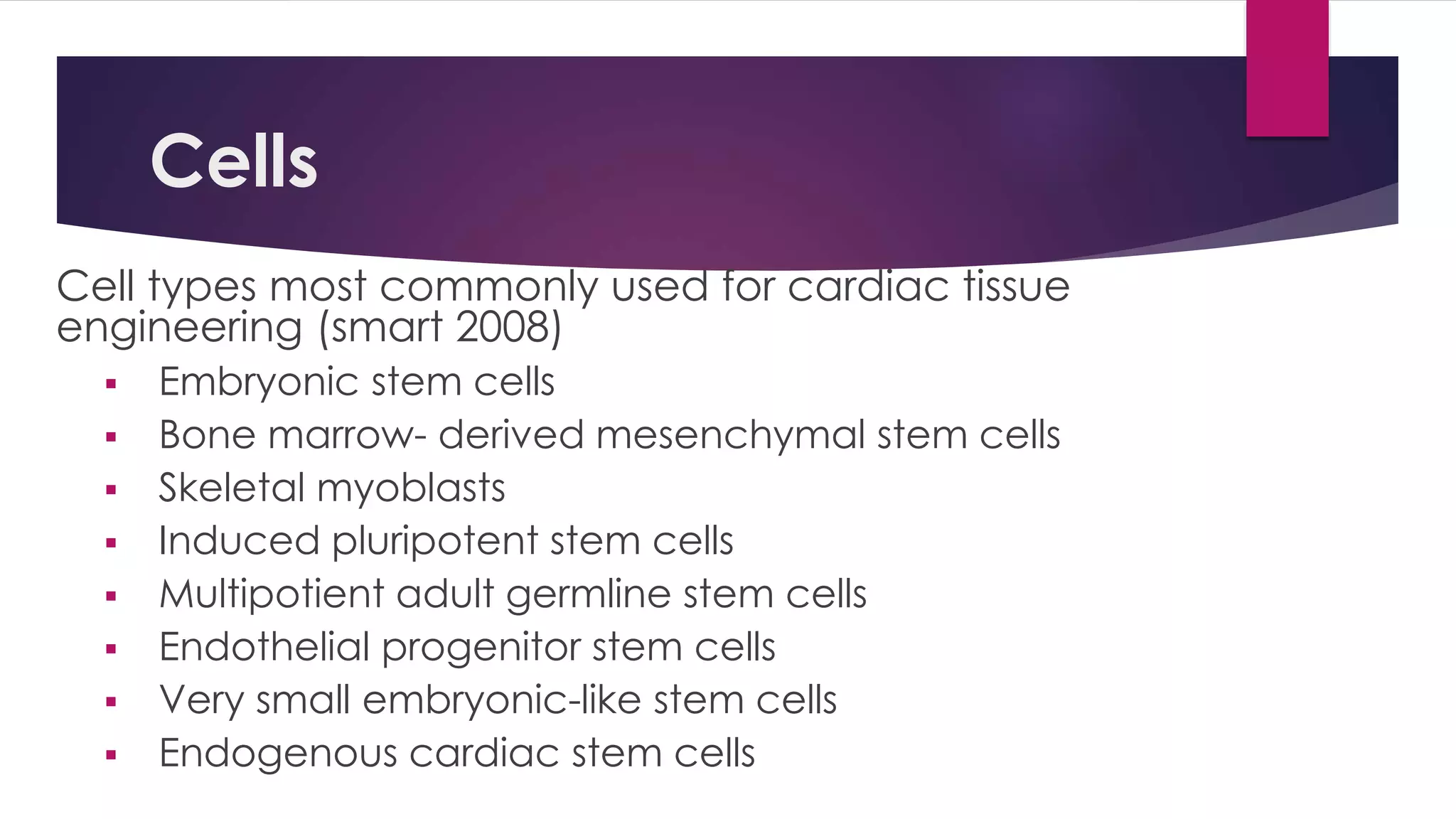
 Found in many tissues and organs
 Are multipotent and possess
extensive proliferation potential
 Bone marrow-derived adult stem
cells can be differentiated to many
cell types like cartilage bone and
adipose fat
 Use of adult stem cells allows
autologous cell transplantation
Embryonic Stem Cells
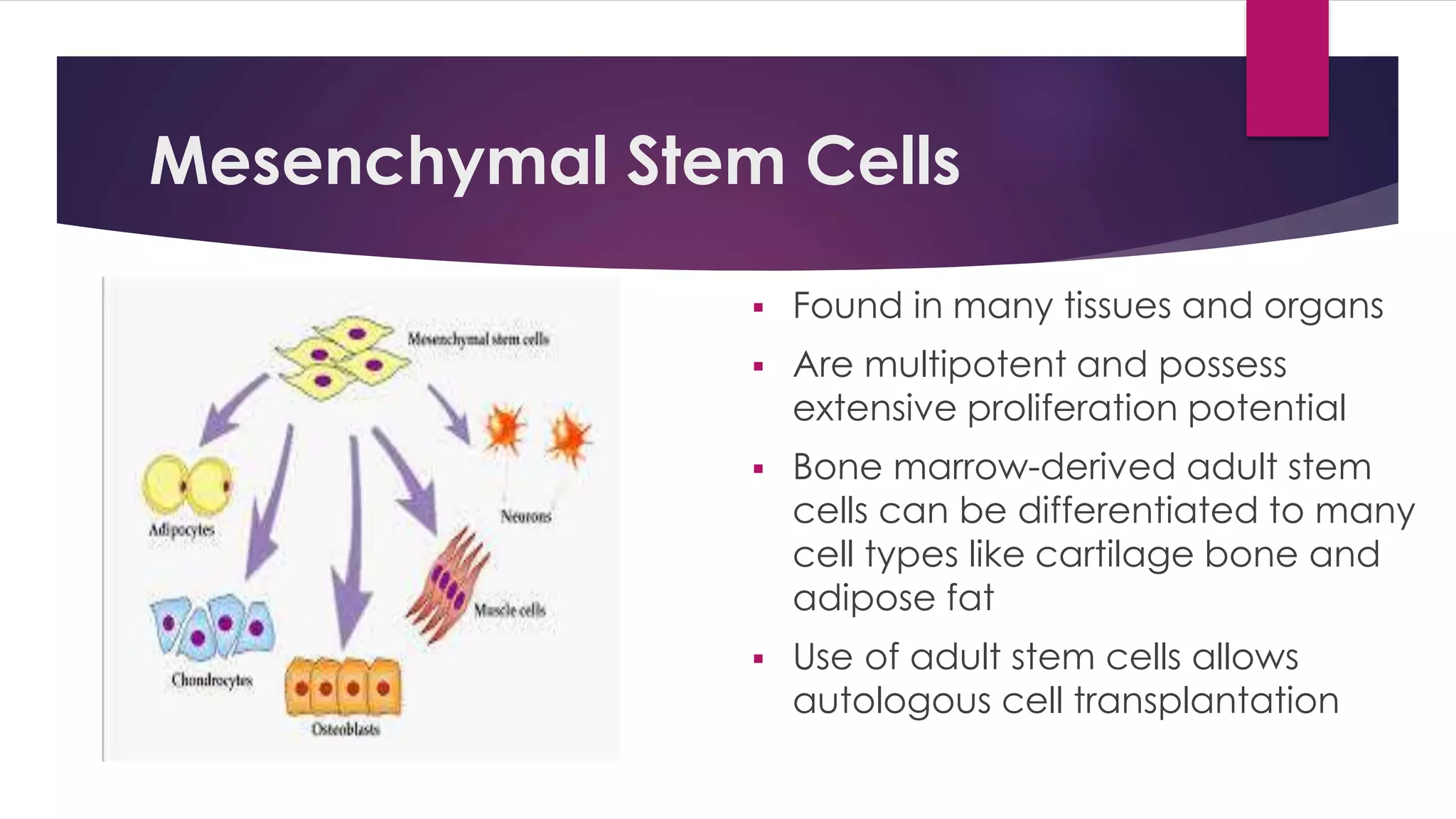
 Collected at the
blastocyst stage (day 6)
of embryogenesis
 Can differentiate into
cells from all three germ
layers of the body (
endoderm, endoderm,
mesoderm)
 Capable of self-renewal
and undifferentiated
proliferation in culture for
extended time.
BIOMOLECULES
 Angiogenic Factors
 Vasculogenic Factors
 Growth Factors
 Differentiation Factors
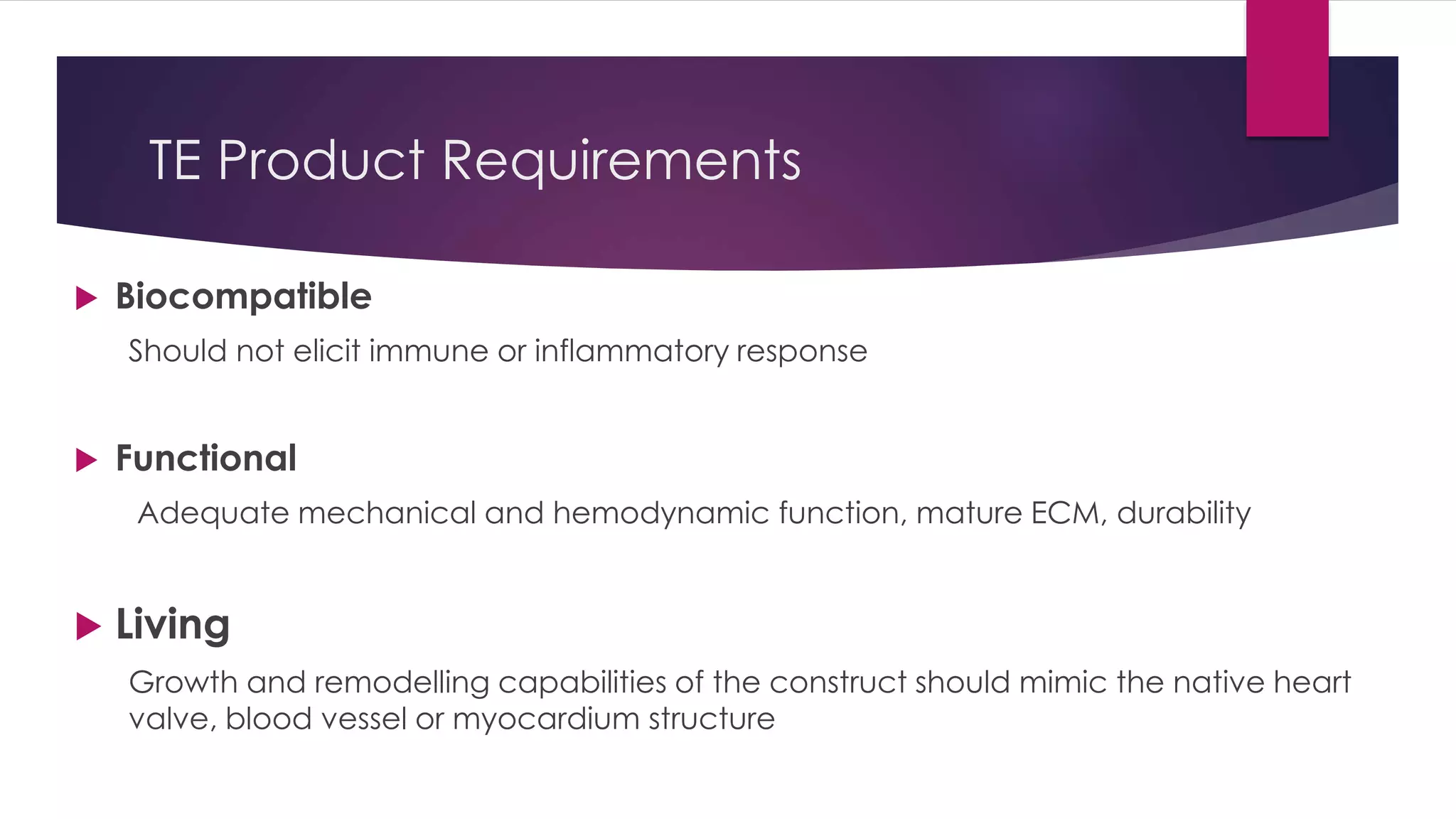
TE Product Requirements
 Biocompatible
Should not elicit immune or inflammatory response
 Functional
Adequate mechanical and hemodynamic function, mature ECM, durability
 Living
Growth and remodelling capabilities of the construct should mimic the native heart
valve, blood vessel or myocardium structure
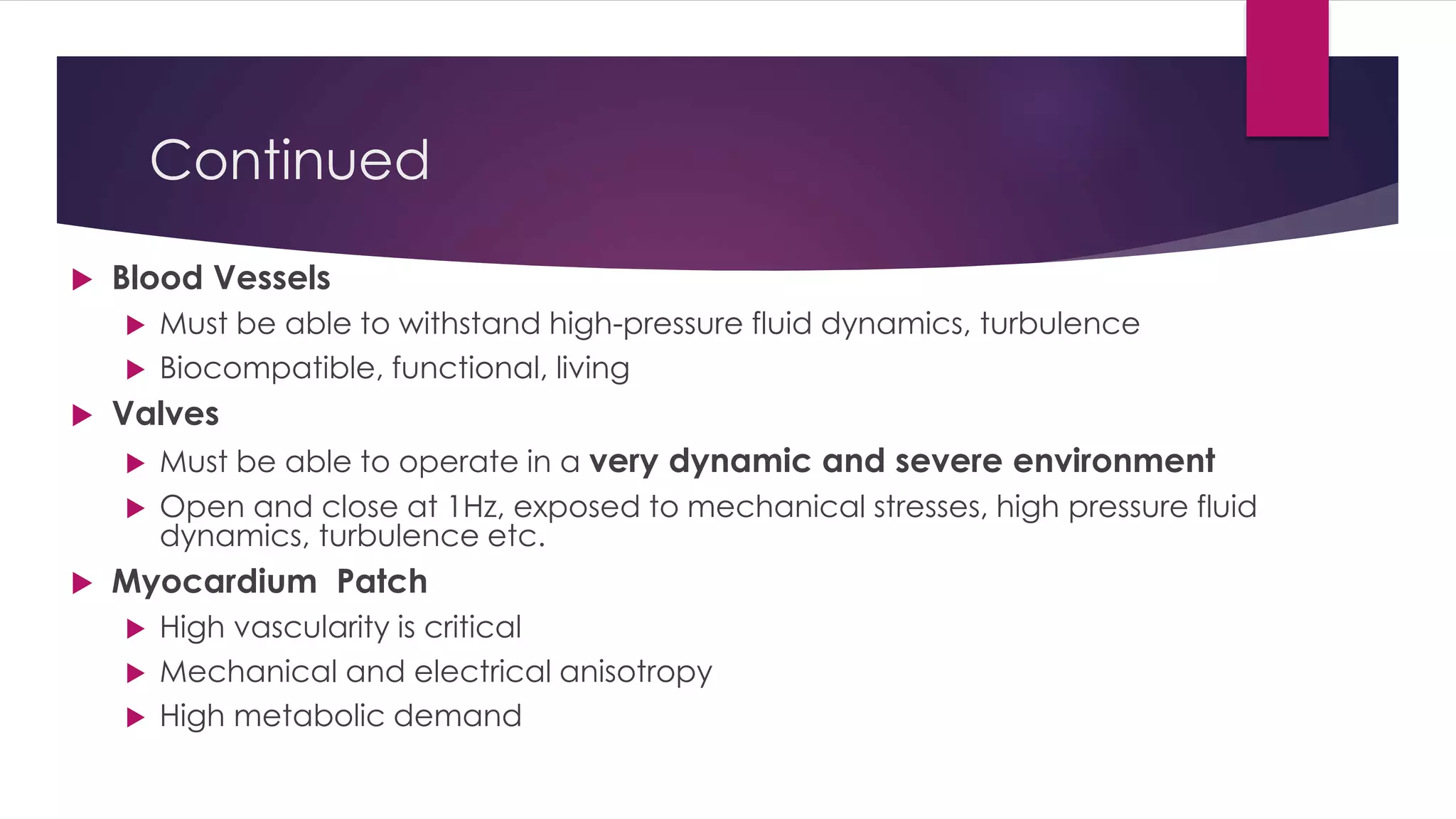
Continued
 Blood Vessels
 Must be able to withstand high-pressure fluid dynamics, turbulence
 Biocompatible, functional, living
 Valves
 Must be able to operate in a very dynamic and severe environment
 Open and close at 1Hz, exposed to mechanical stresses, high pressure fluid
dynamics, turbulence etc.
 Myocardium Patch
 High vascularity is critical
 Mechanical and electrical anisotropy
 High metabolic demand
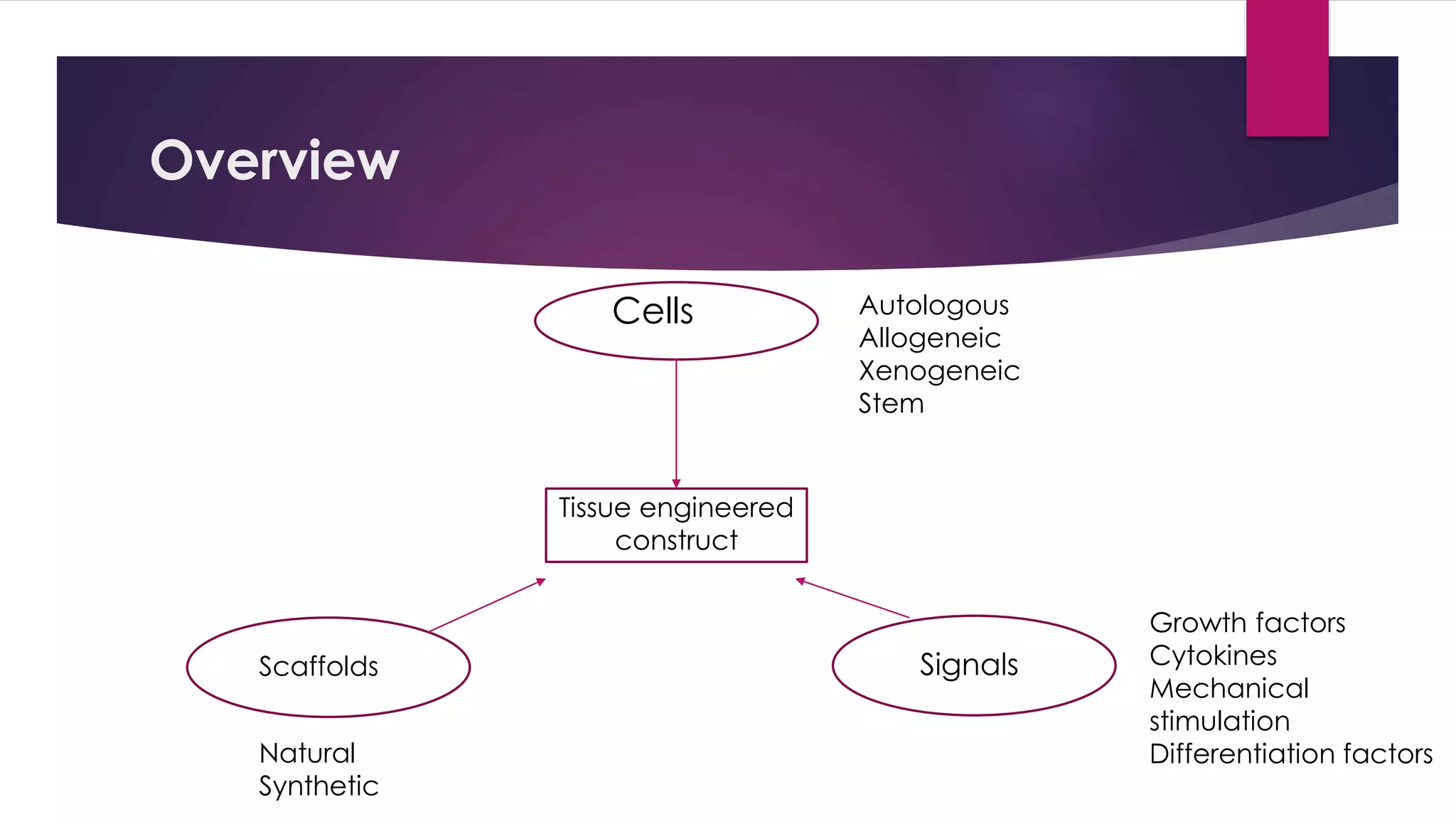
Overview
Tissue engineered
construct
Cells
Scaffolds Signals
Autologous
Allogeneic
Xenogeneic
Stem
Growth factors
Cytokines
Mechanical
stimulation
Differentiation factorsNatural
Synthetic
Tissue Engineered Heart Valves
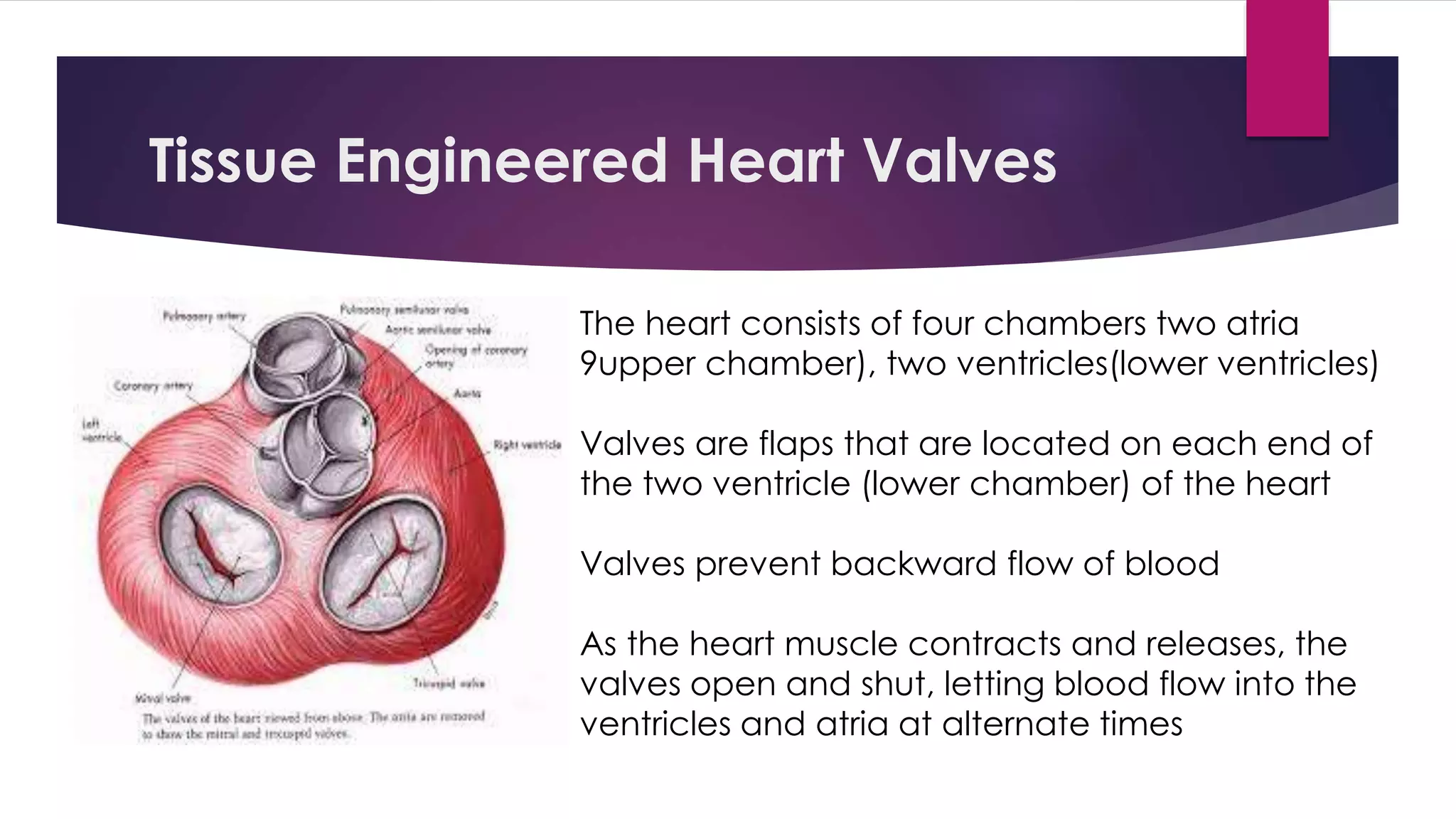
The heart consists of four chambers two atria
9upper chamber), two ventricles(lower ventricles)
Valves are flaps that are located on each end of
the two ventricle (lower chamber) of the heart
Valves prevent backward flow of blood
As the heart muscle contracts and releases, the
valves open and shut, letting blood flow into the
ventricles and atria at alternate times
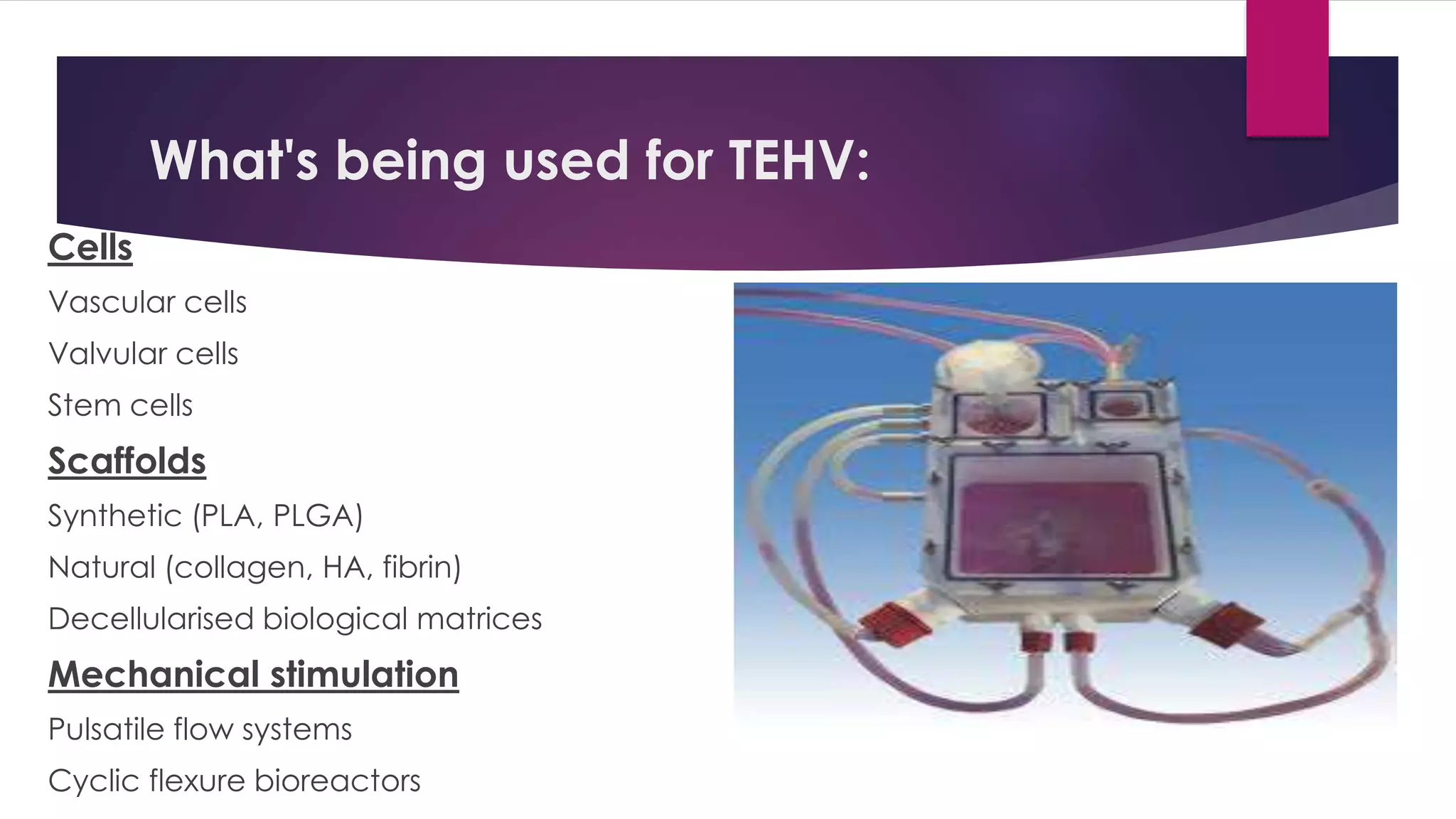
What's being used for TEHV:
Cells
Vascular cells
Valvular cells
Stem cells
Scaffolds
Synthetic (PLA, PLGA)
Natural (collagen, HA, fibrin)
Decellularised biological matrices
Mechanical stimulation
Pulsatile flow systems
Cyclic flexure bioreactors
Tissue Engineered Blood Vessels
TEBV has become necessary because
 Atherosclerosis, in the form of coronary artery
disease results in over 515,000 coronary artery
bypass graft procedures a year in the United
States alone
 Many patients do not have suitable
vessels due to age, disease, or previous
use
 Synthetic coronary bypass vessels have not
performed adequately to be employed to any
significant degree
What is being used for TEBV:
Cells
Endothelial cells
Smooth muscle cells
Fibroblasts and Myofibroblasts
Genetically modified cells
Stem cells (MSCs ESCs)
Scaffolds
Synthetic(PET, ePTFE, PGA, PLA, PUs)
Natural (collagen)
Decellularized biological matrices
Mechanical Stimulation
Pulsatile Flow Systems
Cyclic longitudinal strain
Signalling Factors
Growth Factors (bFGF, PDGF, VEGF)
Cytokines
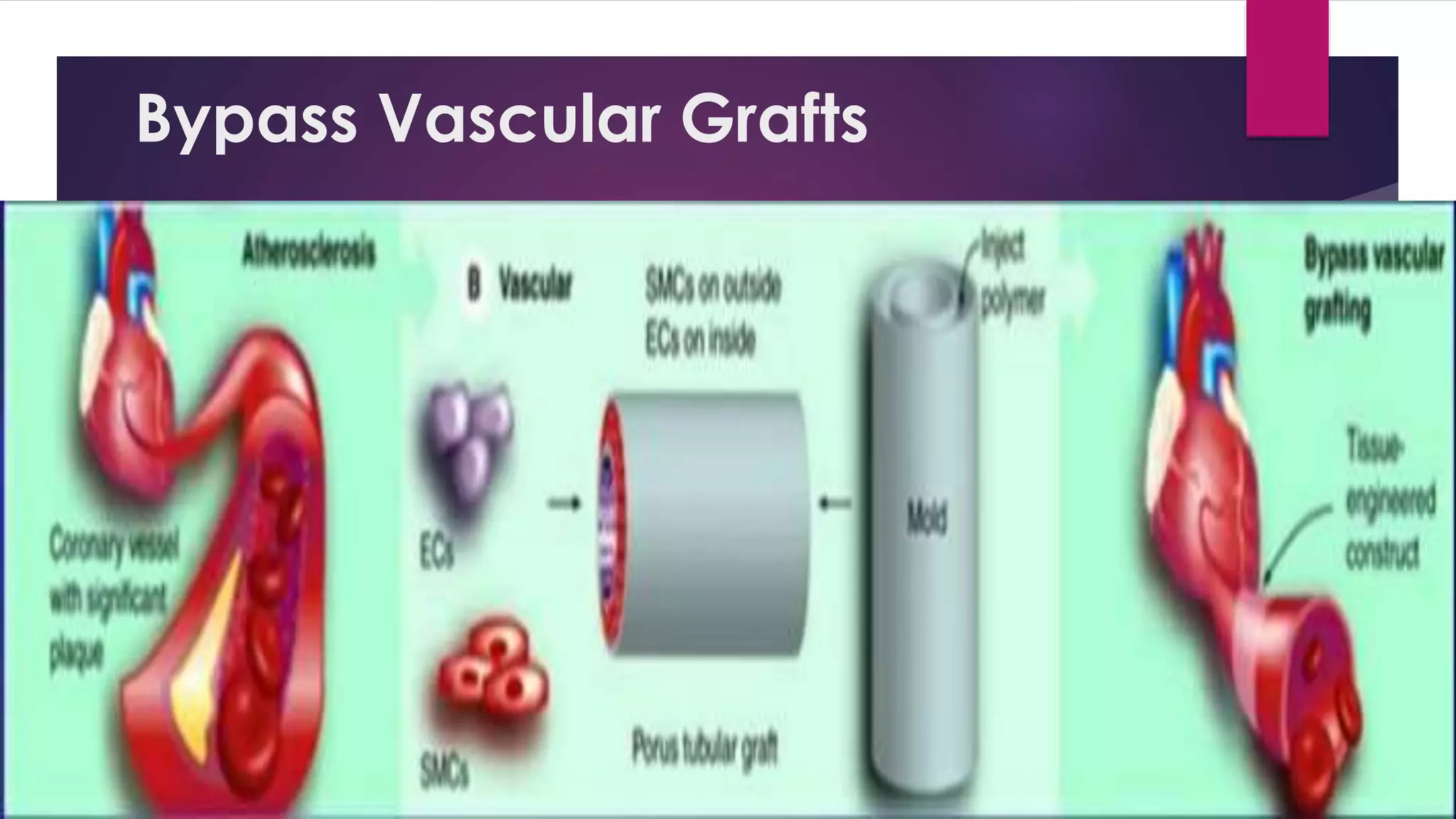
Bypass Vascular Grafts
 Graft fabrication requires designs of a suitable mold
 Walls are cellularized with smooth muscle cells
 Lumen is cellularized with endothelial cells
Tissue Engineered Myocardium
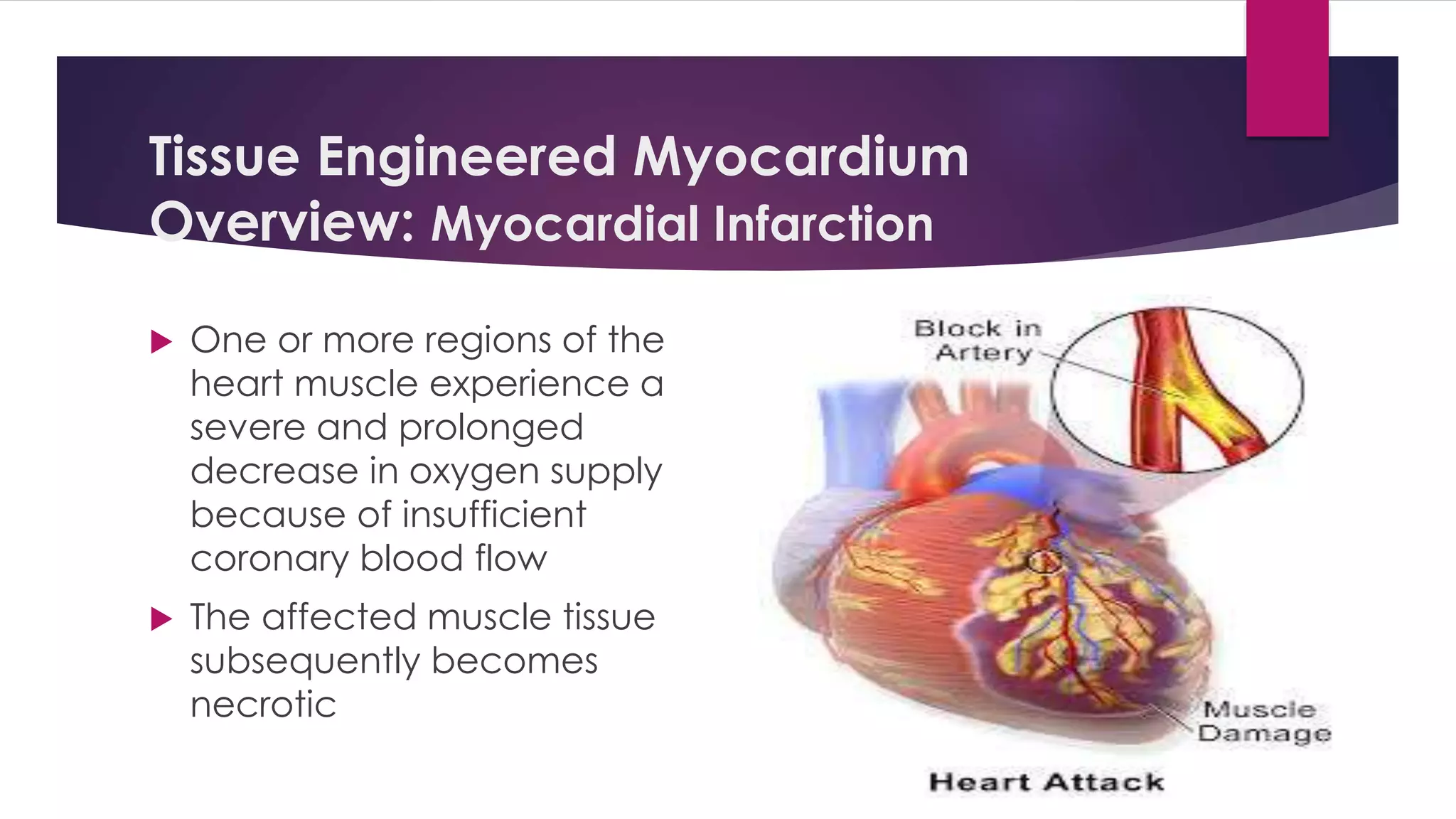
Overview: Myocardial Infarction
 One or more regions of the
heart muscle experience a
severe and prolonged
decrease in oxygen supply
because of insufficient
coronary blood flow
 The affected muscle tissue
subsequently becomes
necrotic
Myocardial Patch
Cells
Cardiocytes
Cardiac progenitor cells
Skeletal muscle cells
Smooth muscle cells
Stem cells (MSCs ESCs)
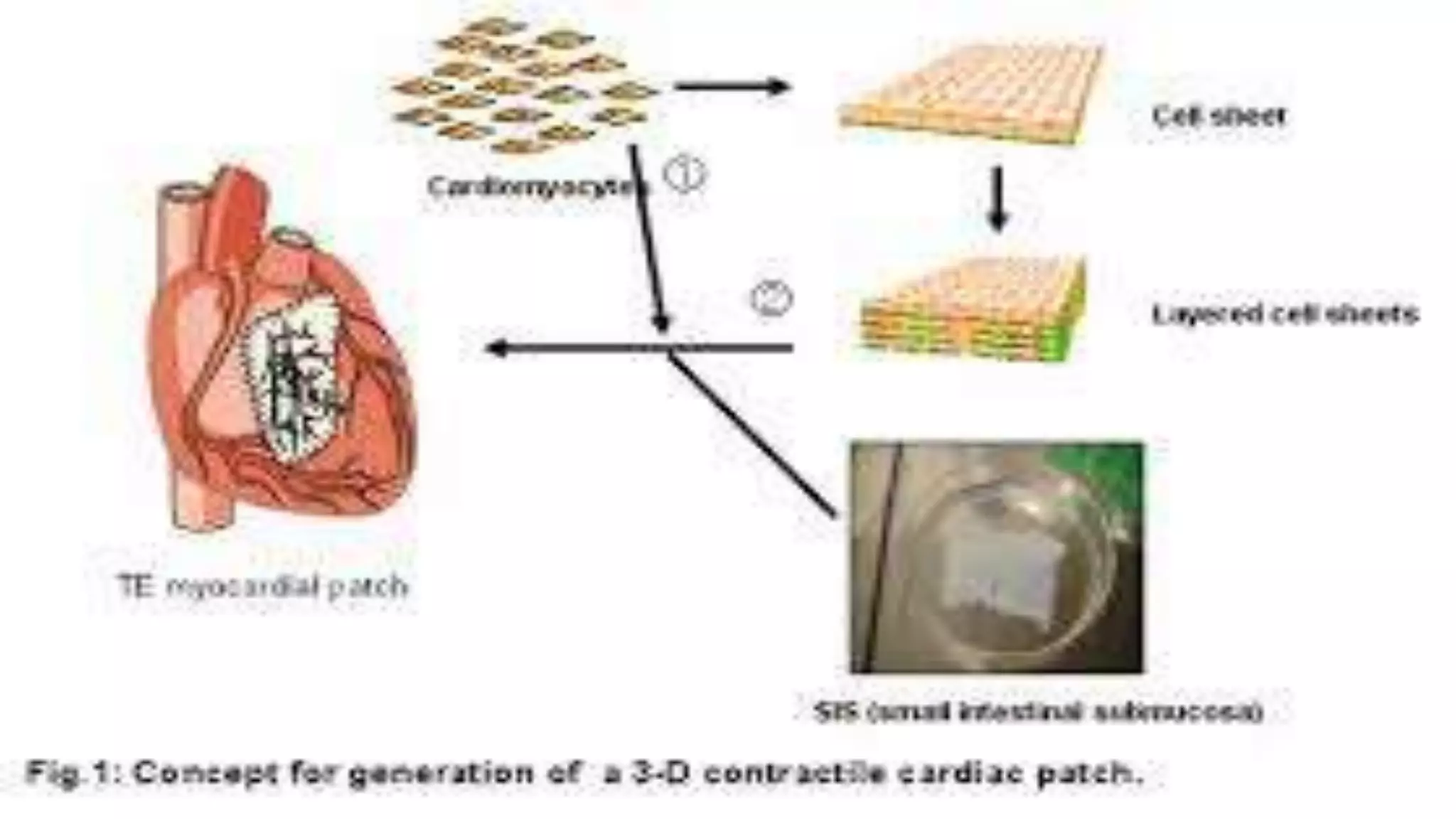
Scaffolds
Synthetic (PEG 3d MMP- responsive
hydrogel)
Natural
(collagen, ECM proteins, alginate)
Cell sheets
Mechanical Stimulation
Pulsatile Flow Systems
Rotational seeding
Cyclic mechanical strain
Signalling Factors
Growth Factors
(Insulin, transferrin, PDGF,5-azacytidine)
Cytokines
Conditioned media
Co-culture
Recent Developments
 Researchers at the Brigham and Women's Hospital and Harvard Medical School in
Boston and the University of Sydney in Australia were able to combine a novel elastic
hydrogel with micro scale technologies to create an artificial cardiac tissue that
mimics the mechanical and biological properties of the native heart. Which can be
used to address the challenge of engineering complex 3D- tissues as in heart tissues.
 Harvard scientists have merged stem cell and “organ-on-a-chip” technologies to
grow, for the first time, functioning human heart tissue carrying an inherited
cardiovascular disease.
 Previous studies have shown that cardiomyocytes can grow on porous scaffolds
such as gels made from alginate or gelatin. However, these materials are poor
conductors. To make a conductive scaffold, Khademhosseini and his colleagues,
including Xiaowu (Shirley) Tang of the University of Waterloo,
Continued…
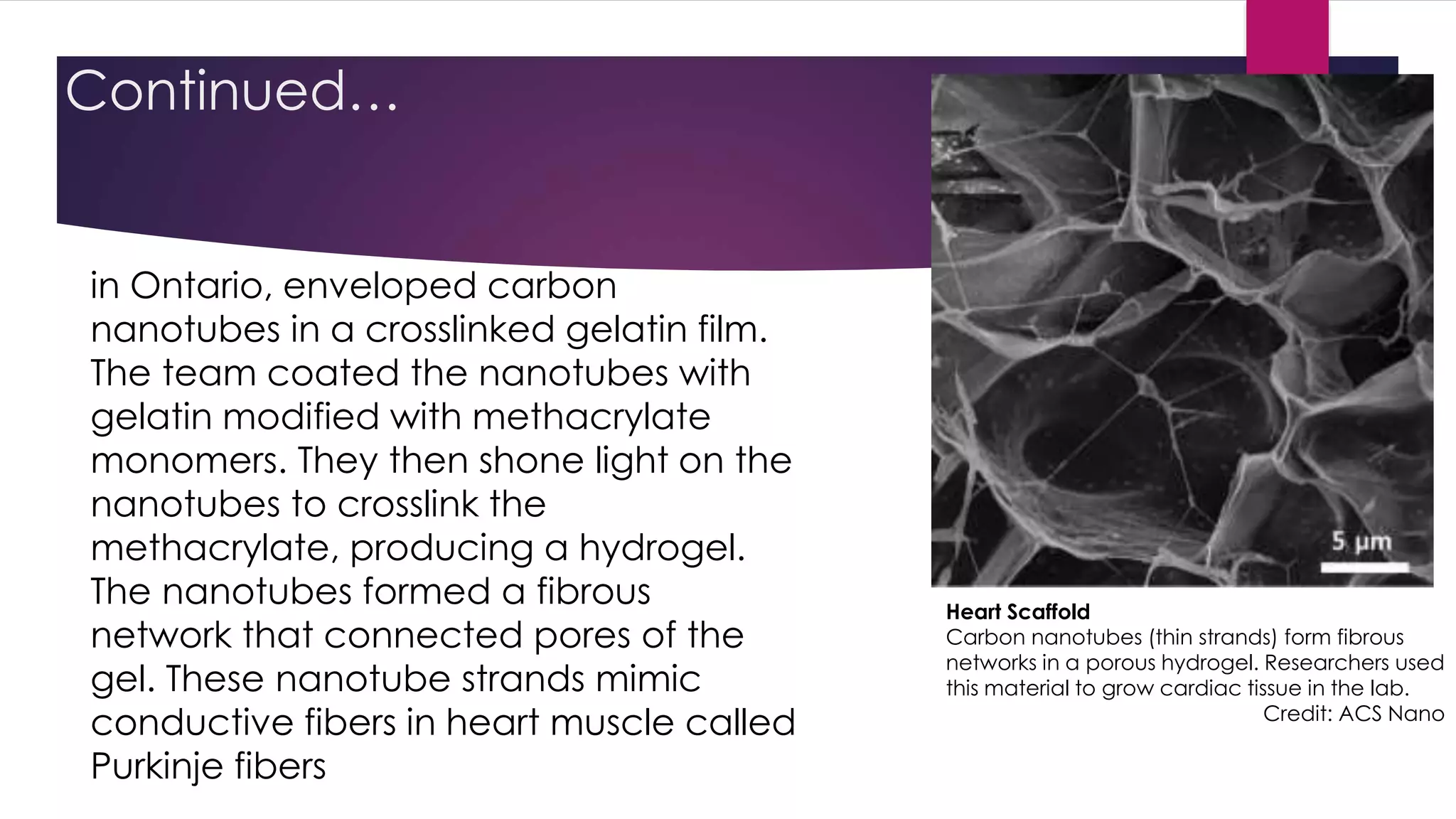
in Ontario, enveloped carbon
nanotubes in a crosslinked gelatin film.
The team coated the nanotubes with
gelatin modified with methacrylate
monomers. They then shone light on the
nanotubes to crosslink the
methacrylate, producing a hydrogel.
The nanotubes formed a fibrous
network that connected pores of the
gel. These nanotube strands mimic
conductive fibers in heart muscle called
Purkinje fibers
Heart Scaffold
Carbon nanotubes (thin strands) form fibrous
networks in a porous hydrogel. Researchers used
this material to grow cardiac tissue in the lab.
Credit: ACS Nano
Conclusion
 Despite all the work being carried out for
decades, a lot still need to be done in Taking
these tissue engineered constructs
from benchtop to bedside
 Better understanding the human body and how
to manipulate cells
References
 www.sciencedirect.com
 An introduction to Biomaterials. Ramaswami, P and Wagner, WR. 2005
 www.seas.Harvard.edu
 Roger, v et al. heart disease and stroke statistics.2011. update: a report
from the American Heart association. Circulation. 2011
 www.sciencedaily.com Building heart tissue that beats: Engineered tissue
closely mimics natural heart muscle March 12, 2014

Cardiac tissue engineering

  • 1.
  • 2.
    Overview  Introduction  Biomaterials Cells  Biomolecule  TE product requirements  Heart valves  Blood vessels  Myocardium
  • 3.
    Introduction  Heart diseaseis the leading cause of death and disability all over the world accounting for approximately 40% of all human mortality  Treatment limitations:  Cardiomyocytes cannot divide to replace injured cells  Restricted intrinsic capacity of the heart  Lack of organs for transplantation and  Complications associated with immune suppressive treatments  The main targets for tissue engineering  Blood vessels  Heart muscles- myocardium and  Heart valve
  • 4.
    Biomaterials Most commonly usedbiomaterials for cardiovascular tissue engineering are  Biodegradable Polymeric scaffolds (Polyglycolic acid PGA)  Hydrogels(seeded with collagen, fibrin, alginate)  Decellularized tissue (composed of natural ECM proteins: collagen, fibronectin etc.)
  • 5.
    Biomaterials-Scaffolds Scaffold provides structurefor cells/tissue to grow and deliver biomolecules (growth factors, cytokines, etc.) Properties (chemical, mechanical, biological) should be adjusted to provide appropriate performance.
  • 6.
    Cells Cell types mostcommonly used for cardiac tissue engineering (smart 2008)  Embryonic stem cells  Bone marrow- derived mesenchymal stem cells  Skeletal myoblasts  Induced pluripotent stem cells  Multipotient adult germline stem cells  Endothelial progenitor stem cells  Very small embryonic-like stem cells  Endogenous cardiac stem cells
  • 7.
    Mesenchymal Stem Cells Found in many tissues and organs  Are multipotent and possess extensive proliferation potential  Bone marrow-derived adult stem cells can be differentiated to many cell types like cartilage bone and adipose fat  Use of adult stem cells allows autologous cell transplantation
  • 8.
    Embryonic Stem Cells Collected at the blastocyst stage (day 6) of embryogenesis  Can differentiate into cells from all three germ layers of the body ( endoderm, endoderm, mesoderm)  Capable of self-renewal and undifferentiated proliferation in culture for extended time.
  • 9.
    BIOMOLECULES  Angiogenic Factors Vasculogenic Factors  Growth Factors  Differentiation Factors
  • 10.
    TE Product Requirements Biocompatible Should not elicit immune or inflammatory response  Functional Adequate mechanical and hemodynamic function, mature ECM, durability  Living Growth and remodelling capabilities of the construct should mimic the native heart valve, blood vessel or myocardium structure
  • 11.
    Continued  Blood Vessels Must be able to withstand high-pressure fluid dynamics, turbulence  Biocompatible, functional, living  Valves  Must be able to operate in a very dynamic and severe environment  Open and close at 1Hz, exposed to mechanical stresses, high pressure fluid dynamics, turbulence etc.  Myocardium Patch  High vascularity is critical  Mechanical and electrical anisotropy  High metabolic demand
  • 12.
    Overview Tissue engineered construct Cells Scaffolds Signals Autologous Allogeneic Xenogeneic Stem Growthfactors Cytokines Mechanical stimulation Differentiation factorsNatural Synthetic
  • 13.
    Tissue Engineered HeartValves The heart consists of four chambers two atria 9upper chamber), two ventricles(lower ventricles) Valves are flaps that are located on each end of the two ventricle (lower chamber) of the heart Valves prevent backward flow of blood As the heart muscle contracts and releases, the valves open and shut, letting blood flow into the ventricles and atria at alternate times
  • 14.
    What's being usedfor TEHV: Cells Vascular cells Valvular cells Stem cells Scaffolds Synthetic (PLA, PLGA) Natural (collagen, HA, fibrin) Decellularised biological matrices Mechanical stimulation Pulsatile flow systems Cyclic flexure bioreactors
  • 15.
    Tissue Engineered BloodVessels TEBV has become necessary because  Atherosclerosis, in the form of coronary artery disease results in over 515,000 coronary artery bypass graft procedures a year in the United States alone  Many patients do not have suitable vessels due to age, disease, or previous use  Synthetic coronary bypass vessels have not performed adequately to be employed to any significant degree
  • 16.
    What is beingused for TEBV: Cells Endothelial cells Smooth muscle cells Fibroblasts and Myofibroblasts Genetically modified cells Stem cells (MSCs ESCs) Scaffolds Synthetic(PET, ePTFE, PGA, PLA, PUs) Natural (collagen) Decellularized biological matrices Mechanical Stimulation Pulsatile Flow Systems Cyclic longitudinal strain Signalling Factors Growth Factors (bFGF, PDGF, VEGF) Cytokines
  • 17.
  • 18.
     Graft fabricationrequires designs of a suitable mold  Walls are cellularized with smooth muscle cells  Lumen is cellularized with endothelial cells
  • 19.
    Tissue Engineered Myocardium Overview:Myocardial Infarction  One or more regions of the heart muscle experience a severe and prolonged decrease in oxygen supply because of insufficient coronary blood flow  The affected muscle tissue subsequently becomes necrotic
  • 20.
    Myocardial Patch Cells Cardiocytes Cardiac progenitorcells Skeletal muscle cells Smooth muscle cells Stem cells (MSCs ESCs) Scaffolds Synthetic (PEG 3d MMP- responsive hydrogel) Natural (collagen, ECM proteins, alginate) Cell sheets Mechanical Stimulation Pulsatile Flow Systems Rotational seeding Cyclic mechanical strain Signalling Factors Growth Factors (Insulin, transferrin, PDGF,5-azacytidine) Cytokines Conditioned media Co-culture
  • 22.
    Recent Developments  Researchersat the Brigham and Women's Hospital and Harvard Medical School in Boston and the University of Sydney in Australia were able to combine a novel elastic hydrogel with micro scale technologies to create an artificial cardiac tissue that mimics the mechanical and biological properties of the native heart. Which can be used to address the challenge of engineering complex 3D- tissues as in heart tissues.  Harvard scientists have merged stem cell and “organ-on-a-chip” technologies to grow, for the first time, functioning human heart tissue carrying an inherited cardiovascular disease.  Previous studies have shown that cardiomyocytes can grow on porous scaffolds such as gels made from alginate or gelatin. However, these materials are poor conductors. To make a conductive scaffold, Khademhosseini and his colleagues, including Xiaowu (Shirley) Tang of the University of Waterloo,
  • 23.
    Continued… in Ontario, envelopedcarbon nanotubes in a crosslinked gelatin film. The team coated the nanotubes with gelatin modified with methacrylate monomers. They then shone light on the nanotubes to crosslink the methacrylate, producing a hydrogel. The nanotubes formed a fibrous network that connected pores of the gel. These nanotube strands mimic conductive fibers in heart muscle called Purkinje fibers Heart Scaffold Carbon nanotubes (thin strands) form fibrous networks in a porous hydrogel. Researchers used this material to grow cardiac tissue in the lab. Credit: ACS Nano
  • 24.
    Conclusion  Despite allthe work being carried out for decades, a lot still need to be done in Taking these tissue engineered constructs from benchtop to bedside  Better understanding the human body and how to manipulate cells
  • 25.
    References  www.sciencedirect.com  Anintroduction to Biomaterials. Ramaswami, P and Wagner, WR. 2005  www.seas.Harvard.edu  Roger, v et al. heart disease and stroke statistics.2011. update: a report from the American Heart association. Circulation. 2011  www.sciencedaily.com Building heart tissue that beats: Engineered tissue closely mimics natural heart muscle March 12, 2014