Downloaded 3,914 times

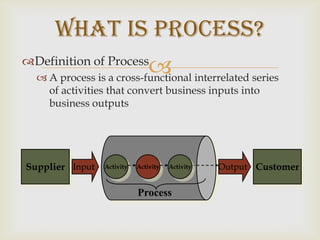

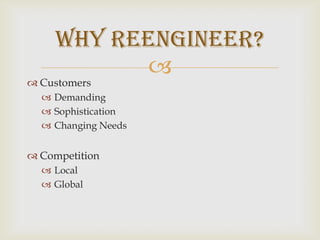
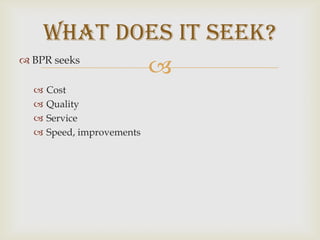

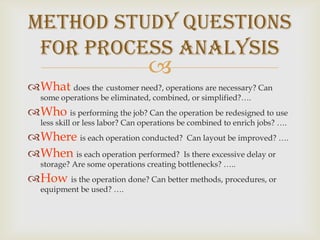

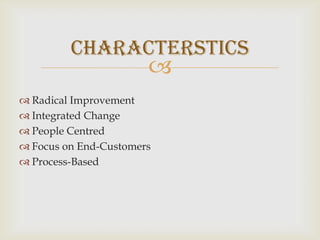
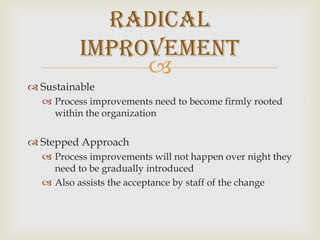
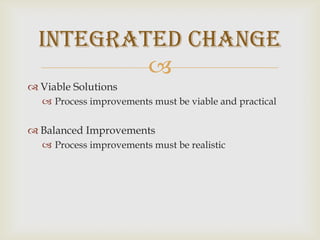
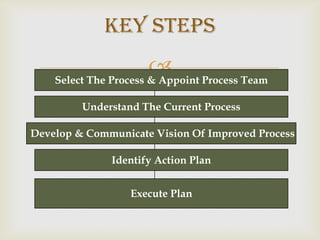
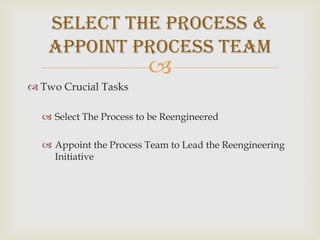
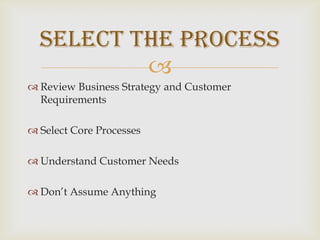
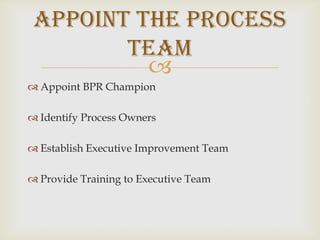
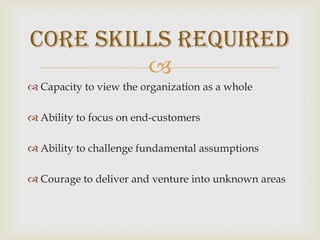
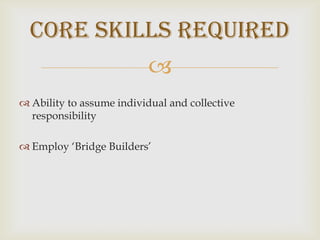
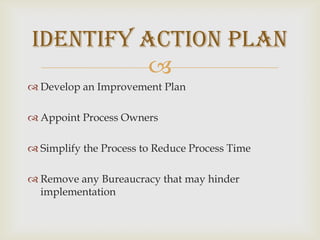
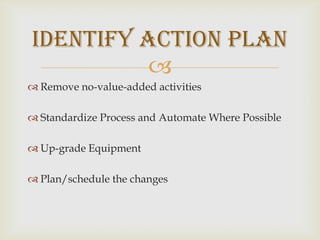
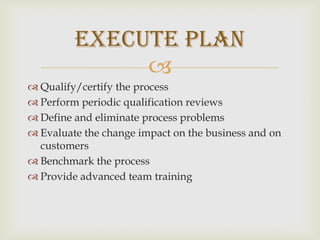

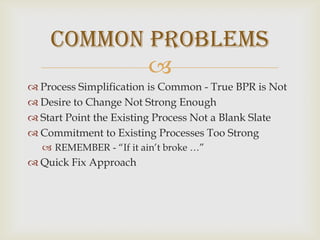
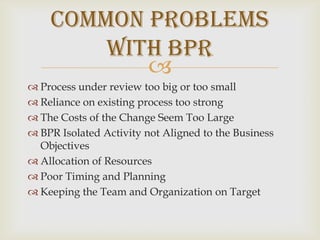

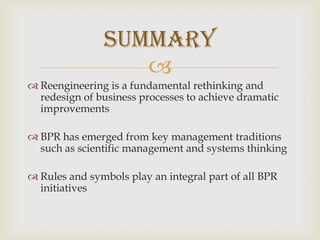
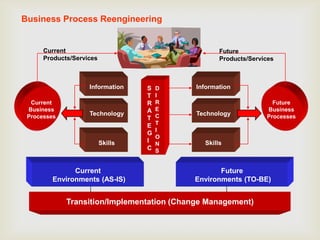


Business process reengineering (BPR) seeks dramatic improvements in critical performance measures like cost, quality, service and speed through fundamentally rethinking and redesigning business processes. It requires taking a clean-sheet approach to processes rather than assuming current processes are optimal. Key steps involve selecting processes for reengineering, appointing cross-functional teams, understanding the current "as-is" process, developing and communicating a vision for an improved "to-be" process, identifying an action plan, and executing the plan through process simplification and standardization while removing non-value adding activities. Common challenges include processes being too broadly or narrowly defined, over-reliance on existing processes, and failure to align BPR with business objectives.


