
Downloaded 1,395 times




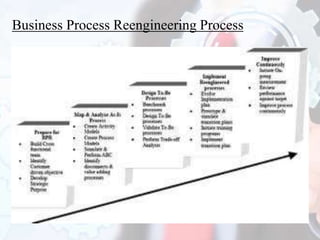
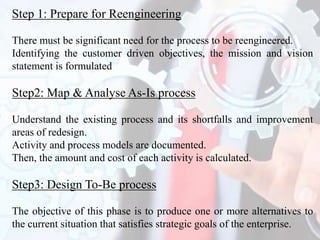
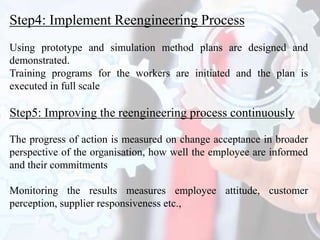



Business process reengineering (BPR) was introduced in the 1990s to fundamentally rethink and redesign business processes. It aims to make radical improvements by eliminating non-value adding activities, integrating information systems, and optimizing end-to-end processes. BPR focuses on outcomes rather than tasks and seeks to dramatically reduce costs and improve customer service. A typical BPR process involves preparing for change, analyzing the existing process, designing an improved process, implementing changes, and continuously monitoring results. When successfully implemented, BPR can lead to significant reductions in time, costs and improvements in quality.


