Emergency Management of Burns
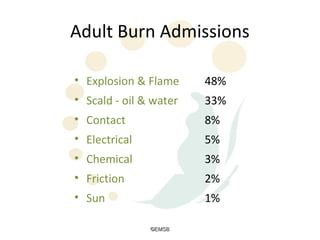
Adult Burn Admissions

• Explosion & Flame     48%
• Scald - oil & water   33%
• Contact               8%
• Electrical            5%
• Chemical              3%
• Friction              2%
• Sun                   1%

               ©EMSB
Pathophysiology
• Tissue damage occurs in two stages:
  – Initial thermal injury
  – Secondary injury from ongoing dermal
    ischaemia or trauma
• Early management is aimed at minimizing
  secondary damage
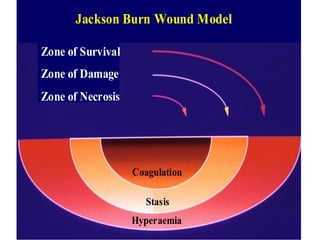
Jackson Burn Wound Model

Zone of Survival
Zone of Damage
Zone of Necrosis


                   Coagulation

                      Stasis
                   Hyperaemia
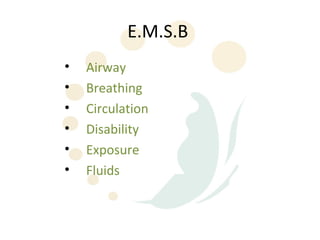
E.M.S.B
•   Airway
•   Breathing
•   Circulation
•   Disability
•   Exposure
•   Fluids
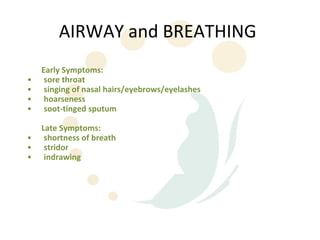
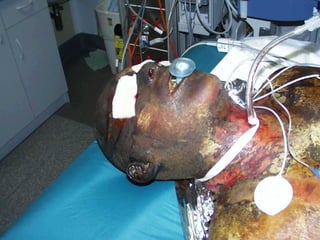
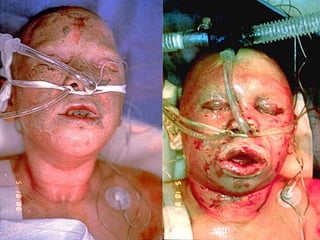
AIRWAY and BREATHING
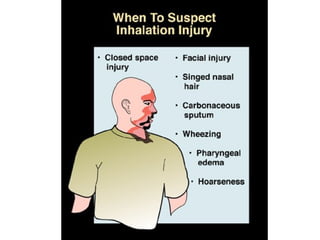
    Early Symptoms:
•    sore throat
•    singing of nasal hairs/eyebrows/eyelashes
•    hoarseness
•    soot-tinged sputum

    Late Symptoms:
•    shortness of breath
•    stridor
•    indrawing
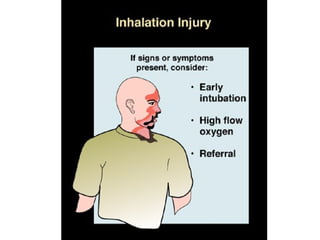
IF IN DOUBT INTUBATE
CIRCULATION
• BURN SCHOCK
• Management focuses on fluid resuscitation,
  pulmonary, cardiovascular and renal support. Ends
  with mobilization of fluid and establishment of
  cardiopulmonary and renal stability (lasts up to 48
  hours or several days)
• FLUID RESUSCITATION – Parklands Formula
DISABILITY
• Beware the Confused Patient

• Intoxicated Or Hypoxic?
• Electrolyte Imbalances
• Shock
EXPOSURE
• REMOVAL OF ALL JEWELLERY AND CLOTHING WHILE KEEPING
  THE PATIENT WARM

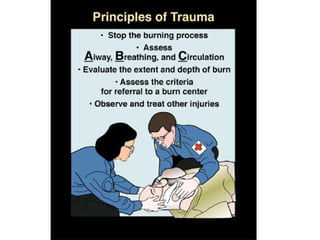
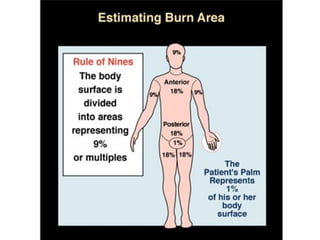
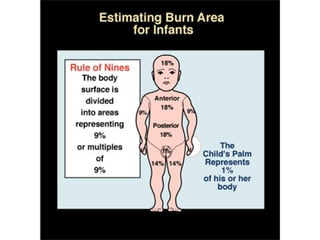
• ASSESSMENT OF BURN SEVERITY AND EXTENT
• MANAGEMENT
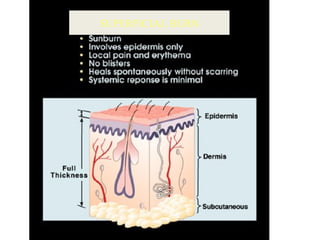
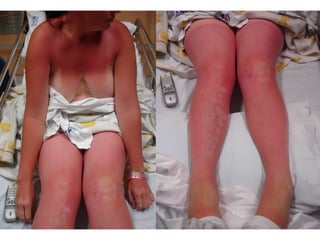
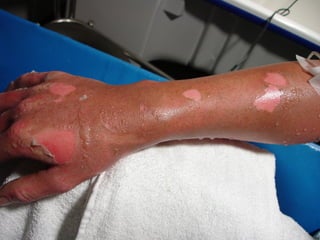
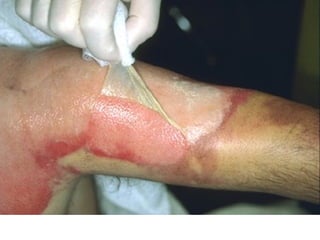
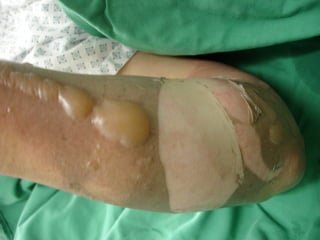
SUPERFICIAL BURN
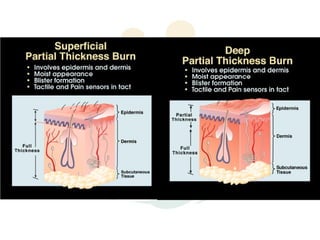
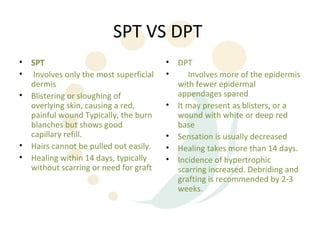
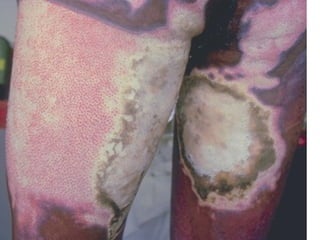
SPT VS DPT
•   SPT                                   •   DPT
•    Involves only the most superficial   •      Involves more of the epidermis
    dermis                                    with fewer epidermal
•   Blistering or sloughing of                appendages spared
    overlying skin, causing a red,        •   It may present as blisters, or a
    painful wound Typically, the burn         wound with white or deep red
    blanches but shows good                   base
    capillary refill.                     •   Sensation is usually decreased
•   Hairs cannot be pulled out easily.    •   Healing takes more than 14 days.
•   Healing within 14 days, typically     •   Incidence of hypertrophic
    without scarring or need for graft        scarring increased. Debriding and
                                              grafting is recommended by 2-3
                                              weeks.
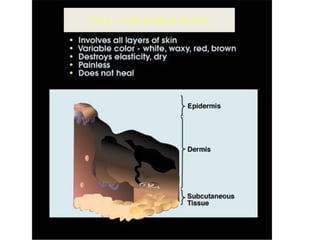
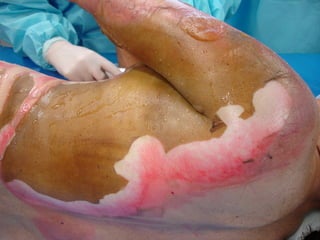
FULL THICKNESS BURN
Calculation of fluid commences
     from the time of burn
              NOT
 from the time of presentation


             ©EMSB
Limbs: Signs of Circulatory Obstruction

       • Loss of distal circulation
             • pallor
             • coolness
             • absent pulse
             • loss capillary refill
             • decreased oxygen saturation
       • Pain on passive extension
       • Deep pain at rest
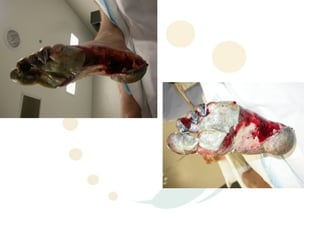
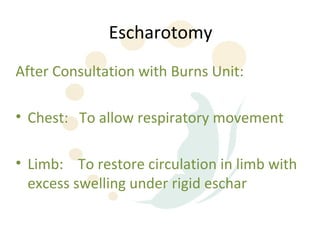
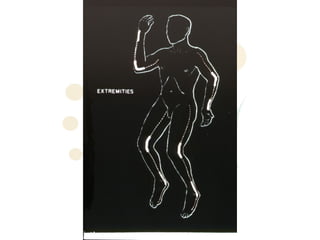
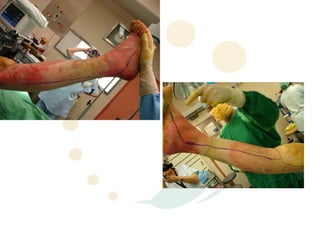
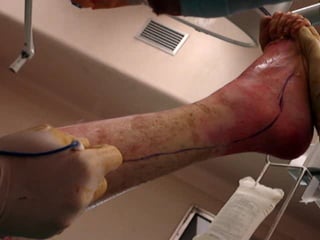
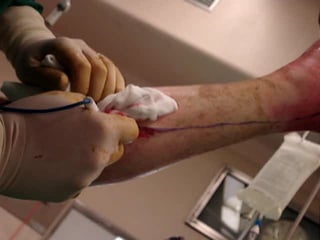
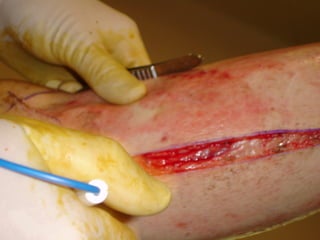
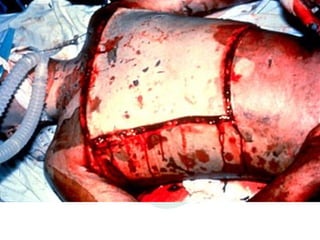
Escharotomy
After Consultation with Burns Unit:

• Chest: To allow respiratory movement

• Limb: To restore circulation in limb with
  excess swelling under rigid eschar
INITIAL CARE
•   JELONET/BACTIGRAS
•   SILVAZINE CREAM
•   GLAD WRAP
•   PAIN RELIEF - IV
•   IDC INSERTION TO MONITOR URINE OUTPUT
Further Management
•   NG TUBE AND FEEDS
•   NO ANTIBIOTICS
•   TETANUS PROPHYLAXIS
•   AVOIDENCE OF HYPOTHERMIA
TRANSFER CRITERIA
1. Partial thickness burns >= 15% TBSA in patients aged 10 - 50 years old.
2. Partial thickness burns >=10% TBSA in children aged 10 or adults aged 50
   years old.
3. Full-thickness burns >= 5% TBSA in patients of any age.
4. Patients with partial or full-thickness burns of the hands, feet, face, eyes,
   ears, perineum, and/or major joints.
5. Patients with high-voltage electrical injuries, including lightning injuries.
6. Patients with significant burns from caustic chemicals.
7. Patients with burns complicated by multiple trauma in which the burn
   injury poses the greatest risk of morbidity or mortality
8. Patients with burns who suffer inhalation injury.
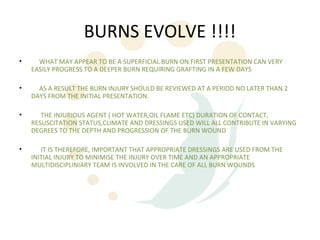
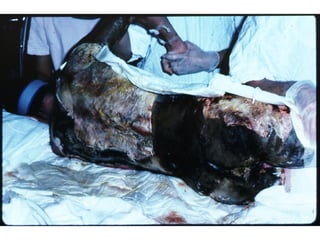
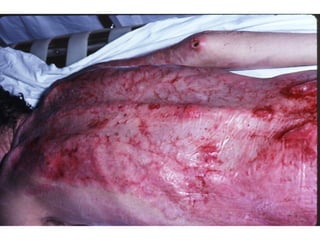
BURNS EVOLVE !!!!
•     WHAT MAY APPEAR TO BE A SUPERFICIAL BURN ON FIRST PRESENTATION CAN VERY
    EASILY PROGRESS TO A DEEPER BURN REQUIRING GRAFTING IN A FEW DAYS

•     AS A RESULT THE BURN INJURY SHOULD BE REVIEWED AT A PERIOD NO LATER THAN 2
    DAYS FROM THE INITIAL PRESENTATION.

•      THE INJURIOUS AGENT ( HOT WATER,OIL FLAME ETC) DURATION OF CONTACT,
    RESUSCITATION STATUS,CLIMATE AND DRESSINGS USED WILL ALL CONTRIBUTE IN VARYING
    DEGREES TO THE DEPTH AND PROGRESSION OF THE BURN WOUND

•      IT IS THEREFORE, IMPORTANT THAT APPROPRIATE DRESSINGS ARE USED FROM THE
    INITIAL INJURY TO MINIMISE THE INJURY OVER TIME AND AN APPROPRIATE
    MULTIDISCIPLINIARY TEAM IS INVOLVED IN THE CARE OF ALL BURN WOUNDS
Burns
Burns

Burns

  • 2.
  • 3.
    Adult Burn Admissions •Explosion & Flame 48% • Scald - oil & water 33% • Contact 8% • Electrical 5% • Chemical 3% • Friction 2% • Sun 1% ©EMSB
  • 4.
    Pathophysiology • Tissue damageoccurs in two stages: – Initial thermal injury – Secondary injury from ongoing dermal ischaemia or trauma • Early management is aimed at minimizing secondary damage
  • 5.
    Jackson Burn WoundModel Zone of Survival Zone of Damage Zone of Necrosis Coagulation Stasis Hyperaemia
  • 6.
    E.M.S.B • Airway • Breathing • Circulation • Disability • Exposure • Fluids
  • 14.
    AIRWAY and BREATHING Early Symptoms: • sore throat • singing of nasal hairs/eyebrows/eyelashes • hoarseness • soot-tinged sputum Late Symptoms: • shortness of breath • stridor • indrawing
  • 19.
    IF IN DOUBTINTUBATE
  • 20.
    CIRCULATION • BURN SCHOCK •Management focuses on fluid resuscitation, pulmonary, cardiovascular and renal support. Ends with mobilization of fluid and establishment of cardiopulmonary and renal stability (lasts up to 48 hours or several days) • FLUID RESUSCITATION – Parklands Formula
  • 21.
    DISABILITY • Beware theConfused Patient • Intoxicated Or Hypoxic? • Electrolyte Imbalances • Shock
  • 22.
    EXPOSURE • REMOVAL OFALL JEWELLERY AND CLOTHING WHILE KEEPING THE PATIENT WARM • ASSESSMENT OF BURN SEVERITY AND EXTENT • MANAGEMENT
  • 24.
  • 27.
    SPT VS DPT • SPT • DPT • Involves only the most superficial • Involves more of the epidermis dermis with fewer epidermal • Blistering or sloughing of appendages spared overlying skin, causing a red, • It may present as blisters, or a painful wound Typically, the burn wound with white or deep red blanches but shows good base capillary refill. • Sensation is usually decreased • Hairs cannot be pulled out easily. • Healing takes more than 14 days. • Healing within 14 days, typically • Incidence of hypertrophic without scarring or need for graft scarring increased. Debriding and grafting is recommended by 2-3 weeks.
  • 31.
  • 38.
    Calculation of fluidcommences from the time of burn NOT from the time of presentation ©EMSB
  • 39.
    Limbs: Signs ofCirculatory Obstruction • Loss of distal circulation • pallor • coolness • absent pulse • loss capillary refill • decreased oxygen saturation • Pain on passive extension • Deep pain at rest
  • 40.
    Escharotomy After Consultation withBurns Unit: • Chest: To allow respiratory movement • Limb: To restore circulation in limb with excess swelling under rigid eschar
  • 49.
    INITIAL CARE • JELONET/BACTIGRAS • SILVAZINE CREAM • GLAD WRAP • PAIN RELIEF - IV • IDC INSERTION TO MONITOR URINE OUTPUT
  • 50.
    Further Management • NG TUBE AND FEEDS • NO ANTIBIOTICS • TETANUS PROPHYLAXIS • AVOIDENCE OF HYPOTHERMIA
  • 51.
    TRANSFER CRITERIA 1. Partialthickness burns >= 15% TBSA in patients aged 10 - 50 years old. 2. Partial thickness burns >=10% TBSA in children aged 10 or adults aged 50 years old. 3. Full-thickness burns >= 5% TBSA in patients of any age. 4. Patients with partial or full-thickness burns of the hands, feet, face, eyes, ears, perineum, and/or major joints. 5. Patients with high-voltage electrical injuries, including lightning injuries. 6. Patients with significant burns from caustic chemicals. 7. Patients with burns complicated by multiple trauma in which the burn injury poses the greatest risk of morbidity or mortality 8. Patients with burns who suffer inhalation injury.
  • 52.
    BURNS EVOLVE !!!! • WHAT MAY APPEAR TO BE A SUPERFICIAL BURN ON FIRST PRESENTATION CAN VERY EASILY PROGRESS TO A DEEPER BURN REQUIRING GRAFTING IN A FEW DAYS • AS A RESULT THE BURN INJURY SHOULD BE REVIEWED AT A PERIOD NO LATER THAN 2 DAYS FROM THE INITIAL PRESENTATION. • THE INJURIOUS AGENT ( HOT WATER,OIL FLAME ETC) DURATION OF CONTACT, RESUSCITATION STATUS,CLIMATE AND DRESSINGS USED WILL ALL CONTRIBUTE IN VARYING DEGREES TO THE DEPTH AND PROGRESSION OF THE BURN WOUND • IT IS THEREFORE, IMPORTANT THAT APPROPRIATE DRESSINGS ARE USED FROM THE INITIAL INJURY TO MINIMISE THE INJURY OVER TIME AND AN APPROPRIATE MULTIDISCIPLINIARY TEAM IS INVOLVED IN THE CARE OF ALL BURN WOUNDS