Downloaded 119 times

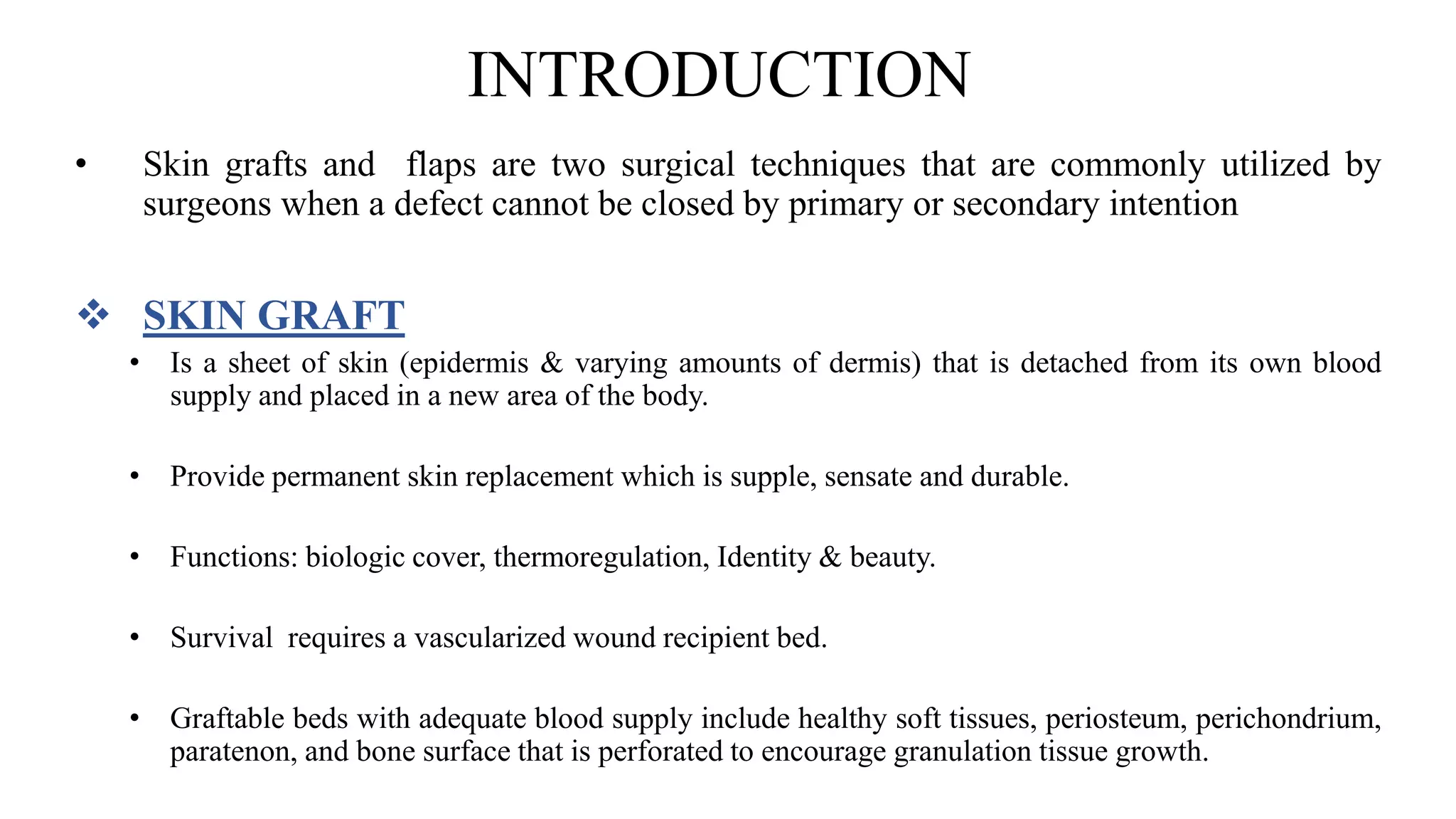


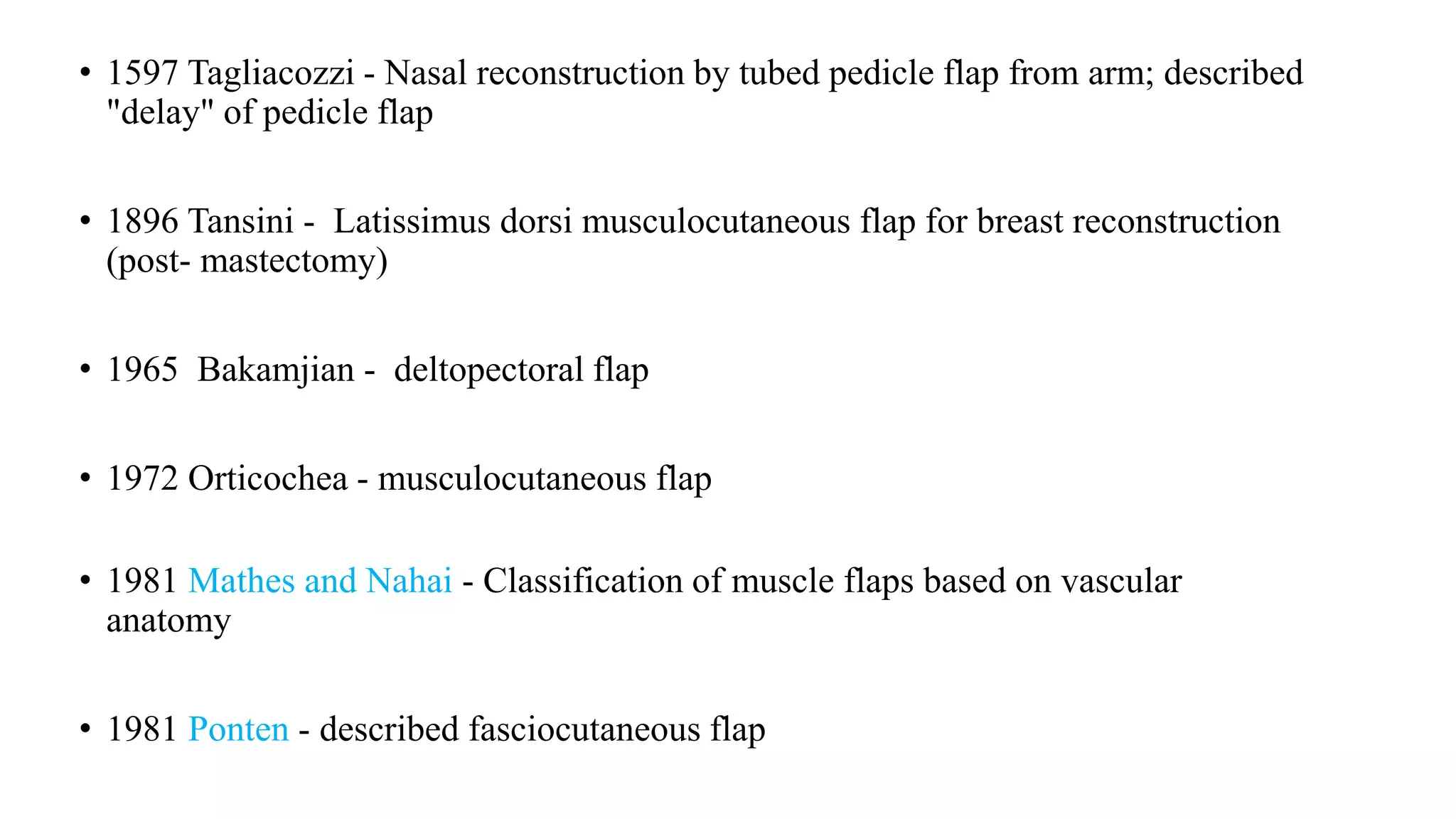


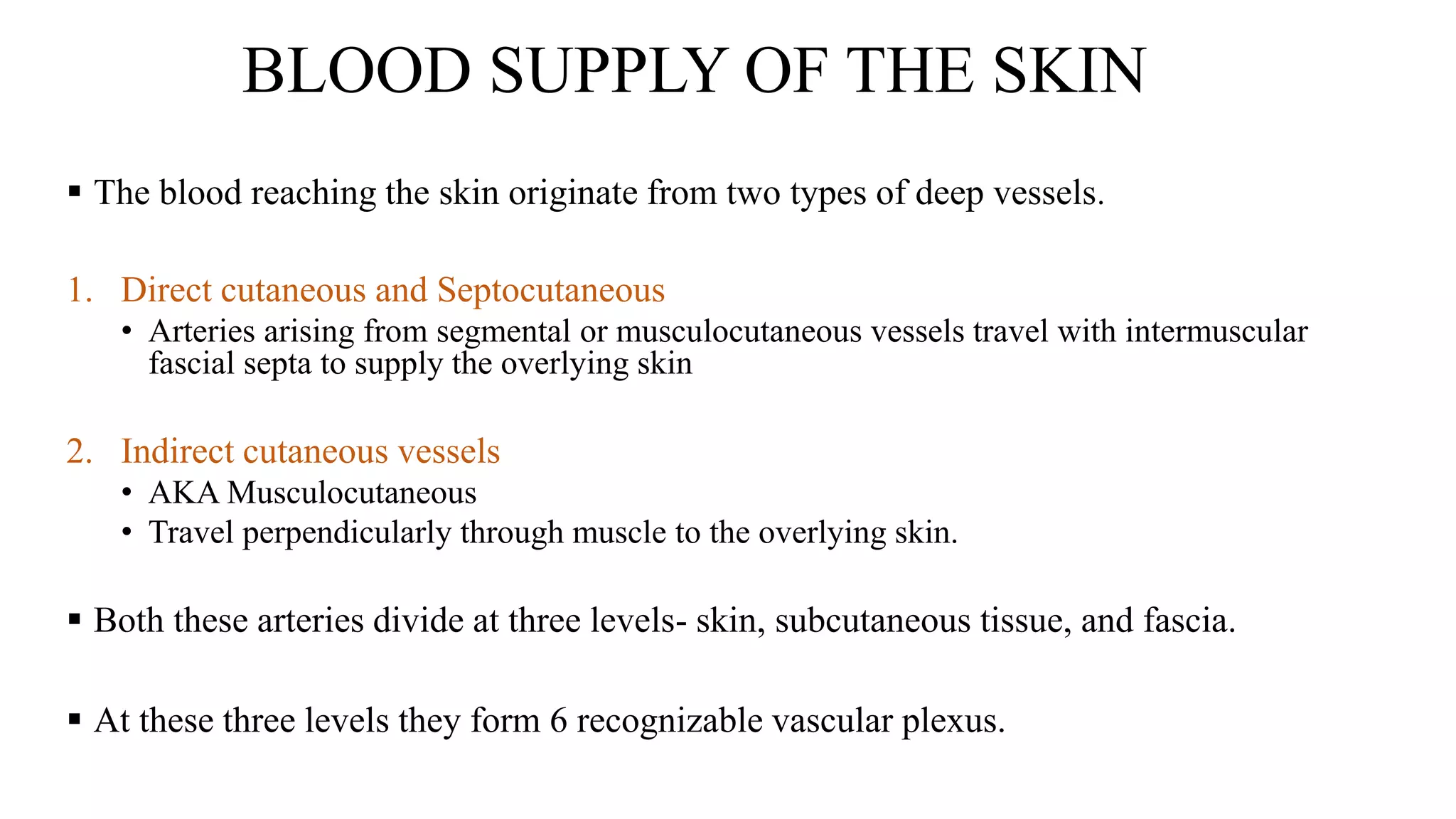


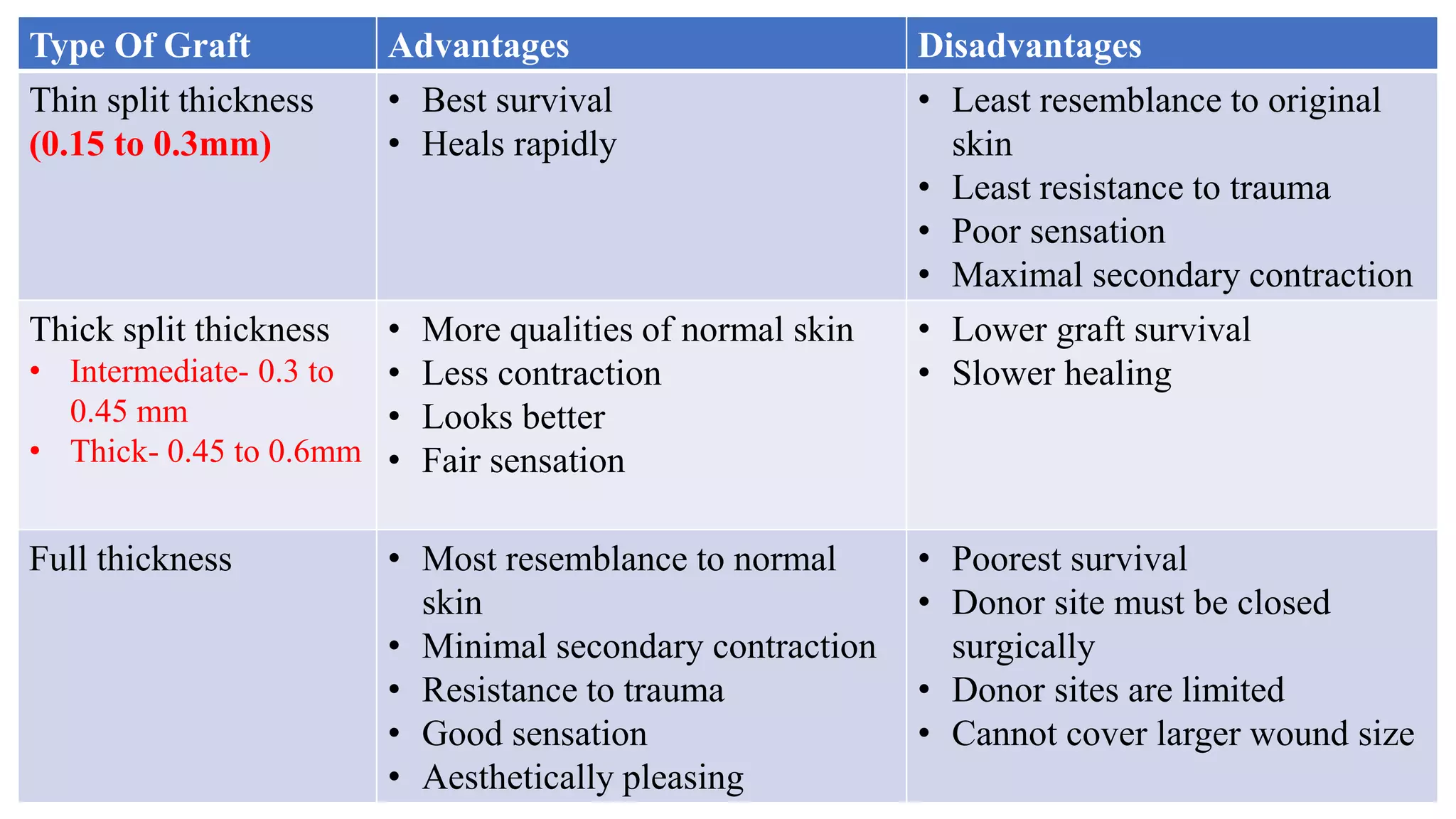
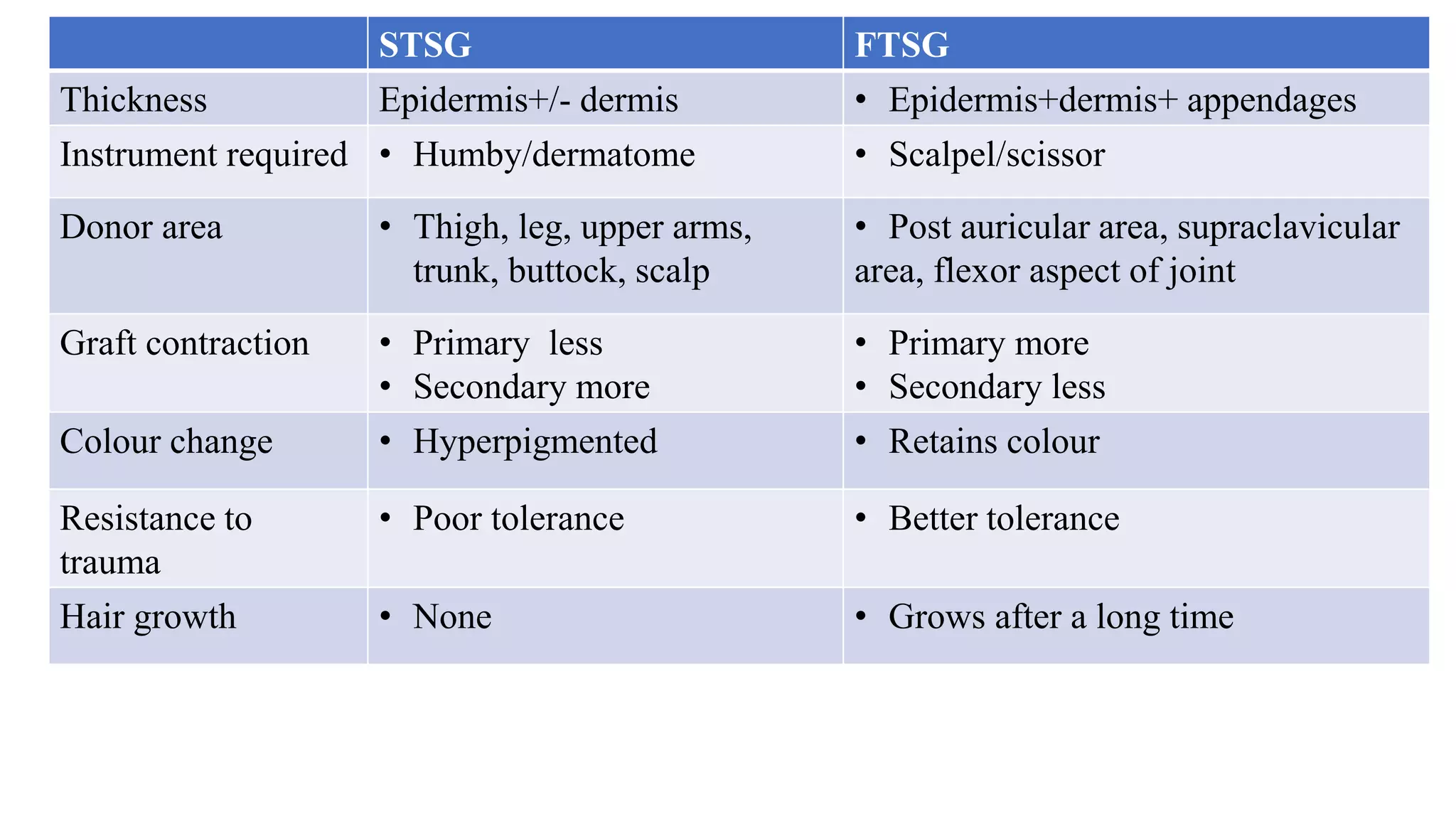


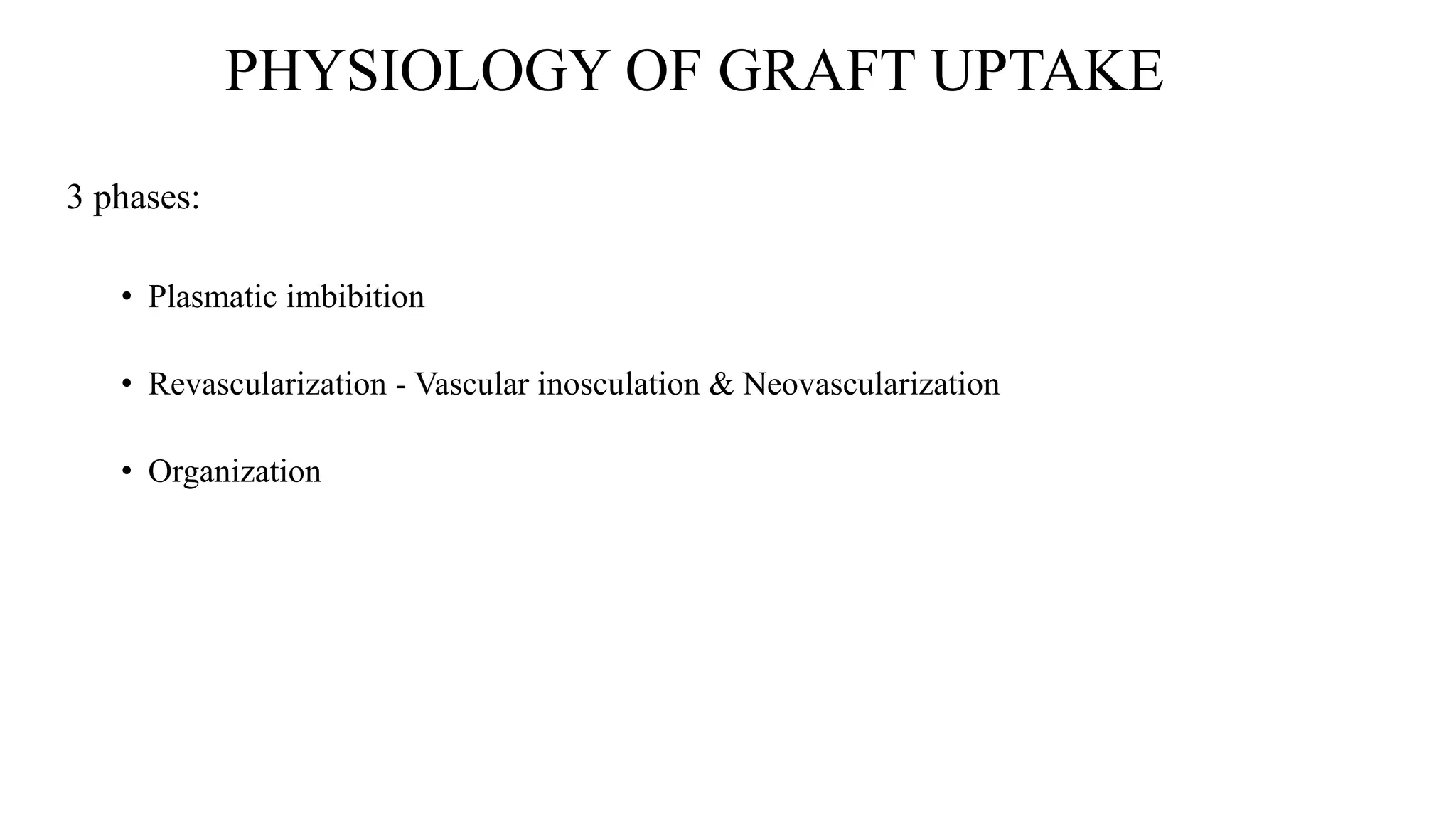
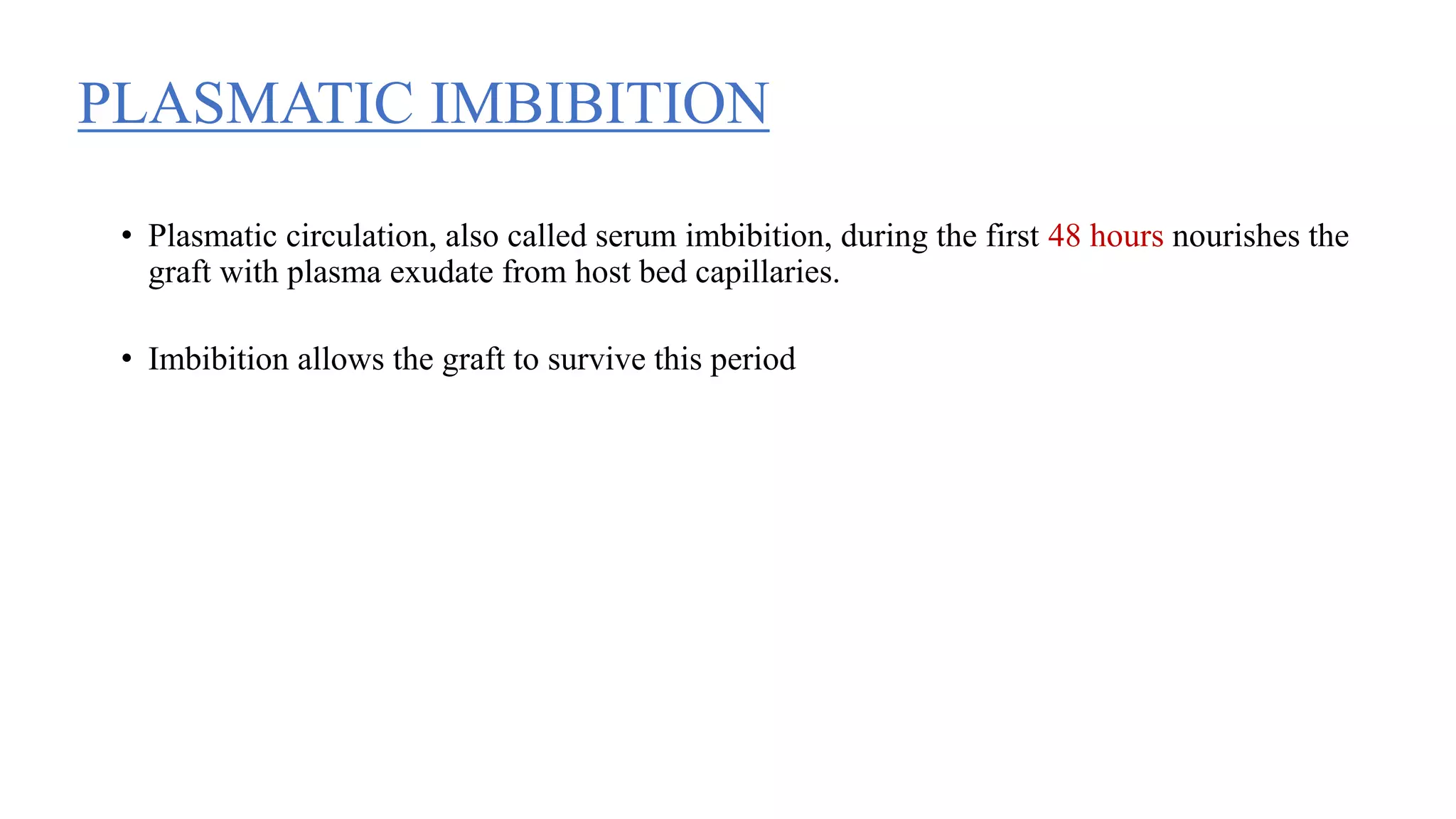


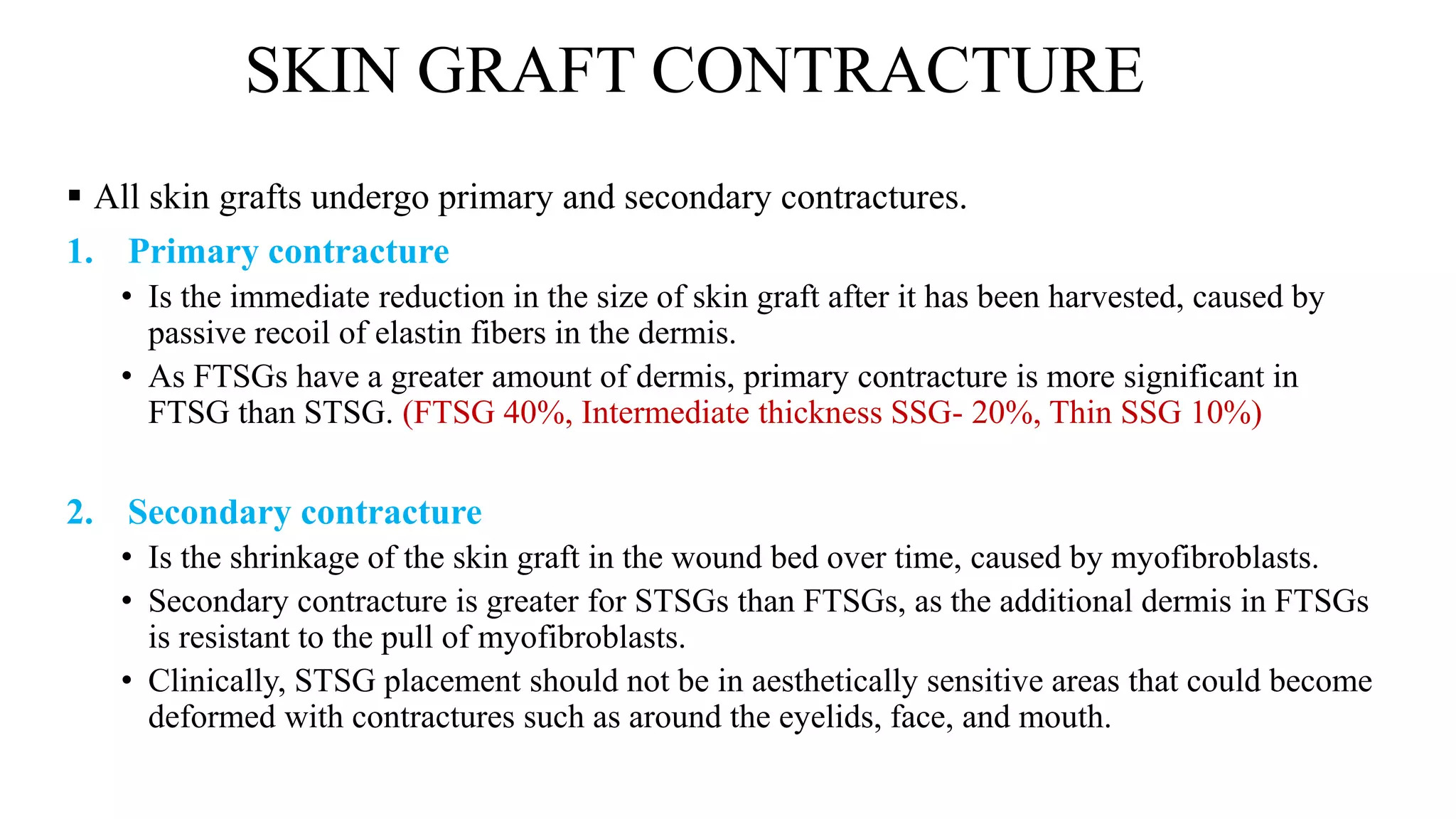







This document discusses skin grafting and flaps. Skin grafts involve removing a sheet of skin from a donor site and placing it on a wound bed, while flaps involve moving a piece of tissue with an intact blood supply. Key points include: - Skin grafts rely on plasmatic imbibition, neovascularization, and revascularization to survive on the wound bed. - Split-thickness skin grafts are thinner and have greater contraction, while full-thickness grafts more closely resemble normal skin but have poorer survival. - The anterolateral thighs, back, and arms are common donor sites for split-thickness skin grafts due to ease of harvest and ability to cover with clothing.


