Downloaded 2,949 times
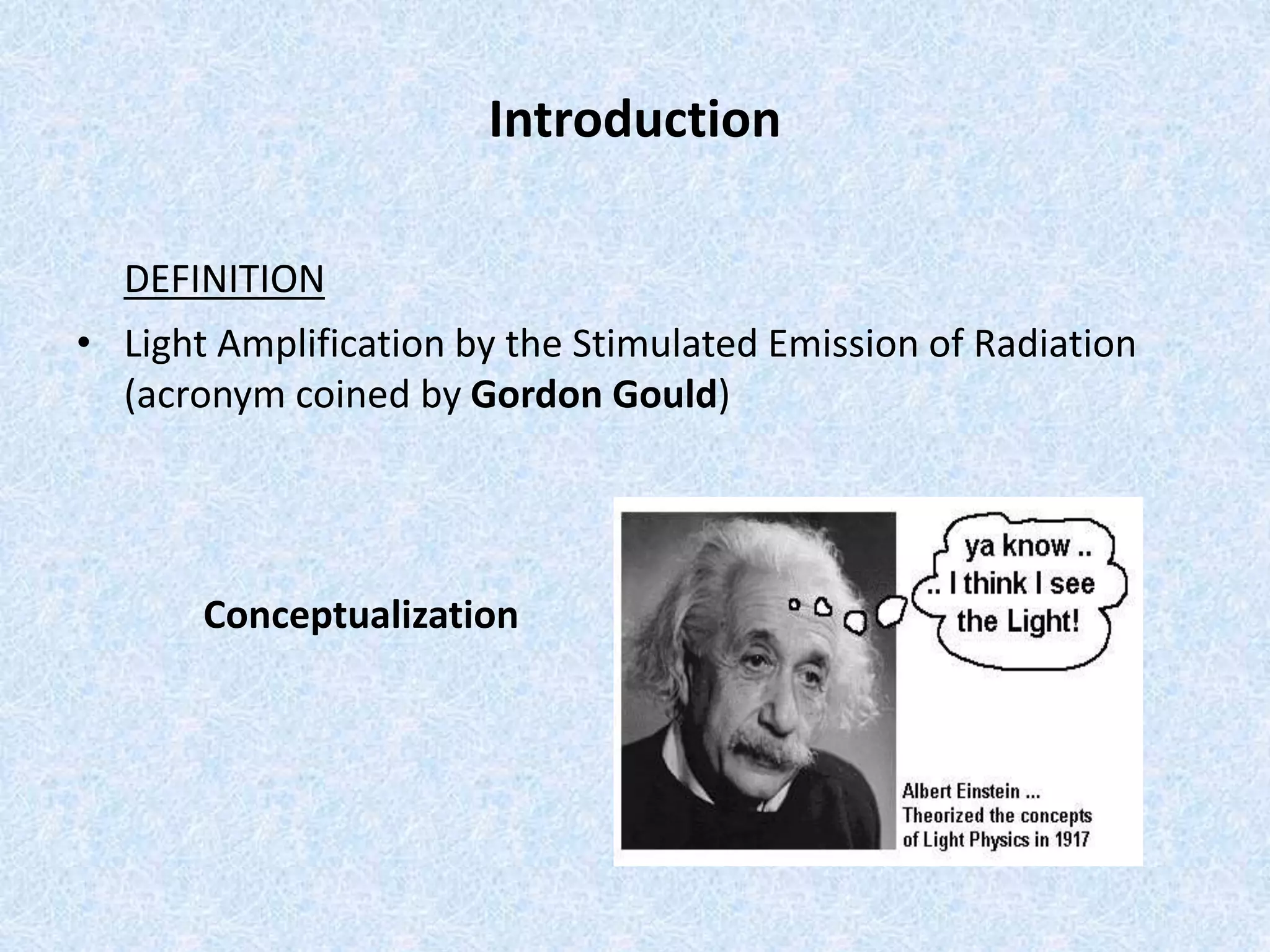

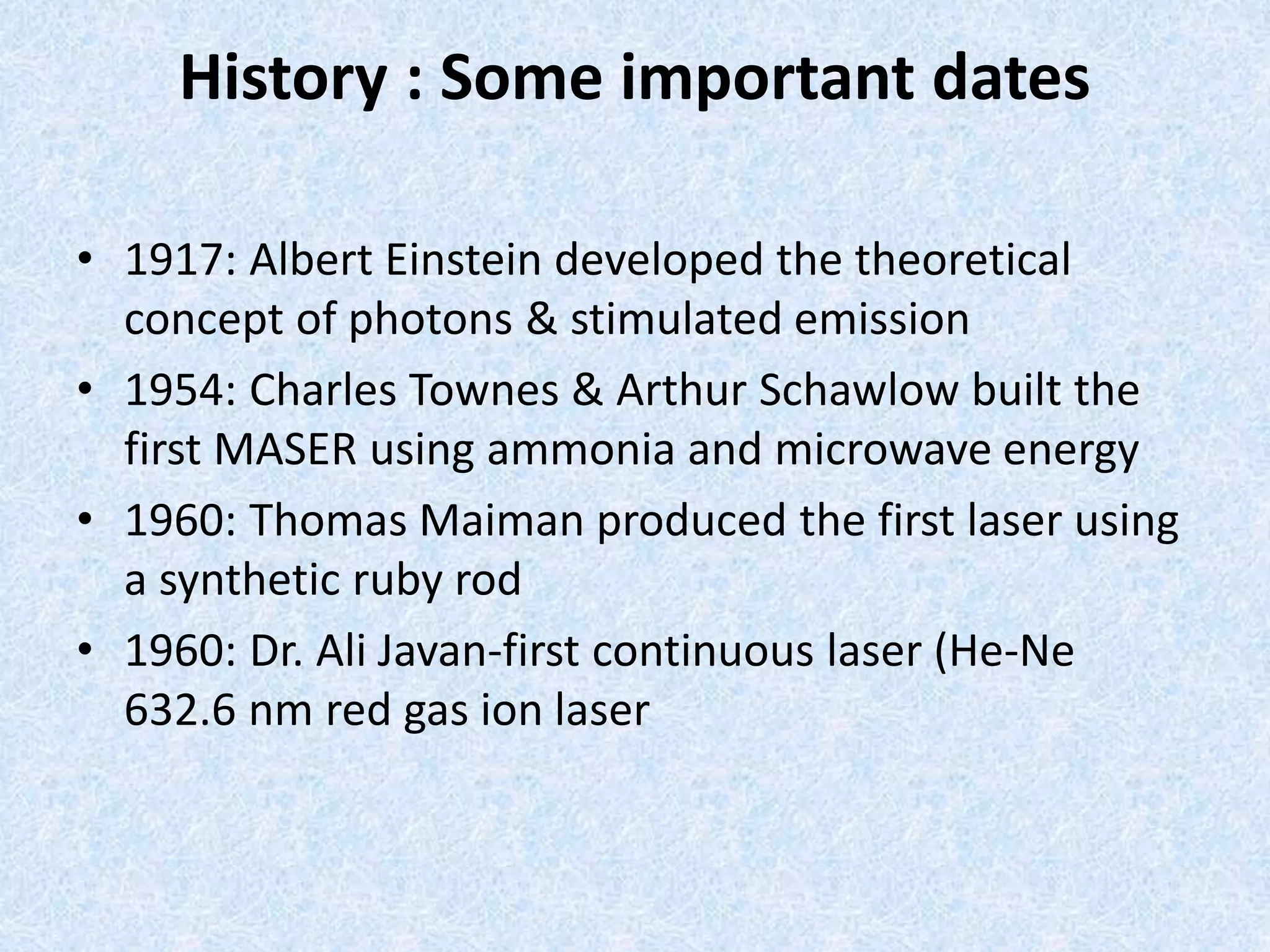
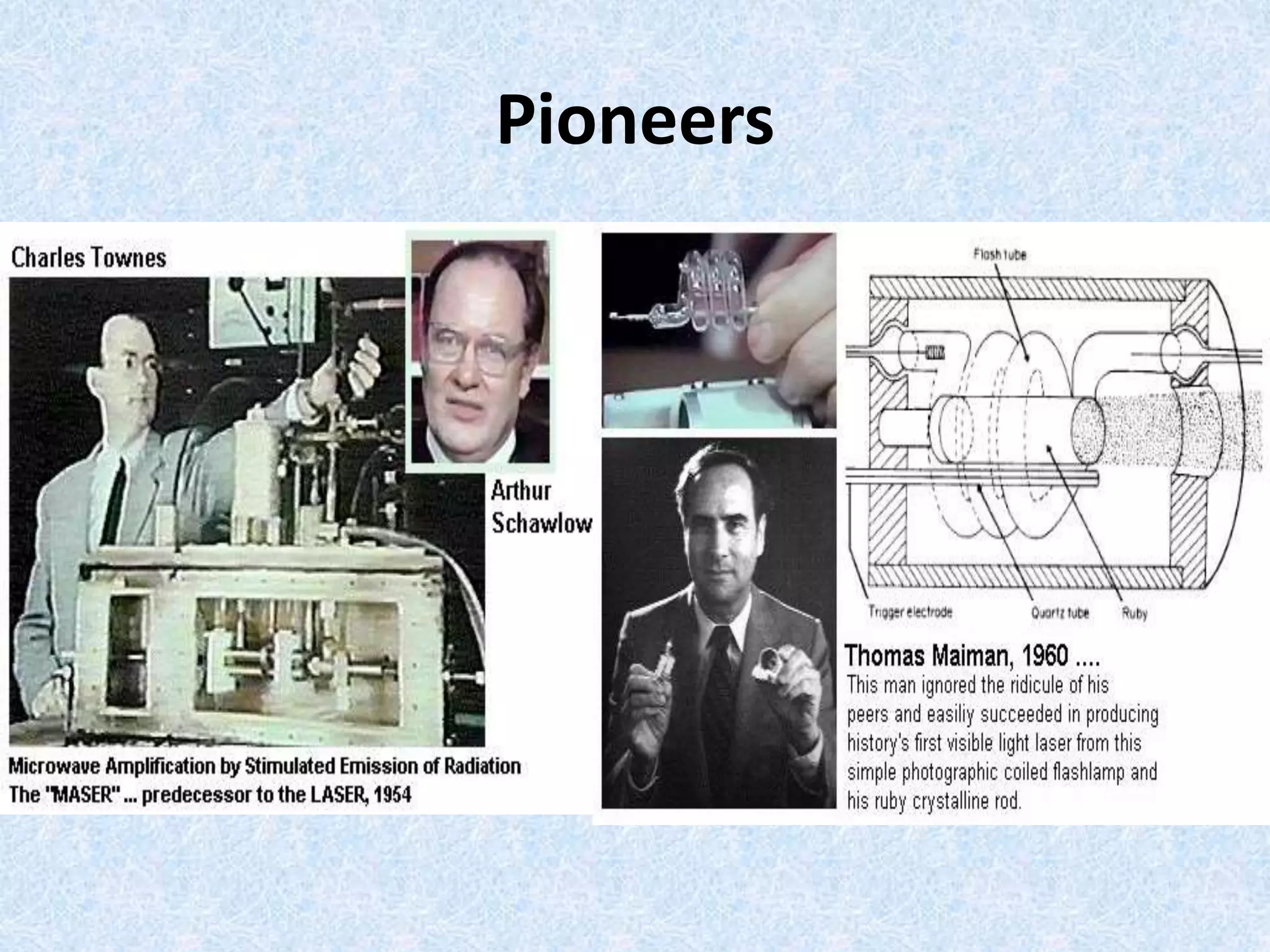
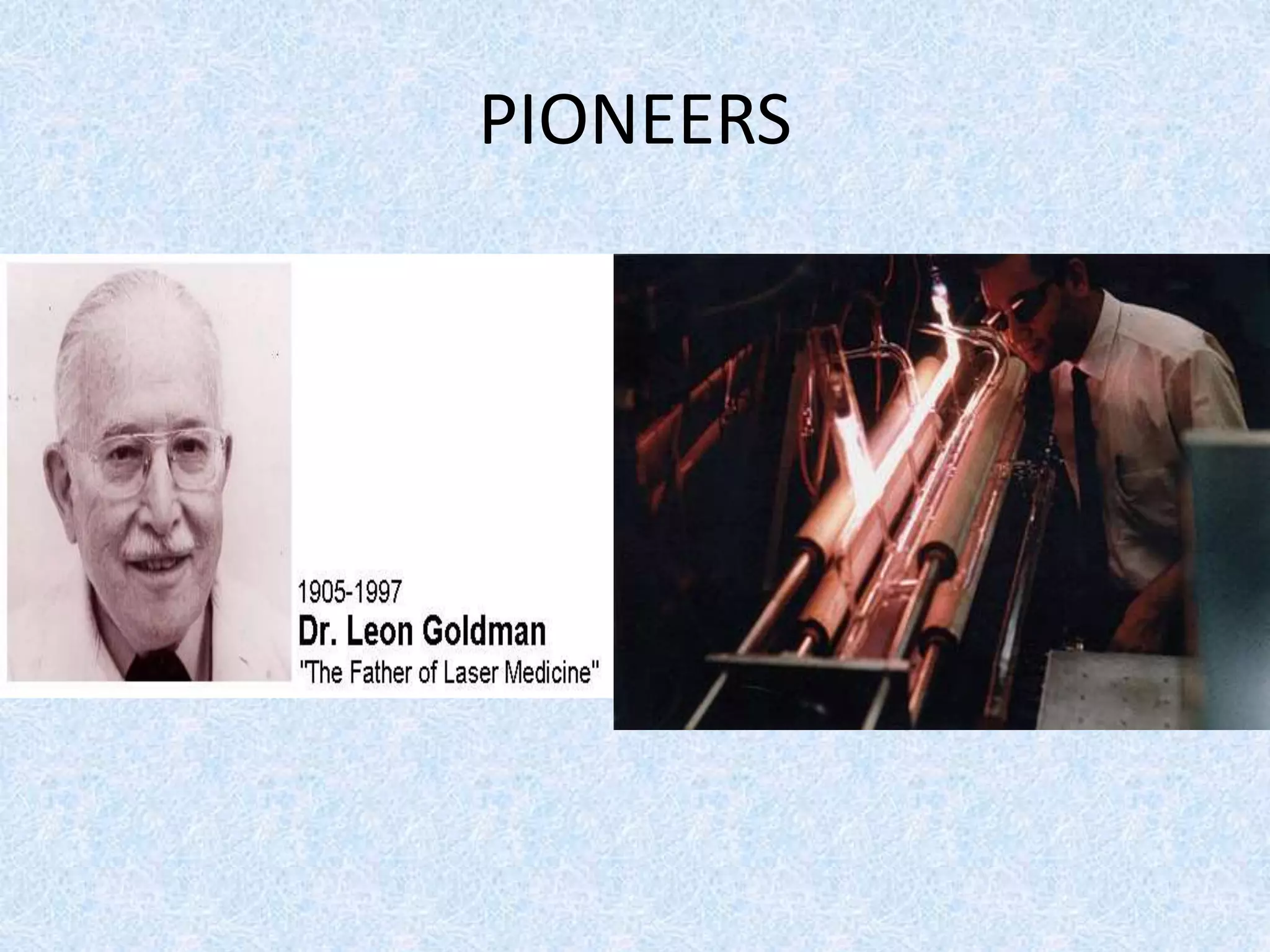
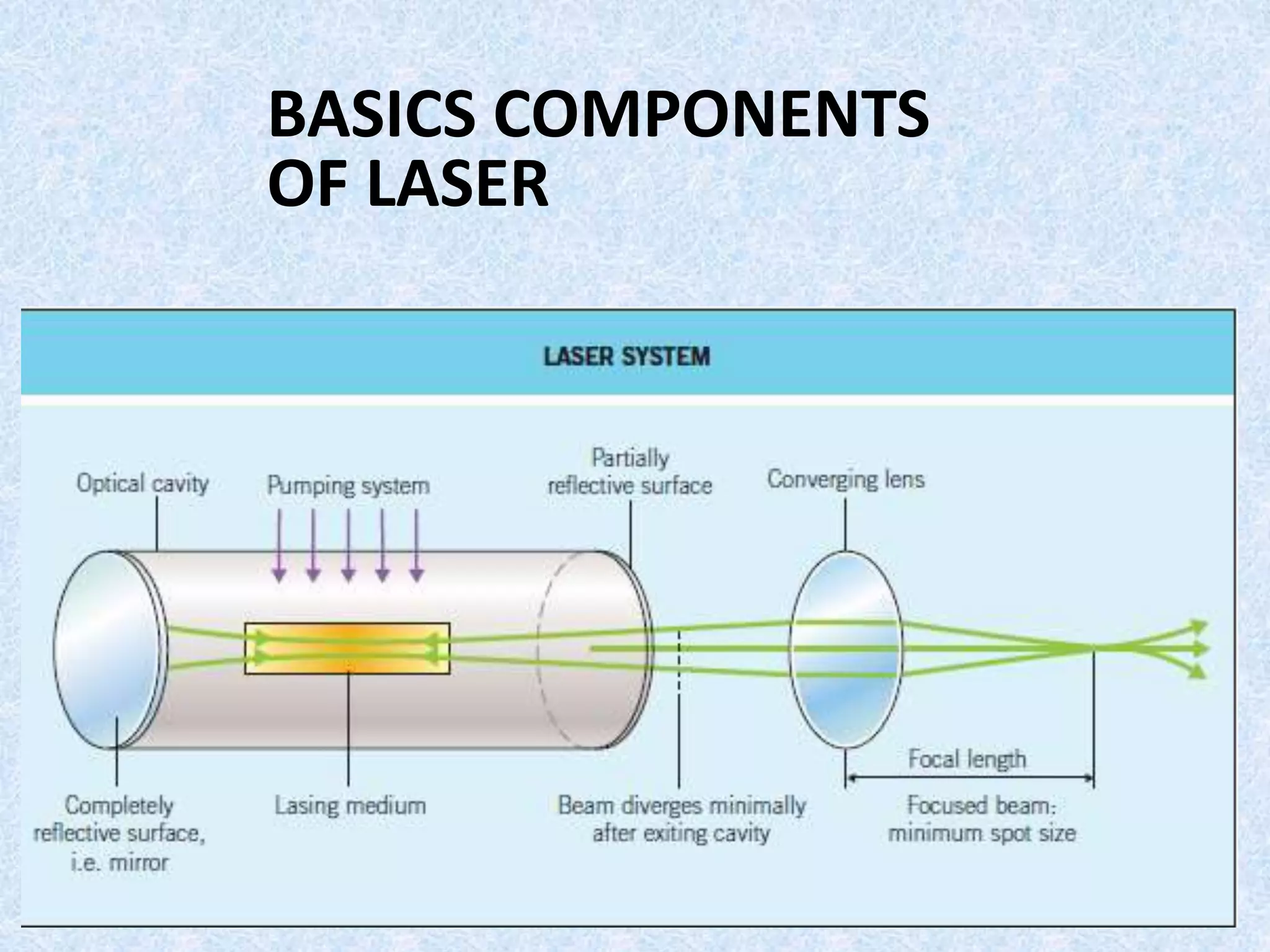
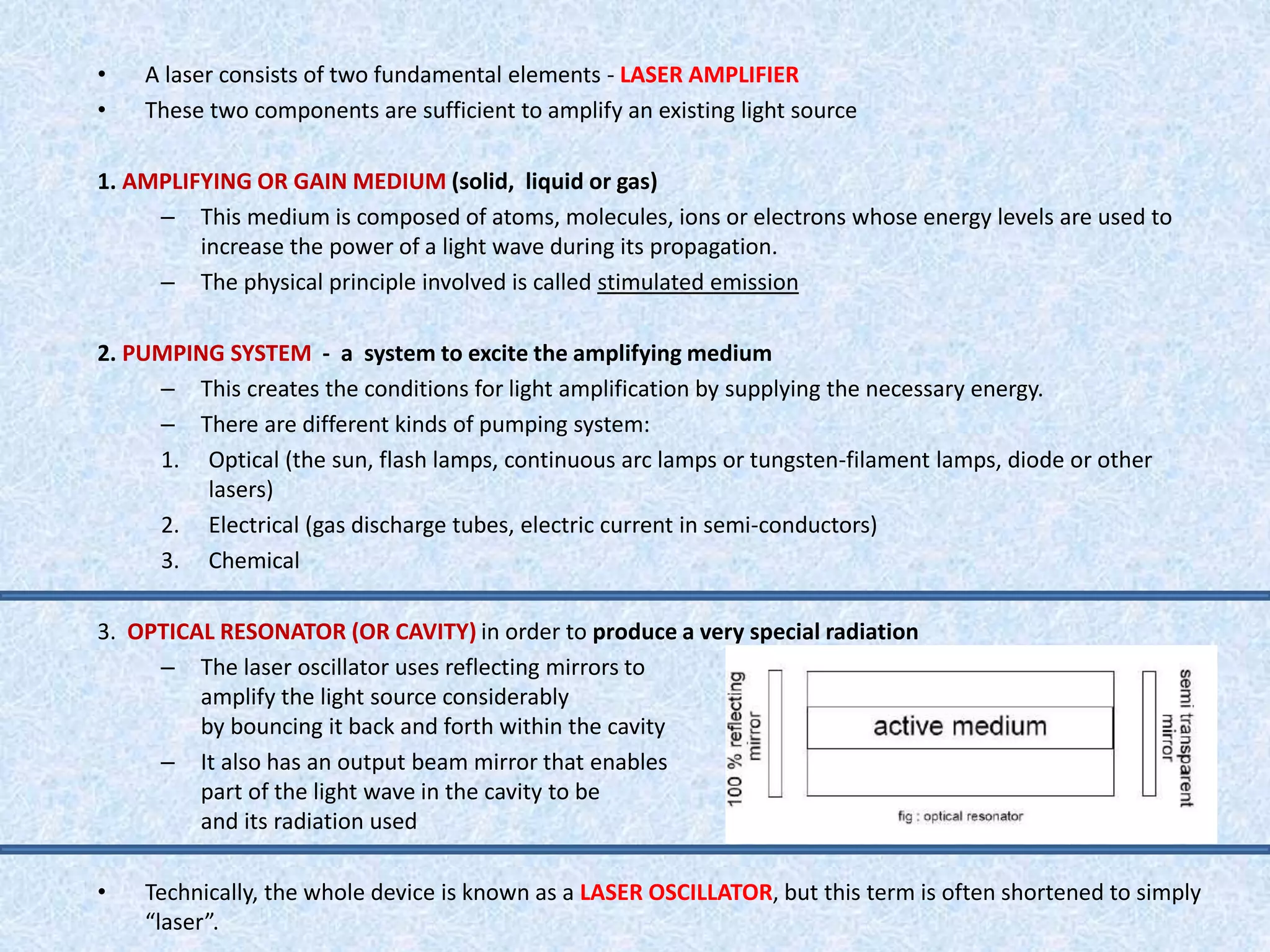
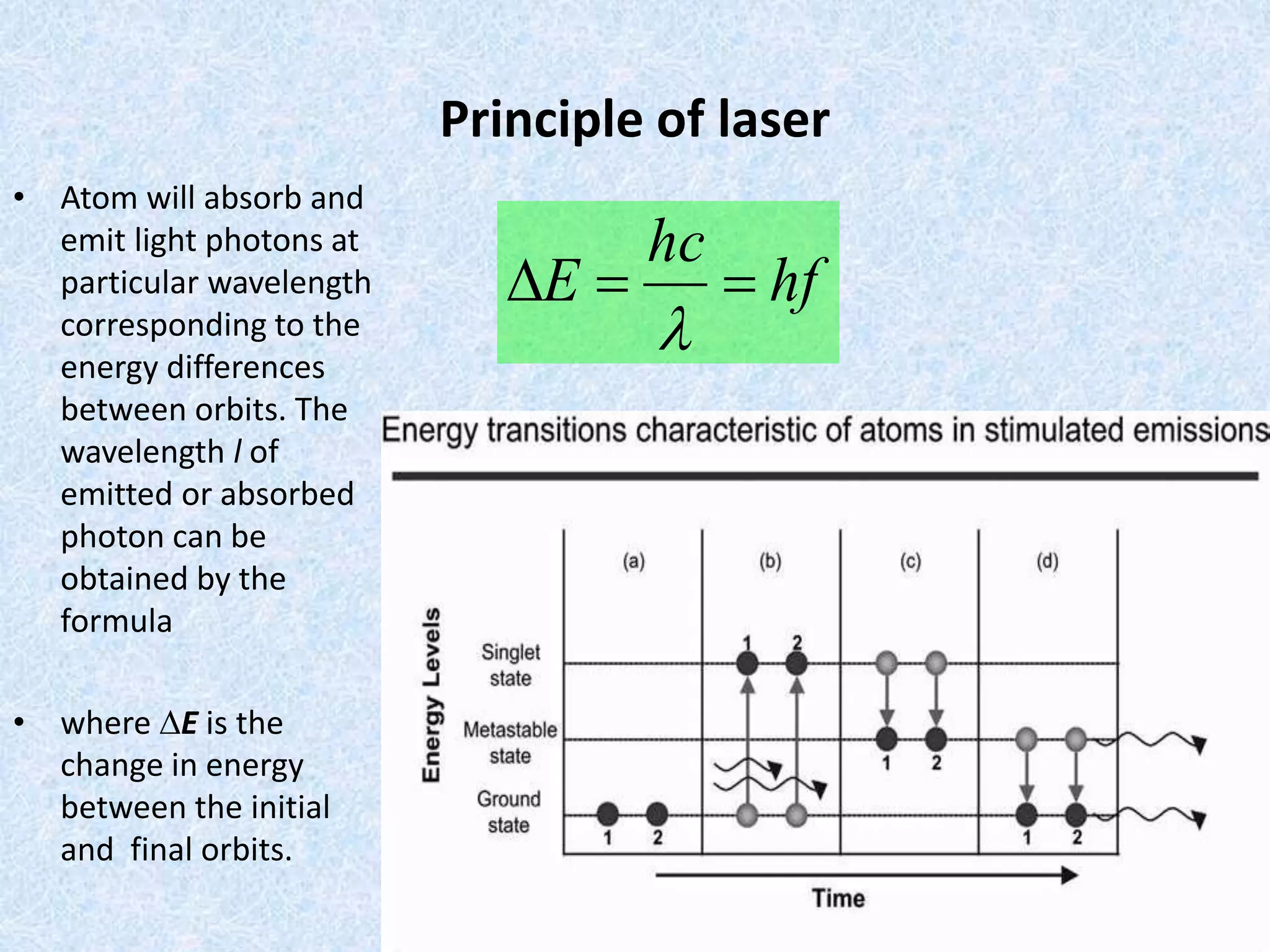
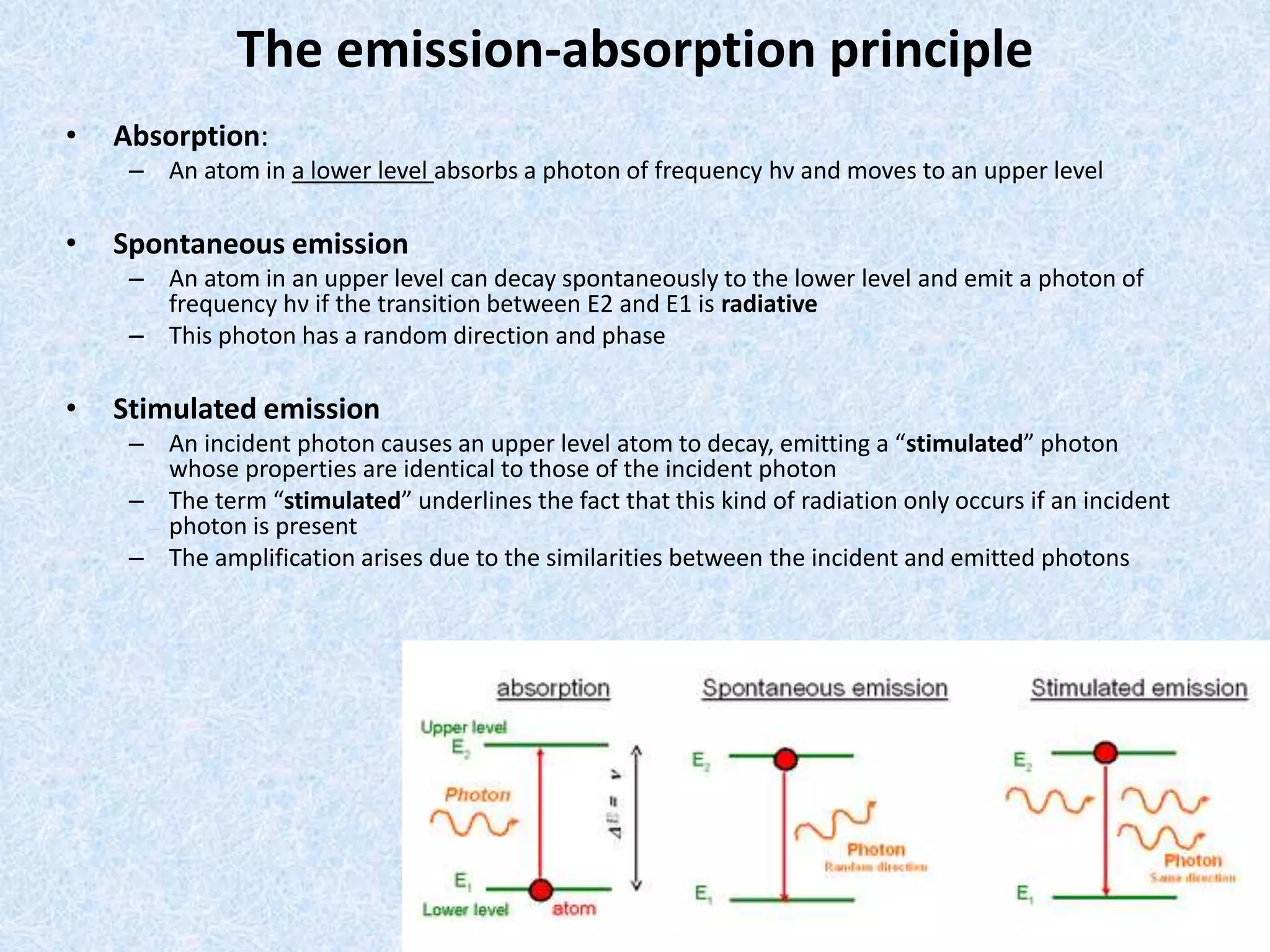
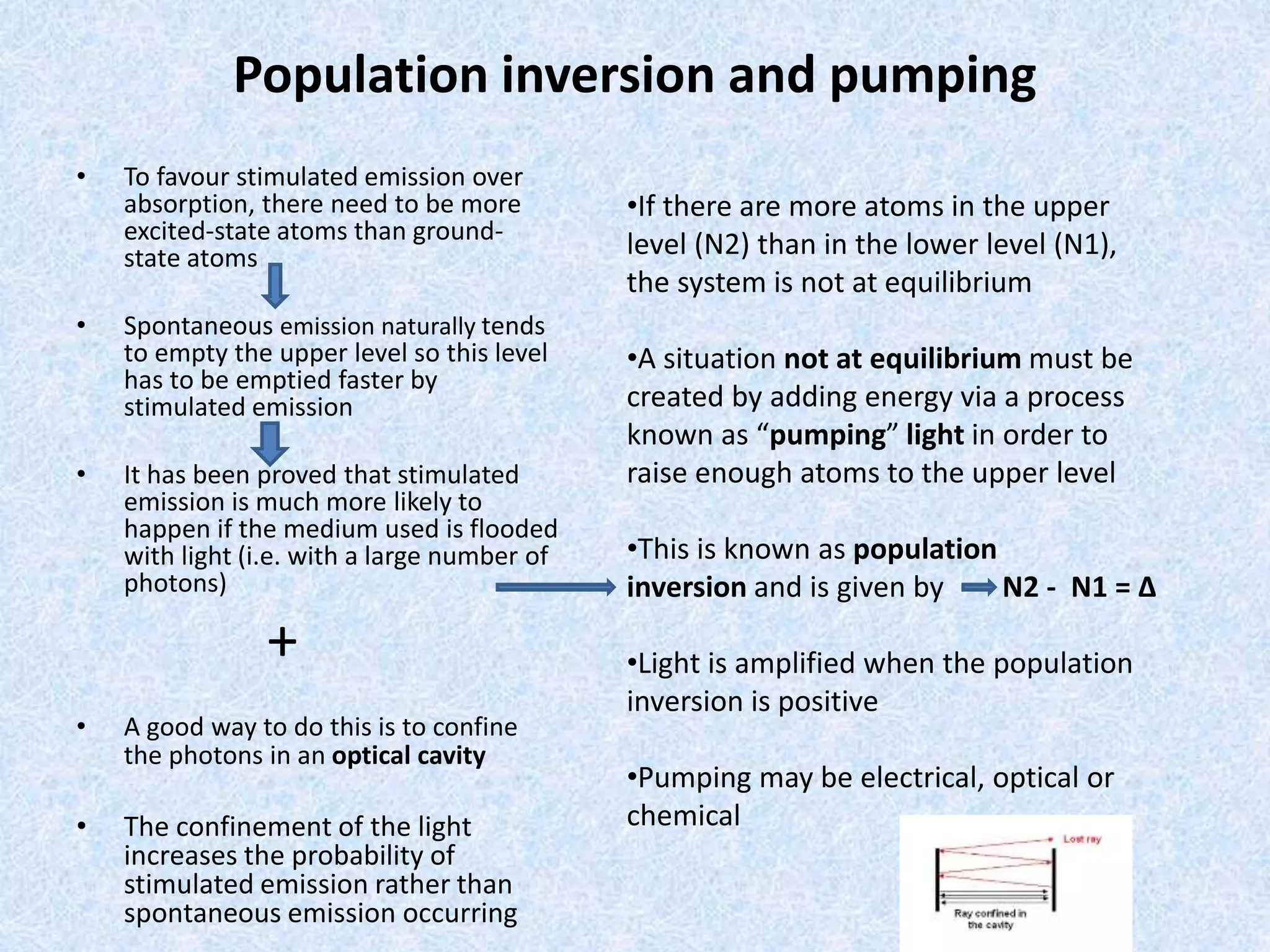
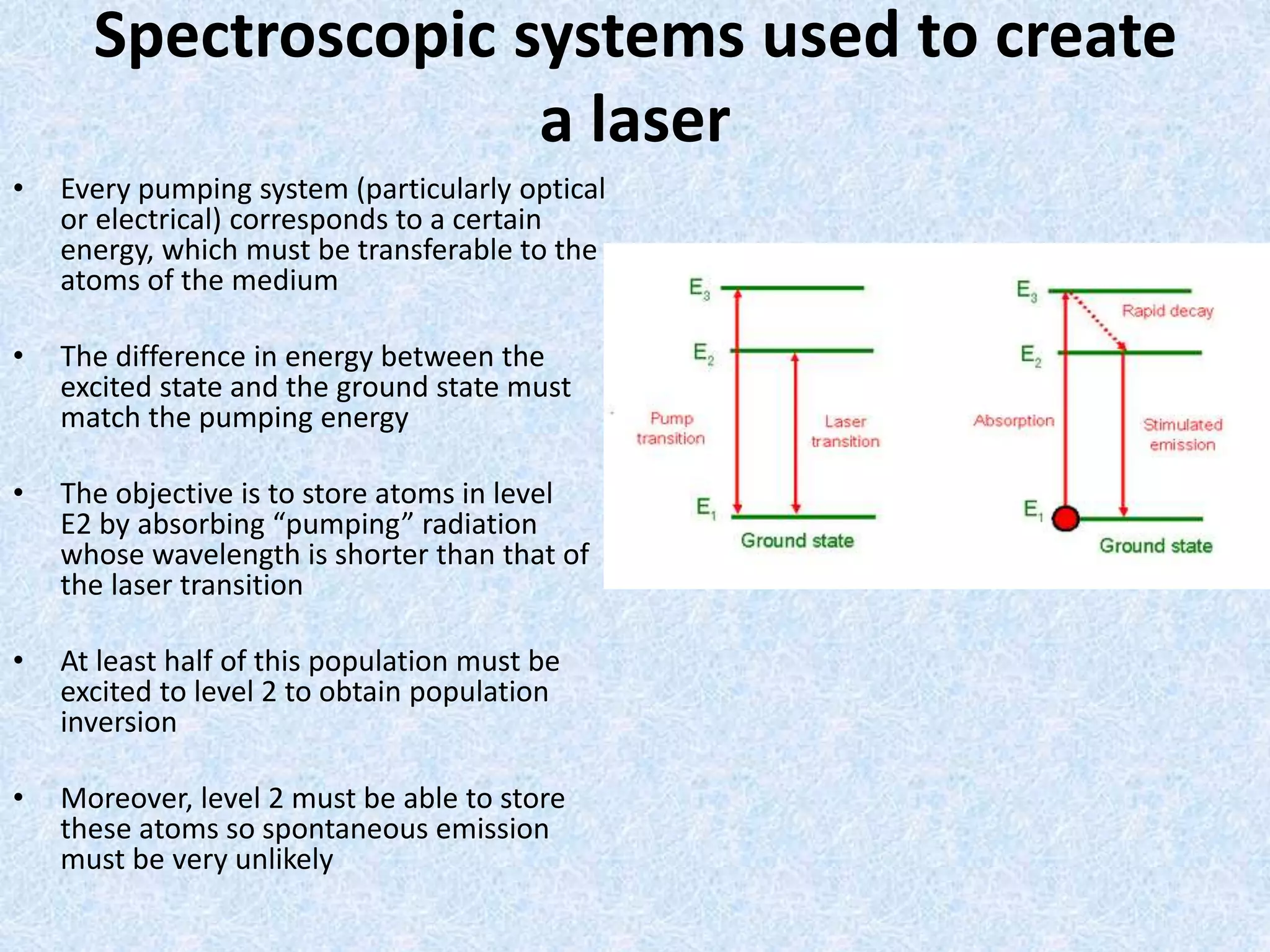
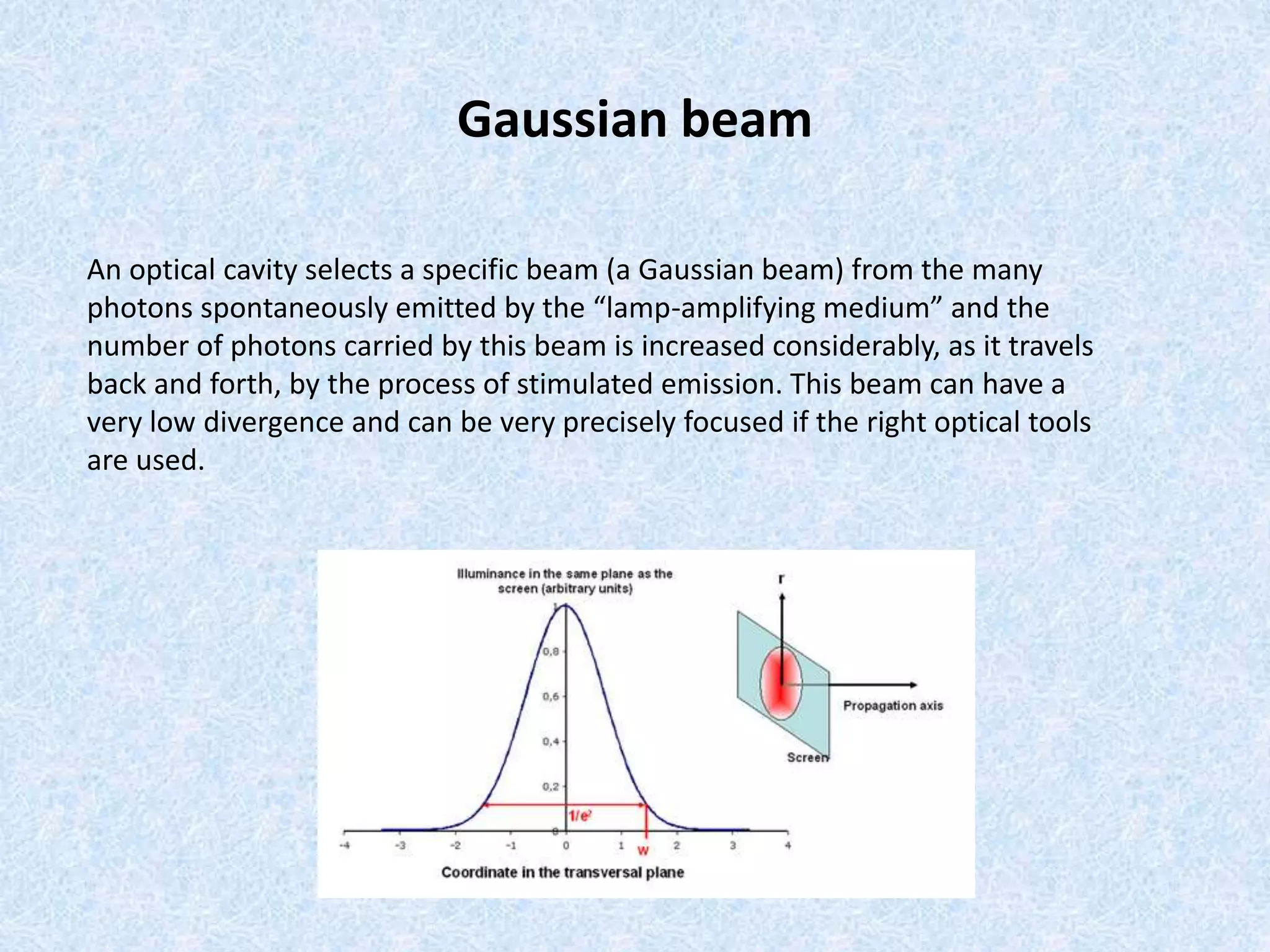
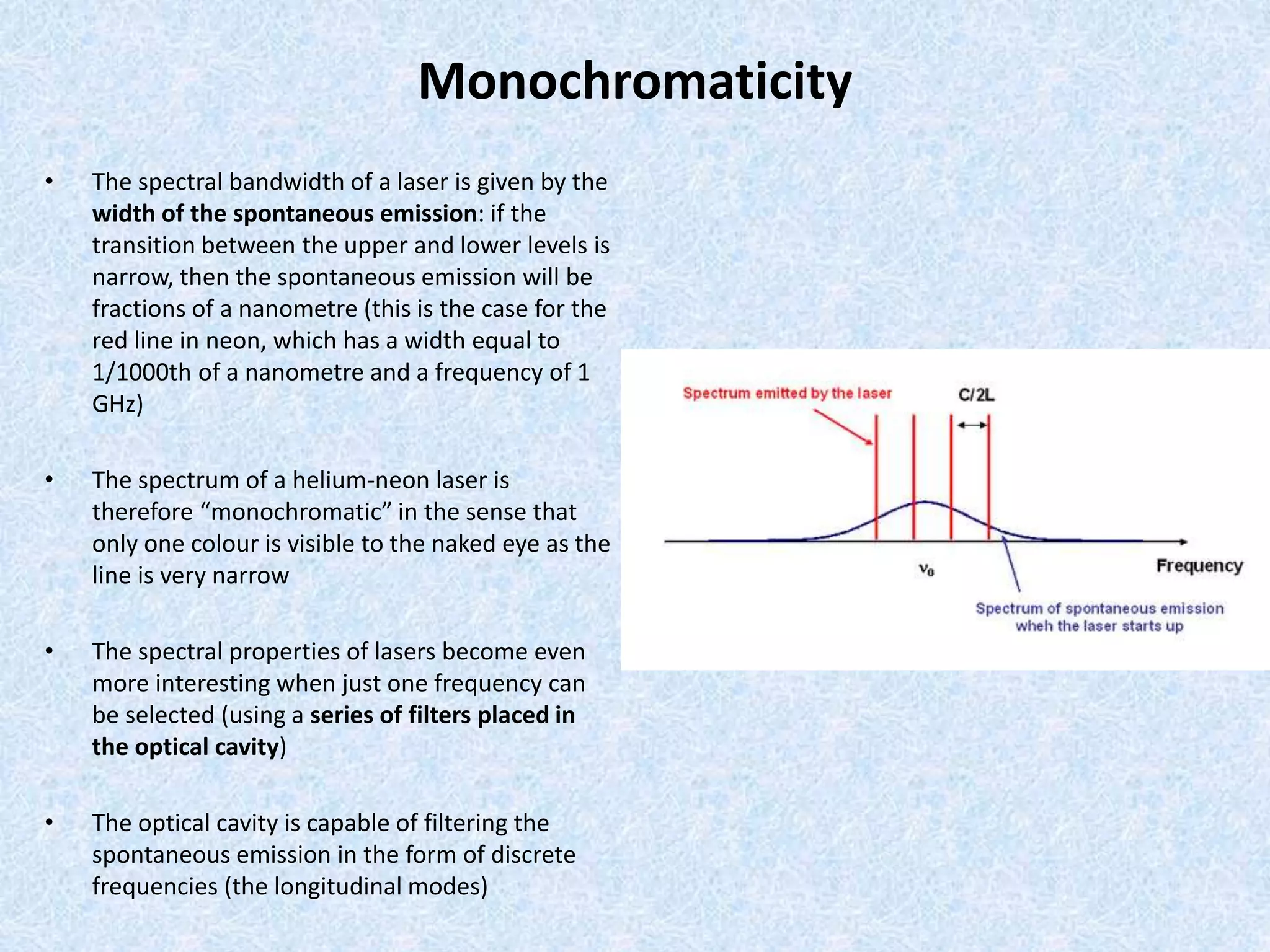
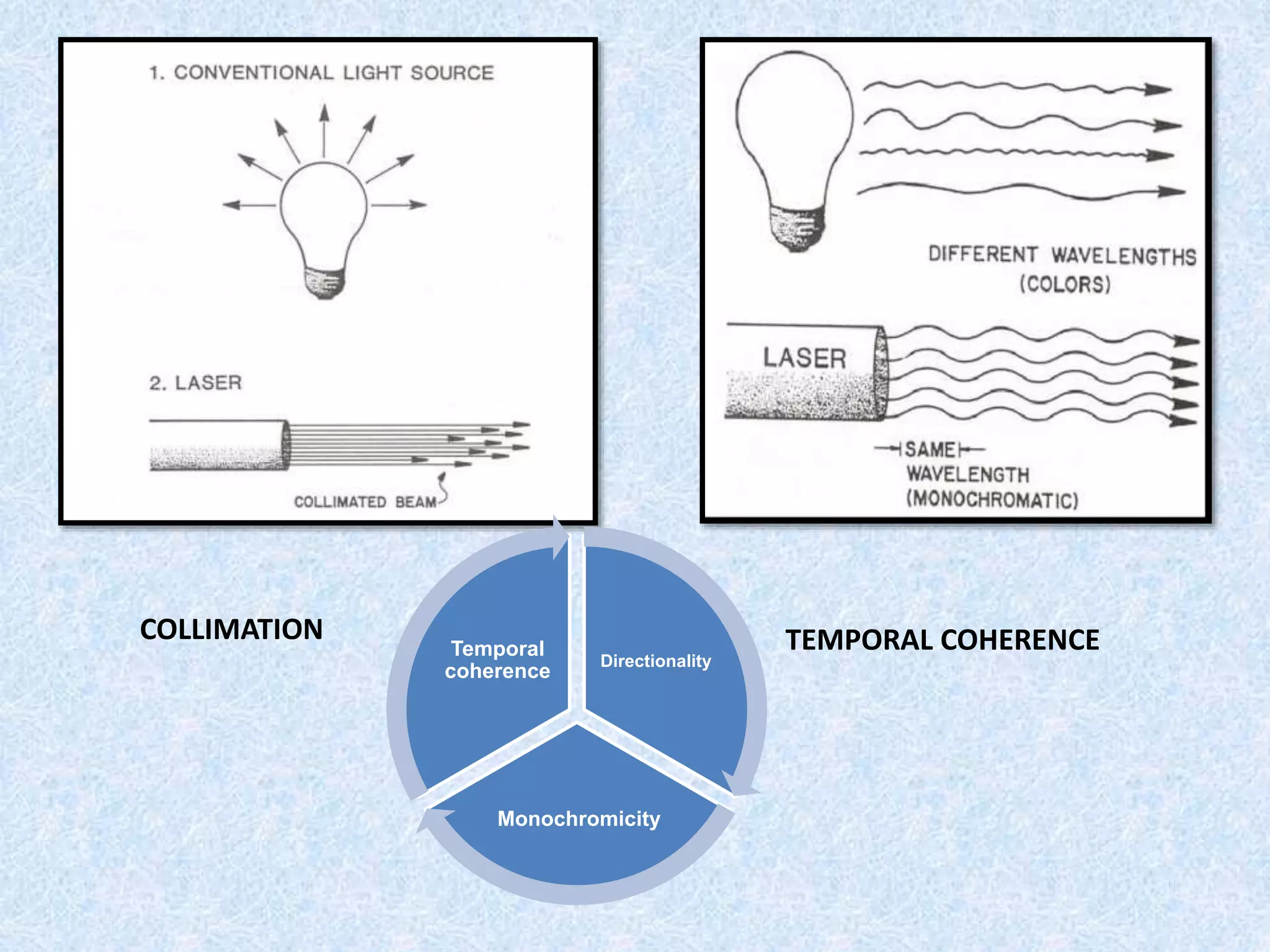
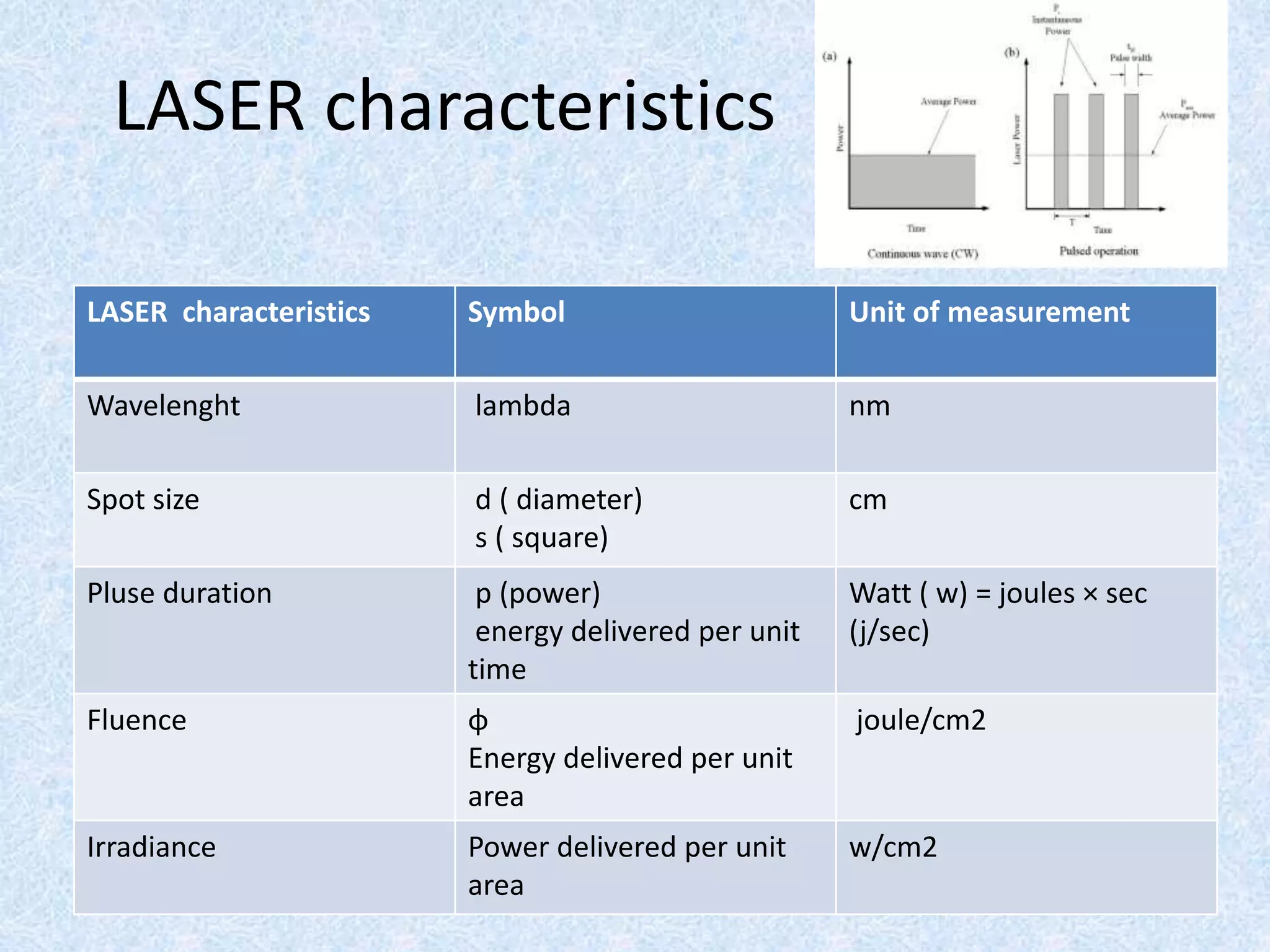
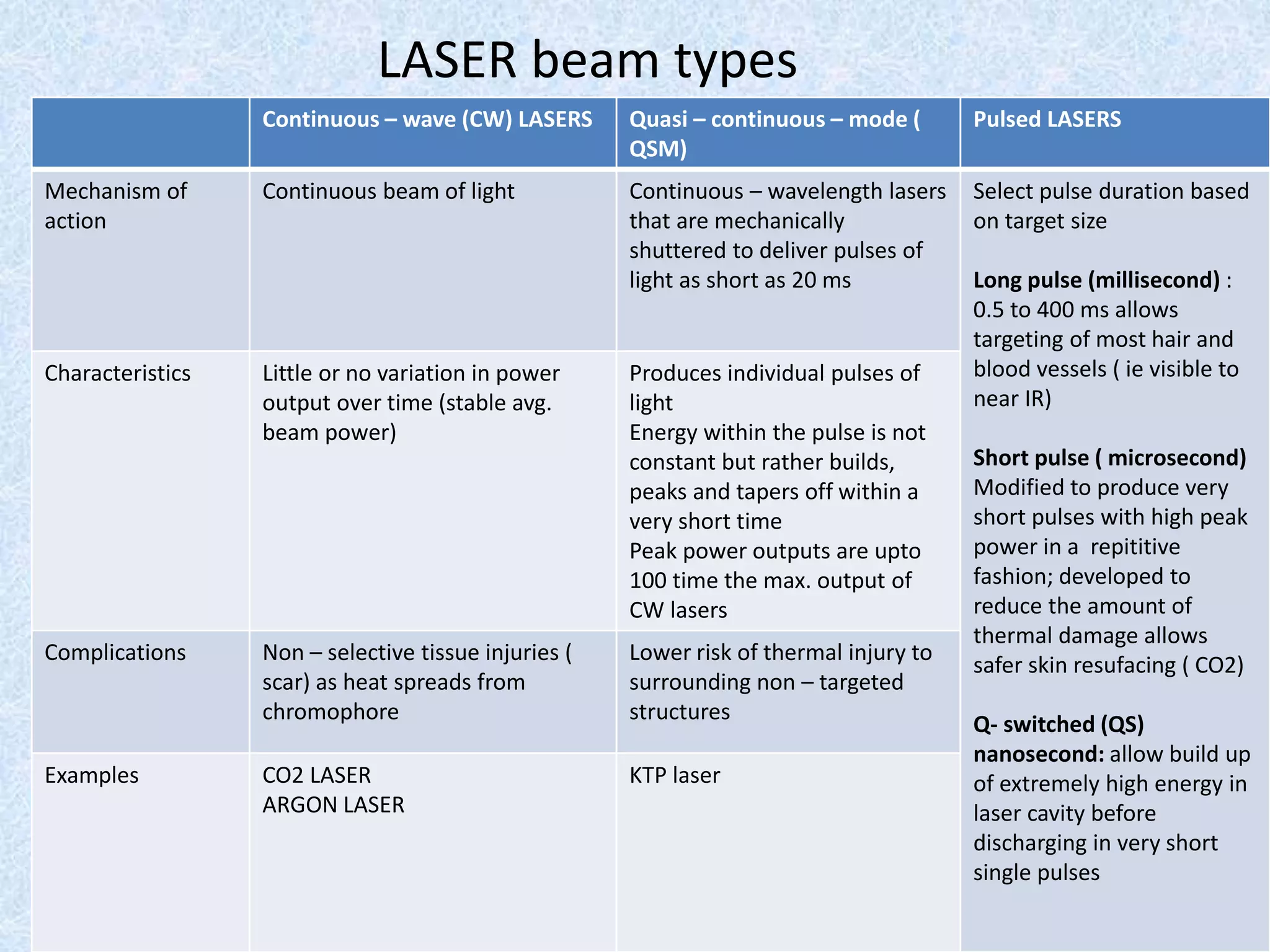
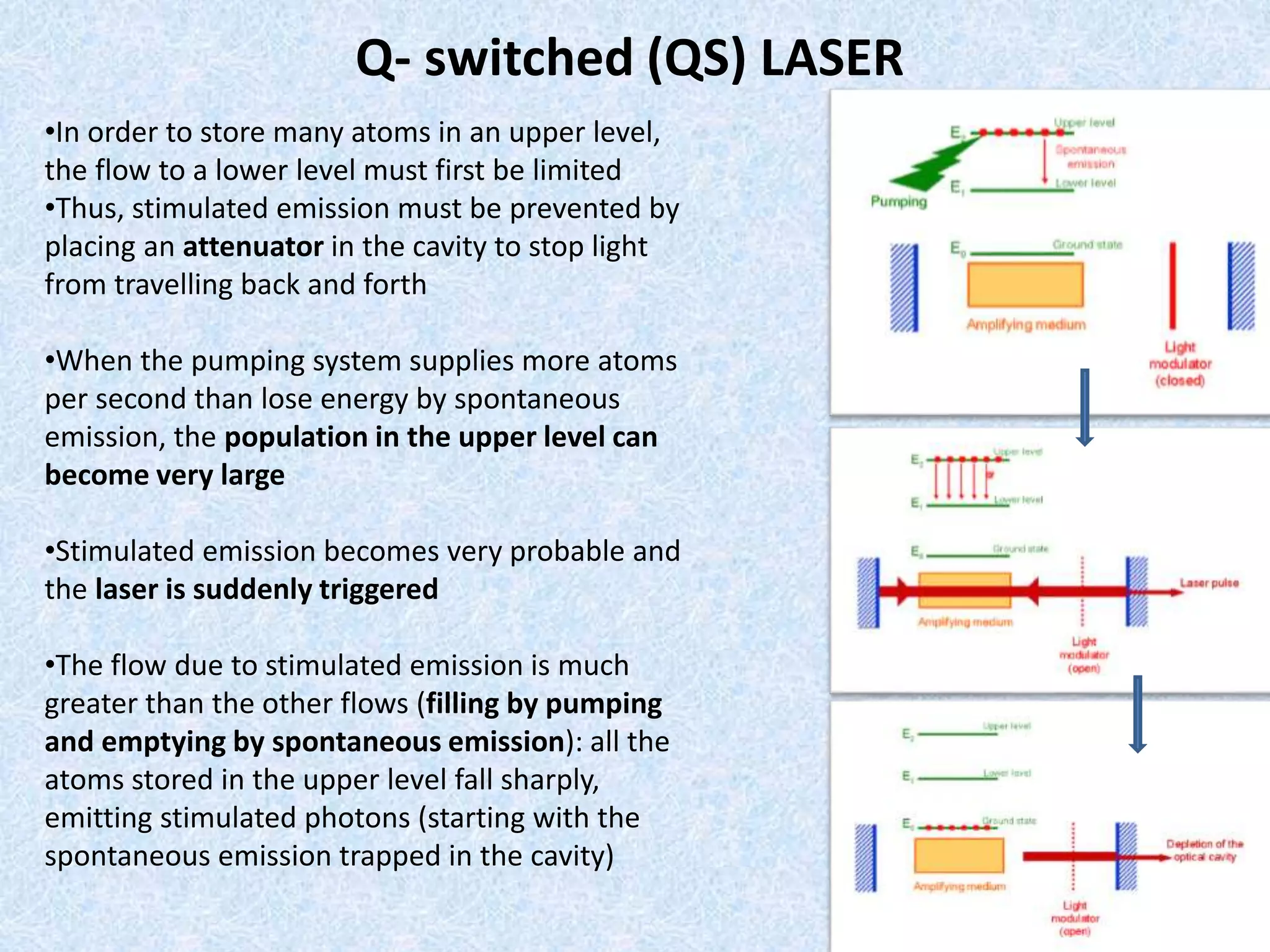
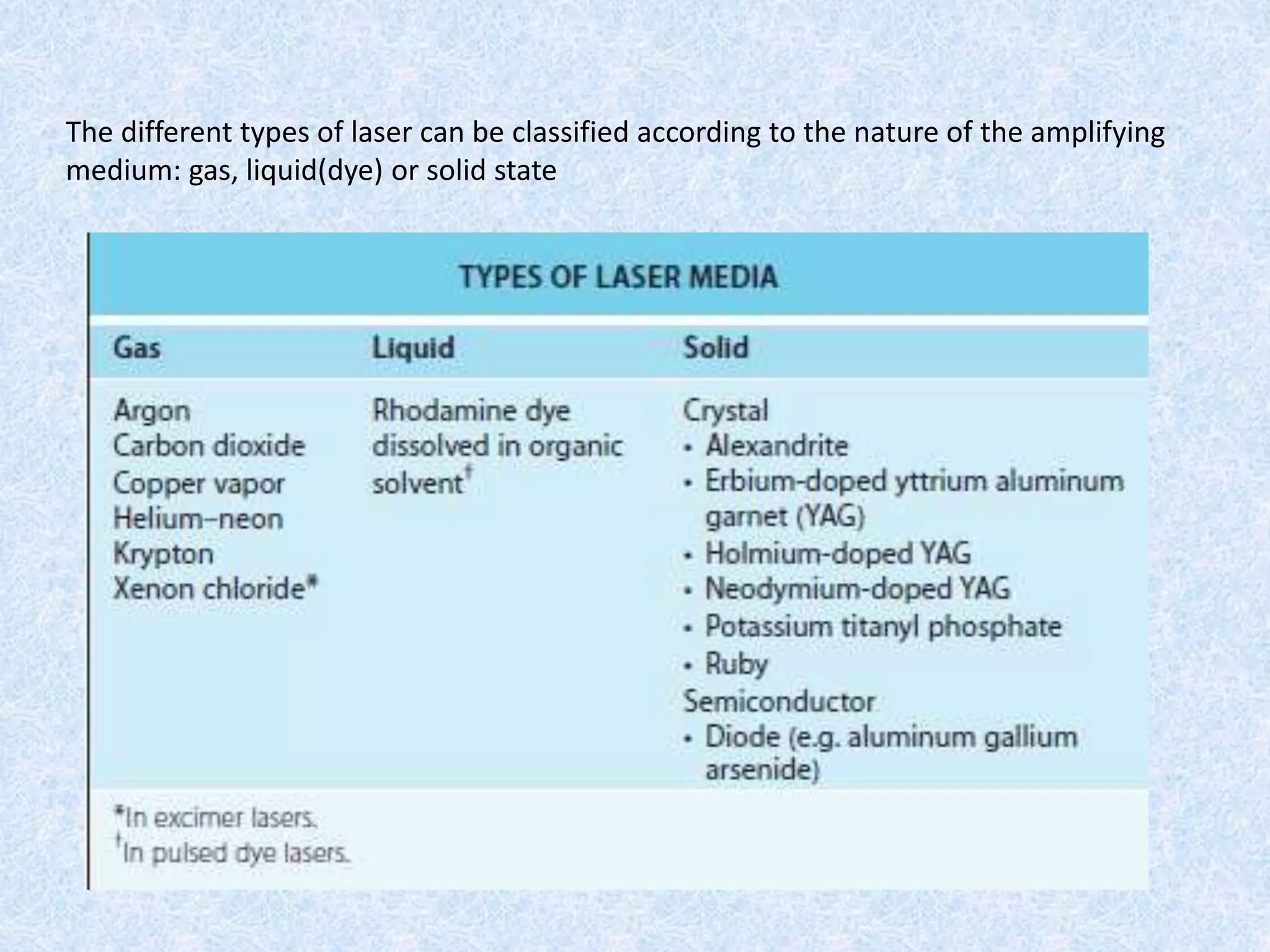
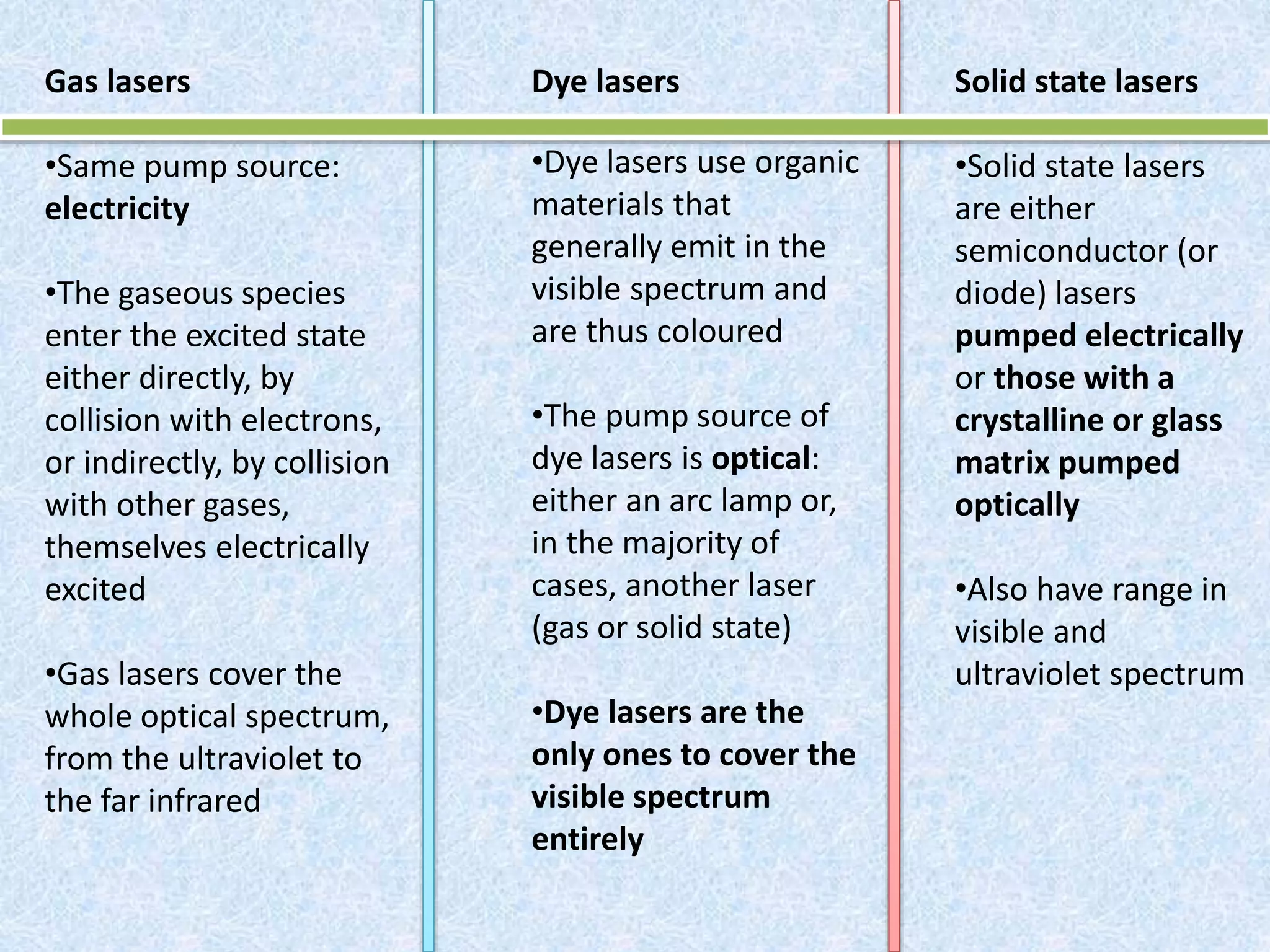
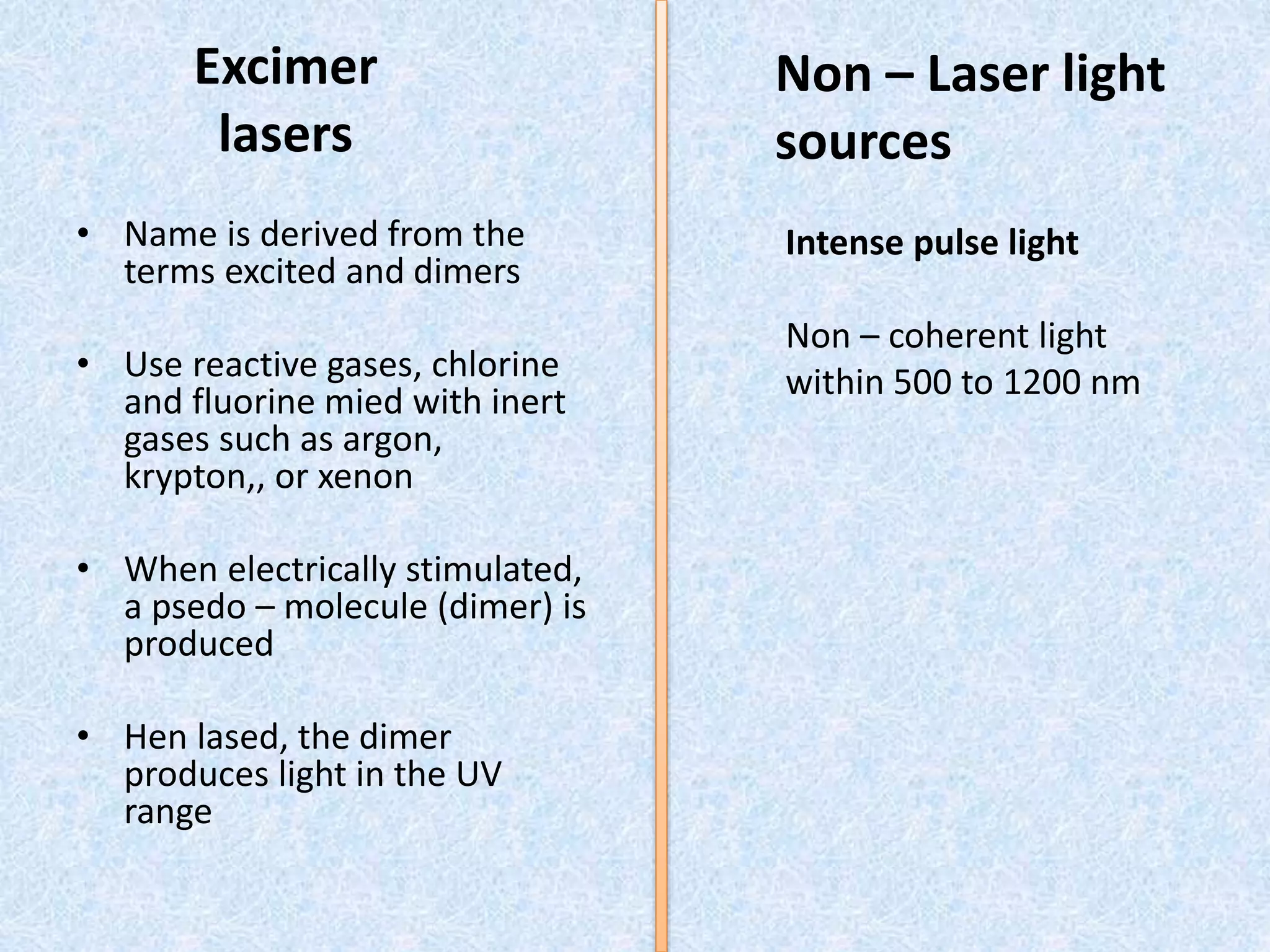
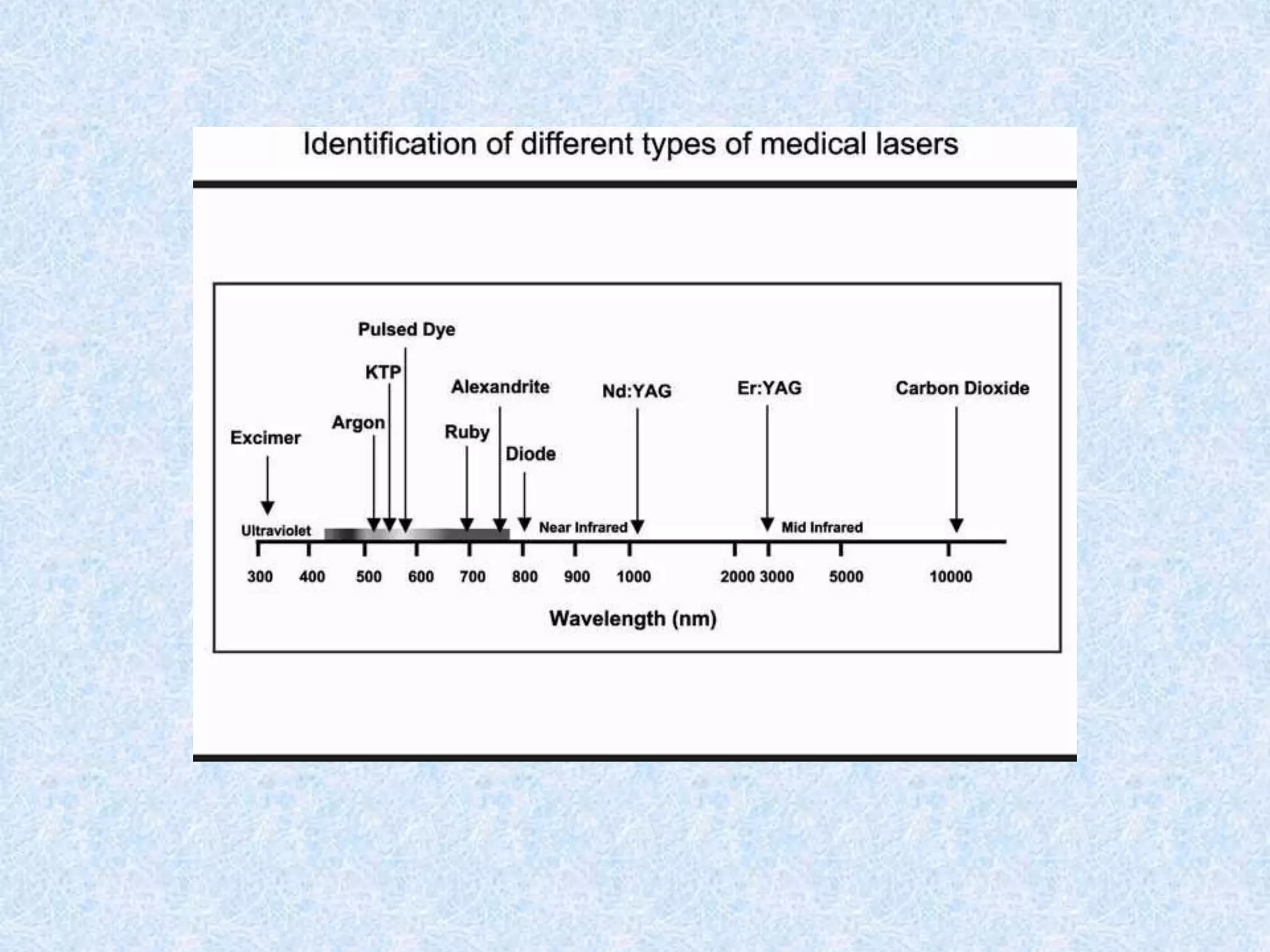
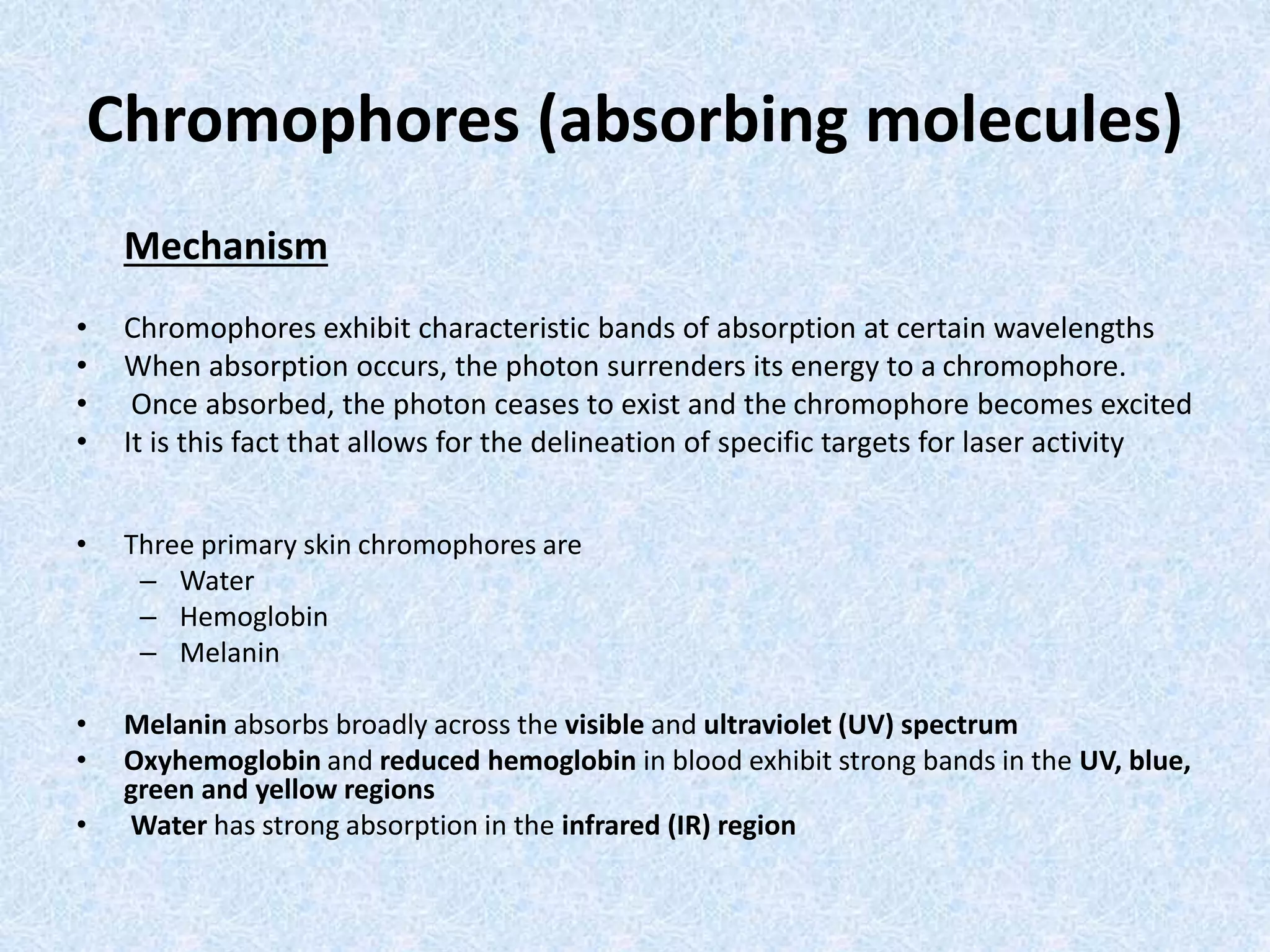
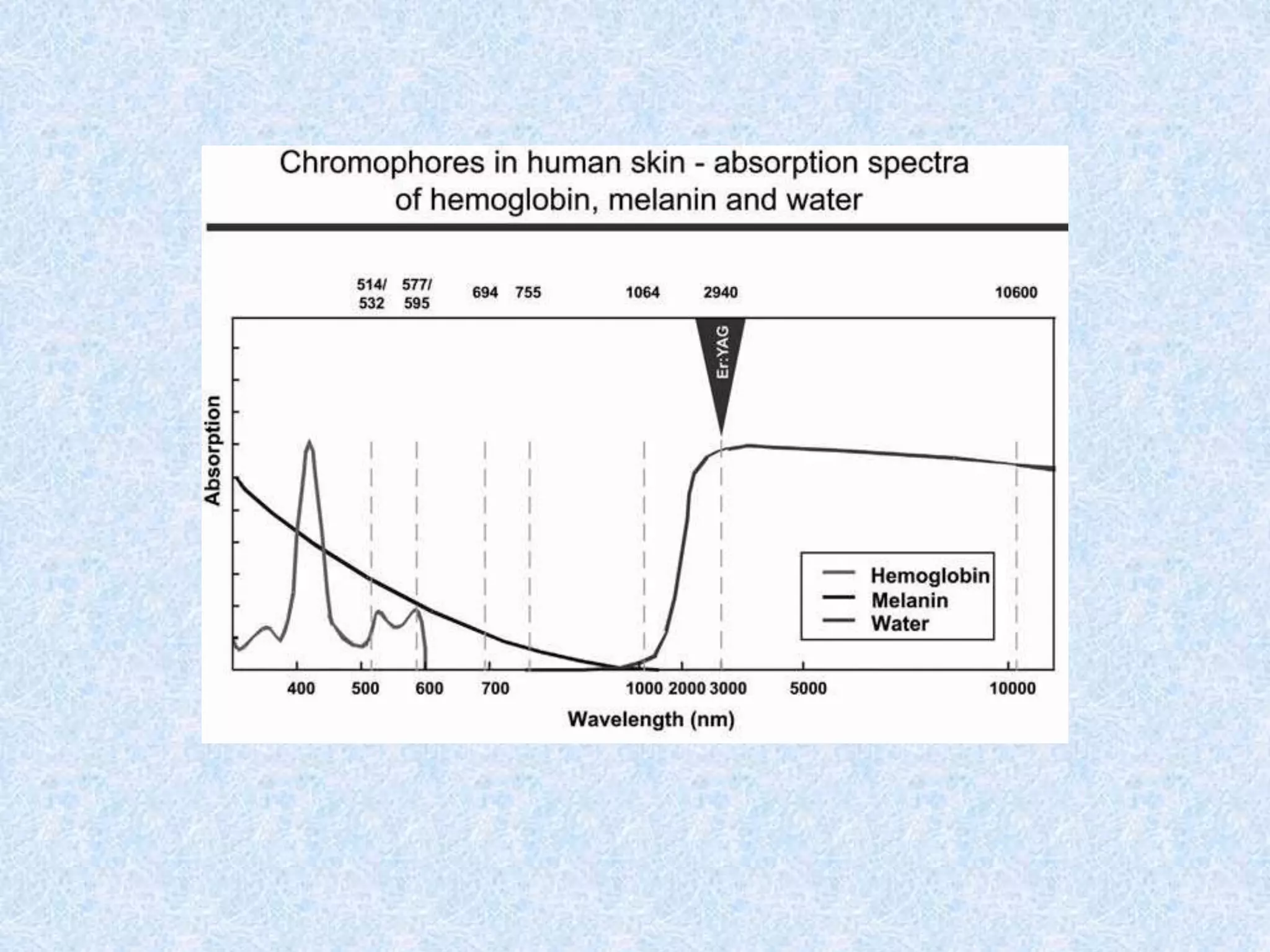
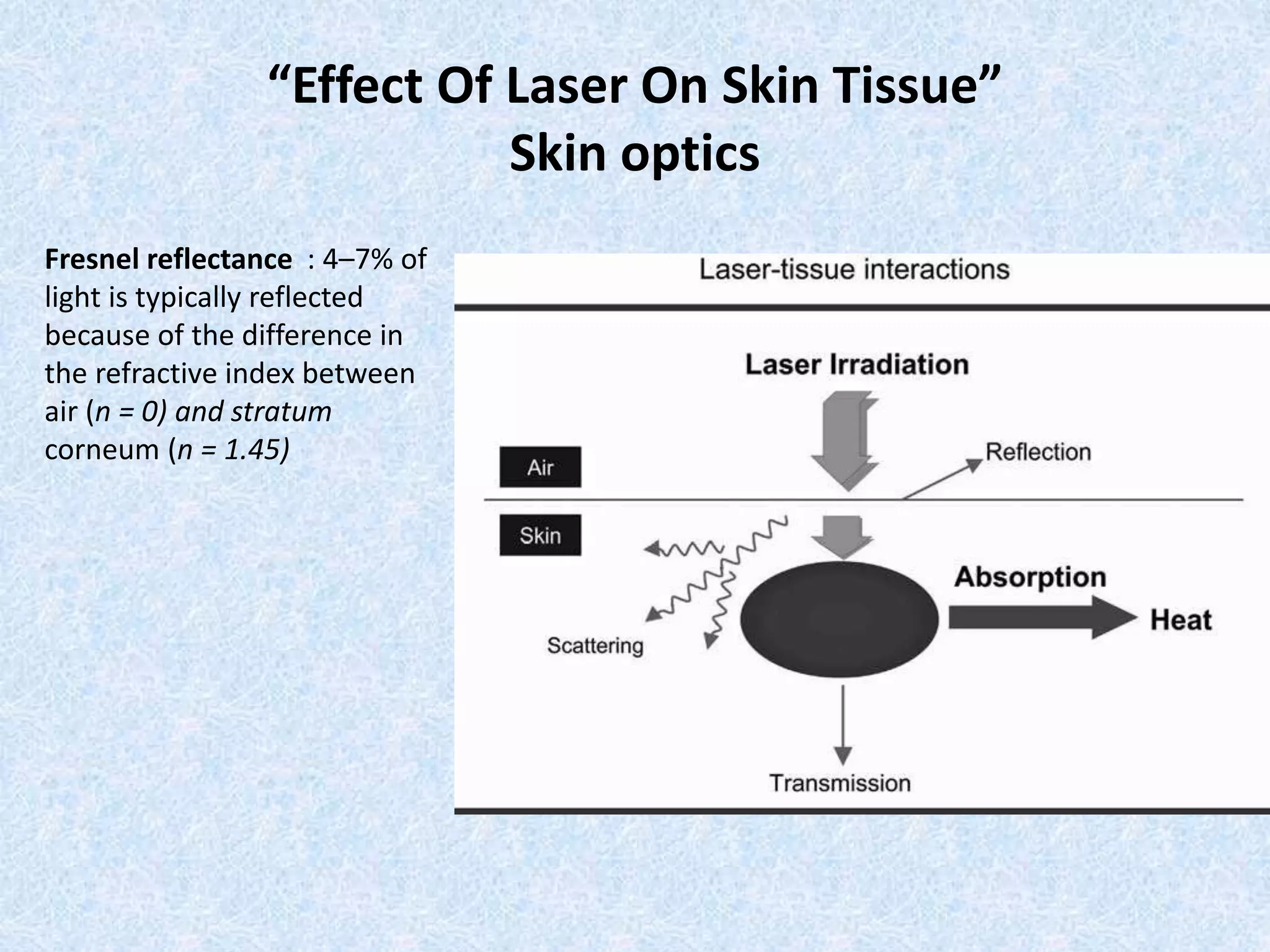
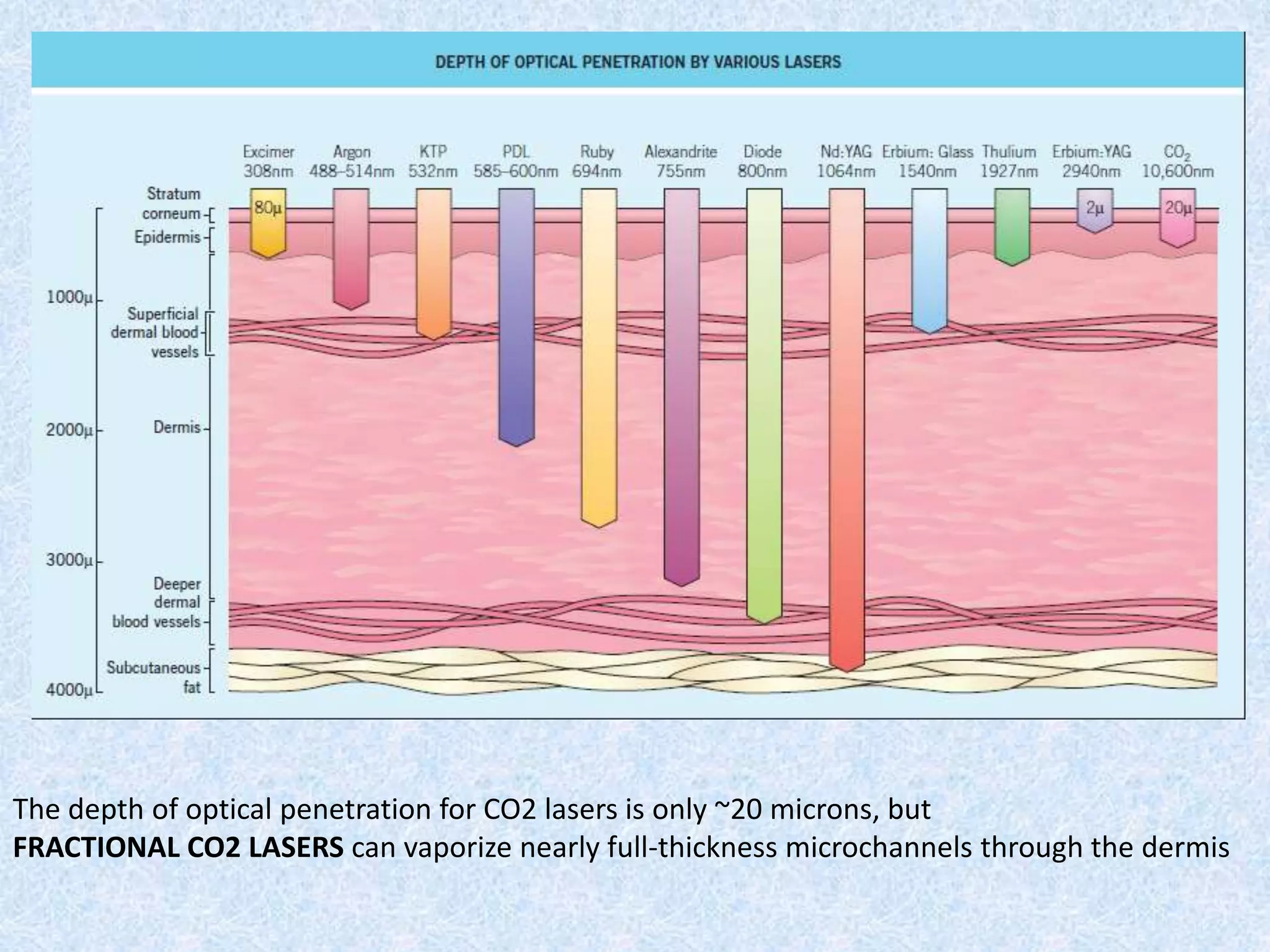
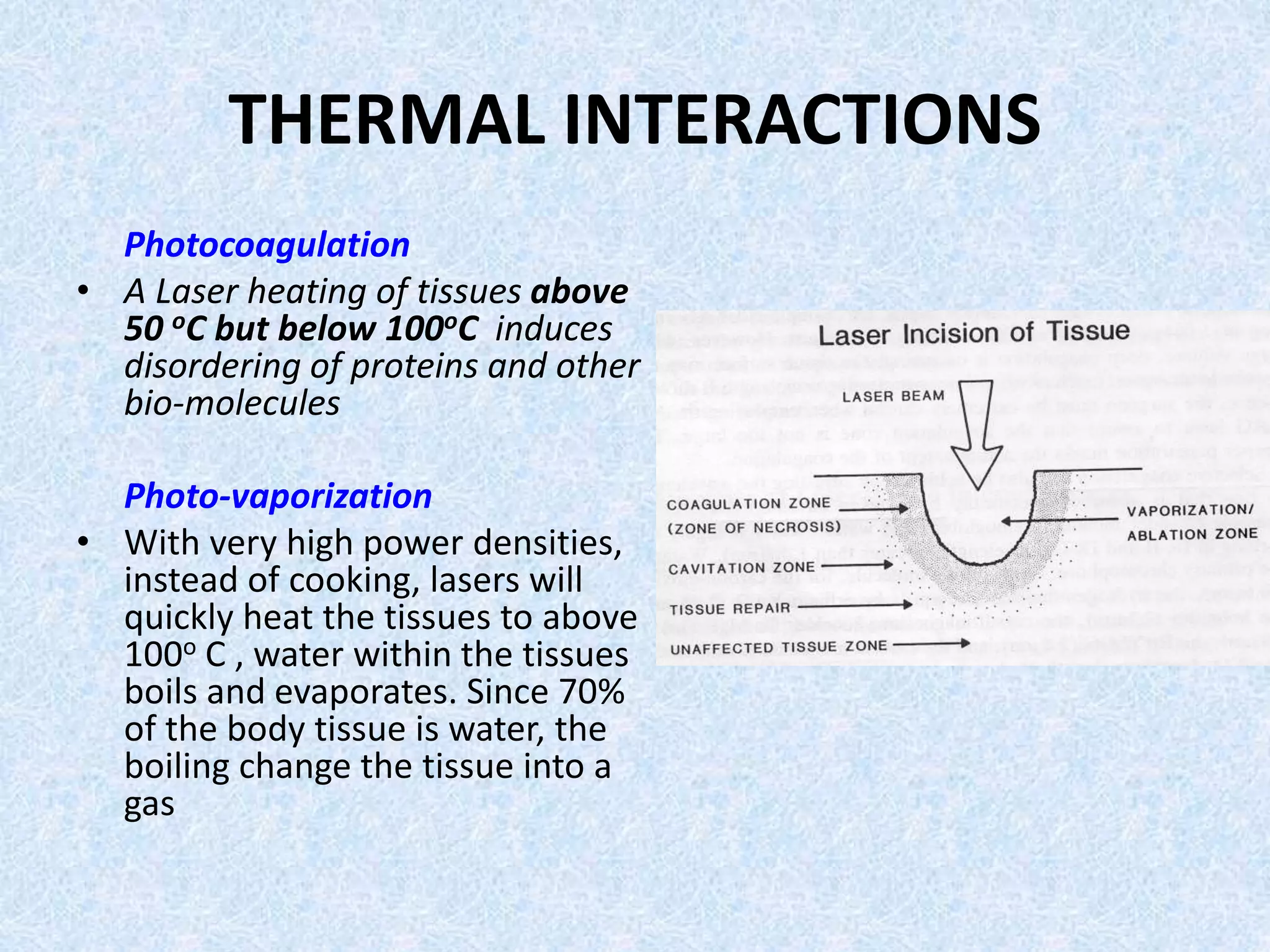
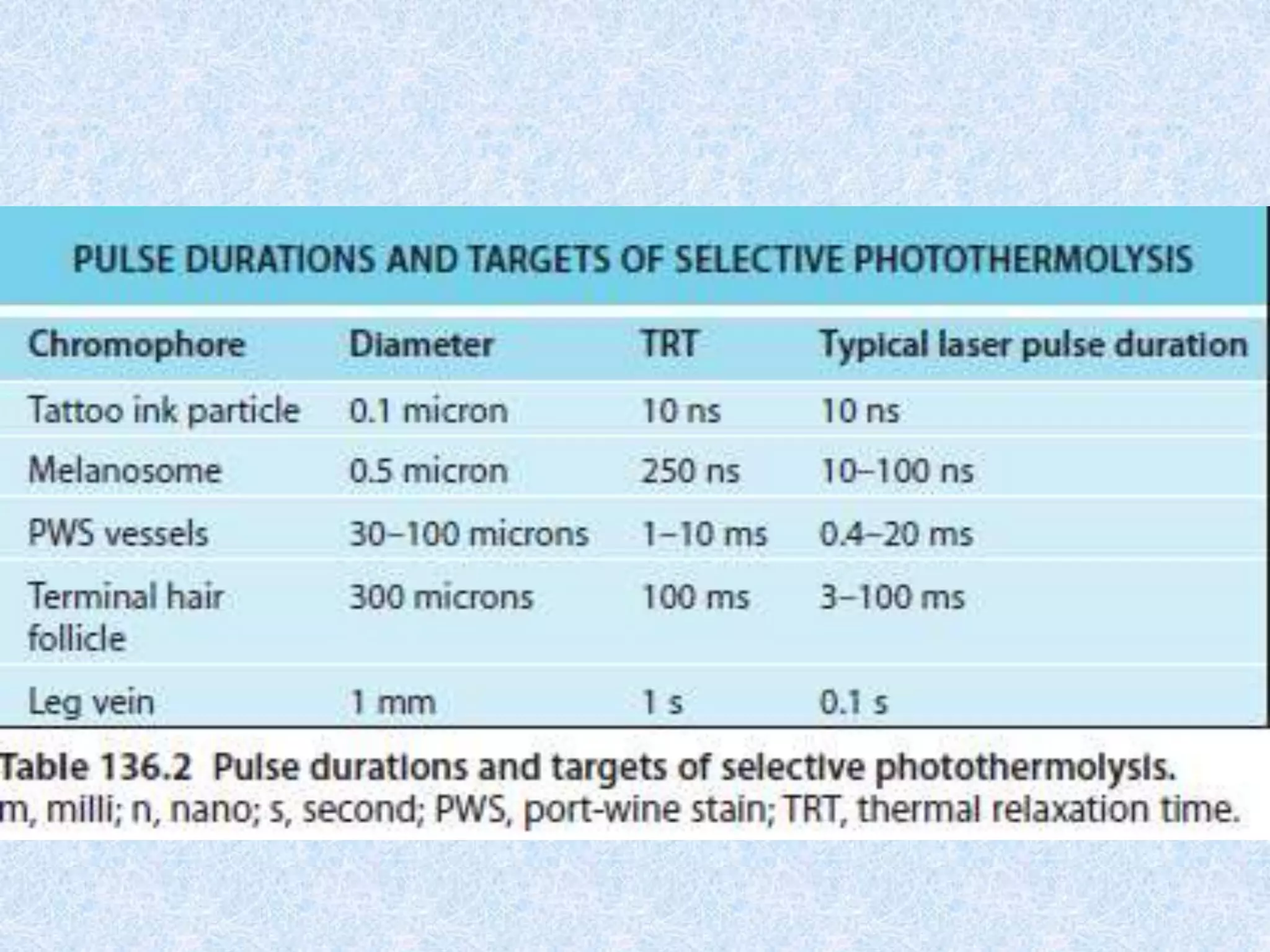
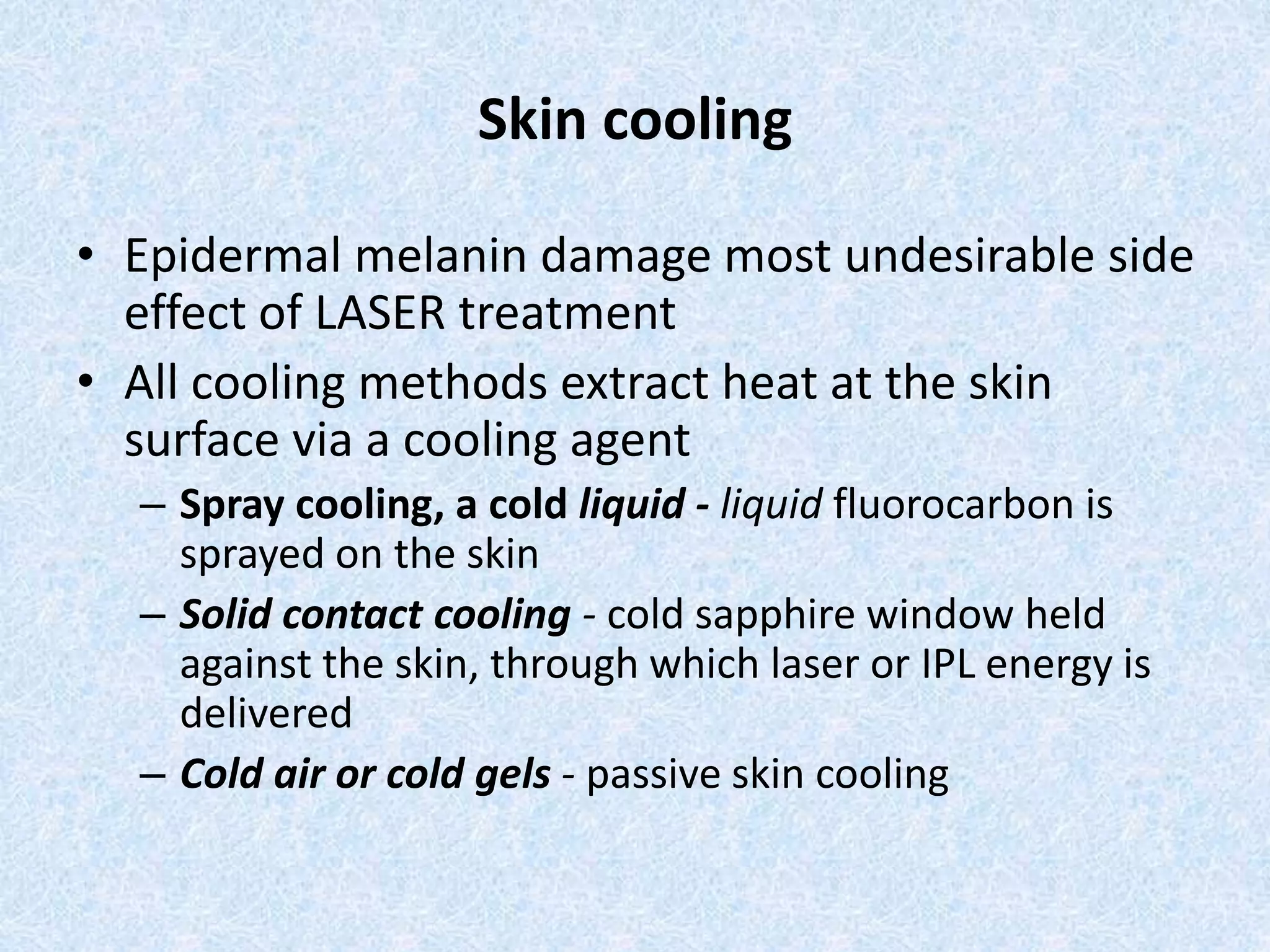
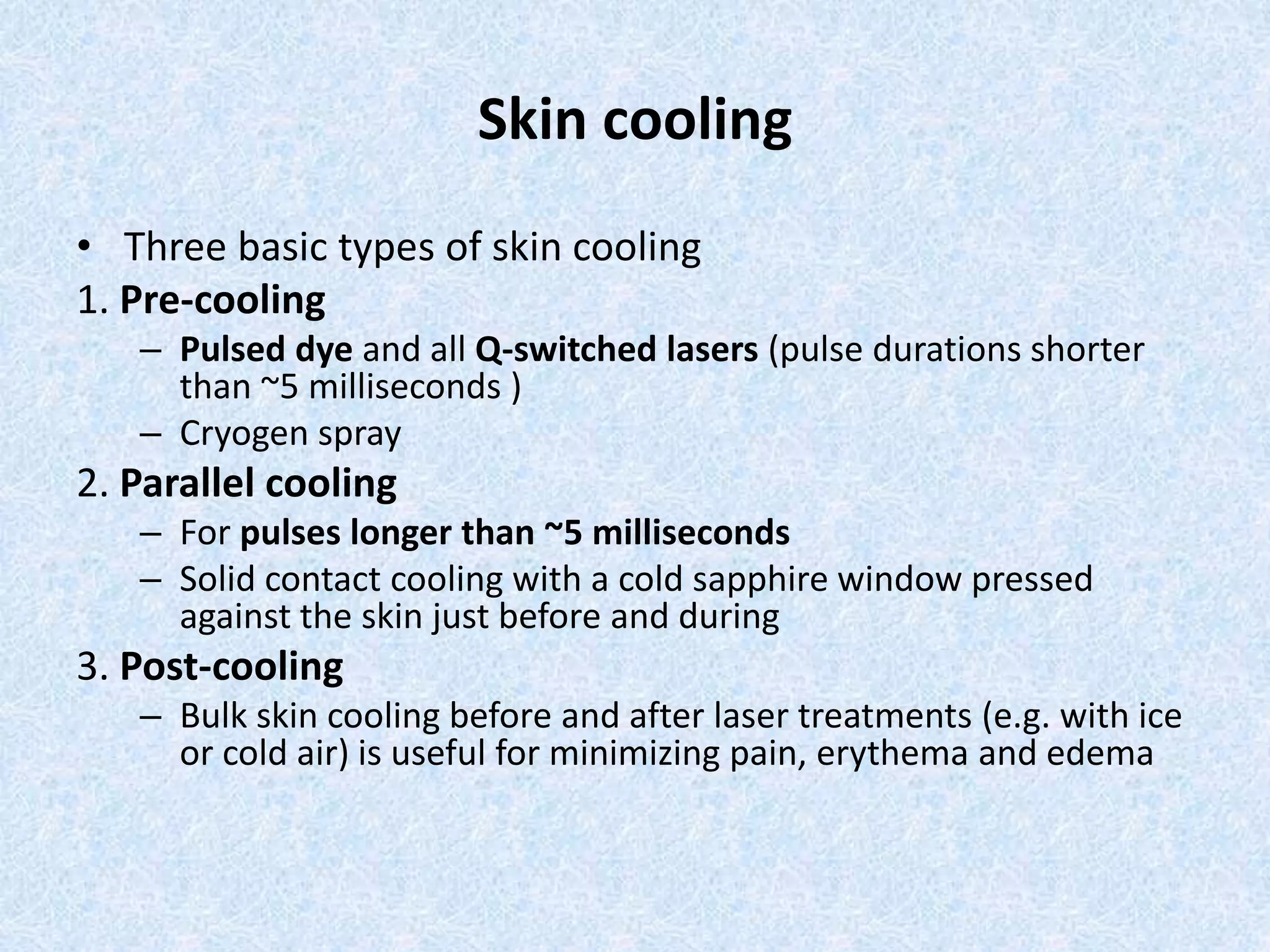
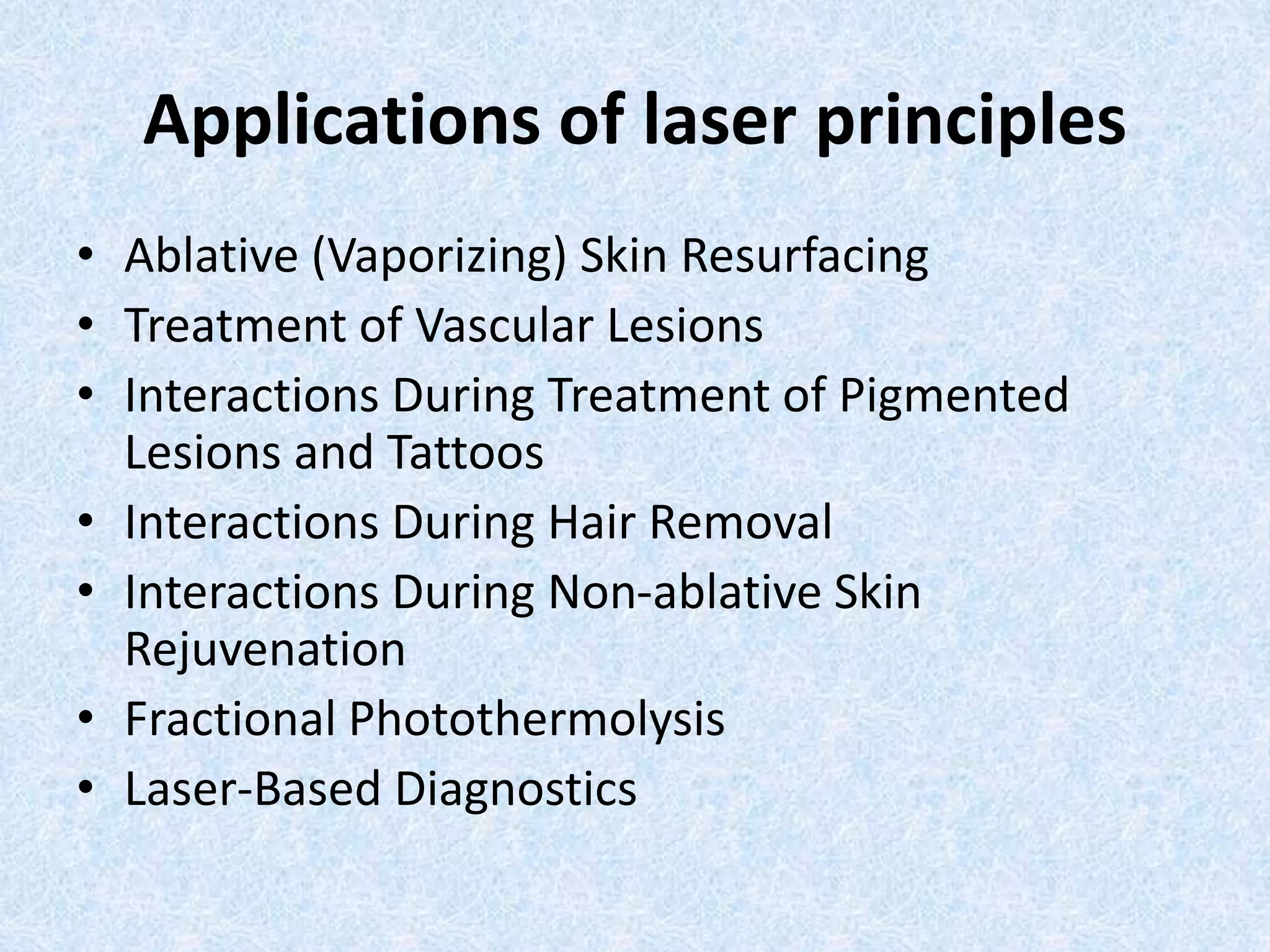
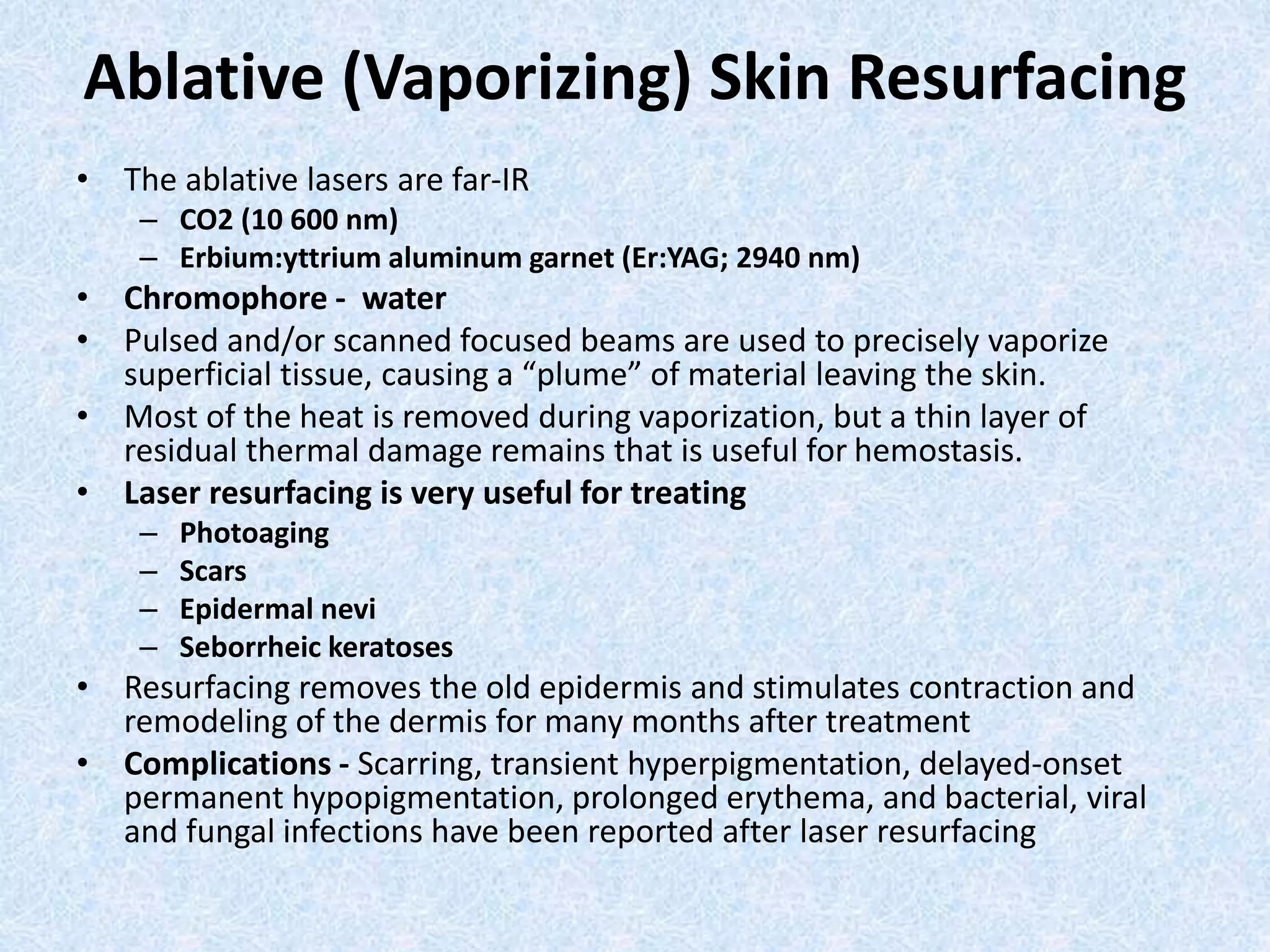
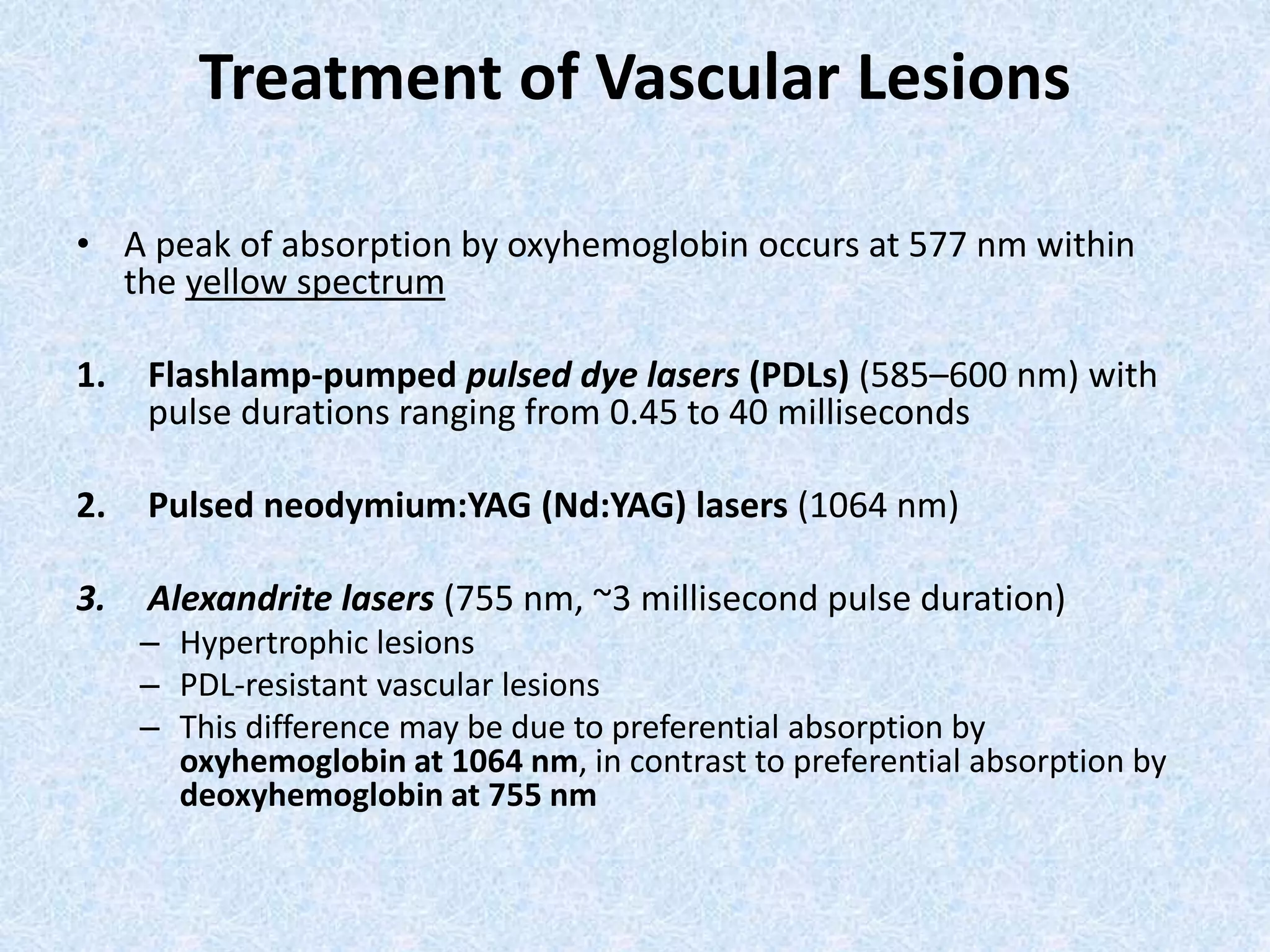
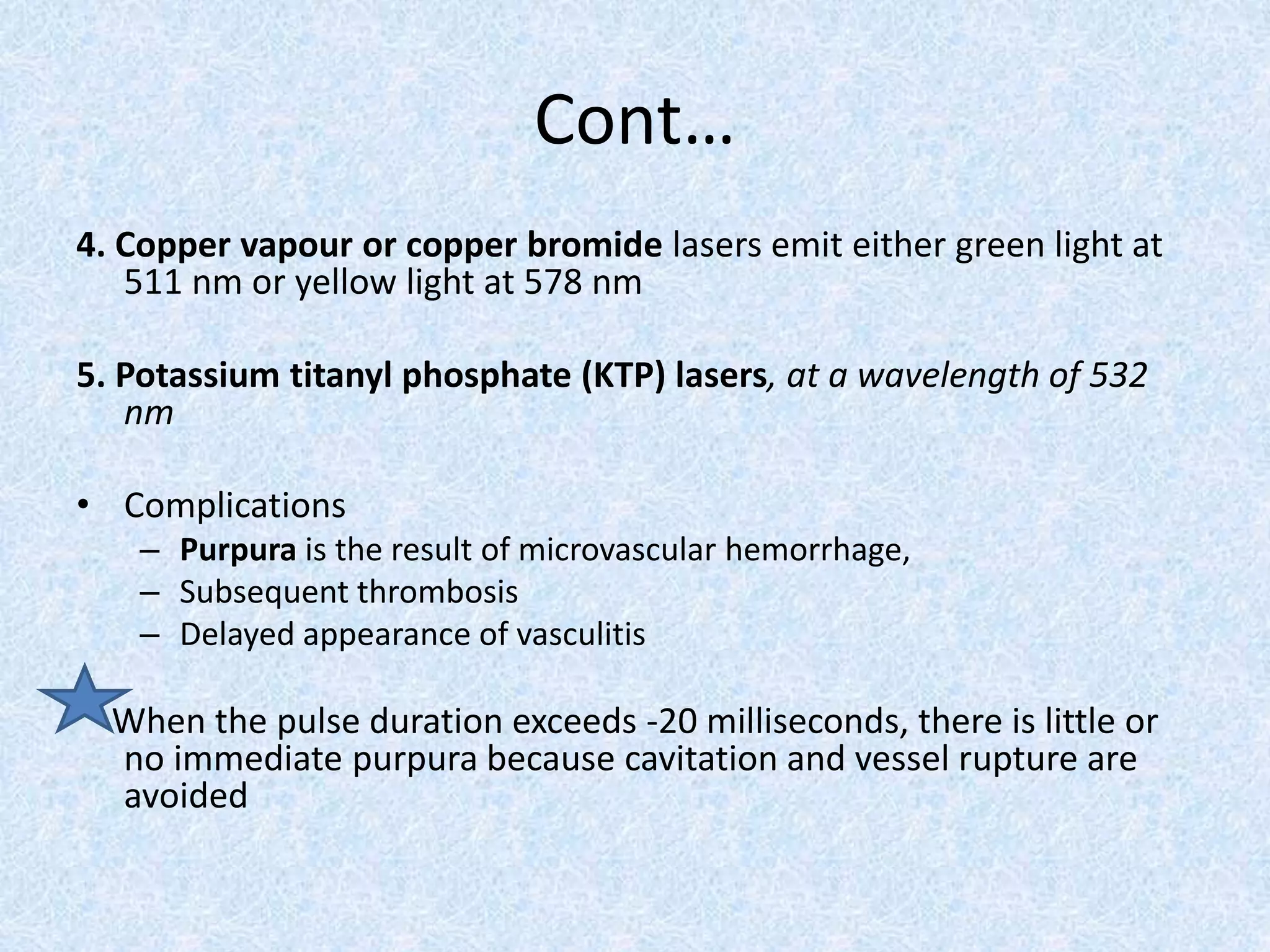
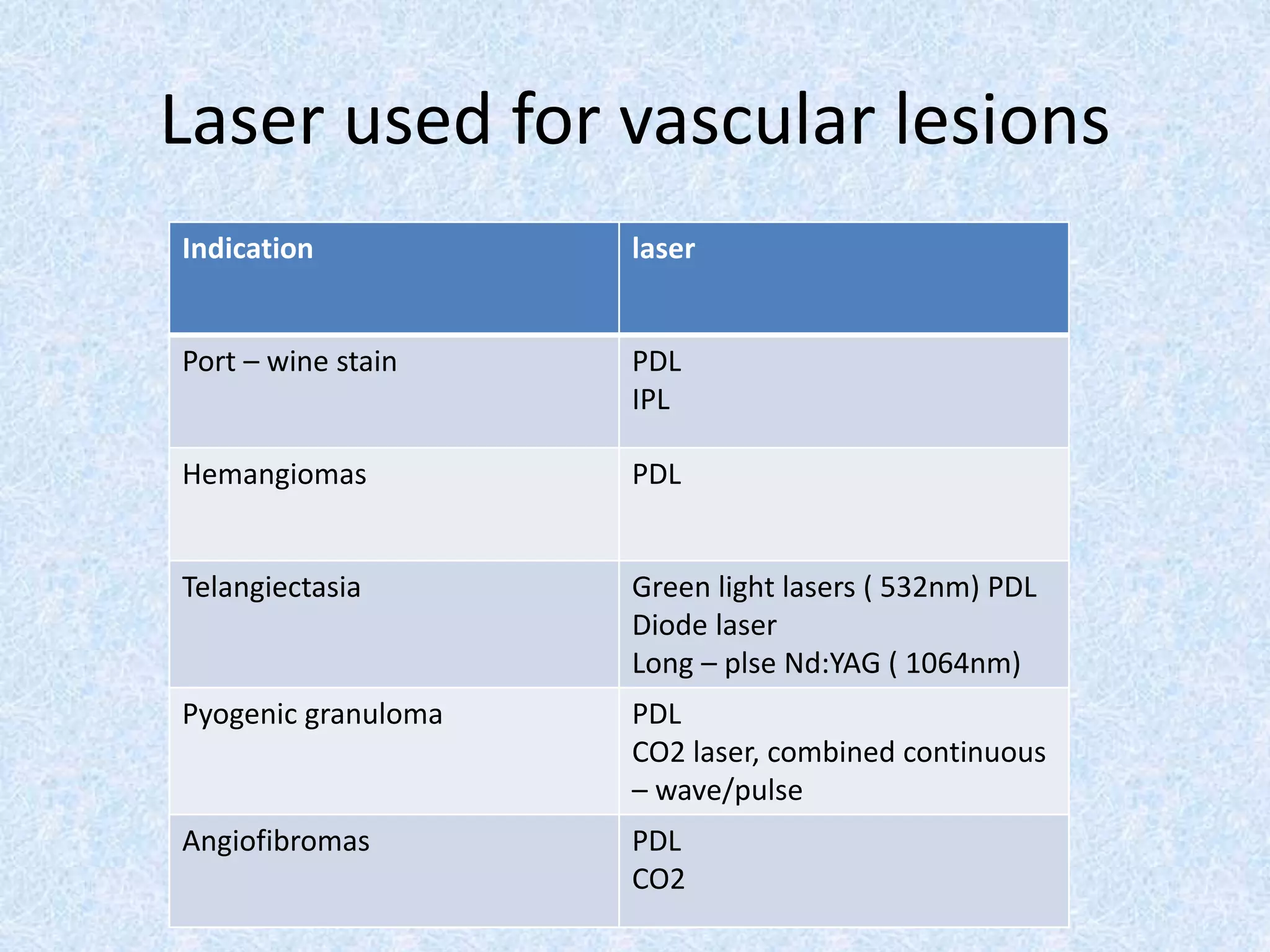
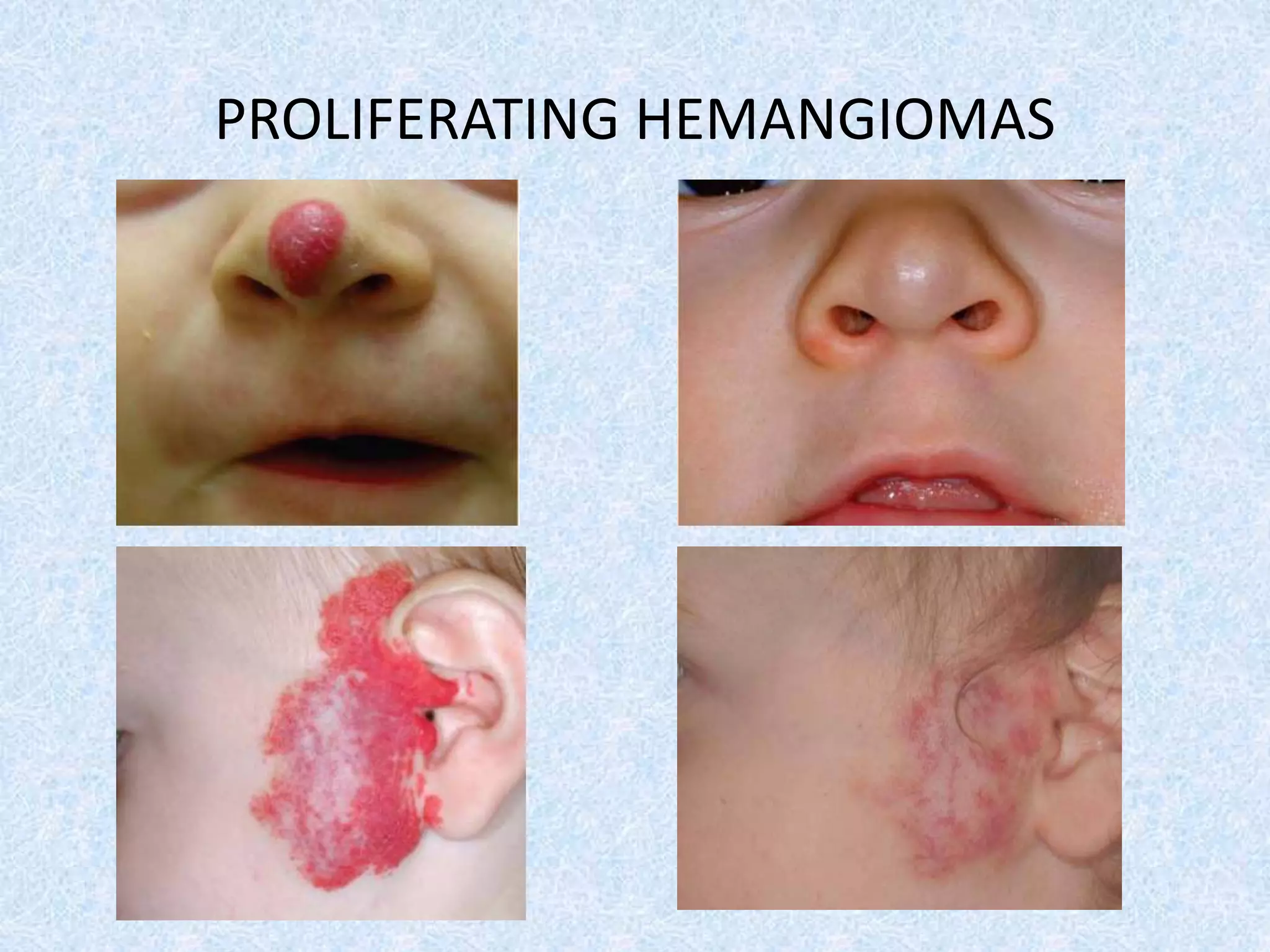
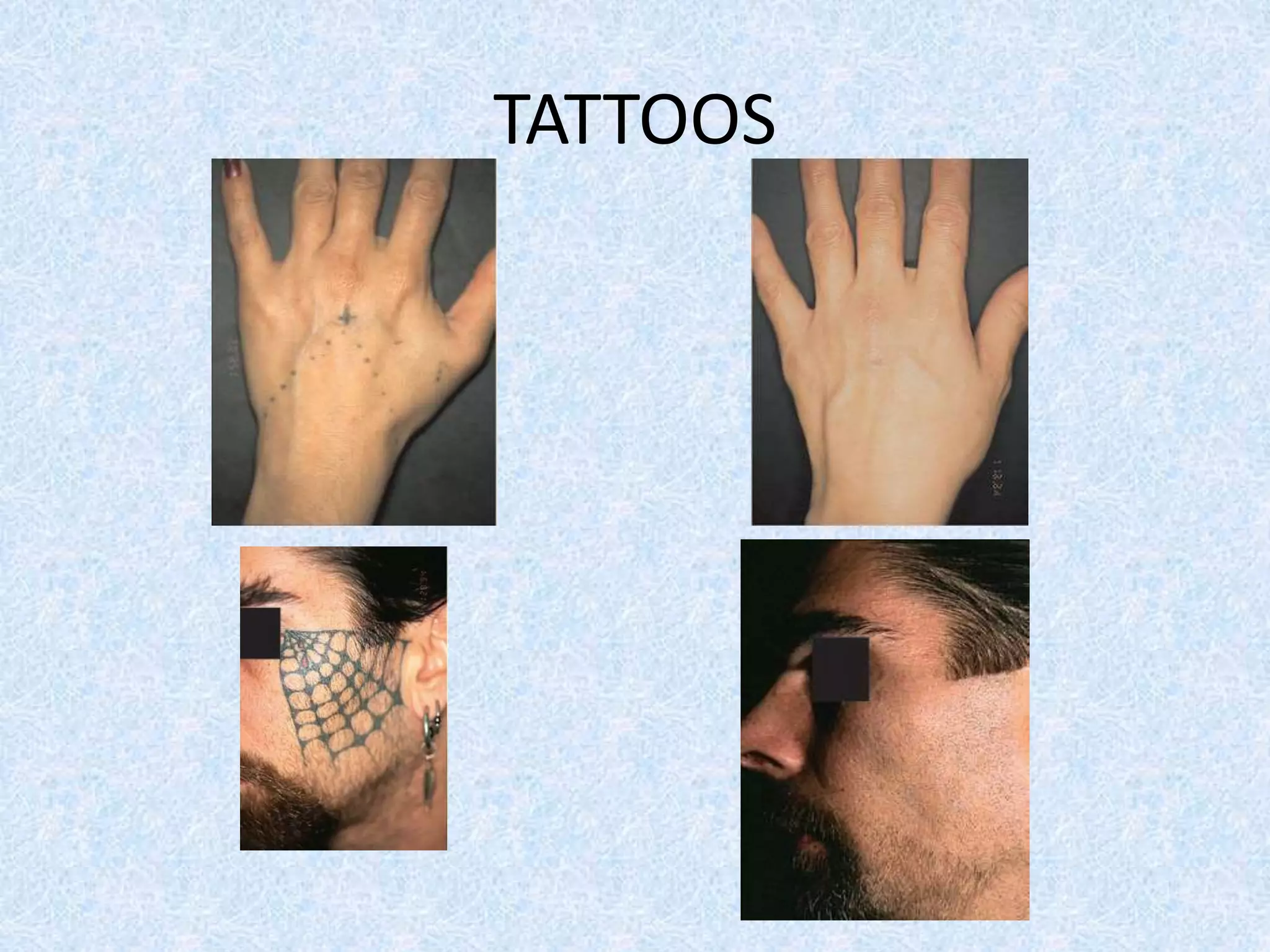
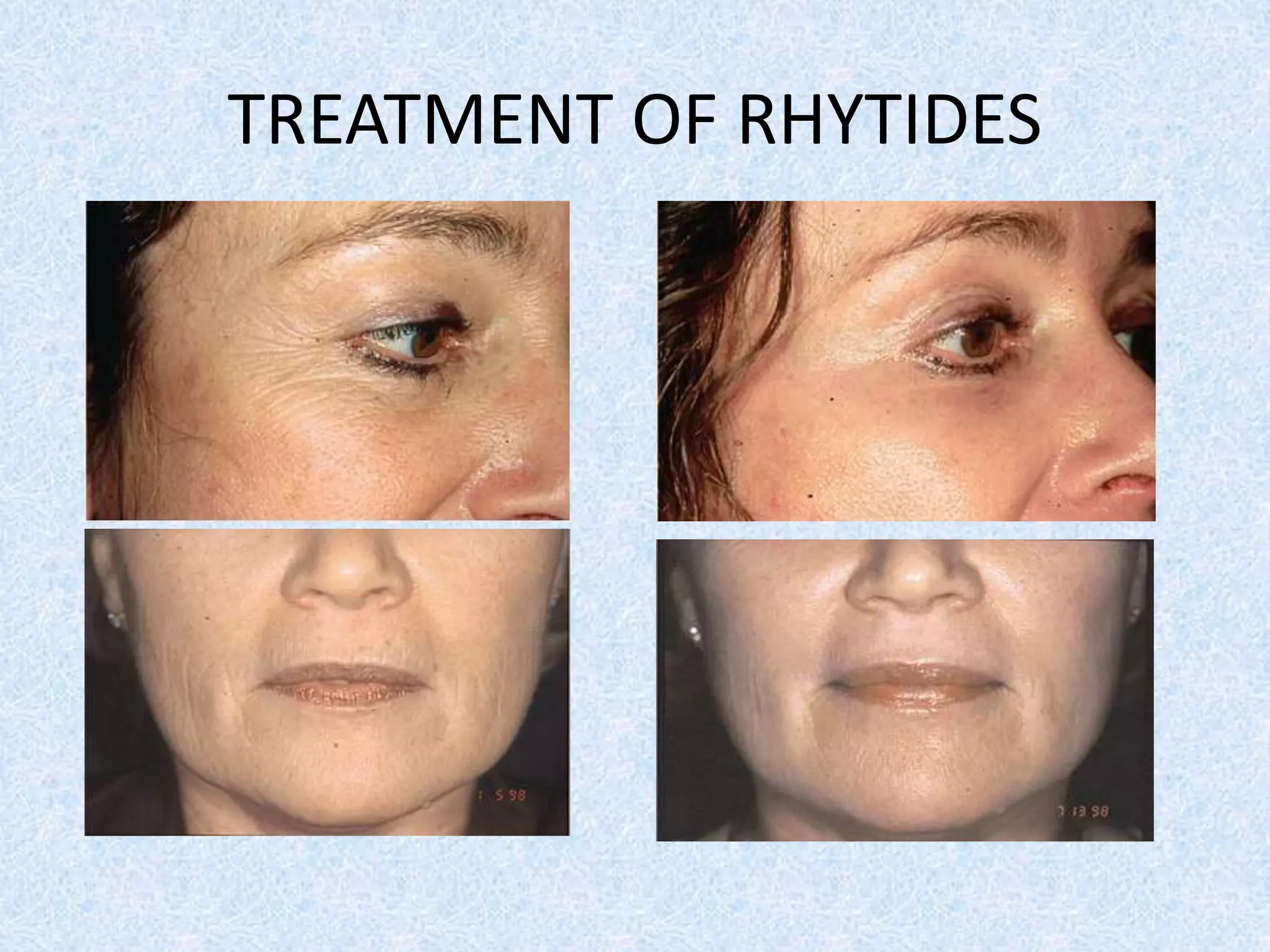

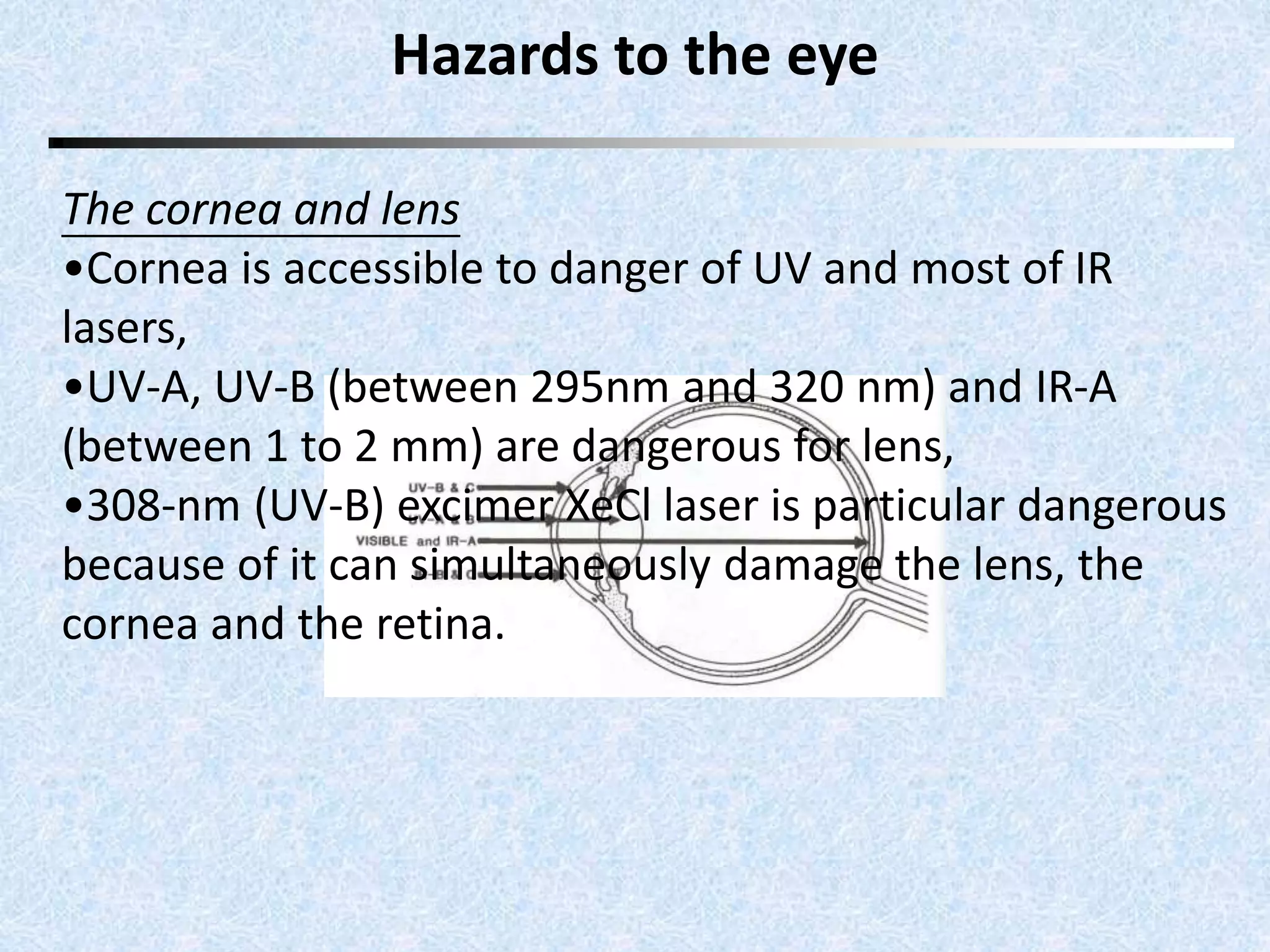
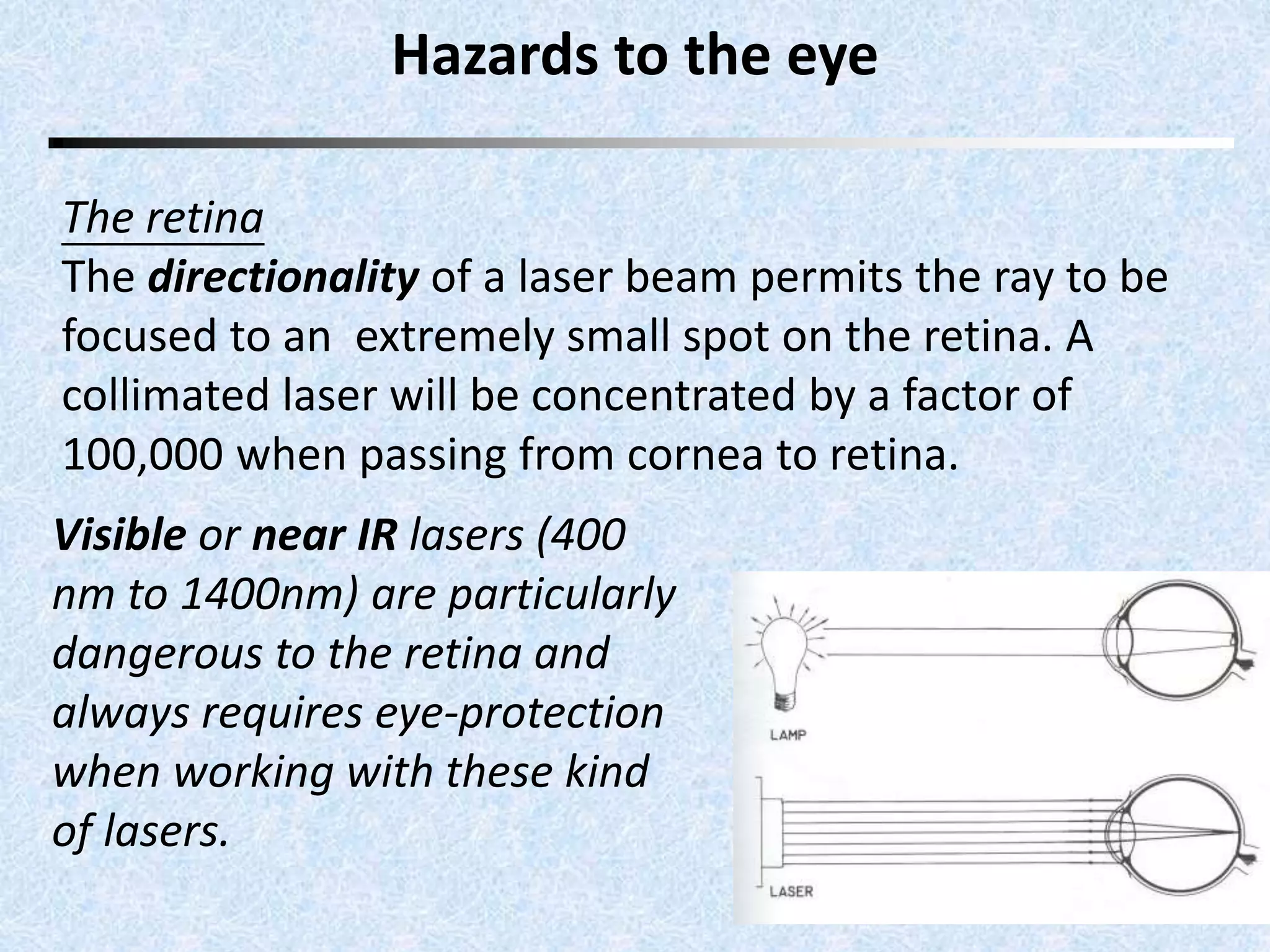
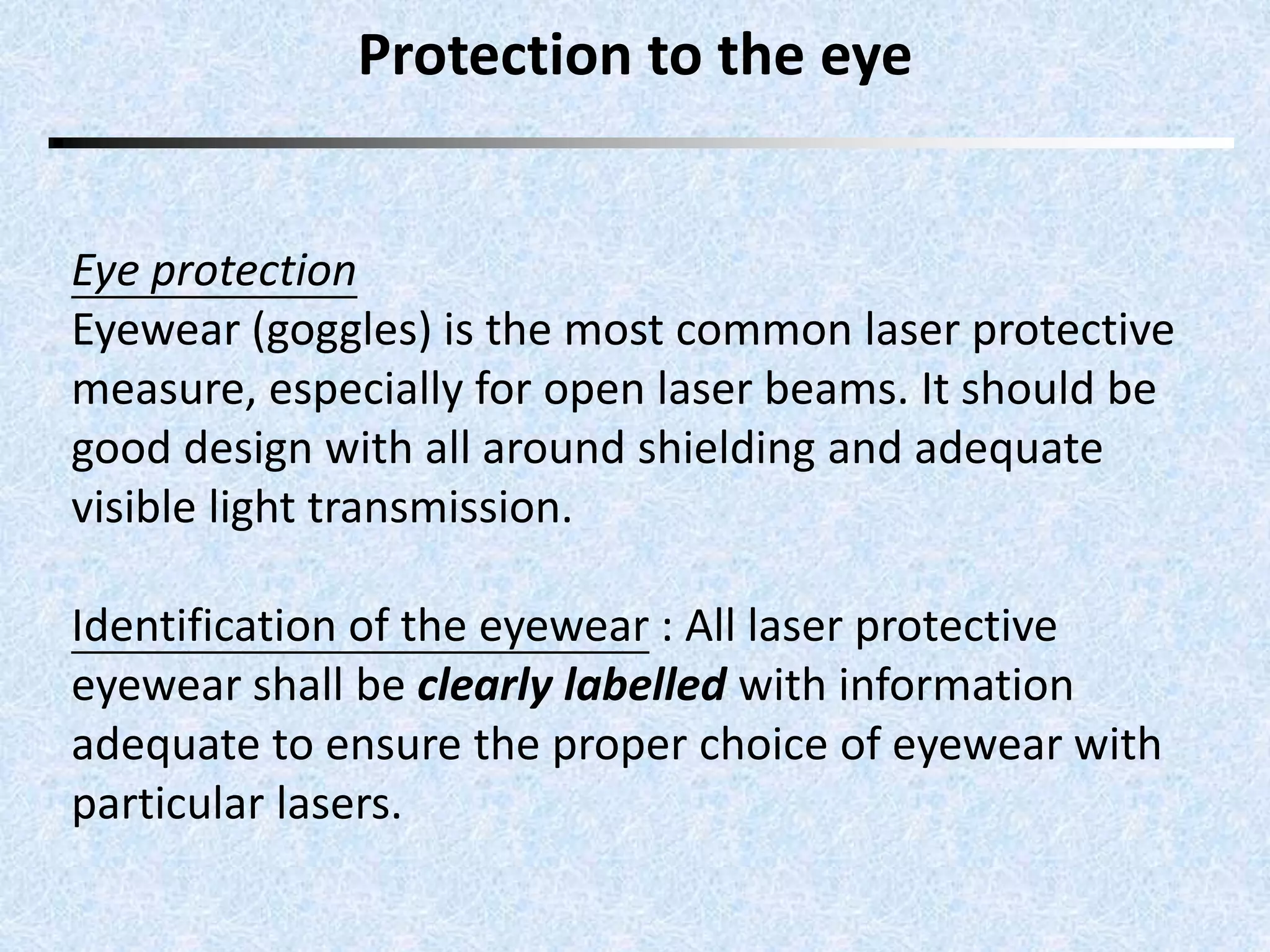


The document discusses lasers and their uses in dermatology. It begins with definitions and a brief history of lasers, describing some important early pioneers and dates. The basic components and working principles of lasers are then explained, including population inversion, stimulated emission, and the use of gain medium, pumping systems, and optical resonators. Different types of lasers are also categorized based on their gain medium, such as gas, solid state, and dye lasers. Applications of lasers in dermatology are enabled by their interactions with chromophores in the skin and ability to penetrate at varying depths depending on the wavelength. Thermal effects on tissue include photocoagulation and photo-vaporization.


