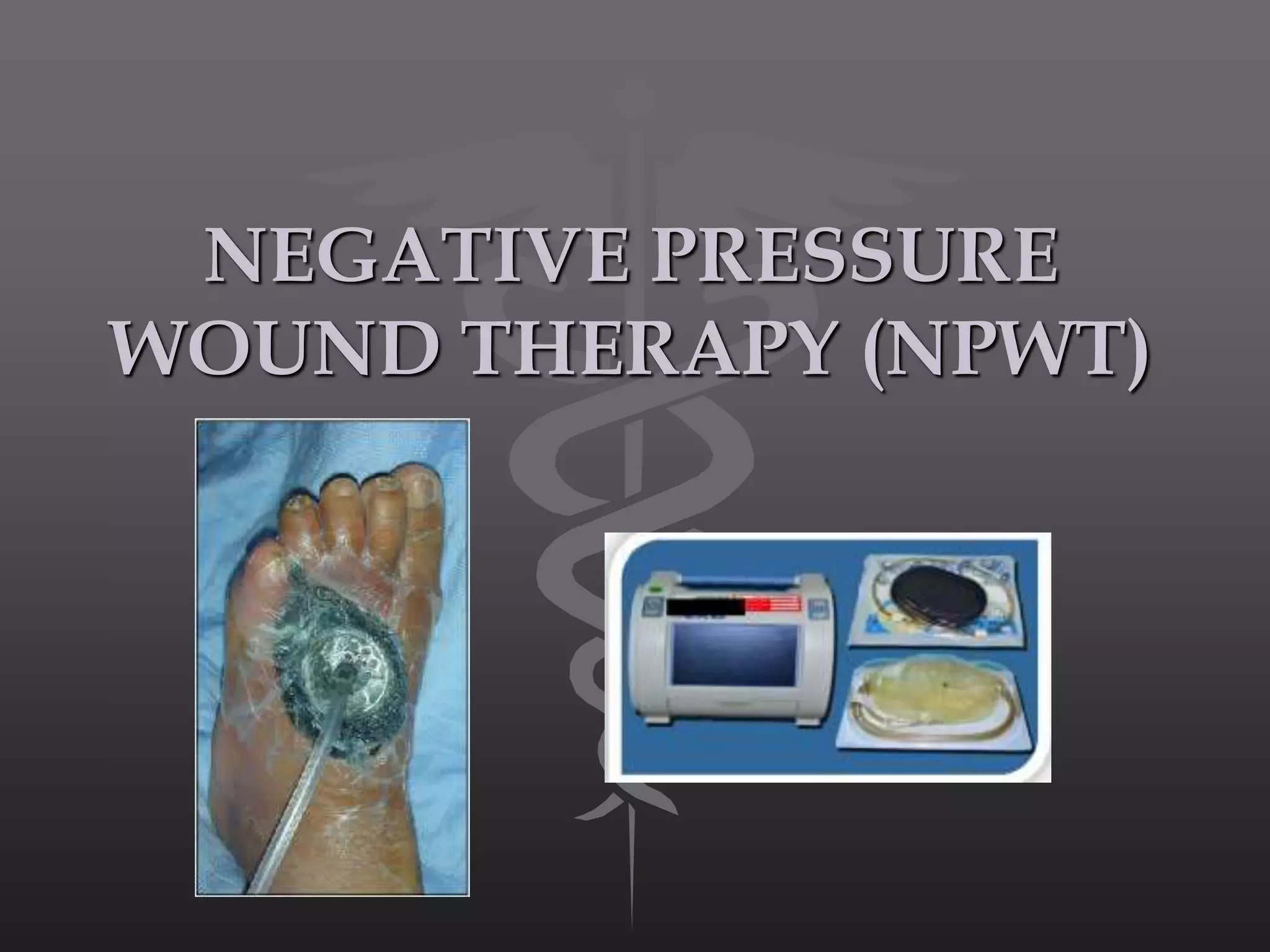
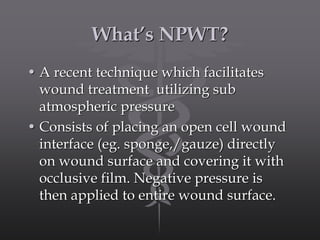
NEGATIVE PRESSURE
WOUND THERAPY (NPWT)
What’s NPWT?
• A recent technique which facilitates
wound treatment utilizing sub
atmospheric pressure
• Consists of placing an open cell wound
interface (eg. sponge,/gauze) directly
on wound surface and covering it with
occlusive film. Negative pressure is
then applied to entire wound surface.
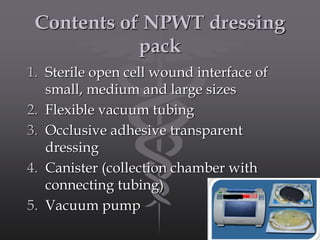
Contents of NPWT dressing
pack
1. Sterile open cell wound interface of
small, medium and large sizes
2. Flexible vacuum tubing
3. Occlusive adhesive transparent
dressing
4. Canister (collection chamber with
connecting tubing)
5. Vacuum pump
How NPWT works?
1. Provides a closed and moist wound
healing environment
2. Decreases wound volume
3. Removes excess fluids that can inhibit
wound healing
4. Helps remove interstitial fluid
5. Promotes granulation
Indications of NPWT
• Huge, clean and/or exudative wound
while waiting for definitive wound
closure
• Fixation of skin grafts (mesh-grafts) and
tissue flaps
Contraindications of NPWT
• Clotting disorders (Risk of bleeding)
• Necrotic wound bed or eschar (barrier
to new tissue growth)
• Untreated infection (Due to deep
extension of potential infectious focus)
• Neoplastic tissue in wound area
How to apply NPWT?
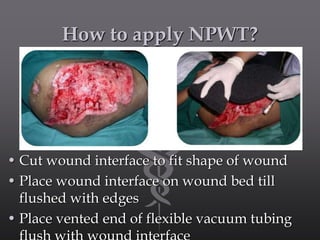
• Cut wound interface to fit shape of wound
• Place wound interface on wound bed till
flushed with edges
• Place vented end of flexible vacuum tubing
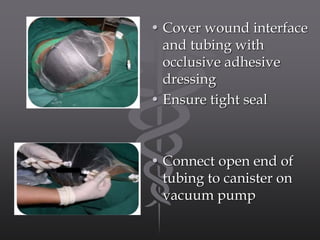
• Cover wound interface
and tubing with
occlusive adhesive
dressing
• Ensure tight seal
• Connect open end of
tubing to canister on
vacuum pump
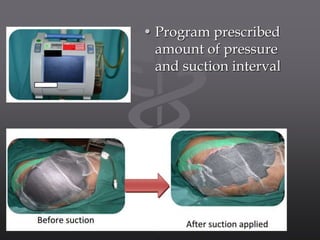
• Program prescribed
amount of pressure
and suction interval
Complications of NPWT
• Toxic shock syndrome
• Wound infection caused by anaerobes
• Loss of blood and fluid
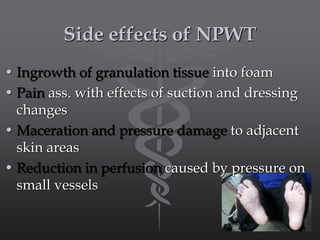
Side effects of NPWT
• Ingrowth of granulation tissue into foam
• Pain ass. with effects of suction and dressing
changes
• Maceration and pressure damage to adjacent
skin areas
• Reduction in perfusion caused by pressure on
small vessels
Summary
• NPWT is only an adjunct to
management of chronic, acute and
difficult wounds and it is not the
ultimate solution
• NPWT prepares wound bed for greater
chance of successful closure
• NPWT does not replace surgical
procedures
Reference
• Wound Care Manual 1st edition (2014),
Ministry of Health Malaysia, pg 157-
162

Negative Pressure Wound Therapy (NPWT)

  • 1.
  • 2.
    What’s NPWT? • Arecent technique which facilitates wound treatment utilizing sub atmospheric pressure • Consists of placing an open cell wound interface (eg. sponge,/gauze) directly on wound surface and covering it with occlusive film. Negative pressure is then applied to entire wound surface.
  • 3.
    Contents of NPWTdressing pack 1. Sterile open cell wound interface of small, medium and large sizes 2. Flexible vacuum tubing 3. Occlusive adhesive transparent dressing 4. Canister (collection chamber with connecting tubing) 5. Vacuum pump
  • 4.
    How NPWT works? 1.Provides a closed and moist wound healing environment 2. Decreases wound volume 3. Removes excess fluids that can inhibit wound healing 4. Helps remove interstitial fluid 5. Promotes granulation
  • 5.
    Indications of NPWT •Huge, clean and/or exudative wound while waiting for definitive wound closure • Fixation of skin grafts (mesh-grafts) and tissue flaps
  • 6.
    Contraindications of NPWT •Clotting disorders (Risk of bleeding) • Necrotic wound bed or eschar (barrier to new tissue growth) • Untreated infection (Due to deep extension of potential infectious focus) • Neoplastic tissue in wound area
  • 7.
    How to applyNPWT? • Cut wound interface to fit shape of wound • Place wound interface on wound bed till flushed with edges • Place vented end of flexible vacuum tubing
  • 8.
    • Cover woundinterface and tubing with occlusive adhesive dressing • Ensure tight seal • Connect open end of tubing to canister on vacuum pump
  • 9.
    • Program prescribed amountof pressure and suction interval
  • 11.
    Complications of NPWT •Toxic shock syndrome • Wound infection caused by anaerobes • Loss of blood and fluid
  • 12.
    Side effects ofNPWT • Ingrowth of granulation tissue into foam • Pain ass. with effects of suction and dressing changes • Maceration and pressure damage to adjacent skin areas • Reduction in perfusion caused by pressure on small vessels
  • 13.
    Summary • NPWT isonly an adjunct to management of chronic, acute and difficult wounds and it is not the ultimate solution • NPWT prepares wound bed for greater chance of successful closure • NPWT does not replace surgical procedures
  • 14.
    Reference • Wound CareManual 1st edition (2014), Ministry of Health Malaysia, pg 157- 162