
DEPARTMENT OF
CIVIL ENGINEERING
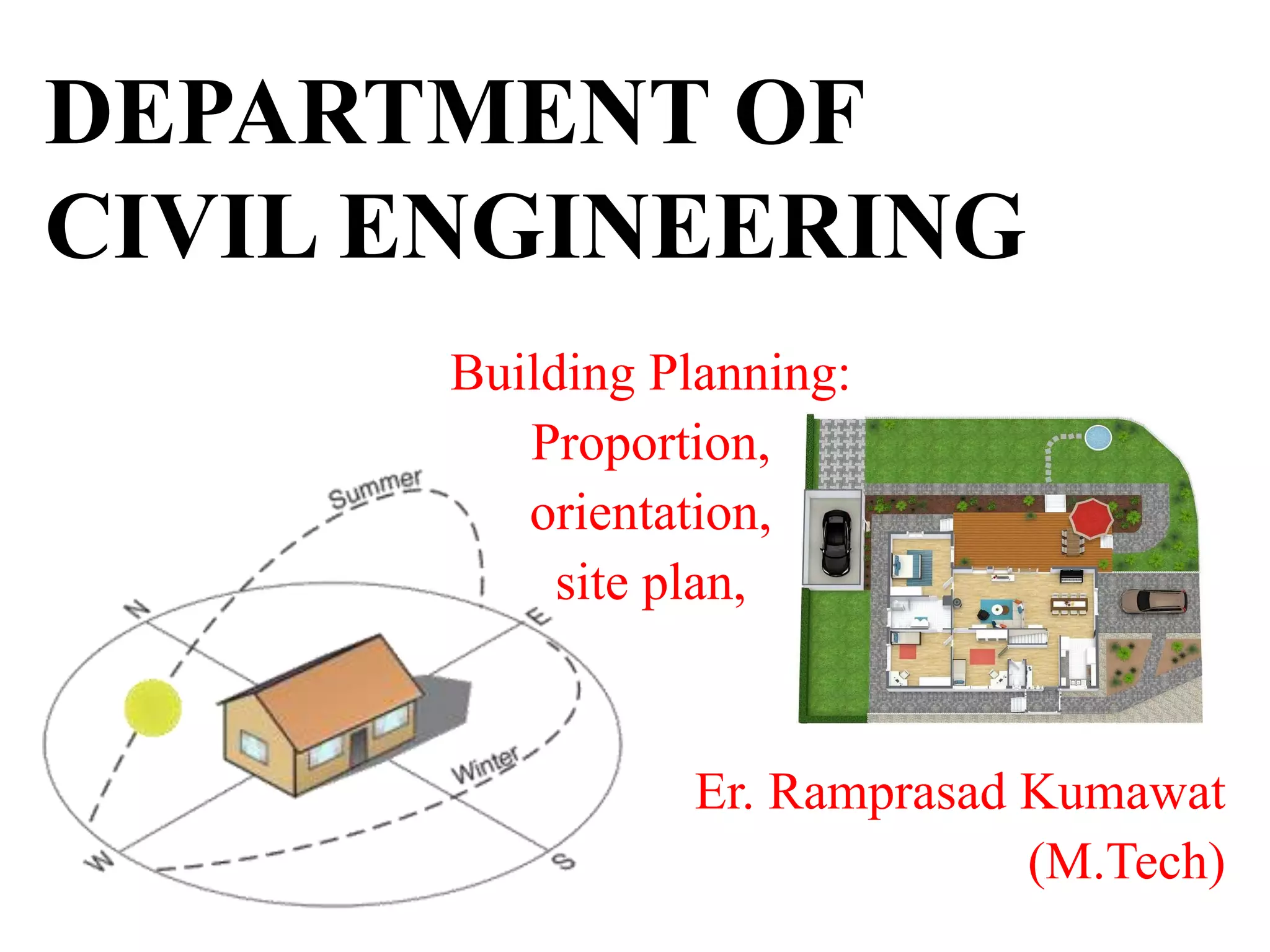
Building Planning:
Proportion,
orientation,
site plan,
Er. Ramprasad Kumawat
(M.Tech)
Historical architecture and modern
structural design
• Building Planning:
• Proportion,
• orientation,
• site plan,
• working drawing Building layout,
• Architectural and structural working drawings,
• Standard codes as measure of controlling safety
and serviceability,
• Building bye-laws and their role in controlled
development of built-environment,
• Concept of Green Buildings
Building Planning
• The term planning of a structure by an
architect is used to mean the arrangement of all
the units of a building on all floors and at all
levels and it not only includes the horizontal
layout but also it takes into consideration the
height and levels to accommodate the space
enclosed by wall, floor and roof.
• Building Planning is the arrangement of
various components or units of a building in a
systematic manner so as to form
a meaningful and homogeneous structure to
meet its functional purpose.
• The arrangement of the various rooms in the
building is known as Planning of Building.
Proportion
• Proportion is a central principle
of architectural theory and an important
connection between mathematics and art.
• It is the visual effect of the relationships of the
various objects and spaces that make up a
structure to one another and to the whole.
• These relationships are often governed by
multiples of a standard unit of length known as
a "module"
Orientation of building
• ”Orientation of building is defined as a
method of fixing in direction of the plan of
the such a way that if drained maximum
benefit from the elements of nature such as
sun, wind and rain.”
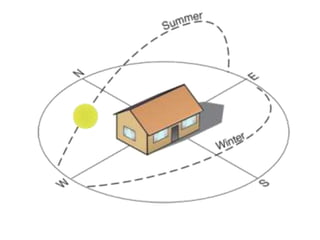
• The orientation of the building is the term used
to define the setting or fixing the direction of
the layout plan of building respect to the
direction of north.
• The orientation of building refers to the
direction of normal to the normal to the long
axis.
• For example, if the length of building East-
West orientation North-South.
• A building should receive maximum solar
radiation in winter and minimum in summer.
• In hot climates, verandahs or chajjas or sum
breakers may be provided. Hospital school,
drawing office, the library should be located
on North Side i.e. long sides of these should
face north whereas south side and west side
should be protected by verandahs.
• Verandahs should not be provided on north
facing
• To reduce the intensity of sun rays.
• The tall tree is may be planted on the sunny side.
• Walls of the minimum area may be provided on
East and Westside.
• Rooms which are occupied through the day are
placed on North, whereas bedrooms may be
located on West or in direction of prevailing wind.
• For ventilation point of view, the height of a
house should not be more than twice the width of
the street.
• No part of the building is allowed of the project
beyond the set back distance.
Site Plan
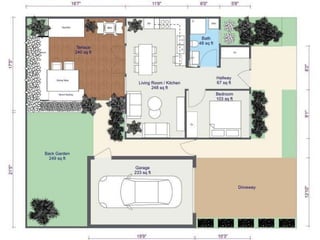
• A site plan is a diagram that shows the layout
of a property or “site”.
• A site plan may include the location of
buildings and structures.
• As well as, property features such as
driveways, walkways, landscaped areas,
gardens, pools or water, trees, terraces and
more.
• Site plans are also an important part of
marketing real estate properties to show the
complete property, including key outdoor
features.
• Site plans give potential homebuyers an idea
of the size, scale, and orientation of the
property, better than photos do.
• Including the property layout along with the
buildings floor plan, also makes it even easier
to see how the interior of the home relates to
its surroundings.
Types of Site Plans
• There are two types of site plans that helpful
for real estate, landscape design, and home
improvement projects:
• 2D Site Plans
• 3D Site Plans
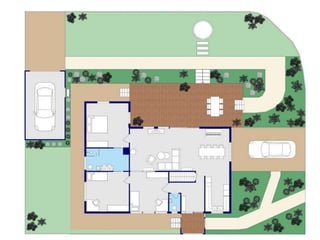
2D Site Plans
• A 2D Site Plan gives you a clear overview of
the layout of your property.
• They can be simple black and white diagrams
or color-coded to show different landscape
features such as green areas or paved areas.
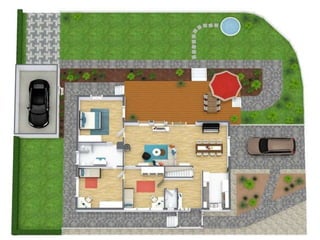
3D Site Plans
• A 3D Site Plan is a full-colored 3D rendering
of your landscape layout.
• 3D Site Plans make easy to understand and
visualize what the landscape actually looks
like including details such as structures,
materials, plantings, and more.
• THANKS!

Building Planning Proportion Orientation Site Plan

  • 1.
    DEPARTMENT OF CIVIL ENGINEERING BuildingPlanning: Proportion, orientation, site plan, Er. Ramprasad Kumawat (M.Tech)
  • 2.
    Historical architecture andmodern structural design • Building Planning: • Proportion, • orientation, • site plan, • working drawing Building layout, • Architectural and structural working drawings, • Standard codes as measure of controlling safety and serviceability, • Building bye-laws and their role in controlled development of built-environment, • Concept of Green Buildings
  • 3.
    Building Planning • Theterm planning of a structure by an architect is used to mean the arrangement of all the units of a building on all floors and at all levels and it not only includes the horizontal layout but also it takes into consideration the height and levels to accommodate the space enclosed by wall, floor and roof.
  • 4.
    • Building Planningis the arrangement of various components or units of a building in a systematic manner so as to form a meaningful and homogeneous structure to meet its functional purpose. • The arrangement of the various rooms in the building is known as Planning of Building.
  • 5.
    Proportion • Proportion isa central principle of architectural theory and an important connection between mathematics and art. • It is the visual effect of the relationships of the various objects and spaces that make up a structure to one another and to the whole. • These relationships are often governed by multiples of a standard unit of length known as a "module"
  • 6.
    Orientation of building •”Orientation of building is defined as a method of fixing in direction of the plan of the such a way that if drained maximum benefit from the elements of nature such as sun, wind and rain.”
  • 7.
    • The orientationof the building is the term used to define the setting or fixing the direction of the layout plan of building respect to the direction of north. • The orientation of building refers to the direction of normal to the normal to the long axis. • For example, if the length of building East- West orientation North-South.
  • 9.
    • A buildingshould receive maximum solar radiation in winter and minimum in summer. • In hot climates, verandahs or chajjas or sum breakers may be provided. Hospital school, drawing office, the library should be located on North Side i.e. long sides of these should face north whereas south side and west side should be protected by verandahs. • Verandahs should not be provided on north facing
  • 10.
    • To reducethe intensity of sun rays. • The tall tree is may be planted on the sunny side. • Walls of the minimum area may be provided on East and Westside. • Rooms which are occupied through the day are placed on North, whereas bedrooms may be located on West or in direction of prevailing wind. • For ventilation point of view, the height of a house should not be more than twice the width of the street. • No part of the building is allowed of the project beyond the set back distance.
  • 11.
    Site Plan • Asite plan is a diagram that shows the layout of a property or “site”. • A site plan may include the location of buildings and structures. • As well as, property features such as driveways, walkways, landscaped areas, gardens, pools or water, trees, terraces and more.
  • 13.
    • Site plansare also an important part of marketing real estate properties to show the complete property, including key outdoor features. • Site plans give potential homebuyers an idea of the size, scale, and orientation of the property, better than photos do. • Including the property layout along with the buildings floor plan, also makes it even easier to see how the interior of the home relates to its surroundings.
  • 14.
    Types of SitePlans • There are two types of site plans that helpful for real estate, landscape design, and home improvement projects: • 2D Site Plans • 3D Site Plans
  • 15.
    2D Site Plans •A 2D Site Plan gives you a clear overview of the layout of your property. • They can be simple black and white diagrams or color-coded to show different landscape features such as green areas or paved areas.
  • 17.
    3D Site Plans •A 3D Site Plan is a full-colored 3D rendering of your landscape layout. • 3D Site Plans make easy to understand and visualize what the landscape actually looks like including details such as structures, materials, plantings, and more.
  • 19.