ITRODUCTION
BY MRS. A.A. AVASTHI
Visit for more Learning Resources
Building Planning And
Drawing
Introduction
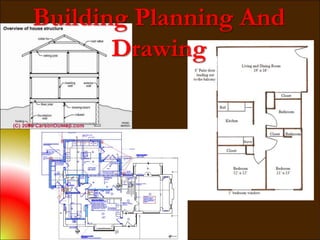
 A building or construction project requires a complete
set of specialised drawings. These drawings, called a
project set, are used by the local planning department
and building control, as well as by builders, joiners,
plumbers, electricians and water, gas and telephone
engineers.
 The buildings are designed by an architect with a
team of technicians and surveyors to help plan and
produce the drawings. The types of drawings are
designed by an architect with a team of technicians
and surveyors to help plan and produce the drawing.
 The types of drawings you need to know about are:
 location plans
 site (block) plans
 floor plan
 Drawings for new buildings require approval from the
building control department and the planning
department before construction work can begin. The
building control department checks that the quality of
design and construction meet British standards. The
planning department assesses whether or not the
style and proportions of the proposed building are
appropriate for the location.
Introduction
Types of Drawings:
 Engineering drawings
 Architectural drawings
 Technical drawings
 As built drawings
 Shop drawings
1. Engineering drawing:
 Definition :A schematic representation of a building,
object, or component made according to defined
conventions and projected to serve in the construction or
fabrication of the thing depicted.
 Engineering drawings are frequently used to describe public
works projects, such as :
 bridges, highways, and dams.
2. Architectural drawing
 Definition A sketch, diagram, plan, or schematic
used to design, construct, and document buildings and
other structures.

 The drawings may be used to indicate the overall appearance,
inside or outside the structure, or they may be used to indicate
precise measurements and other details for construction.
Drawings, especially those for construction purposes, may be
issued as a set, with different sheets indicating different types of
construction (electrical, mechanical, plumbing).
 As-built drawing
 Definition Architectural drawings that reflect changes
made during the construction process, recording
differences between the original design and the
completed structure.
 As-built drawings are based on design drawings used
during construction, where measured drawings are
usually made long after construction is completed and
no design drawings exist
 Technical drawing:
 Definition A graphic using lines and symbols that
follows specific conventions of scale and projection,
typically used in architecture, construction,
engineering, or mapping
 A shop drawing:
 Definition It is a drawing or set of drawings
produced by the contractor, supplier, manufacturer,
subcontractor, or fabricator.
 Shop drawings are typically required for pre-fabricated
components. Examples of these include: elevators,
structural steel, trusses, pre-cast, windows, appliances,
cabinets, air handling units and millwork.
 Shop drawings are not produced by architects and
engineers under their contract with the owner. The
shop drawing is the manufacturer’s or the contractor’s
drawn version of information shown in the construction
documents. The shop drawing normally shows more
detail than the construction documents. It is drawn to
explain the fabrication of the items to the
manufacturer’s production crew. The style of the shop
drawing is usually very different from that of the
architect’s drawing.
 Architectural Drawings used for:
1. Building elements seen in true size, shape,
orientation . ”scale”
2. Describe form & construction of building
component.
3. It is the base drawings for other construction
works.” electrical, sewage, mechanical…”
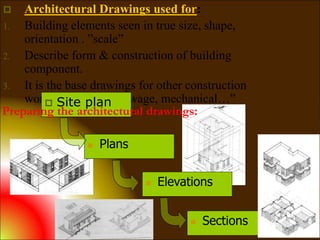
 Site plan
 Plans
 Sections
Preparing the architectural drawings:
 Elevations
 The site plan: is a view looking down at a building from
above, illustrating its location & orientation on a plot land &
providing information about the site’s topography, landscaping
utilities ,and site work.
 The importance of site plan:
 It illustrates the existing natural & built features.
 The building section: is a vertical pane cut through a building.
Or: it is a drawing of interior & exterior partitions and roofs and
ground floor in addition of interior elevations seen beyond the
plane of cut.
 The importance of The building section:
1. Illustrate building construction.
2. Technical implementation (precast- prestress…).
3. Types of slab (roof plate) solid slab, hollow block, flat slab…).
4. Building material (block, stone, concrete,…).
5. Height of the building and levels.
6. Details and finishing.
7. Measurements.
5. Utilities (stairs- elevators- mechanical room- baths- stores….)
6. Structural system:
1. R.C, steel, bearing walls…
2. Columns, beams,…
3. Thickness of walls (exterior & interior)
7. Measurement and cost (quantity survey)
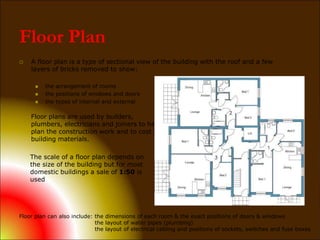
 The floor plan: is a view looking down/ a horizontal plane is cut through a
building from above about 1.5m, illustrating it’s the horizontal dimensions of a
building spaces, the thickness & construction of vertical walls & columns that
define these spaces.
 The importance of plans:
1. Define the spaces & its functional relationship.
2. Illustrates places of openings (doors- windows).
3. Finishing.
4. Entrance (main- secondary)
 Building elevations: is views of a building’s exterior
perpendicular to the principle vertical surfaces.
 The importance of The building section:
1. Finishing
2. Openings
3. Size, shape , materials of exterior surfaces
4. Size proportion
5. Heights of the building
6. Measurements
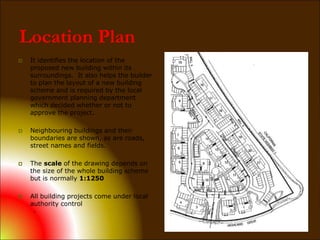
Location Plan
 It identifies the location of the
proposed new building within its
surroundings. It also helps the builder
to plan the layout of a new building
scheme and is required by the local
government planning department
which decided whether or not to
approve the project.
 Neighbouring buildings and their
boundaries are shown, as are roads,
street names and fields.
 The scale of the drawing depends on
the size of the whole building scheme
but is normally 1:1250
 All building projects come under local
authority control
.
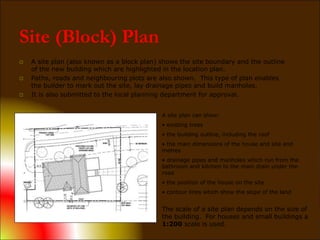
Site (Block) Plan
 A site plan (also known as a block plan) shows the site boundary and the outline
of the new building which are highlighted in the location plan.
 Paths, roads and neighbouring plots are also shown. This type of plan enables
the builder to mark out the site, lay drainage pipes and build manholes.
 It is also submitted to the local planning department for approval.
The scale of a site plan depends on the size of
the building. For houses and small buildings a
1:200 scale is used.
A site plan can show:
• existing trees
• the building outline, including the roof
• the main dimensions of the house and site and
metres
• drainage pipes and manholes which run from the
bathroom and kitchen to the main drain under the
road
• the position of the house on the site
• contour lines which show the slope of the land
Floor Plan
 A floor plan is a type of sectional view of the building with the roof and a few
layers of bricks removed to show:
 the arrangement of rooms
 the positions of windows and doors
 the types of internal and external
Floor plans are used by builders,
plumbers, electricians and joiners to help
plan the construction work and to cost the
building materials.
The scale of a floor plan depends on
the size of the building but for most
domestic buildings a sale of 1:50 is
used
Floor plan can also include: the dimensions of each room & the exact positions of doors & windows
the layout of water pipes (plumbing)
the layout of electrical cabling and positions of sockets, switches and fuse boxes
Architectural Plans
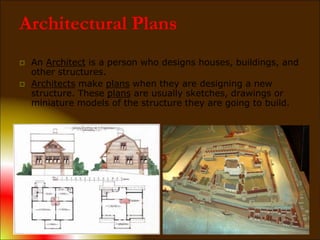
 An Architect is a person who designs houses, buildings, and
other structures.
 Architects make plans when they are designing a new
structure. These plans are usually sketches, drawings or
miniature models of the structure they are going to build.
Architectural Plans – Drawing Plans for a
House
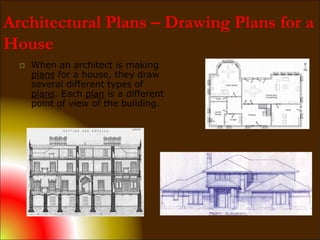
 When an architect is making
plans for a house, they draw
several different types of
plans. Each plan is a different
point of view of the building.
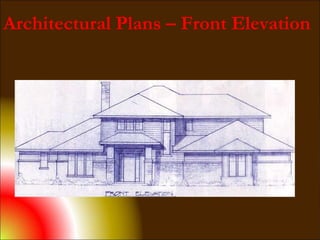
Architectural Plans – Front Elevation
Architectural Plans – Section Drawing
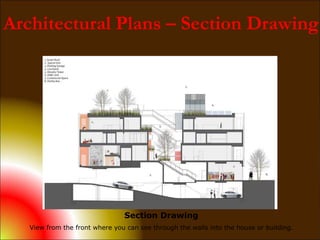
Section Drawing
View from the front where you can see through the walls into the house or building.
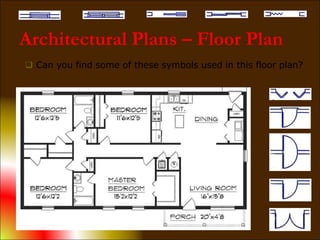
Architectural Plans – Floor Plan
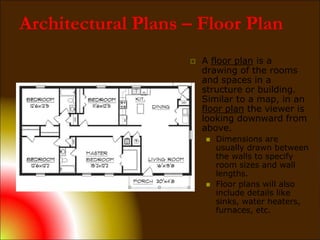
 A floor plan is a
drawing of the rooms
and spaces in a
structure or building.
Similar to a map, in an
floor plan the viewer is
looking downward from
above.
 Dimensions are
usually drawn between
the walls to specify
room sizes and wall
lengths.
 Floor plans will also
include details like
sinks, water heaters,
furnaces, etc.
Architectural Plans – Floor Plan
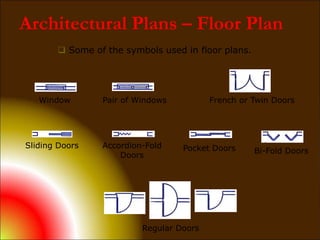
 Some of the symbols used in floor plans.
French or Twin Doors
Regular Doors
Bi-Fold Doors
Sliding Doors Pocket Doors
Accordion-Fold
Doors
Pair of Windows
Window
Architectural Plans – Floor Plan
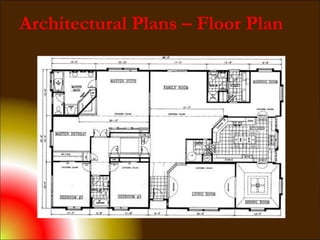
 Can you find some of these symbols used in this floor plan?
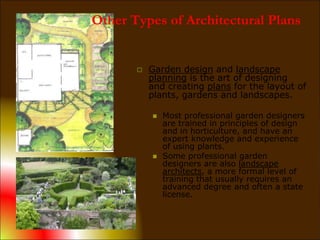
 Garden design and landscape
planning is the art of designing
and creating plans for the layout of
plants, gardens and landscapes.
 Most professional garden designers
are trained in principles of design
and in horticulture, and have an
expert knowledge and experience
of using plants.
 Some professional garden
designers are also landscape
architects, a more formal level of
training that usually requires an
advanced degree and often a state
license.
Other Types of Architectural Plans
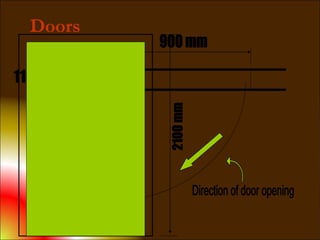
Doors
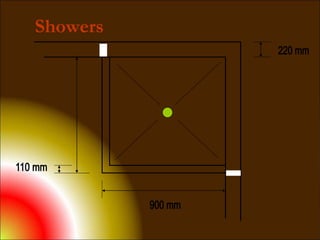
Showers
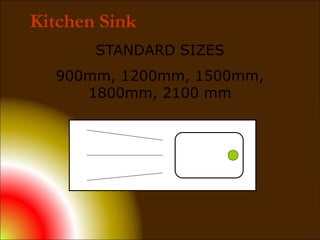
Kitchen Sink
STANDARD SIZES
900mm, 1200mm, 1500mm,
1800mm, 2100 mm
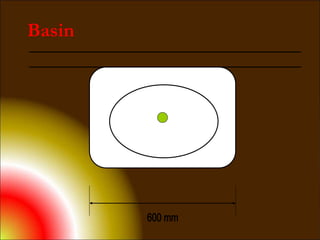
Basin
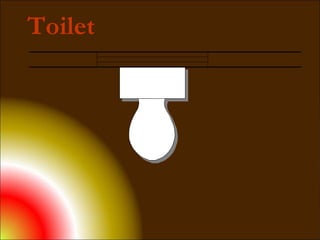
Toilet
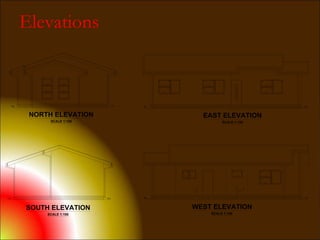
Elevations
NORTH ELEVATION
SCALE 1:100
EAST ELEVATION
SCALE 1:100
WEST ELEVATION
SCALE 1:100
SOUTH ELEVATION
SCALE 1:100
NGL
NGL NGL NGL
NGL NGL NGL NGL
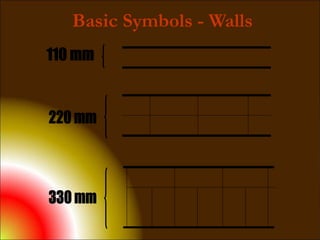
Basic Symbols - Walls
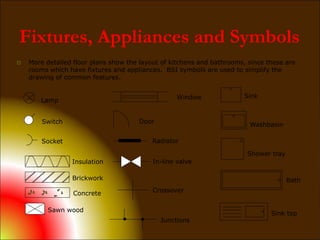
Fixtures, Appliances and Symbols
 More detailed floor plans show the layout of kitchens and bathrooms, since these are
rooms which have fixtures and appliances. BSI symbols are used to simplify the
drawing of common features.
Lamp
Switch
Socket
Brickwork
Concrete
Sawn wood
Window
Door
Radiator
In-line valve
Crossover
Junctions
Sink
Washbasin
Shower tray
Bath
Sink top
Insulation
Task – Floor Plans and Sectional Views
 Produce an accurate floor plan of a room in your home
using the correct symbols learnt in this section.
 Duration: 20mins
 Should you wish you may re-visit your kitchen floor plan and
improve.
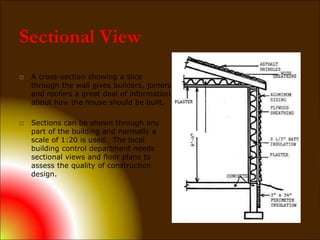
Sectional View
 A cross-section showing a slice
through the wall gives builders, joiners
and roofers a great deal of information
about how the house should be built,
 Sections can be shown through any
part of the building and normally a
scale of 1:20 is used. The local
building control department needs
sectional views and floor plans to
assess the quality of construction
design.
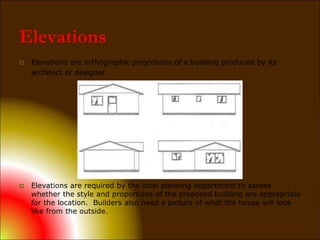
Elevations
 Elevations are orthographic projections of a building produced by its
architect or designer.
 Elevations are required by the local planning department to assess
whether the style and proportions of the proposed building are appropriate
for the location. Builders also need a picture of what the house will look
like from the outside.
For more detail contact us

Building Drawing(CE3G)- Introduction.ppt

  • 1.
    ITRODUCTION BY MRS. A.A.AVASTHI Visit for more Learning Resources
  • 2.
  • 3.
    Introduction  A buildingor construction project requires a complete set of specialised drawings. These drawings, called a project set, are used by the local planning department and building control, as well as by builders, joiners, plumbers, electricians and water, gas and telephone engineers.  The buildings are designed by an architect with a team of technicians and surveyors to help plan and produce the drawings. The types of drawings are designed by an architect with a team of technicians and surveyors to help plan and produce the drawing.
  • 4.
     The typesof drawings you need to know about are:  location plans  site (block) plans  floor plan  Drawings for new buildings require approval from the building control department and the planning department before construction work can begin. The building control department checks that the quality of design and construction meet British standards. The planning department assesses whether or not the style and proportions of the proposed building are appropriate for the location. Introduction
  • 5.
    Types of Drawings: Engineering drawings  Architectural drawings  Technical drawings  As built drawings  Shop drawings
  • 6.
    1. Engineering drawing: Definition :A schematic representation of a building, object, or component made according to defined conventions and projected to serve in the construction or fabrication of the thing depicted.  Engineering drawings are frequently used to describe public works projects, such as :  bridges, highways, and dams. 2. Architectural drawing  Definition A sketch, diagram, plan, or schematic used to design, construct, and document buildings and other structures.  The drawings may be used to indicate the overall appearance, inside or outside the structure, or they may be used to indicate precise measurements and other details for construction. Drawings, especially those for construction purposes, may be issued as a set, with different sheets indicating different types of construction (electrical, mechanical, plumbing).
  • 7.
     As-built drawing Definition Architectural drawings that reflect changes made during the construction process, recording differences between the original design and the completed structure.  As-built drawings are based on design drawings used during construction, where measured drawings are usually made long after construction is completed and no design drawings exist  Technical drawing:  Definition A graphic using lines and symbols that follows specific conventions of scale and projection, typically used in architecture, construction, engineering, or mapping
  • 8.
     A shopdrawing:  Definition It is a drawing or set of drawings produced by the contractor, supplier, manufacturer, subcontractor, or fabricator.  Shop drawings are typically required for pre-fabricated components. Examples of these include: elevators, structural steel, trusses, pre-cast, windows, appliances, cabinets, air handling units and millwork.  Shop drawings are not produced by architects and engineers under their contract with the owner. The shop drawing is the manufacturer’s or the contractor’s drawn version of information shown in the construction documents. The shop drawing normally shows more detail than the construction documents. It is drawn to explain the fabrication of the items to the manufacturer’s production crew. The style of the shop drawing is usually very different from that of the architect’s drawing.
  • 9.
     Architectural Drawingsused for: 1. Building elements seen in true size, shape, orientation . ”scale” 2. Describe form & construction of building component. 3. It is the base drawings for other construction works.” electrical, sewage, mechanical…”  Site plan  Plans  Sections Preparing the architectural drawings:  Elevations
  • 10.
     The siteplan: is a view looking down at a building from above, illustrating its location & orientation on a plot land & providing information about the site’s topography, landscaping utilities ,and site work.  The importance of site plan:  It illustrates the existing natural & built features.  The building section: is a vertical pane cut through a building. Or: it is a drawing of interior & exterior partitions and roofs and ground floor in addition of interior elevations seen beyond the plane of cut.  The importance of The building section: 1. Illustrate building construction. 2. Technical implementation (precast- prestress…). 3. Types of slab (roof plate) solid slab, hollow block, flat slab…). 4. Building material (block, stone, concrete,…). 5. Height of the building and levels. 6. Details and finishing. 7. Measurements.
  • 11.
    5. Utilities (stairs-elevators- mechanical room- baths- stores….) 6. Structural system: 1. R.C, steel, bearing walls… 2. Columns, beams,… 3. Thickness of walls (exterior & interior) 7. Measurement and cost (quantity survey)  The floor plan: is a view looking down/ a horizontal plane is cut through a building from above about 1.5m, illustrating it’s the horizontal dimensions of a building spaces, the thickness & construction of vertical walls & columns that define these spaces.  The importance of plans: 1. Define the spaces & its functional relationship. 2. Illustrates places of openings (doors- windows). 3. Finishing. 4. Entrance (main- secondary)
  • 12.
     Building elevations:is views of a building’s exterior perpendicular to the principle vertical surfaces.  The importance of The building section: 1. Finishing 2. Openings 3. Size, shape , materials of exterior surfaces 4. Size proportion 5. Heights of the building 6. Measurements
  • 13.
    Location Plan  Itidentifies the location of the proposed new building within its surroundings. It also helps the builder to plan the layout of a new building scheme and is required by the local government planning department which decided whether or not to approve the project.  Neighbouring buildings and their boundaries are shown, as are roads, street names and fields.  The scale of the drawing depends on the size of the whole building scheme but is normally 1:1250  All building projects come under local authority control .
  • 14.
    Site (Block) Plan A site plan (also known as a block plan) shows the site boundary and the outline of the new building which are highlighted in the location plan.  Paths, roads and neighbouring plots are also shown. This type of plan enables the builder to mark out the site, lay drainage pipes and build manholes.  It is also submitted to the local planning department for approval. The scale of a site plan depends on the size of the building. For houses and small buildings a 1:200 scale is used. A site plan can show: • existing trees • the building outline, including the roof • the main dimensions of the house and site and metres • drainage pipes and manholes which run from the bathroom and kitchen to the main drain under the road • the position of the house on the site • contour lines which show the slope of the land
  • 15.
    Floor Plan  Afloor plan is a type of sectional view of the building with the roof and a few layers of bricks removed to show:  the arrangement of rooms  the positions of windows and doors  the types of internal and external Floor plans are used by builders, plumbers, electricians and joiners to help plan the construction work and to cost the building materials. The scale of a floor plan depends on the size of the building but for most domestic buildings a sale of 1:50 is used Floor plan can also include: the dimensions of each room & the exact positions of doors & windows the layout of water pipes (plumbing) the layout of electrical cabling and positions of sockets, switches and fuse boxes
  • 16.
    Architectural Plans  AnArchitect is a person who designs houses, buildings, and other structures.  Architects make plans when they are designing a new structure. These plans are usually sketches, drawings or miniature models of the structure they are going to build.
  • 17.
    Architectural Plans –Drawing Plans for a House  When an architect is making plans for a house, they draw several different types of plans. Each plan is a different point of view of the building.
  • 18.
    Architectural Plans –Front Elevation
  • 19.
    Architectural Plans –Section Drawing Section Drawing View from the front where you can see through the walls into the house or building.
  • 20.
    Architectural Plans –Floor Plan  A floor plan is a drawing of the rooms and spaces in a structure or building. Similar to a map, in an floor plan the viewer is looking downward from above.  Dimensions are usually drawn between the walls to specify room sizes and wall lengths.  Floor plans will also include details like sinks, water heaters, furnaces, etc.
  • 21.
  • 22.
    Architectural Plans –Floor Plan  Some of the symbols used in floor plans. French or Twin Doors Regular Doors Bi-Fold Doors Sliding Doors Pocket Doors Accordion-Fold Doors Pair of Windows Window
  • 23.
    Architectural Plans –Floor Plan  Can you find some of these symbols used in this floor plan?
  • 24.
     Garden designand landscape planning is the art of designing and creating plans for the layout of plants, gardens and landscapes.  Most professional garden designers are trained in principles of design and in horticulture, and have an expert knowledge and experience of using plants.  Some professional garden designers are also landscape architects, a more formal level of training that usually requires an advanced degree and often a state license. Other Types of Architectural Plans
  • 25.
  • 26.
  • 27.
    Kitchen Sink STANDARD SIZES 900mm,1200mm, 1500mm, 1800mm, 2100 mm
  • 28.
  • 29.
  • 30.
    Elevations NORTH ELEVATION SCALE 1:100 EASTELEVATION SCALE 1:100 WEST ELEVATION SCALE 1:100 SOUTH ELEVATION SCALE 1:100 NGL NGL NGL NGL NGL NGL NGL NGL
  • 31.
  • 32.
    Fixtures, Appliances andSymbols  More detailed floor plans show the layout of kitchens and bathrooms, since these are rooms which have fixtures and appliances. BSI symbols are used to simplify the drawing of common features. Lamp Switch Socket Brickwork Concrete Sawn wood Window Door Radiator In-line valve Crossover Junctions Sink Washbasin Shower tray Bath Sink top Insulation
  • 33.
    Task – FloorPlans and Sectional Views  Produce an accurate floor plan of a room in your home using the correct symbols learnt in this section.  Duration: 20mins  Should you wish you may re-visit your kitchen floor plan and improve.
  • 34.
    Sectional View  Across-section showing a slice through the wall gives builders, joiners and roofers a great deal of information about how the house should be built,  Sections can be shown through any part of the building and normally a scale of 1:20 is used. The local building control department needs sectional views and floor plans to assess the quality of construction design.
  • 35.
    Elevations  Elevations areorthographic projections of a building produced by its architect or designer.  Elevations are required by the local planning department to assess whether the style and proportions of the proposed building are appropriate for the location. Builders also need a picture of what the house will look like from the outside.
  • 36.
    For more detailcontact us