DEPARTMENT OF
CIVIL ENGINEERING
Water Resources and water systems
Er. Ramprasad Kumawat
Water Resources
• Water resources are natural
resources of water that are potentially useful as
a source of water supply.
• 97% of the water on the Earth is salt water
and only three percent is fresh water; slightly
over two thirds of this is frozen
in glaciers and polar ice caps.
• The remaining unfrozen freshwater is found
mainly as groundwater, with only a small
fraction present above ground or in the air.
• Natural sources of fresh
water include surface water, under river
flow, groundwater and frozen water.
• Artificial sources of fresh water can
include treated wastewater (reclaimed water)
and desalinated seawater.
Uses of water
• Uses of water include
• Agricultural,
• Industrial,
• Household,
• Recreational and
• Environmental activities.
• Graphical distribution of the locations of
water on Earth.
• Only 3% of the Earth's water is fresh water.
• Most of it is in icecaps and glaciers (69%) and
groundwater (30%), while all lakes, rivers and
swamps combined only account for a small
fraction (0.3%) of the Earth's total freshwater
reserves.
Sources of useful water
• Natural sources of fresh water
• Artificial sources of usable water
Natural sources of fresh water
• Natural sources of fresh water include surface
water, under river flow, groundwater and frozen
water.
• Surface water is water in a river, lake or fresh
water wetland.
• Surface water is naturally replenished
by precipitation and naturally lost through
discharge to
the oceans, evaporation, evapotranspiration and
groundwater recharge.
• The ocean (also the sea or the world ocean) is
the body of salt water that covers
approximately 70.8% of the surface
of Earth and contains 97% of Earth's water.
• Evaporation is a type of vaporization that
occurs on the surface of a liquid as it changes
into the gas phase.
• Evapotranspiration (ET)
is the sum of
water evaporation and
transpiration from a surface
area to the atmosphere.
• Groundwater
recharge or deep
drainage or deep
percolation is
a hydrologic process,
where water moves
downward from surface
water to groundwater.
• Under River Flow
• Throughout the course of a river, the total
volume of water transported downstream will
often be a combination of the visible free water
flow together with a substantial contribution
flowing through rocks and sediments that
underlie the river and its floodplain called
the hypothetic zone.
• Groundwater is fresh water located in the
subsurface pore space of soil and rocks.
It is also water that is flowing
within aquifers below the water table.
• Groundwater can be thought of in the same
terms as surface water: inputs, outputs and
storage.
• The natural input to groundwater is seepage
from surface water. The natural outputs from
groundwater are springs and seepage to the
oceans.
• Frozen water
• Several schemes have been proposed to make
use of icebergs as a water source.
• Glacier runoff is considered to be surface
water.
The Himalayas, which are often called "The
Roof of the World", contain some of the most
extensive and rough high altitude areas on
Earth as well as the greatest area of glaciers
and permafrost outside of the poles.
Artificial sources of usable water
• Artificial sources of fresh water can
include treated wastewater (reclaimed water)
and desalinated seawater.
• However, economic and environmental side
effects of these technologies must also be
taken into consideration.
Reclaimed water
• Water reclamation (also called wastewater reuse,
water reuse or water recycling) is the process of
converting municipal wastewater (sewage)
or industrial wastewater into water that can
be reused for a variety of purposes.
• Types of reuse include: urban reuse, agricultural
reuse (irrigation), environmental reuse, industrial
reuse, planned potable reuse, de facto wastewater
reuse (unplanned potable reuse).
• For example, reuse may include irrigation of
gardens and agricultural fields or
replenishing surface-
water and groundwater (i.e., groundwater
recharge).
• Reused water may also be directed toward
fulfilling certain needs in residences (e.g. toilet
flushing), businesses, and industry, and could
even be treated to reach drinking
water standards.
Water uses
• Agriculture and other irrigation
• Industries
• Drinking water and domestic use (households)
• Environment
• Recreational water use
Agriculture and other irrigation
• It is estimated that 70% of worldwide water is
used for irrigation, with 15–35% of irrigation
withdrawals being unsustainable.
• It takes around 2,000 – 3,000 liters of water to
produce enough food to satisfy one person's
daily dietary need.
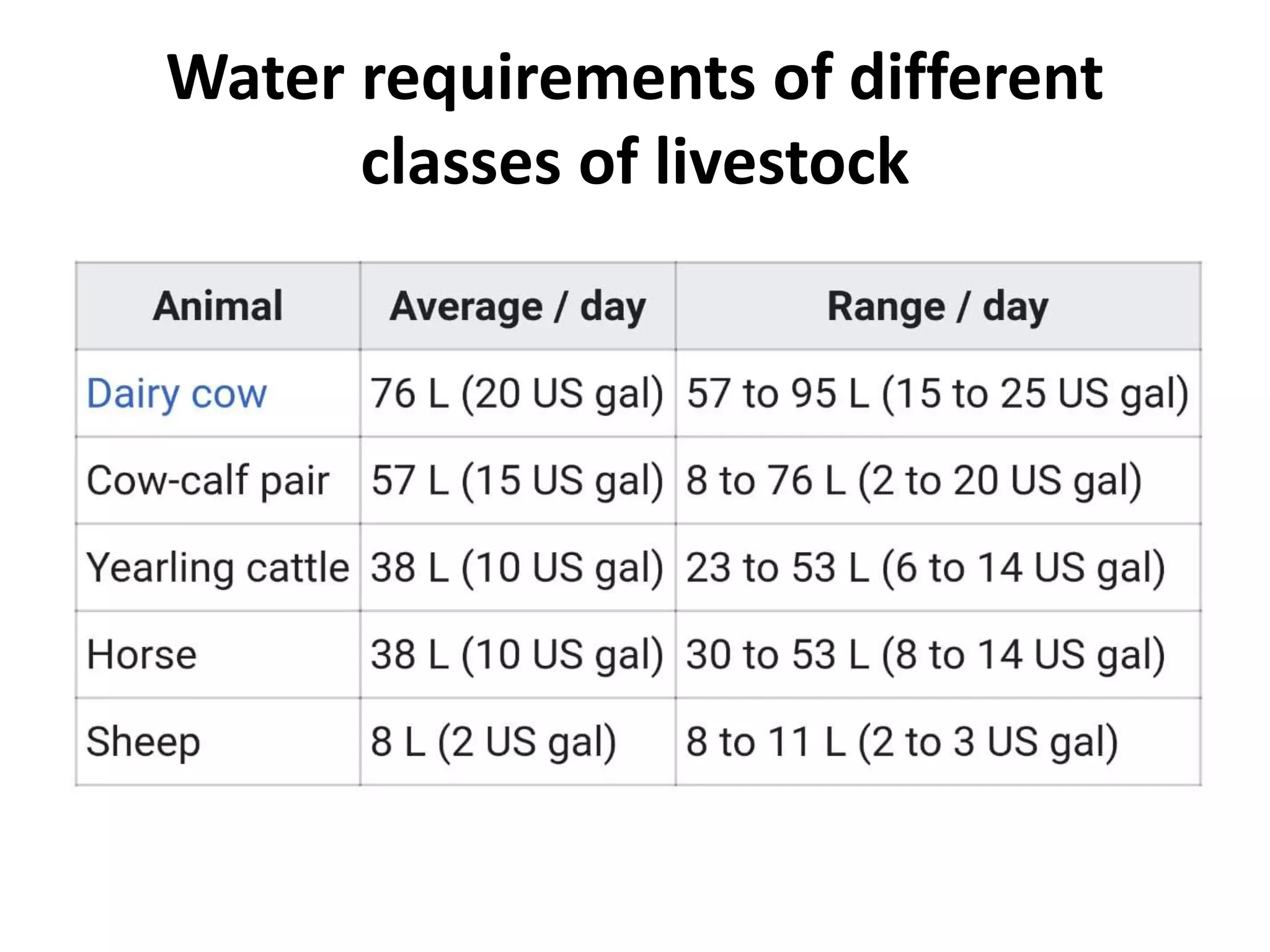
Water requirements of different
classes of livestock
Approximate
values of
seasonal
crop water
needs
• Industries
• It is estimated that 22% of worldwide water is
used in industry.
• Major industrial users
include hydroelectric dams, thermoelectric
power plants, which use water
for cooling, ore and oil refineries, which use
water in chemical processes, and
manufacturing plants, which use water as
a solvent.
• Water is used in renewable power generation.
Hydroelectric power derives energy from the
force of water flowing downhill, driving a
turbine connected to a generator.
• This hydroelectricity is a low-cost, non-
polluting, renewable energy source.
Drinking water and domestic use
(households)
• It is estimated that 8% of worldwide water use
is for domestic purposes.
• These include drinking
water, bathing, cooking, toilet flushing,
cleaning, laundry and gardening.
• Basic domestic water requirements have been
estimated by Peter Gleick at around 50 liters
per person per day, excluding water for
gardens.
• Drinking water is water that is of sufficiently
high quality so that it can be consumed or used
without risk of immediate or long term harm.
Such water is commonly called potable water.
Recommended basic water
requirements for human needs
(per person)
• Environment
• Explicit environment water use is also a very
small but growing percentage of total water
use.
• Environmental water may include water stored
in impoundments and released for
environmental purposes (held environmental
water), but more often is water retained in
waterways through regulatory limits of
abstraction.
• Recreational water use is mostly tied to lakes,
dams, rivers or oceans.
• If a water reservoir is kept fuller than it would
otherwise be for recreation, then the water
retained could be categorized as recreational
usage.
• Examples are anglers, water skiers, nature
enthusiasts and swimmers.
• THANKS!

water resources

  • 1.
    DEPARTMENT OF CIVIL ENGINEERING WaterResources and water systems Er. Ramprasad Kumawat
  • 2.
    Water Resources • Waterresources are natural resources of water that are potentially useful as a source of water supply. • 97% of the water on the Earth is salt water and only three percent is fresh water; slightly over two thirds of this is frozen in glaciers and polar ice caps.
  • 3.
    • The remainingunfrozen freshwater is found mainly as groundwater, with only a small fraction present above ground or in the air. • Natural sources of fresh water include surface water, under river flow, groundwater and frozen water. • Artificial sources of fresh water can include treated wastewater (reclaimed water) and desalinated seawater.
  • 4.
    Uses of water •Uses of water include • Agricultural, • Industrial, • Household, • Recreational and • Environmental activities.
  • 6.
    • Graphical distributionof the locations of water on Earth. • Only 3% of the Earth's water is fresh water. • Most of it is in icecaps and glaciers (69%) and groundwater (30%), while all lakes, rivers and swamps combined only account for a small fraction (0.3%) of the Earth's total freshwater reserves.
  • 7.
    Sources of usefulwater • Natural sources of fresh water • Artificial sources of usable water
  • 8.
    Natural sources offresh water • Natural sources of fresh water include surface water, under river flow, groundwater and frozen water. • Surface water is water in a river, lake or fresh water wetland. • Surface water is naturally replenished by precipitation and naturally lost through discharge to the oceans, evaporation, evapotranspiration and groundwater recharge.
  • 9.
    • The ocean(also the sea or the world ocean) is the body of salt water that covers approximately 70.8% of the surface of Earth and contains 97% of Earth's water. • Evaporation is a type of vaporization that occurs on the surface of a liquid as it changes into the gas phase.
  • 10.
    • Evapotranspiration (ET) isthe sum of water evaporation and transpiration from a surface area to the atmosphere. • Groundwater recharge or deep drainage or deep percolation is a hydrologic process, where water moves downward from surface water to groundwater.
  • 11.
    • Under RiverFlow • Throughout the course of a river, the total volume of water transported downstream will often be a combination of the visible free water flow together with a substantial contribution flowing through rocks and sediments that underlie the river and its floodplain called the hypothetic zone.
  • 12.
    • Groundwater isfresh water located in the subsurface pore space of soil and rocks. It is also water that is flowing within aquifers below the water table. • Groundwater can be thought of in the same terms as surface water: inputs, outputs and storage.
  • 13.
    • The naturalinput to groundwater is seepage from surface water. The natural outputs from groundwater are springs and seepage to the oceans.
  • 14.
    • Frozen water •Several schemes have been proposed to make use of icebergs as a water source. • Glacier runoff is considered to be surface water. The Himalayas, which are often called "The Roof of the World", contain some of the most extensive and rough high altitude areas on Earth as well as the greatest area of glaciers and permafrost outside of the poles.
  • 15.
    Artificial sources ofusable water • Artificial sources of fresh water can include treated wastewater (reclaimed water) and desalinated seawater. • However, economic and environmental side effects of these technologies must also be taken into consideration.
  • 16.
    Reclaimed water • Waterreclamation (also called wastewater reuse, water reuse or water recycling) is the process of converting municipal wastewater (sewage) or industrial wastewater into water that can be reused for a variety of purposes. • Types of reuse include: urban reuse, agricultural reuse (irrigation), environmental reuse, industrial reuse, planned potable reuse, de facto wastewater reuse (unplanned potable reuse).
  • 17.
    • For example,reuse may include irrigation of gardens and agricultural fields or replenishing surface- water and groundwater (i.e., groundwater recharge). • Reused water may also be directed toward fulfilling certain needs in residences (e.g. toilet flushing), businesses, and industry, and could even be treated to reach drinking water standards.
  • 18.
    Water uses • Agricultureand other irrigation • Industries • Drinking water and domestic use (households) • Environment • Recreational water use
  • 19.
    Agriculture and otherirrigation • It is estimated that 70% of worldwide water is used for irrigation, with 15–35% of irrigation withdrawals being unsustainable. • It takes around 2,000 – 3,000 liters of water to produce enough food to satisfy one person's daily dietary need.
  • 20.
    Water requirements ofdifferent classes of livestock
  • 21.
  • 22.
    • Industries • Itis estimated that 22% of worldwide water is used in industry. • Major industrial users include hydroelectric dams, thermoelectric power plants, which use water for cooling, ore and oil refineries, which use water in chemical processes, and manufacturing plants, which use water as a solvent.
  • 23.
    • Water isused in renewable power generation. Hydroelectric power derives energy from the force of water flowing downhill, driving a turbine connected to a generator. • This hydroelectricity is a low-cost, non- polluting, renewable energy source.
  • 24.
    Drinking water anddomestic use (households) • It is estimated that 8% of worldwide water use is for domestic purposes. • These include drinking water, bathing, cooking, toilet flushing, cleaning, laundry and gardening. • Basic domestic water requirements have been estimated by Peter Gleick at around 50 liters per person per day, excluding water for gardens.
  • 25.
    • Drinking wateris water that is of sufficiently high quality so that it can be consumed or used without risk of immediate or long term harm. Such water is commonly called potable water.
  • 26.
    Recommended basic water requirementsfor human needs (per person)
  • 27.
    • Environment • Explicitenvironment water use is also a very small but growing percentage of total water use. • Environmental water may include water stored in impoundments and released for environmental purposes (held environmental water), but more often is water retained in waterways through regulatory limits of abstraction.
  • 28.
    • Recreational wateruse is mostly tied to lakes, dams, rivers or oceans. • If a water reservoir is kept fuller than it would otherwise be for recreation, then the water retained could be categorized as recreational usage. • Examples are anglers, water skiers, nature enthusiasts and swimmers.
  • 29.