BIOINFORMATICS
Introduction To Bioinformatics
Course: B.Sc Biochemistry
Subject: Basic of Bioinformatics
Unit: I
BIOINFORMATICS
BIOINFORMATICS
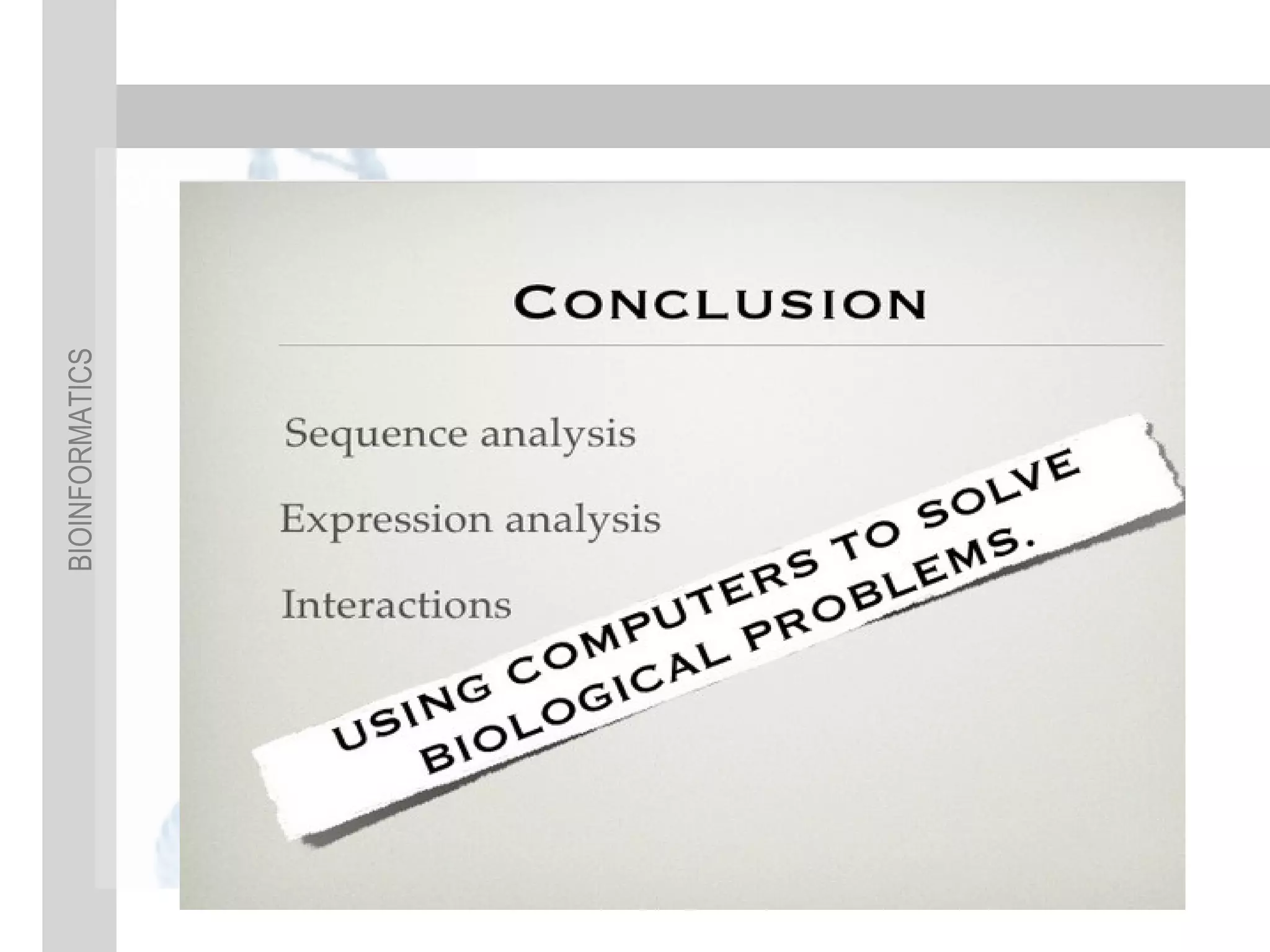
• Introduction to bioinformatics
• History
• Aim scope and importance of bioinformatics
• Origin of bioinformatics its application and benefits in life science
industry.
• Research areas of bioinformatics.
• Fundamentals of Internet: WWW, HTML, URLs Browsers,
Netscape/Opera/Explorer Search Engines: Google, NCBI,
PUBMED, entraz
BIOINFORMATICS
INTRODUCTION TO BIOINFORMATICS
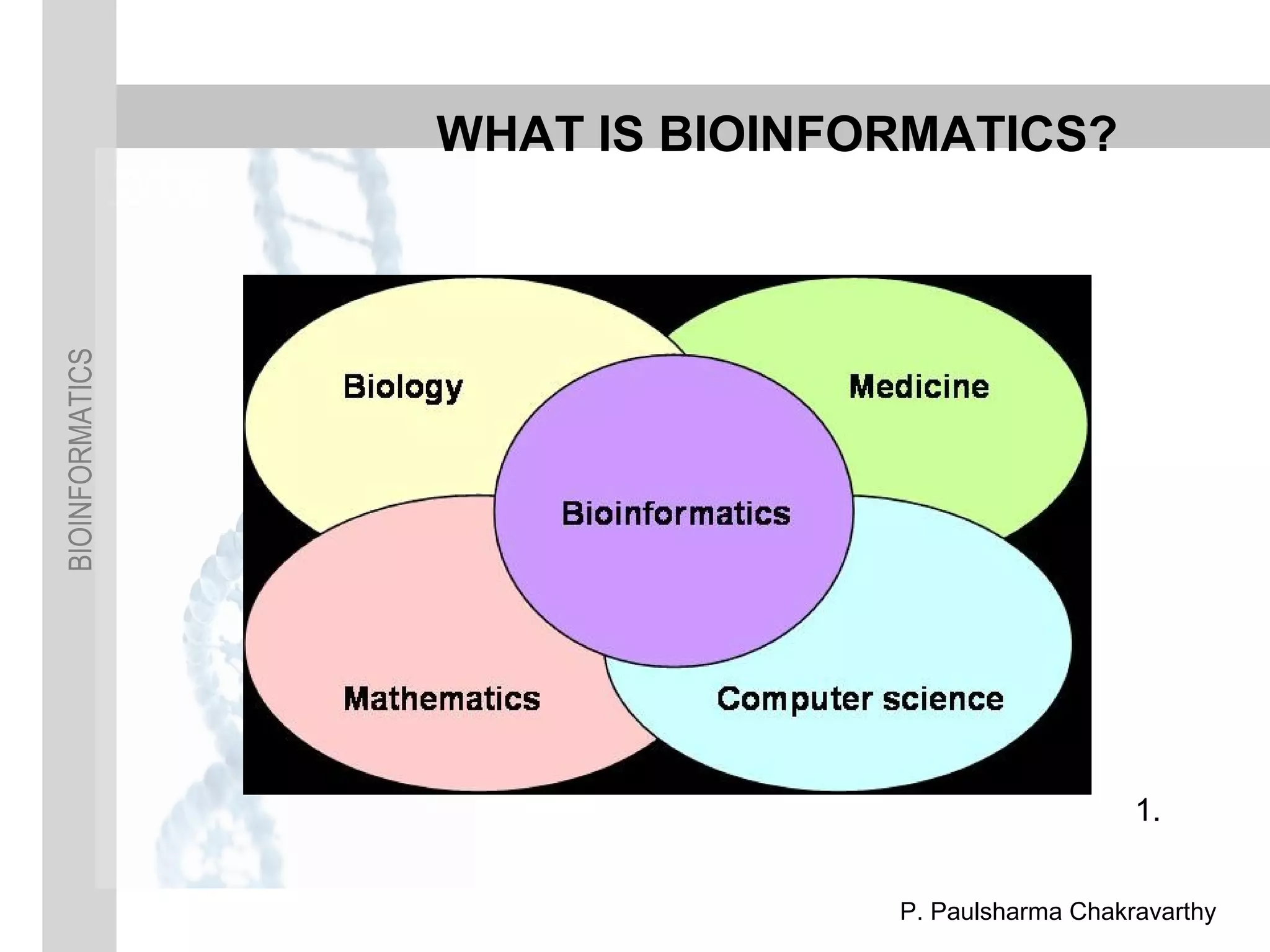
• Definition: Bioinformatics is an interdisciplinary
scientific field that develops methods and software tools
for storing, retrieving, organizing and analyzing
biological data. As an interdisciplinary field,
bioinformatics combines computer
Science, statistics, mathematics and engineering to
study biological data and processes.
BIOINFORMATICS
P. Paulsharma Chakravarthy
WHAT IS BIOINFORMATICS?
1.
BIOINFORMATICS
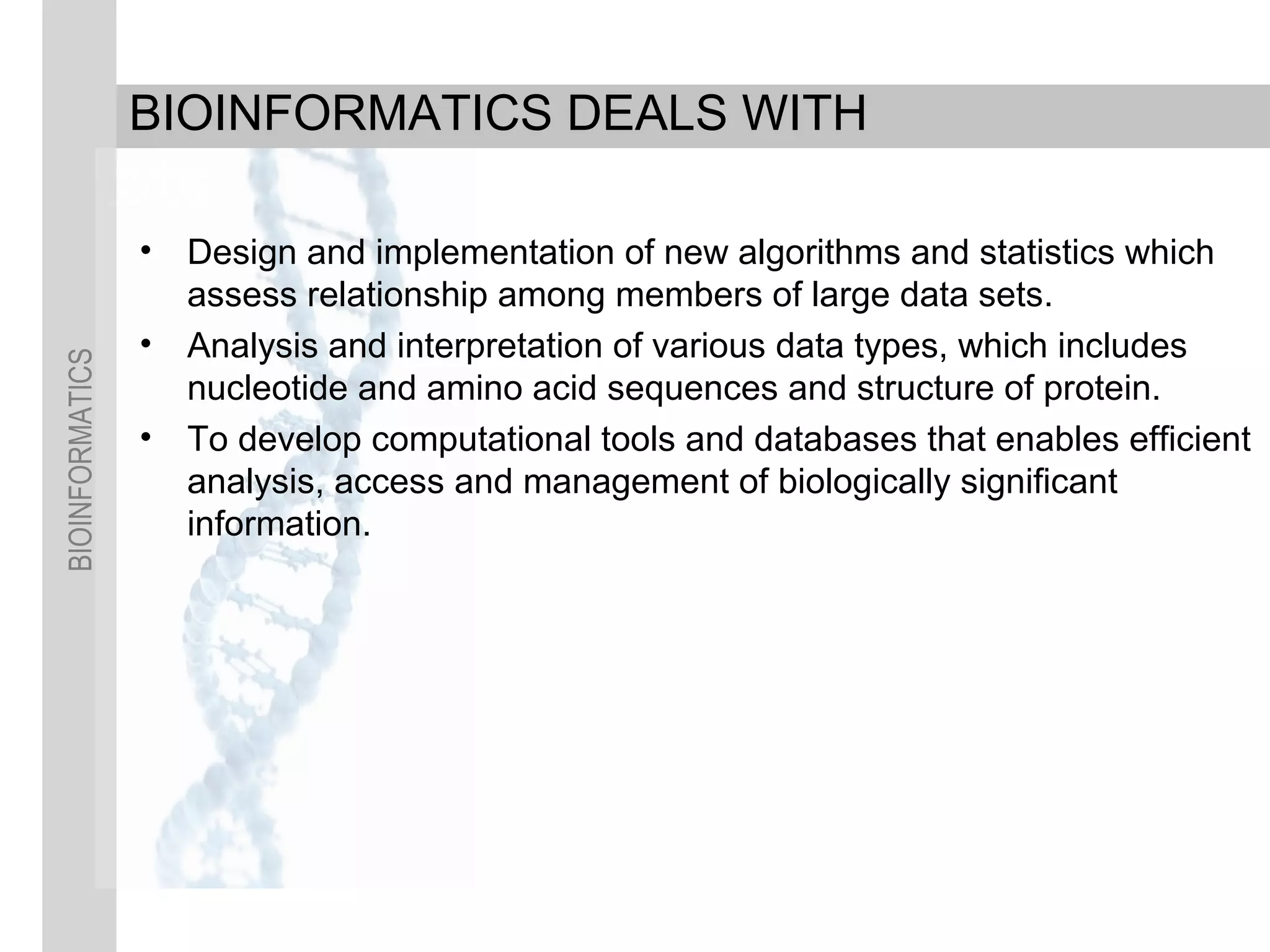
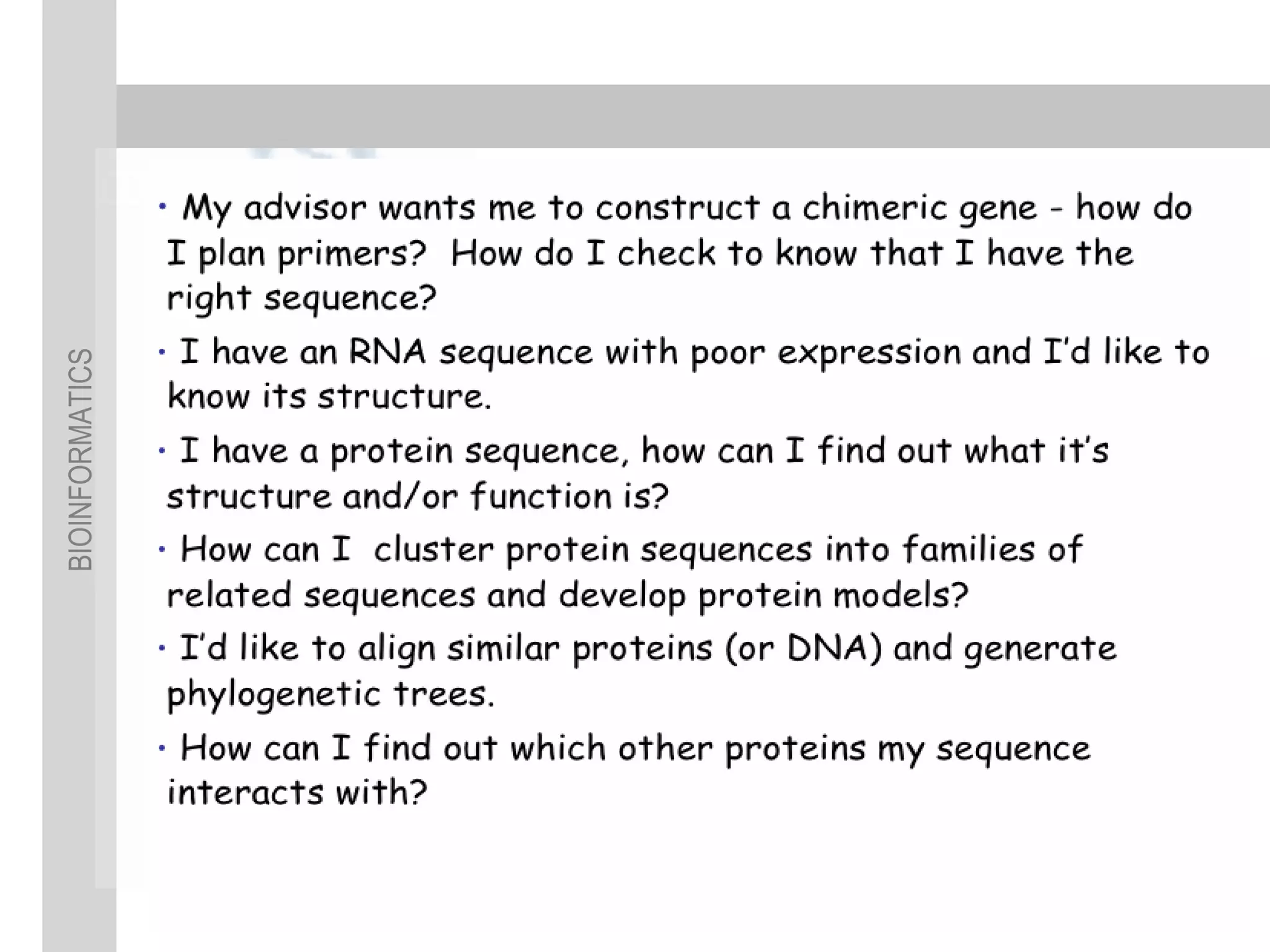
BIOINFORMATICS DEALS WITH
• Design and implementation of new algorithms and statistics which
assess relationship among members of large data sets.
• Analysis and interpretation of various data types, which includes
nucleotide and amino acid sequences and structure of protein.
• To develop computational tools and databases that enables efficient
analysis, access and management of biologically significant
information.
BIOINFORMATICS
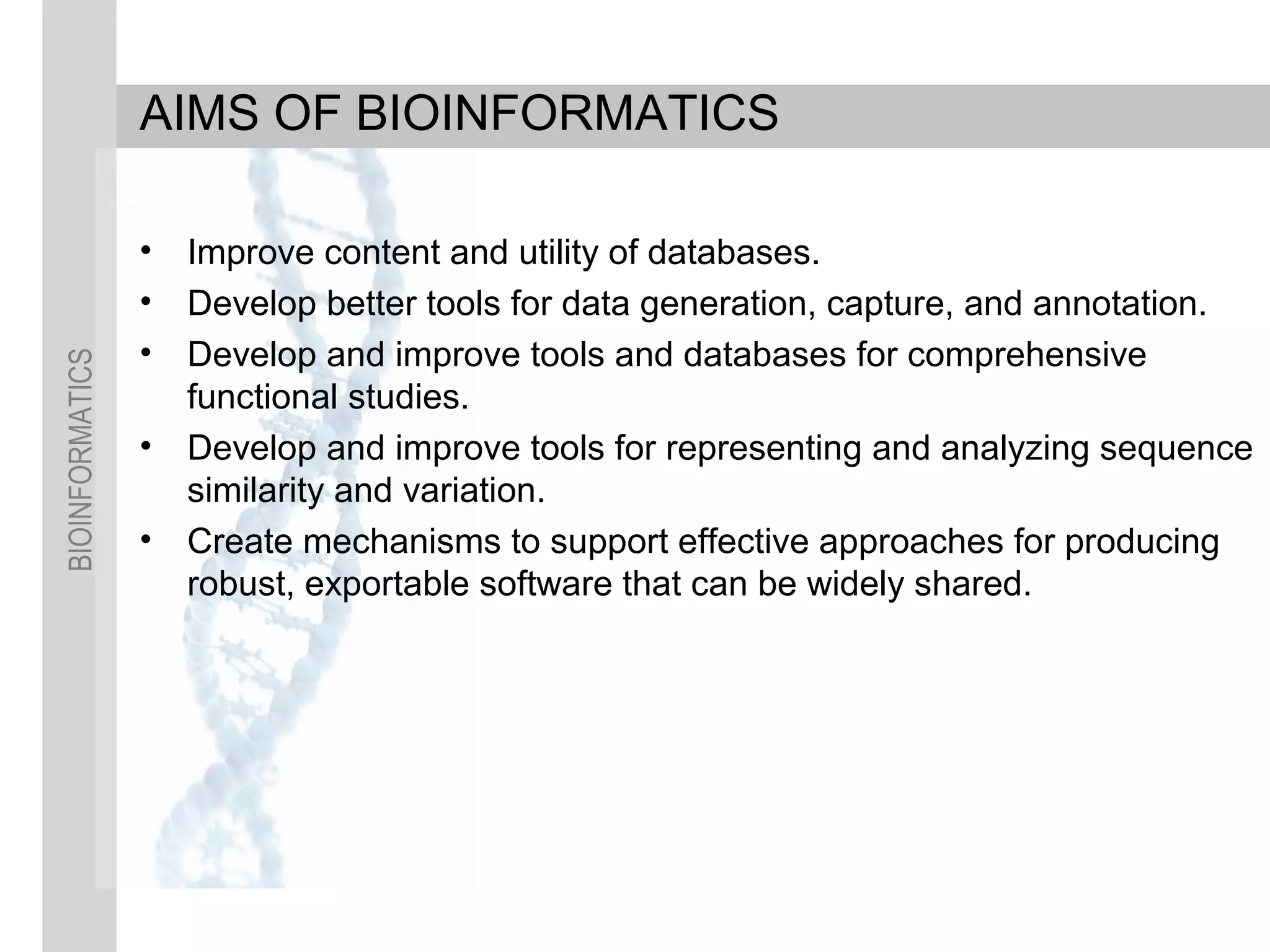
AIMS OF BIOINFORMATICS
• Improve content and utility of databases.
• Develop better tools for data generation, capture, and annotation.
• Develop and improve tools and databases for comprehensive
functional studies.
• Develop and improve tools for representing and analyzing sequence
similarity and variation.
• Create mechanisms to support effective approaches for producing
robust, exportable software that can be widely shared.
BIOINFORMATICS
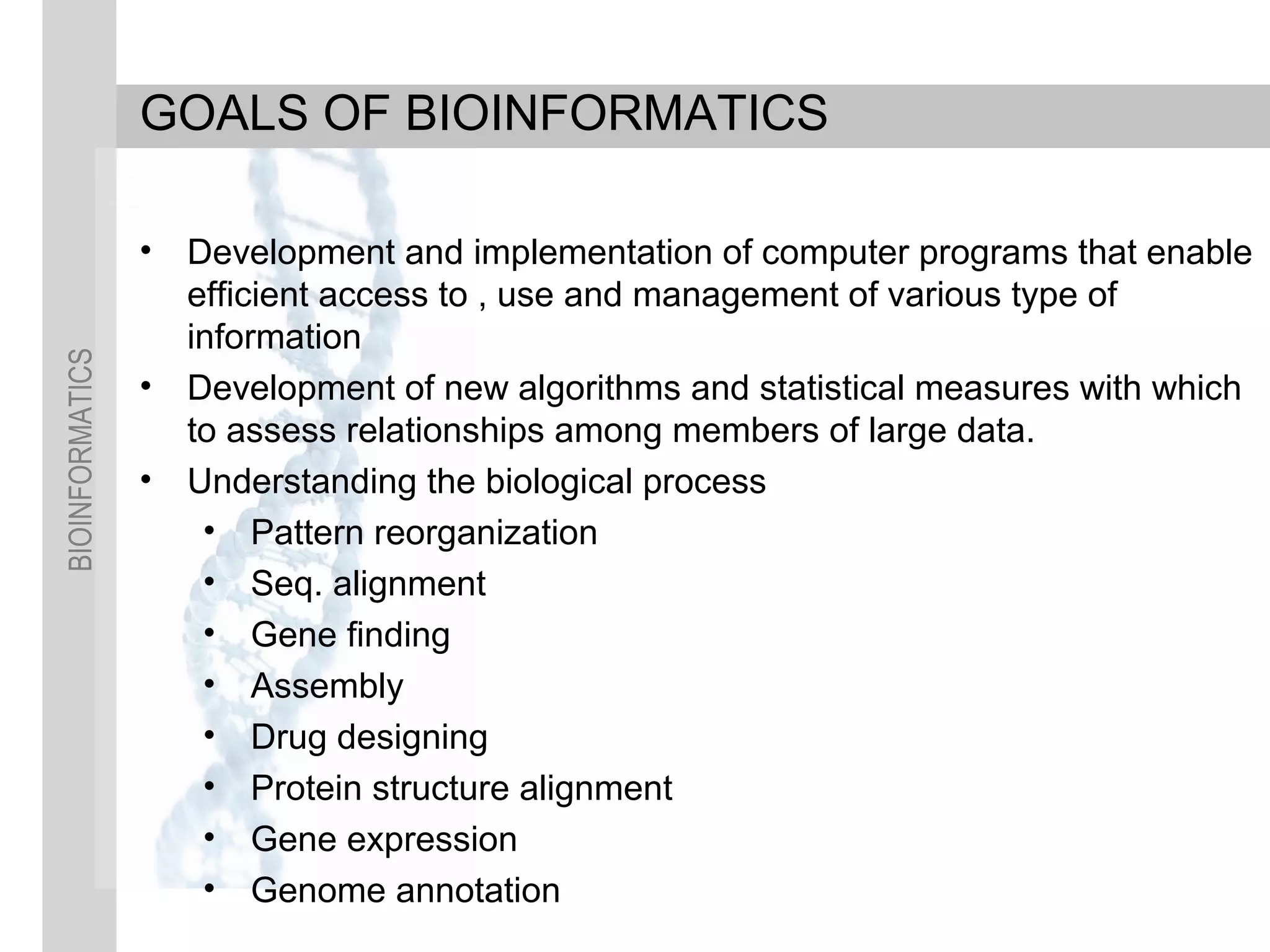
GOALS OF BIOINFORMATICS
• Development and implementation of computer programs that enable
efficient access to , use and management of various type of
information
• Development of new algorithms and statistical measures with which
to assess relationships among members of large data.
• Understanding the biological process
• Pattern reorganization
• Seq. alignment
• Gene finding
• Assembly
• Drug designing
• Protein structure alignment
• Gene expression
• Genome annotation
BIOINFORMATICS
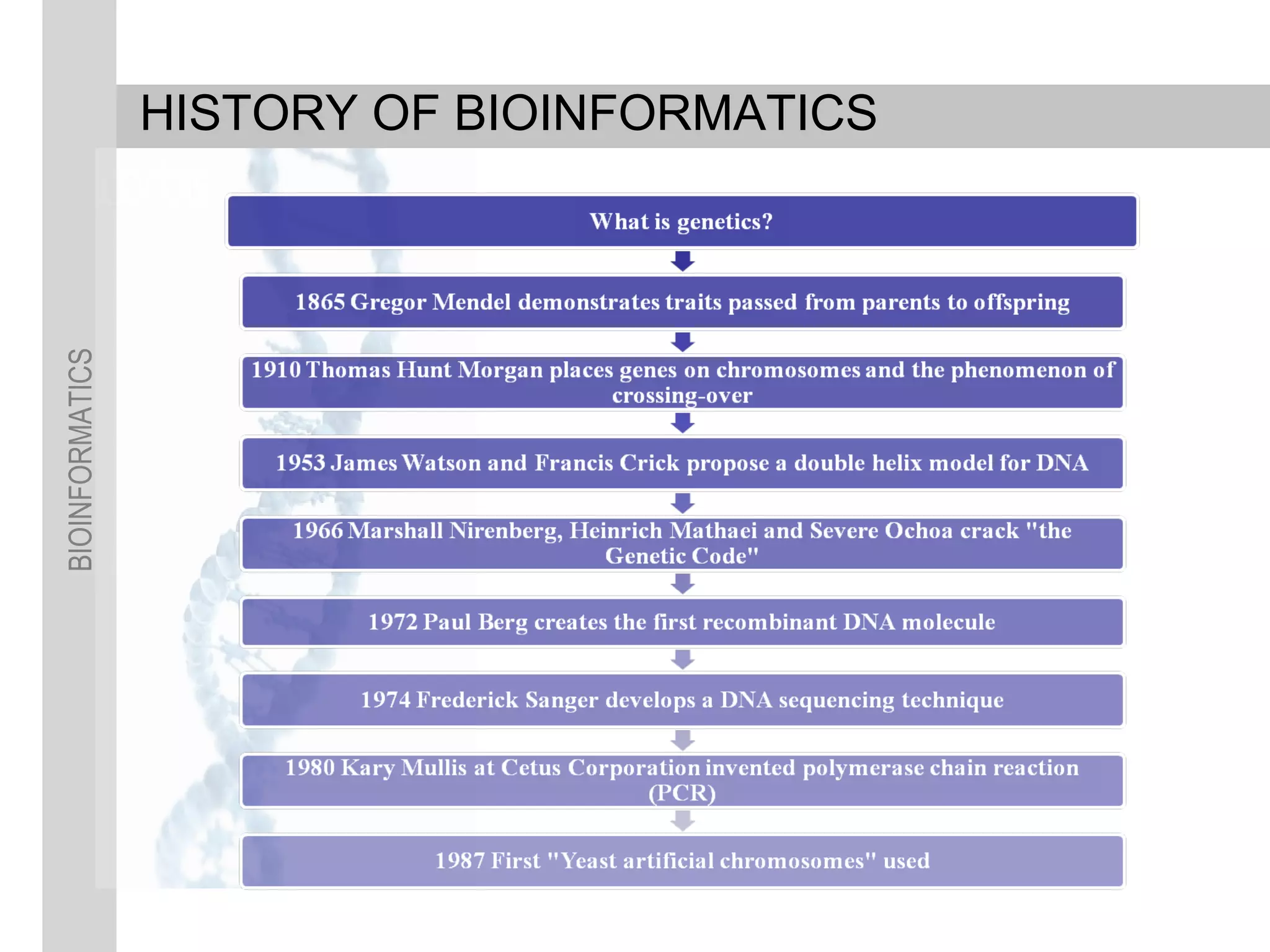
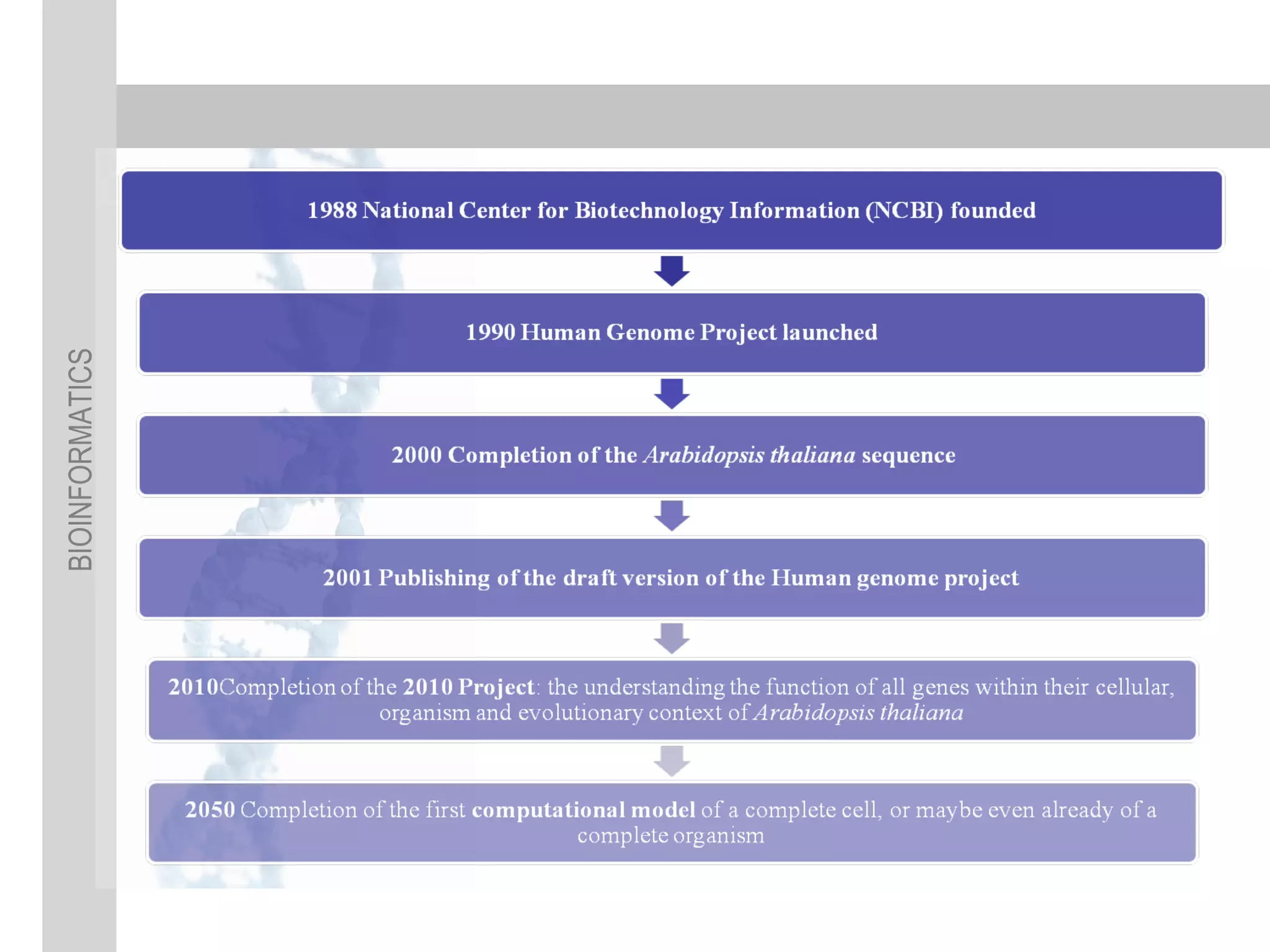
HISTORY OF BIOINFORMATICS
BIOINFORMATICS
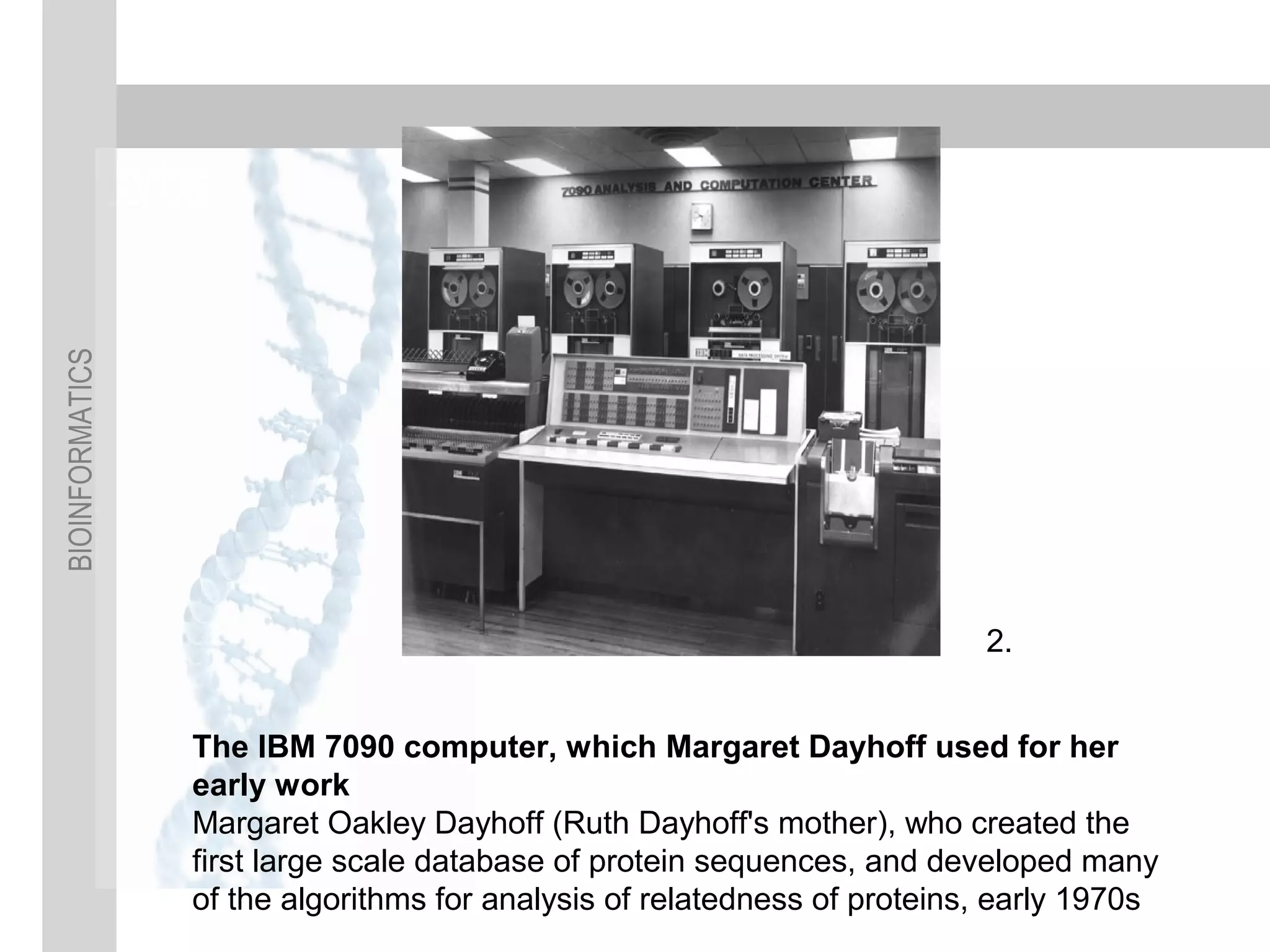
The IBM 7090 computer, which Margaret Dayhoff used for her
early work
Margaret Oakley Dayhoff (Ruth Dayhoff's mother), who created the
first large scale database of protein sequences, and developed many
of the algorithms for analysis of relatedness of proteins, early 1970s
2.
BIOINFORMATICS
BIOINFORMATICS
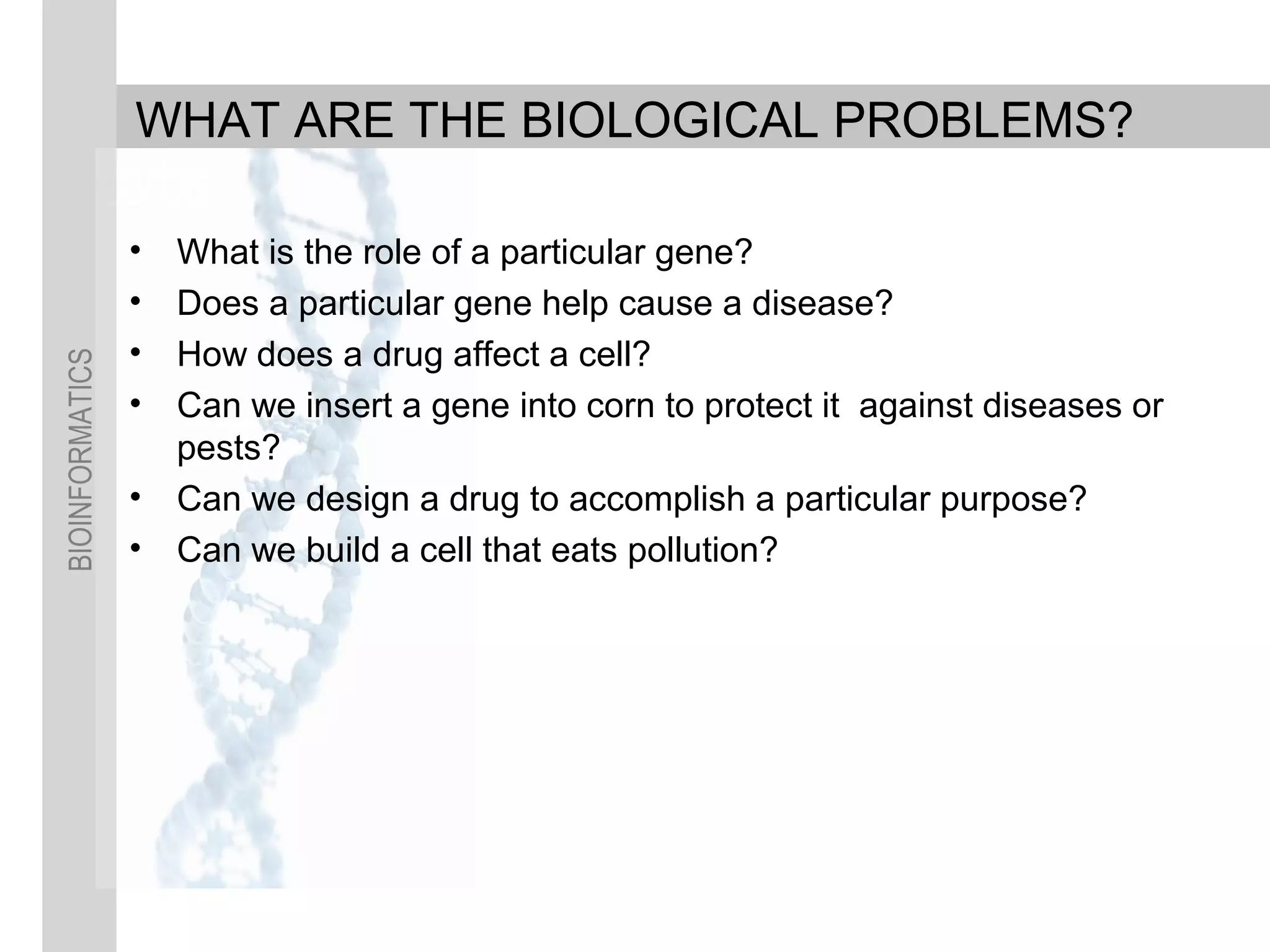
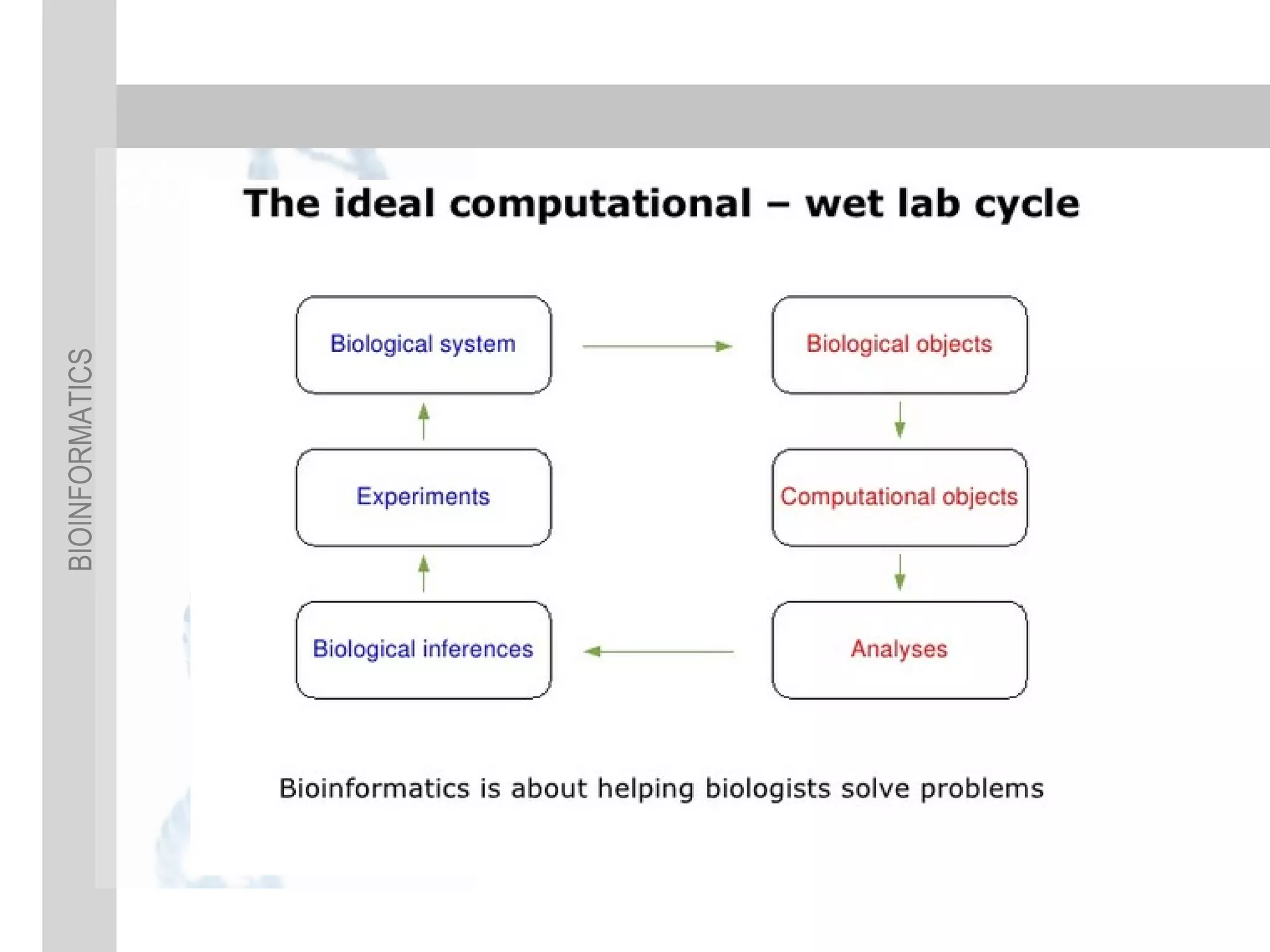
WHAT ARE THE BIOLOGICAL PROBLEMS?
• What is the role of a particular gene?
• Does a particular gene help cause a disease?
• How does a drug affect a cell?
• Can we insert a gene into corn to protect it against diseases or
pests?
• Can we design a drug to accomplish a particular purpose?
• Can we build a cell that eats pollution?
BIOINFORMATICS
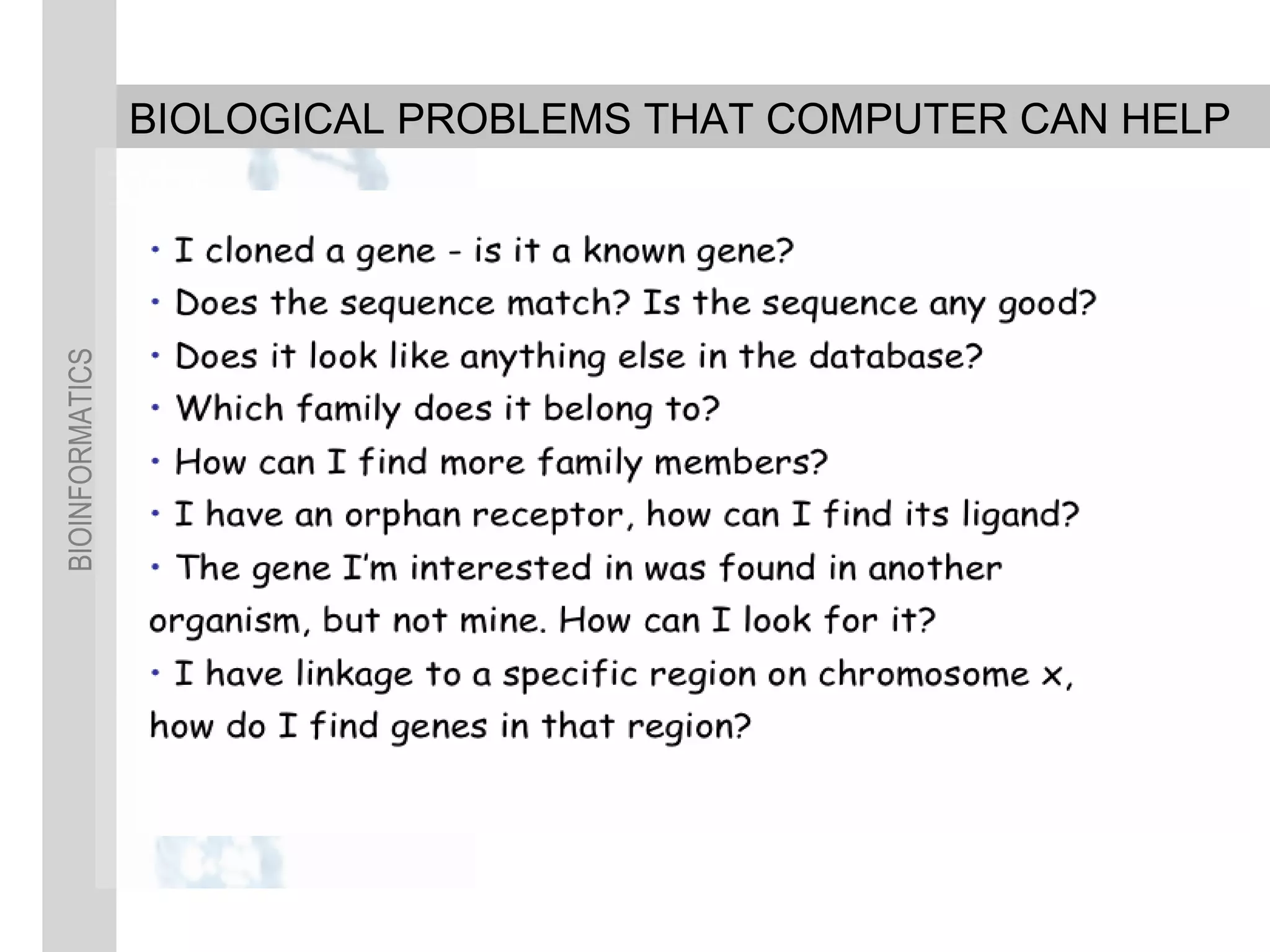
BIOLOGICAL PROBLEMS THAT COMPUTER CAN HELP
BIOINFORMATICS
BIOINFORMATICS
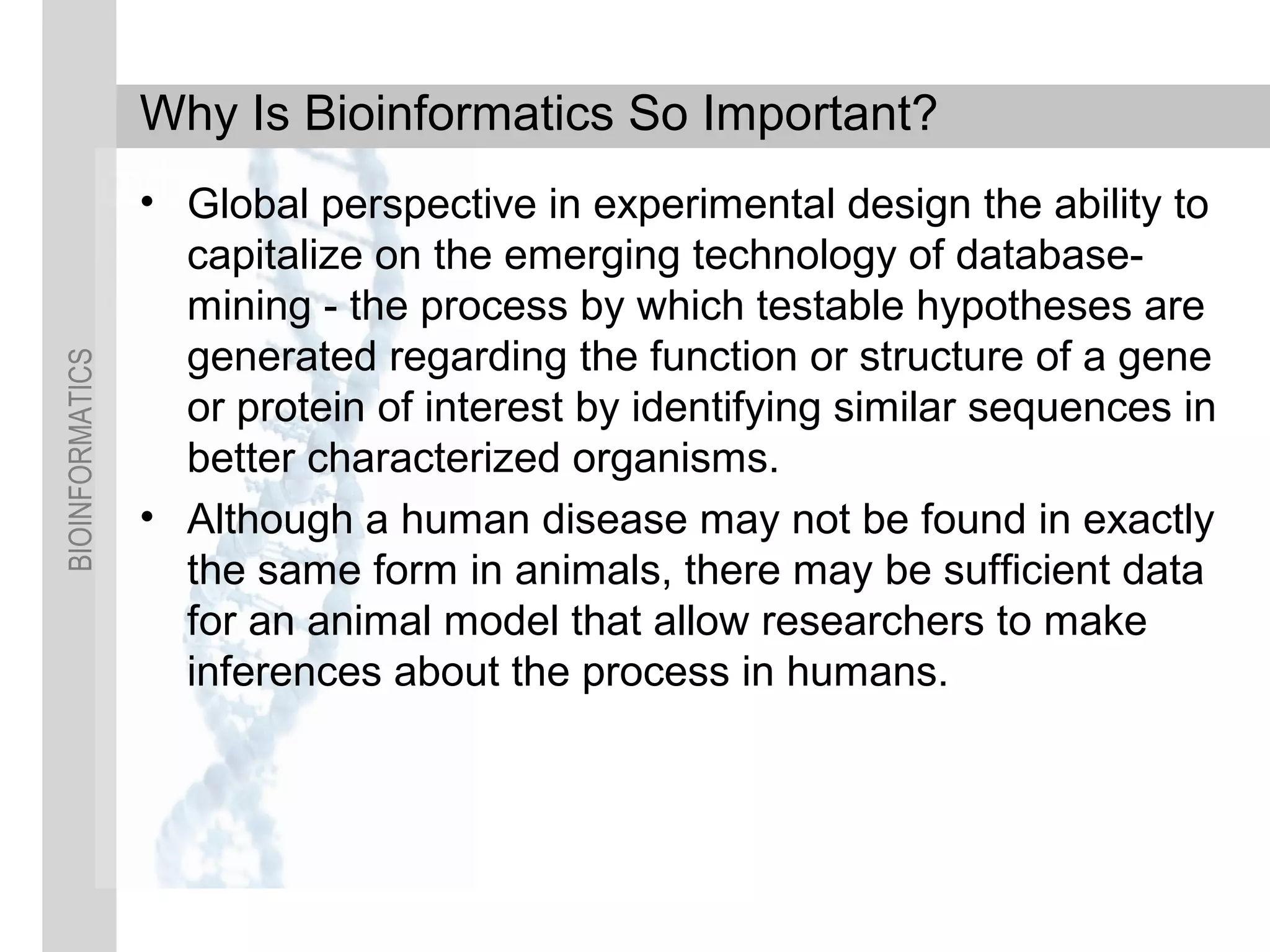
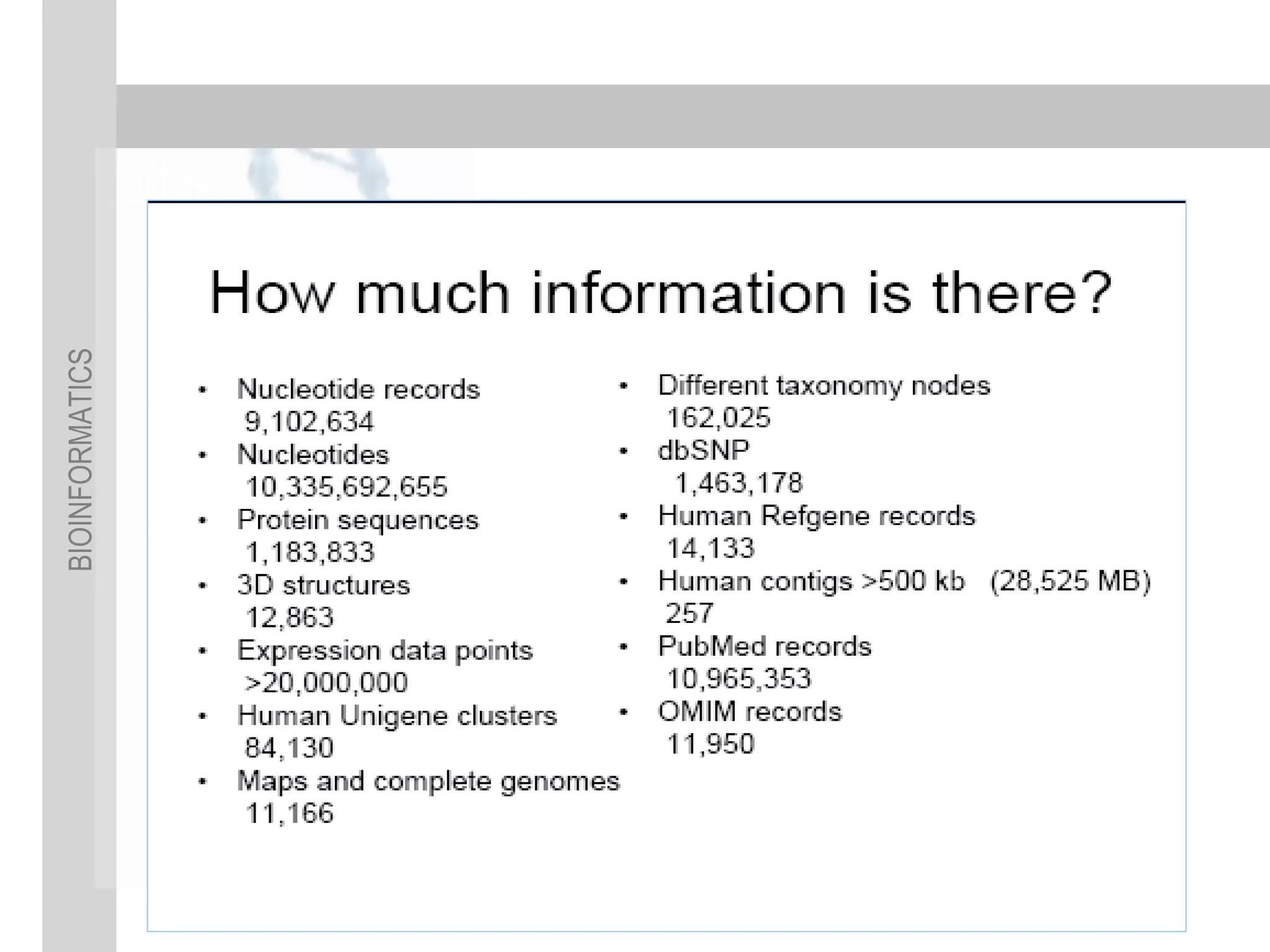
Why Is Bioinformatics So Important?
• Global perspective in experimental design the ability to
capitalize on the emerging technology of database-
mining - the process by which testable hypotheses are
generated regarding the function or structure of a gene
or protein of interest by identifying similar sequences in
better characterized organisms.
• Although a human disease may not be found in exactly
the same form in animals, there may be sufficient data
for an animal model that allow researchers to make
inferences about the process in humans.
BIOINFORMATICS
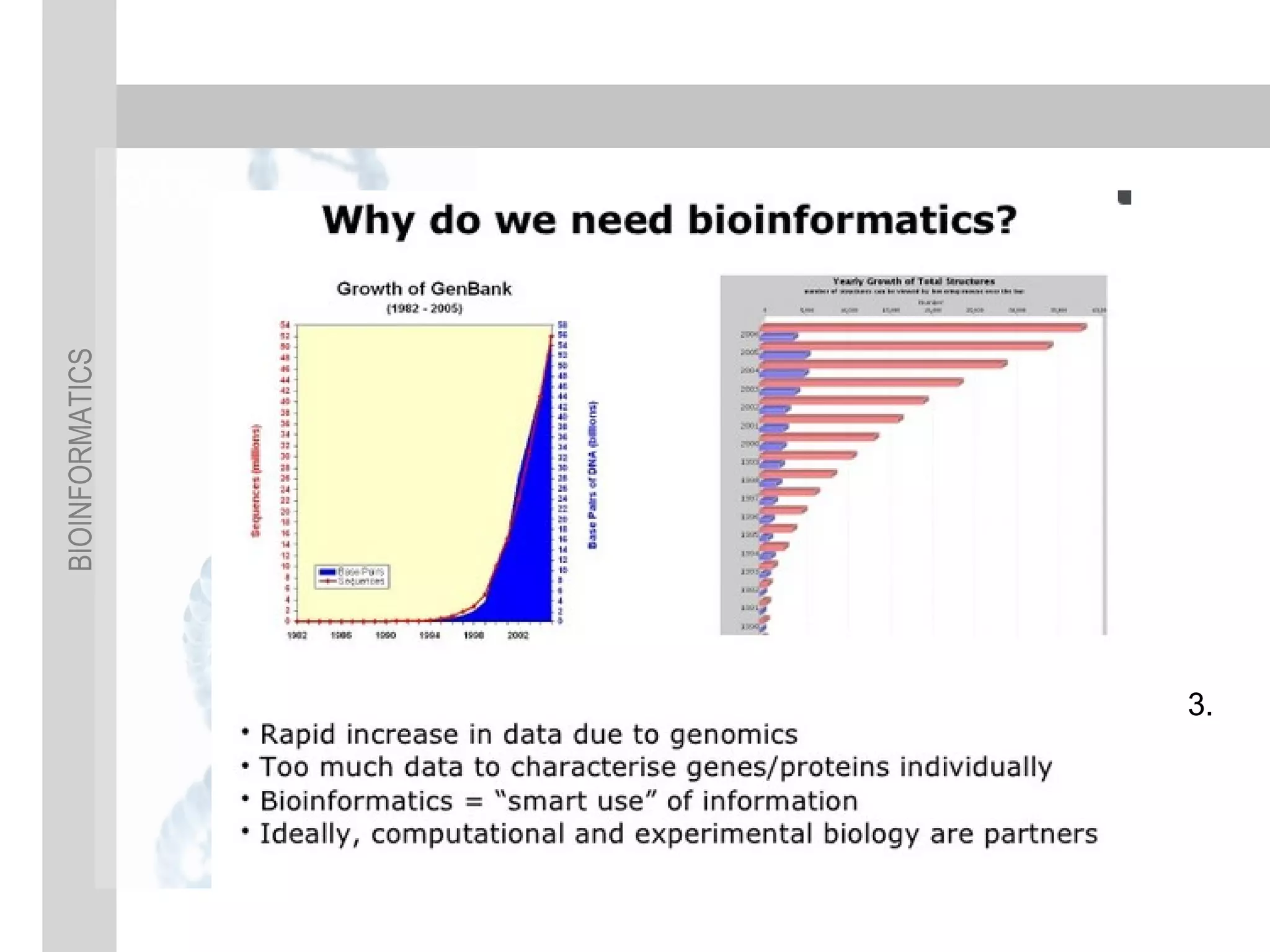
3.
BIOINFORMATICS
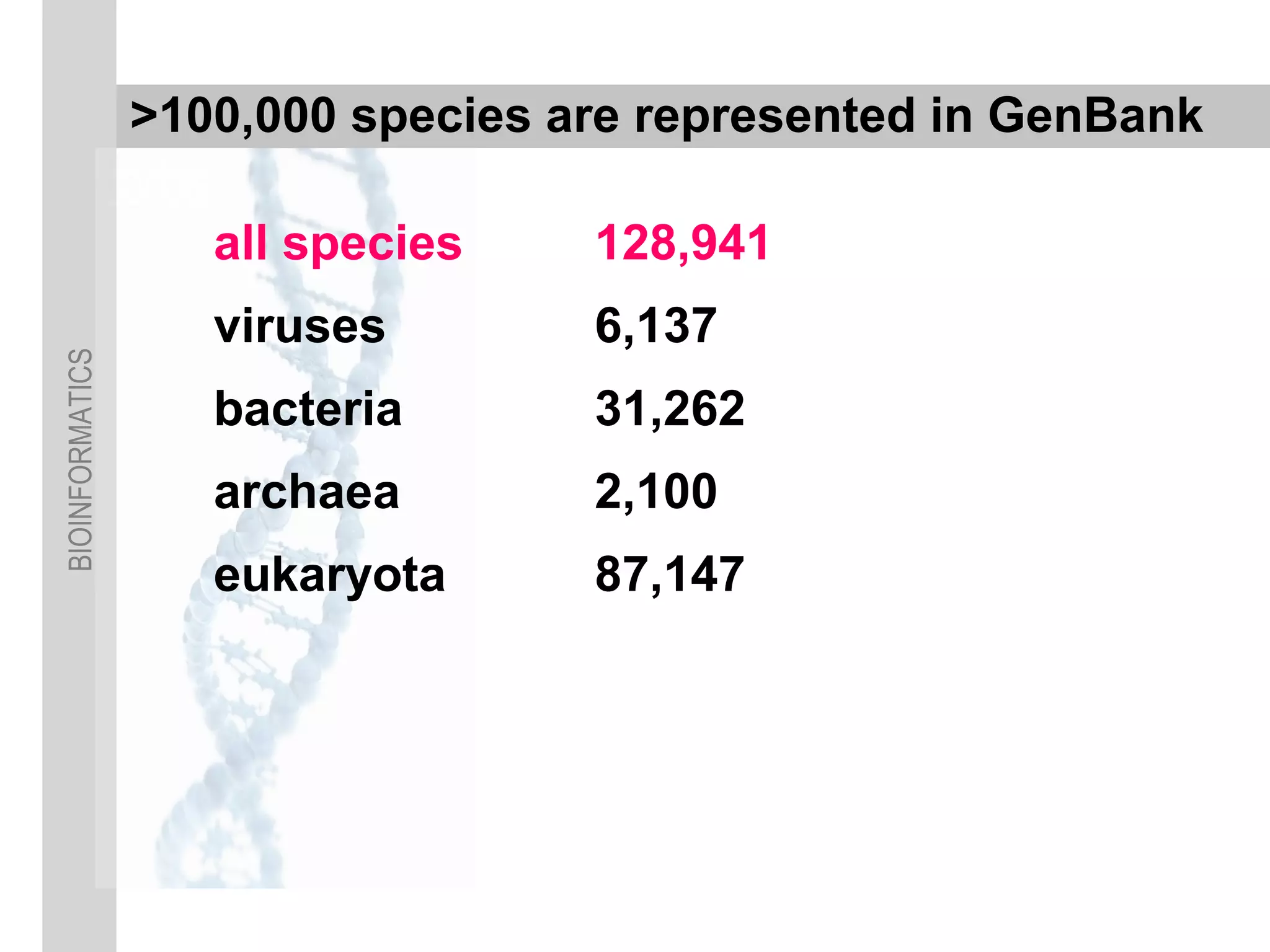
>100,000 species are represented in GenBank
all species 128,941
viruses 6,137
bacteria 31,262
archaea 2,100
eukaryota 87,147
BIOINFORMATICS
BIOINFORMATICS
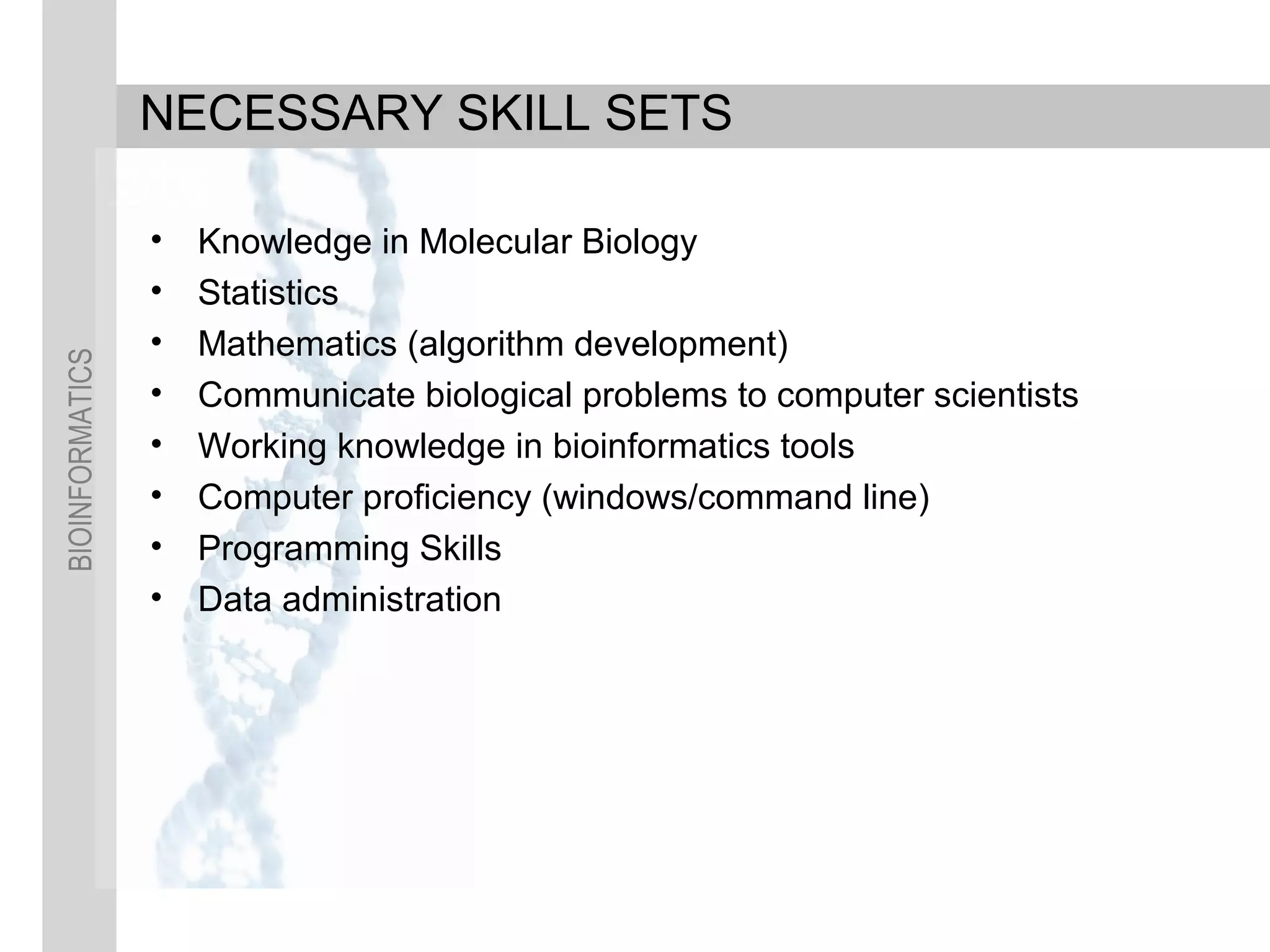
NECESSARY SKILL SETS
• Knowledge in Molecular Biology
• Statistics
• Mathematics (algorithm development)
• Communicate biological problems to computer scientists
• Working knowledge in bioinformatics tools
• Computer proficiency (windows/command line)
• Programming Skills
• Data administration
BIOINFORMATICS
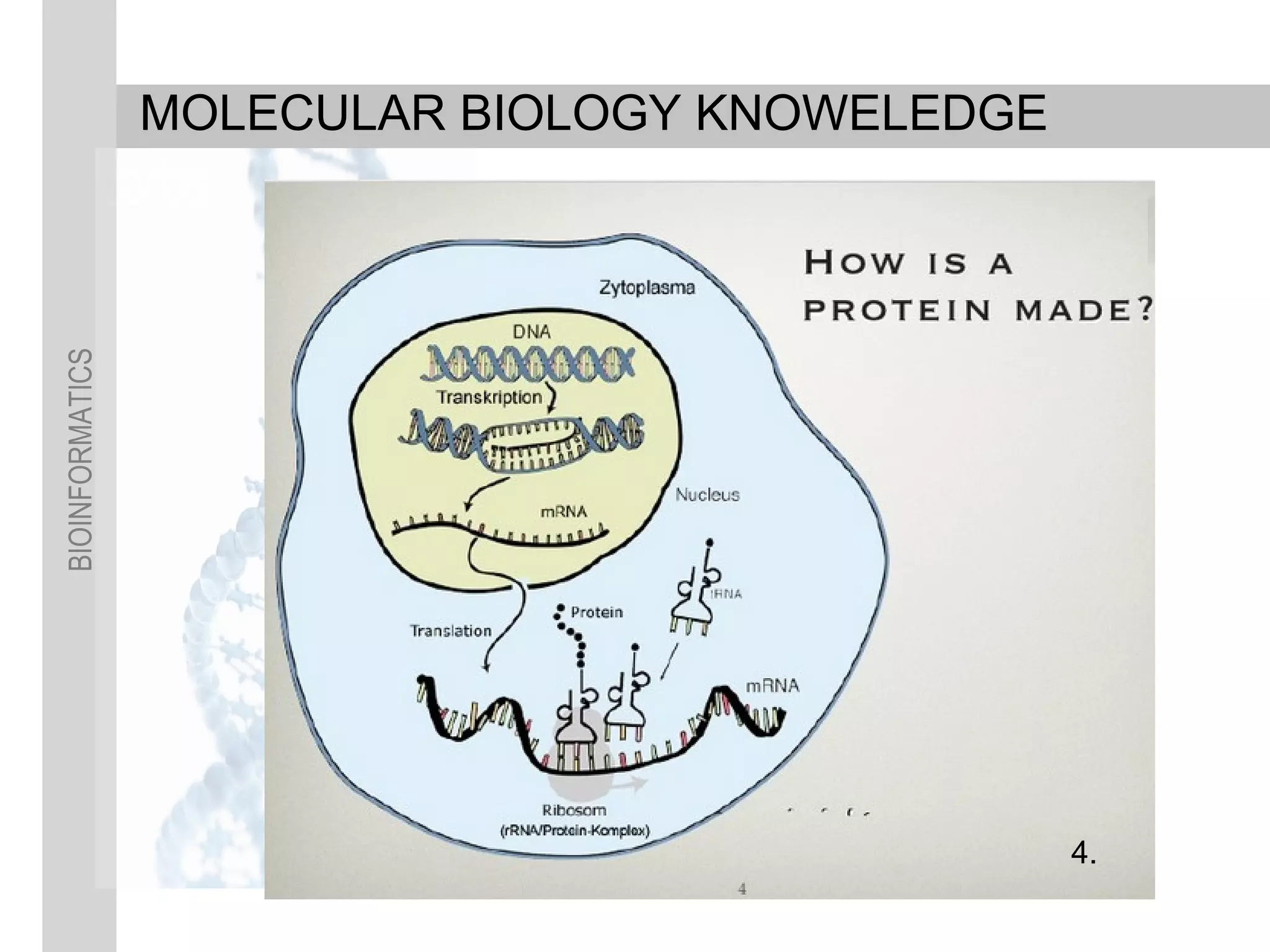
MOLECULAR BIOLOGY KNOWELEDGE
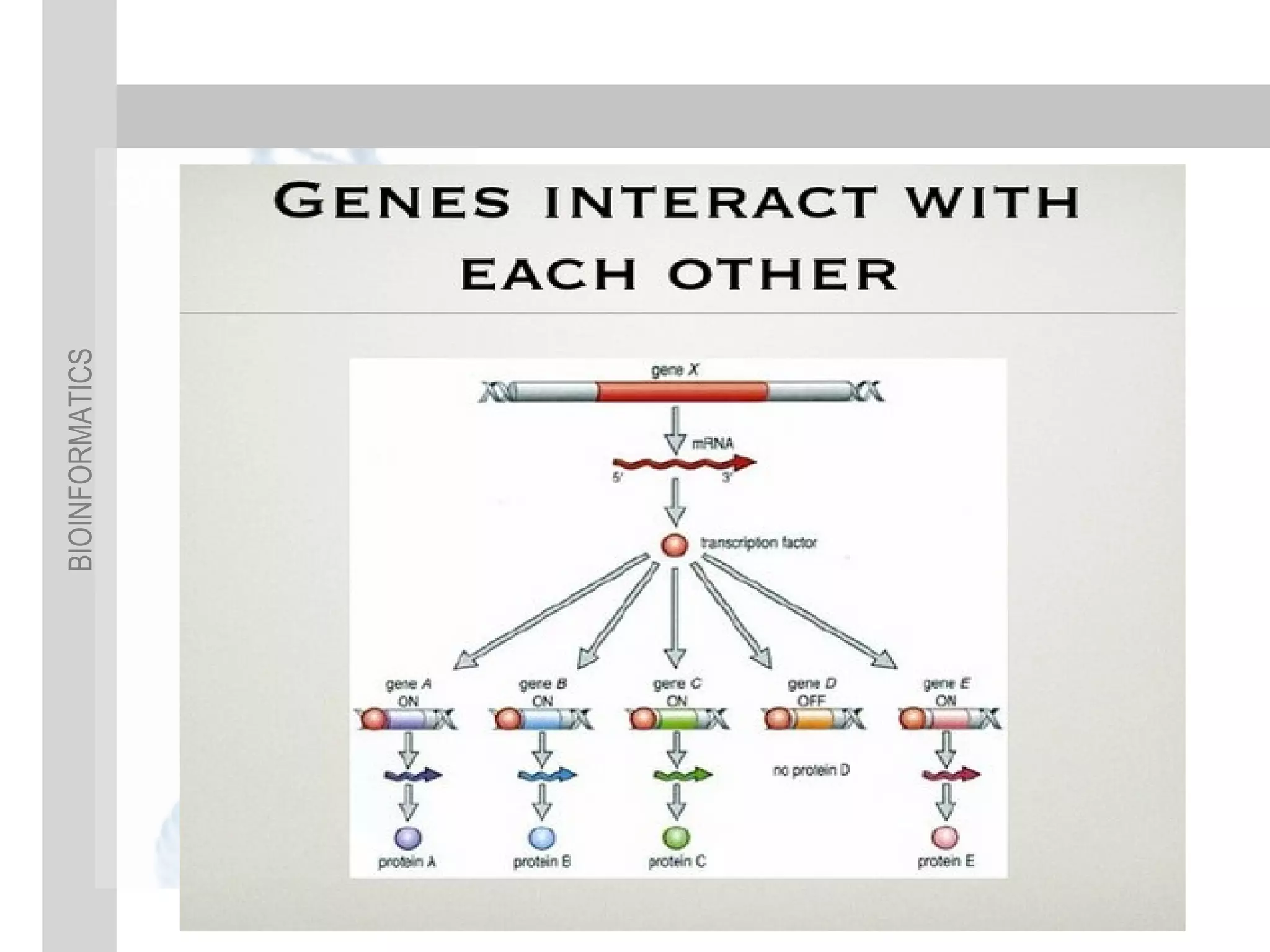
4.
BIOINFORMATICS
BIOINFORMATICS
BIOINFORMATICS
BIOINFORMATICS
BIOINFORMATICS
BIOINFORMATICS
BIOINFORMATICS
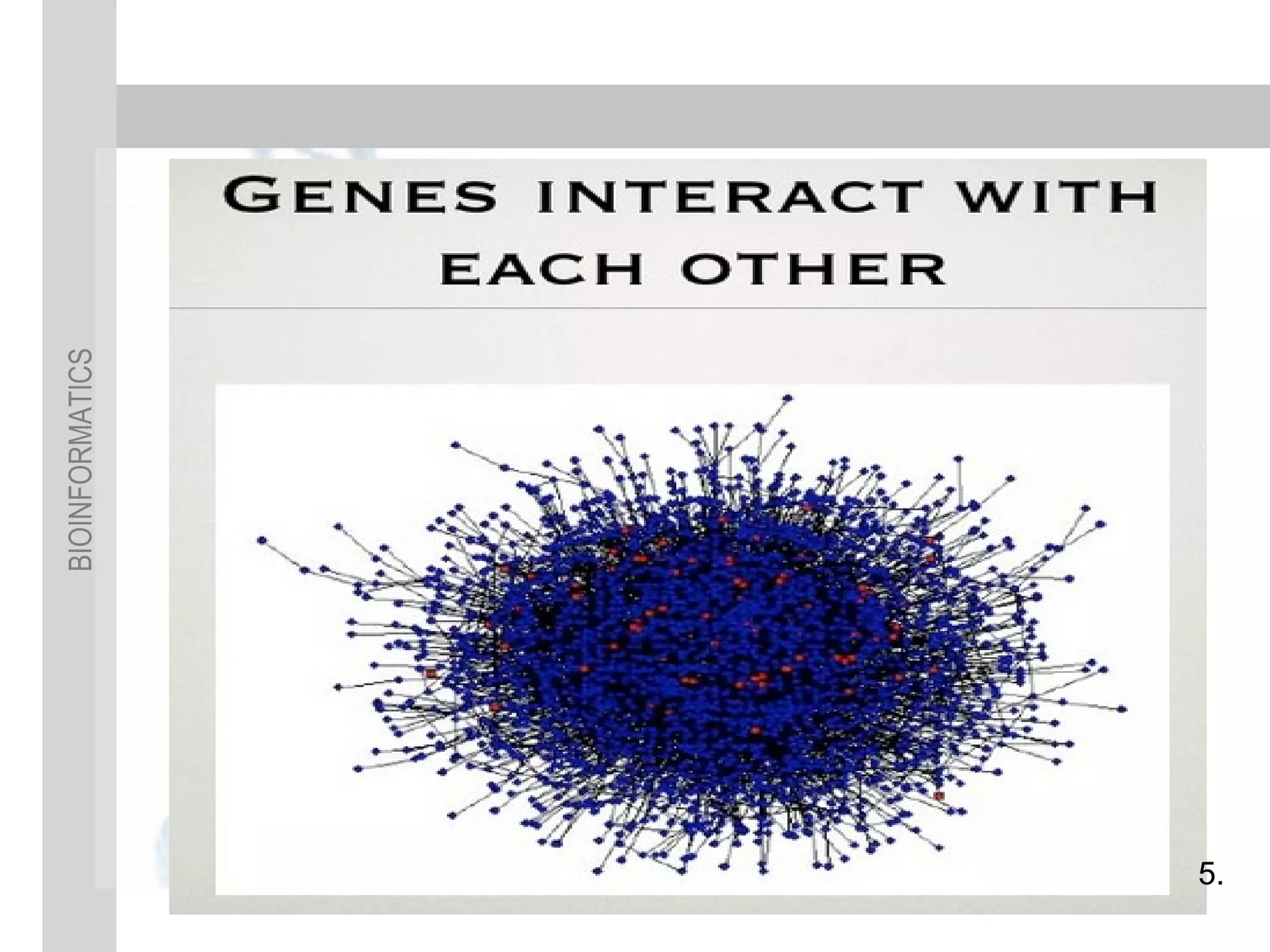
5.
BIOINFORMATICS
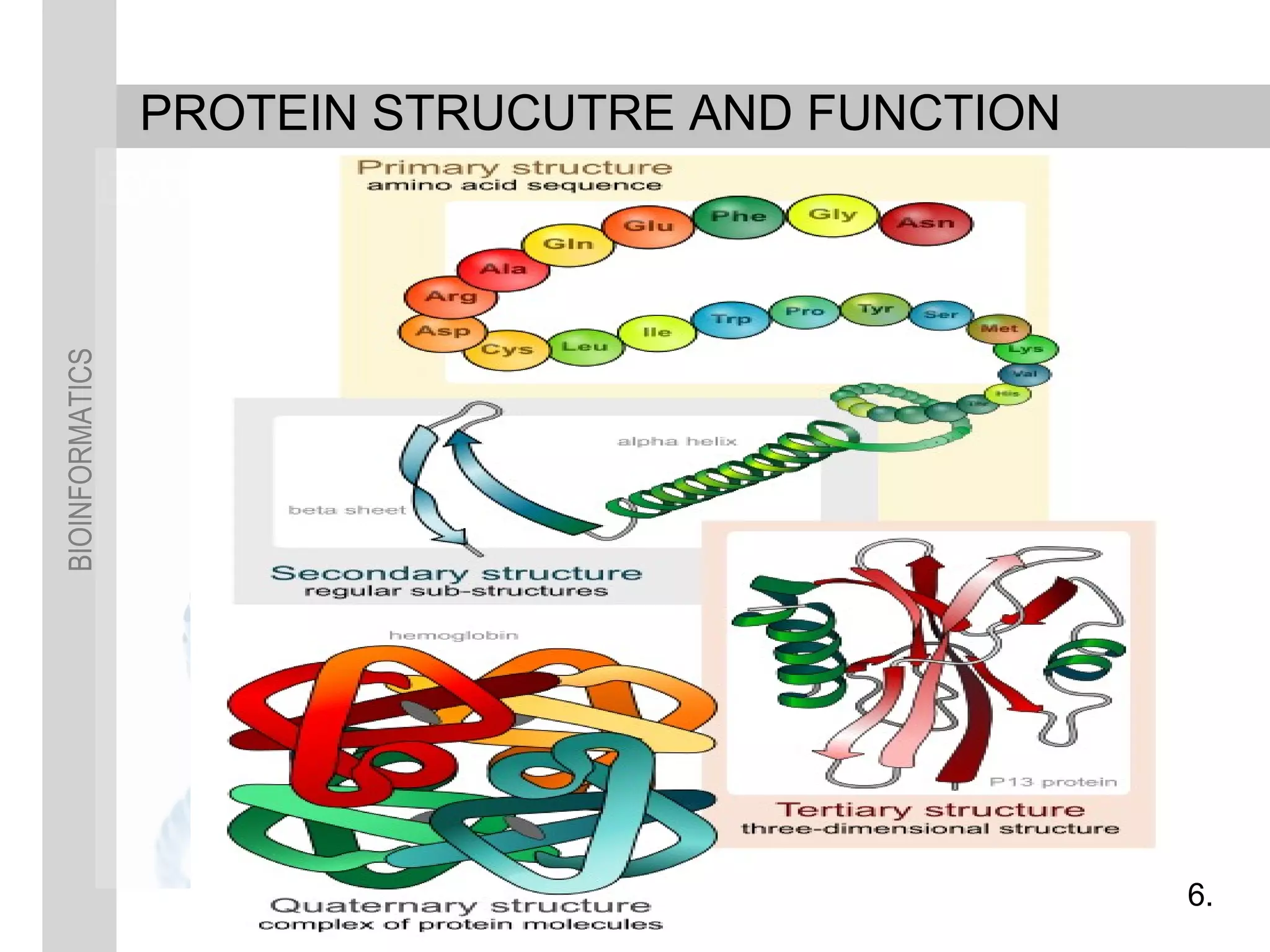
PROTEIN STRUCUTRE AND FUNCTION
6.
BIOINFORMATICS
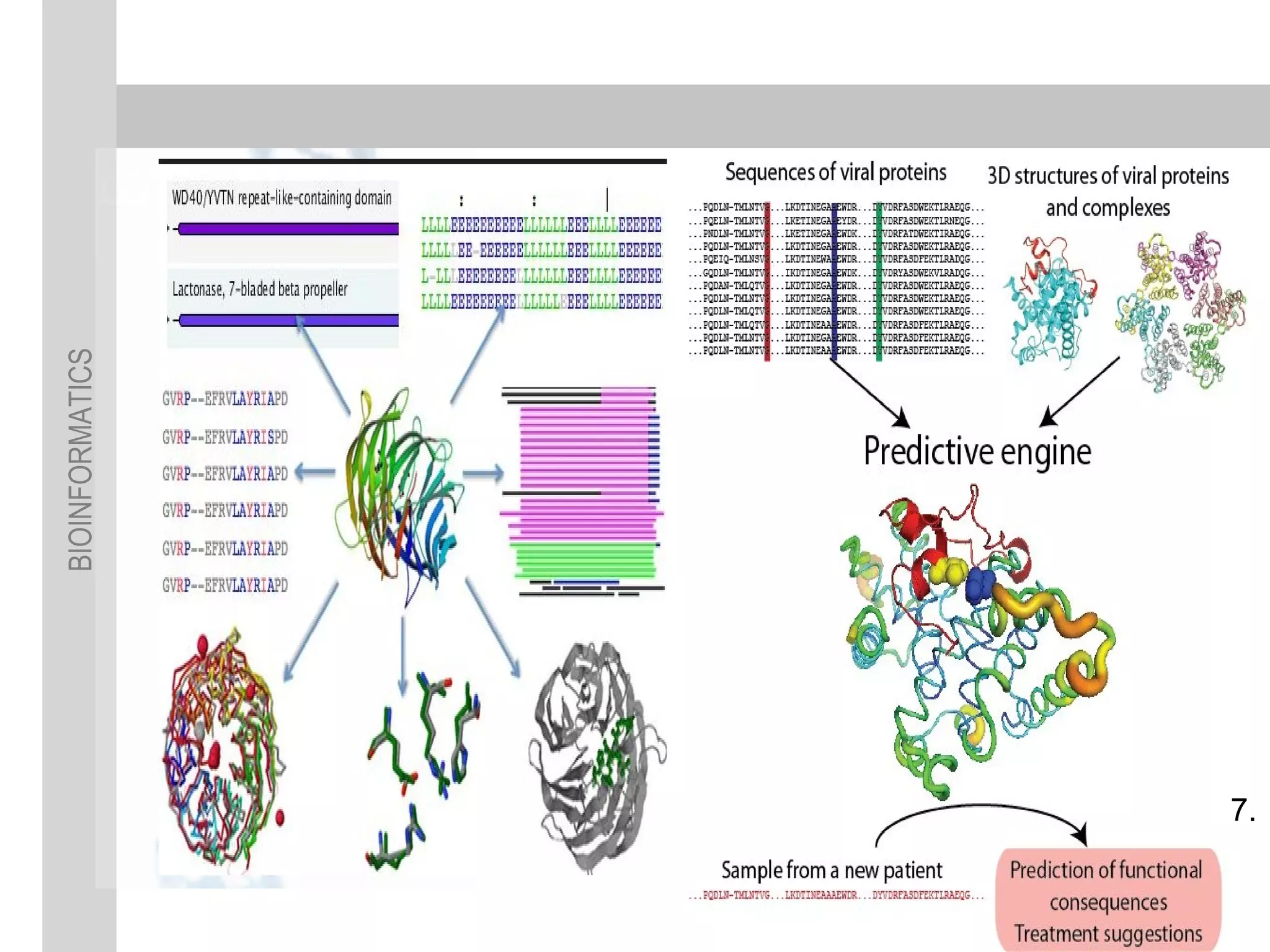
7.
BIOINFORMATICS
BIOINFORMATICS
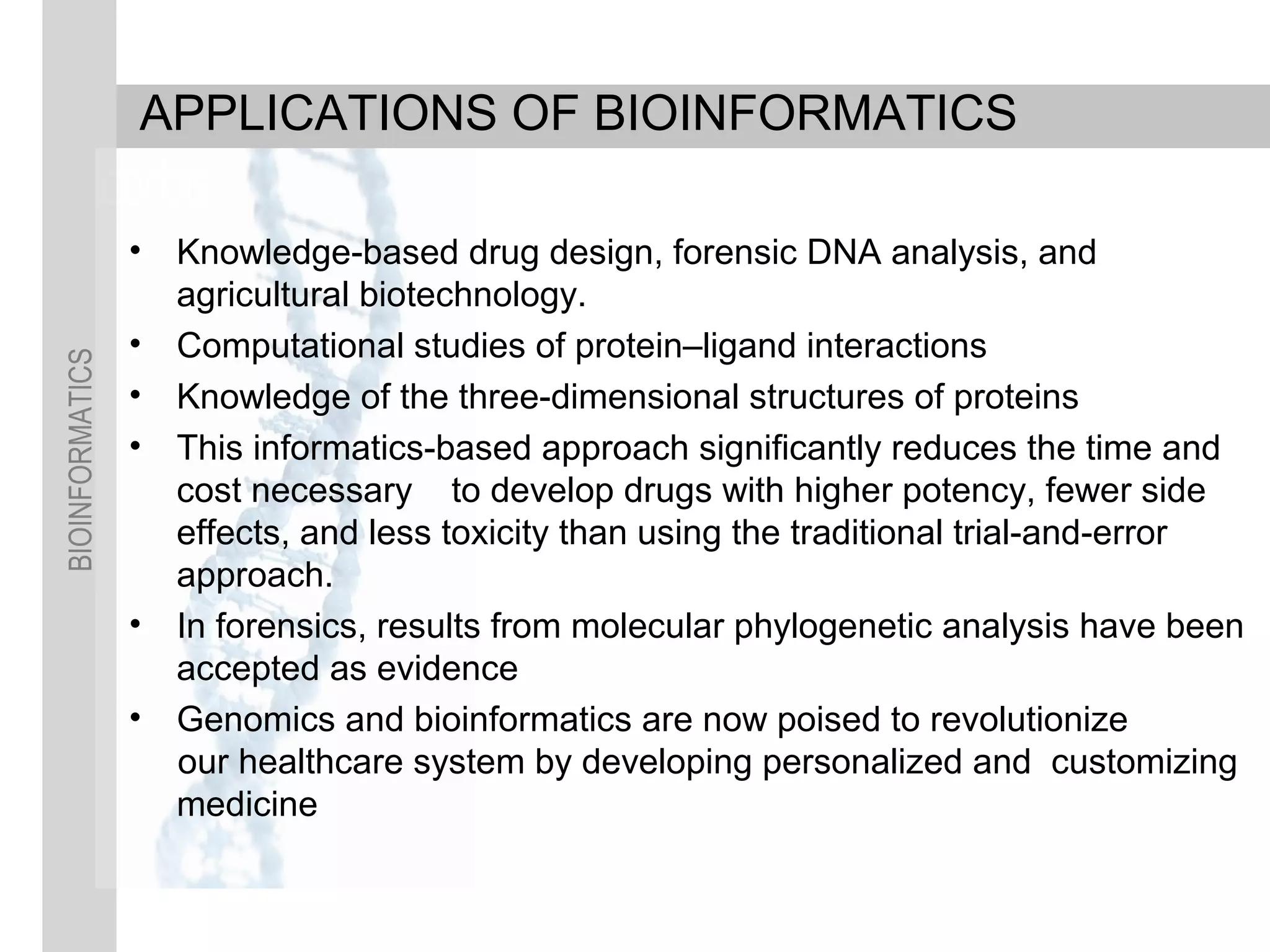
APPLICATIONS OF BIOINFORMATICS
• Knowledge-based drug design, forensic DNA analysis, and
agricultural biotechnology.
• Computational studies of protein–ligand interactions
• Knowledge of the three-dimensional structures of proteins
• This informatics-based approach significantly reduces the time and
cost necessary to develop drugs with higher potency, fewer side
effects, and less toxicity than using the traditional trial-and-error
approach.
• In forensics, results from molecular phylogenetic analysis have been
accepted as evidence
• Genomics and bioinformatics are now poised to revolutionize
our healthcare system by developing personalized and customizing
medicine
BIOINFORMATICS
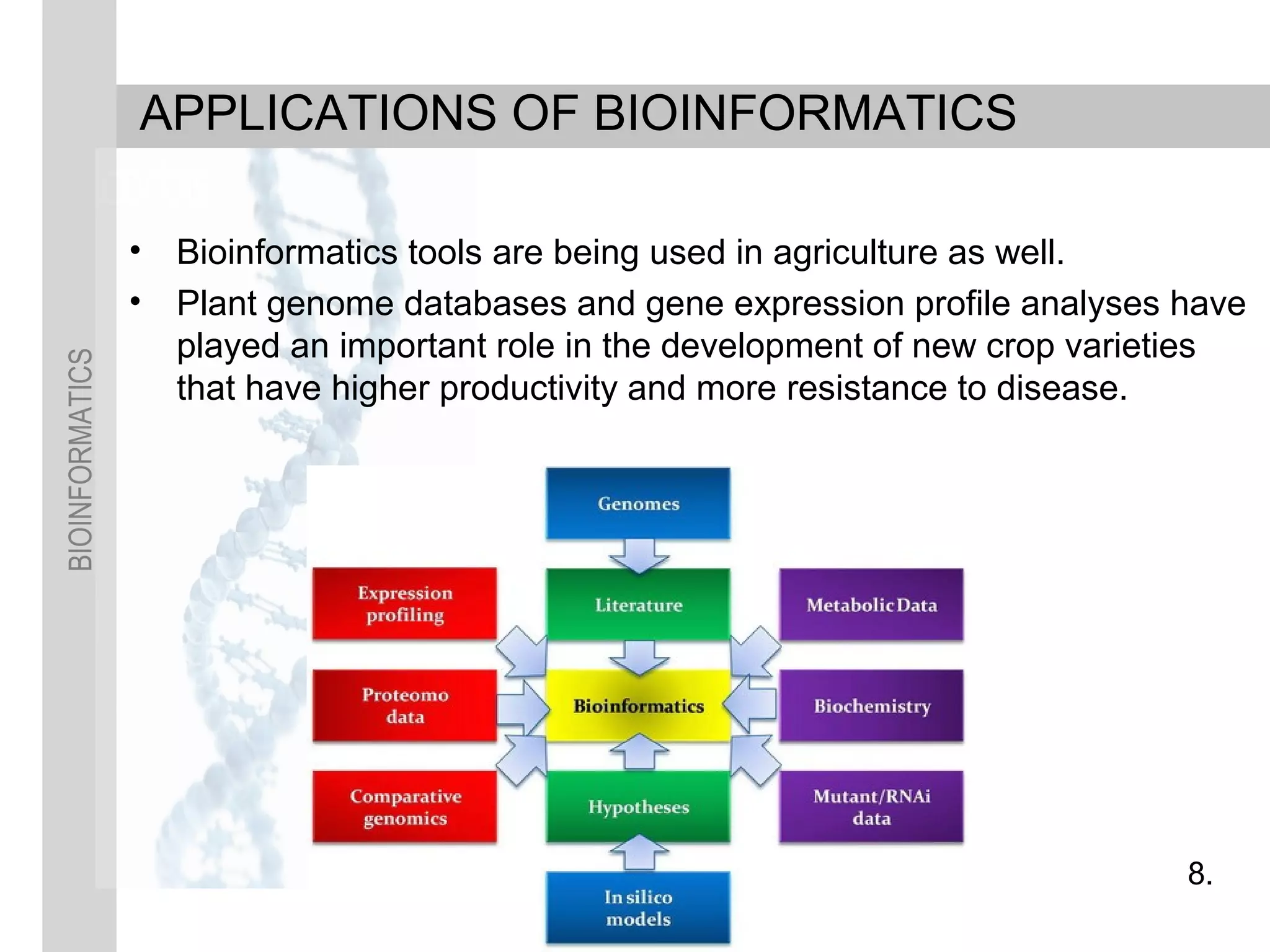
• Bioinformatics tools are being used in agriculture as well.
• Plant genome databases and gene expression profile analyses have
played an important role in the development of new crop varieties
that have higher productivity and more resistance to disease.
APPLICATIONS OF BIOINFORMATICS
8.
BIOINFORMATICS
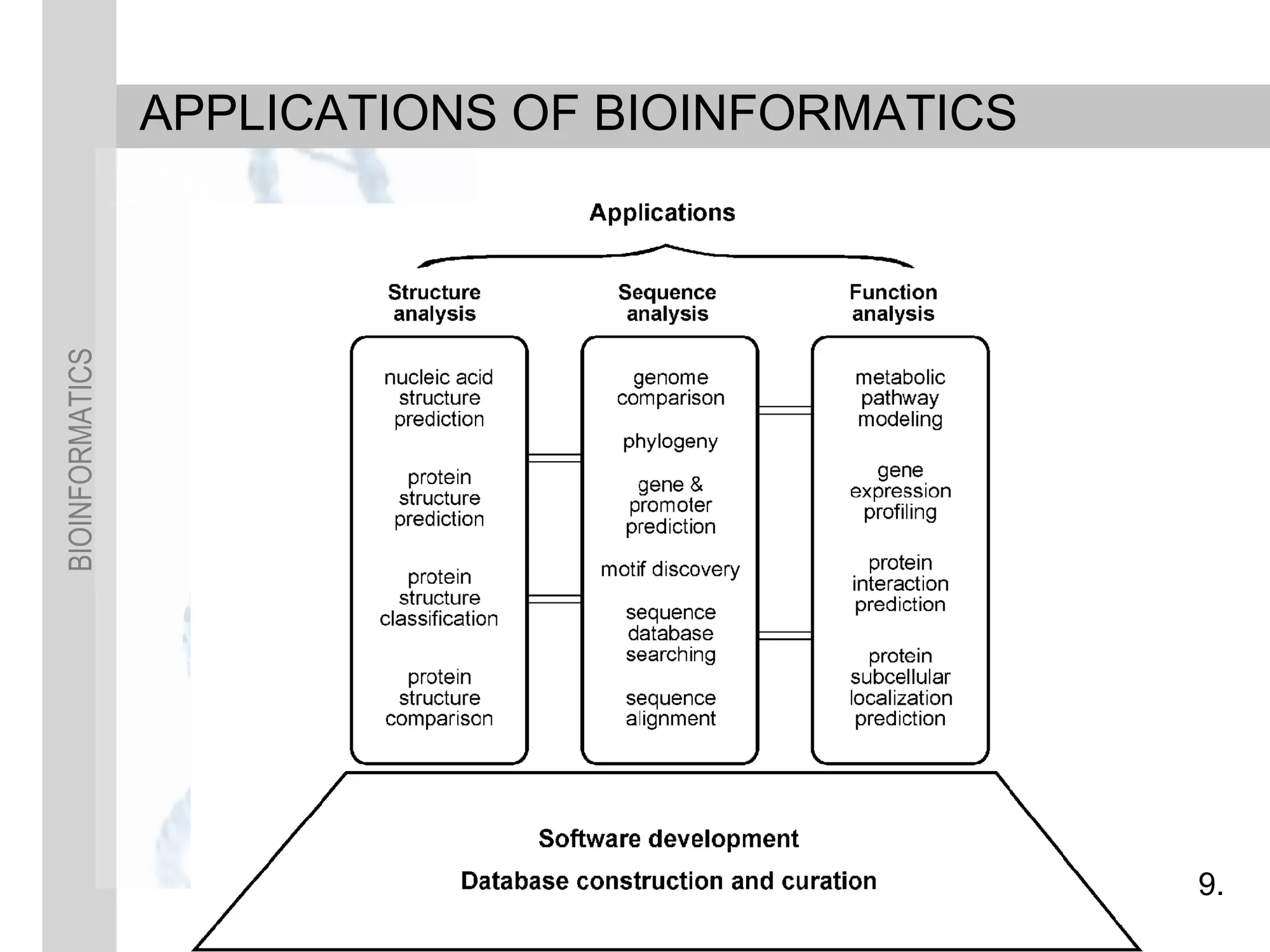
APPLICATIONS OF BIOINFORMATICS
9.
BIOINFORMATICS
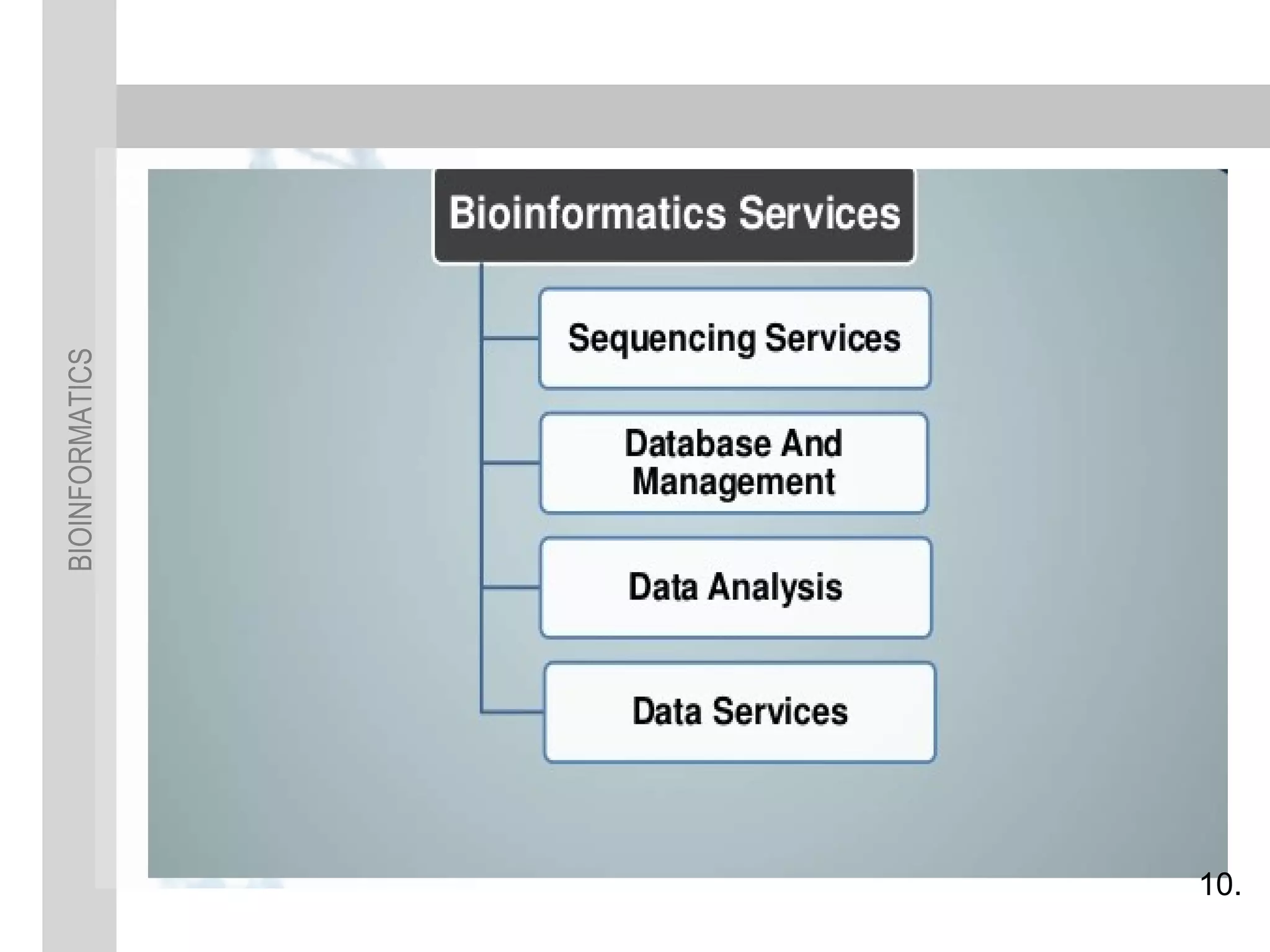
10.
BIOINFORMATICS
.
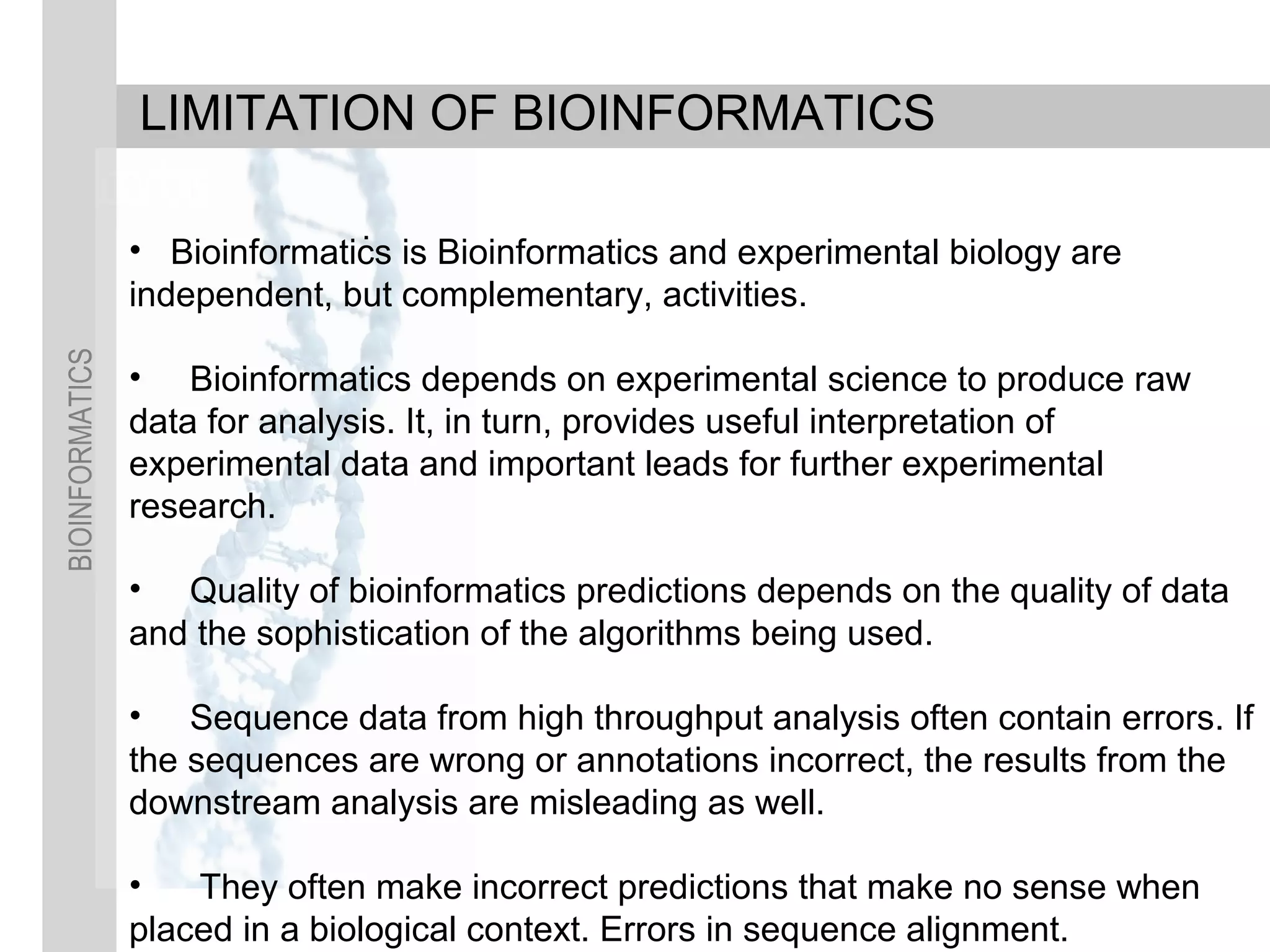
LIMITATION OF BIOINFORMATICS
• Bioinformatics is Bioinformatics and experimental biology are
independent, but complementary, activities.
• Bioinformatics depends on experimental science to produce raw
data for analysis. It, in turn, provides useful interpretation of
experimental data and important leads for further experimental
research.
• Quality of bioinformatics predictions depends on the quality of data
and the sophistication of the algorithms being used.
• Sequence data from high throughput analysis often contain errors. If
the sequences are wrong or annotations incorrect, the results from the
downstream analysis are misleading as well.
• They often make incorrect predictions that make no sense when
placed in a biological context. Errors in sequence alignment.
BIOINFORMATICS
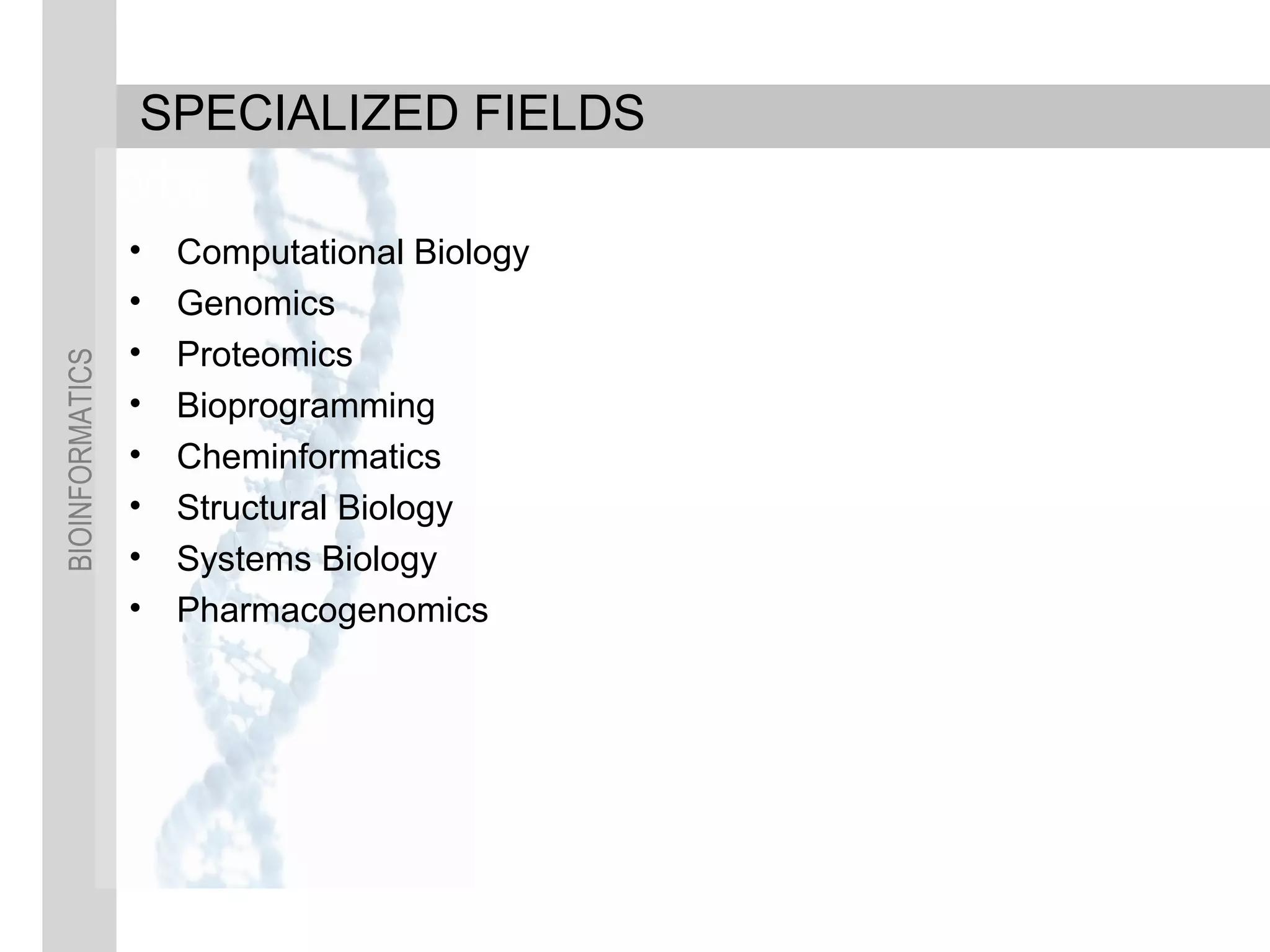
SPECIALIZED FIELDS
• Computational Biology
• Genomics
• Proteomics
• Bioprogramming
• Cheminformatics
• Structural Biology
• Systems Biology
• Pharmacogenomics
BIOINFORMATICS
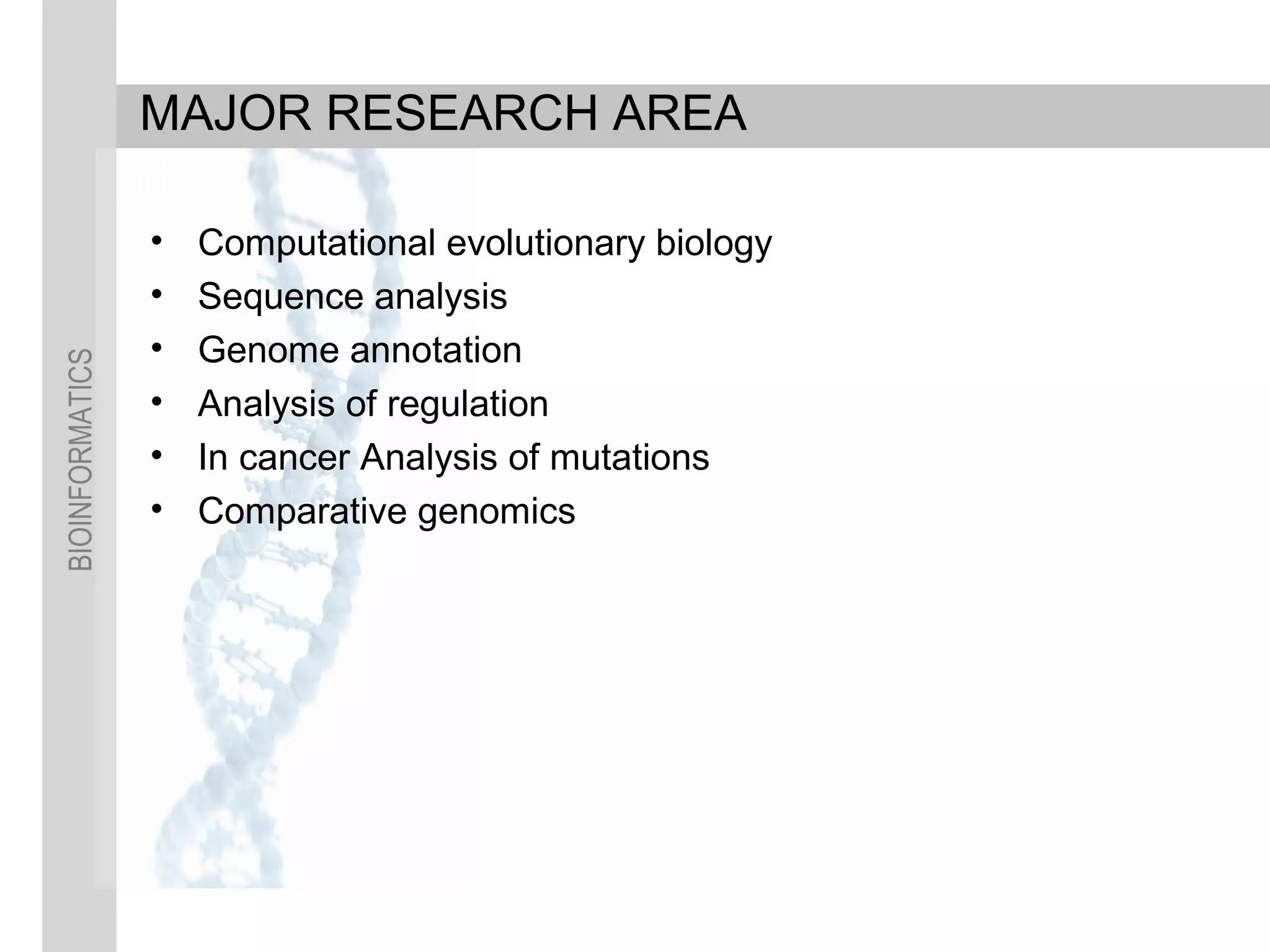
MAJOR RESEARCH AREA
• Computational evolutionary biology
• Sequence analysis
• Genome annotation
• Analysis of regulation
• In cancer Analysis of mutations
• Comparative genomics
BIOINFORMATICS
Origin of internet
The management and, more importantly, accessibility of the
data is directly attributable to the development of the Internet,
particularly the World Wide Web (WWW).
Originally developed for military purposes in the 60's and
expanded by the National Science Foundation
in the 80's, scientific use of the Internet grew dramatically
following the release of the WWW by CERN in 1992.
BIOINFORMATICS
HTML
• The WWW is a graphical interface based on hypertext by which
text and graphics can be displayed and highlighted.
• Each highlighted element is a pointer to another document or an
element in another document which can reside on any internet
host computer. Page display, hypertext links and other features
are coded using a simple, cross-platform HyperText Markup
Language (HTML) and viewed on UNIX workstations, PCs and
Apple Macs as WWW pages using a browser.
BIOINFORMATICS
ASSIGNMENT -1--------------------------------10 Marks
1. What is bioinformatics? Why do people consider it as an
interdisciplinary subject
2. What are the necessary skills required for bioinformatics study?
3. Write about history of bioinformatics.
4. Describe the application of bioinformatics.
5. What is NCBI?
6. What is Entraz?
7. What is search engine?
8. What is PubMed?
9. Enlist the major research areas of bioinformatics.
10. Give the importance of bioinformatics in biological science.
BIOINFORMATICS
Test-1-----------------------------------------------10
Marks
1. What is bioinformatics?-------------------------------------------------1
2. Describe the application of bioinformatics.------------------------2
3. What is NCBI?-------------------------------------------------------------1
4. What is Entraz?-----------------------------------------------------------1
5. What is PubMed?---------------------------------------------------------1
6. Enlist the major research areas of bioinformatics.---------------4
BIOINFORMATICS
Web and Books References
• Books Name :
1. Introduction To Bioinformatics by T. K. Attwood
2. BioInformatics by Sangita
3. Basic Bioinformatics by S.Ignacimuthu, s.j.
4. Application of bioinformatics by david mount
• http://en.wikipedia.org/wiki/Bioinformatics
• http://bioinformaticsweb.net/applications.html
• http://bioinformaticsinstitute.ru/sites/default/files/lapidus_1_0.pdf
• History:
http://www.bioinformatics.nl/webportal/background/timeline.html
• Links: http://www.ncbi.nlm.nih.gov
41
BIOINFORMATICS
Image References
• 1. http://www.esat.kuleuven.be/sista/GGS/images/bioi.jpg
• 2. http://www.nature.com/nrg/journal/v1/n3/images/nrg1200-231a-f4.jpg
• 3. https://encrypted-tbn2.gstatic.com/images?
q=tbn:ANd9GcSg58MFhqEDknaHb3nHWmkP6mMgUbCjD7ASmqII4befeov
n566L9w
• 4.
http://www.ncbi.nlm.nih.gov/Class/MLACourse/Modules/MolBioReview/imag
es/central_dogma.gif
• 5. https://encrypted-tbn3.gstatic.com/images?
q=tbn:ANd9GcRx8BAquGrTstZrdTzPvvfn2ItAnPVGsjK03JfzMZF6SbpdasC
FAw
• 6.https://encrypted-tbn0.gstatic.com/images?q=tbn:ANd9GcRc-CJZHa1e-
8Xj78HMvWR-FNzw0KF4tEHrmH8clOcCzlOeYT3i
• 7.
http://upload.wikimedia.org/wikipedia/commons/e/e6/Spombe_Pop2p_protei
n_structure_rainbow.png
• 8. https://encrypted-tbn1.gstatic.com/images?
q=tbn:ANd9GcSHmWGzX5jd6PvwdiaYdxnGcCKOXjmxBmoz_YiE7L1xLNv
zAkQvITmdSrRy
• 9. & 10.Book: Basic Bioinformatics by S.Ignacimuthu, s.j.

B.sc biochem i bobi u-1 introduction to bioinformatics

  • 1.
    BIOINFORMATICS Introduction To Bioinformatics Course:B.Sc Biochemistry Subject: Basic of Bioinformatics Unit: I
  • 2.
    BIOINFORMATICS BIOINFORMATICS • Introduction tobioinformatics • History • Aim scope and importance of bioinformatics • Origin of bioinformatics its application and benefits in life science industry. • Research areas of bioinformatics. • Fundamentals of Internet: WWW, HTML, URLs Browsers, Netscape/Opera/Explorer Search Engines: Google, NCBI, PUBMED, entraz
  • 3.
    BIOINFORMATICS INTRODUCTION TO BIOINFORMATICS •Definition: Bioinformatics is an interdisciplinary scientific field that develops methods and software tools for storing, retrieving, organizing and analyzing biological data. As an interdisciplinary field, bioinformatics combines computer Science, statistics, mathematics and engineering to study biological data and processes.
  • 4.
  • 5.
    BIOINFORMATICS BIOINFORMATICS DEALS WITH •Design and implementation of new algorithms and statistics which assess relationship among members of large data sets. • Analysis and interpretation of various data types, which includes nucleotide and amino acid sequences and structure of protein. • To develop computational tools and databases that enables efficient analysis, access and management of biologically significant information.
  • 6.
    BIOINFORMATICS AIMS OF BIOINFORMATICS •Improve content and utility of databases. • Develop better tools for data generation, capture, and annotation. • Develop and improve tools and databases for comprehensive functional studies. • Develop and improve tools for representing and analyzing sequence similarity and variation. • Create mechanisms to support effective approaches for producing robust, exportable software that can be widely shared.
  • 7.
    BIOINFORMATICS GOALS OF BIOINFORMATICS •Development and implementation of computer programs that enable efficient access to , use and management of various type of information • Development of new algorithms and statistical measures with which to assess relationships among members of large data. • Understanding the biological process • Pattern reorganization • Seq. alignment • Gene finding • Assembly • Drug designing • Protein structure alignment • Gene expression • Genome annotation
  • 8.
  • 9.
    BIOINFORMATICS The IBM 7090computer, which Margaret Dayhoff used for her early work Margaret Oakley Dayhoff (Ruth Dayhoff's mother), who created the first large scale database of protein sequences, and developed many of the algorithms for analysis of relatedness of proteins, early 1970s 2.
  • 10.
  • 11.
    BIOINFORMATICS WHAT ARE THEBIOLOGICAL PROBLEMS? • What is the role of a particular gene? • Does a particular gene help cause a disease? • How does a drug affect a cell? • Can we insert a gene into corn to protect it against diseases or pests? • Can we design a drug to accomplish a particular purpose? • Can we build a cell that eats pollution?
  • 12.
  • 13.
  • 14.
    BIOINFORMATICS Why Is BioinformaticsSo Important? • Global perspective in experimental design the ability to capitalize on the emerging technology of database- mining - the process by which testable hypotheses are generated regarding the function or structure of a gene or protein of interest by identifying similar sequences in better characterized organisms. • Although a human disease may not be found in exactly the same form in animals, there may be sufficient data for an animal model that allow researchers to make inferences about the process in humans.
  • 15.
  • 16.
    BIOINFORMATICS >100,000 species arerepresented in GenBank all species 128,941 viruses 6,137 bacteria 31,262 archaea 2,100 eukaryota 87,147
  • 17.
  • 18.
    BIOINFORMATICS NECESSARY SKILL SETS •Knowledge in Molecular Biology • Statistics • Mathematics (algorithm development) • Communicate biological problems to computer scientists • Working knowledge in bioinformatics tools • Computer proficiency (windows/command line) • Programming Skills • Data administration
  • 19.
  • 20.
  • 21.
  • 22.
  • 23.
  • 24.
  • 25.
  • 26.
  • 27.
  • 28.
  • 29.
  • 30.
    BIOINFORMATICS APPLICATIONS OF BIOINFORMATICS •Knowledge-based drug design, forensic DNA analysis, and agricultural biotechnology. • Computational studies of protein–ligand interactions • Knowledge of the three-dimensional structures of proteins • This informatics-based approach significantly reduces the time and cost necessary to develop drugs with higher potency, fewer side effects, and less toxicity than using the traditional trial-and-error approach. • In forensics, results from molecular phylogenetic analysis have been accepted as evidence • Genomics and bioinformatics are now poised to revolutionize our healthcare system by developing personalized and customizing medicine
  • 31.
    BIOINFORMATICS • Bioinformatics toolsare being used in agriculture as well. • Plant genome databases and gene expression profile analyses have played an important role in the development of new crop varieties that have higher productivity and more resistance to disease. APPLICATIONS OF BIOINFORMATICS 8.
  • 32.
  • 33.
  • 34.
    BIOINFORMATICS . LIMITATION OF BIOINFORMATICS •Bioinformatics is Bioinformatics and experimental biology are independent, but complementary, activities. • Bioinformatics depends on experimental science to produce raw data for analysis. It, in turn, provides useful interpretation of experimental data and important leads for further experimental research. • Quality of bioinformatics predictions depends on the quality of data and the sophistication of the algorithms being used. • Sequence data from high throughput analysis often contain errors. If the sequences are wrong or annotations incorrect, the results from the downstream analysis are misleading as well. • They often make incorrect predictions that make no sense when placed in a biological context. Errors in sequence alignment.
  • 35.
    BIOINFORMATICS SPECIALIZED FIELDS • ComputationalBiology • Genomics • Proteomics • Bioprogramming • Cheminformatics • Structural Biology • Systems Biology • Pharmacogenomics
  • 36.
    BIOINFORMATICS MAJOR RESEARCH AREA •Computational evolutionary biology • Sequence analysis • Genome annotation • Analysis of regulation • In cancer Analysis of mutations • Comparative genomics
  • 37.
    BIOINFORMATICS Origin of internet Themanagement and, more importantly, accessibility of the data is directly attributable to the development of the Internet, particularly the World Wide Web (WWW). Originally developed for military purposes in the 60's and expanded by the National Science Foundation in the 80's, scientific use of the Internet grew dramatically following the release of the WWW by CERN in 1992.
  • 38.
    BIOINFORMATICS HTML • The WWWis a graphical interface based on hypertext by which text and graphics can be displayed and highlighted. • Each highlighted element is a pointer to another document or an element in another document which can reside on any internet host computer. Page display, hypertext links and other features are coded using a simple, cross-platform HyperText Markup Language (HTML) and viewed on UNIX workstations, PCs and Apple Macs as WWW pages using a browser.
  • 39.
    BIOINFORMATICS ASSIGNMENT -1--------------------------------10 Marks 1.What is bioinformatics? Why do people consider it as an interdisciplinary subject 2. What are the necessary skills required for bioinformatics study? 3. Write about history of bioinformatics. 4. Describe the application of bioinformatics. 5. What is NCBI? 6. What is Entraz? 7. What is search engine? 8. What is PubMed? 9. Enlist the major research areas of bioinformatics. 10. Give the importance of bioinformatics in biological science.
  • 40.
    BIOINFORMATICS Test-1-----------------------------------------------10 Marks 1. What isbioinformatics?-------------------------------------------------1 2. Describe the application of bioinformatics.------------------------2 3. What is NCBI?-------------------------------------------------------------1 4. What is Entraz?-----------------------------------------------------------1 5. What is PubMed?---------------------------------------------------------1 6. Enlist the major research areas of bioinformatics.---------------4
  • 41.
    BIOINFORMATICS Web and BooksReferences • Books Name : 1. Introduction To Bioinformatics by T. K. Attwood 2. BioInformatics by Sangita 3. Basic Bioinformatics by S.Ignacimuthu, s.j. 4. Application of bioinformatics by david mount • http://en.wikipedia.org/wiki/Bioinformatics • http://bioinformaticsweb.net/applications.html • http://bioinformaticsinstitute.ru/sites/default/files/lapidus_1_0.pdf • History: http://www.bioinformatics.nl/webportal/background/timeline.html • Links: http://www.ncbi.nlm.nih.gov 41
  • 42.
    BIOINFORMATICS Image References • 1.http://www.esat.kuleuven.be/sista/GGS/images/bioi.jpg • 2. http://www.nature.com/nrg/journal/v1/n3/images/nrg1200-231a-f4.jpg • 3. https://encrypted-tbn2.gstatic.com/images? q=tbn:ANd9GcSg58MFhqEDknaHb3nHWmkP6mMgUbCjD7ASmqII4befeov n566L9w • 4. http://www.ncbi.nlm.nih.gov/Class/MLACourse/Modules/MolBioReview/imag es/central_dogma.gif • 5. https://encrypted-tbn3.gstatic.com/images? q=tbn:ANd9GcRx8BAquGrTstZrdTzPvvfn2ItAnPVGsjK03JfzMZF6SbpdasC FAw • 6.https://encrypted-tbn0.gstatic.com/images?q=tbn:ANd9GcRc-CJZHa1e- 8Xj78HMvWR-FNzw0KF4tEHrmH8clOcCzlOeYT3i • 7. http://upload.wikimedia.org/wikipedia/commons/e/e6/Spombe_Pop2p_protei n_structure_rainbow.png • 8. https://encrypted-tbn1.gstatic.com/images? q=tbn:ANd9GcSHmWGzX5jd6PvwdiaYdxnGcCKOXjmxBmoz_YiE7L1xLNv zAkQvITmdSrRy • 9. & 10.Book: Basic Bioinformatics by S.Ignacimuthu, s.j.