Brain Chips
        Kumar Gaurav
Overview of brain chips
   Introduction
   Evolution towards implantable brain chips
   Achievements
   Benefits of brain chips
   Drawbacks of brain chips
   Future of brain chips
   Conclusion
Introduction
  It is man that gave technology its present
form but today its entering a phase where it
will out with man in intelligence as we as
efficiency.

 Man has now to find a way in which he can
keep in pace with technology, & one of the
recent developments in this regard is the brain
chips implants.
    Brain chips can enhance memory of human
    beings, help paralyzed patients and are
    intended for military purposes.
     Develop direct interface between brain and
    computers.
   Its likely that implantable computer chips
    acting as sensors may soon assist failing
    memory, but even provide fluency in a new
    language…
Evolution towards brain chips …
   The study of the Brain
            It is the most complicated area of research.
    When we enter a discussion on this topic, the
    works of the physiologist JOSE DELGADO need
    to be mentioned. Much of the work taking place at
    the NIH, Stanford is built on the research done in
    1950’s by JOSE DELGADO. He implanted
    electrodes in animal brains and attached them to a
    "stimoceiver" under the skull…
   Jose Delgado’s experiments…


Jose Delgado controlling a bull with stimoceiver
Studies in human subjects with
implanted electrodes have demonstrated that
electrical stimulation of the depth of the brain
can induce pleasurable manifestations, as
evidenced by the spontaneous verbal reports of
patients, their facial expression and general
behavior, and their desire to repeat the
experience.
With such experiments, DELGADO
unfolded many of the mysteries of the BRAIN,
which contributed to the developments in brain
implant technology. For e.g.: he understood
how the sensation of suffering pain could be
reduced by stimulating the frontal lobes of the
brain.
   Neural Network
             Neural networks are loosely modeled
    on the networks of neurons.
               They can learn to perform complex
    tasks. They are especially effective at
    recognizing patterns, classifying data, and
    processing noisy signals…
The study of artificial neural networks
has also added to the data required to create
brain chips. They crudely mimic the
fundamental properties of the brain.
            When eventually a network model
which resembles the brain in every aspect is
created, it will be a major breakthrough in the
evolution towards implantable brain chips.
   Brain cells and silicon chips linked
    electronically …
                     Researchers working on tiny
    electrode arrays that links the two.
             However, once a device is implanted
    the body develops so-called glial cells,
    defenses that surround the foreign object and
    prevent neurons and electrodes from making
    contact.
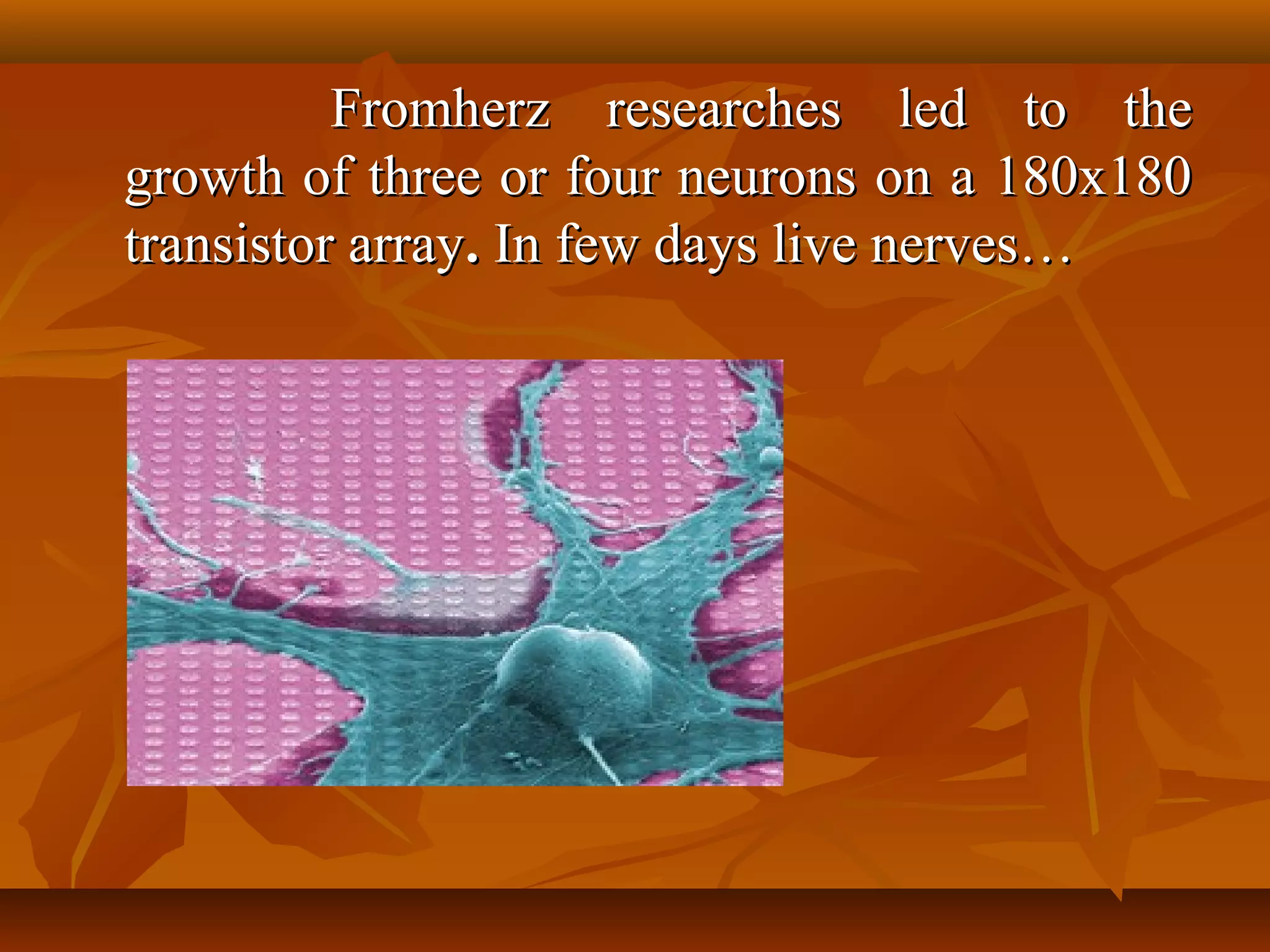
Fromherz researches led to the
growth of three or four neurons on a 180x180
transistor array. In few days live nerves…
Achievements In This Field
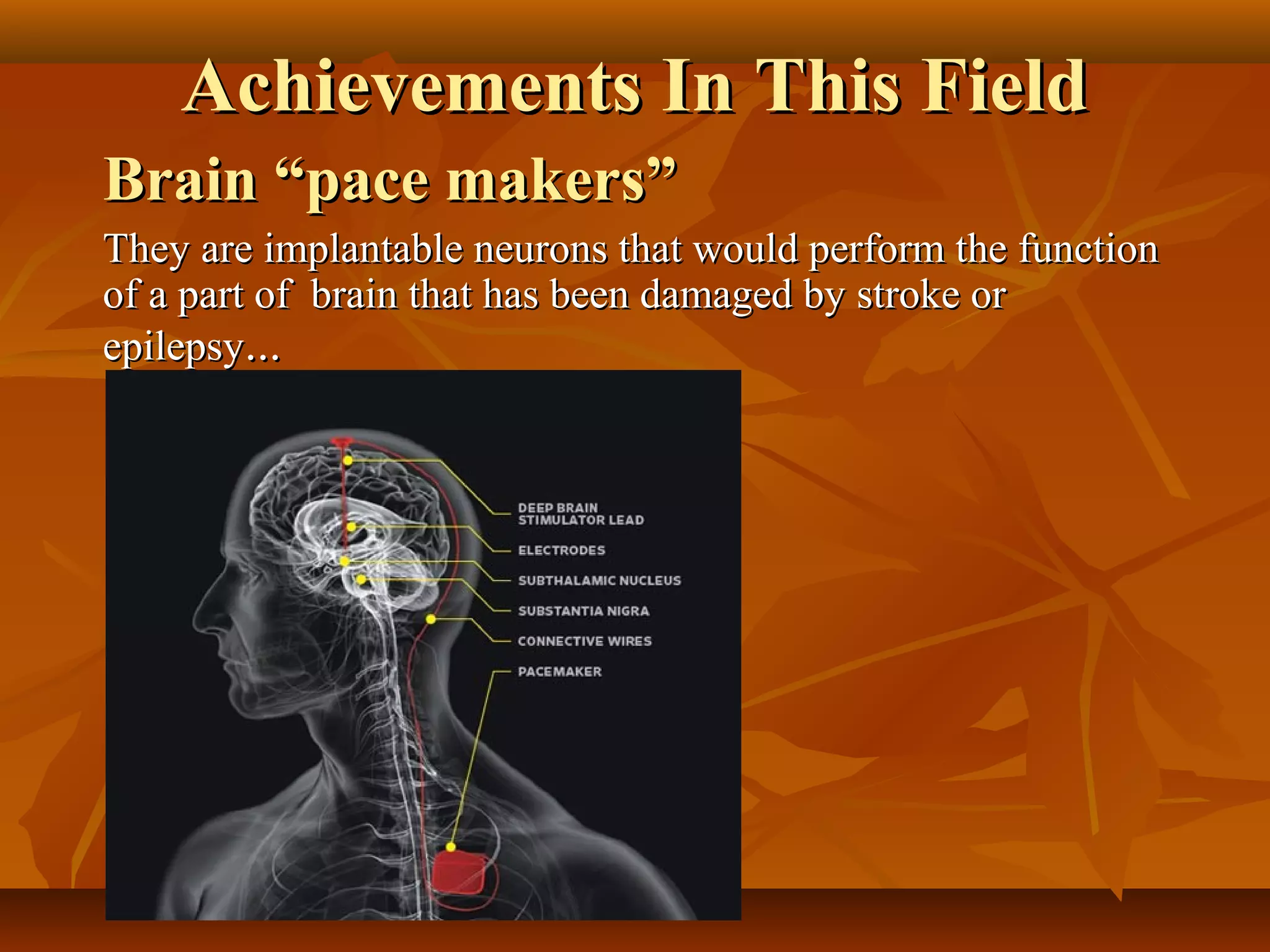
Brain “pace makers”
They are implantable neurons that would perform the function
of a part of brain that has been damaged by stroke or
epilepsy...
Retinomorphic chip

   Retinomorphic chip is a silicon device similar to the human
    eye, picks out the kinds of features and facial patterns that we
    use to recognize people and read their emotional state…
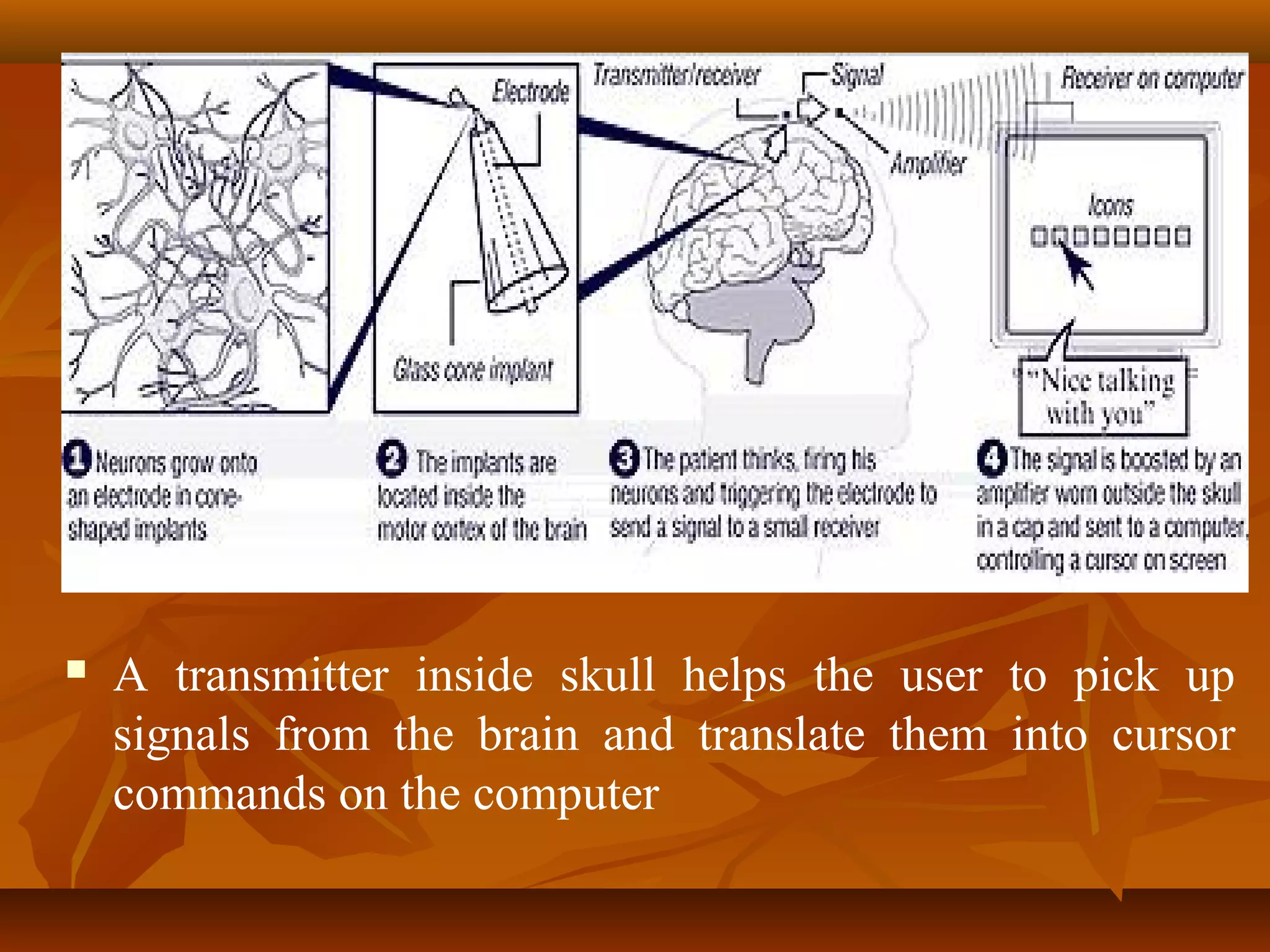
Mental mouse
   Hollow glass cone, size of ball point pen tip. Before
    implanting, cones are coated with chemicals — taken
    from tissue inside the patients’ own knees for nerve
    growth.
   Implants contain electrode, picks up impulses from
    the nerve endings.
   Implants placed in brain’s motor cortex(body
    movement).
   A transmitter inside skull helps the user to pick up
    signals from the brain and translate them into cursor
    commands on the computer
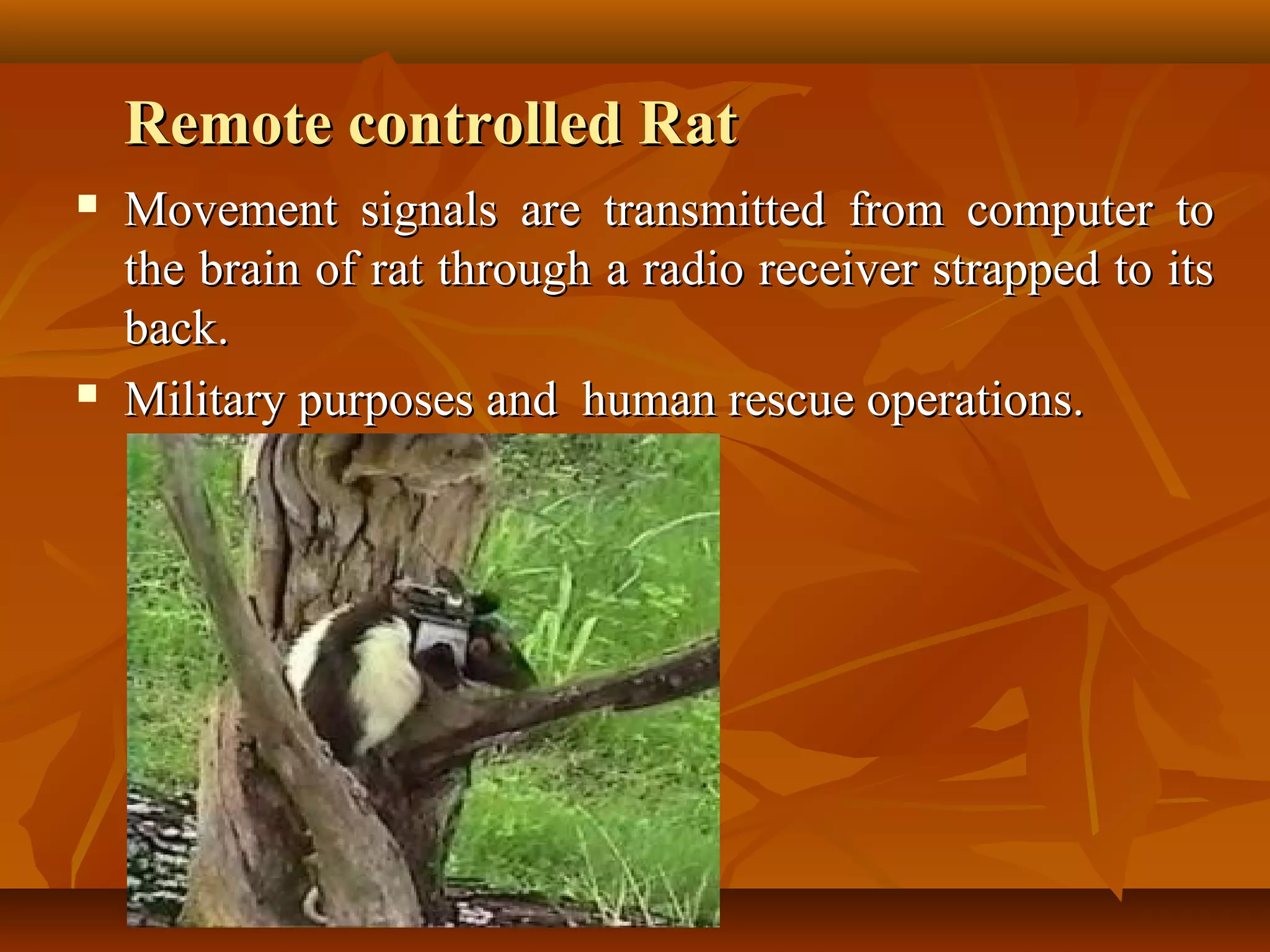
Remote controlled Rat
   Movement signals are transmitted from computer to
    the brain of rat through a radio receiver strapped to its
    back.
   Military purposes and human rescue operations.
Benefits of Brain Chips
   It will increase the dynamic ranging of senses.
   Giving light to blind and giving paralyzed patients
    full mental control of limbs.
   No genetic modifications in the next generation.
   Rescue missions(remote controlled rat).
   The advantage of implants is that they take the
    decision making power away from the addict. Chips
    take away one's free will. It enables a person to make
    a better choice not to take drugs at all.
Drawbacks
 Cost.
 Safety(non toxic materials).

 Losing Identity.

 Normal range people seen as subnormal.

 Risk for surgeons.
Future of brain chips
 It will enhance memory.
 It might enable “cyberthink”- invisible

  communication.
 Enable consistent and constant access to

  information where and when needed.
 It will increase the dynamic range of

  senses, enabling, for example, seeing IR,
  UV, and chemical spectra.
Conclusion
 Brain implants enhance capability of
  human organs and senses.
 It has a significant role to play in future

  genetic engineering fields and
  neuroscience.
 The implants may enhance your

  capabilities, but they will expire when
  you do.
Questions
Thank You
Brain chips

Brain chips

  • 1.
    Brain Chips Kumar Gaurav
  • 2.
    Overview of brainchips  Introduction  Evolution towards implantable brain chips  Achievements  Benefits of brain chips  Drawbacks of brain chips  Future of brain chips  Conclusion
  • 3.
    Introduction  Itis man that gave technology its present form but today its entering a phase where it will out with man in intelligence as we as efficiency.  Man has now to find a way in which he can keep in pace with technology, & one of the recent developments in this regard is the brain chips implants.
  • 4.
    Brain chips can enhance memory of human beings, help paralyzed patients and are intended for military purposes.  Develop direct interface between brain and computers.  Its likely that implantable computer chips acting as sensors may soon assist failing memory, but even provide fluency in a new language…
  • 5.
    Evolution towards brainchips …  The study of the Brain It is the most complicated area of research. When we enter a discussion on this topic, the works of the physiologist JOSE DELGADO need to be mentioned. Much of the work taking place at the NIH, Stanford is built on the research done in 1950’s by JOSE DELGADO. He implanted electrodes in animal brains and attached them to a "stimoceiver" under the skull…
  • 6.
    Jose Delgado’s experiments… Jose Delgado controlling a bull with stimoceiver
  • 7.
    Studies in humansubjects with implanted electrodes have demonstrated that electrical stimulation of the depth of the brain can induce pleasurable manifestations, as evidenced by the spontaneous verbal reports of patients, their facial expression and general behavior, and their desire to repeat the experience.
  • 8.
    With such experiments,DELGADO unfolded many of the mysteries of the BRAIN, which contributed to the developments in brain implant technology. For e.g.: he understood how the sensation of suffering pain could be reduced by stimulating the frontal lobes of the brain.
  • 9.
    Neural Network Neural networks are loosely modeled on the networks of neurons. They can learn to perform complex tasks. They are especially effective at recognizing patterns, classifying data, and processing noisy signals…
  • 10.
    The study ofartificial neural networks has also added to the data required to create brain chips. They crudely mimic the fundamental properties of the brain. When eventually a network model which resembles the brain in every aspect is created, it will be a major breakthrough in the evolution towards implantable brain chips.
  • 11.
    Brain cells and silicon chips linked electronically … Researchers working on tiny electrode arrays that links the two. However, once a device is implanted the body develops so-called glial cells, defenses that surround the foreign object and prevent neurons and electrodes from making contact.
  • 12.
    Fromherz researches ledto the growth of three or four neurons on a 180x180 transistor array. In few days live nerves…
  • 13.
    Achievements In ThisField Brain “pace makers” They are implantable neurons that would perform the function of a part of brain that has been damaged by stroke or epilepsy...
  • 14.
    Retinomorphic chip  Retinomorphic chip is a silicon device similar to the human eye, picks out the kinds of features and facial patterns that we use to recognize people and read their emotional state…
  • 15.
    Mental mouse  Hollow glass cone, size of ball point pen tip. Before implanting, cones are coated with chemicals — taken from tissue inside the patients’ own knees for nerve growth.  Implants contain electrode, picks up impulses from the nerve endings.  Implants placed in brain’s motor cortex(body movement).
  • 16.
    A transmitter inside skull helps the user to pick up signals from the brain and translate them into cursor commands on the computer
  • 17.
    Remote controlled Rat  Movement signals are transmitted from computer to the brain of rat through a radio receiver strapped to its back.  Military purposes and human rescue operations.
  • 18.
    Benefits of BrainChips  It will increase the dynamic ranging of senses.  Giving light to blind and giving paralyzed patients full mental control of limbs.  No genetic modifications in the next generation.  Rescue missions(remote controlled rat).  The advantage of implants is that they take the decision making power away from the addict. Chips take away one's free will. It enables a person to make a better choice not to take drugs at all.
  • 19.
    Drawbacks  Cost.  Safety(nontoxic materials).  Losing Identity.  Normal range people seen as subnormal.  Risk for surgeons.
  • 20.
    Future of brainchips  It will enhance memory.  It might enable “cyberthink”- invisible communication.  Enable consistent and constant access to information where and when needed.  It will increase the dynamic range of senses, enabling, for example, seeing IR, UV, and chemical spectra.
  • 21.
    Conclusion  Brain implantsenhance capability of human organs and senses.  It has a significant role to play in future genetic engineering fields and neuroscience.  The implants may enhance your capabilities, but they will expire when you do.
  • 22.
  • 23.