Neurobiological
Bases of Human
Behaviour
©John Wiley & Sons, Inc. 2007
Huffman: Psychology in Action (8e)
Lecture Overview
Neural Bases of Behavior
Nervous System Organization
A Tour Through the Brain
Our Genetic Inheritance
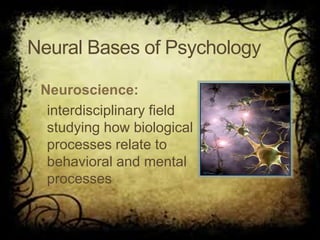
Neural Bases of Psychology
Neuroscience:
interdisciplinary field
studying how biological
processes relate to
behavioral and mental
processes
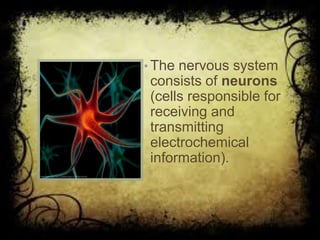
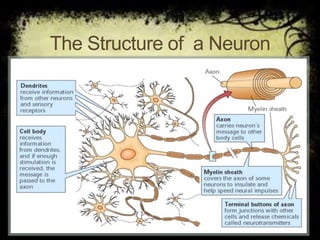
• The nervous system
consists of neurons
(cells responsible for
receiving and
transmitting
electrochemical
information).
The Structure of a Neuron
©John Wiley & Sons, Inc. 2007
Huffman: Psychology in Action (8e)
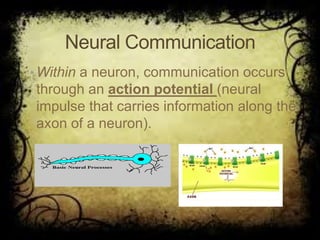
Neural Communication
• Within a neuron, communication occurs
through an action potential (neural
impulse that carries information along the
axon of a neuron).
©John Wiley & Sons, Inc. 2007
Huffman: Psychology in Action (8e)
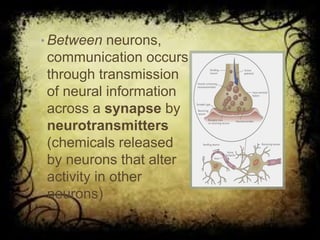
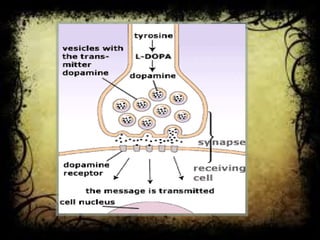
• Between neurons,
communication occurs
through transmission
of neural information
across a synapse by
neurotransmitters
(chemicals released
by neurons that alter
activity in other
neurons)
©John Wiley & Sons, Inc. 2007
Huffman: Psychology in Action (8e)
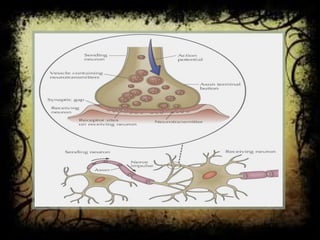
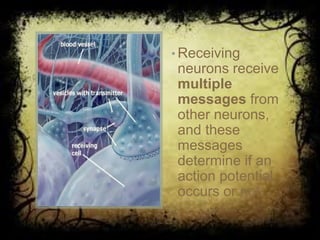
• Receiving
neurons receive
multiple
messages from
other neurons,
and these
messages
determine if an
action potential
occurs or not.
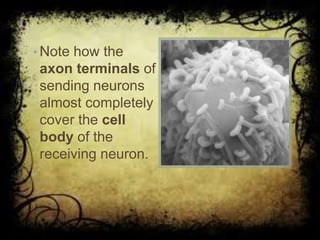
• Note how the
axon terminals of
sending neurons
almost completely
cover the cell
body of the
receiving neuron.
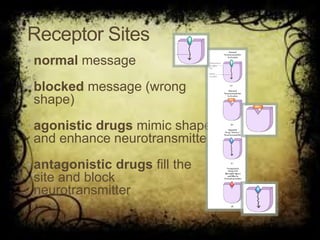
Receptor Sites
• normal message
• blocked message (wrong
shape)
• agonistic drugs mimic shape
and enhance neurotransmitter
• antagonistic drugs fill the
site and block
neurotransmitter
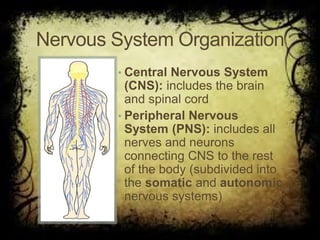
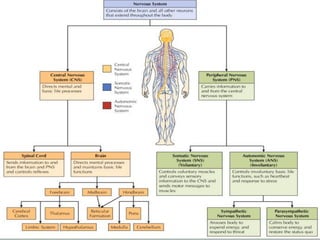
Nervous System Organization
• Central Nervous System
(CNS): includes the brain
and spinal cord
• Peripheral Nervous
System (PNS): includes all
nerves and neurons
connecting CNS to the rest
of the body (subdivided into
the somatic and autonomic
nervous systems)
Nervous System Organization
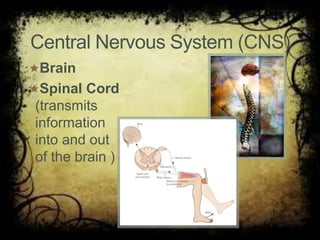
Central Nervous System (CNS)
Brain
Spinal Cord
(transmits
information
into and out
of the brain )
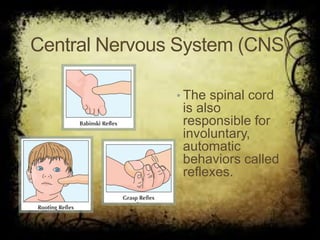
Central Nervous System (CNS)
• The spinal cord
is also
responsible for
involuntary,
automatic
behaviors called
reflexes.
Subdivisions of the
Peripheral Nervous System
Somatic Nervous System (SNS): connects
to sensory receptors and controls skeletal
muscles.
Autonomic Nervous System (ANS):
controls involuntary bodily functions
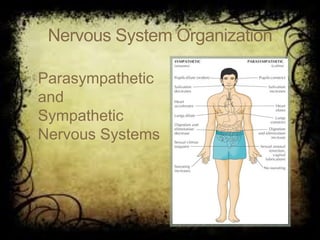
ANS is subdivided into: Sympathetic
Nervous System (arouses) and the
Parasympathetic Nervous System (calms)
Nervous System Organization
Parasympathetic
and
Sympathetic
Nervous Systems
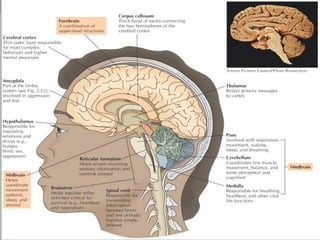
A Tour Through the Brain
ATour Through The Brain: Hindbrain
• Three key structures of the hindbrain:
• Medulla: life survival functions
• Pons: respiration, movement, waking,
sleeping, and dreaming
• Cerebellum: coordination of fine muscular
movements, balance, and some aspects of
perception and cognition
ATour Through The Brain (Continued)
• Midbrain: collection of brain structures
in the middle of the brain that
coordinates movement patterns, sleep,
and arousal
• Reticular formation: runs through the
hindbrain, midbrain, and brainstem and
screens incoming information and
controls arousal
ATour Through The Brain (Continued)
• Forebrain: collection of upper-level brain
structures, including the thalamus,
hypothalamus, and limbic system
• Thalamus: relays sensory messages to
the cerebral cortex
• Hypothalamus: responsible for
emotions, drives, and regulating the
body’s internal environment
ATour Through The Brain (Continued)
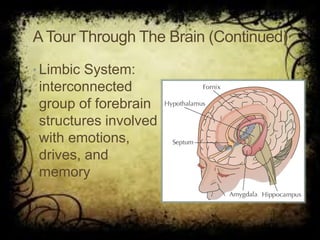
• Limbic System:
interconnected
group of forebrain
structures involved
with emotions,
drives, and
memory
Cerebral Cortex
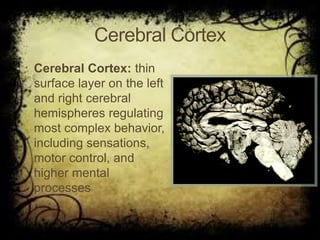
• Cerebral Cortex: thin
surface layer on the left
and right cerebral
hemispheres regulating
most complex behavior,
including sensations,
motor control, and
higher mental
processes
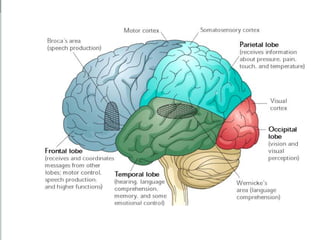
A Tour Through The Brain:
Lobes of the Cerebral Cortex (Cont.)
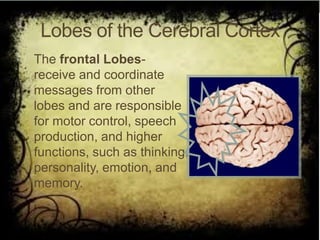
Lobes of the Cerebral Cortex
• The frontal Lobes-
receive and coordinate
messages from other
lobes and are responsible
for motor control, speech
production, and higher
functions, such as thinking,
personality, emotion, and
memory.

Brain

  • 1.
  • 3.
    ©John Wiley &Sons, Inc. 2007 Huffman: Psychology in Action (8e) Lecture Overview Neural Bases of Behavior Nervous System Organization A Tour Through the Brain Our Genetic Inheritance
  • 4.
    Neural Bases ofPsychology Neuroscience: interdisciplinary field studying how biological processes relate to behavioral and mental processes
  • 5.
    • The nervoussystem consists of neurons (cells responsible for receiving and transmitting electrochemical information).
  • 6.
  • 7.
    ©John Wiley &Sons, Inc. 2007 Huffman: Psychology in Action (8e) Neural Communication • Within a neuron, communication occurs through an action potential (neural impulse that carries information along the axon of a neuron).
  • 8.
    ©John Wiley &Sons, Inc. 2007 Huffman: Psychology in Action (8e) • Between neurons, communication occurs through transmission of neural information across a synapse by neurotransmitters (chemicals released by neurons that alter activity in other neurons)
  • 10.
    ©John Wiley &Sons, Inc. 2007 Huffman: Psychology in Action (8e) • Receiving neurons receive multiple messages from other neurons, and these messages determine if an action potential occurs or not.
  • 11.
    • Note howthe axon terminals of sending neurons almost completely cover the cell body of the receiving neuron.
  • 13.
    Receptor Sites • normalmessage • blocked message (wrong shape) • agonistic drugs mimic shape and enhance neurotransmitter • antagonistic drugs fill the site and block neurotransmitter
  • 14.
    Nervous System Organization •Central Nervous System (CNS): includes the brain and spinal cord • Peripheral Nervous System (PNS): includes all nerves and neurons connecting CNS to the rest of the body (subdivided into the somatic and autonomic nervous systems)
  • 15.
  • 16.
    Central Nervous System(CNS) Brain Spinal Cord (transmits information into and out of the brain )
  • 17.
    Central Nervous System(CNS) • The spinal cord is also responsible for involuntary, automatic behaviors called reflexes.
  • 18.
    Subdivisions of the PeripheralNervous System Somatic Nervous System (SNS): connects to sensory receptors and controls skeletal muscles. Autonomic Nervous System (ANS): controls involuntary bodily functions ANS is subdivided into: Sympathetic Nervous System (arouses) and the Parasympathetic Nervous System (calms)
  • 19.
  • 20.
    A Tour Throughthe Brain
  • 21.
    ATour Through TheBrain: Hindbrain • Three key structures of the hindbrain: • Medulla: life survival functions • Pons: respiration, movement, waking, sleeping, and dreaming • Cerebellum: coordination of fine muscular movements, balance, and some aspects of perception and cognition
  • 22.
    ATour Through TheBrain (Continued) • Midbrain: collection of brain structures in the middle of the brain that coordinates movement patterns, sleep, and arousal • Reticular formation: runs through the hindbrain, midbrain, and brainstem and screens incoming information and controls arousal
  • 23.
    ATour Through TheBrain (Continued) • Forebrain: collection of upper-level brain structures, including the thalamus, hypothalamus, and limbic system • Thalamus: relays sensory messages to the cerebral cortex • Hypothalamus: responsible for emotions, drives, and regulating the body’s internal environment
  • 24.
    ATour Through TheBrain (Continued) • Limbic System: interconnected group of forebrain structures involved with emotions, drives, and memory
  • 25.
    Cerebral Cortex • CerebralCortex: thin surface layer on the left and right cerebral hemispheres regulating most complex behavior, including sensations, motor control, and higher mental processes
  • 26.
    A Tour ThroughThe Brain: Lobes of the Cerebral Cortex (Cont.)
  • 27.
    Lobes of theCerebral Cortex • The frontal Lobes- receive and coordinate messages from other lobes and are responsible for motor control, speech production, and higher functions, such as thinking, personality, emotion, and memory.