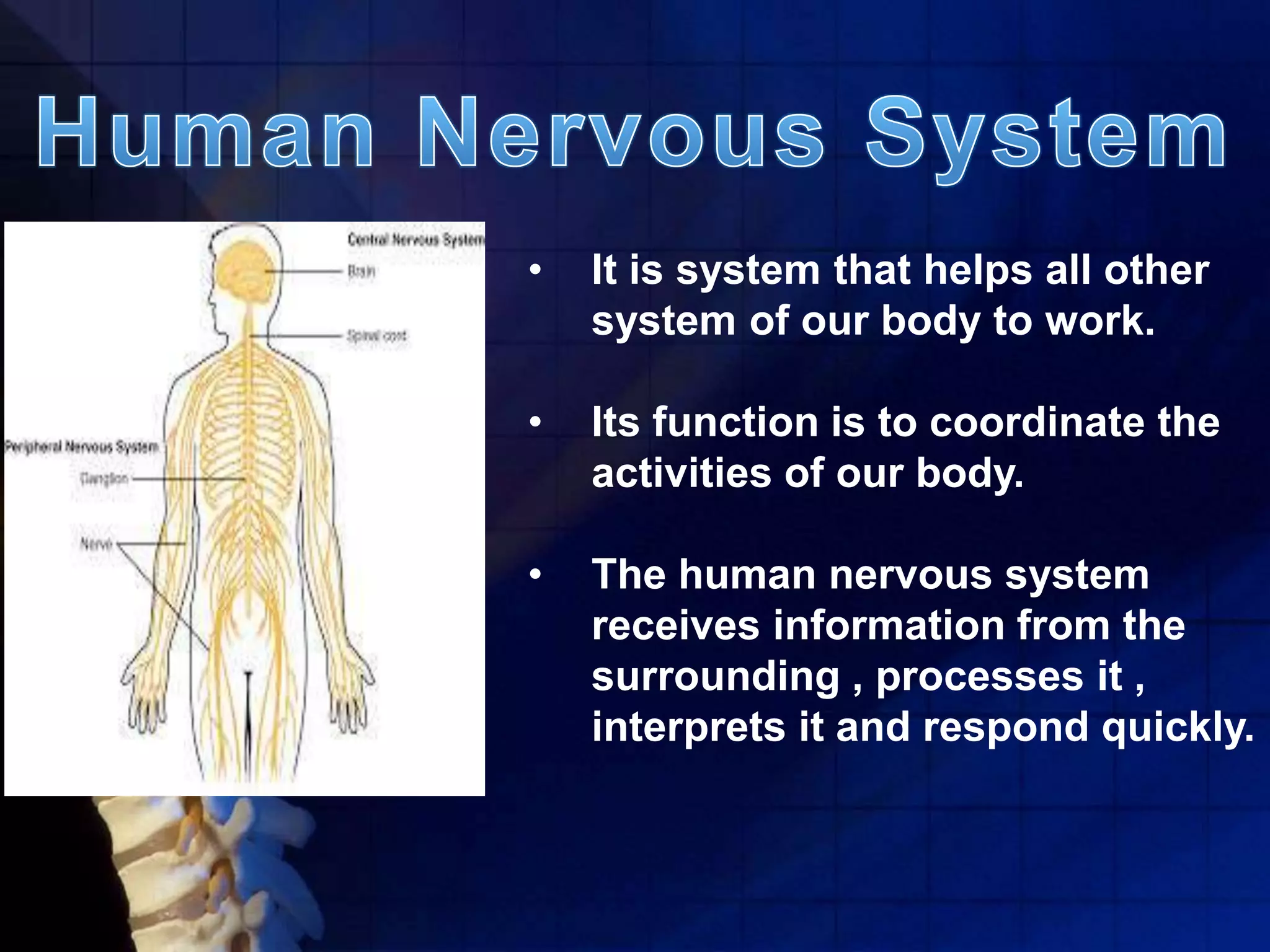
• It is system that helps all other
system of our body to work.
• Its function is to coordinate the
activities of our body.
• The human nervous system
receives information from the
surrounding , processes it ,
interprets it and respond quickly.
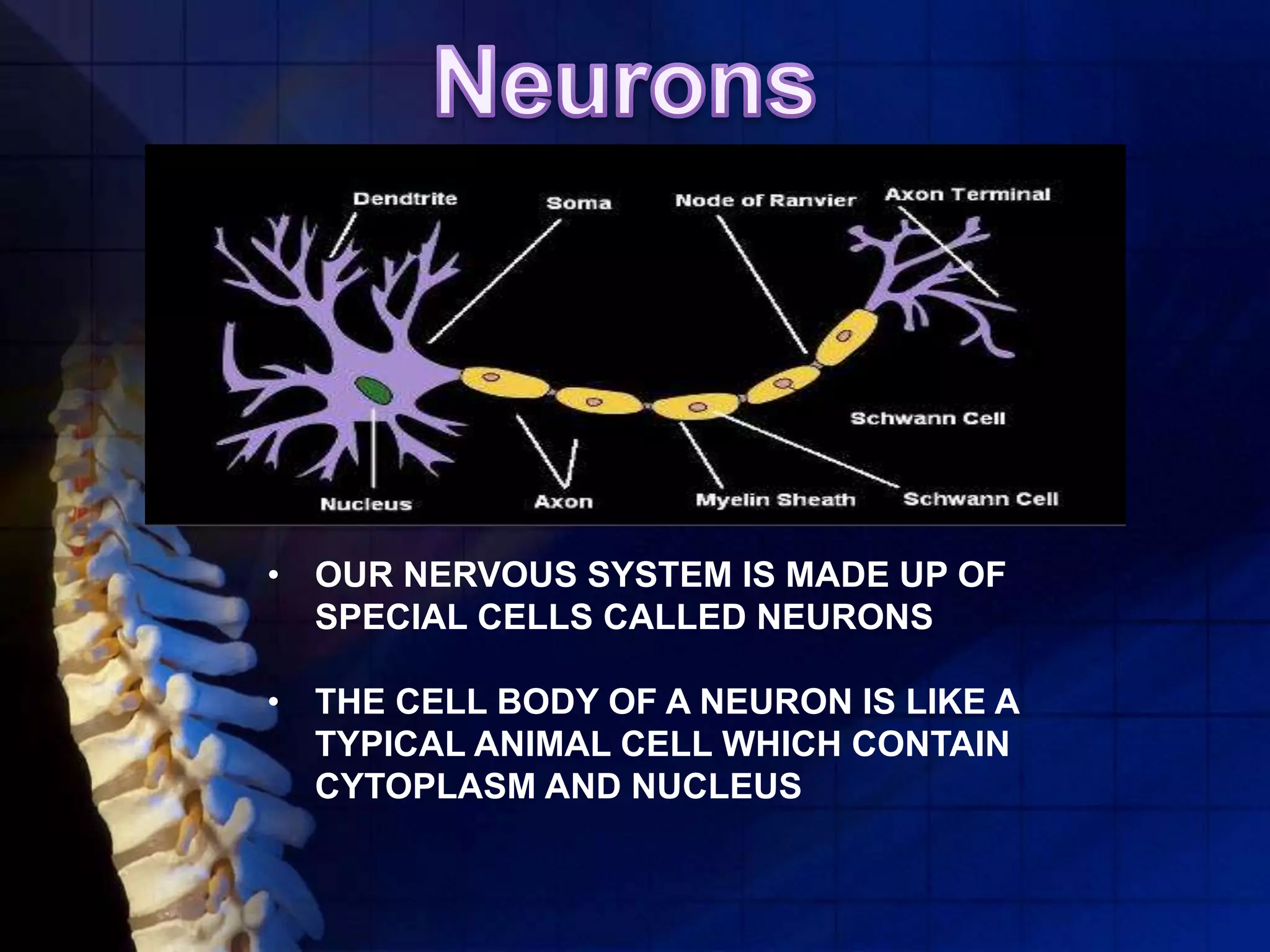
• OUR NERVOUS SYSTEM IS MADE UP OF
SPECIAL CELLS CALLED NEURONS
• THE CELL BODY OF A NEURON IS LIKE A
TYPICAL ANIMAL CELL WHICH CONTAIN
CYTOPLASM AND NUCLEUS
THE NEURONS HAVE 3 COMPONENTS :
AXON : It is the longest fibre on the cell body of
neuron. it has an insulating and protective sheath of
myelin around it.
DENDRITES : It picks up the nerve impulse
(message) from receptors and the passes to cell
body and then to axon.
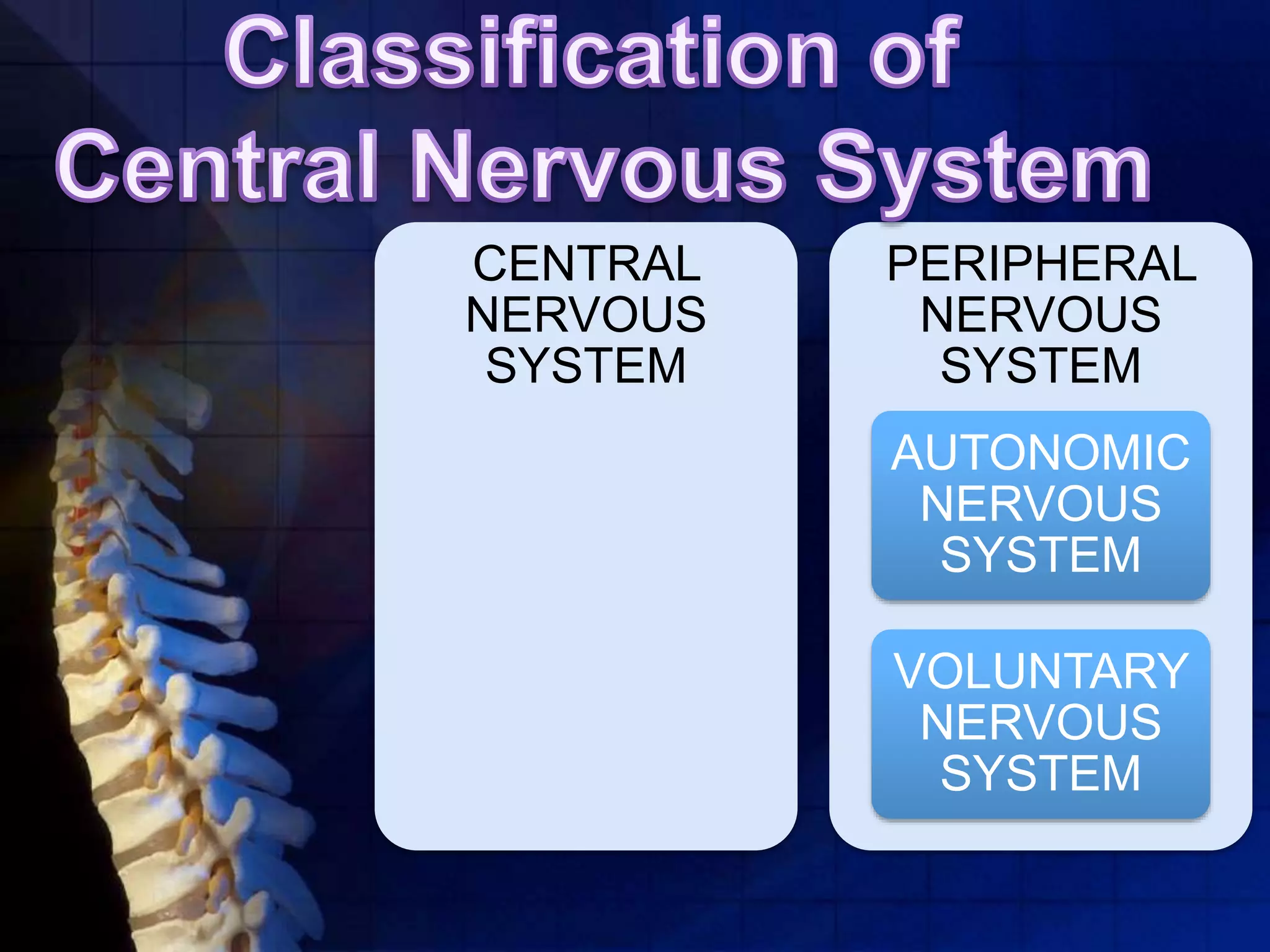
CENTRAL
NERVOUS
SYSTEM
PERIPHERAL
NERVOUS
SYSTEM
AUTONOMIC
NERVOUS
SYSTEM
VOLUNTARY
NERVOUS
SYSTEM
• The human central nervous system is made up of;
• 1. Brain
• 2. Spinal cord
• The complete central nervous system consist of up
to 100 billions inter-neurons
• Brain and spinal cord are protected in protected
bony armour, the skull and the vertebral column.
• Both the spinal cord and brain are covered in three
continuous sheets of connective tissue called
meninges.
• A plasma like fluid, the cerebrospinal fluid (CSF)
bathing the neurons of CNS is yet another
protection to CNS.
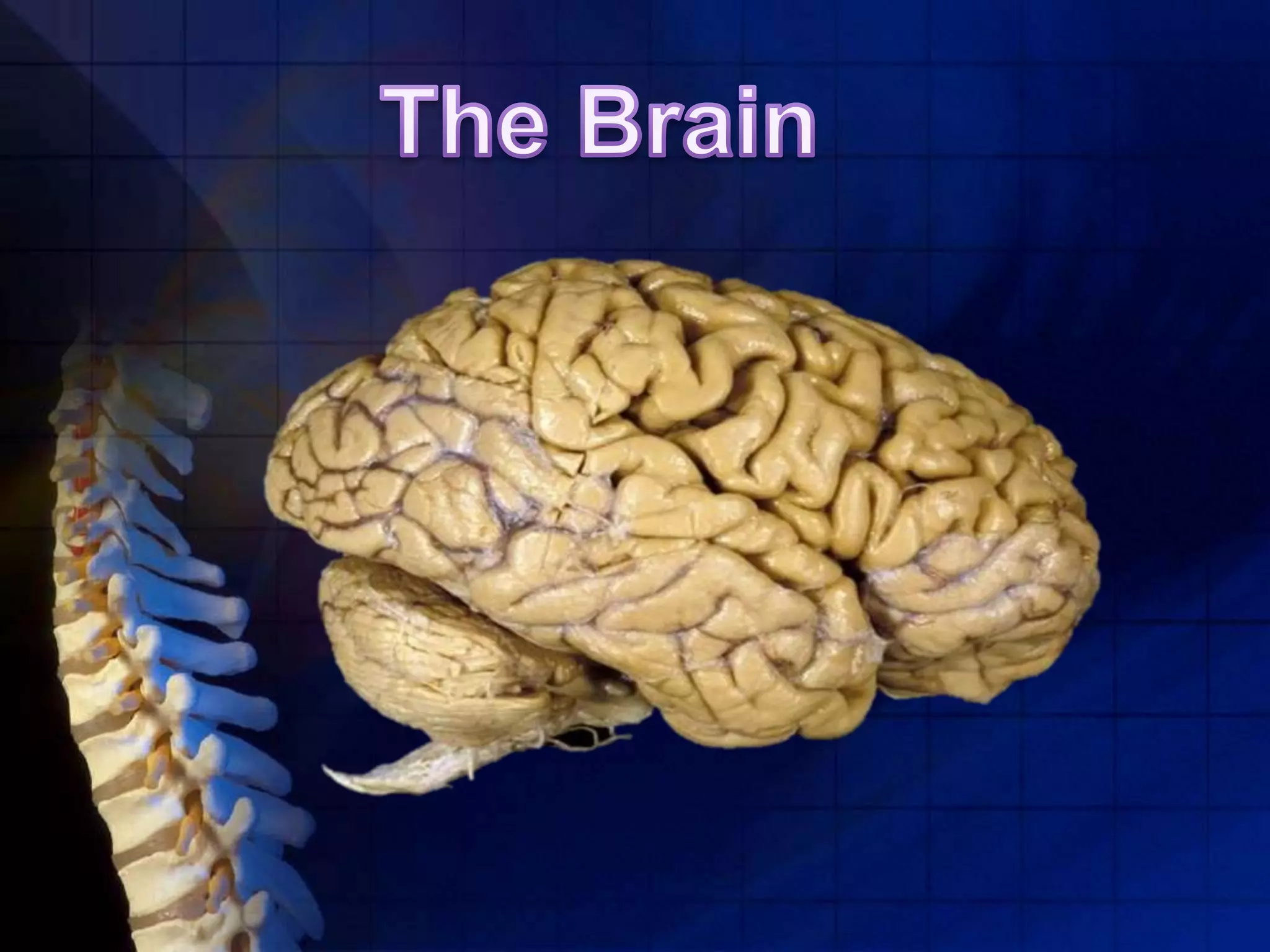
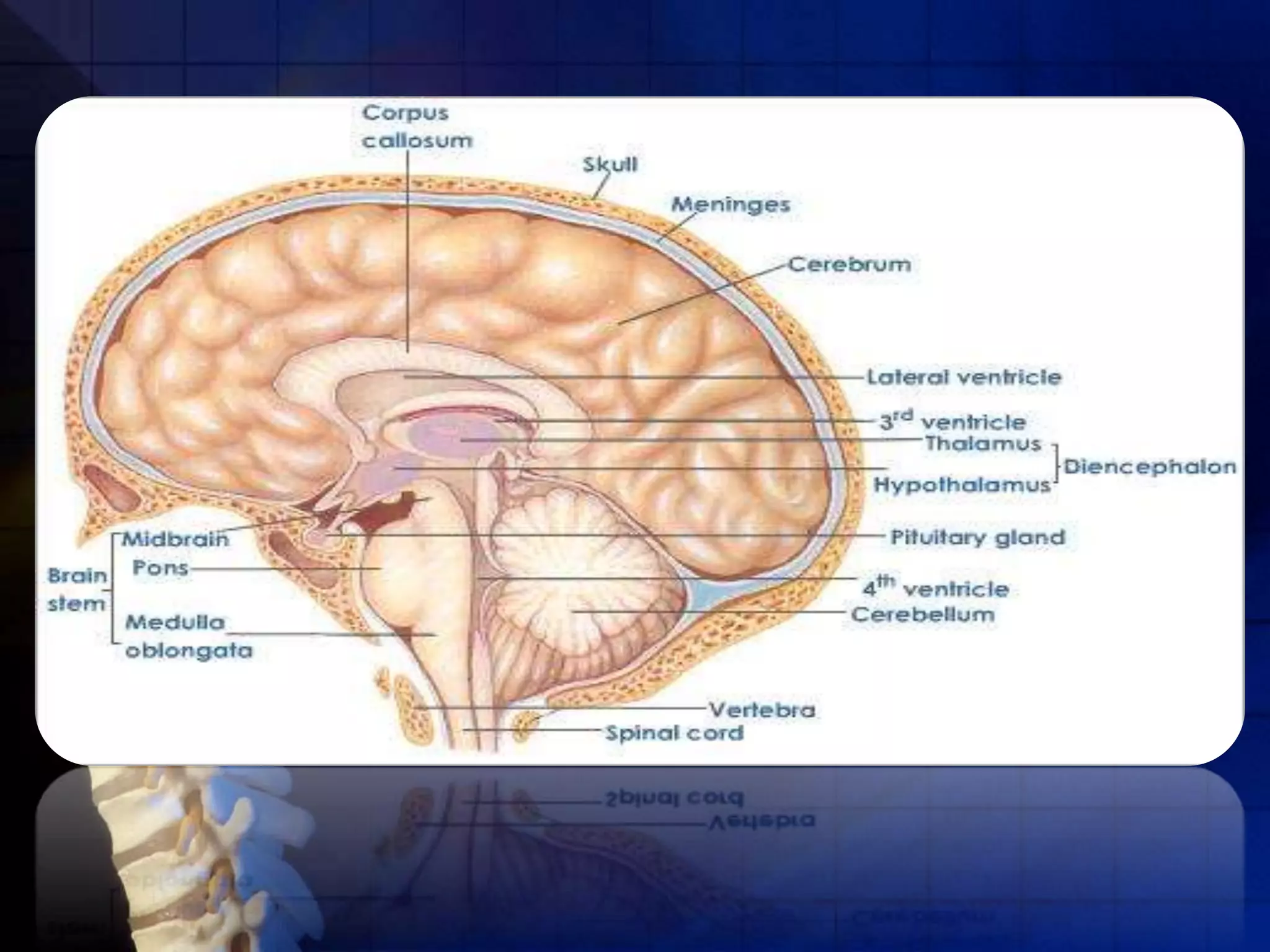
• Brain is the highest coordinating centre in the body
• Located inside the skull (at the top of the spinal chord)
• protected by a bony box in the skull-Cranium
• Surrounded by 3 membranes-Meninges
• The space between the membranes id filled with a
cerebro spinal fluid, which protects the brain from
mechanical shocks
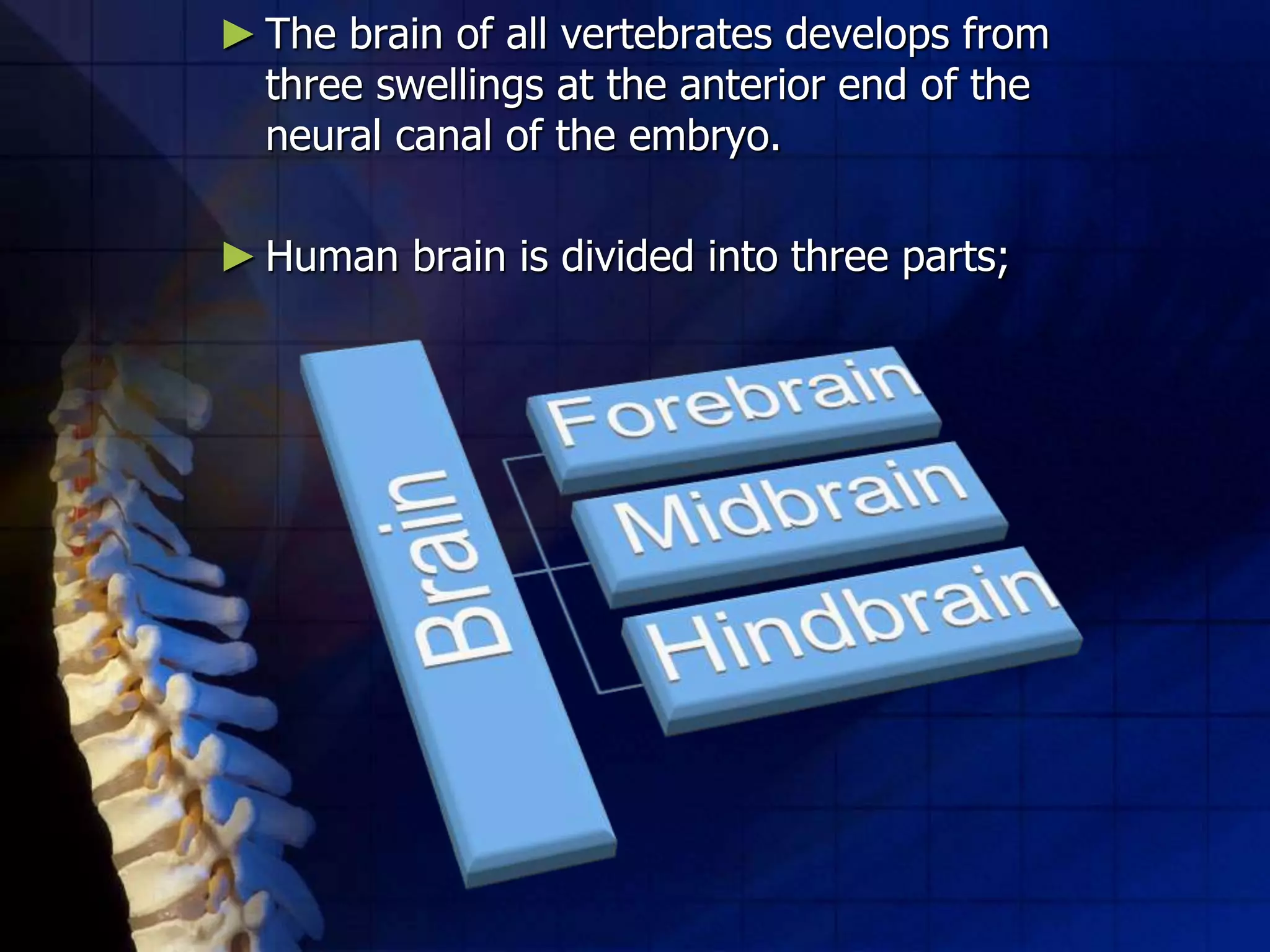
►The brain of all vertebrates develops from
three swellings at the anterior end of the
neural canal of the embryo.
►Human brain is divided into three parts;
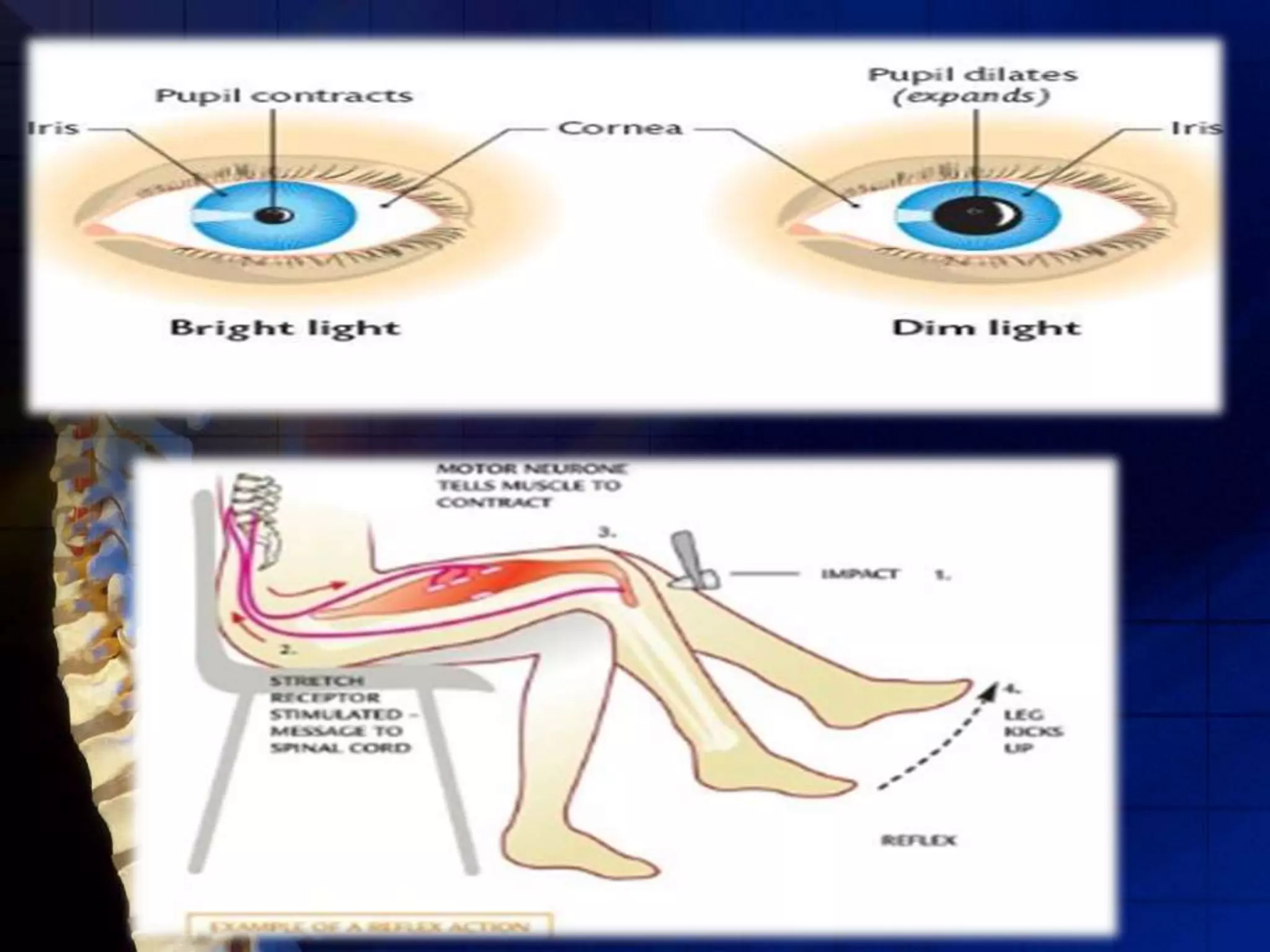
• Reflex Action-This is a rapid, automatic
response to a stimulus which is not
under voluntary control of the brain. The
stimulus produces the same response
every time
• Sneezing and Blinking are two examples
of Reflexes.
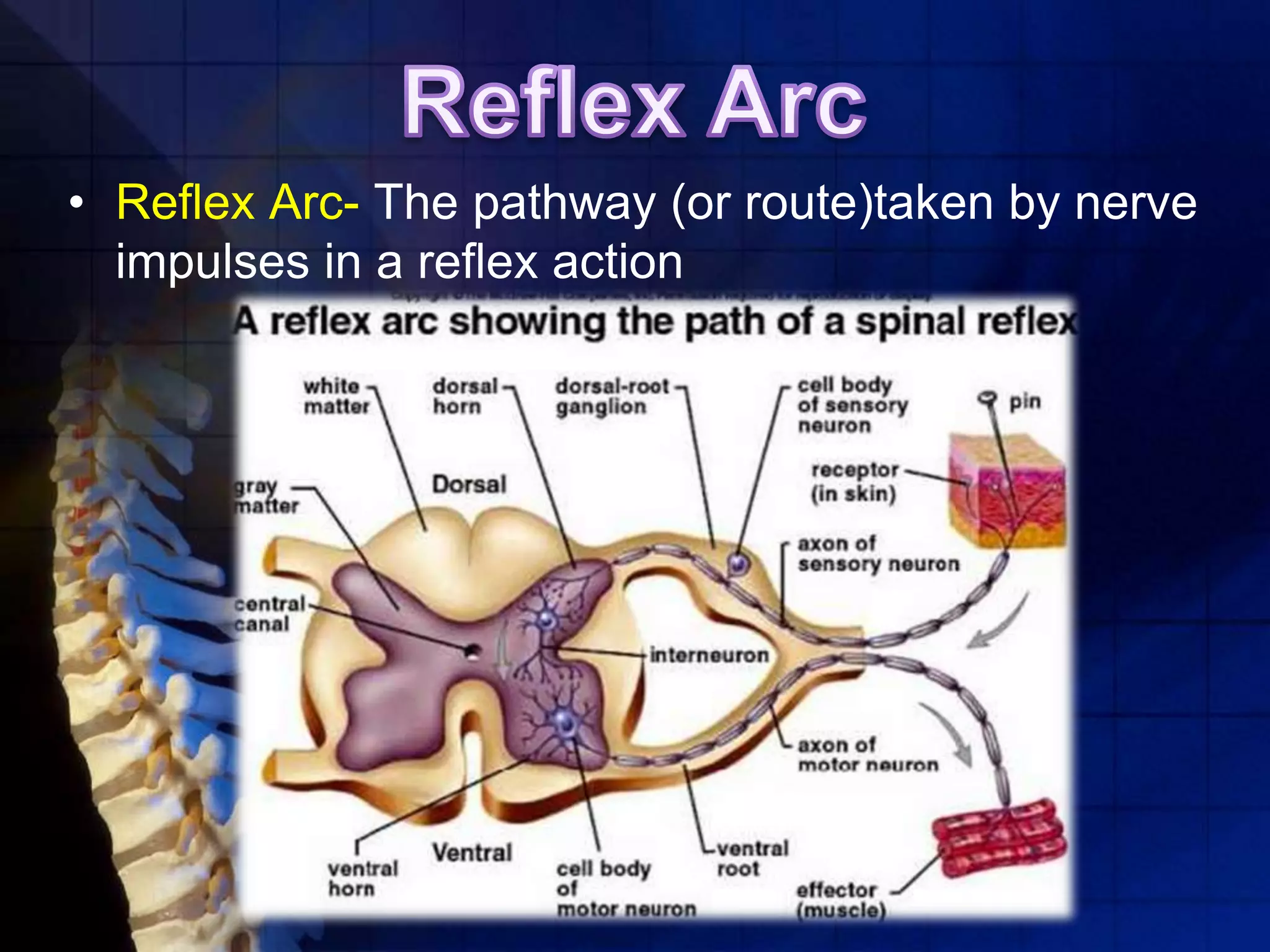
• REFLEXES are very fast, and Most Reflexes
Never Reach the Brain.
• Sensory Neurons carry impulses from
RECEPTORS to the spinal cord.
• Motor Neurons carry impulses from the spinal
cord to the EFFECTORS.
• Within the spinal cord, motor and sensory
neurons are connected by INTERNEURONS.
• Reflex Arc- The pathway (or route)taken by nerve
impulses in a reflex action
Human nervous system__by_Aarohi Gupta_for_class_10-a

Human nervous system__by_Aarohi Gupta_for_class_10-a

  • 2.
    • It issystem that helps all other system of our body to work. • Its function is to coordinate the activities of our body. • The human nervous system receives information from the surrounding , processes it , interprets it and respond quickly.
  • 4.
    • OUR NERVOUSSYSTEM IS MADE UP OF SPECIAL CELLS CALLED NEURONS • THE CELL BODY OF A NEURON IS LIKE A TYPICAL ANIMAL CELL WHICH CONTAIN CYTOPLASM AND NUCLEUS
  • 5.
    THE NEURONS HAVE3 COMPONENTS : AXON : It is the longest fibre on the cell body of neuron. it has an insulating and protective sheath of myelin around it. DENDRITES : It picks up the nerve impulse (message) from receptors and the passes to cell body and then to axon.
  • 6.
  • 7.
    • The humancentral nervous system is made up of; • 1. Brain • 2. Spinal cord • The complete central nervous system consist of up to 100 billions inter-neurons • Brain and spinal cord are protected in protected bony armour, the skull and the vertebral column. • Both the spinal cord and brain are covered in three continuous sheets of connective tissue called meninges. • A plasma like fluid, the cerebrospinal fluid (CSF) bathing the neurons of CNS is yet another protection to CNS.
  • 9.
    • Brain isthe highest coordinating centre in the body • Located inside the skull (at the top of the spinal chord) • protected by a bony box in the skull-Cranium • Surrounded by 3 membranes-Meninges • The space between the membranes id filled with a cerebro spinal fluid, which protects the brain from mechanical shocks
  • 10.
    ►The brain ofall vertebrates develops from three swellings at the anterior end of the neural canal of the embryo. ►Human brain is divided into three parts;
  • 13.
    • Reflex Action-Thisis a rapid, automatic response to a stimulus which is not under voluntary control of the brain. The stimulus produces the same response every time • Sneezing and Blinking are two examples of Reflexes.
  • 14.
    • REFLEXES arevery fast, and Most Reflexes Never Reach the Brain. • Sensory Neurons carry impulses from RECEPTORS to the spinal cord. • Motor Neurons carry impulses from the spinal cord to the EFFECTORS. • Within the spinal cord, motor and sensory neurons are connected by INTERNEURONS.
  • 16.
    • Reflex Arc-The pathway (or route)taken by nerve impulses in a reflex action