NERVOUS SYSTEM
 Nervous system is the chief
controlling and coordinating
system of the body. It controls
and regulates all activities of the
body, whether voluntary or
involuntary, and adjusts the
individual (organism) to the given
surroundings.
 The basic working unit of the nervous
system is a cell called a neuron. The
human brain contains about 100 billion
neurons. A neuron consists of a cell
body containing the nucleus, and special
extensions called axons (pronounced
AK-sonz) and dendrites (pronounced
DEN-drahytz).
 Nerves are cylindrical bundles of fibers
that start at the brain and central cord
and branch out to every other part of the
body.
WHAT ARE THE PARTS OF
THE NERVOUS SYSTEM?
The nervous system consists of two main
parts:
 Central nervous system
 Peripheral nervous system
CENTRAL NERVOUS
SYSTEM
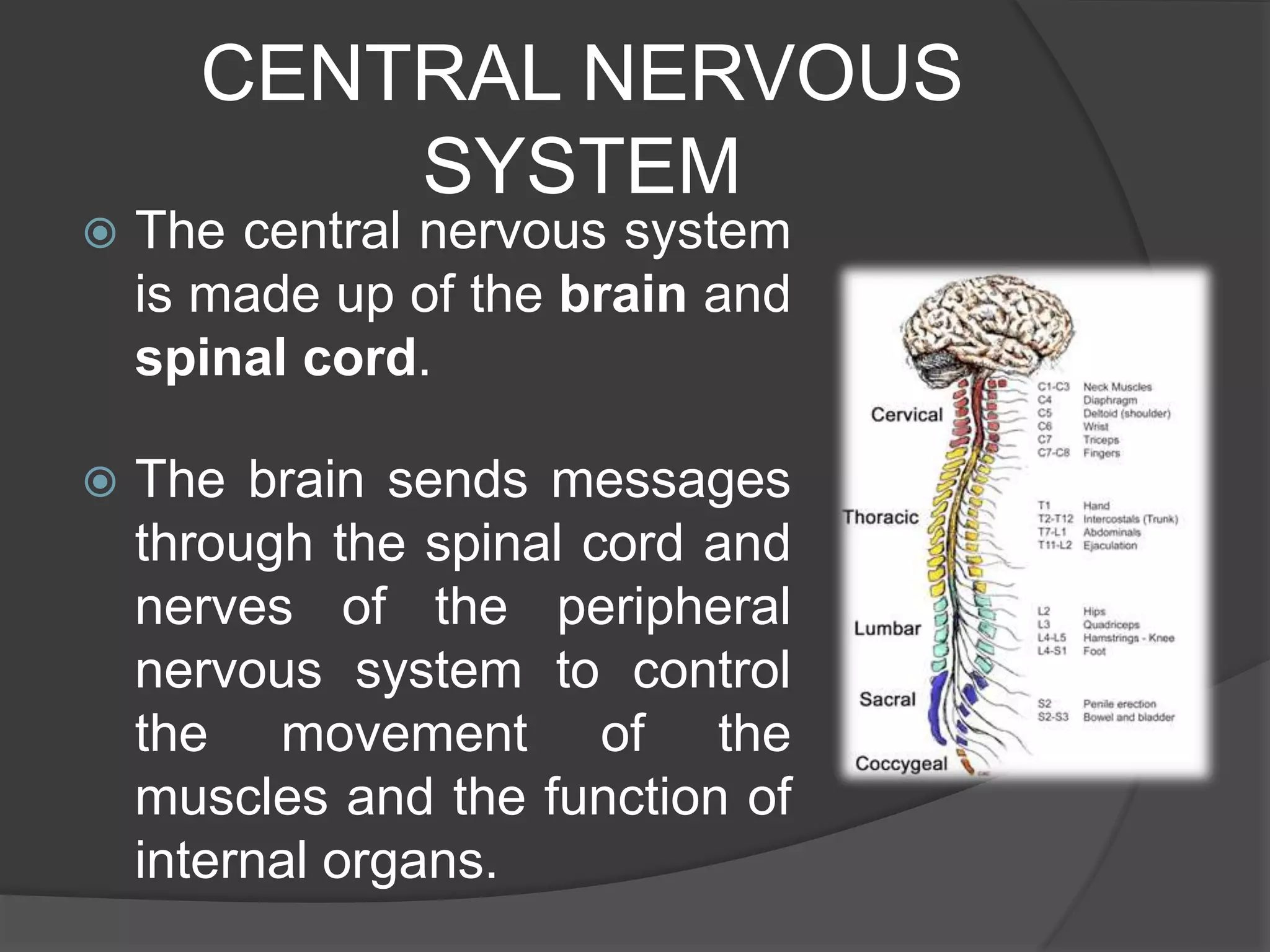
 The central nervous system
is made up of the brain and
spinal cord.
 The brain sends messages
through the spinal cord and
nerves of the peripheral
nervous system to control
the movement of the
muscles and the function of
internal organs.
BRAIN
 The brain is the center of our thoughts,
the interpreter of our external
environment, and the origin of control
over body movement. Like a central
computer, it interprets information from
our eyes (sight), ears (sound), nose
(smell), tongue (taste), and skin (touch),
as well as from internal organs such as
the stomach.
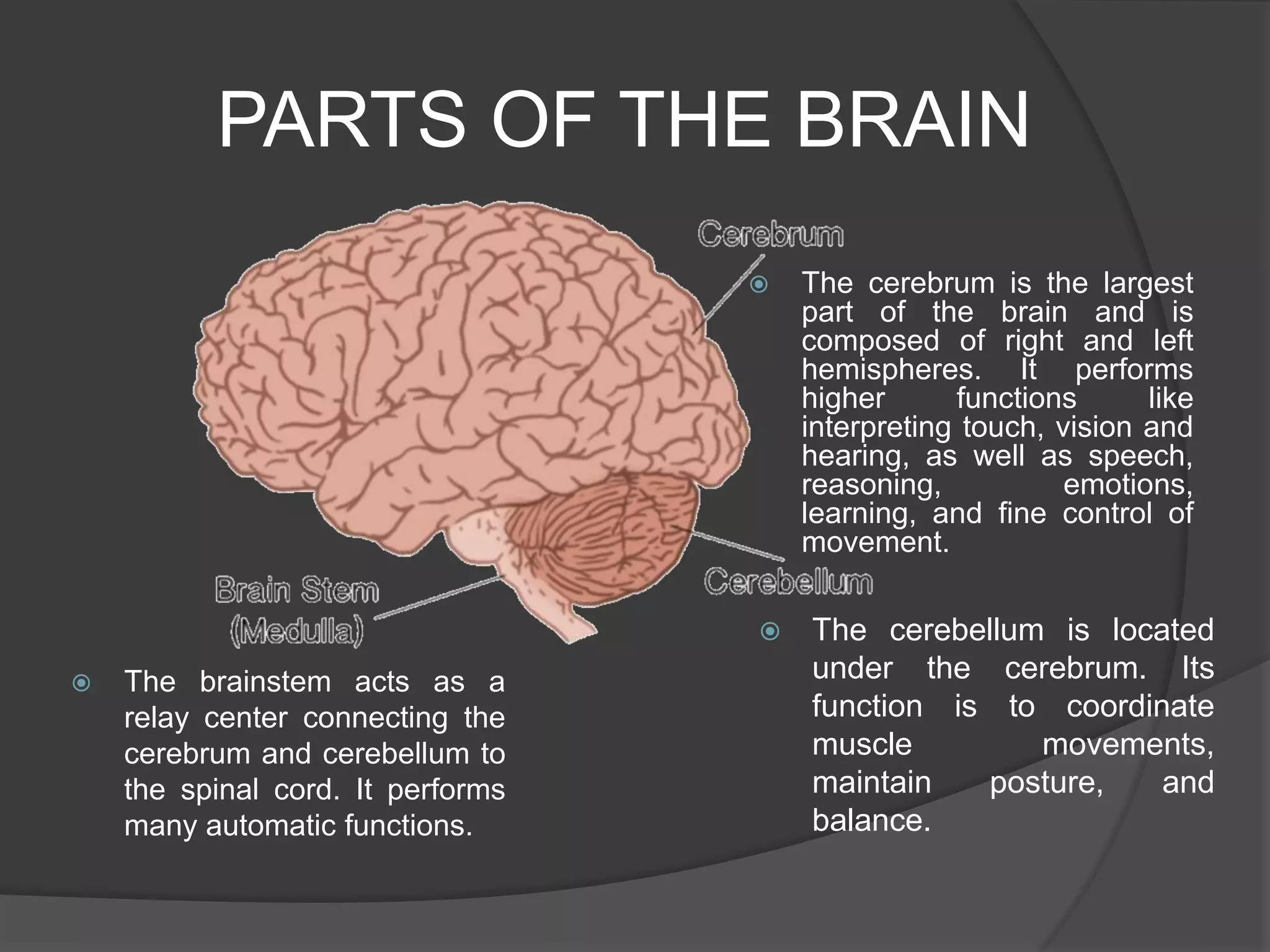
PARTS OF THE BRAIN
 The cerebrum is the largest
part of the brain and is
composed of right and left
hemispheres. It performs
higher functions like
interpreting touch, vision and
hearing, as well as speech,
reasoning, emotions,
learning, and fine control of
movement.
 The cerebellum is located
under the cerebrum. Its
function is to coordinate
muscle movements,
maintain posture, and
balance.
 The brainstem acts as a
relay center connecting the
cerebrum and cerebellum to
the spinal cord. It performs
many automatic functions.
SPINAL CORD
 The spinal cord is the highway for
communication between the body and
the brain. When the spinal cord is
injured, the exchange of information
between the brain and other parts of the
body is disrupted.
PERIPHERAL NERVOUS
SYSTEM
 The peripheral nervous
system is made up of
sensory neurons, ganglia
(clusters of neurons) and
nerves that connect to
one another and to the
central nervous system.
The peripheral nervous system is divided into the
somatic and the autonomic nervous system.
SOMATIC NERVOUS SYSTEM
 The somatic nervous system is under
voluntary control, and transmits signals from
the brain to end organs such as muscles. The
sensory nervous system is part of the somatic
nervous system and transmits signals from
senses such as taste and touch (including
fine touch and gross touch) to the spinal cord
and brain. The autonomic nervous system is
a 'self-regulating' system which influences the
function of organs outside of voluntary
control, such as the heart rate, or the
functions of the digestive system.
AUTONOMIC NERVOUS SYSTEM
 The autonomic nervous system controls
involuntary responses to regulate
physiological functions. The brain and spinal
cord from the central nervous system are
connected with organs that have smooth
muscle, such as the heart, bladder, and
other cardiac, exocrine, and endocrine
related organs, by ganglion neurons. The
most notable physiological effects from
autonomic activity are pupil constriction and
dilation, and salivation of saliva. The
autonomic nervous system is always
activated, but is either in the sympathetic or
parasympathetic state.
SYMPATHETIC NERVOUS SYSTEM
 The sympathetic system is activated during a “fight or flight”
situation in which great mental stress or physical danger is
encountered. Neurotransmitters such as nor epinephrine,
and epinephrine are released, which increases heart rate and
blood flow in certain areas like muscle, while simultaneously
decreasing activities of non-critical functions for survival, like
digestion. The systems are independent to each other, which
allows activation of certain parts of the body, while others
remain rested.
PARASYMPATHETIC NERVOUS SYSTEM
 Primarily using the neurotransmitter acetylcholine (ACh) as a
mediator, the parasympathetic system allows the body to
function in a “rest and digest” state. Consequently, when the
parasympathetic system dominates the body, there are
increases in salivation and activities in digestion, while heart
rate and other sympathetic response decrease. Unlike the
sympathetic system, humans have some voluntary controls
in the parasympathetic system. The most prominent
examples of this control are urination and defecation.
PARASYMPATHETI
C
Body at rest
SYMPATHETIC
Emergency situations
Eyes Constricts pupils Dilates pupils
Heart Beat more slowly Beats faster and stronger
Lungs Constricts airways Relaxes airways, which
lets you breathe more
deeply
Digestion Stimulates digestion Inhibits digestion
Muscles Reduces blood flow to
skeletal muscles
Increases blood flow to
skeletal muscles
Nervous System Parts and Function

Nervous System Parts and Function

  • 2.
    NERVOUS SYSTEM  Nervoussystem is the chief controlling and coordinating system of the body. It controls and regulates all activities of the body, whether voluntary or involuntary, and adjusts the individual (organism) to the given surroundings.
  • 3.
     The basicworking unit of the nervous system is a cell called a neuron. The human brain contains about 100 billion neurons. A neuron consists of a cell body containing the nucleus, and special extensions called axons (pronounced AK-sonz) and dendrites (pronounced DEN-drahytz).  Nerves are cylindrical bundles of fibers that start at the brain and central cord and branch out to every other part of the body.
  • 4.
    WHAT ARE THEPARTS OF THE NERVOUS SYSTEM? The nervous system consists of two main parts:  Central nervous system  Peripheral nervous system
  • 5.
    CENTRAL NERVOUS SYSTEM  Thecentral nervous system is made up of the brain and spinal cord.  The brain sends messages through the spinal cord and nerves of the peripheral nervous system to control the movement of the muscles and the function of internal organs.
  • 6.
    BRAIN  The brainis the center of our thoughts, the interpreter of our external environment, and the origin of control over body movement. Like a central computer, it interprets information from our eyes (sight), ears (sound), nose (smell), tongue (taste), and skin (touch), as well as from internal organs such as the stomach.
  • 7.
    PARTS OF THEBRAIN  The cerebrum is the largest part of the brain and is composed of right and left hemispheres. It performs higher functions like interpreting touch, vision and hearing, as well as speech, reasoning, emotions, learning, and fine control of movement.  The cerebellum is located under the cerebrum. Its function is to coordinate muscle movements, maintain posture, and balance.  The brainstem acts as a relay center connecting the cerebrum and cerebellum to the spinal cord. It performs many automatic functions.
  • 8.
    SPINAL CORD  Thespinal cord is the highway for communication between the body and the brain. When the spinal cord is injured, the exchange of information between the brain and other parts of the body is disrupted.
  • 9.
    PERIPHERAL NERVOUS SYSTEM  Theperipheral nervous system is made up of sensory neurons, ganglia (clusters of neurons) and nerves that connect to one another and to the central nervous system.
  • 10.
    The peripheral nervoussystem is divided into the somatic and the autonomic nervous system. SOMATIC NERVOUS SYSTEM  The somatic nervous system is under voluntary control, and transmits signals from the brain to end organs such as muscles. The sensory nervous system is part of the somatic nervous system and transmits signals from senses such as taste and touch (including fine touch and gross touch) to the spinal cord and brain. The autonomic nervous system is a 'self-regulating' system which influences the function of organs outside of voluntary control, such as the heart rate, or the functions of the digestive system.
  • 11.
    AUTONOMIC NERVOUS SYSTEM The autonomic nervous system controls involuntary responses to regulate physiological functions. The brain and spinal cord from the central nervous system are connected with organs that have smooth muscle, such as the heart, bladder, and other cardiac, exocrine, and endocrine related organs, by ganglion neurons. The most notable physiological effects from autonomic activity are pupil constriction and dilation, and salivation of saliva. The autonomic nervous system is always activated, but is either in the sympathetic or parasympathetic state.
  • 12.
    SYMPATHETIC NERVOUS SYSTEM The sympathetic system is activated during a “fight or flight” situation in which great mental stress or physical danger is encountered. Neurotransmitters such as nor epinephrine, and epinephrine are released, which increases heart rate and blood flow in certain areas like muscle, while simultaneously decreasing activities of non-critical functions for survival, like digestion. The systems are independent to each other, which allows activation of certain parts of the body, while others remain rested. PARASYMPATHETIC NERVOUS SYSTEM  Primarily using the neurotransmitter acetylcholine (ACh) as a mediator, the parasympathetic system allows the body to function in a “rest and digest” state. Consequently, when the parasympathetic system dominates the body, there are increases in salivation and activities in digestion, while heart rate and other sympathetic response decrease. Unlike the sympathetic system, humans have some voluntary controls in the parasympathetic system. The most prominent examples of this control are urination and defecation.
  • 13.
    PARASYMPATHETI C Body at rest SYMPATHETIC Emergencysituations Eyes Constricts pupils Dilates pupils Heart Beat more slowly Beats faster and stronger Lungs Constricts airways Relaxes airways, which lets you breathe more deeply Digestion Stimulates digestion Inhibits digestion Muscles Reduces blood flow to skeletal muscles Increases blood flow to skeletal muscles