CONDUCT
CONDUCT
 The mode or standard of personal behavior
especially as based on moral principles
 The way that a person behaves in a
particular place or situation
CODE OF CONDUCT
 A code of business conduct, sometimes called a
code of ethics, is a management tool for setting out an
organization’s values, responsibilities and ethical
obligations
 The code of conduct provides employees with
guidance for handling difficult ethical situations related
to the business
 Businesses develop their own codes, based on their
core values, and no two codes are the same
 To be truly effective, the code of conduct must also
be embedded in the business, so employees know how
it applies to them
CODE OF CONDUCT VIOLATIONS
 An act that violates the rules written in the code of
conduct
 Conduct cases are those where an employee fails to
comply with work rules, policies, and procedures such as
arriving for work on time; treating co-workers respect; being
honest; maintaining a good attendance record; using company
time, supplies and property in a responsible manner; and
other similar behaviour-related areas
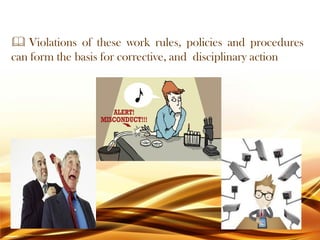
 Violations of these work rules, policies and procedures
can form the basis for corrective, and disciplinary action
STEPS ON HOW TO CREATE CODE
OF CONDUCT
Review sample codes of ethics that companies in a
similar business use
Review other documents related to your business,
including the firm's mission statement and any
specific policies new hires receive as part of their
orientation
Think about the ethical dilemmas that face not only
your company, but also its competitors. These ethical
issues vary by industry, and it is important to directly
address them in the company's code of ethics
Solicit input from employees when you create
the code of ethics
Address potential workplace issues, such as office
romances and nepotism, in your code of ethics
Ask your lawyer to review the proposed code of
ethics before putting it in force
HRs RESPONSIBILITIES IN COC
These professionals must adhere to the highest
standards of personal and professional conduct to
faithfully carry out their responsibilities, gain the respect of
management and employees and ensure the company is in
compliance with federal and state employment law
They should carry their responsibilities with
Accountability, Fairness, Integrity & Professional
Development
HRs should clearly communicate expectations
through orientations
HR should give employees copies or access to COC
*Supervisors are also responsible for monitoring
employees’ conduct and for providing honest and timely
feedback when an employee fails to meet expectations
HR RESPONSIBILITIES IN COC VIOLATION
To investigate
To give quick response
To base actions on COC guidelines
To give sanctions to the violations
FACTORS THAT WILL AFFECT DECISIONS
1) The seriousness of the offense and the relationship
to the employees duties
2) The employees position and level of responsibility
(i.e., supervisory etc)
3) The employee's past disciplinary record
4) The employee's past work record and years of
service
5) The effect of the offense on the supervisor's
confidence in the employee
6) The consistency of the penalty with that imposed
on other employees
7) The clarity with which the employee was placed on
notice
8) The potential for rehabilitation
9) Any mitigating circumstances (provocation by
others, etc.)
PROGRESSIVE DISCIPLINE
 A procedure in which increasingly stiffer penalties
are imposed for repeated acts of indiscipline
 A system of escalating responses intended to
correct the negative behavior rather than to punish the
employee
 The process features increasingly formal efforts to
provide feedback to the employee so he or she can
correct the problem
 The goal of progressive discipline is to improve
employee performance.
 To assist the employee to overcome performance
problems and satisfy job expectations
 It enables the organization to fairly, and with
substantial documentation, terminate the employment
of employees who are ineffective and unwilling to
improve
 Not all infraction must go through every step of the
corrective action process, as this depends on the
gravity of offense
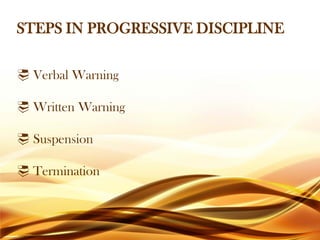
STEPS IN PROGRESSIVE DISCIPLINE
 Verbal Warning
 Written Warning
 Suspension
 Termination
VERBAL WARNING
A disciplinary measure in which a manager
reprimands an employee that his or her
performance is unacceptable. This action is still
noted for documentation purposes.
WRITTEN WARNING
A letter written to an employee as a disciplinary
measure. A written warning describes the
performance problems or work violations of the
employee in specific detail and explains the
consequences to the employee if his or her
performance does not improve within a specified
period of time.
SUSPENSION
A period of time during which the employee is not
allowed to work and for which the employee will
receive no compensation when it has been determined
that the employee’s performance of duty or personal
conduct is unsatisfactory. Temporary deprivation or
interruption of position, power, and/or privileges.
TERMINATION
The termination of the employment relationship, at
the direction of the employer, related to an action/s
or omission/s by the employee that has irreparably
damaged the relationship between the employer
and employee.
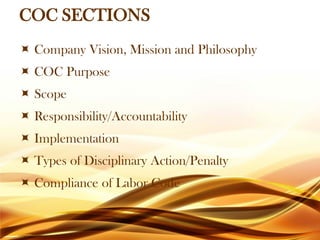
COC SECTIONS
 Company Vision, Mission and Philosophy
 COC Purpose
 Scope
 Responsibility/Accountability
 Implementation
 Types of Disciplinary Action/Penalty
 Compliance of Labor Code
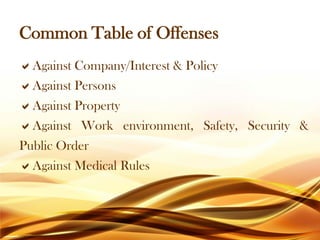
Common Table of Offenses
Against Company/Interest & Policy
Against Persons
Against Property
Against Work environment, Safety, Security &
Public Order
Against Medical Rules
THANK
YOU

Code of Conduct

  • 1.
  • 2.
    CONDUCT  The modeor standard of personal behavior especially as based on moral principles  The way that a person behaves in a particular place or situation
  • 3.
    CODE OF CONDUCT A code of business conduct, sometimes called a code of ethics, is a management tool for setting out an organization’s values, responsibilities and ethical obligations  The code of conduct provides employees with guidance for handling difficult ethical situations related to the business
  • 4.
     Businesses developtheir own codes, based on their core values, and no two codes are the same  To be truly effective, the code of conduct must also be embedded in the business, so employees know how it applies to them
  • 5.
    CODE OF CONDUCTVIOLATIONS  An act that violates the rules written in the code of conduct  Conduct cases are those where an employee fails to comply with work rules, policies, and procedures such as arriving for work on time; treating co-workers respect; being honest; maintaining a good attendance record; using company time, supplies and property in a responsible manner; and other similar behaviour-related areas
  • 6.
     Violations ofthese work rules, policies and procedures can form the basis for corrective, and disciplinary action
  • 7.
    STEPS ON HOWTO CREATE CODE OF CONDUCT Review sample codes of ethics that companies in a similar business use Review other documents related to your business, including the firm's mission statement and any specific policies new hires receive as part of their orientation
  • 8.
    Think about theethical dilemmas that face not only your company, but also its competitors. These ethical issues vary by industry, and it is important to directly address them in the company's code of ethics Solicit input from employees when you create the code of ethics
  • 9.
    Address potential workplaceissues, such as office romances and nepotism, in your code of ethics Ask your lawyer to review the proposed code of ethics before putting it in force
  • 10.
    HRs RESPONSIBILITIES INCOC These professionals must adhere to the highest standards of personal and professional conduct to faithfully carry out their responsibilities, gain the respect of management and employees and ensure the company is in compliance with federal and state employment law They should carry their responsibilities with Accountability, Fairness, Integrity & Professional Development
  • 11.
    HRs should clearlycommunicate expectations through orientations HR should give employees copies or access to COC *Supervisors are also responsible for monitoring employees’ conduct and for providing honest and timely feedback when an employee fails to meet expectations
  • 12.
    HR RESPONSIBILITIES INCOC VIOLATION To investigate To give quick response To base actions on COC guidelines To give sanctions to the violations
  • 13.
    FACTORS THAT WILLAFFECT DECISIONS 1) The seriousness of the offense and the relationship to the employees duties 2) The employees position and level of responsibility (i.e., supervisory etc) 3) The employee's past disciplinary record
  • 14.
    4) The employee'spast work record and years of service 5) The effect of the offense on the supervisor's confidence in the employee 6) The consistency of the penalty with that imposed on other employees
  • 15.
    7) The claritywith which the employee was placed on notice 8) The potential for rehabilitation 9) Any mitigating circumstances (provocation by others, etc.)
  • 16.
    PROGRESSIVE DISCIPLINE  Aprocedure in which increasingly stiffer penalties are imposed for repeated acts of indiscipline  A system of escalating responses intended to correct the negative behavior rather than to punish the employee
  • 17.
     The processfeatures increasingly formal efforts to provide feedback to the employee so he or she can correct the problem  The goal of progressive discipline is to improve employee performance.  To assist the employee to overcome performance problems and satisfy job expectations
  • 18.
     It enablesthe organization to fairly, and with substantial documentation, terminate the employment of employees who are ineffective and unwilling to improve  Not all infraction must go through every step of the corrective action process, as this depends on the gravity of offense
  • 19.
    STEPS IN PROGRESSIVEDISCIPLINE  Verbal Warning  Written Warning  Suspension  Termination
  • 20.
    VERBAL WARNING A disciplinarymeasure in which a manager reprimands an employee that his or her performance is unacceptable. This action is still noted for documentation purposes.
  • 21.
    WRITTEN WARNING A letterwritten to an employee as a disciplinary measure. A written warning describes the performance problems or work violations of the employee in specific detail and explains the consequences to the employee if his or her performance does not improve within a specified period of time.
  • 22.
    SUSPENSION A period oftime during which the employee is not allowed to work and for which the employee will receive no compensation when it has been determined that the employee’s performance of duty or personal conduct is unsatisfactory. Temporary deprivation or interruption of position, power, and/or privileges.
  • 23.
    TERMINATION The termination ofthe employment relationship, at the direction of the employer, related to an action/s or omission/s by the employee that has irreparably damaged the relationship between the employer and employee.
  • 24.
    COC SECTIONS  CompanyVision, Mission and Philosophy  COC Purpose  Scope  Responsibility/Accountability  Implementation  Types of Disciplinary Action/Penalty  Compliance of Labor Code
  • 25.
    Common Table ofOffenses Against Company/Interest & Policy Against Persons Against Property Against Work environment, Safety, Security & Public Order Against Medical Rules
  • 26.