EMPLOYEE
RETENTION
“We cant stop
   employees from
leaving unless we have
    a plan to make
      them stay!”
Employee Retention
A process in which the employees
 are encouraged to remain with
 the organization for the maximum
 period of time or until completion of the
 project.

Employee retention is beneficial for the
 organization as well as the employee.
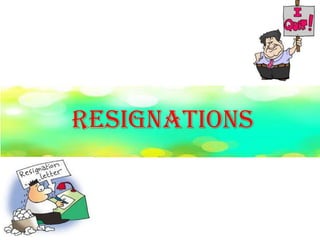
RESIGNATIONS
REASONS WHY EMPLOYEES LEAVE

 Job is not what the employee expected
 No growth opportunities
 Lack of appreciation
 Lack of trust and support
 Stress from overwork

 Compensation

 New job offers

 No personal life

 Physical strains
IMPORTANCE OF
EMPLOYEE RETENTION
 The cost of turnover.

 Loss of company knowledge.

 Interruption of operations.

 Turnover leads to more turnovers.

 Goodwill of Company.

 Regaining efficiency.
Employees Retention
involves five major things:

 Compensation

 Growth

 Environment

 Relationship

 Support
EMPLOYEE RETENTION
          STRATEGIES
 Hire the right person in right place
 Empower the employee

 Make them realize that they are valuable
   for Organization
 Have faith in them, trust & respect them
 Provide information & knowledge

 Give feedback on performance.
 Recognize & appreciate their
  achievements.
 Keep their morale high

 Create healthy environment
Recipe of retention
Remunerate competitively
Encouragement and expectations
Training and development
Annual review cycles
Inform and involve
Nurture
MOST EFFECTIVE
RETENTION INITIATIVES
 Competitive merit increase/salary
  adjustment
 Career development opportunities
 Promoting qualified employee
 Increasing health care benefits
 Offering schedules conducive to
  work life balance
 Bonuses
GUIDELINES FOR INCREASING
        JOB SATISFACTION
 Extrinsic Reward
     Refers to motivation that comes from
 outside an individual. The motivating factors
 are external, or outside, rewards such as
 money or praise. These rewards provide
 satisfaction and pleasure that the task itself
 may not provide.
Extrinsic REWARDS
 Reward must be meaningful and unique
 Reward must match individual preferences
 Link rewards to motivational behaviors
 Link rewards to performance

                        Examples:
      Salary increase, gadgets, house loan and car loan
 Intrinsic Rewards

    The personal satisfaction a person derives
 from a sense of self-accomplishment related
 to personal or business goals.

    More powerful motivator in doing
 responsibilities.
INTrinsic REWARDS
 Assign employees to jobs that meet their
  needs for work characteristics
 Provide clear communication to employees
 Design fair reward allocation system
 Ensure supervisors provide a positive
  environment
 Provide programs to enhance work-life
  balance
Thank You

Employee Retention Management

  • 1.
  • 3.
    “We cant stop employees from leaving unless we have a plan to make them stay!”
  • 5.
    Employee Retention A processin which the employees are encouraged to remain with the organization for the maximum period of time or until completion of the project. Employee retention is beneficial for the organization as well as the employee.
  • 6.
  • 7.
    REASONS WHY EMPLOYEESLEAVE  Job is not what the employee expected  No growth opportunities  Lack of appreciation  Lack of trust and support
  • 8.
     Stress fromoverwork  Compensation  New job offers  No personal life  Physical strains
  • 9.
    IMPORTANCE OF EMPLOYEE RETENTION The cost of turnover.  Loss of company knowledge.  Interruption of operations.  Turnover leads to more turnovers.  Goodwill of Company.  Regaining efficiency.
  • 10.
    Employees Retention involves fivemajor things:  Compensation  Growth  Environment  Relationship  Support
  • 11.
    EMPLOYEE RETENTION STRATEGIES  Hire the right person in right place  Empower the employee  Make them realize that they are valuable for Organization
  • 12.
     Have faithin them, trust & respect them  Provide information & knowledge  Give feedback on performance.  Recognize & appreciate their achievements.  Keep their morale high  Create healthy environment
  • 13.
    Recipe of retention Remuneratecompetitively Encouragement and expectations Training and development Annual review cycles Inform and involve Nurture
  • 14.
    MOST EFFECTIVE RETENTION INITIATIVES Competitive merit increase/salary adjustment  Career development opportunities  Promoting qualified employee  Increasing health care benefits  Offering schedules conducive to work life balance  Bonuses
  • 15.
    GUIDELINES FOR INCREASING JOB SATISFACTION  Extrinsic Reward Refers to motivation that comes from outside an individual. The motivating factors are external, or outside, rewards such as money or praise. These rewards provide satisfaction and pleasure that the task itself may not provide.
  • 16.
    Extrinsic REWARDS  Rewardmust be meaningful and unique  Reward must match individual preferences  Link rewards to motivational behaviors  Link rewards to performance Examples: Salary increase, gadgets, house loan and car loan
  • 17.
     Intrinsic Rewards The personal satisfaction a person derives from a sense of self-accomplishment related to personal or business goals. More powerful motivator in doing responsibilities.
  • 18.
    INTrinsic REWARDS  Assignemployees to jobs that meet their needs for work characteristics  Provide clear communication to employees  Design fair reward allocation system  Ensure supervisors provide a positive environment  Provide programs to enhance work-life balance
  • 19.