STAFFING
STAFFING
the process of acquiring,
deploying, and retaining a
workforce of sufficient
quantity and quality to create
positive impacts on the
organization’s effectiveness
Acquire, Deploy and Retain
Acquisition
►Activities that involve the initial intake of
applicants into the organization.
►It involves planning for the numbers and
types of people needed
►Establishes job requirements in the form of
the qualifications or KSAOs (knowledge, skill,
ability, and other characteristics) needed to
perform the job effectively
►Establishes the types of rewards the job
will provide
►Conducts external recruitment
campaigns, using selection tools to
evaluate the KSAOs that applicants
possess
►Decides which applicants are the most
qualified and will receive job offers, and
putting together job offers that applicants
will hopefully accept
Deployment
Refers to the placement of new hires on
the actual job they will hold, something
that may not be entirely clear at the time
of hire
Also encompasses guiding the
movement of current employees
throughout the organization through
internal staffing systems that handle
promotions, transfers, and new project
assignments for employees
 Establishes job requirements and job
rewards, recruiting employees for
promotion or transfer opportunities,
evaluating employees’ qualifications, and
making them job offers for new positions
Retention
 Systems seek to manage the
inevitable flow of employees out of
the organization
 Sometimes these outflows are
involuntary on the part of the
employee, such as through layoffs or
the sale of a business unit to another
organization
 Other outflows are voluntary in that
they are initiated by the employee,
such as leaving the organization to
take another job
Minimize the types of turnover in
which valued employees leave which
is a voluntary-avoidable turnover
Through various retention strategies
and tactics, the organization can
combat these types of turnover,
seeking to retain those employees it
thinks it cannot afford to lose
Staffing Organization Model
 Staffing Quantity: Levels
 Staffing Quality: Person/Job Match
 Staffing Quality:
Person/Organization Match
 Staffing System Components
 Staffing Organizations
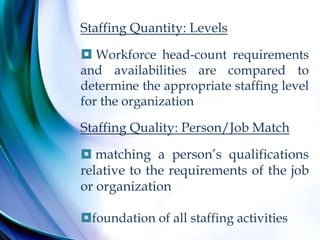
Staffing Quantity: Levels
 Workforce head-count requirements
and availabilities are compared to
determine the appropriate staffing level
for the organization
Staffing Quality: Person/Job Match
 matching a person’s qualifications
relative to the requirements of the job
or organization
foundation of all staffing activities
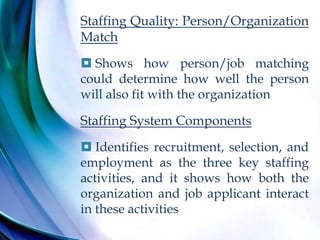
Staffing Quality: Person/Organization
Match
 Shows how person/job matching
could determine how well the person
will also fit with the organization
Staffing System Components
 Identifies recruitment, selection, and
employment as the three key staffing
activities, and it shows how both the
organization and job applicant interact
in these activities
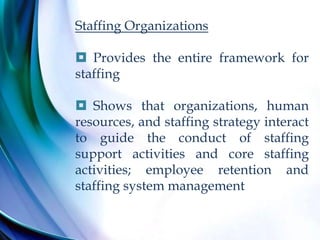
Staffing Organizations
 Provides the entire framework for
staffing
 Shows that organizations, human
resources, and staffing strategy interact
to guide the conduct of staffing
support activities and core staffing
activities; employee retention and
staffing system management
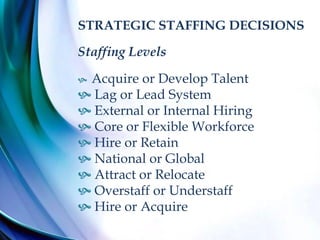
STRATEGIC STAFFING DECISIONS
Staffing Levels
 Acquire or Develop Talent
 Lag or Lead System
 External or Internal Hiring
 Core or Flexible Workforce
 Hire or Retain
 National or Global
 Attract or Relocate
 Overstaff or Understaff
 Hire or Acquire
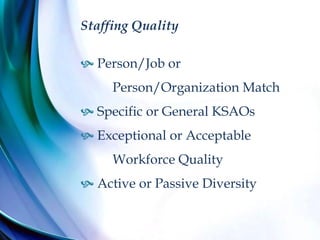
Staffing Quality
 Person/Job or
Person/Organization Match
 Specific or General KSAOs
 Exceptional or Acceptable
Workforce Quality
 Active or Passive Diversity
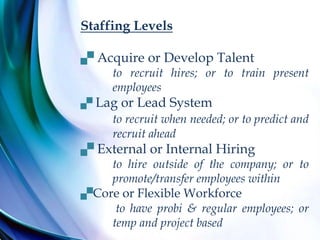
Staffing Levels
 Acquire or Develop Talent
to recruit hires; or to train present
employees
 Lag or Lead System
to recruit when needed; or to predict and
recruit ahead
 External or Internal Hiring
to hire outside of the company; or to
promote/transfer employees within
Core or Flexible Workforce
to have probi & regular employees; or
temp and project based
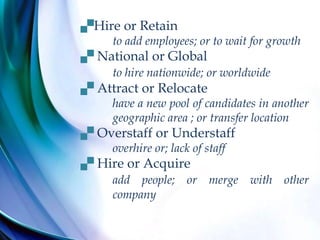
Hire or Retain
to add employees; or to wait for growth
 National or Global
to hire nationwide; or worldwide
 Attract or Relocate
have a new pool of candidates in another
geographic area ; or transfer location
 Overstaff or Understaff
overhire or; lack of staff
 Hire or Acquire
add people; or merge with other
company
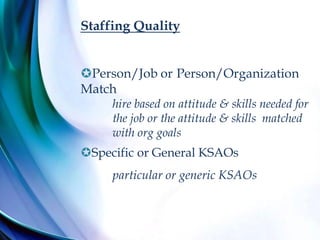
Staffing Quality
Person/Job or Person/Organization
Match
hire based on attitude & skills needed for
the job or the attitude & skills matched
with org goals
Specific or General KSAOs
particular or generic KSAOs
Exceptional or Acceptable
Workforce Quality
excellent or okay KSAOs
Active or Passive Diversity
proactive or flexible employees
Suggestions for Ethical Staffing Practice
1. Represent the organization’s interests
2. Beware of conflicts of interest
3. Remember the job applicant
4. Follow staffing policies and
procedures
5. Know and follow the law
6. Consult professional codes of conduct
7. Shape effective practice with research
results
8. Seek ethics advice
Thank You

Nature of Staffing

  • 1.
  • 2.
    STAFFING the process ofacquiring, deploying, and retaining a workforce of sufficient quantity and quality to create positive impacts on the organization’s effectiveness
  • 3.
    Acquire, Deploy andRetain Acquisition ►Activities that involve the initial intake of applicants into the organization. ►It involves planning for the numbers and types of people needed ►Establishes job requirements in the form of the qualifications or KSAOs (knowledge, skill, ability, and other characteristics) needed to perform the job effectively
  • 4.
    ►Establishes the typesof rewards the job will provide ►Conducts external recruitment campaigns, using selection tools to evaluate the KSAOs that applicants possess ►Decides which applicants are the most qualified and will receive job offers, and putting together job offers that applicants will hopefully accept
  • 5.
    Deployment Refers to theplacement of new hires on the actual job they will hold, something that may not be entirely clear at the time of hire Also encompasses guiding the movement of current employees throughout the organization through internal staffing systems that handle promotions, transfers, and new project assignments for employees
  • 6.
     Establishes jobrequirements and job rewards, recruiting employees for promotion or transfer opportunities, evaluating employees’ qualifications, and making them job offers for new positions
  • 7.
    Retention  Systems seekto manage the inevitable flow of employees out of the organization  Sometimes these outflows are involuntary on the part of the employee, such as through layoffs or the sale of a business unit to another organization
  • 8.
     Other outflowsare voluntary in that they are initiated by the employee, such as leaving the organization to take another job Minimize the types of turnover in which valued employees leave which is a voluntary-avoidable turnover Through various retention strategies and tactics, the organization can combat these types of turnover, seeking to retain those employees it thinks it cannot afford to lose
  • 9.
    Staffing Organization Model Staffing Quantity: Levels  Staffing Quality: Person/Job Match  Staffing Quality: Person/Organization Match  Staffing System Components  Staffing Organizations
  • 10.
    Staffing Quantity: Levels Workforce head-count requirements and availabilities are compared to determine the appropriate staffing level for the organization Staffing Quality: Person/Job Match  matching a person’s qualifications relative to the requirements of the job or organization foundation of all staffing activities
  • 11.
    Staffing Quality: Person/Organization Match Shows how person/job matching could determine how well the person will also fit with the organization Staffing System Components  Identifies recruitment, selection, and employment as the three key staffing activities, and it shows how both the organization and job applicant interact in these activities
  • 12.
    Staffing Organizations  Providesthe entire framework for staffing  Shows that organizations, human resources, and staffing strategy interact to guide the conduct of staffing support activities and core staffing activities; employee retention and staffing system management
  • 13.
    STRATEGIC STAFFING DECISIONS StaffingLevels  Acquire or Develop Talent  Lag or Lead System  External or Internal Hiring  Core or Flexible Workforce  Hire or Retain  National or Global  Attract or Relocate  Overstaff or Understaff  Hire or Acquire
  • 14.
    Staffing Quality  Person/Jobor Person/Organization Match  Specific or General KSAOs  Exceptional or Acceptable Workforce Quality  Active or Passive Diversity
  • 15.
    Staffing Levels  Acquireor Develop Talent to recruit hires; or to train present employees  Lag or Lead System to recruit when needed; or to predict and recruit ahead  External or Internal Hiring to hire outside of the company; or to promote/transfer employees within Core or Flexible Workforce to have probi & regular employees; or temp and project based
  • 16.
    Hire or Retain toadd employees; or to wait for growth  National or Global to hire nationwide; or worldwide  Attract or Relocate have a new pool of candidates in another geographic area ; or transfer location  Overstaff or Understaff overhire or; lack of staff  Hire or Acquire add people; or merge with other company
  • 17.
    Staffing Quality Person/Job orPerson/Organization Match hire based on attitude & skills needed for the job or the attitude & skills matched with org goals Specific or General KSAOs particular or generic KSAOs
  • 18.
    Exceptional or Acceptable WorkforceQuality excellent or okay KSAOs Active or Passive Diversity proactive or flexible employees
  • 19.
    Suggestions for EthicalStaffing Practice 1. Represent the organization’s interests 2. Beware of conflicts of interest 3. Remember the job applicant 4. Follow staffing policies and procedures 5. Know and follow the law 6. Consult professional codes of conduct 7. Shape effective practice with research results 8. Seek ethics advice
  • 20.