1
Blood Gas Analysis
2
Introduction:
The term respiration is normally employed to indicate an
interchange of two gases. Oxygen and Carbondioxide. It
is divided into 4 steps:
a) Pulmonary ventilation.
b) Diffusion
c) Transport
d) Regulation
3
a) Pulmonary ventilation:
 Inflow and outflow of air between atmosphere
and alveoli.
b) Diffusion:
 The O2 and CO2 undergo diffusion in alveoli
and blood.
4
c) Transport:
 O2 and CO2 are transported to and from cells.
d) Regulation:
The whole process of ventilation is strictly
regulated.
5
Oxygen and carbondioxide:
 O2 is imp for maintenance of cell and tissue integrity.
 O2 has imp role in metabolism is crucial life.
 In cells mitochondria, electron pairs from the
oxidation of NADH and FADH2 are transferred to
molecular oxygen causing release of energy used to
synthesized ATP for phosphorylation of ADP.
6
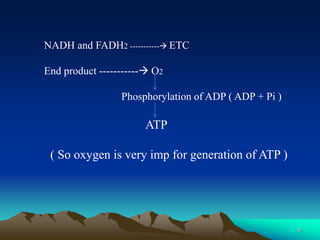
NADH and FADH2 ----------- ETC
End product ----------- O2
Phosphorylation of ADP ( ADP + Pi )
ATP
( So oxygen is very imp for generation of ATP )
7
Tissue Oxygenation:
Process of taking O2 by Tissue.
Factors required for adeqaute oxygenation:
1) Available atmosphere oxygen.
2) Gas exchange between lungs and arterial blood.
3) Leading of O2 into Hb.
4) Transport (cardiac out put) and release of O2 to
the tissue.
Partial Pressure of Oxygen(PO2):
The pressure exerts 760mmHg pressure and is made
up of: > Oxygen ( 20.93%),
> Carbondioxide ( 0.03%)
> Nitrogen ( 78.1%)
> Inert gases ( 0.1%).
 We measure the partial pressure of oxygen(PO2)
but not total oxygen because it is not feasible to
detect whole body oxygen present.
9
Imp factors for influencing PO2 :
1) Exposure of alveolar membrane surface to
arterial blood:
The effective alveolar surface area exposed to the blood is
one of the most imp factors that affect the amount of
Oxygen entering the arterial blood.
 Any things that decrease this surface area results in
decreased oxygen intake .
eg: Asthama, Diptheria
10
2) Rate of diffusion of O2 from alveoli to arterial
blood:
The diffusion rate of O2 across the alveolar
membrane to the arterial blood also determine
the PO2.
The distance through which the O2 must diffuse
is inversely proportional to the rate of diffusion.
eg: pneumonia
Partial pressure of CO2:
 CO2 is the end product of all metabolsim.
 While oxygen is being transported to the tissue, CO2
is being eliminated by lungs in exhaled air:
 PCO2 of venous blood = 46mmHg.
 PCO2 of alveoli is = 36 mmHg
10mmHg These difference
between PCO2 in venous blood and alveoli is the
main factor exhalation of CO2 from the body.
11
Diagnosis:
Sample Collection:
 Arterial blood
 Anticoagulant heparin is using.
Analytes to be measured by blood gas analyser
are:-
 PO2 ( Amperometric i.e variation in current).
 PCO2 and pH: Potentiometric i.e variation in Voltage.
12
Note:
 The PO2 measurement is amperometric measuring
amount of current flow is an indication of O2 Presence.
 PCO2 and pH measurement is potentiometric where a
change in voltage indicate the activity of each analytes.
13
Determination of PCO2( respiratory parameter):
 PCO2 is determined with a modified pH electrode.
 The glass pH membrane is covered by outer semipermeable
membrane of materials that allows non-ionic diffusion of
particles.
 CO2 diffuses across the membrane.
14
15
Between outer membrane and inner glass membrane of pH
electrode is a layer of electrolyte usually a bicarbonate
buffer.
The CO2 that diffuses across membrane react’s
with buffer, forming H2CO3 which then dissociate
into HCO3 and H+.
The change in activity of H+ is measured by pH
electrode and related to PCO2.
Determination of PO2:-
 Determination is carried out to assess the oxygen(O2)
carrying capacity of blood Hb.
 The decreased O2 affinity of the Hb is indicated by the
elevated PO2 Values.
 The measurement of arterial PO2 is also used in conjuction
with that of PCO2 in the assessment of respiratory disorders.
16
 A low PO2 is a measure of anorexia.
 It may occurs with high PCO2 when there is alveolar
hyperventilation due to depression or obstruction of
respiration.
 A low PO2 , with low PCO2 may also be observed in
pulmonary edema.
17
18

blood gas analysis.ppt

  • 1.
  • 2.
    2 Introduction: The term respirationis normally employed to indicate an interchange of two gases. Oxygen and Carbondioxide. It is divided into 4 steps: a) Pulmonary ventilation. b) Diffusion c) Transport d) Regulation
  • 3.
    3 a) Pulmonary ventilation: Inflow and outflow of air between atmosphere and alveoli. b) Diffusion:  The O2 and CO2 undergo diffusion in alveoli and blood.
  • 4.
    4 c) Transport:  O2and CO2 are transported to and from cells. d) Regulation: The whole process of ventilation is strictly regulated.
  • 5.
    5 Oxygen and carbondioxide: O2 is imp for maintenance of cell and tissue integrity.  O2 has imp role in metabolism is crucial life.  In cells mitochondria, electron pairs from the oxidation of NADH and FADH2 are transferred to molecular oxygen causing release of energy used to synthesized ATP for phosphorylation of ADP.
  • 6.
    6 NADH and FADH2----------- ETC End product ----------- O2 Phosphorylation of ADP ( ADP + Pi ) ATP ( So oxygen is very imp for generation of ATP )
  • 7.
    7 Tissue Oxygenation: Process oftaking O2 by Tissue. Factors required for adeqaute oxygenation: 1) Available atmosphere oxygen. 2) Gas exchange between lungs and arterial blood. 3) Leading of O2 into Hb. 4) Transport (cardiac out put) and release of O2 to the tissue.
  • 8.
    Partial Pressure ofOxygen(PO2): The pressure exerts 760mmHg pressure and is made up of: > Oxygen ( 20.93%), > Carbondioxide ( 0.03%) > Nitrogen ( 78.1%) > Inert gases ( 0.1%).  We measure the partial pressure of oxygen(PO2) but not total oxygen because it is not feasible to detect whole body oxygen present.
  • 9.
    9 Imp factors forinfluencing PO2 : 1) Exposure of alveolar membrane surface to arterial blood: The effective alveolar surface area exposed to the blood is one of the most imp factors that affect the amount of Oxygen entering the arterial blood.  Any things that decrease this surface area results in decreased oxygen intake . eg: Asthama, Diptheria
  • 10.
    10 2) Rate ofdiffusion of O2 from alveoli to arterial blood: The diffusion rate of O2 across the alveolar membrane to the arterial blood also determine the PO2. The distance through which the O2 must diffuse is inversely proportional to the rate of diffusion. eg: pneumonia
  • 11.
    Partial pressure ofCO2:  CO2 is the end product of all metabolsim.  While oxygen is being transported to the tissue, CO2 is being eliminated by lungs in exhaled air:  PCO2 of venous blood = 46mmHg.  PCO2 of alveoli is = 36 mmHg 10mmHg These difference between PCO2 in venous blood and alveoli is the main factor exhalation of CO2 from the body. 11
  • 12.
    Diagnosis: Sample Collection:  Arterialblood  Anticoagulant heparin is using. Analytes to be measured by blood gas analyser are:-  PO2 ( Amperometric i.e variation in current).  PCO2 and pH: Potentiometric i.e variation in Voltage. 12
  • 13.
    Note:  The PO2measurement is amperometric measuring amount of current flow is an indication of O2 Presence.  PCO2 and pH measurement is potentiometric where a change in voltage indicate the activity of each analytes. 13
  • 14.
    Determination of PCO2(respiratory parameter):  PCO2 is determined with a modified pH electrode.  The glass pH membrane is covered by outer semipermeable membrane of materials that allows non-ionic diffusion of particles.  CO2 diffuses across the membrane. 14
  • 15.
    15 Between outer membraneand inner glass membrane of pH electrode is a layer of electrolyte usually a bicarbonate buffer. The CO2 that diffuses across membrane react’s with buffer, forming H2CO3 which then dissociate into HCO3 and H+. The change in activity of H+ is measured by pH electrode and related to PCO2.
  • 16.
    Determination of PO2:- Determination is carried out to assess the oxygen(O2) carrying capacity of blood Hb.  The decreased O2 affinity of the Hb is indicated by the elevated PO2 Values.  The measurement of arterial PO2 is also used in conjuction with that of PCO2 in the assessment of respiratory disorders. 16
  • 17.
     A lowPO2 is a measure of anorexia.  It may occurs with high PCO2 when there is alveolar hyperventilation due to depression or obstruction of respiration.  A low PO2 , with low PCO2 may also be observed in pulmonary edema. 17
  • 18.