MEASUREMENT WITHTWO ELECTRODES
&
RECORDING PROBLEMS
BASICS OF BIOMEDICAL
INSTRUMENTATION
Discussion about
▸ Two electrodes based measurement
▸ Need of medical recording?
▸ Different Noises in recording
2
ELECTRODE
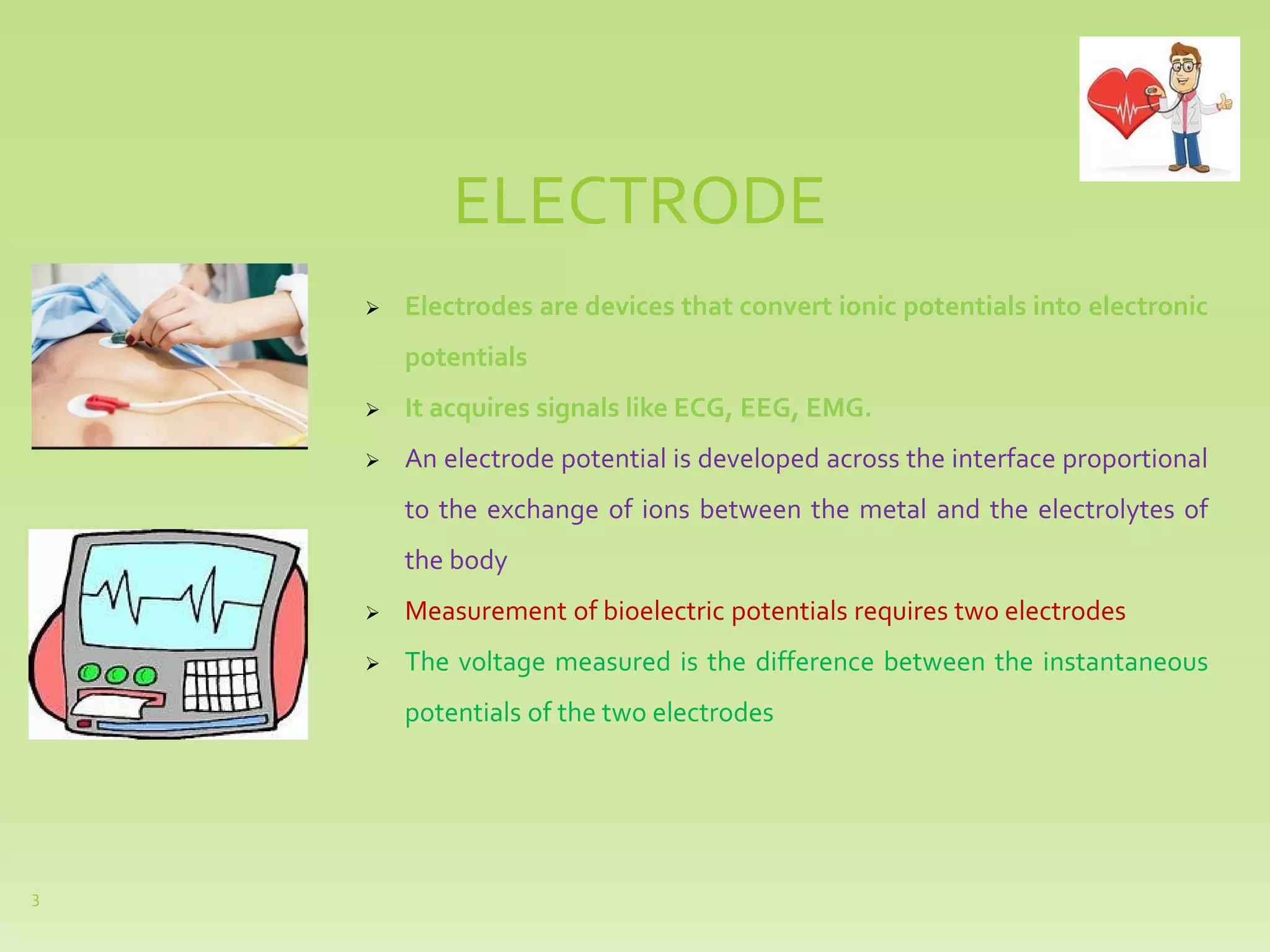
➢ Electrodes are devices that convert ionic potentials into electronic
potentials
➢ It acquires signals like ECG, EEG, EMG.
➢ An electrode potential is developed across the interface proportional
to the exchange of ions between the metal and the electrolytes of
the body
➢ Measurement of bioelectric potentials requires two electrodes
➢ The voltage measured is the difference between the instantaneous
potentials of the two electrodes
3
Body Surface Electrodes
Used to sense the potential from heart, brain and nerves
1. Immersion Electrodes
2. Plate Electrode or Metal Plate
Electrodes
3. Metal Disk Electrode
4. Disposable Electrodes
5. Suction cup Electrodes
6. Floating Electrodes
7. Flexible Electrodes
8. Special Electrodes
4
5
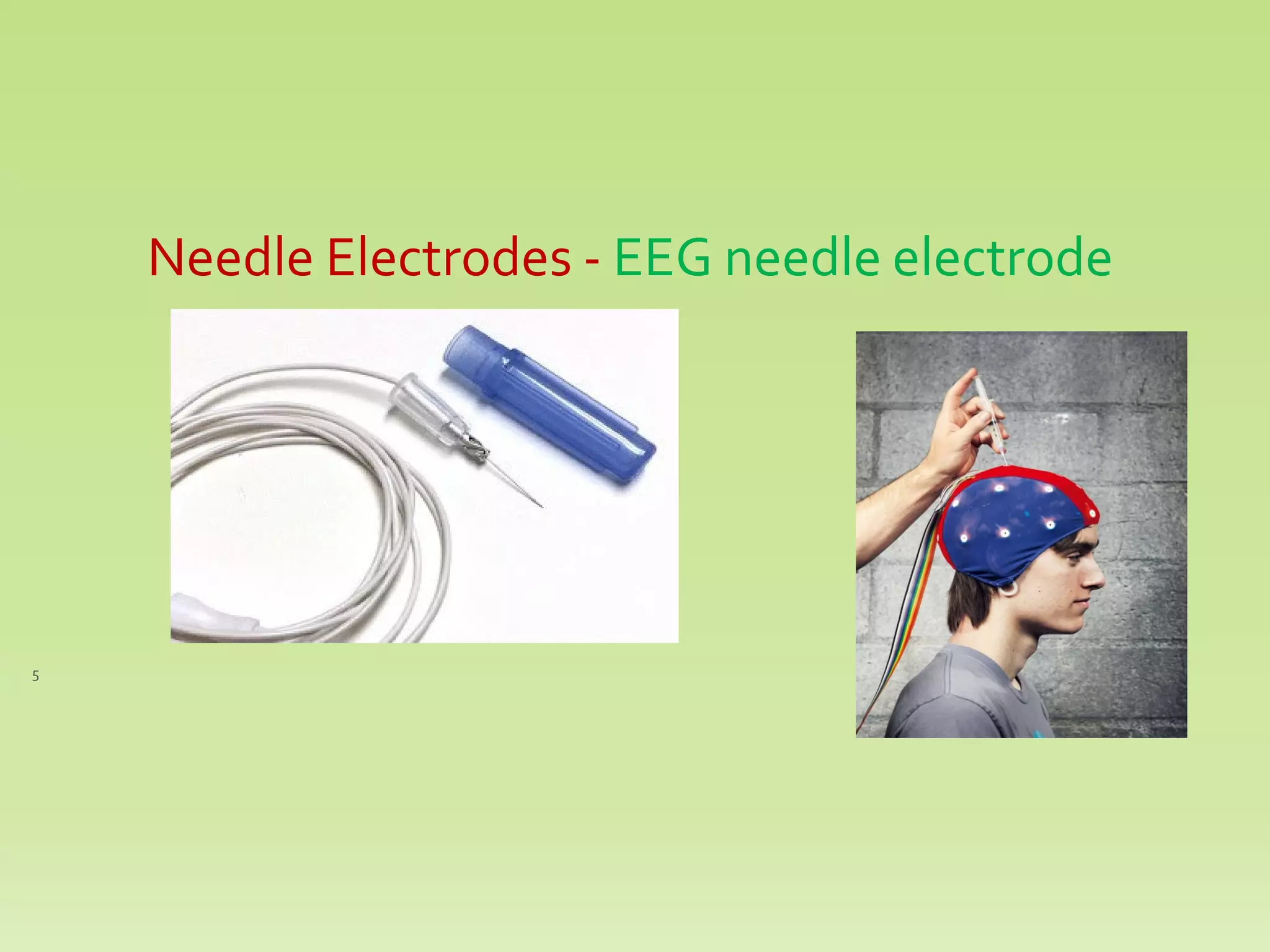
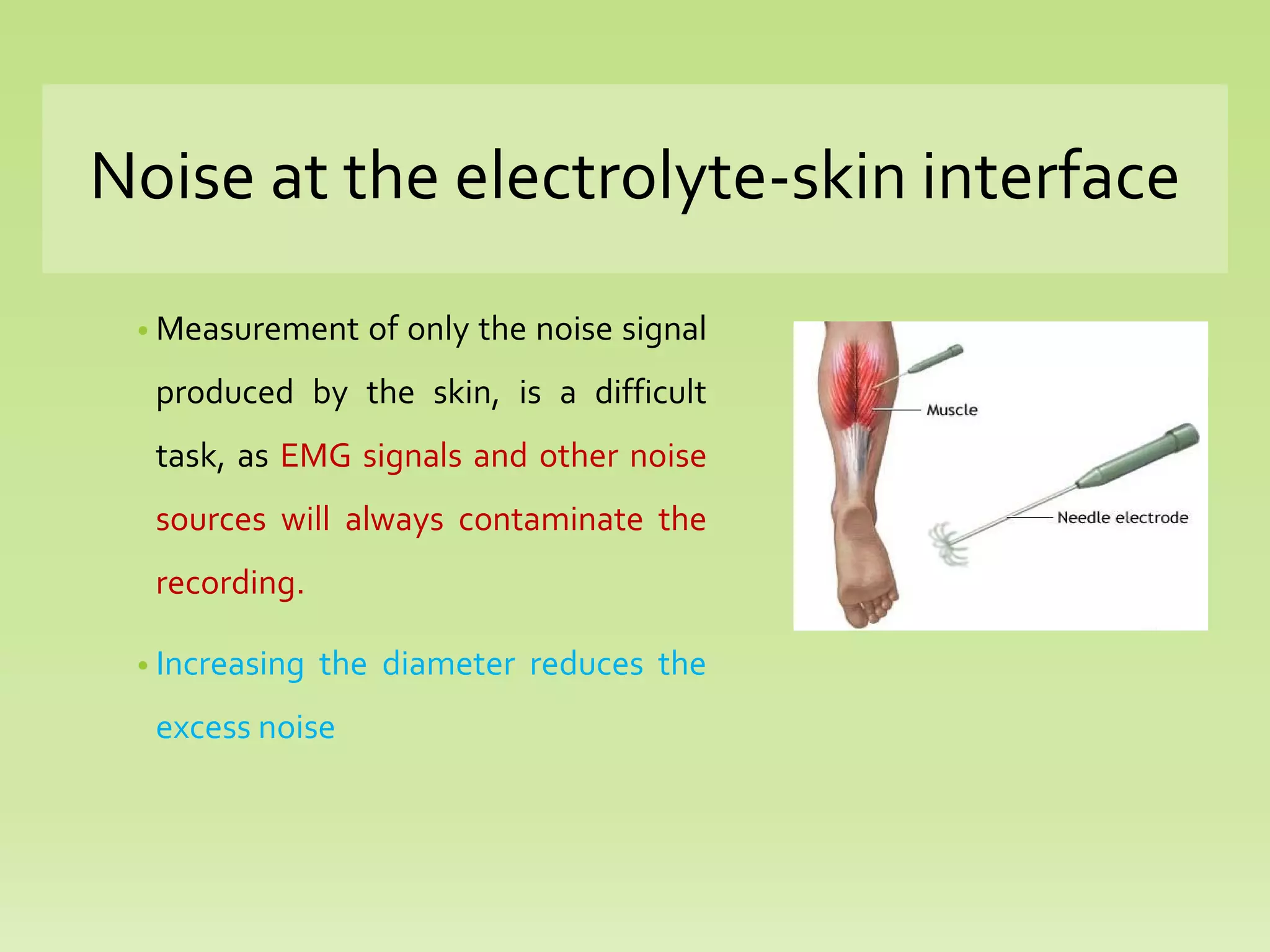
Needle Electrodes - EEG needle electrode
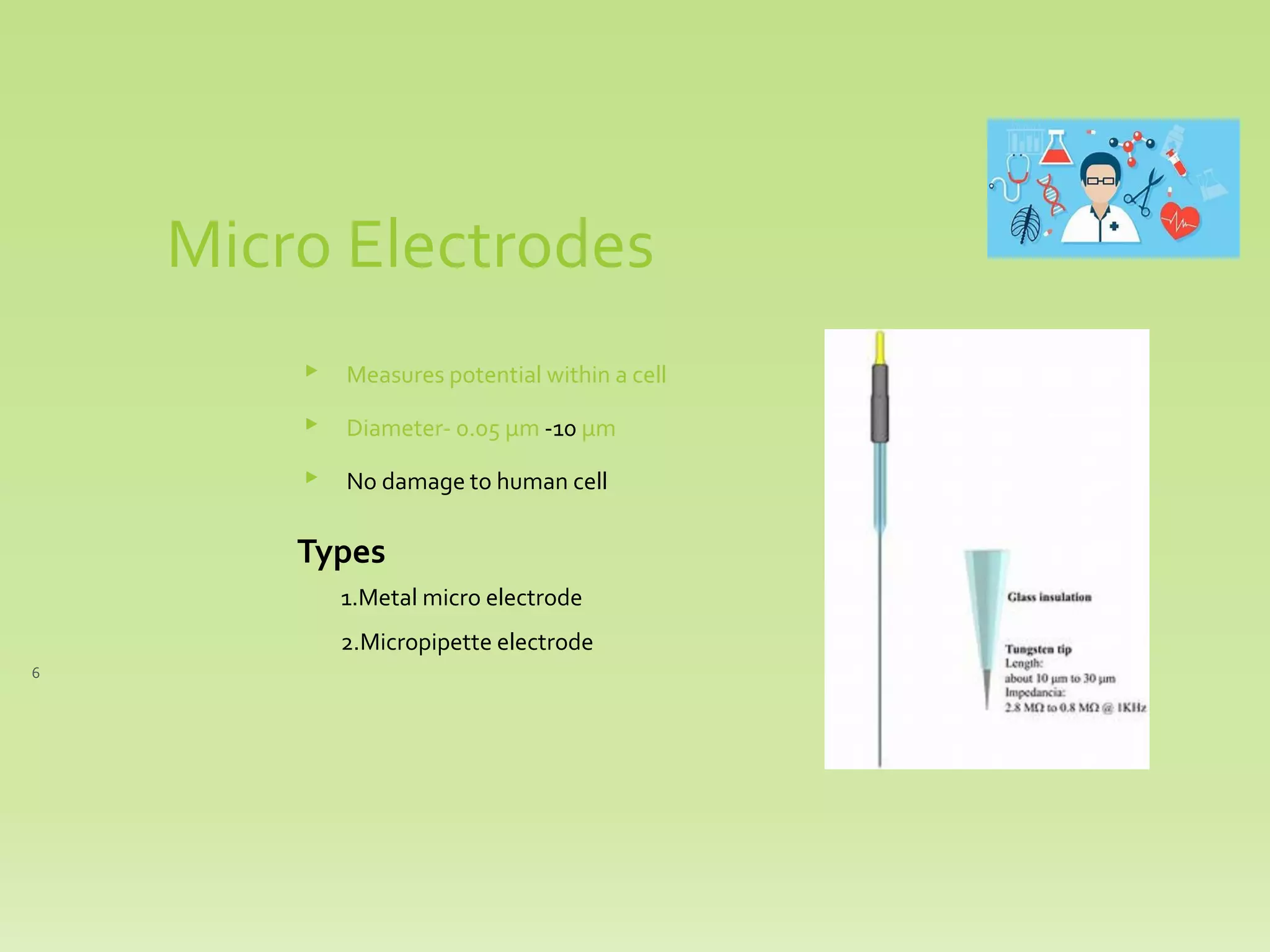
Micro Electrodes
▸ Measures potential within a cell
▸ Diameter- 0.05 µm -10 µm
▸ No damage to human cell
Types
1.Metal micro electrode
2.Micropipette electrode
6
EQUIVALENT CIRCUIT OF
BIOPOTENTIAL ELECTRODE INTERFACE
• The voltage measured is the difference
between the potentials of 2 electrodes.
• The dc voltage due to the difference in
electrode potential is called as electrode
offset voltage.
• 2 electrodes of same material may also
produce small electrode offset voltage.
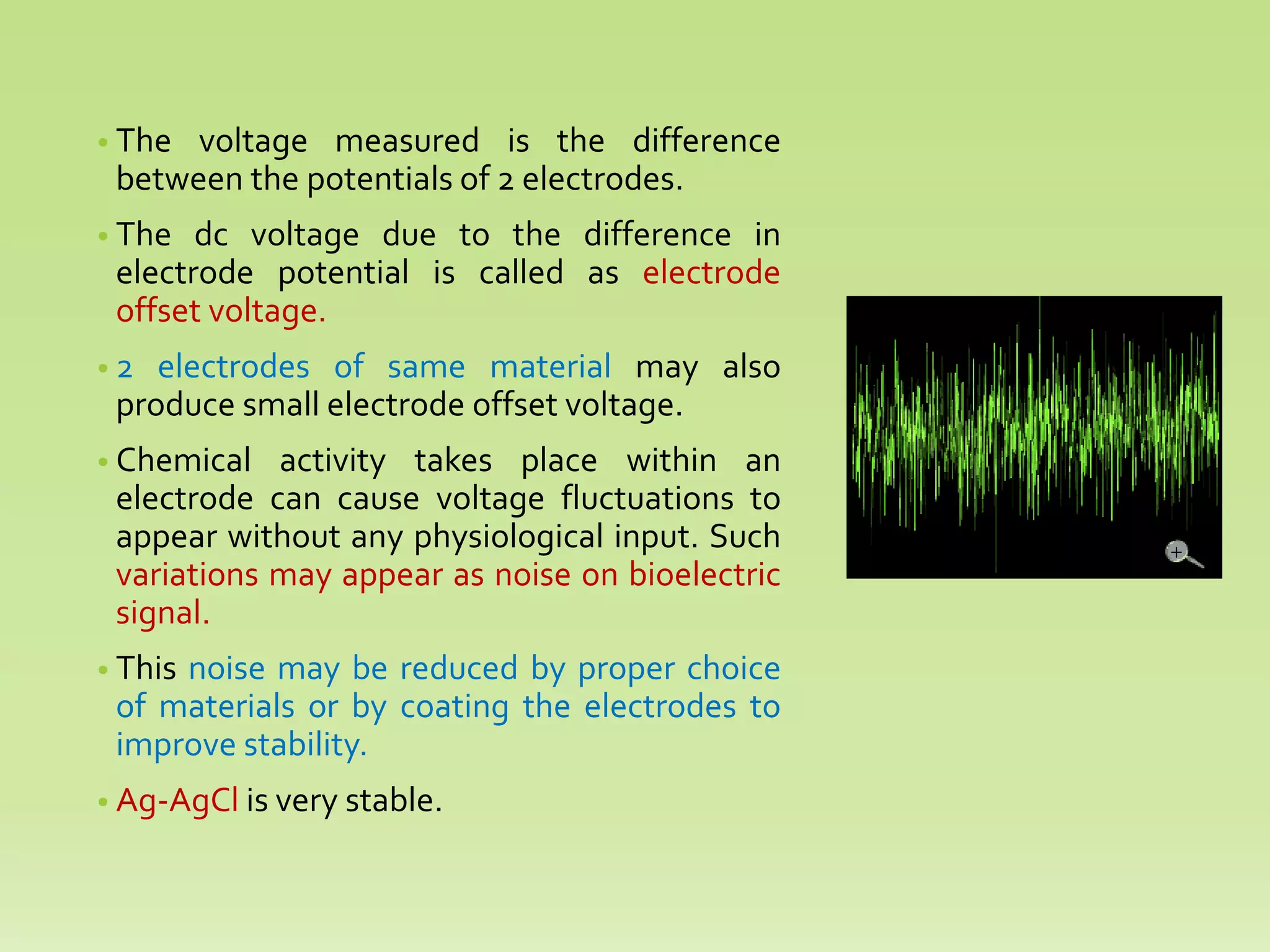
• Chemical activity takes place within an
electrode can cause voltage fluctuations to
appear without any physiological input. Such
variations may appear as noise on bioelectric
signal.
• This noise may be reduced by proper choice
of materials or by coating the electrodes to
improve stability.
• Ag-AgCl is very stable.
Ag-AgCl electrode
• Ag-AgCl electrode is prepared by coating a pure silver with silver
chloride.
• This coating is done by placing silver into a bromide free sodium
chloride solution.
• A second piece of silver is also placed in the solution and the two are
connected to a voltage source.
• Surface electrodes have impedances of 2 to 10 kilo ohm.
• Whereas small needle and micro electrodes have much higher
impedances.
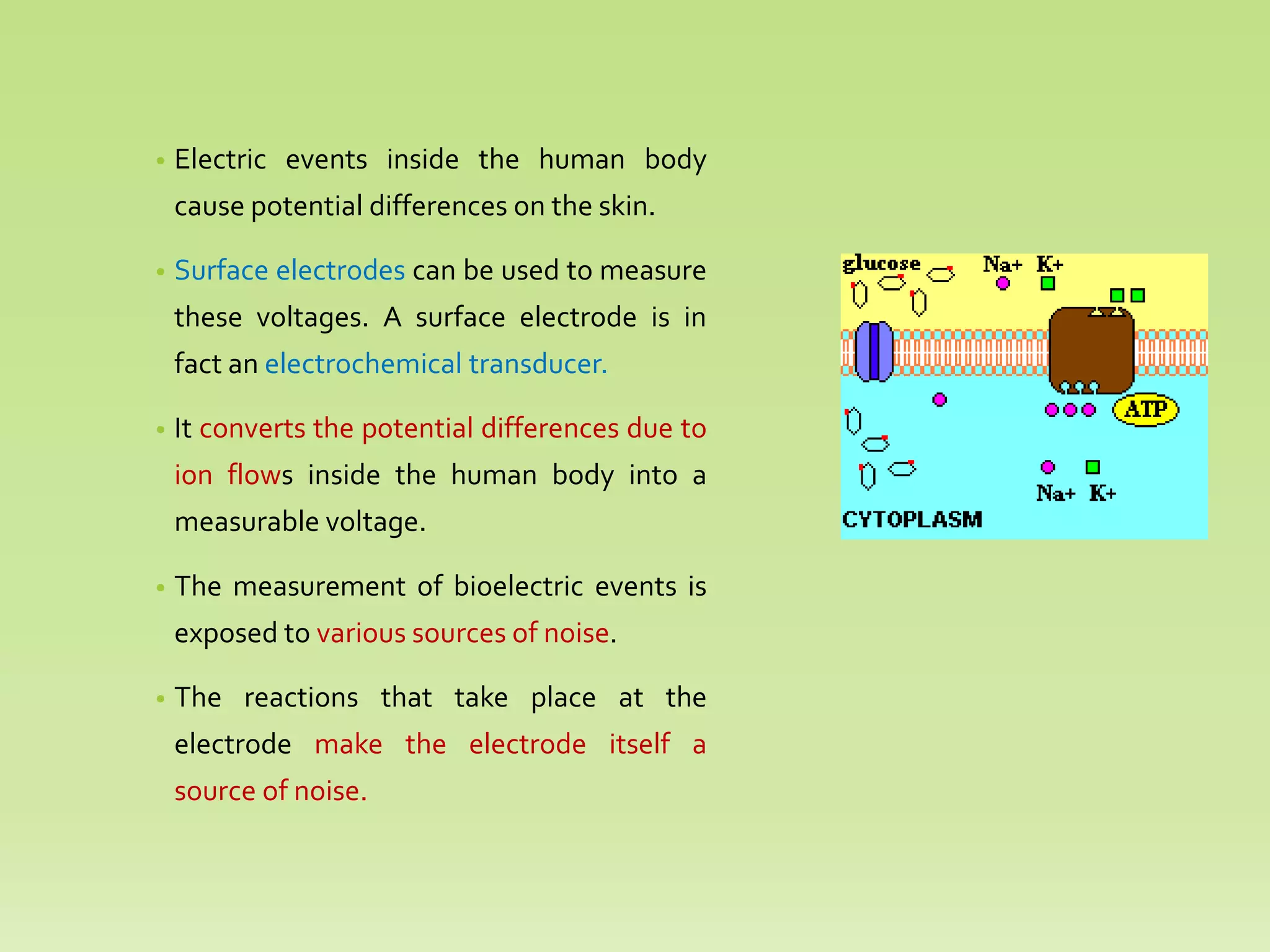
• Electric events inside the human body
cause potential differences on the skin.
• Surface electrodes can be used to measure
these voltages. A surface electrode is in
fact an electrochemical transducer.
• It converts the potential differences due to
ion flows inside the human body into a
measurable voltage.
• The measurement of bioelectric events is
exposed to various sources of noise.
• The reactions that take place at the
electrode make the electrode itself a
source of noise.
The electrode-skin interface
• In medical science the recording of potential
differences from the human body is an
important source of information.
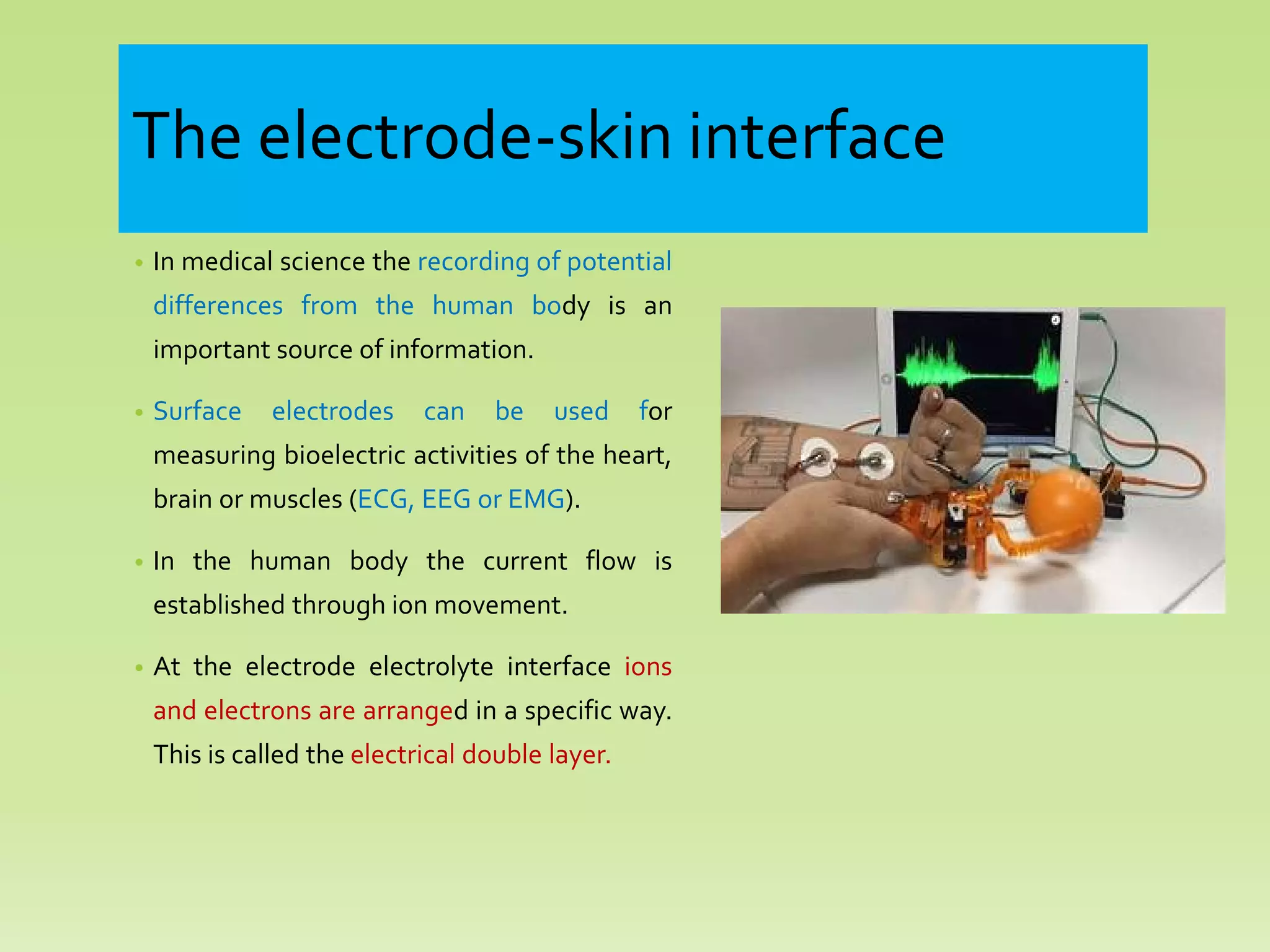
• Surface electrodes can be used for
measuring bioelectric activities of the heart,
brain or muscles (ECG, EEG or EMG).
• In the human body the current flow is
established through ion movement.
• At the electrode electrolyte interface ions
and electrons are arranged in a specific way.
This is called the electrical double layer.
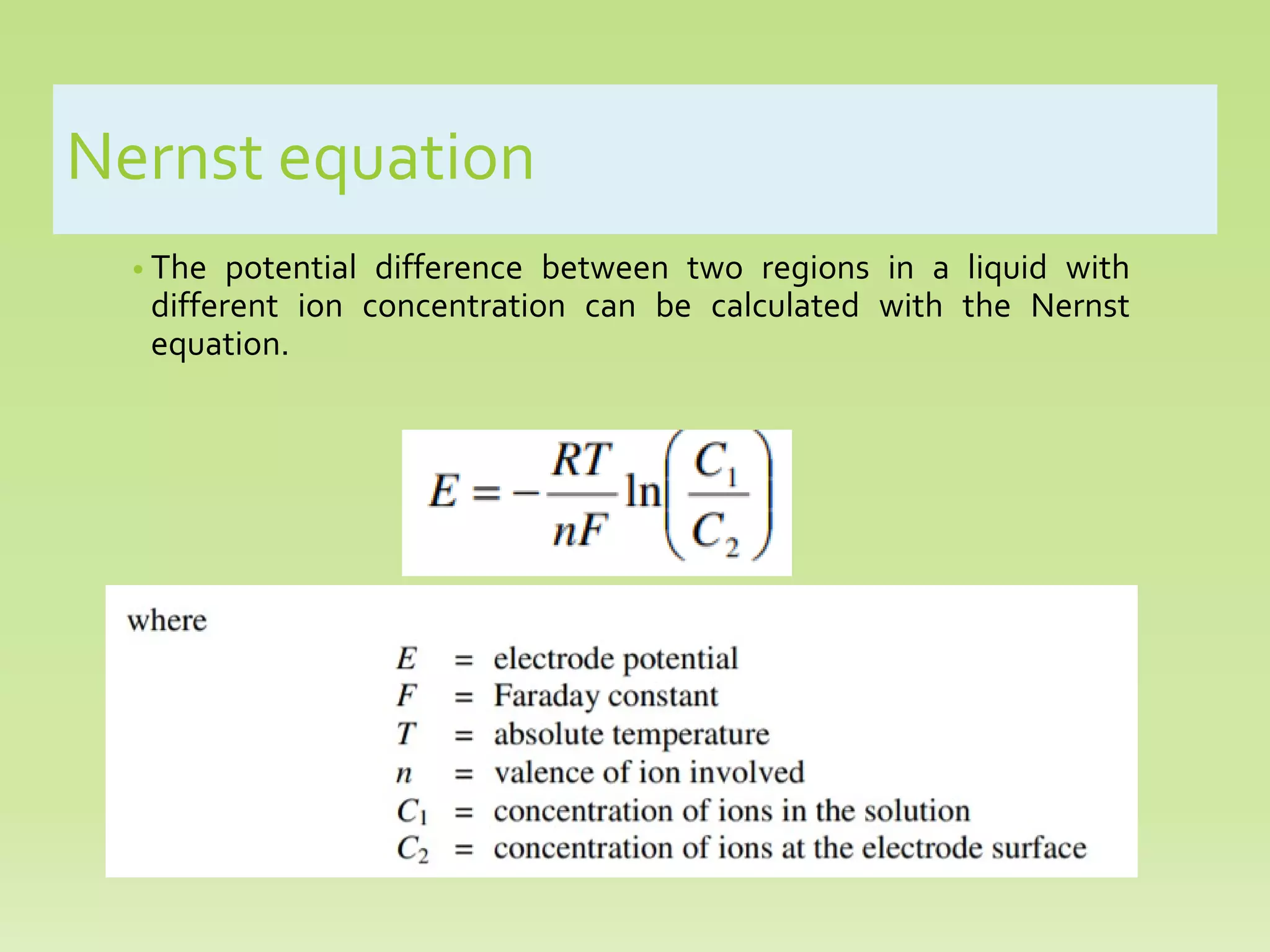
Nernst equation
• The potential difference between two regions in a liquid with
different ion concentration can be calculated with the Nernst
equation.
RECORDING PROBLEMS
NEED OF MEDICAL RECORDING
Better clinical decision making
Proper treatment
Save patient
Noise in biopotential recording
• As surface biopotential recording involves the measurement of
extremely small potential differences, noise is likely to play an
important role.
• The output voltage of an amplifier used to measure bioelectric events
is not always an accurate representation of the event under
examination.
• It is composed of the desired voltage, and a number of unwanted
voltages. The desired voltage is called the signal. All unwanted voltages
are referred to as noise.
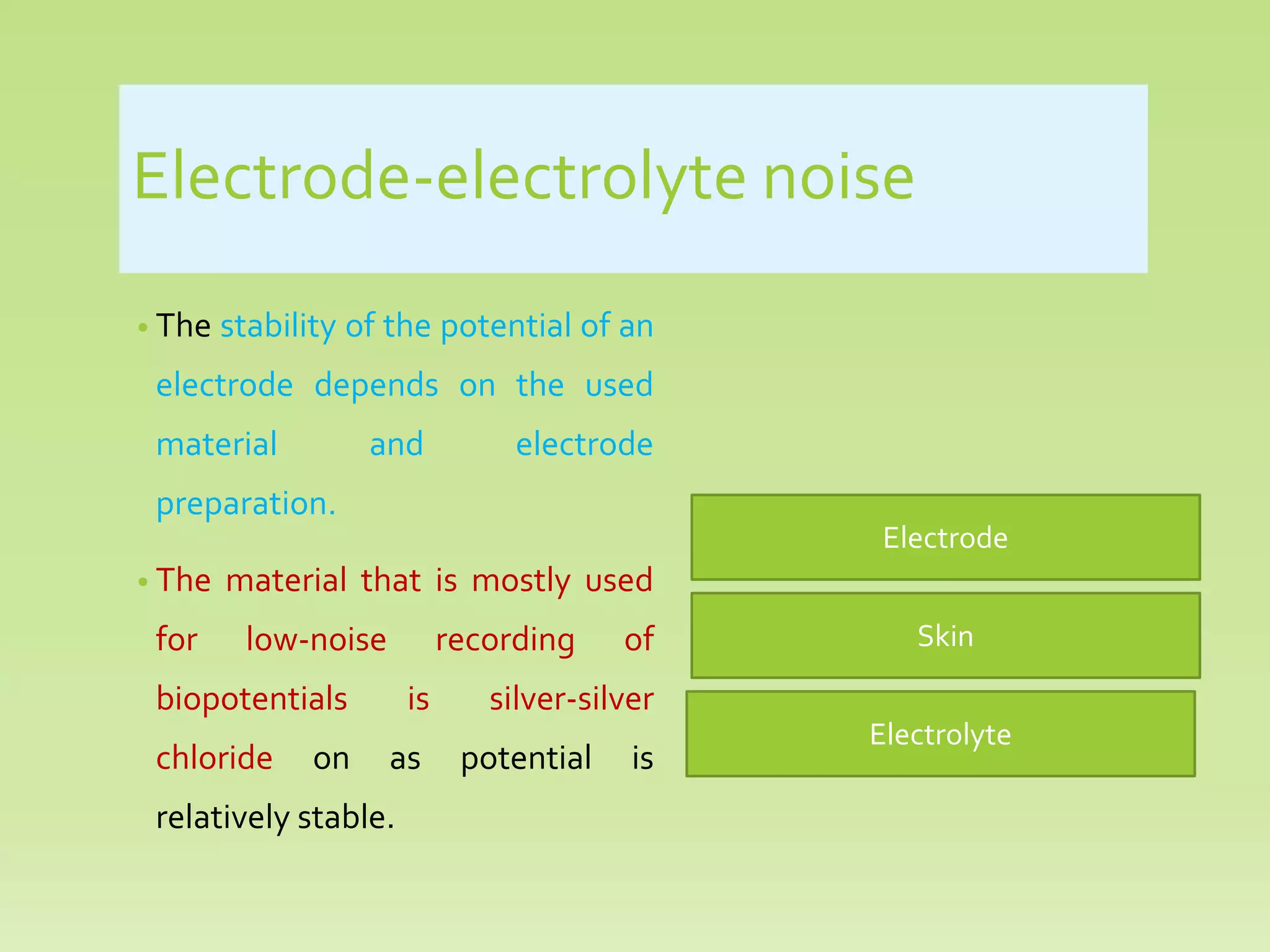
Electrode-electrolyte noise
• The stability of the potential of an
electrode depends on the used
material and electrode
preparation.
• The material that is mostly used
for low-noise recording of
biopotentials is silver-silver
chloride on as potential is
relatively stable.
Electrolyte
Skin
Electrode
Noise at the electrolyte-skin interface
• Measurement of only the noise signal
produced by the skin, is a difficult
task, as EMG signals and other noise
sources will always contaminate the
recording.
• Increasing the diameter reduces the
excess noise
Motion artifact
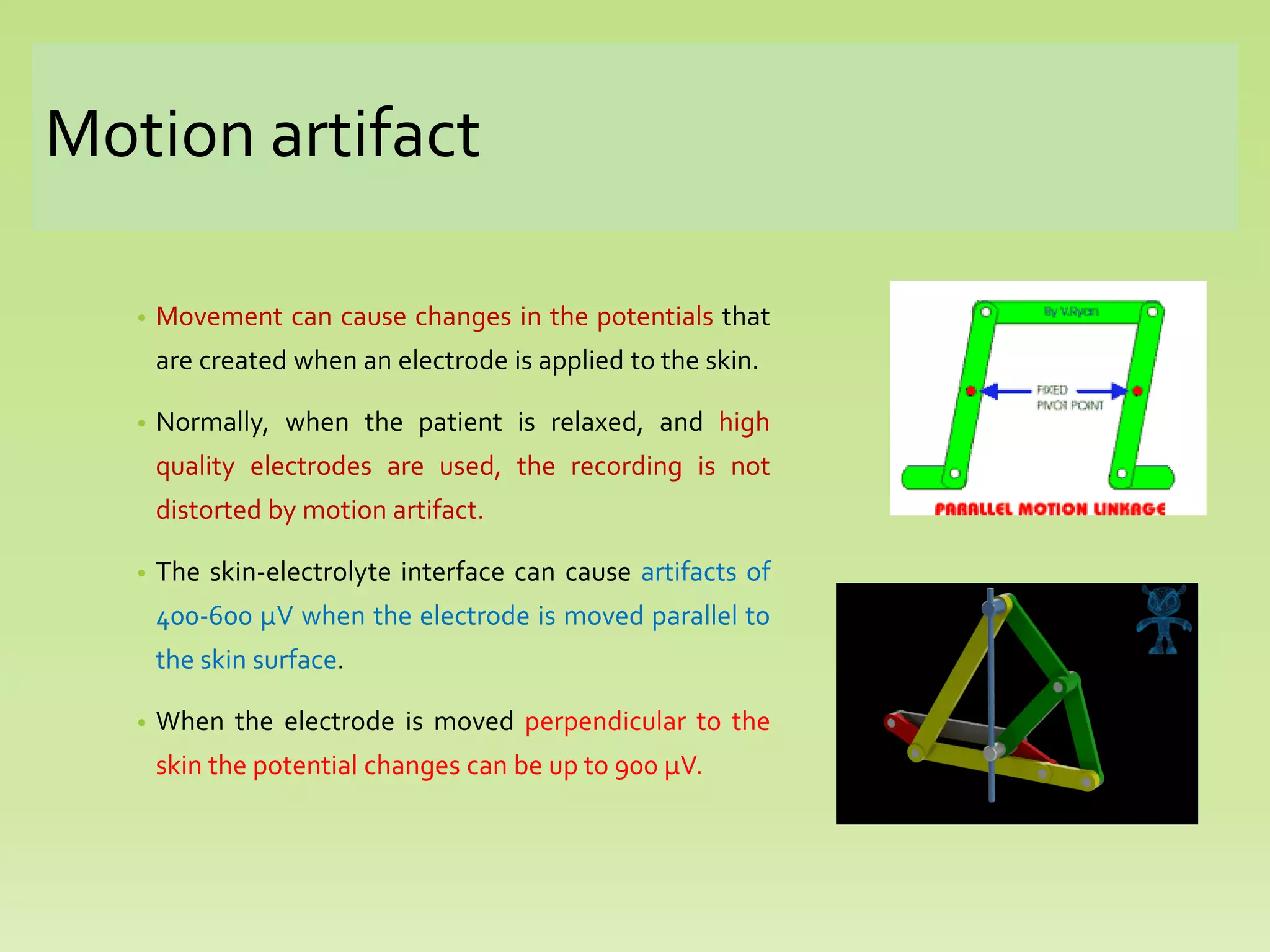
• Movement can cause changes in the potentials that
are created when an electrode is applied to the skin.
• Normally, when the patient is relaxed, and high
quality electrodes are used, the recording is not
distorted by motion artifact.
• The skin-electrolyte interface can cause artifacts of
400-600 µV when the electrode is moved parallel to
the skin surface.
• When the electrode is moved perpendicular to the
skin the potential changes can be up to 900 µV.
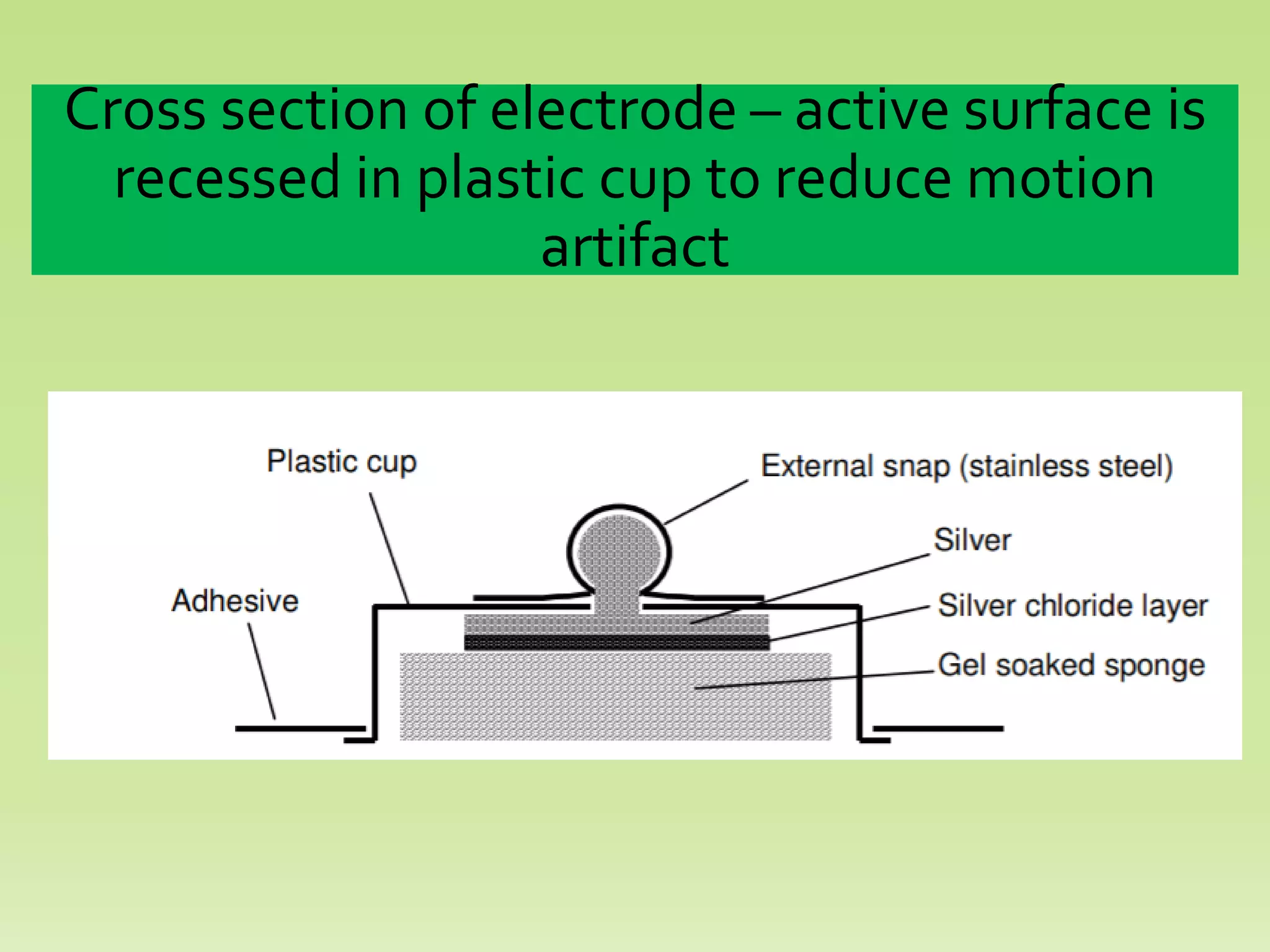
Cross section of electrode – active surface is
recessed in plastic cup to reduce motion
artifact
Cable movement
• Cable movement causes artifact is in the strong magnetic field of a
MRI-scanner.
Avoided by:
• Amplifying the signal before it enters the cable can also reduce all
forms of artifact produced by the wires.
• Various electrodes with amplifier circuits attached to reduce noise
Thermal noise
• Every resistor will produce a certain amount of noise.
• The random movement of charged particles causes thermal noise,
and it has a root mean square value of
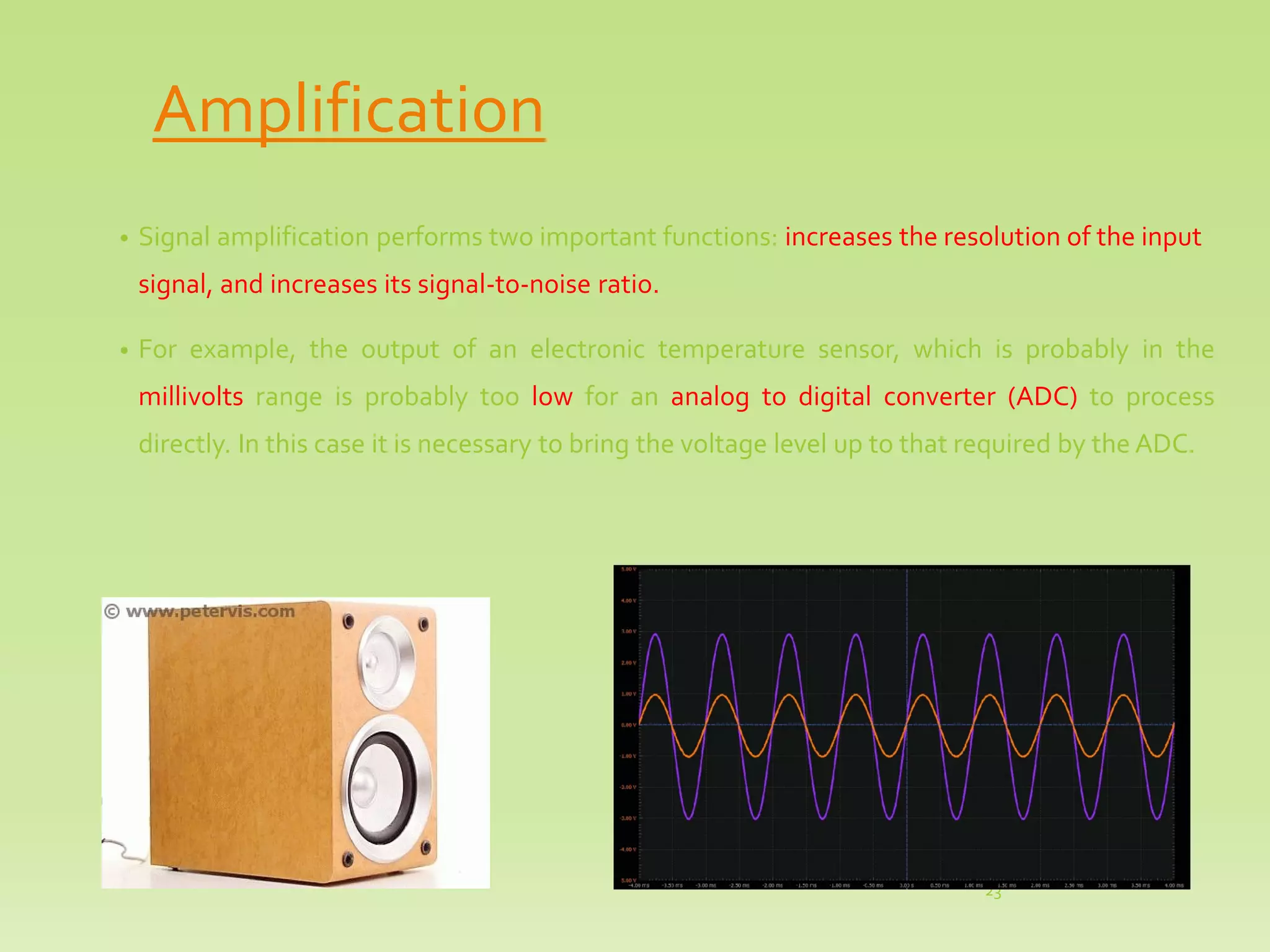
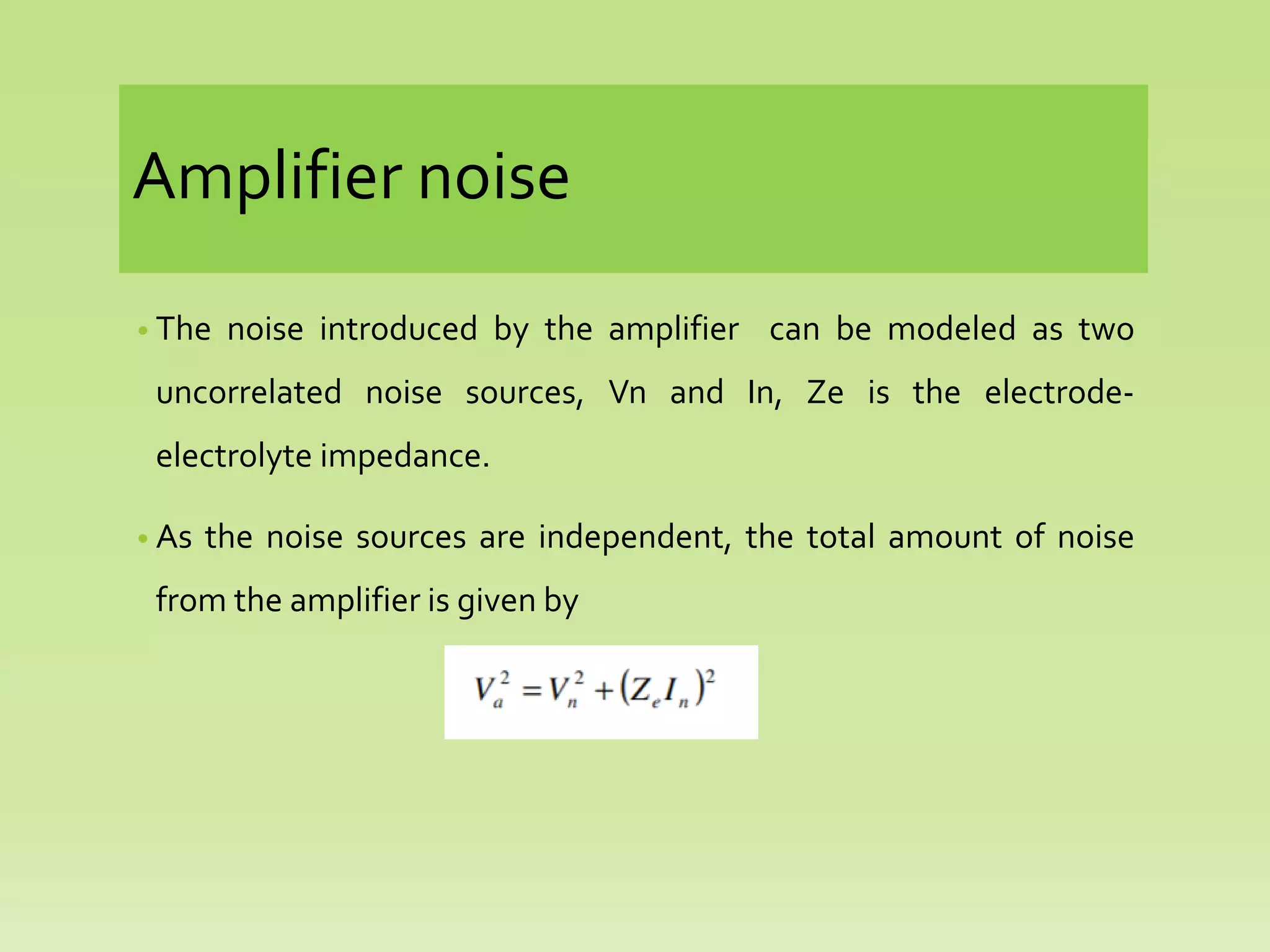
Amplification
• Signal amplification performs two important functions: increases the resolution of the input
signal, and increases its signal-to-noise ratio.
• For example, the output of an electronic temperature sensor, which is probably in the
millivolts range is probably too low for an analog to digital converter (ADC) to process
directly. In this case it is necessary to bring the voltage level up to that required by the ADC.
23
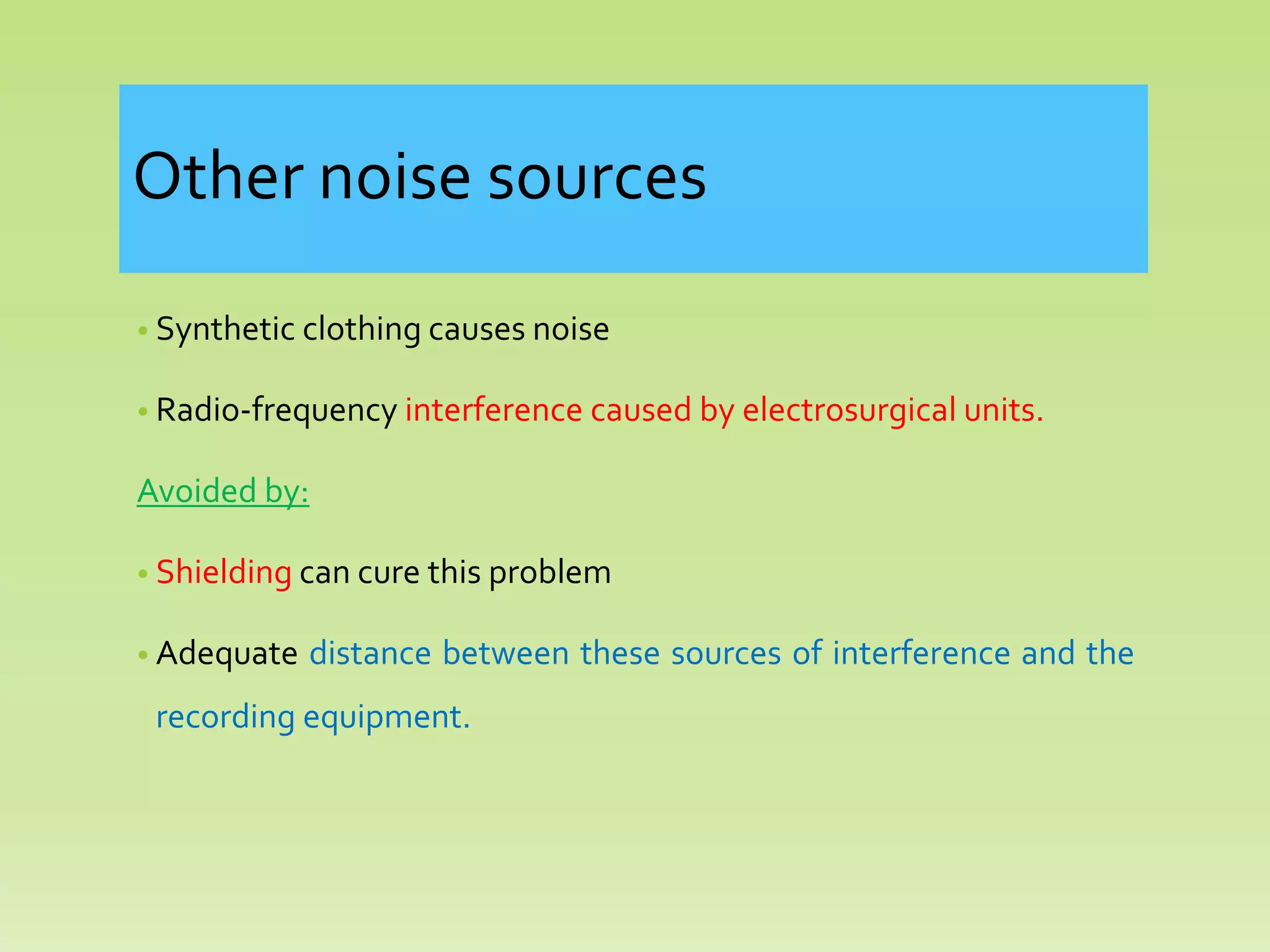
Amplifier noise
• The noise introduced by the amplifier can be modeled as two
uncorrelated noise sources, Vn and In, Ze is the electrode-
electrolyte impedance.
• As the noise sources are independent, the total amount of noise
from the amplifier is given by
Other noise sources
• Synthetic clothing causes noise
• Radio-frequency interference caused by electrosurgical units.
Avoided by:
• Shielding can cure this problem
• Adequate distance between these sources of interference and the
recording equipment.
SIMPLETASKYOU CAN DO . . .
1. Generation of noisy signal
• Generate sinusoidal signal
• Add noise with original signal and the result is the noisy signal
• Plot all the 3 signals
Noisy Signal Generation
MEASUREMENT OF BIO POTENTIAL  USING TWO ELECTRODES AND RECORDING PROBLEMS

MEASUREMENT OF BIO POTENTIAL USING TWO ELECTRODES AND RECORDING PROBLEMS

  • 1.
    MEASUREMENT WITHTWO ELECTRODES & RECORDINGPROBLEMS BASICS OF BIOMEDICAL INSTRUMENTATION
  • 2.
    Discussion about ▸ Twoelectrodes based measurement ▸ Need of medical recording? ▸ Different Noises in recording 2
  • 3.
    ELECTRODE ➢ Electrodes aredevices that convert ionic potentials into electronic potentials ➢ It acquires signals like ECG, EEG, EMG. ➢ An electrode potential is developed across the interface proportional to the exchange of ions between the metal and the electrolytes of the body ➢ Measurement of bioelectric potentials requires two electrodes ➢ The voltage measured is the difference between the instantaneous potentials of the two electrodes 3
  • 4.
    Body Surface Electrodes Usedto sense the potential from heart, brain and nerves 1. Immersion Electrodes 2. Plate Electrode or Metal Plate Electrodes 3. Metal Disk Electrode 4. Disposable Electrodes 5. Suction cup Electrodes 6. Floating Electrodes 7. Flexible Electrodes 8. Special Electrodes 4
  • 5.
    5 Needle Electrodes -EEG needle electrode
  • 6.
    Micro Electrodes ▸ Measurespotential within a cell ▸ Diameter- 0.05 µm -10 µm ▸ No damage to human cell Types 1.Metal micro electrode 2.Micropipette electrode 6
  • 8.
  • 9.
    • The voltagemeasured is the difference between the potentials of 2 electrodes. • The dc voltage due to the difference in electrode potential is called as electrode offset voltage. • 2 electrodes of same material may also produce small electrode offset voltage. • Chemical activity takes place within an electrode can cause voltage fluctuations to appear without any physiological input. Such variations may appear as noise on bioelectric signal. • This noise may be reduced by proper choice of materials or by coating the electrodes to improve stability. • Ag-AgCl is very stable.
  • 10.
    Ag-AgCl electrode • Ag-AgClelectrode is prepared by coating a pure silver with silver chloride. • This coating is done by placing silver into a bromide free sodium chloride solution. • A second piece of silver is also placed in the solution and the two are connected to a voltage source. • Surface electrodes have impedances of 2 to 10 kilo ohm. • Whereas small needle and micro electrodes have much higher impedances.
  • 11.
    • Electric eventsinside the human body cause potential differences on the skin. • Surface electrodes can be used to measure these voltages. A surface electrode is in fact an electrochemical transducer. • It converts the potential differences due to ion flows inside the human body into a measurable voltage. • The measurement of bioelectric events is exposed to various sources of noise. • The reactions that take place at the electrode make the electrode itself a source of noise.
  • 12.
    The electrode-skin interface •In medical science the recording of potential differences from the human body is an important source of information. • Surface electrodes can be used for measuring bioelectric activities of the heart, brain or muscles (ECG, EEG or EMG). • In the human body the current flow is established through ion movement. • At the electrode electrolyte interface ions and electrons are arranged in a specific way. This is called the electrical double layer.
  • 13.
    Nernst equation • Thepotential difference between two regions in a liquid with different ion concentration can be calculated with the Nernst equation.
  • 14.
  • 15.
    NEED OF MEDICALRECORDING Better clinical decision making Proper treatment Save patient
  • 16.
    Noise in biopotentialrecording • As surface biopotential recording involves the measurement of extremely small potential differences, noise is likely to play an important role. • The output voltage of an amplifier used to measure bioelectric events is not always an accurate representation of the event under examination. • It is composed of the desired voltage, and a number of unwanted voltages. The desired voltage is called the signal. All unwanted voltages are referred to as noise.
  • 17.
    Electrode-electrolyte noise • Thestability of the potential of an electrode depends on the used material and electrode preparation. • The material that is mostly used for low-noise recording of biopotentials is silver-silver chloride on as potential is relatively stable. Electrolyte Skin Electrode
  • 18.
    Noise at theelectrolyte-skin interface • Measurement of only the noise signal produced by the skin, is a difficult task, as EMG signals and other noise sources will always contaminate the recording. • Increasing the diameter reduces the excess noise
  • 19.
    Motion artifact • Movementcan cause changes in the potentials that are created when an electrode is applied to the skin. • Normally, when the patient is relaxed, and high quality electrodes are used, the recording is not distorted by motion artifact. • The skin-electrolyte interface can cause artifacts of 400-600 µV when the electrode is moved parallel to the skin surface. • When the electrode is moved perpendicular to the skin the potential changes can be up to 900 µV.
  • 20.
    Cross section ofelectrode – active surface is recessed in plastic cup to reduce motion artifact
  • 21.
    Cable movement • Cablemovement causes artifact is in the strong magnetic field of a MRI-scanner. Avoided by: • Amplifying the signal before it enters the cable can also reduce all forms of artifact produced by the wires. • Various electrodes with amplifier circuits attached to reduce noise
  • 22.
    Thermal noise • Everyresistor will produce a certain amount of noise. • The random movement of charged particles causes thermal noise, and it has a root mean square value of
  • 23.
    Amplification • Signal amplificationperforms two important functions: increases the resolution of the input signal, and increases its signal-to-noise ratio. • For example, the output of an electronic temperature sensor, which is probably in the millivolts range is probably too low for an analog to digital converter (ADC) to process directly. In this case it is necessary to bring the voltage level up to that required by the ADC. 23
  • 24.
    Amplifier noise • Thenoise introduced by the amplifier can be modeled as two uncorrelated noise sources, Vn and In, Ze is the electrode- electrolyte impedance. • As the noise sources are independent, the total amount of noise from the amplifier is given by
  • 25.
    Other noise sources •Synthetic clothing causes noise • Radio-frequency interference caused by electrosurgical units. Avoided by: • Shielding can cure this problem • Adequate distance between these sources of interference and the recording equipment.
  • 26.
    SIMPLETASKYOU CAN DO. . . 1. Generation of noisy signal • Generate sinusoidal signal • Add noise with original signal and the result is the noisy signal • Plot all the 3 signals
  • 27.