DEPARTMENT OF BIOCHEMISTRY
LUMBINI MEDICAL COLLEGE
PRAVAS, TANSEN, NEPAL
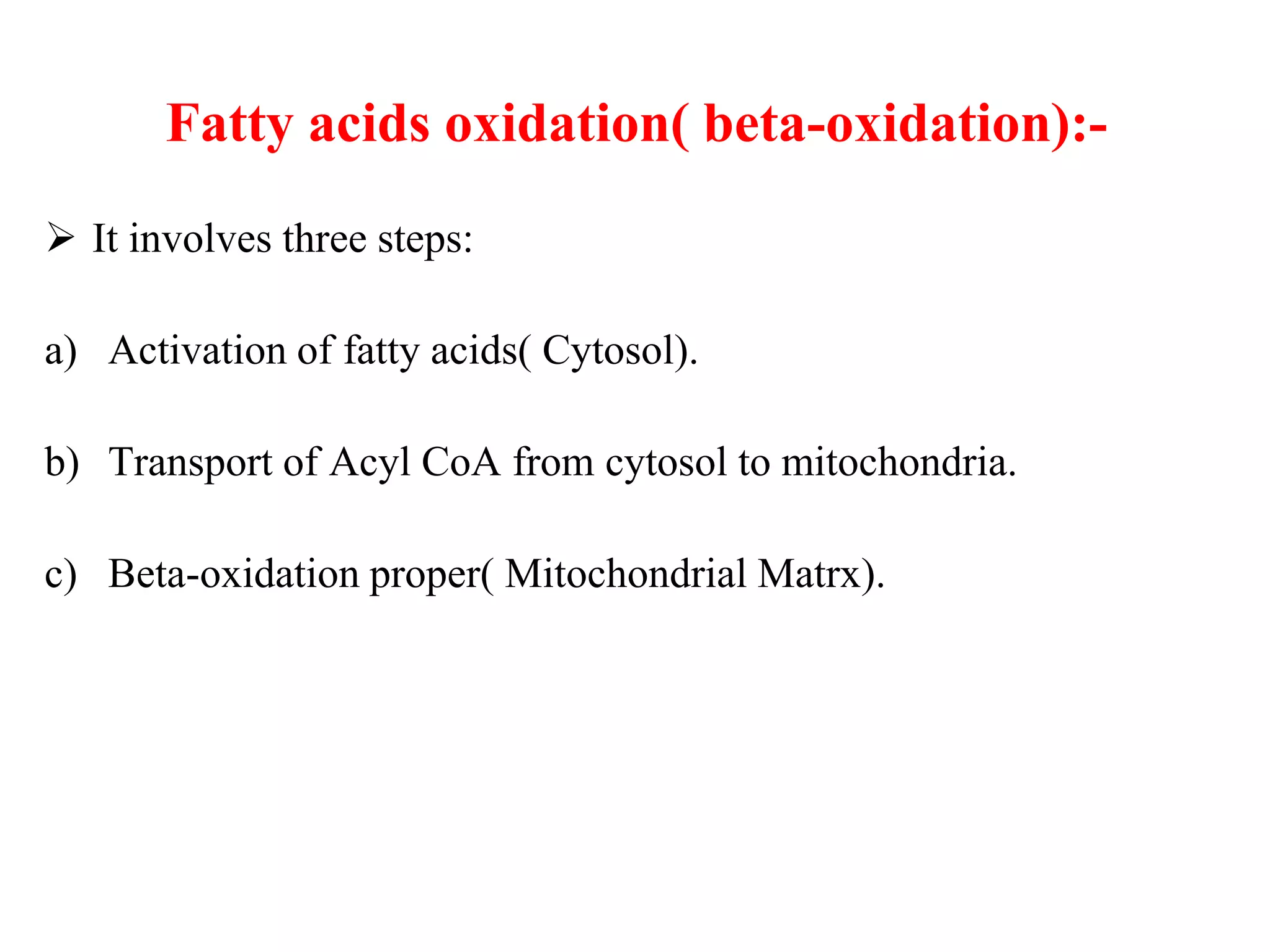
Fatty acids oxidation( beta-oxidation):-
 It involves three steps:
a) Activation of fatty acids( Cytosol).
b) Transport of Acyl CoA from cytosol to mitochondria.
c) Beta-oxidation proper( Mitochondrial Matrx).
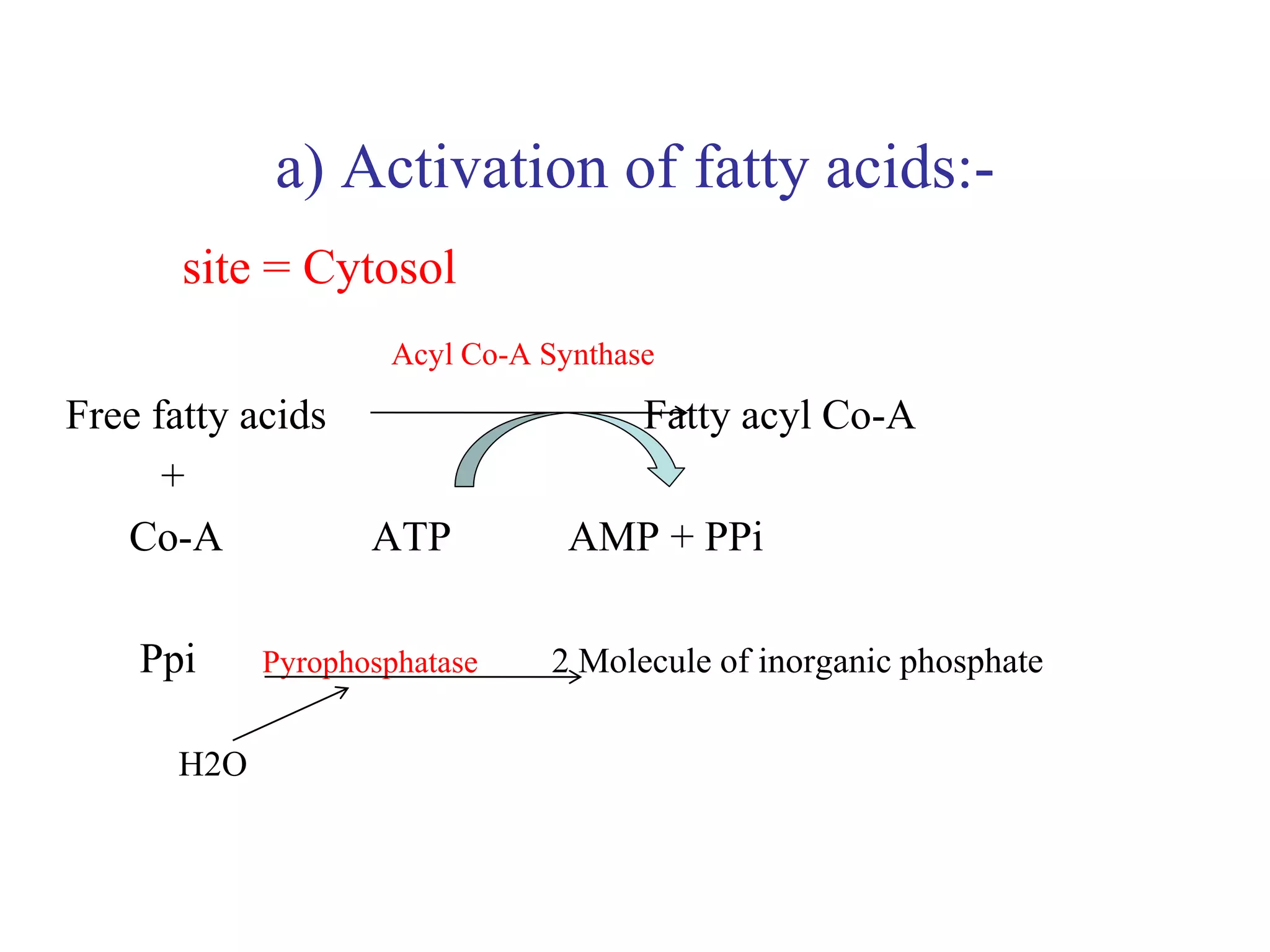
a) Activation of fatty acids:-
site = Cytosol
Acyl Co-A Synthase
Free fatty acids Fatty acyl Co-A
+
Co-A ATP AMP + PPi
Ppi Pyrophosphatase 2 Molecule of inorganic phosphate
H2O
b) Transport of fatty acid ( Acyl CoA) From Cytosol
to mitochondria:-
fig:-
Carnitine:-
 Carnitine is synthesized in liver and kidney.
 It require Lysin and metheonine for it’s synthesis.
 A large conc. Is present in skeletal muscle.
Diet Synthesized in the body
Source
malonyl CoA inhibitors Carnitine
Functions
Transport of Acyl CoA from cytosol to mitochondria
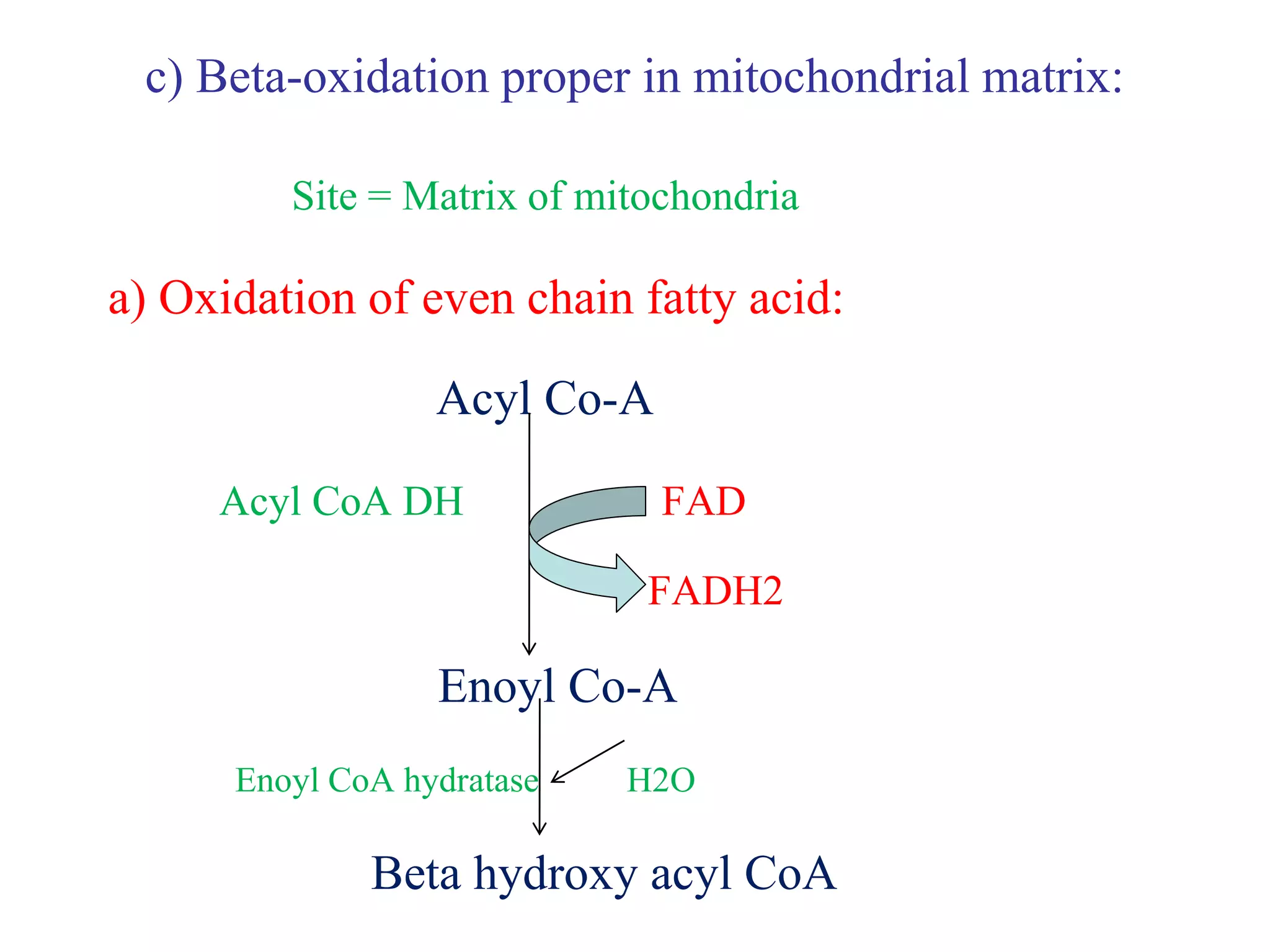
c) Beta-oxidation proper in mitochondrial matrix:
Site = Matrix of mitochondria
a) Oxidation of even chain fatty acid:
Acyl Co-A
Acyl CoA DH FAD
FADH2
Enoyl Co-A
Enoyl CoA hydratase H2O
Beta hydroxy acyl CoA
beta OH acyl CoA NAD
NADH2
Beta-keto acyl Co-A
Thiolase CoA
Acetyl CoA
Acyl CoA
Note:-
a) Short Chain fatty acid No need carnitine
b) Medium chain fatty acid
c) Long chain fatty acid. Need carnitine
Energetic of palmitic acid condition
 Palmitic acid contain 16 carbon molecules.
 It undergoes 7 cycles to be completely oxidised and
produced energy.
 8 molecules of acetyl CoA produced in whole 7 cycle.
 Total energy are given below:
Mechanism No. of ATP
produced lost
1) In One Cycle:-
FADH2 produced = 2 ATP
NADH2 produced = 3 ATP
5 ATP
So, In 7 cycles 7 X 5 = 35 ATP’s
2) No. of acetyl CoA produced
in 7 cycles is 8:
: 1 Acetyl CoA = 12 ATP
: 8 Acetyl CoA produced 8X12= 96 ATP
3)During Activation of fatty acid
the energy utilized 2ATP
:- Total ATP’s produced = 35+96 =131 ATP’s
and utilized(lost) = 2 ATP’s
:- Net yeild of ATP’s after complete
oxidation of palmitic acid (131 – 2) = 129 ATP’s
Disorders:-
1) Carnitine deficiency:
 It happens due to immature liver, kidney functions are not normal
and occurs incase of pre-term newborns.
 During pregnancy, trauma, burns, requirement of carnitine is
increased and body can’t compensate for that.
 During hemodialysis, large amount of carnitine is filtered out.
2) Sudden infants death syndrome :-
 Infants die on bed usually during night.
 Decreased glucose = utilized with in 2 hrs
beta-oxidation ( normally happen)
 Deficiency of medium chain Acyl-CoA dehydrogenase
No Beta-oxidation
No Acetyl CoA
No ATP
Gluconeogenesis Hypoglycemia Death
Beta-oxidation of fatty acids.ppt

Beta-oxidation of fatty acids.ppt

  • 1.
    DEPARTMENT OF BIOCHEMISTRY LUMBINIMEDICAL COLLEGE PRAVAS, TANSEN, NEPAL
  • 2.
    Fatty acids oxidation(beta-oxidation):-  It involves three steps: a) Activation of fatty acids( Cytosol). b) Transport of Acyl CoA from cytosol to mitochondria. c) Beta-oxidation proper( Mitochondrial Matrx).
  • 3.
    a) Activation offatty acids:- site = Cytosol Acyl Co-A Synthase Free fatty acids Fatty acyl Co-A + Co-A ATP AMP + PPi Ppi Pyrophosphatase 2 Molecule of inorganic phosphate H2O
  • 4.
    b) Transport offatty acid ( Acyl CoA) From Cytosol to mitochondria:- fig:-
  • 5.
    Carnitine:-  Carnitine issynthesized in liver and kidney.  It require Lysin and metheonine for it’s synthesis.  A large conc. Is present in skeletal muscle. Diet Synthesized in the body Source malonyl CoA inhibitors Carnitine Functions Transport of Acyl CoA from cytosol to mitochondria
  • 6.
    c) Beta-oxidation properin mitochondrial matrix: Site = Matrix of mitochondria a) Oxidation of even chain fatty acid: Acyl Co-A Acyl CoA DH FAD FADH2 Enoyl Co-A Enoyl CoA hydratase H2O Beta hydroxy acyl CoA
  • 7.
    Beta hydroxy acylCoA beta OH acyl CoA NAD NADH2 Beta-keto acyl Co-A Thiolase CoA Acetyl CoA Acyl CoA Note:- a) Short Chain fatty acid No need carnitine b) Medium chain fatty acid c) Long chain fatty acid. Need carnitine
  • 8.
    Energetic of palmiticacid condition  Palmitic acid contain 16 carbon molecules.  It undergoes 7 cycles to be completely oxidised and produced energy.  8 molecules of acetyl CoA produced in whole 7 cycle.  Total energy are given below:
  • 9.
    Mechanism No. ofATP produced lost 1) In One Cycle:- FADH2 produced = 2 ATP NADH2 produced = 3 ATP 5 ATP So, In 7 cycles 7 X 5 = 35 ATP’s 2) No. of acetyl CoA produced in 7 cycles is 8: : 1 Acetyl CoA = 12 ATP : 8 Acetyl CoA produced 8X12= 96 ATP 3)During Activation of fatty acid the energy utilized 2ATP
  • 10.
    :- Total ATP’sproduced = 35+96 =131 ATP’s and utilized(lost) = 2 ATP’s :- Net yeild of ATP’s after complete oxidation of palmitic acid (131 – 2) = 129 ATP’s
  • 11.
    Disorders:- 1) Carnitine deficiency: It happens due to immature liver, kidney functions are not normal and occurs incase of pre-term newborns.  During pregnancy, trauma, burns, requirement of carnitine is increased and body can’t compensate for that.  During hemodialysis, large amount of carnitine is filtered out.
  • 12.
    2) Sudden infantsdeath syndrome :-  Infants die on bed usually during night.  Decreased glucose = utilized with in 2 hrs beta-oxidation ( normally happen)  Deficiency of medium chain Acyl-CoA dehydrogenase No Beta-oxidation No Acetyl CoA No ATP Gluconeogenesis Hypoglycemia Death