Chapter 15
Neurocognitive Disorders
Neurocognitive Disorders: An Overview
 Affect learning, memory, and consciousness
 Most develop later in life
 Types of neurocognitive disorders
 Delirium – temporary confusion and
disorientation
 Major or mild neurocognitive disorder – broad
cognitive deterioration affecting multiple
domains
 Amnestic – refers to problems with memory
that may occur in neurocognitive disorders
Neurocognitive Disorders: An Overview
 Shifting DSM perspectives
 From “organic” mental disorders to “cognitive”
disorders
 Broad impairments in cognitive functioning
 Cause profound changes in behavior and
personality
 Thus, although some may consider these to
be general medical conditions, often best
treated by mental health professionals
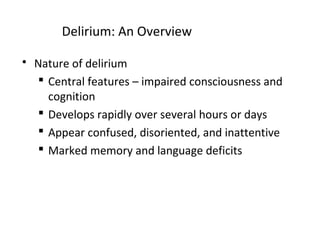
Delirium: An Overview
 Nature of delirium
 Central features – impaired consciousness and
cognition
 Develops rapidly over several hours or days
 Appear confused, disoriented, and inattentive
 Marked memory and language deficits
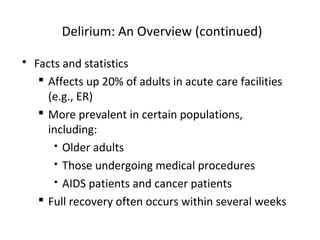
Delirium: An Overview (continued)
 Facts and statistics
 Affects up 20% of adults in acute care facilities
(e.g., ER)
 More prevalent in certain populations,
including:
 Older adults
 Those undergoing medical procedures
 AIDS patients and cancer patients
 Full recovery often occurs within several weeks
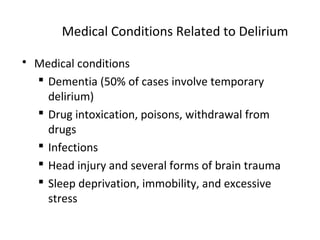
Medical Conditions Related to Delirium
 Medical conditions
 Dementia (50% of cases involve temporary
delirium)
 Drug intoxication, poisons, withdrawal from
drugs
 Infections
 Head injury and several forms of brain trauma
 Sleep deprivation, immobility, and excessive
stress
Treatment and Prevention of Delirium
 Treatment
 Attention to precipitating medical problems
 Psychosocial interventions
 Reassurance/comfort, coping strategies,
inclusion of patients in treatment decisions
 Prevention
 Address proper medical care for illnesses,
proper use and adherence to therapeutic drugs
Major and Mild Neurocognitive Disorders
 Nature of dementia
 Gradual deterioration of brain functioning
 Deterioration in judgment and memory
 Deterioration in language / advanced cognitive
processes
 Has many causes and may be irreversible
Major and Mild Neurocognitive Disorders
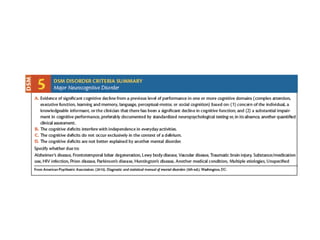
 Major neurocognitive disorder:
 The new DSM-5 term for dementia
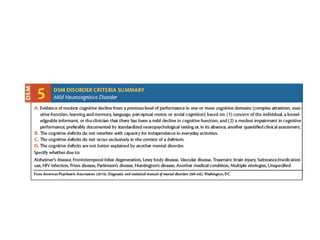
 Mild neurocognitive disorder: New DSM-5
classification for early stages of cognitive decline
 Individual is able to function independently
with some accommodations (e.g.,
reminders/lists)
Major Neurocognitive Disorder
 DSM-5 criteria
 One or more cognitive deficits that represent a
decrease from previous functioning
 Substantiated by clinical assessment
 Interfere with daily independent activities
Major Neurocognitive Disorder
 Prevalence and statistics
 New case identified every 7 seconds
 5% prevalence in adults 65+; 20% prevalence in
adults 85+
 Prevalence of mild neurocognitive disorder is
greater: 10% of adults 70+
Major Neurocognitive Disorder
 Initial stages
 Memory and visuospatial skills impairments
 Facial agnosia – inability to recognize familiar
faces
 Other symptoms
 Delusions, apathy, depression, agitation,
aggression
Major Neurocognitive Disorder
 Later stages
 Cognitive functioning continues to deteriorate
 Total support is needed to carry out day-to-day
activities
 Increased risk for early death due to inactivity
and onset of other illnesses
DSM-5 Types of Major and Mild
Neurocognitive Disorder
 Due to Alzheimers Disease
 Frontotemporal
 Vascular
 With Lewy bodies
 Due to traumatic brain
injury
 Substance/medication
induced
 Due to HIV infection
 Due to prion disease
 Due to Parkinson’s Disease
• Due to Huntington’s disease
• Due to another medical
condition
• Due to multiple etiologies
• Unspecified
Neurocognitive Disorder Due to
Alzheimer’s Disease
 Accounts for nearly half of neurocognitive
disorders
 Clinical Features
 Typically develop gradually and steadily
 Memory, orientation, judgment, and reasoning
deficits
 Additional symptoms may include
 Agitation, confusion, or combativeness
 Depression and/or anxiety
[INSERT Table 15.2 HERE, p. 556]
Neurocognitive Disorder Due to
Alzheimer’s Disease : Statistics
 Nature and progression of the disease
 “Nun study” – analysis of nuns’ journal writing
over many years shows patterns of
deterioration
 Early and later stages = slow
 During middle stages = rapid
 Post-diagnosis survival = 8 years
 Onset = 60s or 70s (“early onset” = 40s to 50s)
 50% of the cases of neurocognitive disorder result
from Alzheimer’s disease
Neurocognitive Disorder Due to
Alzheimer’s Disease : Statistics
 Prevalence
 5 million Americans, several million worldwide
 More common in less educated individuals
 More educated individuals decline more
rapidly after onset; this suggests that
education simply provides a buffer period of
better initial coping
 Slightly more common in women
 Possibly because women lose estrogen as
they age; estrogen may be protective
[INSERT Figure 15.1 HERE, p. 548]
Alzheimer’s Disorder: Extent of Deficits
 Range of cognitive deficits
 Aphasia – difficulty with language
 Apraxia – impaired motor functioning
 Agnosia – failure to recognize objects
 Difficulties with
 Planning, Organizing
 Sequencing
 Abstracting information
 Negative impact on social and occupational
functioning
[INSERT Table 15.1 HERE, p. 550]
Vascular Neurocognitive Disorder
 Caused by blockage or damage to blood vessels
 Second leading cause of neurocognitive disorder
after Alzheimer’s disease
 Onset is often sudden (e.g., stroke)
 Patterns of impairment are variable
 Most require formal care in later stages
[INSERT Disorder Criteria Summary, Major or Mild
Vascular Neurocognitive Disorder HERE, p. 552]
Vascular Neurocognitive Disorder
 Features
 Cognitive disturbances – identical to dementia
 Obvious neurological signs of brain tissue
damage
 Prevalence 1.5% in people 70-75 and 15% for
people over 80
 Risk slightly higher in men
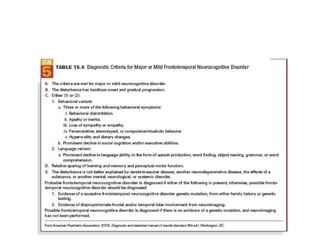
Frontotemporal Neurocognitive Disorder
 Broadly refers to damage to the frontal or
temporal regions of the brain, affecting
 Personality
 Language
 Behavior
 Two types of impairment
 Declines in appropriate behavior
 Declines in language
 Example: Pick’s disease
Neurocognitive Disorder Due to Pick’s
Disease
 Rare neurological condition which accounts for 5%
of all dementia diagnoses
 Produces a cortical dementia like Alzheimer’s
 Occurs relatively early in life (around 40s or 50s)
 Little is known about what causes this disease
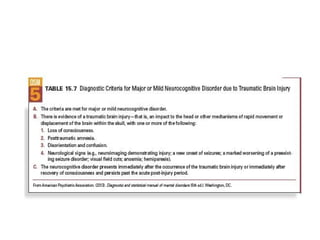
Neurocognitive Disorder Due to
Traumatic Brain injury
 Accidents are leading cause
 Symptoms last for at least one week after head
injury, including problems with executive function,
learning, memory
 Memory loss is the most common symptom
 May be found in athletes who experience
repeated blows to the head (e.g., football players)
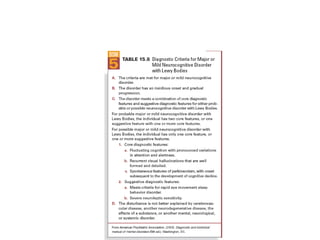
Neurocognitive Disorder Due to Lewy
Body Disease
 Lewy bodies = microscopic protein deposits that
damage brain over time
 Symptoms onset gradually
 Symptoms include impaired attention and
alertness, visual hallucinations, motor impairment
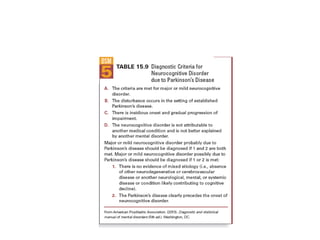
Neurocognitive Disorder Due to
Parkinson’s Disase
 Parkinson’s disease
 Degenerative brain disorder
 Dopamine pathway damage
 1 out of 1,000 people are affected worldwide
 Chief difficulty: motor problems
 Tremors, posture, walking, speech
 Not all with PD will develop dementia
 75% survive 10+ years after diagnosis
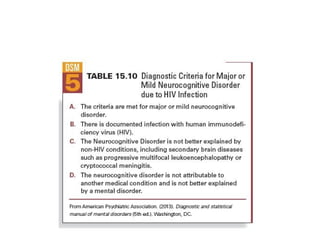
Neurocognitive Disorder due to HIV
Infection
 HIV-1 can cause neurological impairments and
dementia in some individuals
 Cognitive slowness, impaired attention, and
forgetfulness
 Apathy and social withdrawal
 Typically occurs in later disease stages
 Now occurs in <10% of individuals with HIV;
HAART decreases risk
Neurocognitive Disorder Due to
Huntington’s Disease
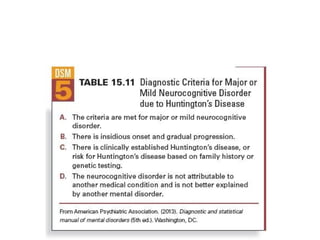
 Huntington’s Disease = genetic autosomal
dominant disorder
 Caused by a gene on chromosome 4
 Manifests initially as involuntary limb movements
(chorea), usually later in life
 Somewhere between 20-80% display
neurocognitive disorder
 Dementia follows a subcortical pattern
Neurocognitive Disorder Due to Prion
Disease
 Disorder of proteins in the brain that reproduce
and cause damage
 No known treatment, always fatal
 Can only be acquired through cannibalism or
accidental transmission (e.g., contaminated blood
transfusion)
 Example: Creutzfeldt-Jakob disease
 Affects one out of 1,000,000 persons
 Linked to mad cow disease
Substance/Medication-Induced
Neurocognitive Disorder
 Results from prolonged drug use, especially in
combination with poor diet
 May be caused by alcohol, sedative, hypnotic,
anxiolytic or inhalant drugs
 Brain damage may be permanent
 Symptoms similar to Alzheimer’s
 Deficits may include
 Memory impairment
 Aphasia, apraxia, agnosia
 Disturbed executive functioning
Causes of Neurocognitive Disorder:
The Example of Alzheimer’s Disease
 Features of brains with Alzheimer’s disease
 Neurofibrillary tangles (strandlike filaments)
 Amyloid plaques (gummy deposits between
neurons)
 Brains of Alzheimer’s patients tend to atrophy
Causes of Neurocognitive Disorder:
The Example of Alzheimer’s Disease
 Multiple genes are involved in Alzheimer’s disease
 Include genes on chromosomes 21, 19, 14, 12
 Chromosome 14
 Associated with early onset Alzheimer’s
 Chromosome 19
 Associated with late onset Alzheimer’s
Causes of Neurocognitive Disorder:
The Example of Alzheimer’s Disease
 Deterministic genes
 Rare genes that inevitably lead to Alzheimer’s
 Beta-amyloid precursor gene
 Presenilin-1 and Presenilin-2 genes
 Susceptibility genes
 Make it more likely but not certain to develop
Alzheimer’s
Causes of Neurocognitive Disorder:
The Example of Alzheimer’s Disease
 Example of susceptibility gene: ApoE4 gene
 Located on chromosome 19
 Associated with late onset Alzheimer’s
 Among Alzheimer’s patients, more prevalent in
those who also have a family history of the
disease
 More likely to produce cognitive decline in the
context of a stressful environment (gene-
environment interaction)
The Contributions of Psychosocial
Factors in Neurocognitive Disorders
 Psychosocial factors do not cause dementia
directly
 May influence onset and course
 Lifestyle factors – drug use, diet, exercise, stress
 Cultural factors
 Risk for certain conditions vary by ethnicity and
class
 Psychosocial factors
 Educational attainment, coping skills, social
support
Medical Treatment of Neurocognitive
Disorders
 Few primary treatments exist
 Most treatments attempt to slow progression of
deterioration, but cannot stop it
 Future directions
 Glial cell-derived neurotrophic factor, stem
cells: may slow deterioration
 Some drugs target cognitive deficits
 Cholinesterase-inhibitors: Aricept, Exelon,
Reminyl
 Long-term effects not well demonstrated
Medical Treatment of Neurocognitive
Disorders
 Exploratory treatments
 Ginkgo biloba to improve memory – findings
are mixed
 Drugs to treat associated symptoms
 SSRIs for depression and anxiety
 Antipsychotics for agitation
 All are only modestly effective for short periods
 Currently testing vaccines on genetically altered
mice
Psychosocial Treatment of
Neurocognitive Disorders
 Aims of psychosocial treatments
 Enhance lives of patients and their families
 Teach compensatory skills
 Use memory enhancement devices, if needed
 Example: “Memory wallets” containing
statements about one’s life
 Cognitive stimulation can delay onset of more
severe symptoms
Psychosocial Treatment of
Neurocognitive Disorders
 Caregivers get instructions on how to handle
problematic behavior, including
 Wandering
 Socially inappropriate behavior
 Aggressive or rebellious behavior
 Caregivers also under great deal of stress, may
need their mental health treatment
[INSERT Table 15.4 HERE, p. 563]
Prevention of Neurocognitive Disorders
 Reducing risk in older adults
 Use of anti-inflammatory medications
 Control blood pressure, don’t smoke and lead
active social life
 Other targets of prevention efforts
 Increasing safety behaviors to reduce head
trauma
 Reducing exposure to neurotoxins and use of
drugs
Summary of Neurocognitive Disorders
 Cognitive disorders span a range of deficits
 Affect attention, memory, language, and motor
behavior
 Causes include
 Aging
 Medical conditions
 Abnormal brain structures
 Drug use
 Environmental factors
Summary of Neurocognitive Disorders
 Most result in progressive deterioration of
functioning
 Few treatments exist to reverse damage and
deficits, but progression may be slowed

Neurocognitive disorders (1)

  • 1.
  • 2.
    Neurocognitive Disorders: AnOverview  Affect learning, memory, and consciousness  Most develop later in life  Types of neurocognitive disorders  Delirium – temporary confusion and disorientation  Major or mild neurocognitive disorder – broad cognitive deterioration affecting multiple domains  Amnestic – refers to problems with memory that may occur in neurocognitive disorders
  • 3.
    Neurocognitive Disorders: AnOverview  Shifting DSM perspectives  From “organic” mental disorders to “cognitive” disorders  Broad impairments in cognitive functioning  Cause profound changes in behavior and personality  Thus, although some may consider these to be general medical conditions, often best treated by mental health professionals
  • 4.
    Delirium: An Overview Nature of delirium  Central features – impaired consciousness and cognition  Develops rapidly over several hours or days  Appear confused, disoriented, and inattentive  Marked memory and language deficits
  • 6.
    Delirium: An Overview(continued)  Facts and statistics  Affects up 20% of adults in acute care facilities (e.g., ER)  More prevalent in certain populations, including:  Older adults  Those undergoing medical procedures  AIDS patients and cancer patients  Full recovery often occurs within several weeks
  • 7.
    Medical Conditions Relatedto Delirium  Medical conditions  Dementia (50% of cases involve temporary delirium)  Drug intoxication, poisons, withdrawal from drugs  Infections  Head injury and several forms of brain trauma  Sleep deprivation, immobility, and excessive stress
  • 8.
    Treatment and Preventionof Delirium  Treatment  Attention to precipitating medical problems  Psychosocial interventions  Reassurance/comfort, coping strategies, inclusion of patients in treatment decisions  Prevention  Address proper medical care for illnesses, proper use and adherence to therapeutic drugs
  • 9.
    Major and MildNeurocognitive Disorders  Nature of dementia  Gradual deterioration of brain functioning  Deterioration in judgment and memory  Deterioration in language / advanced cognitive processes  Has many causes and may be irreversible
  • 10.
    Major and MildNeurocognitive Disorders  Major neurocognitive disorder:  The new DSM-5 term for dementia  Mild neurocognitive disorder: New DSM-5 classification for early stages of cognitive decline  Individual is able to function independently with some accommodations (e.g., reminders/lists)
  • 11.
    Major Neurocognitive Disorder DSM-5 criteria  One or more cognitive deficits that represent a decrease from previous functioning  Substantiated by clinical assessment  Interfere with daily independent activities
  • 14.
    Major Neurocognitive Disorder Prevalence and statistics  New case identified every 7 seconds  5% prevalence in adults 65+; 20% prevalence in adults 85+  Prevalence of mild neurocognitive disorder is greater: 10% of adults 70+
  • 15.
    Major Neurocognitive Disorder Initial stages  Memory and visuospatial skills impairments  Facial agnosia – inability to recognize familiar faces  Other symptoms  Delusions, apathy, depression, agitation, aggression
  • 16.
    Major Neurocognitive Disorder Later stages  Cognitive functioning continues to deteriorate  Total support is needed to carry out day-to-day activities  Increased risk for early death due to inactivity and onset of other illnesses
  • 17.
    DSM-5 Types ofMajor and Mild Neurocognitive Disorder  Due to Alzheimers Disease  Frontotemporal  Vascular  With Lewy bodies  Due to traumatic brain injury  Substance/medication induced  Due to HIV infection  Due to prion disease  Due to Parkinson’s Disease • Due to Huntington’s disease • Due to another medical condition • Due to multiple etiologies • Unspecified
  • 18.
    Neurocognitive Disorder Dueto Alzheimer’s Disease  Accounts for nearly half of neurocognitive disorders  Clinical Features  Typically develop gradually and steadily  Memory, orientation, judgment, and reasoning deficits  Additional symptoms may include  Agitation, confusion, or combativeness  Depression and/or anxiety
  • 20.
    [INSERT Table 15.2HERE, p. 556]
  • 21.
    Neurocognitive Disorder Dueto Alzheimer’s Disease : Statistics  Nature and progression of the disease  “Nun study” – analysis of nuns’ journal writing over many years shows patterns of deterioration  Early and later stages = slow  During middle stages = rapid  Post-diagnosis survival = 8 years  Onset = 60s or 70s (“early onset” = 40s to 50s)  50% of the cases of neurocognitive disorder result from Alzheimer’s disease
  • 22.
    Neurocognitive Disorder Dueto Alzheimer’s Disease : Statistics  Prevalence  5 million Americans, several million worldwide  More common in less educated individuals  More educated individuals decline more rapidly after onset; this suggests that education simply provides a buffer period of better initial coping  Slightly more common in women  Possibly because women lose estrogen as they age; estrogen may be protective
  • 23.
    [INSERT Figure 15.1HERE, p. 548]
  • 24.
    Alzheimer’s Disorder: Extentof Deficits  Range of cognitive deficits  Aphasia – difficulty with language  Apraxia – impaired motor functioning  Agnosia – failure to recognize objects  Difficulties with  Planning, Organizing  Sequencing  Abstracting information  Negative impact on social and occupational functioning
  • 25.
    [INSERT Table 15.1HERE, p. 550]
  • 27.
    Vascular Neurocognitive Disorder Caused by blockage or damage to blood vessels  Second leading cause of neurocognitive disorder after Alzheimer’s disease  Onset is often sudden (e.g., stroke)  Patterns of impairment are variable  Most require formal care in later stages
  • 28.
    [INSERT Disorder CriteriaSummary, Major or Mild Vascular Neurocognitive Disorder HERE, p. 552]
  • 29.
    Vascular Neurocognitive Disorder Features  Cognitive disturbances – identical to dementia  Obvious neurological signs of brain tissue damage  Prevalence 1.5% in people 70-75 and 15% for people over 80  Risk slightly higher in men
  • 30.
    Frontotemporal Neurocognitive Disorder Broadly refers to damage to the frontal or temporal regions of the brain, affecting  Personality  Language  Behavior  Two types of impairment  Declines in appropriate behavior  Declines in language  Example: Pick’s disease
  • 32.
    Neurocognitive Disorder Dueto Pick’s Disease  Rare neurological condition which accounts for 5% of all dementia diagnoses  Produces a cortical dementia like Alzheimer’s  Occurs relatively early in life (around 40s or 50s)  Little is known about what causes this disease
  • 33.
    Neurocognitive Disorder Dueto Traumatic Brain injury  Accidents are leading cause  Symptoms last for at least one week after head injury, including problems with executive function, learning, memory  Memory loss is the most common symptom  May be found in athletes who experience repeated blows to the head (e.g., football players)
  • 35.
    Neurocognitive Disorder Dueto Lewy Body Disease  Lewy bodies = microscopic protein deposits that damage brain over time  Symptoms onset gradually  Symptoms include impaired attention and alertness, visual hallucinations, motor impairment
  • 37.
    Neurocognitive Disorder Dueto Parkinson’s Disase  Parkinson’s disease  Degenerative brain disorder  Dopamine pathway damage  1 out of 1,000 people are affected worldwide  Chief difficulty: motor problems  Tremors, posture, walking, speech  Not all with PD will develop dementia  75% survive 10+ years after diagnosis
  • 39.
    Neurocognitive Disorder dueto HIV Infection  HIV-1 can cause neurological impairments and dementia in some individuals  Cognitive slowness, impaired attention, and forgetfulness  Apathy and social withdrawal  Typically occurs in later disease stages  Now occurs in <10% of individuals with HIV; HAART decreases risk
  • 41.
    Neurocognitive Disorder Dueto Huntington’s Disease  Huntington’s Disease = genetic autosomal dominant disorder  Caused by a gene on chromosome 4  Manifests initially as involuntary limb movements (chorea), usually later in life  Somewhere between 20-80% display neurocognitive disorder  Dementia follows a subcortical pattern
  • 43.
    Neurocognitive Disorder Dueto Prion Disease  Disorder of proteins in the brain that reproduce and cause damage  No known treatment, always fatal  Can only be acquired through cannibalism or accidental transmission (e.g., contaminated blood transfusion)  Example: Creutzfeldt-Jakob disease  Affects one out of 1,000,000 persons  Linked to mad cow disease
  • 44.
    Substance/Medication-Induced Neurocognitive Disorder  Resultsfrom prolonged drug use, especially in combination with poor diet  May be caused by alcohol, sedative, hypnotic, anxiolytic or inhalant drugs  Brain damage may be permanent  Symptoms similar to Alzheimer’s  Deficits may include  Memory impairment  Aphasia, apraxia, agnosia  Disturbed executive functioning
  • 45.
    Causes of NeurocognitiveDisorder: The Example of Alzheimer’s Disease  Features of brains with Alzheimer’s disease  Neurofibrillary tangles (strandlike filaments)  Amyloid plaques (gummy deposits between neurons)  Brains of Alzheimer’s patients tend to atrophy
  • 46.
    Causes of NeurocognitiveDisorder: The Example of Alzheimer’s Disease  Multiple genes are involved in Alzheimer’s disease  Include genes on chromosomes 21, 19, 14, 12  Chromosome 14  Associated with early onset Alzheimer’s  Chromosome 19  Associated with late onset Alzheimer’s
  • 47.
    Causes of NeurocognitiveDisorder: The Example of Alzheimer’s Disease  Deterministic genes  Rare genes that inevitably lead to Alzheimer’s  Beta-amyloid precursor gene  Presenilin-1 and Presenilin-2 genes  Susceptibility genes  Make it more likely but not certain to develop Alzheimer’s
  • 48.
    Causes of NeurocognitiveDisorder: The Example of Alzheimer’s Disease  Example of susceptibility gene: ApoE4 gene  Located on chromosome 19  Associated with late onset Alzheimer’s  Among Alzheimer’s patients, more prevalent in those who also have a family history of the disease  More likely to produce cognitive decline in the context of a stressful environment (gene- environment interaction)
  • 49.
    The Contributions ofPsychosocial Factors in Neurocognitive Disorders  Psychosocial factors do not cause dementia directly  May influence onset and course  Lifestyle factors – drug use, diet, exercise, stress  Cultural factors  Risk for certain conditions vary by ethnicity and class  Psychosocial factors  Educational attainment, coping skills, social support
  • 50.
    Medical Treatment ofNeurocognitive Disorders  Few primary treatments exist  Most treatments attempt to slow progression of deterioration, but cannot stop it  Future directions  Glial cell-derived neurotrophic factor, stem cells: may slow deterioration  Some drugs target cognitive deficits  Cholinesterase-inhibitors: Aricept, Exelon, Reminyl  Long-term effects not well demonstrated
  • 51.
    Medical Treatment ofNeurocognitive Disorders  Exploratory treatments  Ginkgo biloba to improve memory – findings are mixed  Drugs to treat associated symptoms  SSRIs for depression and anxiety  Antipsychotics for agitation  All are only modestly effective for short periods  Currently testing vaccines on genetically altered mice
  • 52.
    Psychosocial Treatment of NeurocognitiveDisorders  Aims of psychosocial treatments  Enhance lives of patients and their families  Teach compensatory skills  Use memory enhancement devices, if needed  Example: “Memory wallets” containing statements about one’s life  Cognitive stimulation can delay onset of more severe symptoms
  • 53.
    Psychosocial Treatment of NeurocognitiveDisorders  Caregivers get instructions on how to handle problematic behavior, including  Wandering  Socially inappropriate behavior  Aggressive or rebellious behavior  Caregivers also under great deal of stress, may need their mental health treatment
  • 54.
    [INSERT Table 15.4HERE, p. 563]
  • 55.
    Prevention of NeurocognitiveDisorders  Reducing risk in older adults  Use of anti-inflammatory medications  Control blood pressure, don’t smoke and lead active social life  Other targets of prevention efforts  Increasing safety behaviors to reduce head trauma  Reducing exposure to neurotoxins and use of drugs
  • 56.
    Summary of NeurocognitiveDisorders  Cognitive disorders span a range of deficits  Affect attention, memory, language, and motor behavior  Causes include  Aging  Medical conditions  Abnormal brain structures  Drug use  Environmental factors
  • 57.
    Summary of NeurocognitiveDisorders  Most result in progressive deterioration of functioning  Few treatments exist to reverse damage and deficits, but progression may be slowed

Editor's Notes

  • #19 Technology Tip: Alzheimer&amp;apos;s Association. The Alzheimer&amp;apos;s Association web site contains information on local chapters, coping strategies for caregivers, and scientific progress towards effective treatment and understanding of this disorder. http://www.alz.org/
  • #21 Table 15.2 Characteristics of Neurocognitive Disorders, including dementia of the Alzheimer’s type.
  • #24 Figure 15.1 Projected rates of Alzheimer’s disease in different age groups.
  • #26 Table 15.1 Assessing neurocognitive disorder due to Alzheimer’s disease. Teaching tip: A test such as this one is not sufficient for making a diagnosis, but It informs understanding of a patient’s capacity.
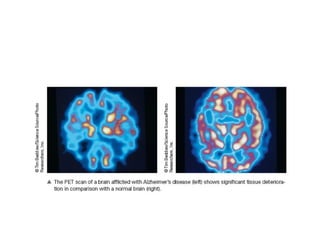
  • #27 This shows the PET scan of a brain afflicted with Alzheimer’s disease (left) compared to a normal brain (right).
  • #28 Technology Tip: For more information, visit the UCSF site on vascular dementia: http://memory.ucsf.edu/Education/Disease/vad.html
  • #33 Technology Tip: More information on Pick’s disease can be found here: www.ninds.nih.gov/disorders/picks/picks.htm
  • #34 Technology Tip: For more information on traumatic brain injury, visit the following sites: www.cdc.gov/ncipc/tbi/TBI.htm
  • #38 Technology Tip: For more information on Parkinson’s disease visit the following site: www.mayoclinic.com/health/parkinsons-disease/DS00295
  • #40 Technology Tip: For more information on AIDS dementia, visit the following sites: http://www.ninds.nih.gov/disorders/aids/aids.htm http://www.emedicinehealth.com/dementia_due_to_hiv_infection/article_em.htm Teaching tip: Reminder: HAART = highly active antiretroviral therapies
  • #42 Technology Tip: For more information on Huntington’s Disease, visit the following sites: www.ninds.nih.gov/disorders/huntington/huntington.htm, www.nlm.nih.gov/medlineplus/huntingtonsdisease.html
  • #44 Technology Tip: For more information on Creutzfeldt-Jakob Disease, visit the following sites: www.mayoclinic.com/health/creutzfeldt-jakob-disease/DS00531
  • #55 Table 15.4 Sample assertive caretaker responses to problematic behavior in individuals with neurocognitive disorder.