DYSRUPTIVE
MOOD
DYSREGULATION
DISORDER
(DMDD)
Introduction
 DMDD- Disruptive mood
dysregulation disorder
 A new diagnosis in field of mental
health
 Children with DMDD have severe
and frequent temper tantrums
that interfere with their ability to
function at home, in school or
with their friends.
AACAP 2013 Facts for families on DMDD
Irritability
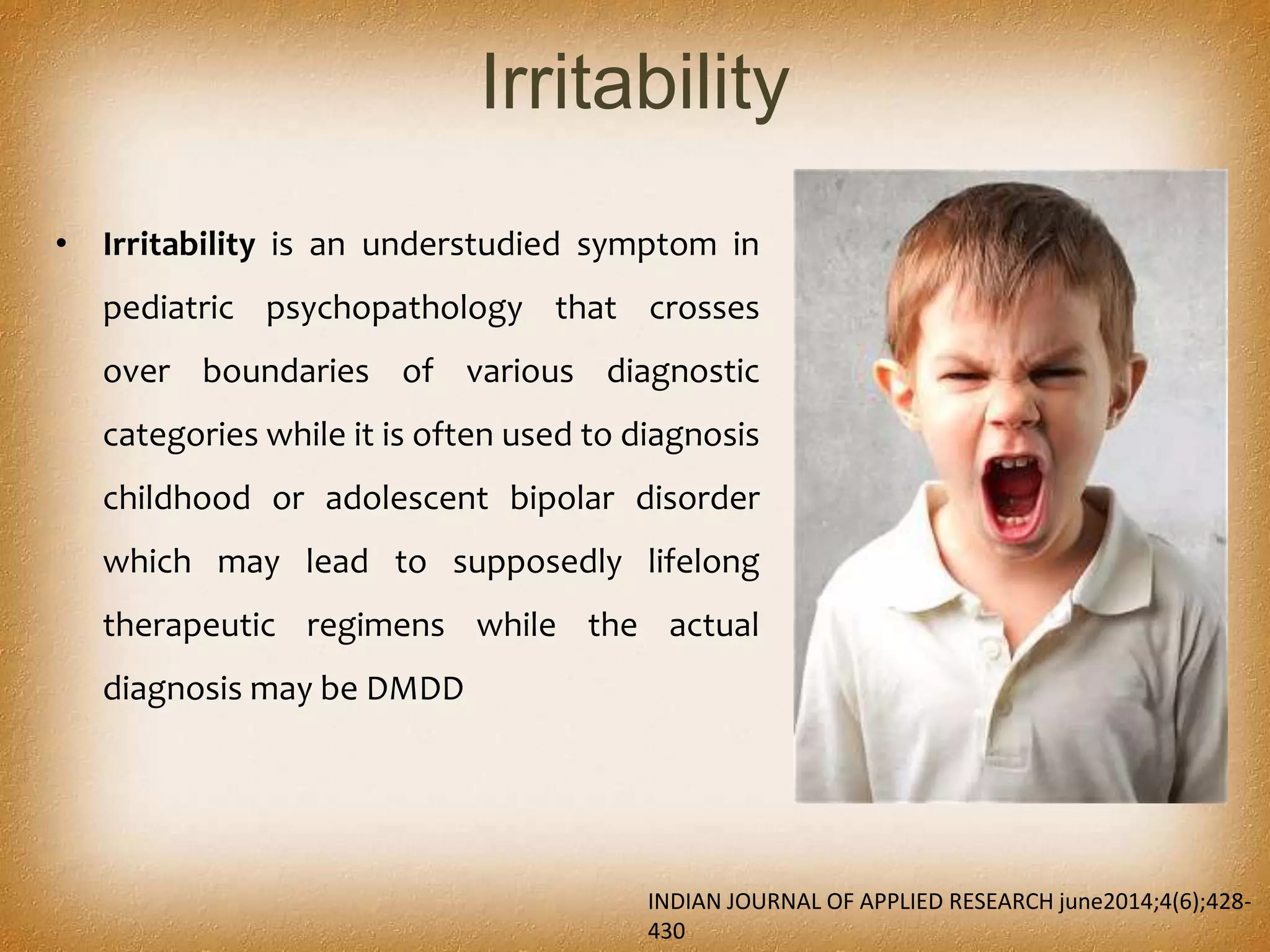
• Irritability is an understudied symptom in
pediatric psychopathology that crosses
over boundaries of various diagnostic
categories while it is often used to diagnosis
childhood or adolescent bipolar disorder
which may lead to supposedly lifelong
therapeutic regimens while the actual
diagnosis may be DMDD
INDIAN JOURNAL OF APPLIED RESEARCH june2014;4(6);428-
430
Disruptive mood dysregulation
disorder (DMDD)
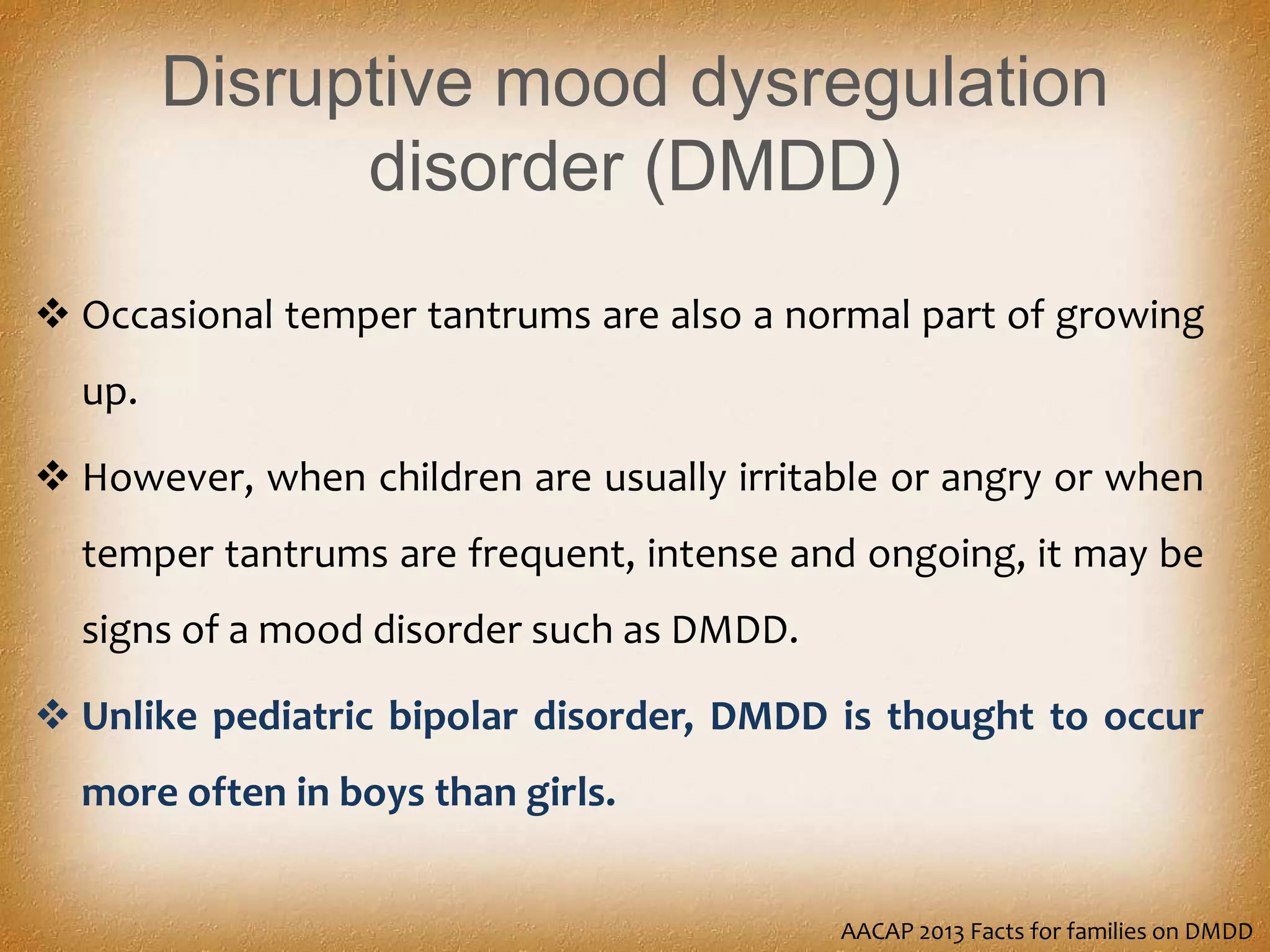
 Occasional temper tantrums are also a normal part of growing
up.
 However, when children are usually irritable or angry or when
temper tantrums are frequent, intense and ongoing, it may be
signs of a mood disorder such as DMDD.
 Unlike pediatric bipolar disorder, DMDD is thought to occur
more often in boys than girls.
AACAP 2013 Facts for families on DMDD
DMDD
 DMDD is a new disorder created to more accurately
categorize some children who had previously been
diagnosed with pediatric bipolar disorder.
 These children do not experience the episodic mania or
hypomania characteristic of bipolar disorder, and they do
not typically develop adult bipolar disorder, although they
are at elevated risk for depression and anxiety as adults.
AACAP 2013 Facts for families on DMDD
Causes of DMDD
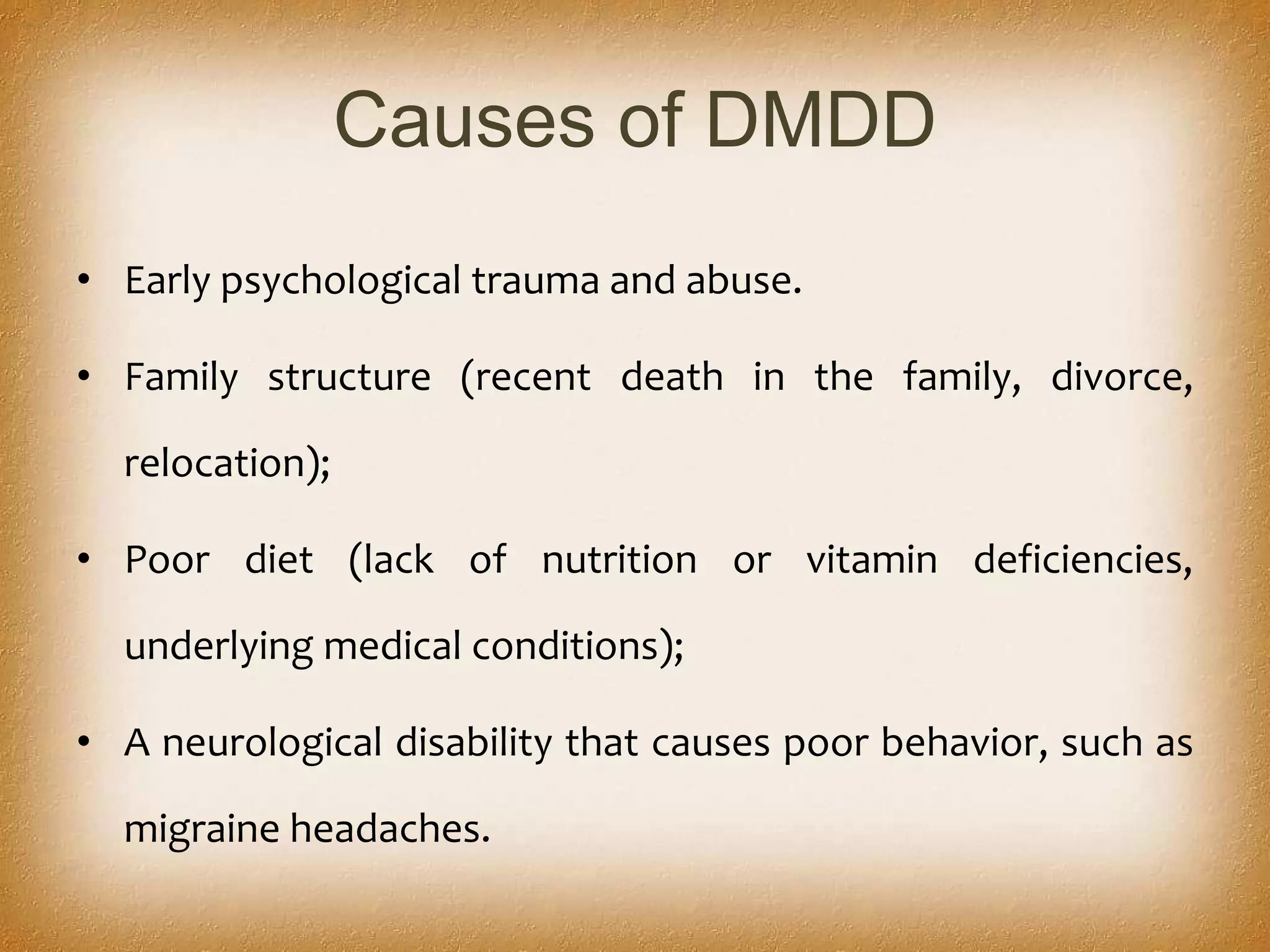
• Early psychological trauma and abuse.
• Family structure (recent death in the family, divorce,
relocation);
• Poor diet (lack of nutrition or vitamin deficiencies,
underlying medical conditions);
• A neurological disability that causes poor behavior, such as
migraine headaches.
Symptoms of DMDD
 Severe temper outbursts at least three
times a week
 Sad, irritable or angry mood almost every
day
 Reaction is bigger than expected
 Child must be at least 6 years old
 Symptoms begin before age 10
 Symptoms are present for at least a year
Child has trouble functioning in more than one place (e.g., home,
school and/or with friends)
Why the new diagnosis?
 First, no DSM-IV category captures the symptomatology of
children characterized primarily and fundamentally by
severely impairing non-episodic irritability.
 DSM-IV disorders do not accurately capture the phenotype
exhibited by severe irritability.
 Oppositional defiant disorder does have irritability but it is
not required; can be diagnosed only on the basis of
oppositional behavior
Limitations of DSM-IV
 DSM-IV provides no definition of irritability, despite the
inclusion of this symptom as a criterion for at least six
diagnoses in children (manic episode, oppositional defiant
disorder, generalized anxiety disorder, dysthymic disorder,
posttraumatic stress disorder, and major depressive
episode)
Problems with Childhood Bipolar
Disorder
 From 1994 to 2003, diagnosis of Bipolar Disorder in children went up
4000%
 Increased diagnosis thought to be caused by “loose” translation of DSM-IV
criteria for Bipolar Disorder when applied to children
 Researchers considered changing criteria for children but concluded that
original Bipolar Disorder criteria should stand
 DMDD was developed to identify children not meeting diagnosis of Bipolar
Disorder yet having significant impairment.
 DSM V removes “Bipolar Disorder Not Otherwise Specified” category
which was commonly applied to children not meeting full criteria.
DSM V Criteria
A. Severe recurrent temper outbursts manifested verbally (e.g., verbal rages)
and/or behaviorally (e.g., physical aggression toward people or property)
that are grossly out of proportion in intensity or duration to the situation or
provocation.
B. The temper outbursts are inconsistent with developmental level.
C. The temper outbursts occur, on average, three or more times per week.
D. The mood between temper outbursts is persistently irritable or angry most
of the day, nearly every day, and is observable by others (e.g., parents,
teachers, peers).
Shelly R. Hart DSM‐5 and School Psychology DMDD
DSM V Criteria
E. Criteria A-D have been present for 12 or more months. Throughout
that time, the individual has not had a period lasting 3 or more
consecutive months without all of the symptoms in Criteria A-D.
F. Criteria A and D are present in at least two of three settings (i.e., at
home, at school, with peers) and are severe in at least one of
these.
G. The diagnosis should not be made for the first time before age 6
years or after age 18 years.
H. By history or observation, the age at onset of Criteria A-E is before
10 years.
Shelly R. Hart DSM‐5 and School Psychology DMDD
DSM V Criteria
I. There has never been a distinct period lasting more than 1 day during
which the full symptom criteria, except duration, for a manic or
hypomanic episode have been met.
J. The behaviors do not occur exclusively during an episode of major
depressive disorder and are not better explained by another mental
disorder (e.g., autism spectrum disorder, posttraumatic stress
disorder, separation anxiety disorder, persistent depressive
disorder [dysthymia]).
K. The symptoms are not attributable to the physiological effects of a
substance or to an other medical or neurological condition
Shelly R. Hart DSM‐5 and School Psychology DMDD
Advantage of evolution
• The addition of DMDD as a diagram in DSM 5 has
now made it incumbent on the psychiatrist to
diagnose this condition and differentiate it from
ADHD or ODD.
• One important role of DMDD will be in reducing the
large number of children who will otherwise be
misdiagnosed as bipolar disorder using DSM criteria
INDIAN JOURNAL OF APPLIED RESEARCH june2014;4(6);428-
430
ICD-11 vs. DSM V
• The ICD 11 classification plans to include disruptive mood
dysregulation with dysphoria disorder as a counterpart to
DMDD in DSM 5.
• The criteria for the two are similar except that ICD has a
uniform one month duration criteria for all mental disorders
unlike the one year guidelines of DMDD in DSM 5
INDIAN JOURNAL OF APPLIED RESEARCH june2014;4(6);428-
430
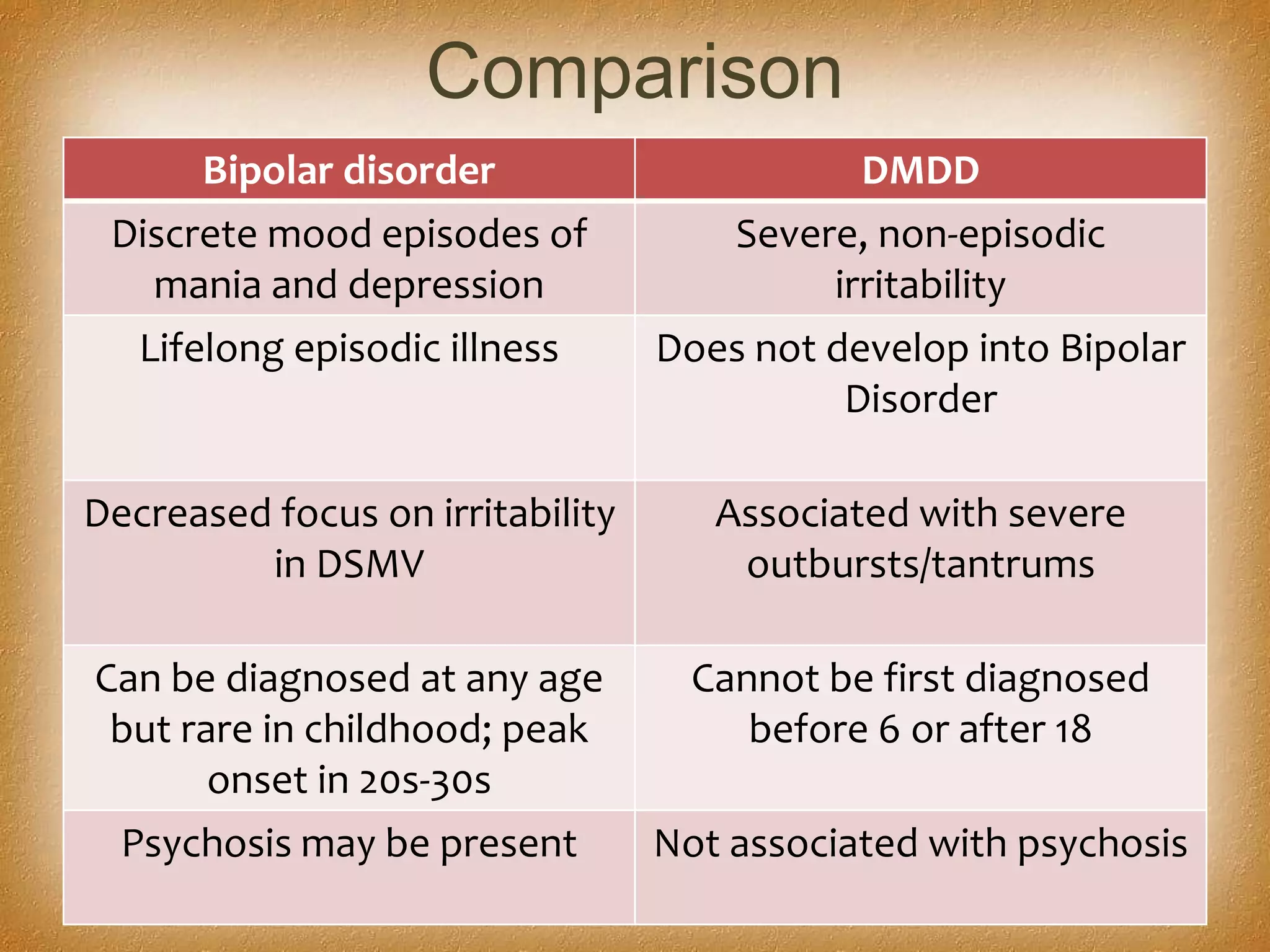
Comparison
Bipolar disorder DMDD
Discrete mood episodes of
mania and depression
Severe, non-episodic
irritability
Lifelong episodic illness Does not develop into Bipolar
Disorder
Decreased focus on irritability
in DSMV
Associated with severe
outbursts/tantrums
Can be diagnosed at any age
but rare in childhood; peak
onset in 20s-30s
Cannot be first diagnosed
before 6 or after 18
Psychosis may be present Not associated with psychosis
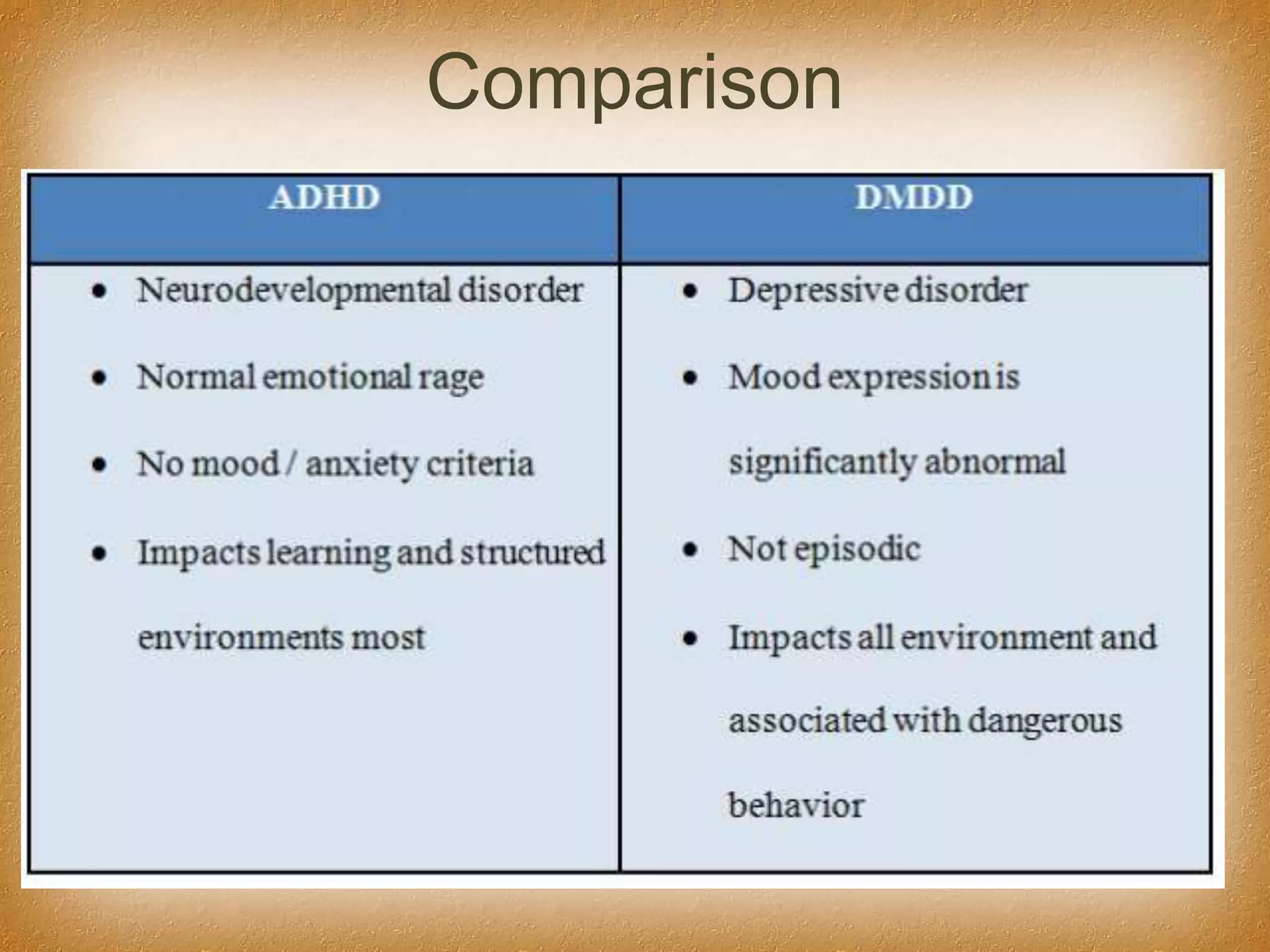
Comparison
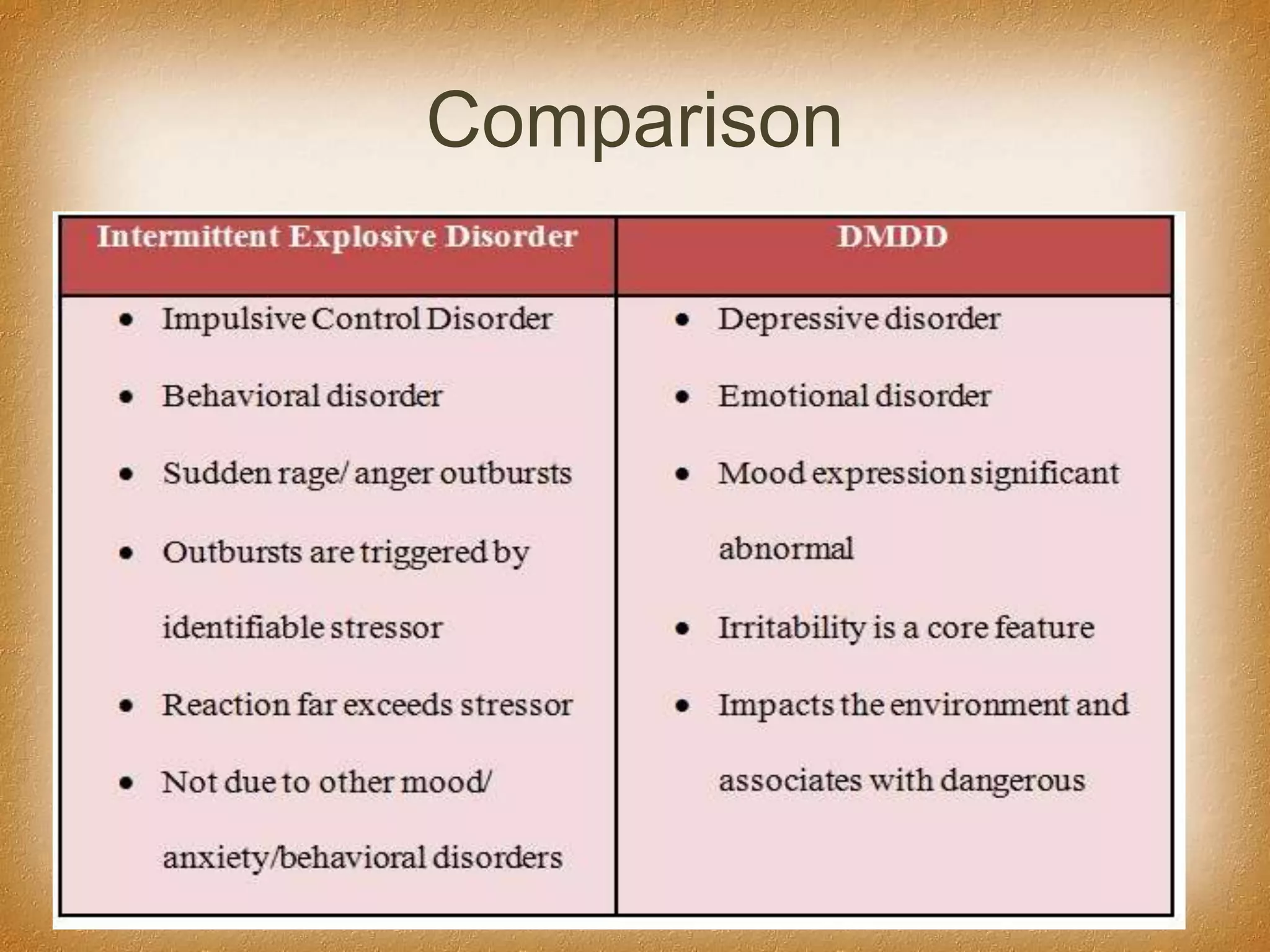
Comparison
Neurobiology of DMDD
 Very little is known about the neurobiology of DMDD and its
relationship with ADHD and Learning disabilities and its impact
on their neurobiology.
 Genetic studies though few are available for DMDD.
 The studies show a clear link to depression and not bipolar
disorder.
 Thus the impact of this genetic link on treatment and prognosis
is enormous
INDIAN JOURNAL OF APPLIED RESEARCH june2014;4(6);428-
430
Risk factor
 Children with a history of chronic irritability are more likely
to be diagnosed with disruptive mood dysregulation
disorder.
 Research has also demonstrated that children with DMDD
usually do not go on to have bipolar disorder in adulthood.
They are more likely to develop problems with depression
or anxiety
AACAP 2013 Facts for families on DMDD
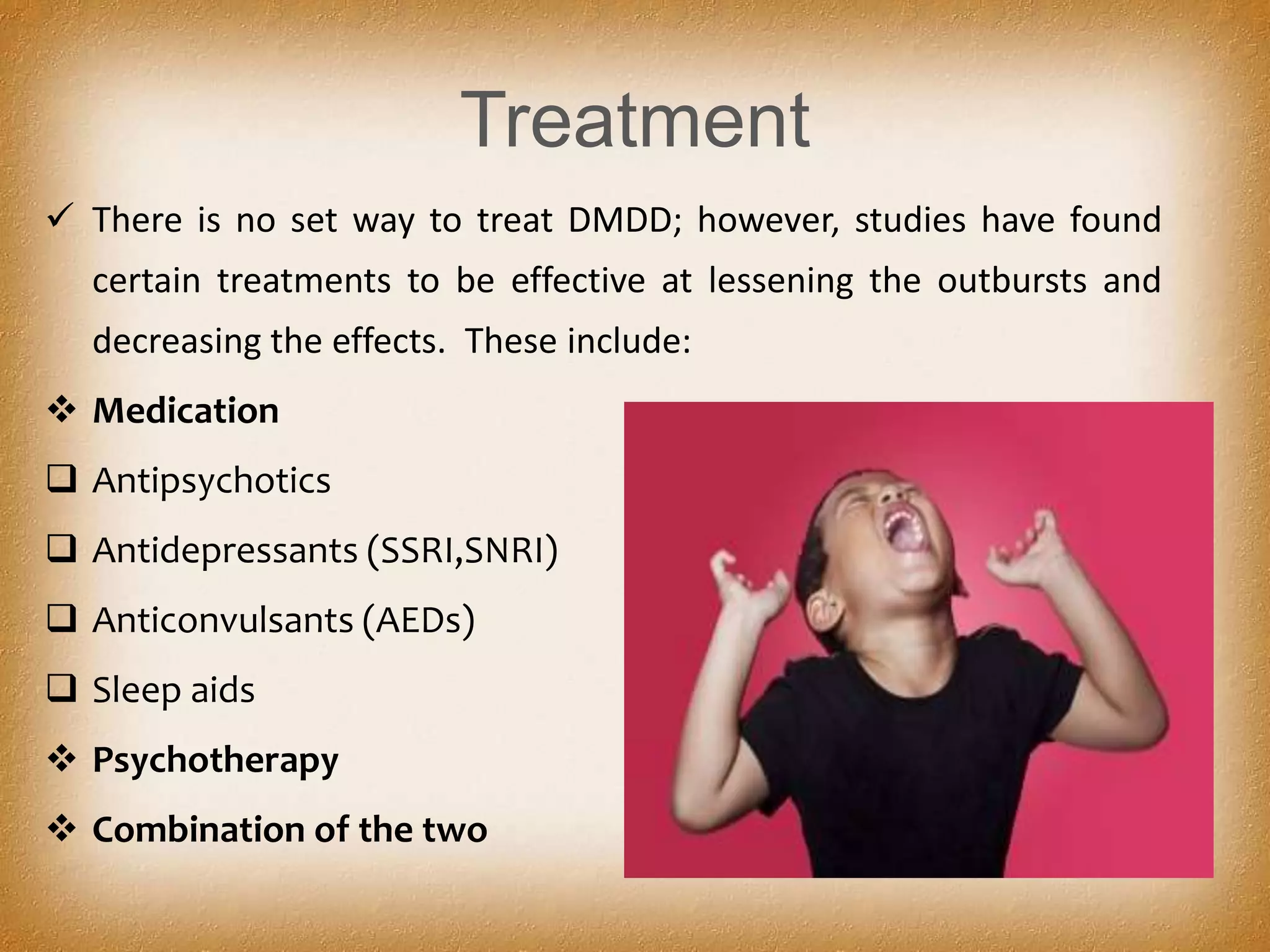
Treatment
 There is no set way to treat DMDD; however, studies have found
certain treatments to be effective at lessening the outbursts and
decreasing the effects. These include:
 Medication
 Antipsychotics
 Antidepressants (SSRI,SNRI)
 Anticonvulsants (AEDs)
 Sleep aids
 Psychotherapy
 Combination of the two
Pharmacotherapy
Liu et al, JAACAP 2011
SSRI-first choice for DMDD
• Antidepressants have been recommended as the first
choice for the management of DMDD as the underlying
disorder is one of mood.
• A concern in children and adolescents is the use of SSRIs
and their links to suicidality which though resolved via
Impact and concerns
 Media has been quite hostile to a diagnosis of DMDD and believe
that the earlier were difficult will now be labelled as DMDD and
medicated as well.
 The other fear is the misuse of the DMDD diagnosis in juvenile
crimes and courts to seek pardon for violent acts triggered by
some events which should ideally not be pardoned easily.
 The acceptance of DMDD by medical insurance companies in
settling claims is another issue worth discussing
INDIAN JOURNAL OF APPLIED RESEARCH june2014;4(6);428-430
Dmdd disruptive mood dysregulation disorder

Dmdd disruptive mood dysregulation disorder

  • 1.
  • 2.
    Introduction  DMDD- Disruptivemood dysregulation disorder  A new diagnosis in field of mental health  Children with DMDD have severe and frequent temper tantrums that interfere with their ability to function at home, in school or with their friends. AACAP 2013 Facts for families on DMDD
  • 3.
    Irritability • Irritability isan understudied symptom in pediatric psychopathology that crosses over boundaries of various diagnostic categories while it is often used to diagnosis childhood or adolescent bipolar disorder which may lead to supposedly lifelong therapeutic regimens while the actual diagnosis may be DMDD INDIAN JOURNAL OF APPLIED RESEARCH june2014;4(6);428- 430
  • 4.
    Disruptive mood dysregulation disorder(DMDD)  Occasional temper tantrums are also a normal part of growing up.  However, when children are usually irritable or angry or when temper tantrums are frequent, intense and ongoing, it may be signs of a mood disorder such as DMDD.  Unlike pediatric bipolar disorder, DMDD is thought to occur more often in boys than girls. AACAP 2013 Facts for families on DMDD
  • 5.
    DMDD  DMDD isa new disorder created to more accurately categorize some children who had previously been diagnosed with pediatric bipolar disorder.  These children do not experience the episodic mania or hypomania characteristic of bipolar disorder, and they do not typically develop adult bipolar disorder, although they are at elevated risk for depression and anxiety as adults. AACAP 2013 Facts for families on DMDD
  • 7.
    Causes of DMDD •Early psychological trauma and abuse. • Family structure (recent death in the family, divorce, relocation); • Poor diet (lack of nutrition or vitamin deficiencies, underlying medical conditions); • A neurological disability that causes poor behavior, such as migraine headaches.
  • 8.
    Symptoms of DMDD Severe temper outbursts at least three times a week  Sad, irritable or angry mood almost every day  Reaction is bigger than expected  Child must be at least 6 years old  Symptoms begin before age 10  Symptoms are present for at least a year Child has trouble functioning in more than one place (e.g., home, school and/or with friends)
  • 9.
    Why the newdiagnosis?  First, no DSM-IV category captures the symptomatology of children characterized primarily and fundamentally by severely impairing non-episodic irritability.  DSM-IV disorders do not accurately capture the phenotype exhibited by severe irritability.  Oppositional defiant disorder does have irritability but it is not required; can be diagnosed only on the basis of oppositional behavior
  • 10.
    Limitations of DSM-IV DSM-IV provides no definition of irritability, despite the inclusion of this symptom as a criterion for at least six diagnoses in children (manic episode, oppositional defiant disorder, generalized anxiety disorder, dysthymic disorder, posttraumatic stress disorder, and major depressive episode)
  • 11.
    Problems with ChildhoodBipolar Disorder  From 1994 to 2003, diagnosis of Bipolar Disorder in children went up 4000%  Increased diagnosis thought to be caused by “loose” translation of DSM-IV criteria for Bipolar Disorder when applied to children  Researchers considered changing criteria for children but concluded that original Bipolar Disorder criteria should stand  DMDD was developed to identify children not meeting diagnosis of Bipolar Disorder yet having significant impairment.  DSM V removes “Bipolar Disorder Not Otherwise Specified” category which was commonly applied to children not meeting full criteria.
  • 13.
    DSM V Criteria A.Severe recurrent temper outbursts manifested verbally (e.g., verbal rages) and/or behaviorally (e.g., physical aggression toward people or property) that are grossly out of proportion in intensity or duration to the situation or provocation. B. The temper outbursts are inconsistent with developmental level. C. The temper outbursts occur, on average, three or more times per week. D. The mood between temper outbursts is persistently irritable or angry most of the day, nearly every day, and is observable by others (e.g., parents, teachers, peers). Shelly R. Hart DSM‐5 and School Psychology DMDD
  • 14.
    DSM V Criteria E.Criteria A-D have been present for 12 or more months. Throughout that time, the individual has not had a period lasting 3 or more consecutive months without all of the symptoms in Criteria A-D. F. Criteria A and D are present in at least two of three settings (i.e., at home, at school, with peers) and are severe in at least one of these. G. The diagnosis should not be made for the first time before age 6 years or after age 18 years. H. By history or observation, the age at onset of Criteria A-E is before 10 years. Shelly R. Hart DSM‐5 and School Psychology DMDD
  • 15.
    DSM V Criteria I.There has never been a distinct period lasting more than 1 day during which the full symptom criteria, except duration, for a manic or hypomanic episode have been met. J. The behaviors do not occur exclusively during an episode of major depressive disorder and are not better explained by another mental disorder (e.g., autism spectrum disorder, posttraumatic stress disorder, separation anxiety disorder, persistent depressive disorder [dysthymia]). K. The symptoms are not attributable to the physiological effects of a substance or to an other medical or neurological condition Shelly R. Hart DSM‐5 and School Psychology DMDD
  • 16.
    Advantage of evolution •The addition of DMDD as a diagram in DSM 5 has now made it incumbent on the psychiatrist to diagnose this condition and differentiate it from ADHD or ODD. • One important role of DMDD will be in reducing the large number of children who will otherwise be misdiagnosed as bipolar disorder using DSM criteria INDIAN JOURNAL OF APPLIED RESEARCH june2014;4(6);428- 430
  • 17.
    ICD-11 vs. DSMV • The ICD 11 classification plans to include disruptive mood dysregulation with dysphoria disorder as a counterpart to DMDD in DSM 5. • The criteria for the two are similar except that ICD has a uniform one month duration criteria for all mental disorders unlike the one year guidelines of DMDD in DSM 5 INDIAN JOURNAL OF APPLIED RESEARCH june2014;4(6);428- 430
  • 18.
    Comparison Bipolar disorder DMDD Discretemood episodes of mania and depression Severe, non-episodic irritability Lifelong episodic illness Does not develop into Bipolar Disorder Decreased focus on irritability in DSMV Associated with severe outbursts/tantrums Can be diagnosed at any age but rare in childhood; peak onset in 20s-30s Cannot be first diagnosed before 6 or after 18 Psychosis may be present Not associated with psychosis
  • 19.
  • 20.
  • 21.
    Neurobiology of DMDD Very little is known about the neurobiology of DMDD and its relationship with ADHD and Learning disabilities and its impact on their neurobiology.  Genetic studies though few are available for DMDD.  The studies show a clear link to depression and not bipolar disorder.  Thus the impact of this genetic link on treatment and prognosis is enormous INDIAN JOURNAL OF APPLIED RESEARCH june2014;4(6);428- 430
  • 22.
    Risk factor  Childrenwith a history of chronic irritability are more likely to be diagnosed with disruptive mood dysregulation disorder.  Research has also demonstrated that children with DMDD usually do not go on to have bipolar disorder in adulthood. They are more likely to develop problems with depression or anxiety AACAP 2013 Facts for families on DMDD
  • 23.
    Treatment  There isno set way to treat DMDD; however, studies have found certain treatments to be effective at lessening the outbursts and decreasing the effects. These include:  Medication  Antipsychotics  Antidepressants (SSRI,SNRI)  Anticonvulsants (AEDs)  Sleep aids  Psychotherapy  Combination of the two
  • 24.
  • 25.
    SSRI-first choice forDMDD • Antidepressants have been recommended as the first choice for the management of DMDD as the underlying disorder is one of mood. • A concern in children and adolescents is the use of SSRIs and their links to suicidality which though resolved via
  • 26.
    Impact and concerns Media has been quite hostile to a diagnosis of DMDD and believe that the earlier were difficult will now be labelled as DMDD and medicated as well.  The other fear is the misuse of the DMDD diagnosis in juvenile crimes and courts to seek pardon for violent acts triggered by some events which should ideally not be pardoned easily.  The acceptance of DMDD by medical insurance companies in settling claims is another issue worth discussing INDIAN JOURNAL OF APPLIED RESEARCH june2014;4(6);428-430