



INDEX OF BIOTIC
INTEGRITY

Presentation by
Livi Wilson and Jitendra Kumar
COF Mangalore

jitenderanduat@gmail.com
IBI
 A scientific tool used to identify and classify

water pollution problems.
 An IBI associates anthropogenic influences
on a water body with biological activity in the
water body, and is formulated using data
developed from biosurveys
 The IBI concept was formulated by Dr. James
Karr in 1981
jitenderanduat@gmail.com
HISTORY
 Water quality act ( 1972) stimulated many

efforts to monitor the quality of water
resource systems
 It resulted in development of thresholds &

criteria levels for specific contaminants ,often
based on acute toxicity tests

jitenderanduat@gmail.com
Drawbacks
 They have not taken into account naturally

occurring geographic variations of
contaminants (eg:asbestos,iron,zinc)
 Considered the synergistic effects of

numerous contaminants
 Not considered sub lethal effects of most

contaminants(eg:reproduction,growth)
jitenderanduat@gmail.com
Cont…
 Chemical monitoring misses many of the

man-induced perturbations (eg:flow
alterations,habitat degradation,heated
effluents)
 In short ,criteria that emphasize physical &

chemical attributes of water are unsuccessful
for measuring biotic integrity
jitenderanduat@gmail.com
Pollution
 Clean Water Act of 1977 defines pollution as

 “the manmade or man-induced alteration of
the chemical,physical,biological &
radiological integrity of water

jitenderanduat@gmail.com
Biological integrity

“the capability of supporting & maintaining a
balanced,integrated,adaptive community of
organisms having a species
composition,diversity ,& functional
organization comparable to that of the
natural habitat of the region”(Frey 1977)

jitenderanduat@gmail.com
Why monitor fish???
 Life history information is extensive for most

fish species
 Fish communities generally include a range of
species that represent a variety of trophic
levels
 Their position at the top of the aquatic food
web in relation to diatoms & invertebrates
also help to provide an integrative view of
the watershed environment
jitenderanduat@gmail.com
Cont..
 Fishes are relatively easy to identify.

Technicians require relatively little training.
 Both acute toxicity (missing taxa) & stress
effects (depressed growth & reproductive
success) can be evaluated
 Fishes are typically present ,even in the
smallest streams & in all but the most
polluted waters
jitenderanduat@gmail.com
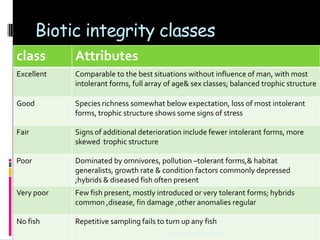
Biotic integrity classes
class

Attributes

Excellent

Comparable to the best situations without influence of man, with most
intolerant forms, full array of age& sex classes; balanced trophic structure

Good

Species richness somewhat below expectation, loss of most intolerant
forms, trophic structure shows some signs of stress

Fair

Signs of additional deterioration include fewer intolerant forms, more
skewed trophic structure

Poor

Dominated by omnivores, pollution –tolerant forms,& habitat
generalists, growth rate & condition factors commonly depressed
;hybrids & diseased fish often present

Very poor

Few fish present, mostly introduced or very tolerant forms; hybrids
common ,disease, fin damage ,other anomalies regular

No fish

Repetitive sampling fails to turn up any fish
jitenderanduat@gmail.com
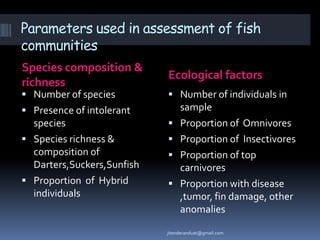
Parameters used in assessment of fish
communities
Species composition &
richness

 Number of species

Ecological factors
 Number of individuals in

 Presence of intolerant

species
 Species richness &
composition of
Darters,Suckers,Sunfish
 Proportion of Hybrid
individuals







sample
Proportion of Omnivores
Proportion of Insectivores
Proportion of top
carnivores
Proportion with disease
,tumor, fin damage, other
anomalies

jitenderanduat@gmail.com
IBI system
 Several species composition metrics are

evaluated
 Each fish species has characteristic tolerance

for water quality ,habitat,& other conditions
 Within each family,sets of species may be

ranked for their tolerances
jitenderanduat@gmail.com
Cont…
 Presence of intolerant species is an important

criterion
 Eg of intolerant species found in mid-western
warm waters include rock bass. Banded
darter,longear sunfish….
 Another metrics is the presence & abundance
of green sunfish ,often the dominant or only
sunfish present at degraded sites(>20% of
individuals indicate degraded condition)
jitenderanduat@gmail.com
Presence of hybrids
Hybridization probably occurs as a result of
habitat degradation
 Frequency of hybrids seems to increase in

modified streams
 Finally in very degraded conditions, hybrids

of carp & goldfish become quite common
jitenderanduat@gmail.com
Ecological factors
 When a site declines in quality ,the

proportion of individuals that are omnivores
increases
 The most degraded streams are commonly

support large population of the
omnivores(gold fish)
 Their dominance is due to degradation of

food base, especially invertebrates.
jitenderanduat@gmail.com
Cont…
<20% of individuals as omnivores as good
>45% omnivores to be badly degraded
 Presence of top carnivore is another

important indicator
Viable & healthy population of top carnivore
species indicate a relatively
healthy,trophically diverse community
jitenderanduat@gmail.com
References
 Assessment of biotic integrity using fish

communities. Karr, J. R. 1981
 U.S.Environmental protection agency
(EPA)”BIOLOGICAL INTEGRITY”

jitenderanduat@gmail.com

Biotic integrity ppt

  • 1.
    INDEX OF BIOTIC INTEGRITY Presentationby Livi Wilson and Jitendra Kumar COF Mangalore jitenderanduat@gmail.com
  • 2.
    IBI  A scientifictool used to identify and classify water pollution problems.  An IBI associates anthropogenic influences on a water body with biological activity in the water body, and is formulated using data developed from biosurveys  The IBI concept was formulated by Dr. James Karr in 1981 jitenderanduat@gmail.com
  • 3.
    HISTORY  Water qualityact ( 1972) stimulated many efforts to monitor the quality of water resource systems  It resulted in development of thresholds & criteria levels for specific contaminants ,often based on acute toxicity tests jitenderanduat@gmail.com
  • 4.
    Drawbacks  They havenot taken into account naturally occurring geographic variations of contaminants (eg:asbestos,iron,zinc)  Considered the synergistic effects of numerous contaminants  Not considered sub lethal effects of most contaminants(eg:reproduction,growth) jitenderanduat@gmail.com
  • 5.
    Cont…  Chemical monitoringmisses many of the man-induced perturbations (eg:flow alterations,habitat degradation,heated effluents)  In short ,criteria that emphasize physical & chemical attributes of water are unsuccessful for measuring biotic integrity jitenderanduat@gmail.com
  • 6.
    Pollution  Clean WaterAct of 1977 defines pollution as  “the manmade or man-induced alteration of the chemical,physical,biological & radiological integrity of water jitenderanduat@gmail.com
  • 7.
    Biological integrity “the capabilityof supporting & maintaining a balanced,integrated,adaptive community of organisms having a species composition,diversity ,& functional organization comparable to that of the natural habitat of the region”(Frey 1977) jitenderanduat@gmail.com
  • 8.
    Why monitor fish??? Life history information is extensive for most fish species  Fish communities generally include a range of species that represent a variety of trophic levels  Their position at the top of the aquatic food web in relation to diatoms & invertebrates also help to provide an integrative view of the watershed environment jitenderanduat@gmail.com
  • 9.
    Cont..  Fishes arerelatively easy to identify. Technicians require relatively little training.  Both acute toxicity (missing taxa) & stress effects (depressed growth & reproductive success) can be evaluated  Fishes are typically present ,even in the smallest streams & in all but the most polluted waters jitenderanduat@gmail.com
  • 10.
    Biotic integrity classes class Attributes Excellent Comparableto the best situations without influence of man, with most intolerant forms, full array of age& sex classes; balanced trophic structure Good Species richness somewhat below expectation, loss of most intolerant forms, trophic structure shows some signs of stress Fair Signs of additional deterioration include fewer intolerant forms, more skewed trophic structure Poor Dominated by omnivores, pollution –tolerant forms,& habitat generalists, growth rate & condition factors commonly depressed ;hybrids & diseased fish often present Very poor Few fish present, mostly introduced or very tolerant forms; hybrids common ,disease, fin damage ,other anomalies regular No fish Repetitive sampling fails to turn up any fish jitenderanduat@gmail.com
  • 11.
    Parameters used inassessment of fish communities Species composition & richness  Number of species Ecological factors  Number of individuals in  Presence of intolerant species  Species richness & composition of Darters,Suckers,Sunfish  Proportion of Hybrid individuals     sample Proportion of Omnivores Proportion of Insectivores Proportion of top carnivores Proportion with disease ,tumor, fin damage, other anomalies jitenderanduat@gmail.com
  • 12.
    IBI system  Severalspecies composition metrics are evaluated  Each fish species has characteristic tolerance for water quality ,habitat,& other conditions  Within each family,sets of species may be ranked for their tolerances jitenderanduat@gmail.com
  • 13.
    Cont…  Presence ofintolerant species is an important criterion  Eg of intolerant species found in mid-western warm waters include rock bass. Banded darter,longear sunfish….  Another metrics is the presence & abundance of green sunfish ,often the dominant or only sunfish present at degraded sites(>20% of individuals indicate degraded condition) jitenderanduat@gmail.com
  • 14.
    Presence of hybrids Hybridizationprobably occurs as a result of habitat degradation  Frequency of hybrids seems to increase in modified streams  Finally in very degraded conditions, hybrids of carp & goldfish become quite common jitenderanduat@gmail.com
  • 15.
    Ecological factors  Whena site declines in quality ,the proportion of individuals that are omnivores increases  The most degraded streams are commonly support large population of the omnivores(gold fish)  Their dominance is due to degradation of food base, especially invertebrates. jitenderanduat@gmail.com
  • 16.
    Cont… <20% of individualsas omnivores as good >45% omnivores to be badly degraded  Presence of top carnivore is another important indicator Viable & healthy population of top carnivore species indicate a relatively healthy,trophically diverse community jitenderanduat@gmail.com
  • 17.
    References  Assessment ofbiotic integrity using fish communities. Karr, J. R. 1981  U.S.Environmental protection agency (EPA)”BIOLOGICAL INTEGRITY” jitenderanduat@gmail.com
  • 18.