Download as PDF, PPTX


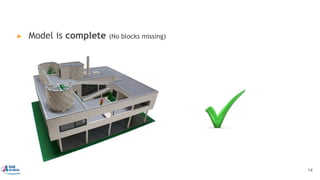
![▶ BIM elements are fully parametric
Lego blocks
▶ Lego blocks are [PLACEHOLDERS] for
real-world product data
▶ All Lego blocks must be accounted
for - otherwise model is incomplete
Think of BIM as intelligent Lego
13](https://image.slidesharecdn.com/bimimplementation-200927151730/85/Bim-implementation-13-320.jpg)
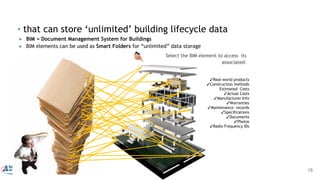

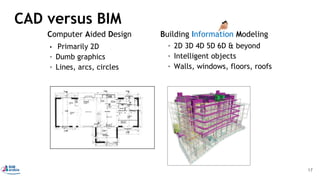
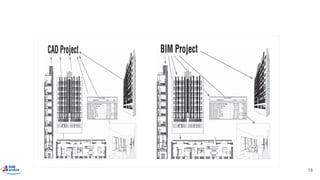
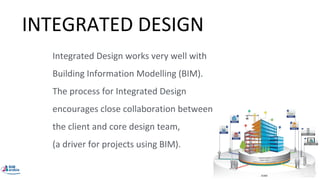


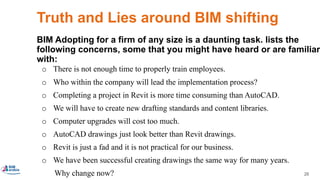

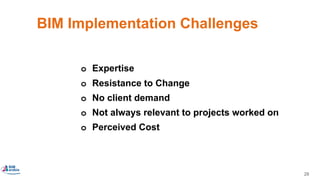
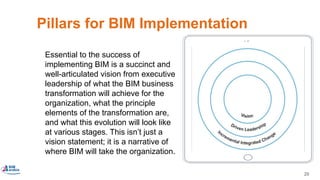
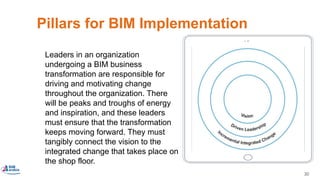
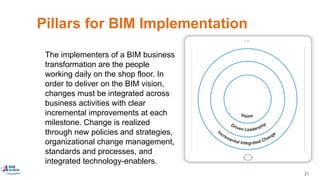
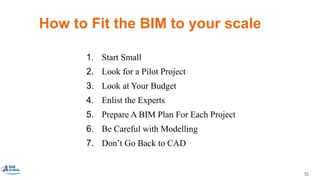
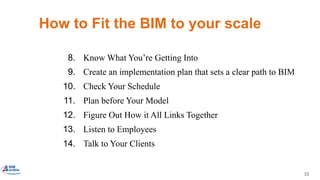
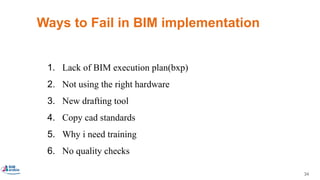
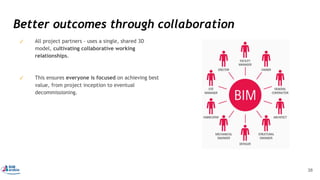
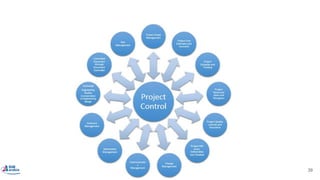




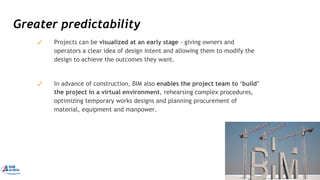
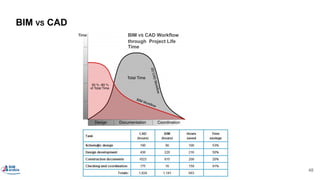
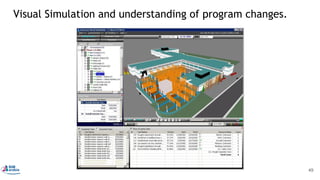


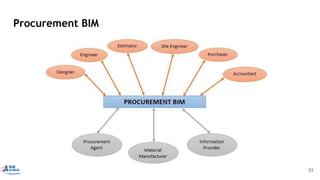
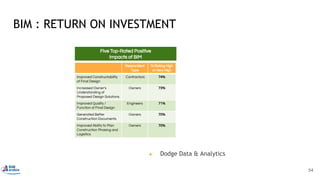
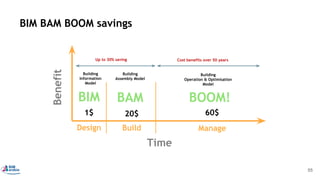
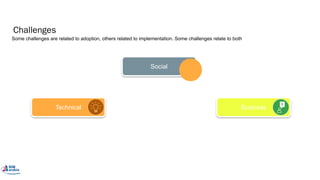
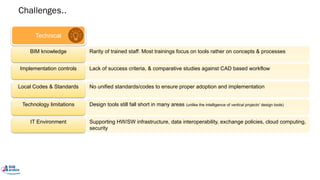
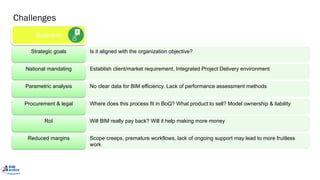
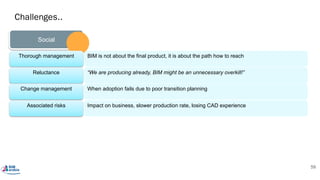




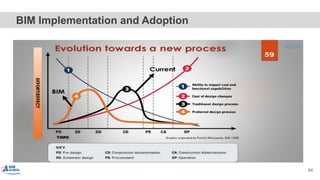
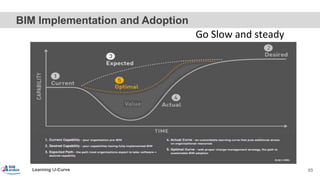
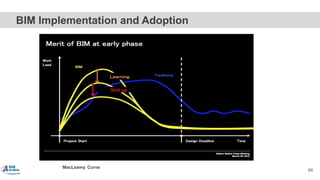
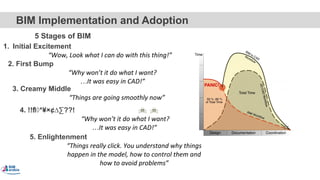
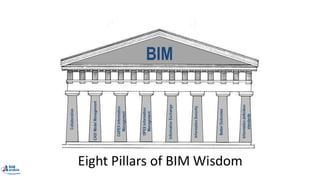
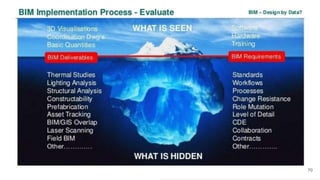
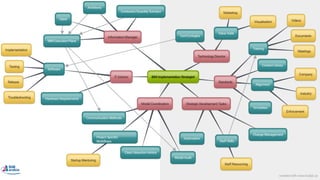
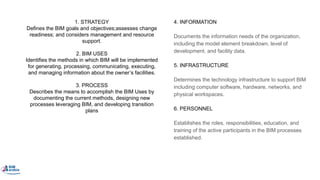
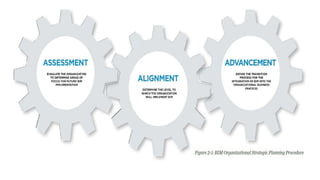
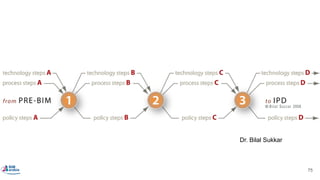
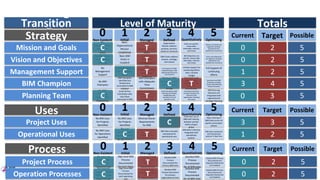

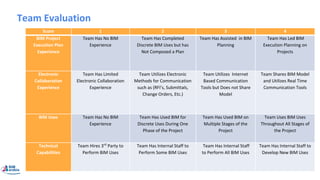
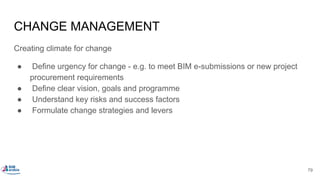
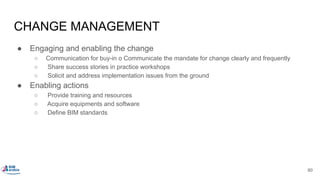
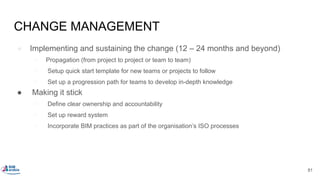



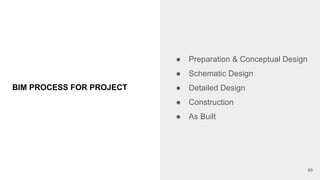
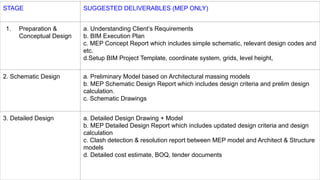
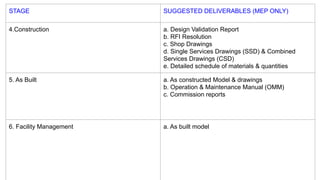
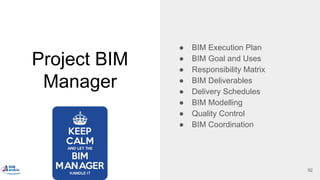
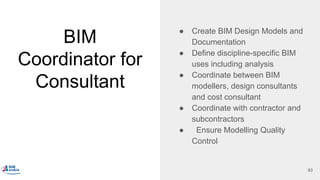
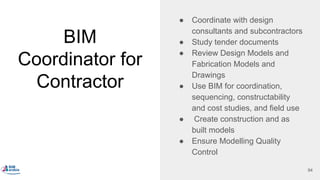

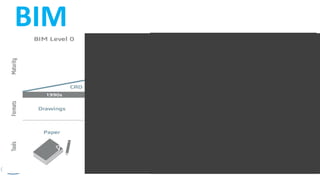
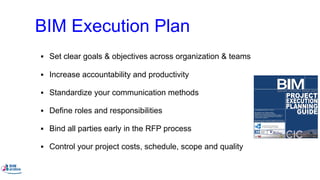
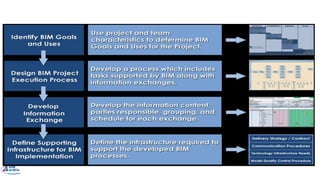
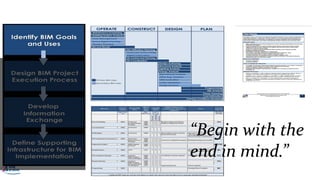

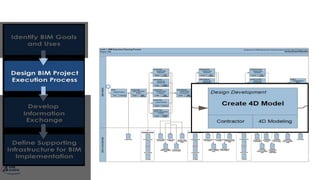
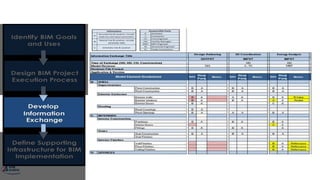
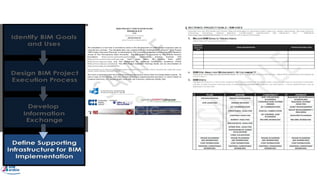
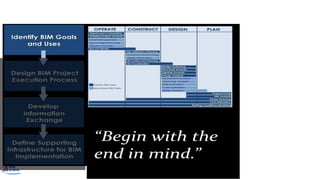
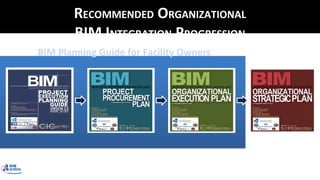
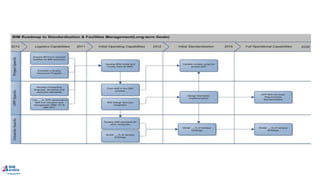
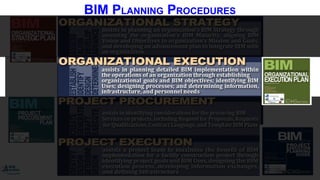
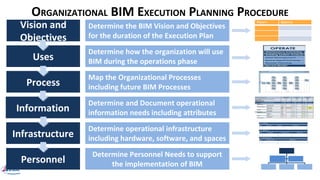

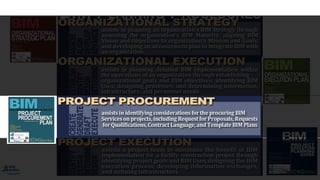
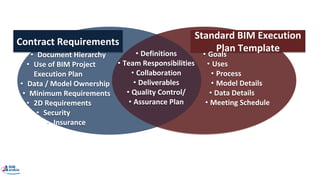
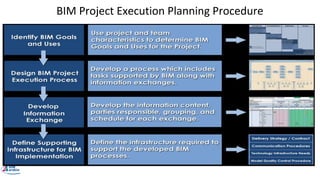




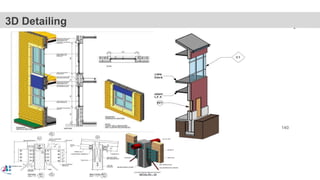
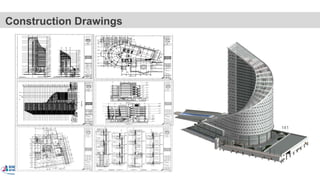
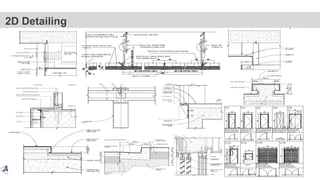

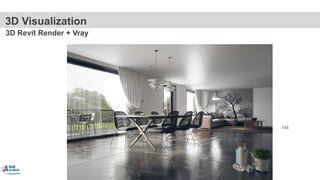




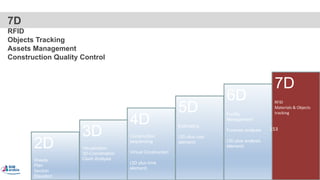









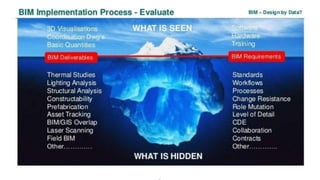

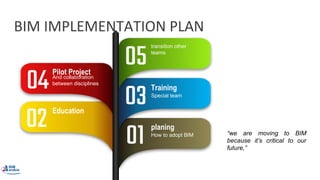

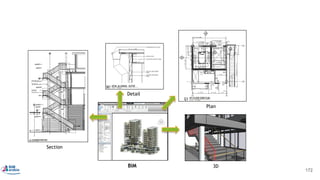




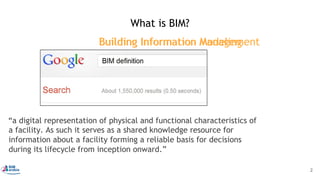
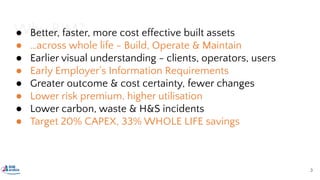
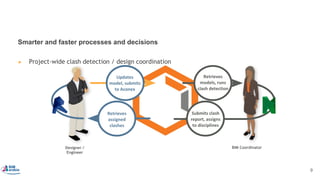
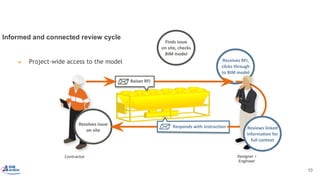
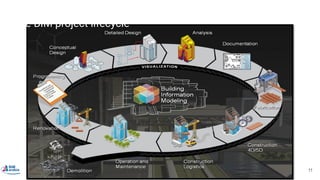
This document discusses Building Information Modeling (BIM) and its implementation. It begins with definitions of BIM and explains its benefits such as better project outcomes, cost savings, and reduced risks. It then discusses challenges of BIM implementation including lack of expertise, resistance to change, and perceived costs. Key pillars for successful BIM implementation are identified as having a clear vision, leadership, and implementing incremental integrated changes. Methods for fitting BIM to different scales are provided along with common mistakes to avoid. The document concludes with discussions of project controls, optimization, and return on investment when using BIM.


