Building Information Modeling is a design and 
documentation methodology based on 
coordinated, high quality information. It 
enables design and construction teams to 
create and manage information about a 
building project consistently and reliably 
across the scope of the project. The 
information is stored in a single building 
model. This ensures that information is 
coordinated, consistent, and complete.
Building Information modeling supports large 
team workflows to improve project 
understanding and enable more predictabe 
outcomes. The visibility that BIM provides 
to all members of the project team 
contributes to its success through better 
coordination, improved accurary and the 
ability to make more informed decisions 
earlier in the process.
Revit Structure is a purpose-built software for building information 
modeling. 
Traditional drafting CAD software represent geometry of a design by 
using stylized symbols from designated illustrations. Some 
examples of these illustrations may be a series of plans, 
elevations, and sections. These illustrations are essentially 
independent of one another. Building information modeling 
software represents as series of intelligent objects and elements 
such as walls, beams, schedules, and plan views. These objects 
and elements have parametric attributes. The information about 
these objects and elements is stored in a single building model. 
You can extract any number of different views of the data from 
the model.
Bidirectional associativity is the ability of the building 
information model to coordinate changes made in any 
view and propagate these changes out to all other 
views. Bidirectional associativity is applied 
automatically to every component, view, and 
annotation. For example, a change in the size and 
location of a column is reflected in all plans, details, 
and schedules; all of which are associated with the 
column and influenced by the changes and are 
automatically adjusted. Revit helps ensure that plans, 
schedules, and building sections and elevations are 
immediately available, up-to-date, and accurate. 
For example: 
 Flip a section line and all views update
Flip a section line and all view updates 
Draw a wall in plan and it appears in all 
other views including material takeoffs 
Change a beam or column type in a 
schedule and the change propagates 
throughout the graphical and non-graphical 
views
The term parametric refers to the relationships 
among the elements of a building design model. 
These relationships are created either 
automatically by the software or by you. In 
mathematics and mechanical CAD, the numbers of 
characteristics that define these relationships are 
called parameters; therefore, the operation of the 
software is called parametric. It is these parametric 
relationships that deliver fundamental coordination 
and productivity benefits provided by the building 
information modeling methodoly.
 Beams attached to supporting columns 
located on column grids. When a grid moves, 
the column moves with it and the beams 
length adjust accordingly 
A structural truss modeled using constraints 
that define the number of bays and lengths of 
diagonals. When the span of the truss 
changes, vertical members are added where 
necessary and the diagonal web members 
adjust accordingly.
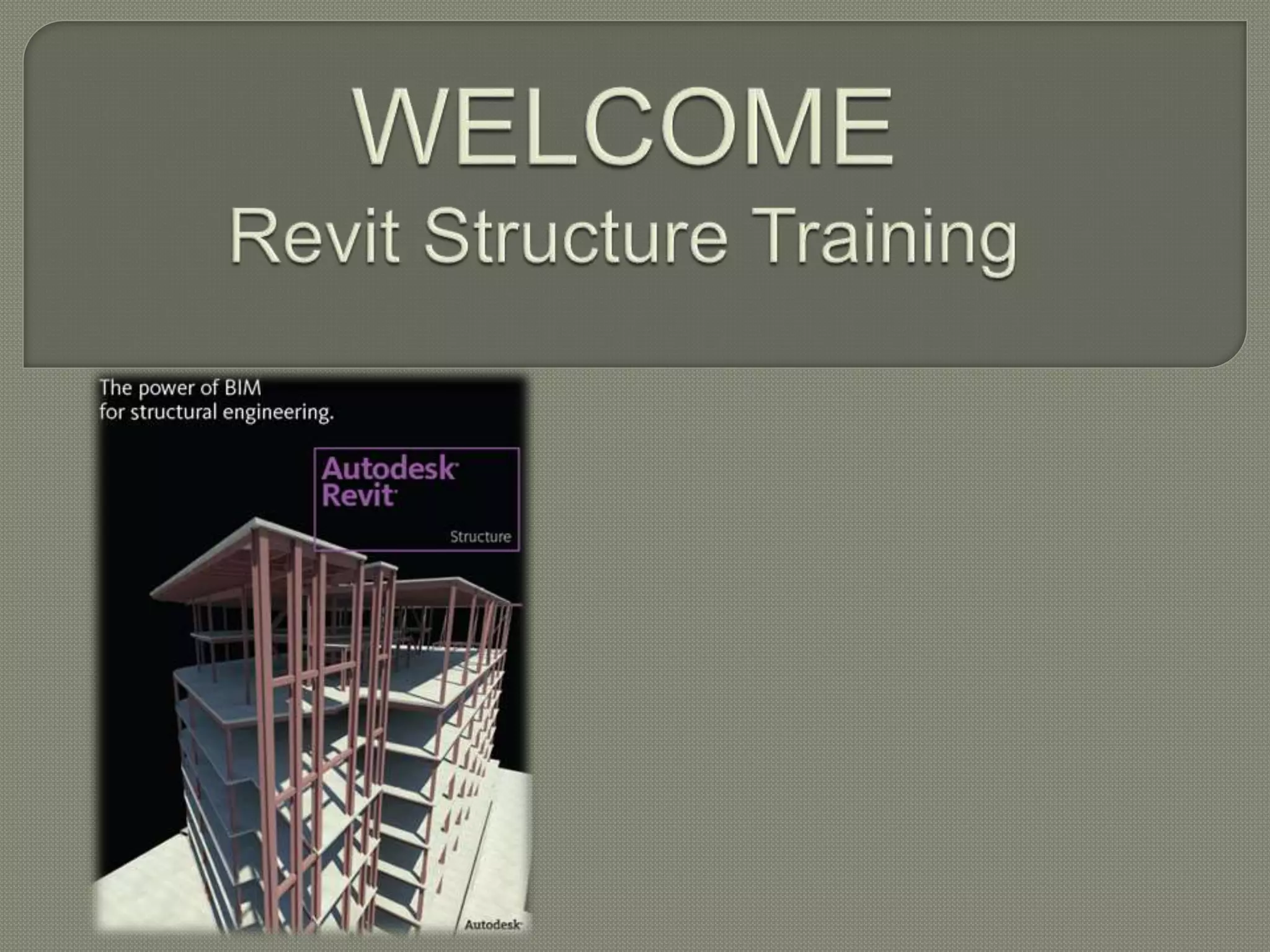
Revit Structure Training

Revit Structure Training

  • 2.
    Building Information Modelingis a design and documentation methodology based on coordinated, high quality information. It enables design and construction teams to create and manage information about a building project consistently and reliably across the scope of the project. The information is stored in a single building model. This ensures that information is coordinated, consistent, and complete.
  • 3.
    Building Information modelingsupports large team workflows to improve project understanding and enable more predictabe outcomes. The visibility that BIM provides to all members of the project team contributes to its success through better coordination, improved accurary and the ability to make more informed decisions earlier in the process.
  • 4.
    Revit Structure isa purpose-built software for building information modeling. Traditional drafting CAD software represent geometry of a design by using stylized symbols from designated illustrations. Some examples of these illustrations may be a series of plans, elevations, and sections. These illustrations are essentially independent of one another. Building information modeling software represents as series of intelligent objects and elements such as walls, beams, schedules, and plan views. These objects and elements have parametric attributes. The information about these objects and elements is stored in a single building model. You can extract any number of different views of the data from the model.
  • 5.
    Bidirectional associativity isthe ability of the building information model to coordinate changes made in any view and propagate these changes out to all other views. Bidirectional associativity is applied automatically to every component, view, and annotation. For example, a change in the size and location of a column is reflected in all plans, details, and schedules; all of which are associated with the column and influenced by the changes and are automatically adjusted. Revit helps ensure that plans, schedules, and building sections and elevations are immediately available, up-to-date, and accurate. For example:  Flip a section line and all views update
  • 6.
    Flip a sectionline and all view updates Draw a wall in plan and it appears in all other views including material takeoffs Change a beam or column type in a schedule and the change propagates throughout the graphical and non-graphical views
  • 7.
    The term parametricrefers to the relationships among the elements of a building design model. These relationships are created either automatically by the software or by you. In mathematics and mechanical CAD, the numbers of characteristics that define these relationships are called parameters; therefore, the operation of the software is called parametric. It is these parametric relationships that deliver fundamental coordination and productivity benefits provided by the building information modeling methodoly.
  • 8.
     Beams attachedto supporting columns located on column grids. When a grid moves, the column moves with it and the beams length adjust accordingly A structural truss modeled using constraints that define the number of bays and lengths of diagonals. When the span of the truss changes, vertical members are added where necessary and the diagonal web members adjust accordingly.