

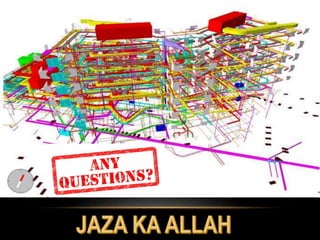
Definition
Building Information Modeling (BIM)
is the process of generating and
managing building data during its life
cycle. BIM uses three-dimensional,
real-time, dynamic building modeling
software to increase productivity in
building design and construction.
Most importantly, BIM is not a technology. It is a process.
This is possibly the most important aspect to understand.
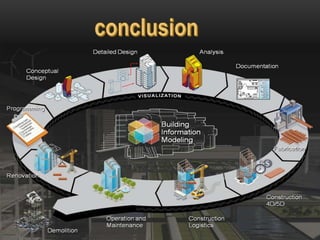
BIM applies to all ​aspects of the construction of a building,
from the design, the estimating, the supply chain, the
delivery of goods during the build, the build process, the
resource allocation, the productivity requirements to meet
targets and on in to the post-handover phase through
Facilities and Asset Management.
• BIM brings together all the information
about every component of a building
• Integrate different inspects more
• effectively
• Reduce risk of mistaked
• Minimize the cost
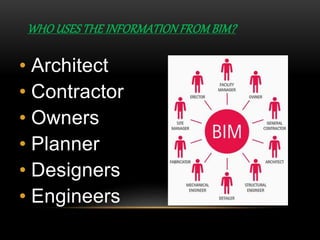
• Architect
• Contractor
• Owners
• Planner
• Designers
• Engineers
WHO USES THE INFORMATION FROM BIM?
• Virtual “walk-throughs”
• Better communication with clients
• Improved project outcomes
Increased construction
productivity and efficiency
• Improved project quality
• Improved facility lifecycle
management
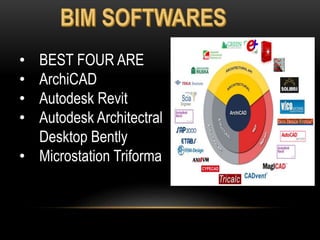
• BEST FOUR ARE
• ArchiCAD
• Autodesk Revit
• Autodesk Architectral
Desktop Bently
• Microstation Triforma
what is BIM
what is BIM
what is BIM

what is BIM

  • 3.
    Definition Building Information Modeling(BIM) is the process of generating and managing building data during its life cycle. BIM uses three-dimensional, real-time, dynamic building modeling software to increase productivity in building design and construction.
  • 4.
    Most importantly, BIMis not a technology. It is a process. This is possibly the most important aspect to understand. BIM applies to all ​aspects of the construction of a building, from the design, the estimating, the supply chain, the delivery of goods during the build, the build process, the resource allocation, the productivity requirements to meet targets and on in to the post-handover phase through Facilities and Asset Management.
  • 5.
    • BIM bringstogether all the information about every component of a building • Integrate different inspects more • effectively • Reduce risk of mistaked • Minimize the cost
  • 6.
    • Architect • Contractor •Owners • Planner • Designers • Engineers WHO USES THE INFORMATION FROM BIM?
  • 7.
    • Virtual “walk-throughs” •Better communication with clients • Improved project outcomes Increased construction productivity and efficiency • Improved project quality • Improved facility lifecycle management
  • 8.
    • BEST FOURARE • ArchiCAD • Autodesk Revit • Autodesk Architectral Desktop Bently • Microstation Triforma