Behaviorism in
Education
Instructional Objectives:
1.Understand the difference between operant & classical conditioning
2.Be able to identify the differences between negative and positive
reinforcement
3.Be able to apply the principles of behaviorist theory to the classroom
The purpose here is to view the things that organisms

do as part of their behavior. Actually the main goal is
to identify the complex mechanisms that guide a
behavior.

Goals
Behaviorism is a learning theory that only focuses on
objectively observable behaviors and discounts any independent
activities of the mind. Behavior theorists define learning as

nothing more than the acquisition of new behavior based on
environmental conditions.

Definition
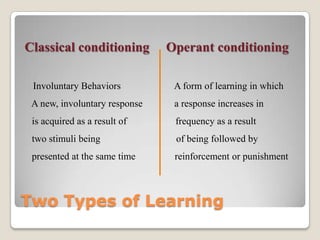
Classical conditioning

Operant conditioning

Involuntary Behaviors

A form of learning in which

A new, involuntary response

a response increases in

is acquired as a result of

frequency as a result

two stimuli being

of being followed by

presented at the same time

reinforcement or punishment

Two Types of Learning
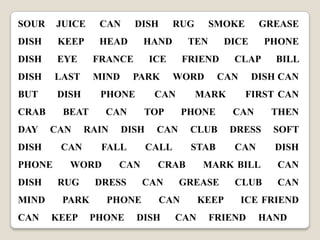
SOUR

JUICE

CAN

DISH

KEEP

HEAD

HAND

TEN

DISH

EYE

FRANCE

ICE

FRIEND

DISH

LAST

MIND

BUT

DISH

CRAB
DAY
DISH

CAN

PHONE
DISH
MIND
CAN

FALL

WORD
RUG
PARK

KEEP

DRESS
PHONE
PHONE

DISH CAN
FIRST CAN

CAN

THEN

DRESS

SOFT

STAB

CAN

DISH

CRAB

MARK BILL

GREASE

CAN

DISH

BILL

CLUB

CAN

CAN

PHONE

CLAP

CAN

PHONE

CALL

CAN

GREASE

DICE

MARK

TOP

DISH

SMOKE

WORD

CAN

CAN

RAIN

RUG

PARK

PHONE

BEAT
CAN

DISH

CAN

KEEP

CLUB

CAN
CAN

ICE FRIEND

FRIEND

HAND
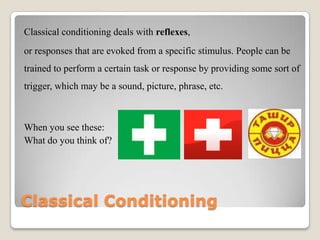
Classical conditioning deals with reflexes,
or responses that are evoked from a specific stimulus. People can be
trained to perform a certain task or response by providing some sort of
trigger, which may be a sound, picture, phrase, etc.

When you see these:
What do you think of?

Classical Conditioning
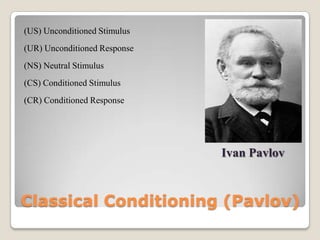
(US) Unconditioned Stimulus
(UR) Unconditioned Response
(NS) Neutral Stimulus
(CS) Conditioned Stimulus
(CR) Conditioned Response

Ivan Pavlov

Classical Conditioning (Pavlov)
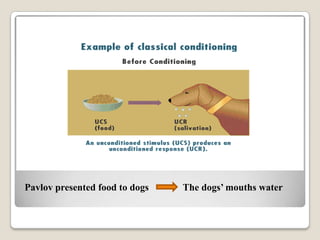
Pavlov presented food to dogs

The dogs’ mouths water
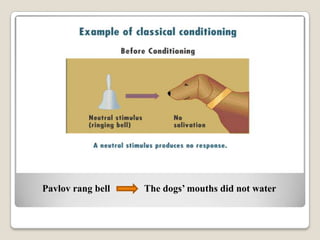
Pavlov rang bell

The dogs’ mouths did not water
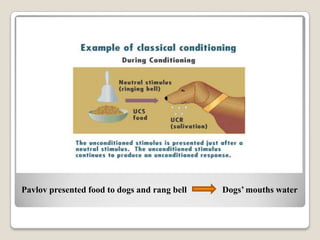
Pavlov presented food to dogs and rang bell

Dogs’ mouths water
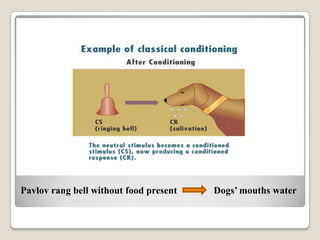
Pavlov rang bell without food present

Dogs’ mouths water
If the teacher is consistent and repetitive with

the stimuli, eventually the students will come
to learn to behave properly through classical
conditioning. Look at this example:

Classical Conditioning in Edu.
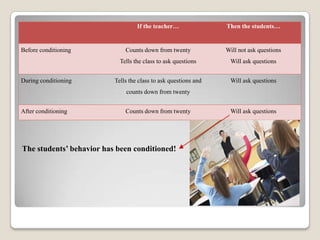
If the teacher…

During conditioning

Counts down from twenty

Will not ask questions

Tells the class to ask questions

Before conditioning

Then the students…

Will ask questions

Tells the class to ask questions and

Will ask questions

counts down from twenty
After conditioning

Counts down from twenty

The students’ behavior has been conditioned!

Will ask questions
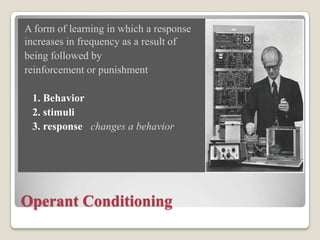
A form of learning in which a response
increases in frequency as a result of
being followed by
reinforcement or punishment
1. Behavior
2. stimuli
3. response changes a behavior

Operant Conditioning
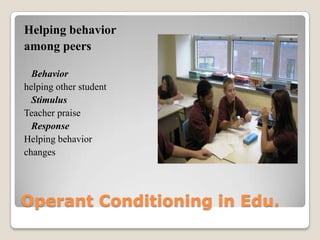
Helping behavior
among peers
Behavior
helping other student
Stimulus
Teacher praise
Response
Helping behavior
changes

Operant Conditioning in Edu.
Principles of Reinforcement
A reinforcer is any event that strengthens
the behavior it follows.
Positive : a stimulus that strengthens an operant response
when it is presented after the response.
Negative : a stimulus that strengthens an operant response
when it is taken away after the response.
Punishment
a stimulus that weakens the operant response it follows.

Positive: a stimulus that weakens an operant response
when it is presented after the response
Negative: a stimulus that weakens an operant response
when it is taken away after the response
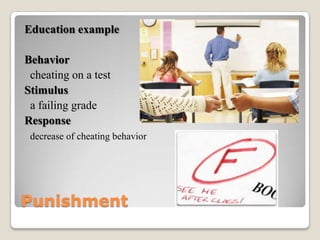
Education example
Behavior
cheating on a test
Stimulus
a failing grade
Response
decrease of cheating behavior

Punishment
Ineffective Forms of Punishment
for Teachers ( Research Results)



Physical punishment



psychological punishment



Extra class work/homework
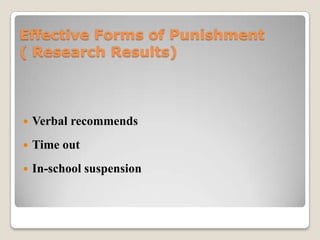
Effective Forms of Punishment
( Research Results)



Verbal recommends



Time out



In-school suspension
Summary


What we did cover
Operant vs. Classical Conditioning

Reinforcement & Punishment
- Positive and negative
Application to the classroom
Maryam Eskandarjouy
Contact: mehraboonn_a192yahoo.com

Presented by
Thank You

Behaviorism in

  • 1.
    Behaviorism in Education Instructional Objectives: 1.Understandthe difference between operant & classical conditioning 2.Be able to identify the differences between negative and positive reinforcement 3.Be able to apply the principles of behaviorist theory to the classroom
  • 2.
    The purpose hereis to view the things that organisms do as part of their behavior. Actually the main goal is to identify the complex mechanisms that guide a behavior. Goals
  • 3.
    Behaviorism is alearning theory that only focuses on objectively observable behaviors and discounts any independent activities of the mind. Behavior theorists define learning as nothing more than the acquisition of new behavior based on environmental conditions. Definition
  • 4.
    Classical conditioning Operant conditioning InvoluntaryBehaviors A form of learning in which A new, involuntary response a response increases in is acquired as a result of frequency as a result two stimuli being of being followed by presented at the same time reinforcement or punishment Two Types of Learning
  • 5.
    SOUR JUICE CAN DISH KEEP HEAD HAND TEN DISH EYE FRANCE ICE FRIEND DISH LAST MIND BUT DISH CRAB DAY DISH CAN PHONE DISH MIND CAN FALL WORD RUG PARK KEEP DRESS PHONE PHONE DISH CAN FIRST CAN CAN THEN DRESS SOFT STAB CAN DISH CRAB MARKBILL GREASE CAN DISH BILL CLUB CAN CAN PHONE CLAP CAN PHONE CALL CAN GREASE DICE MARK TOP DISH SMOKE WORD CAN CAN RAIN RUG PARK PHONE BEAT CAN DISH CAN KEEP CLUB CAN CAN ICE FRIEND FRIEND HAND
  • 6.
    Classical conditioning dealswith reflexes, or responses that are evoked from a specific stimulus. People can be trained to perform a certain task or response by providing some sort of trigger, which may be a sound, picture, phrase, etc. When you see these: What do you think of? Classical Conditioning
  • 7.
    (US) Unconditioned Stimulus (UR)Unconditioned Response (NS) Neutral Stimulus (CS) Conditioned Stimulus (CR) Conditioned Response Ivan Pavlov Classical Conditioning (Pavlov)
  • 8.
    Pavlov presented foodto dogs The dogs’ mouths water
  • 9.
    Pavlov rang bell Thedogs’ mouths did not water
  • 10.
    Pavlov presented foodto dogs and rang bell Dogs’ mouths water
  • 11.
    Pavlov rang bellwithout food present Dogs’ mouths water
  • 12.
    If the teacheris consistent and repetitive with the stimuli, eventually the students will come to learn to behave properly through classical conditioning. Look at this example: Classical Conditioning in Edu.
  • 13.
    If the teacher… Duringconditioning Counts down from twenty Will not ask questions Tells the class to ask questions Before conditioning Then the students… Will ask questions Tells the class to ask questions and Will ask questions counts down from twenty After conditioning Counts down from twenty The students’ behavior has been conditioned! Will ask questions
  • 14.
    A form oflearning in which a response increases in frequency as a result of being followed by reinforcement or punishment 1. Behavior 2. stimuli 3. response changes a behavior Operant Conditioning
  • 15.
    Helping behavior among peers Behavior helpingother student Stimulus Teacher praise Response Helping behavior changes Operant Conditioning in Edu.
  • 16.
    Principles of Reinforcement Areinforcer is any event that strengthens the behavior it follows. Positive : a stimulus that strengthens an operant response when it is presented after the response. Negative : a stimulus that strengthens an operant response when it is taken away after the response.
  • 17.
    Punishment a stimulus thatweakens the operant response it follows. Positive: a stimulus that weakens an operant response when it is presented after the response Negative: a stimulus that weakens an operant response when it is taken away after the response
  • 18.
    Education example Behavior cheating ona test Stimulus a failing grade Response decrease of cheating behavior Punishment
  • 19.
    Ineffective Forms ofPunishment for Teachers ( Research Results)  Physical punishment  psychological punishment  Extra class work/homework
  • 20.
    Effective Forms ofPunishment ( Research Results)  Verbal recommends  Time out  In-school suspension
  • 21.
    Summary  What we didcover Operant vs. Classical Conditioning Reinforcement & Punishment - Positive and negative Application to the classroom
  • 22.
  • 23.