By: Joy, Curtis, and Annie-Grace
 A learning theory that only focuses on
objectively observable behaviors and discounts
any independent activities of the mind.
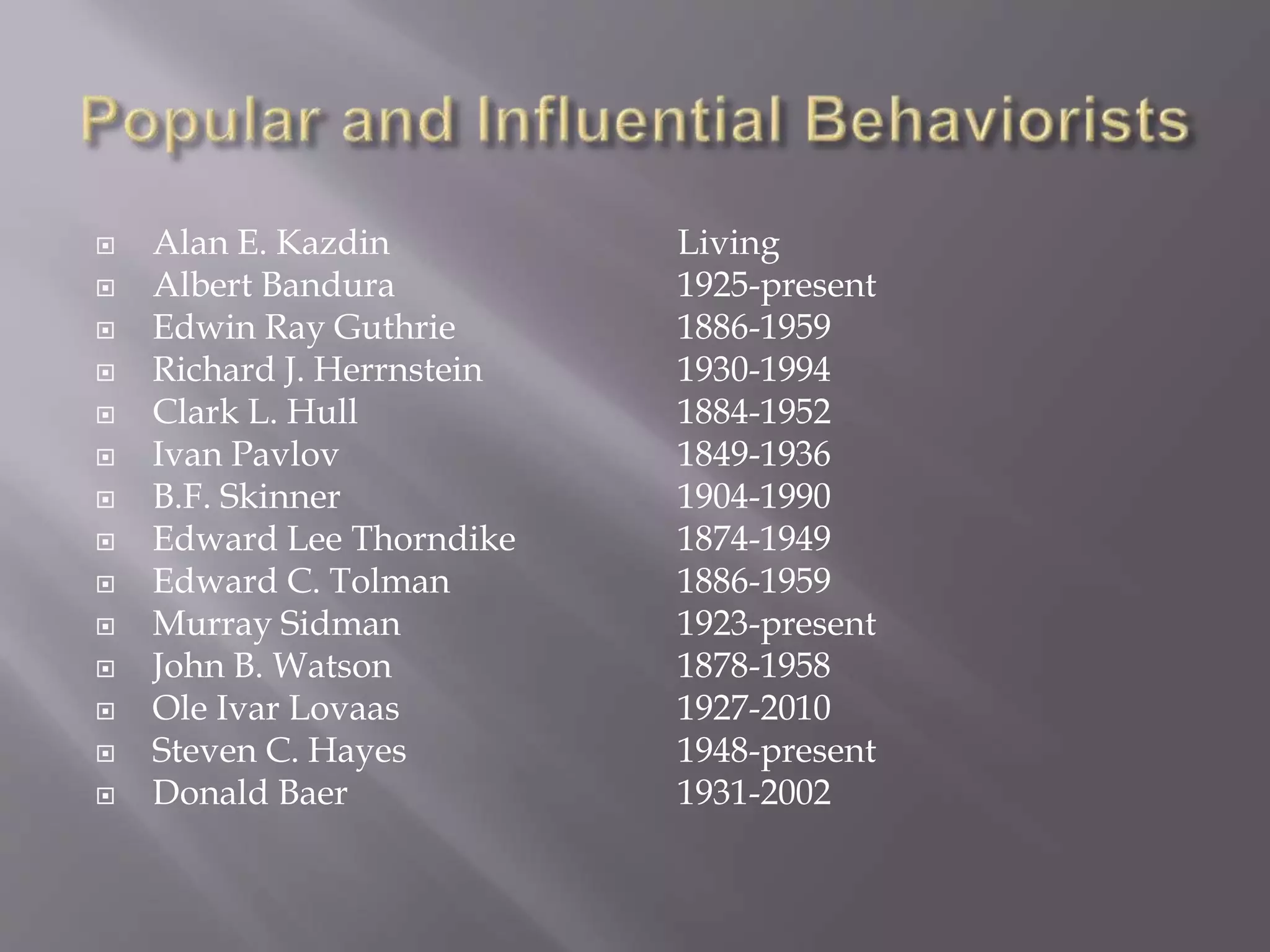
 Alan E. Kazdin
 Albert Bandura
 Edwin Ray Guthrie
 Richard J. Herrnstein
 Clark L. Hull
 Ivan Pavlov
 B.F. Skinner
 Edward Lee Thorndike
 Edward C. Tolman
 Murray Sidman
 John B. Watson
 Ole Ivar Lovaas
 Steven C. Hayes
 Donald Baer
Living
1925-present
1886-1959
1930-1994
1884-1952
1849-1936
1904-1990
1874-1949
1886-1959
1923-present
1878-1958
1927-2010
1948-present
1931-2002
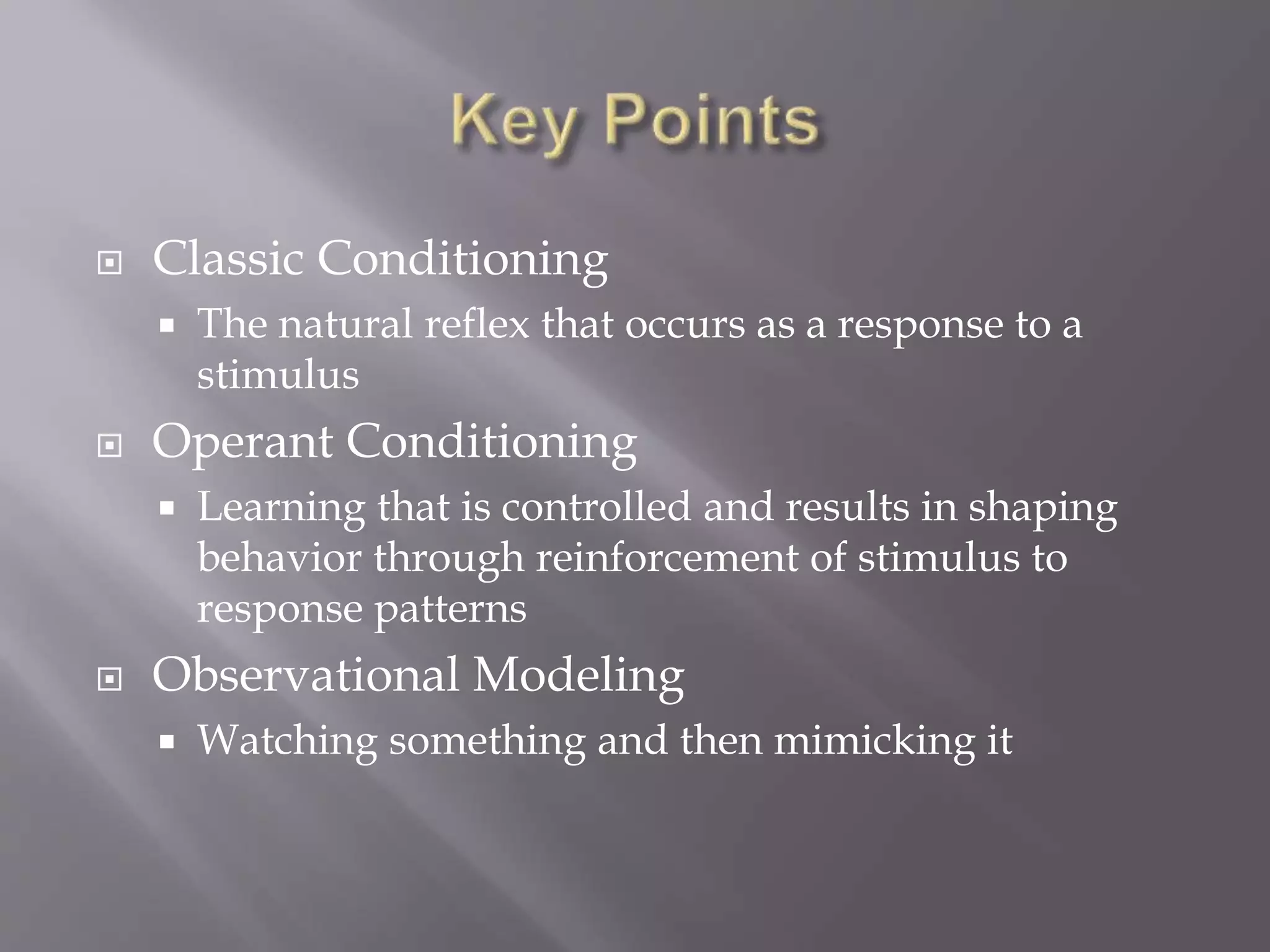
 Classic Conditioning
 The natural reflex that occurs as a response to a
stimulus
 Operant Conditioning
 Learning that is controlled and results in shaping
behavior through reinforcement of stimulus to
response patterns
 Observational Modeling
 Watching something and then mimicking it
A behaviorist educator would use positive
and negative reinforcement as a means to
motivate their students. An extreme
behaviorist believes all motivation for the
students to learn is extrinsic.
Examples:
•Handing out treats to reward good test scores
•Emphasizing grades, rather than significance of
learning
•Giving free homework passes to students who complete
all their assignment on time
•Smiling and complimenting students on a job well done
In this behaviorist environment, students adapt to the
reinforcement. They learn to base their efforts,
academic performances, and behavior off the resulting
positive or negative reinforcement. The behaviorist
theory proposes that the students’ behavior and
academic performance will come develop as a result of
their responses to certain stimuli.
 Behavior theorists define learning as nothing
more than the acquisition of new behavior
based on environmental conditions.
 I think that this is a really important theory to grasp.
Behaviorism is something that an educator must take
hold of before getting in from of a group of students.
Understanding why people act the way they do, and
better yet, predicting what they are going to do will
allow a teacher to better manage their classroom. I also
think that understanding HOW to alter behavior is key.
Whether it be by example or by positive reinforcement,
I believe that knowing what will motivate your
students is essential to their success.
 I agree to an extent with the behaviorist theory of
learning. I do think that positive and negative
reinforcement will prove effective in the classroom;
however, not all of the motivation we give our students
should be extrinsic. I believe that students do have a
personal desire to learn, and if we constantly use
reinforcement to control the desire, it will slowly lose
it’s intrinsic motivation, transferring it to extrinsic.
Students will acquire more information in the long run
if their learning things for the knowledge, not the
reward.
INFORMATION FOUND RESOURCE
 Slide 2 & 3
 Slide 3
 Slide 4
 Slide 5-7
 http://www.funderstanding.com
/content/behaviorism
 http://en.wikipedia.org/wiki/Be
haviorism
 http://psychology.about.com/od
/behavioralpsychology/f/behavi
orism.htm
 http://projects.coe.uga.edu/epltt
/index.php?title=Behaviorism
https://www.msu.edu/~purcelll/beh
aviorism%20theory.htm

Behaviorism Learning Theory

  • 1.
    By: Joy, Curtis,and Annie-Grace
  • 2.
     A learningtheory that only focuses on objectively observable behaviors and discounts any independent activities of the mind.
  • 3.
     Alan E.Kazdin  Albert Bandura  Edwin Ray Guthrie  Richard J. Herrnstein  Clark L. Hull  Ivan Pavlov  B.F. Skinner  Edward Lee Thorndike  Edward C. Tolman  Murray Sidman  John B. Watson  Ole Ivar Lovaas  Steven C. Hayes  Donald Baer Living 1925-present 1886-1959 1930-1994 1884-1952 1849-1936 1904-1990 1874-1949 1886-1959 1923-present 1878-1958 1927-2010 1948-present 1931-2002
  • 4.
     Classic Conditioning The natural reflex that occurs as a response to a stimulus  Operant Conditioning  Learning that is controlled and results in shaping behavior through reinforcement of stimulus to response patterns  Observational Modeling  Watching something and then mimicking it
  • 5.
    A behaviorist educatorwould use positive and negative reinforcement as a means to motivate their students. An extreme behaviorist believes all motivation for the students to learn is extrinsic. Examples: •Handing out treats to reward good test scores •Emphasizing grades, rather than significance of learning •Giving free homework passes to students who complete all their assignment on time •Smiling and complimenting students on a job well done
  • 6.
    In this behavioristenvironment, students adapt to the reinforcement. They learn to base their efforts, academic performances, and behavior off the resulting positive or negative reinforcement. The behaviorist theory proposes that the students’ behavior and academic performance will come develop as a result of their responses to certain stimuli.
  • 7.
     Behavior theoristsdefine learning as nothing more than the acquisition of new behavior based on environmental conditions.
  • 9.
     I thinkthat this is a really important theory to grasp. Behaviorism is something that an educator must take hold of before getting in from of a group of students. Understanding why people act the way they do, and better yet, predicting what they are going to do will allow a teacher to better manage their classroom. I also think that understanding HOW to alter behavior is key. Whether it be by example or by positive reinforcement, I believe that knowing what will motivate your students is essential to their success.
  • 10.
     I agreeto an extent with the behaviorist theory of learning. I do think that positive and negative reinforcement will prove effective in the classroom; however, not all of the motivation we give our students should be extrinsic. I believe that students do have a personal desire to learn, and if we constantly use reinforcement to control the desire, it will slowly lose it’s intrinsic motivation, transferring it to extrinsic. Students will acquire more information in the long run if their learning things for the knowledge, not the reward.
  • 11.
    INFORMATION FOUND RESOURCE Slide 2 & 3  Slide 3  Slide 4  Slide 5-7  http://www.funderstanding.com /content/behaviorism  http://en.wikipedia.org/wiki/Be haviorism  http://psychology.about.com/od /behavioralpsychology/f/behavi orism.htm  http://projects.coe.uga.edu/epltt /index.php?title=Behaviorism https://www.msu.edu/~purcelll/beh aviorism%20theory.htm