TABLE OF CONTENT
01
02
03
04
05
06
WELCOME:HOW DO WE LEARN?
LEARNING BY ASSOCIATION (CLASSICAL CONDITIONING)
LEARNING FROM WHAT HAPPENS AFTER (OPERANT CONDITIONING)
PUTTING IT TOGETHER: LEARNING OUR BEHAVIORS
WHY THIS IS USEFUL
QUIZZ
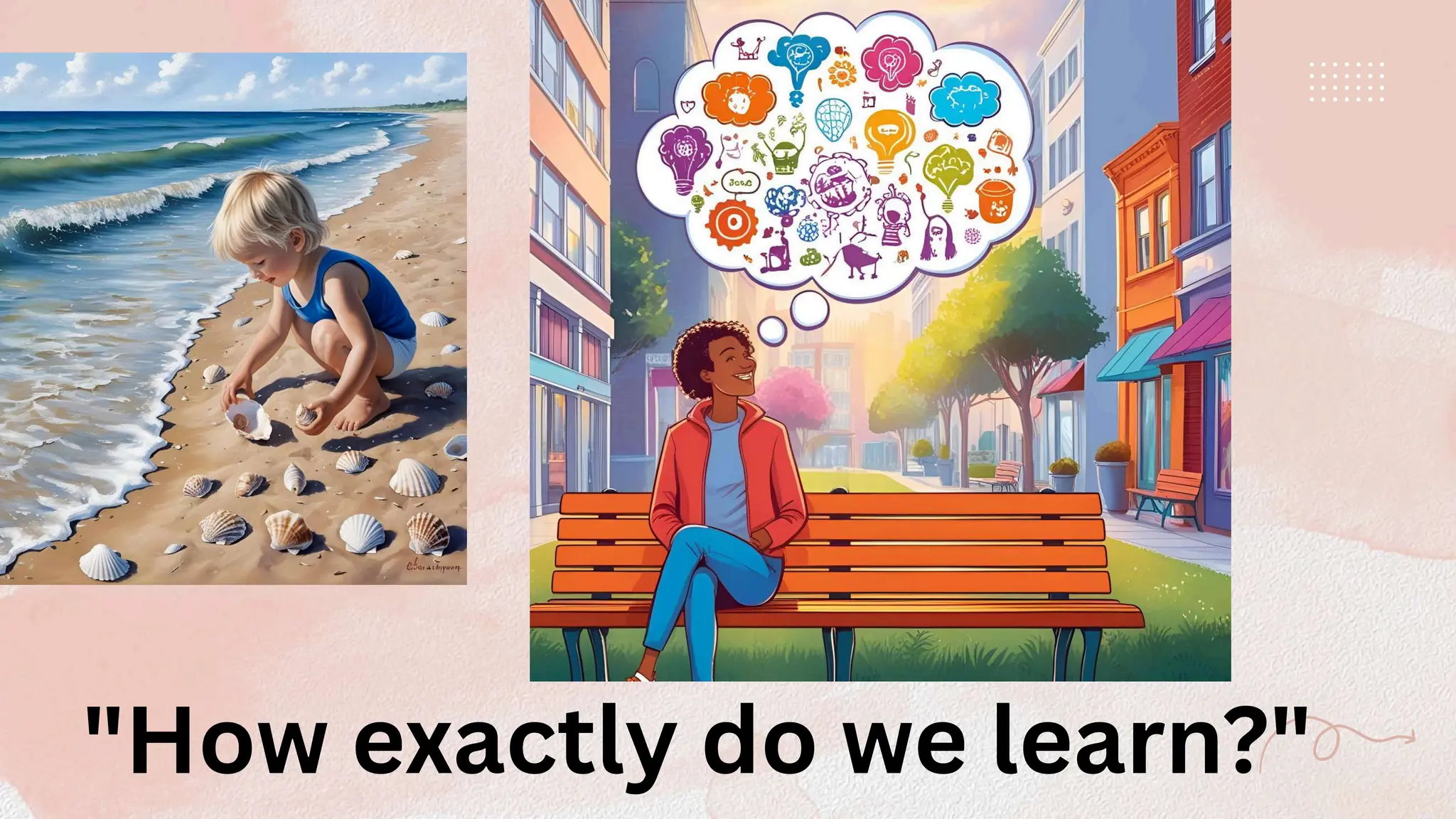
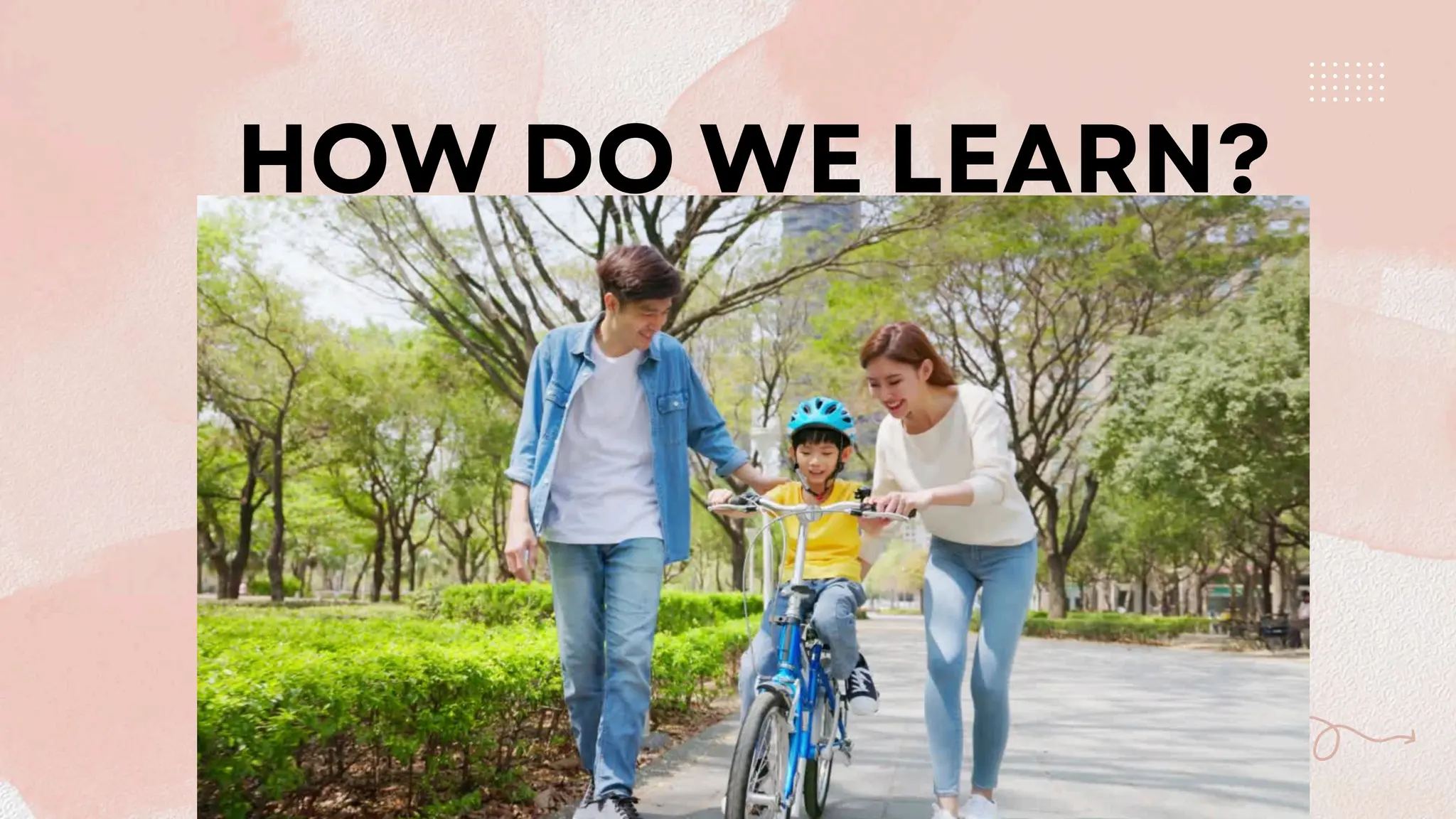
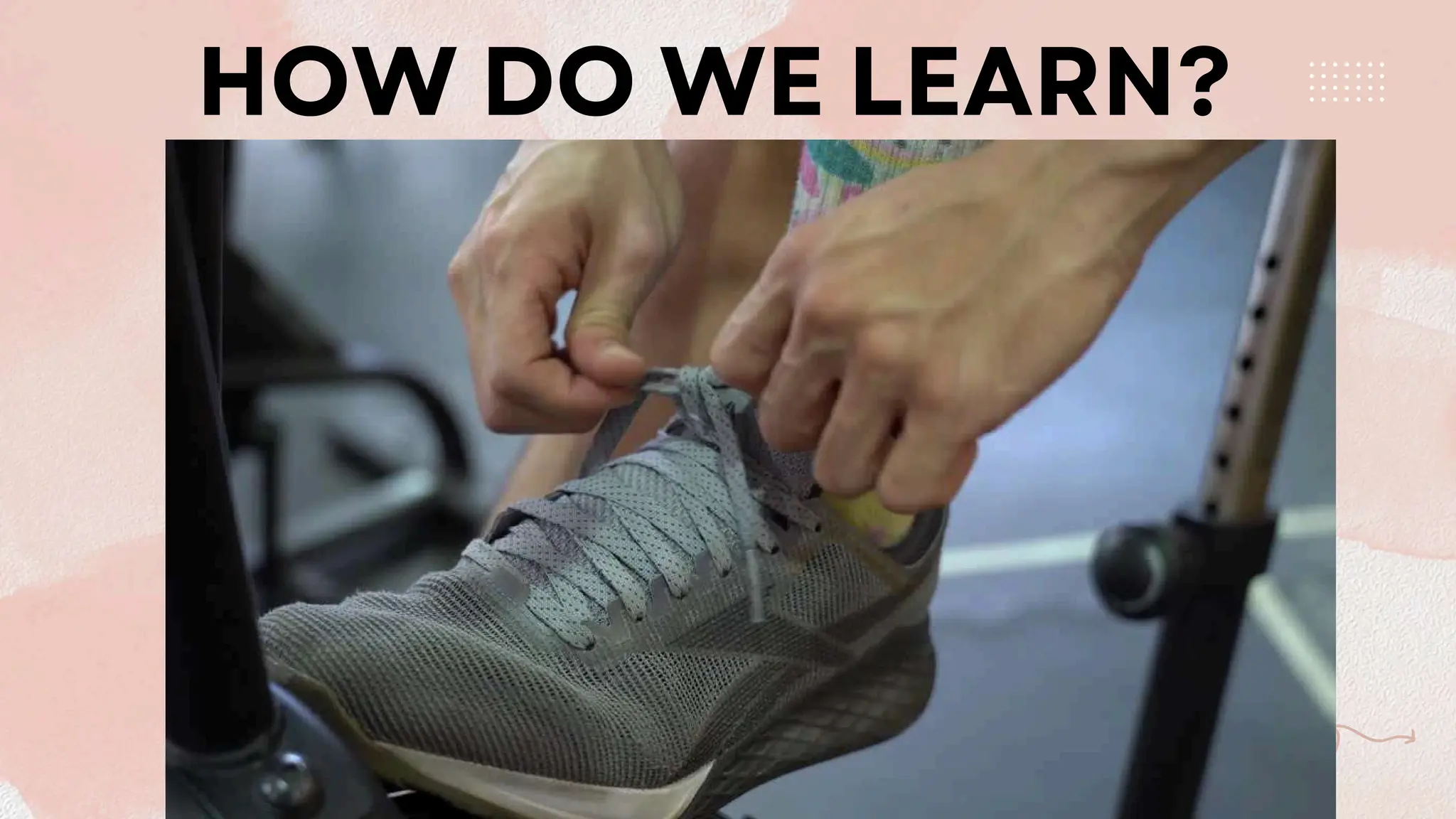
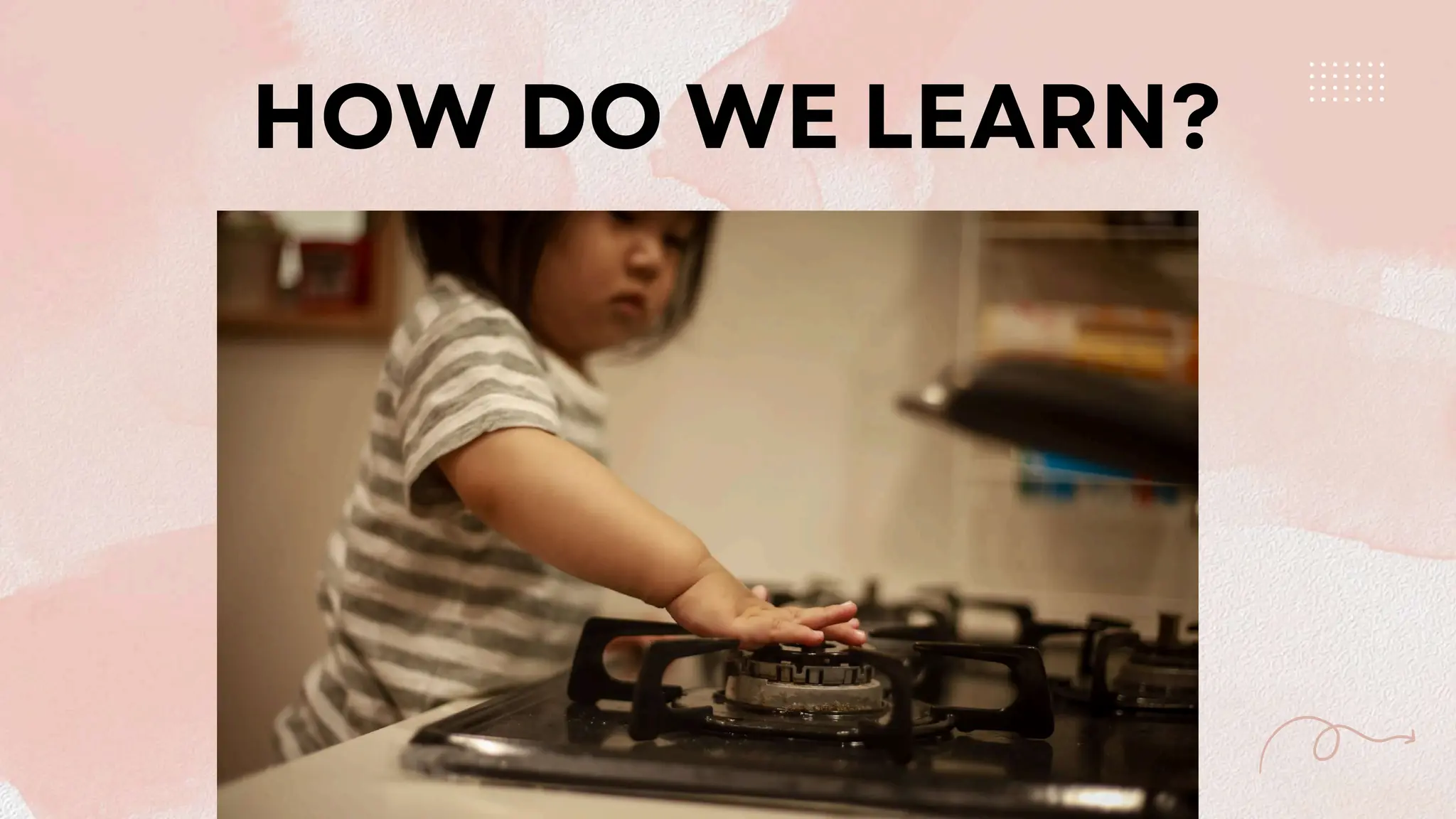
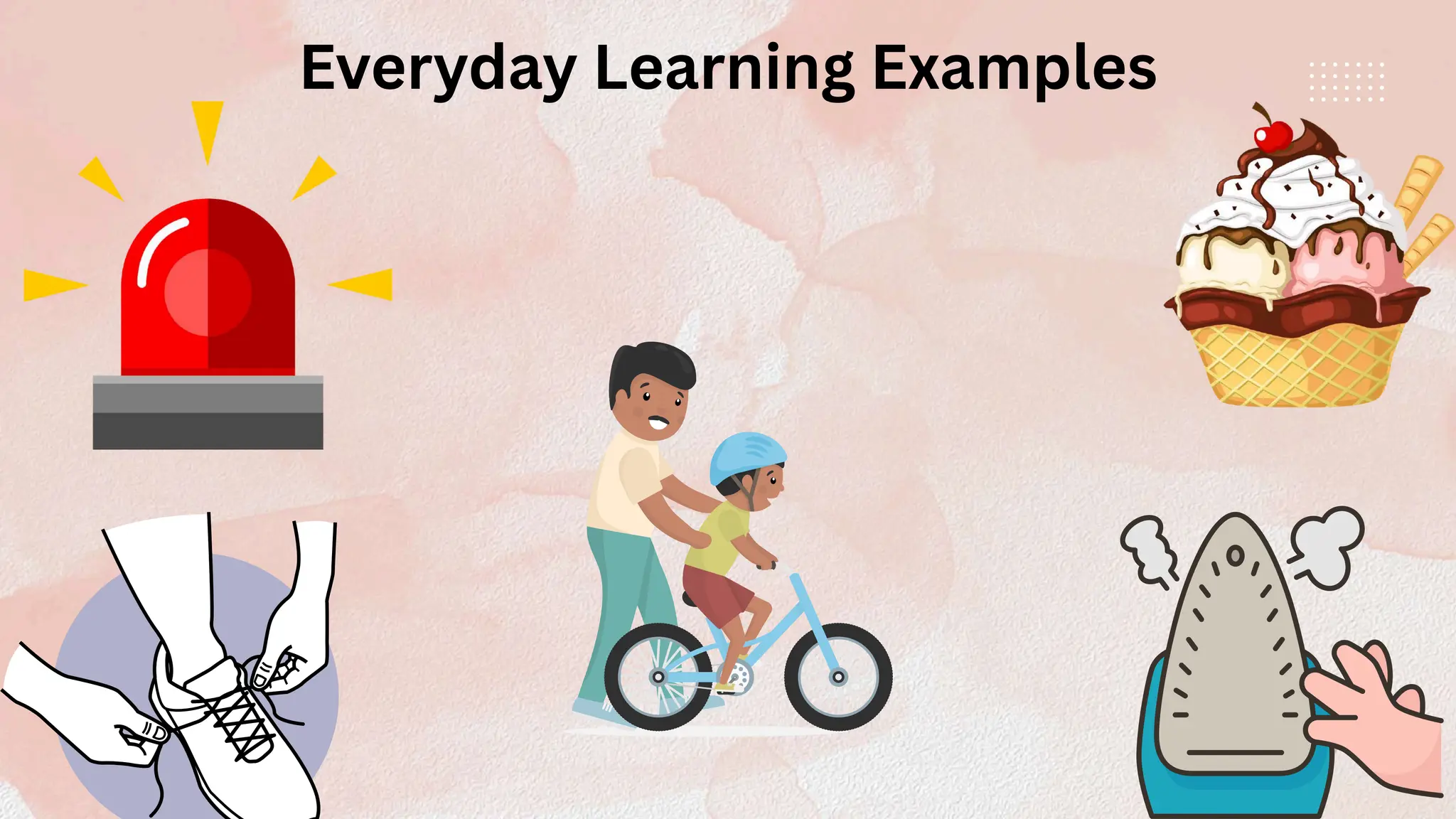
"So, we learnall the time! From practicing, from
linking things together, and from what happens
after we do something."
"Scientists, especially psychologists, have been
fascinated by how this happens for a long, long
time."
"They wanted to understand the 'rules' of
learning."
Behaviourism
"Behaviorism says: focuson what we can see. What actions do people (or animals!)
do?
And what happens in the world around them right before or after they do those
actions?"
two main ways that behaviorists explained how we learn these kinds of behaviors,
based on what happens before and what happens after."
"It's all about studying observable behavior."
15.
Behaviourism
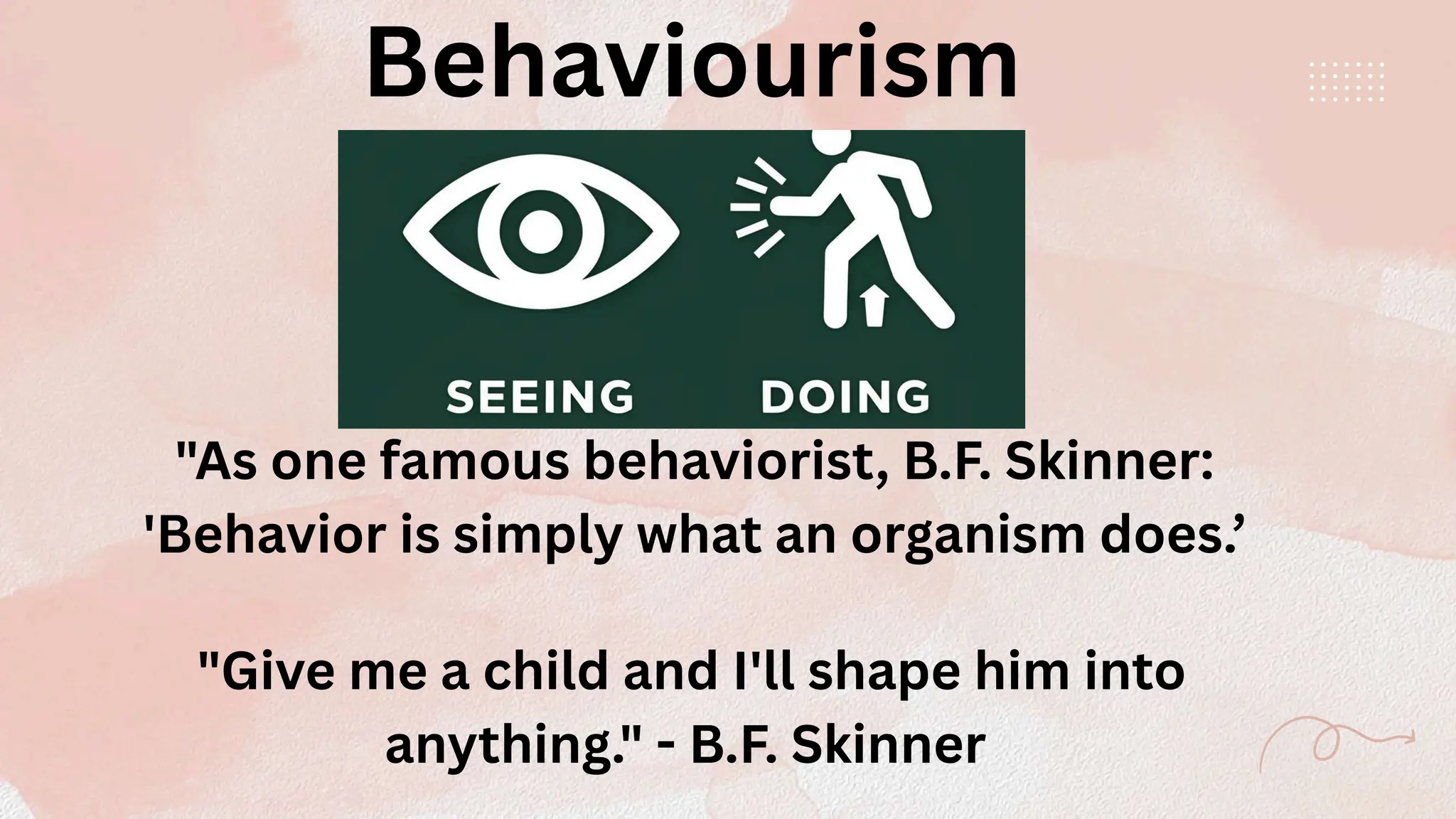
"As one famousbehaviorist, B.F. Skinner:
'Behavior is simply what an organism does.’
"Give me a child and I'll shape him into
anything." - B.F. Skinner
16.
Classical
Conditioning
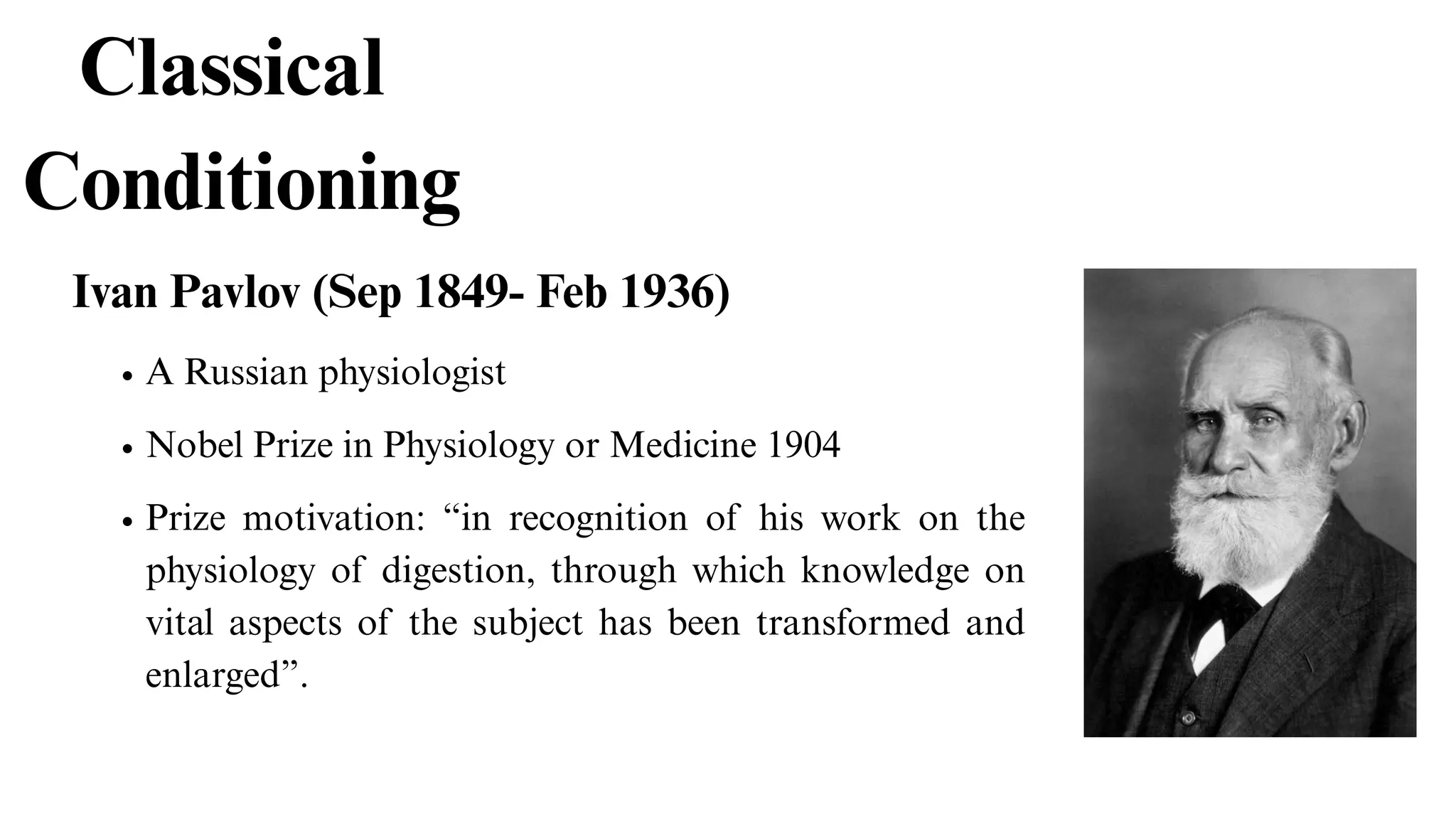
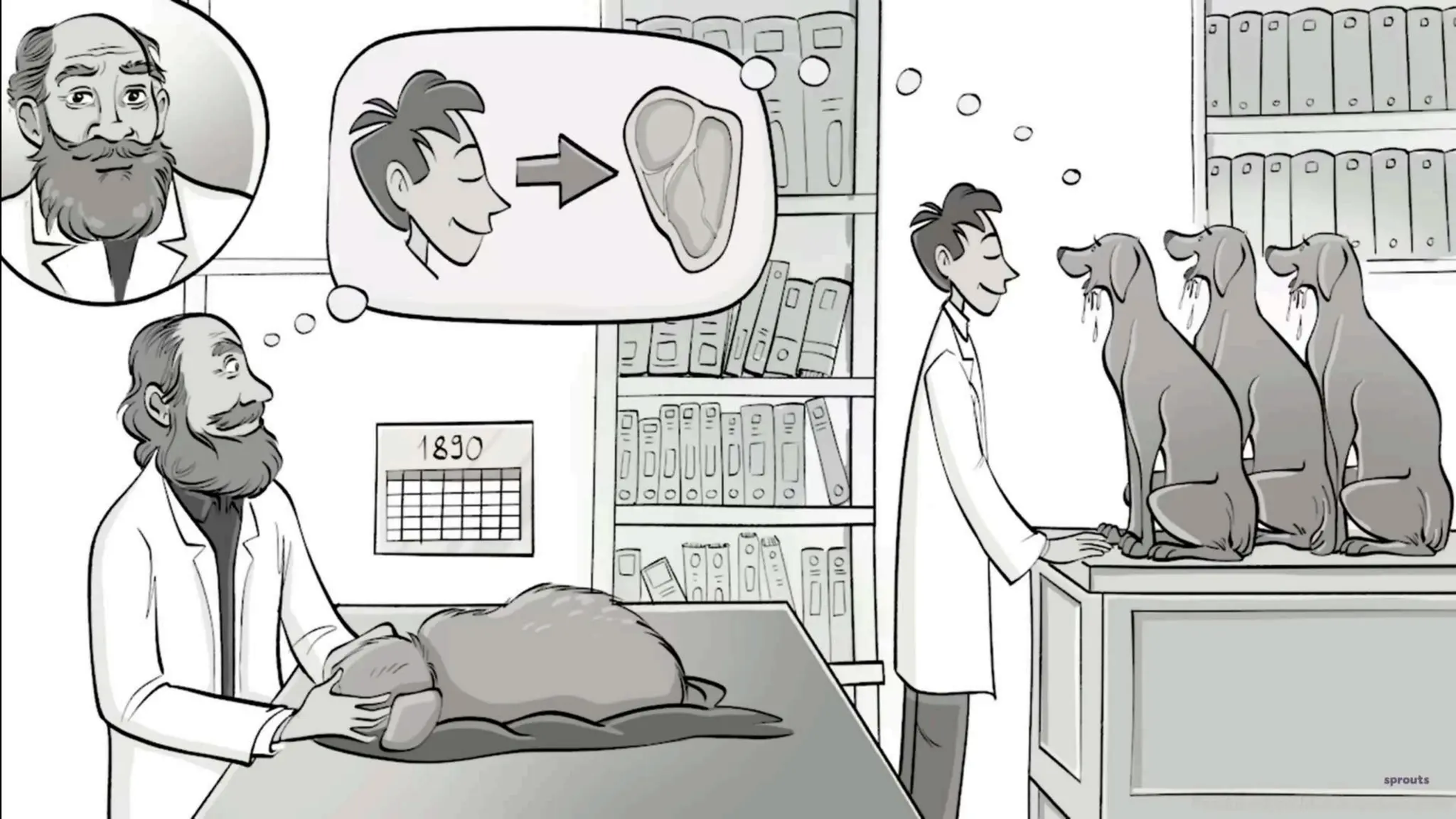
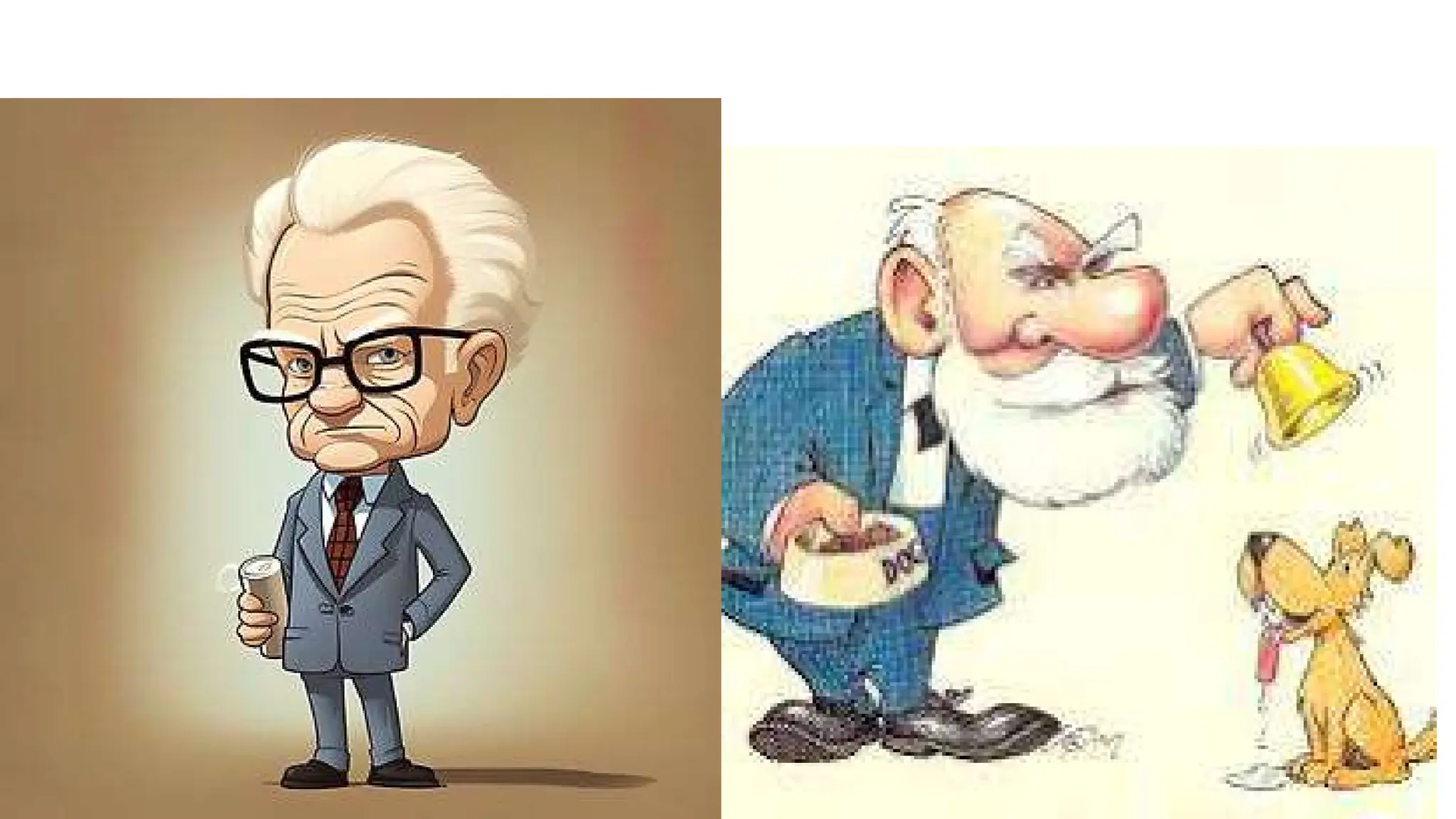
Ivan Pavlov (Sep1849- Feb 1936)
Nobel Prize in Physiology or Medicine 1904
Prize motivation: “in recognition of his work on the
physiology of digestion, through which knowledge on
vital aspects of the subject has been transformed and
enlarged”.
A Russian physiologist
17.
Classical
Conditioning
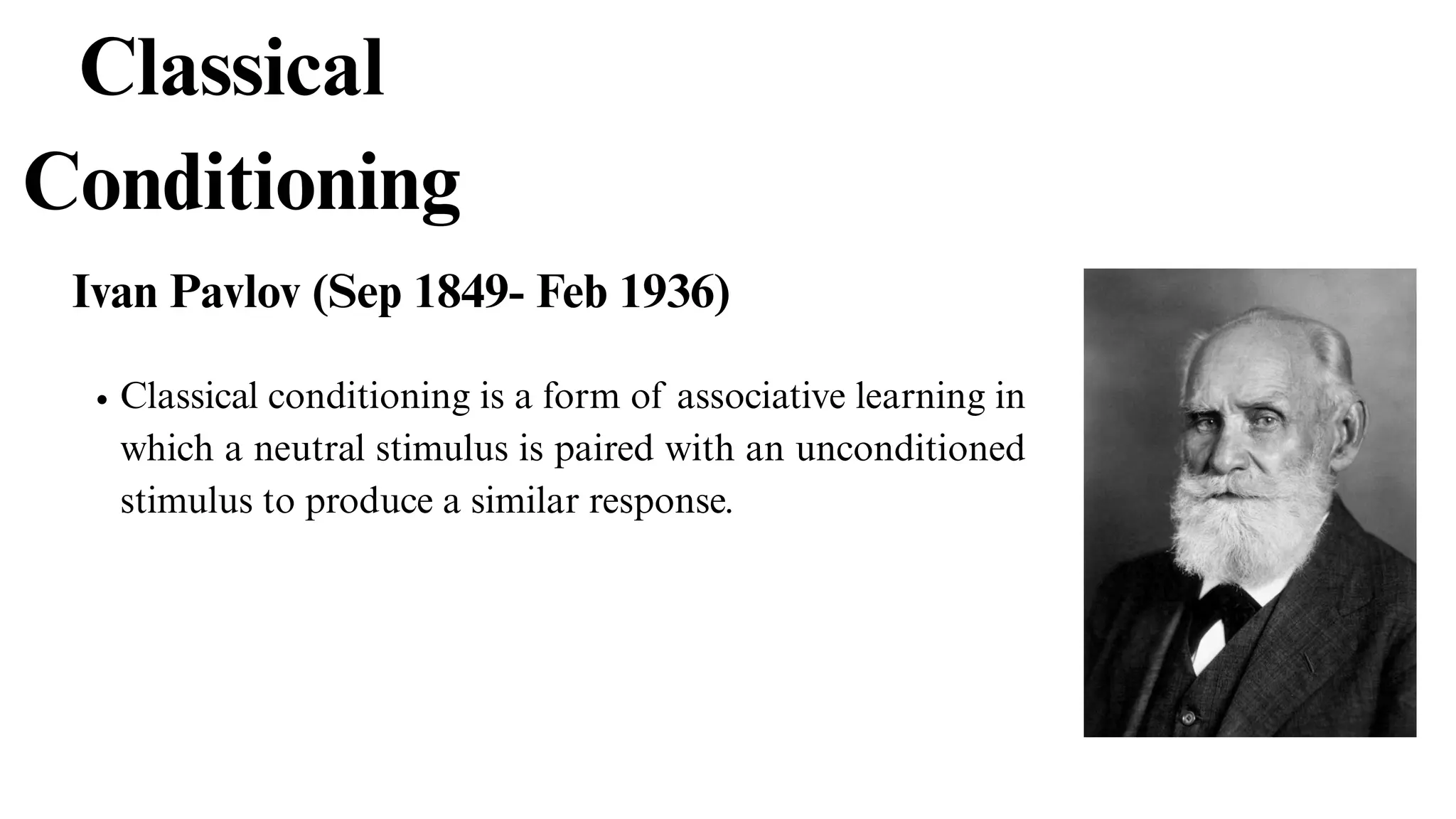
Ivan Pavlov (Sep1849- Feb 1936)
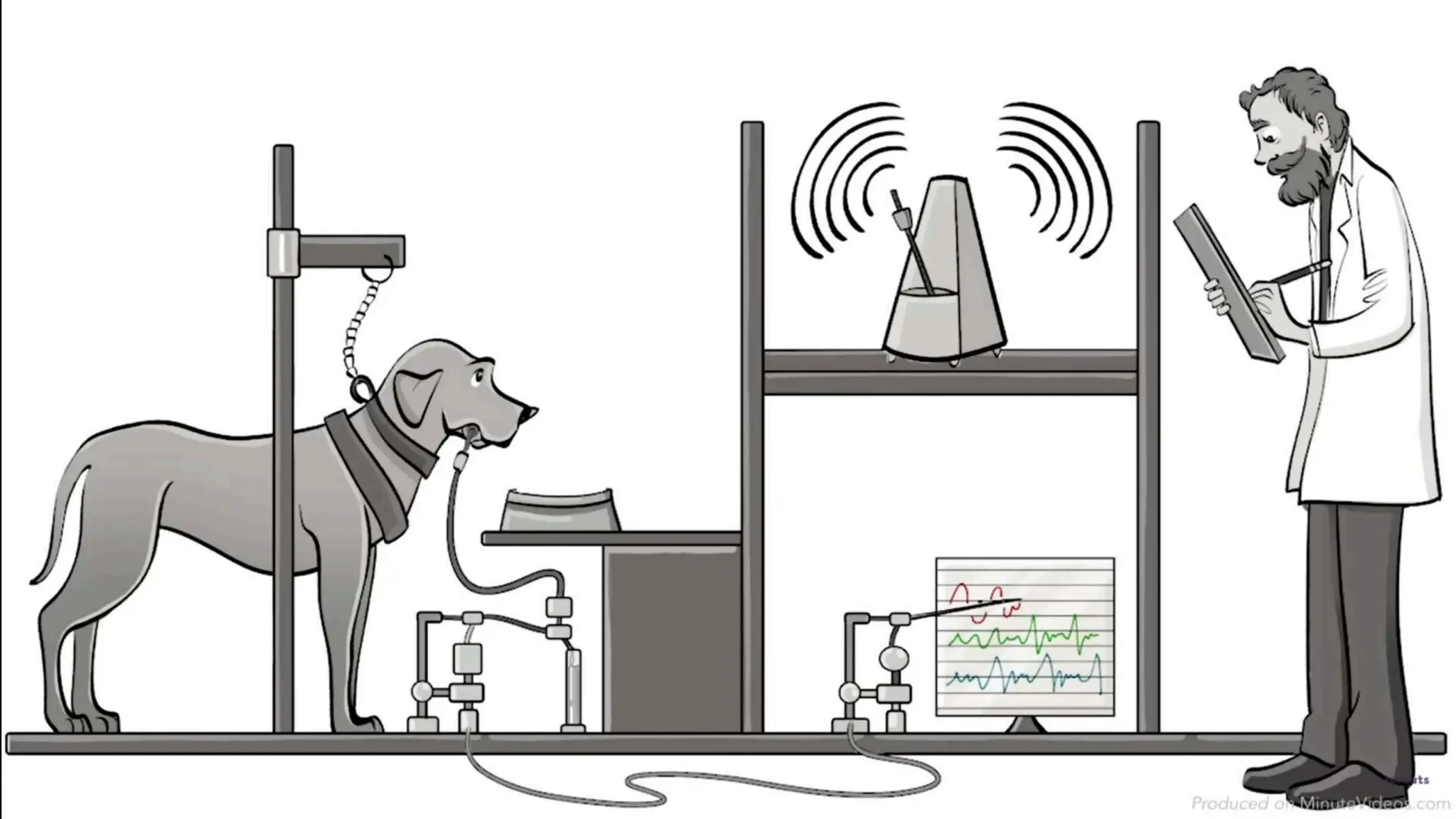
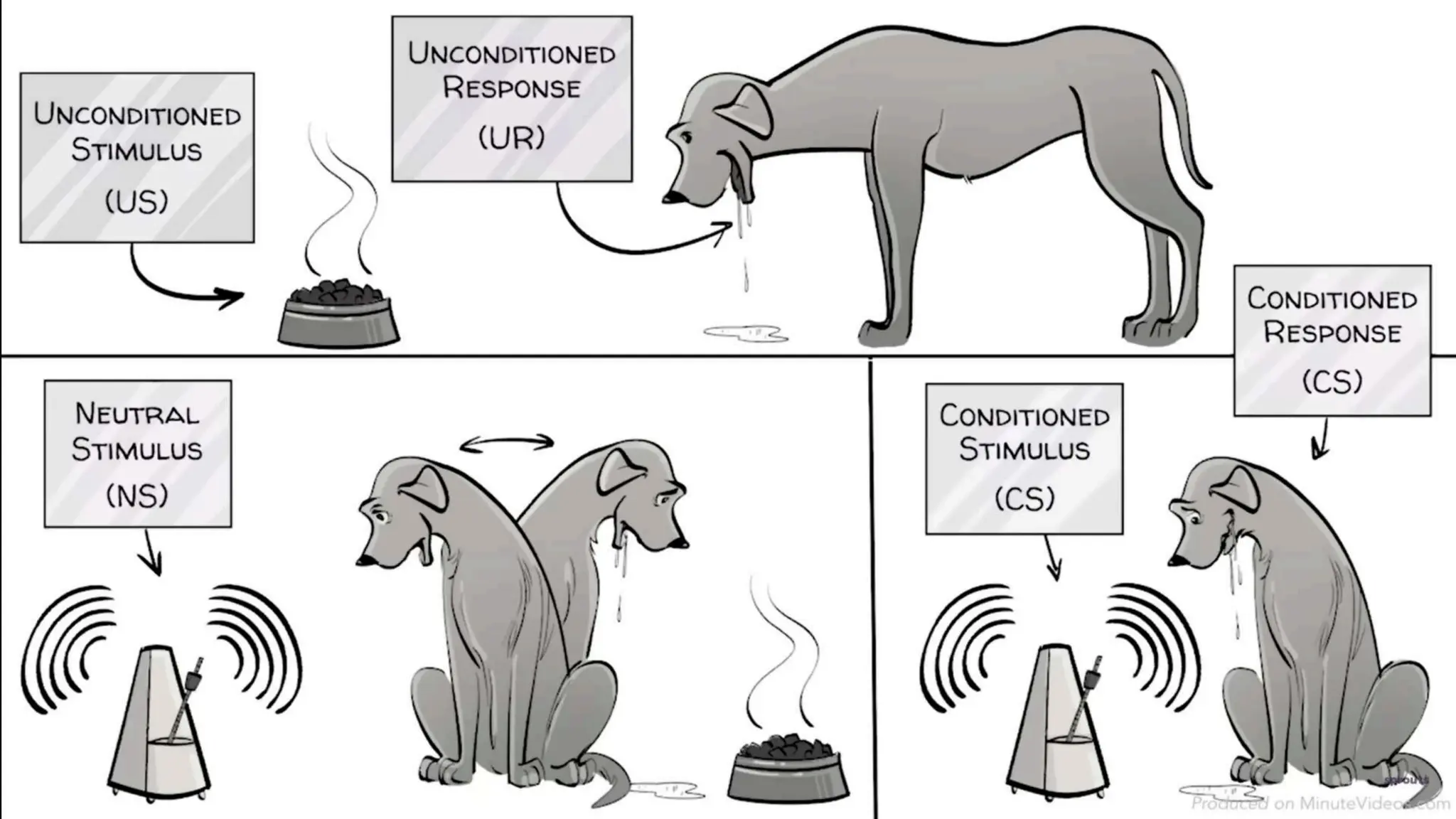
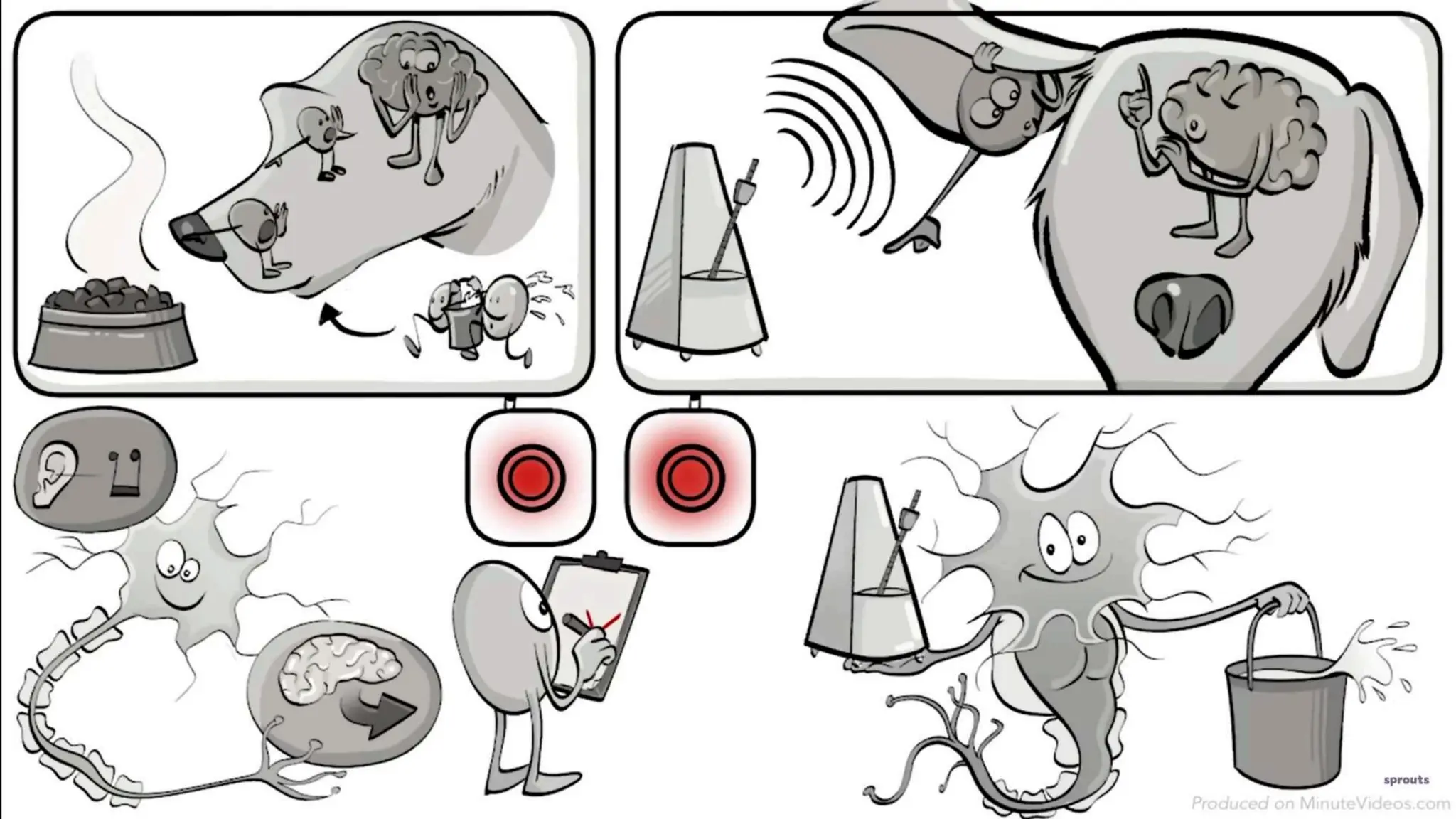
Classical conditioning is a form of associative learning in
which a neutral stimulus is paired with an unconditioned
stimulus to produce a similar response.
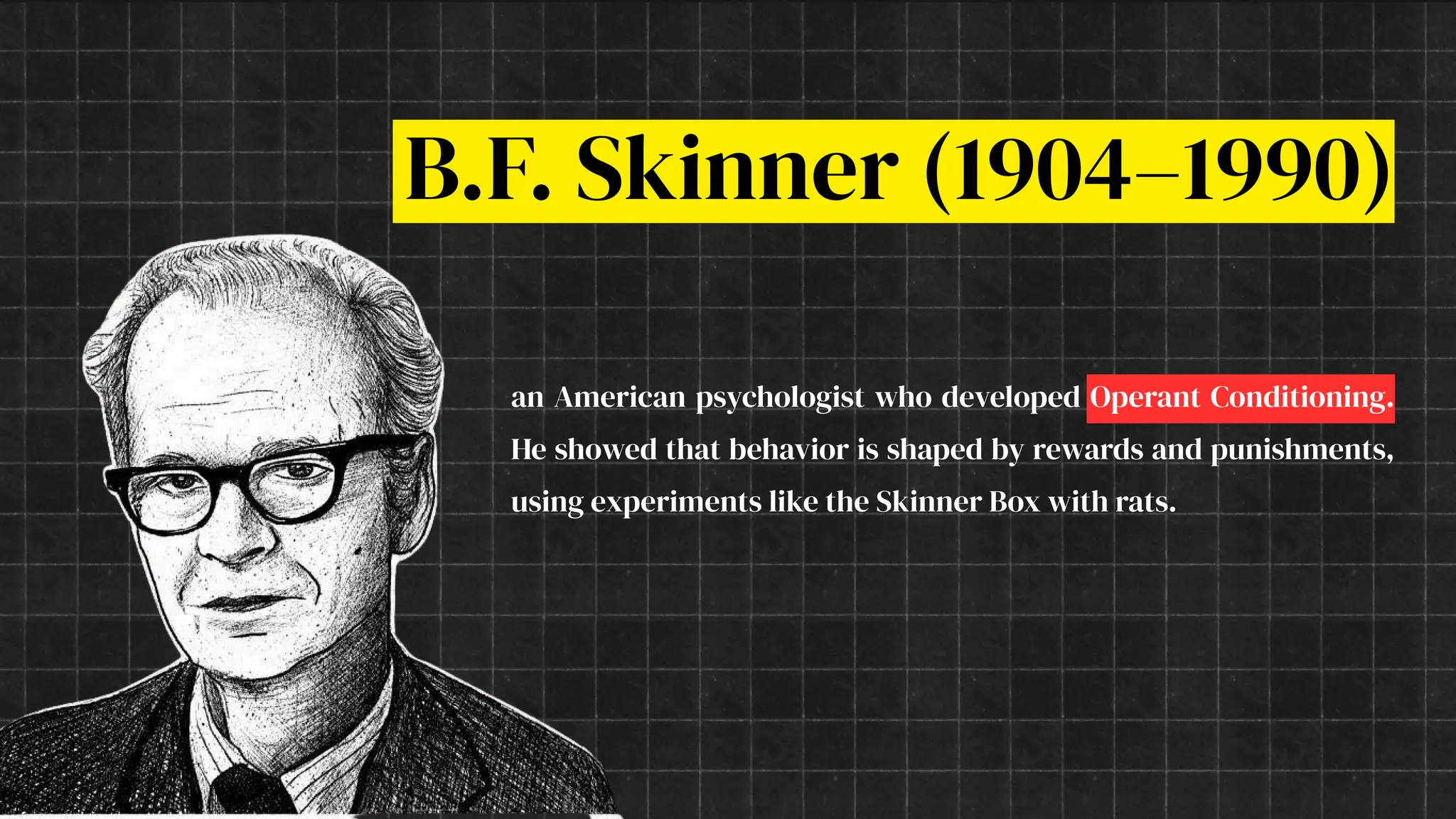
B.F. Skinner (1904–1990)
anAmerican psychologist who developed Operant Conditioning.
He showed that behavior is shaped by rewards and punishments,
using experiments like the Skinner Box with rats.
28.
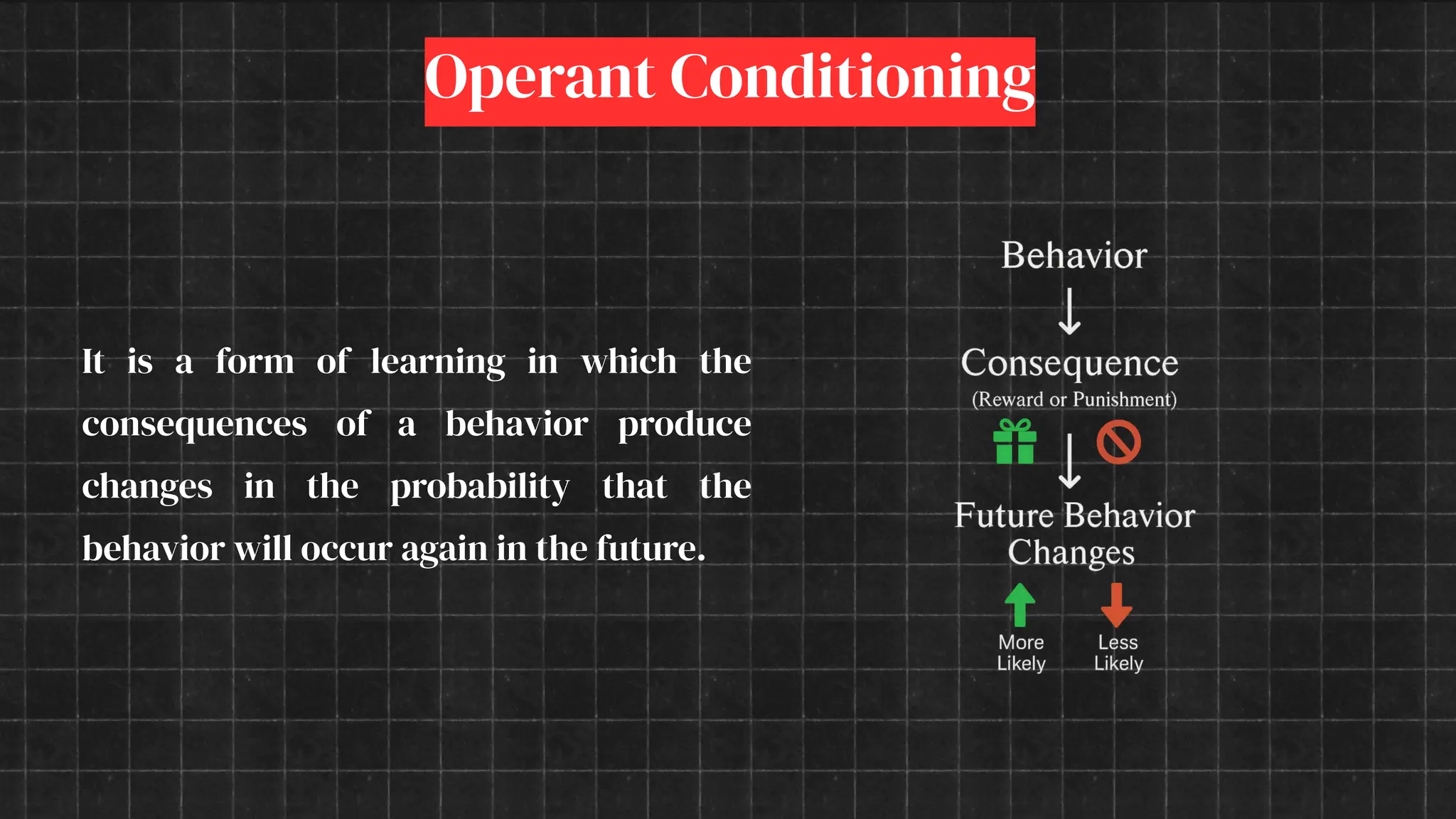
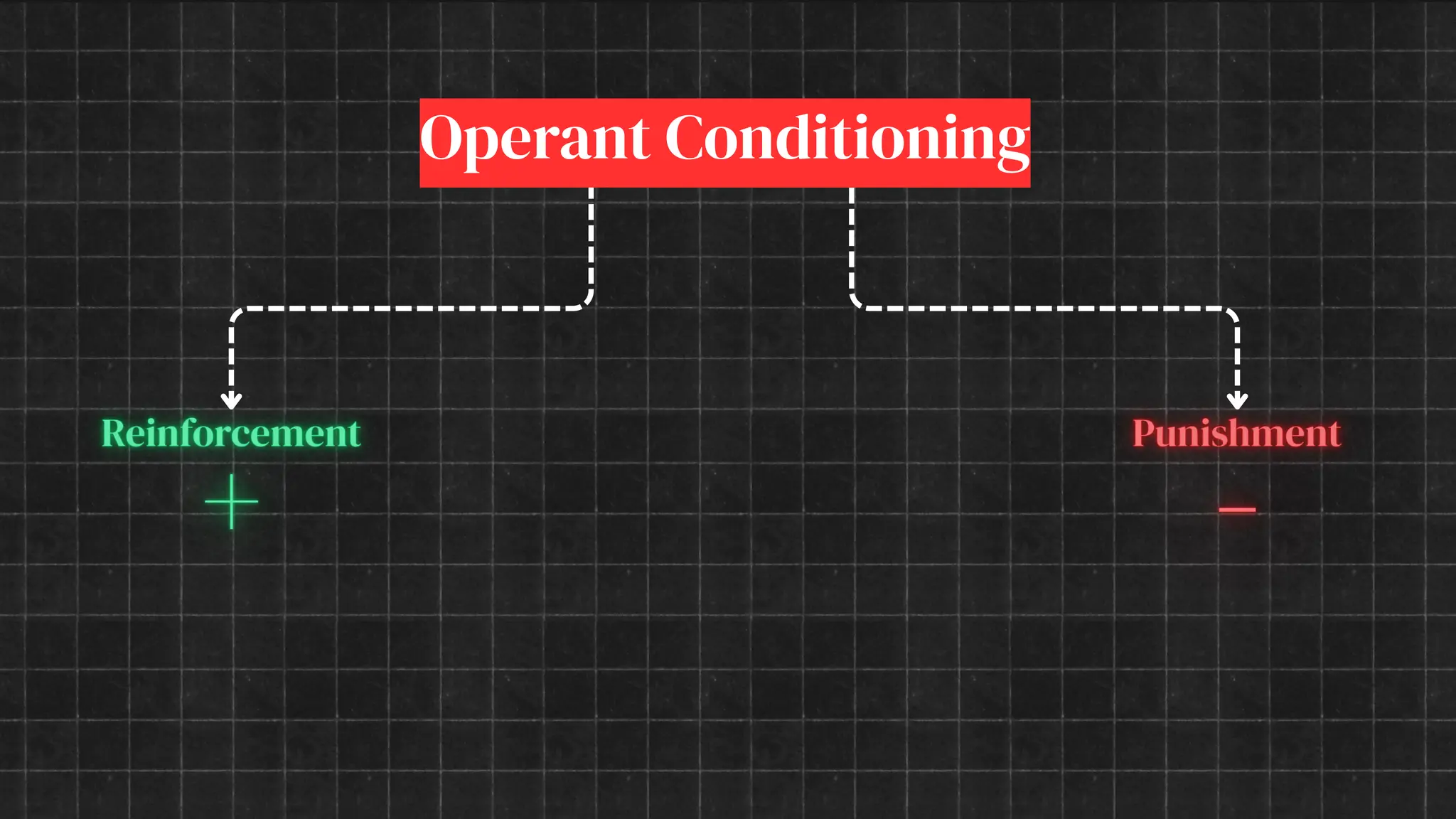
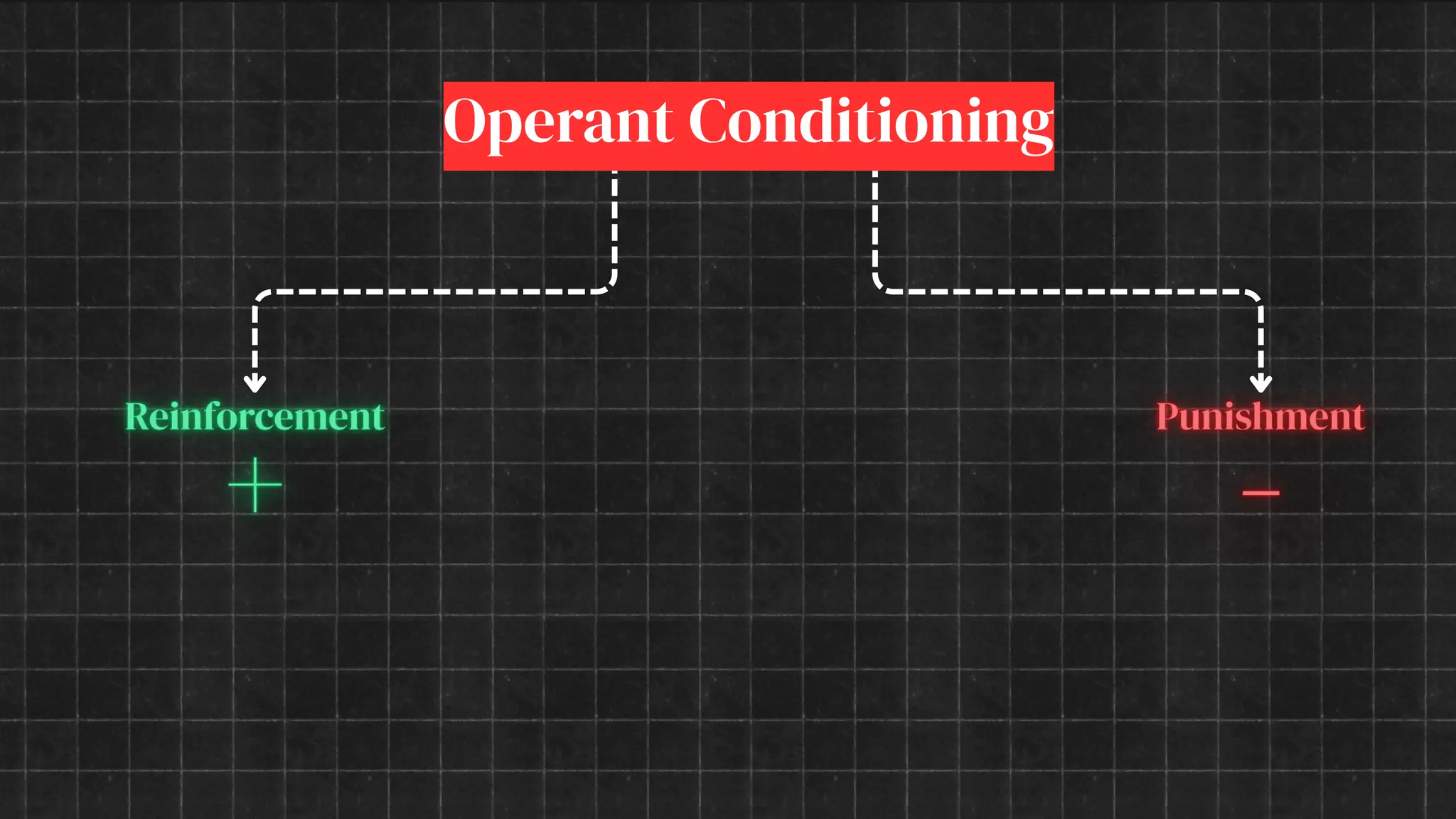
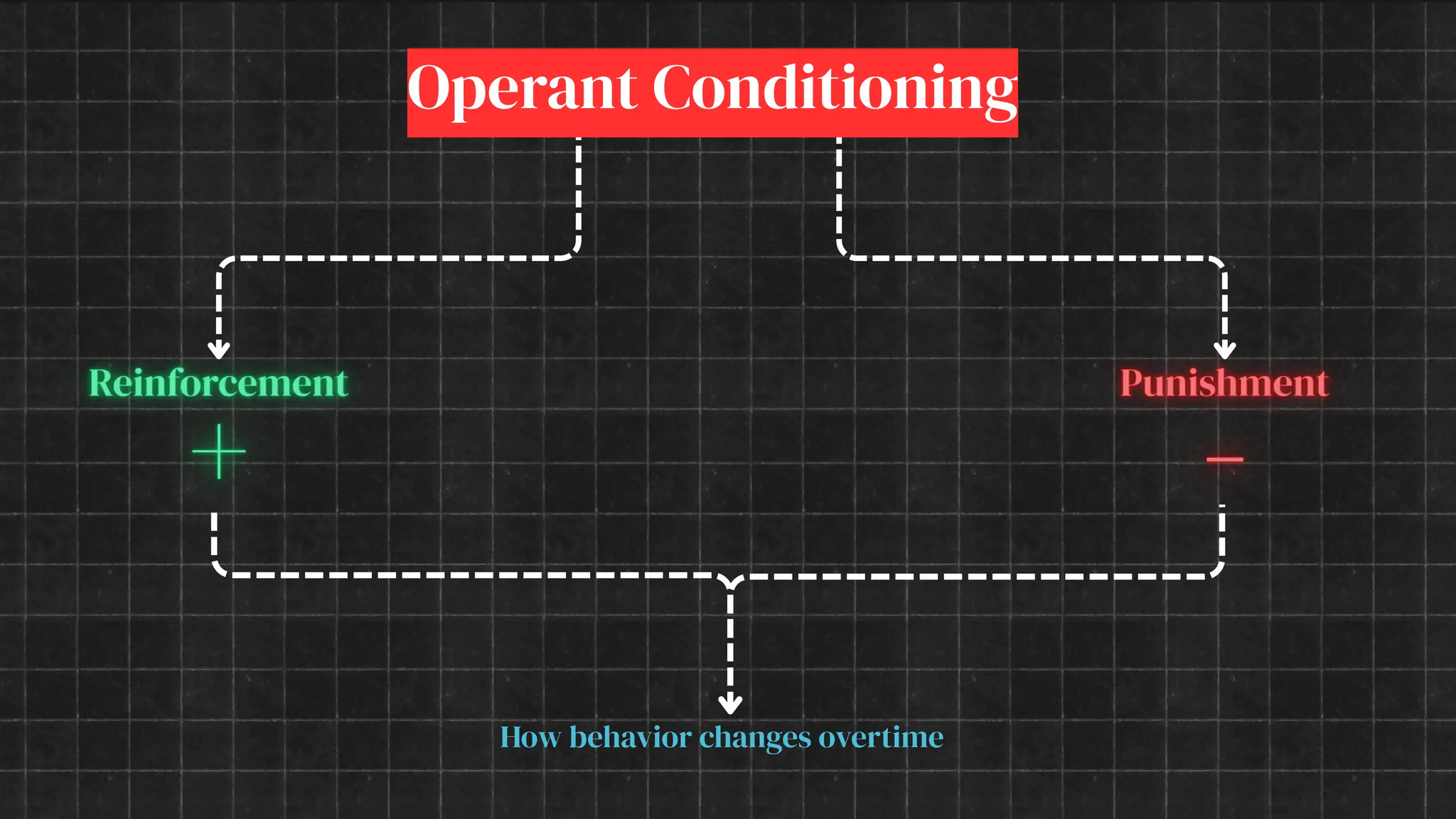
Operant Conditioning
It isa form of learning in which the
consequences of a behavior produce
changes in the probability that the
behavior will occur again in the future.
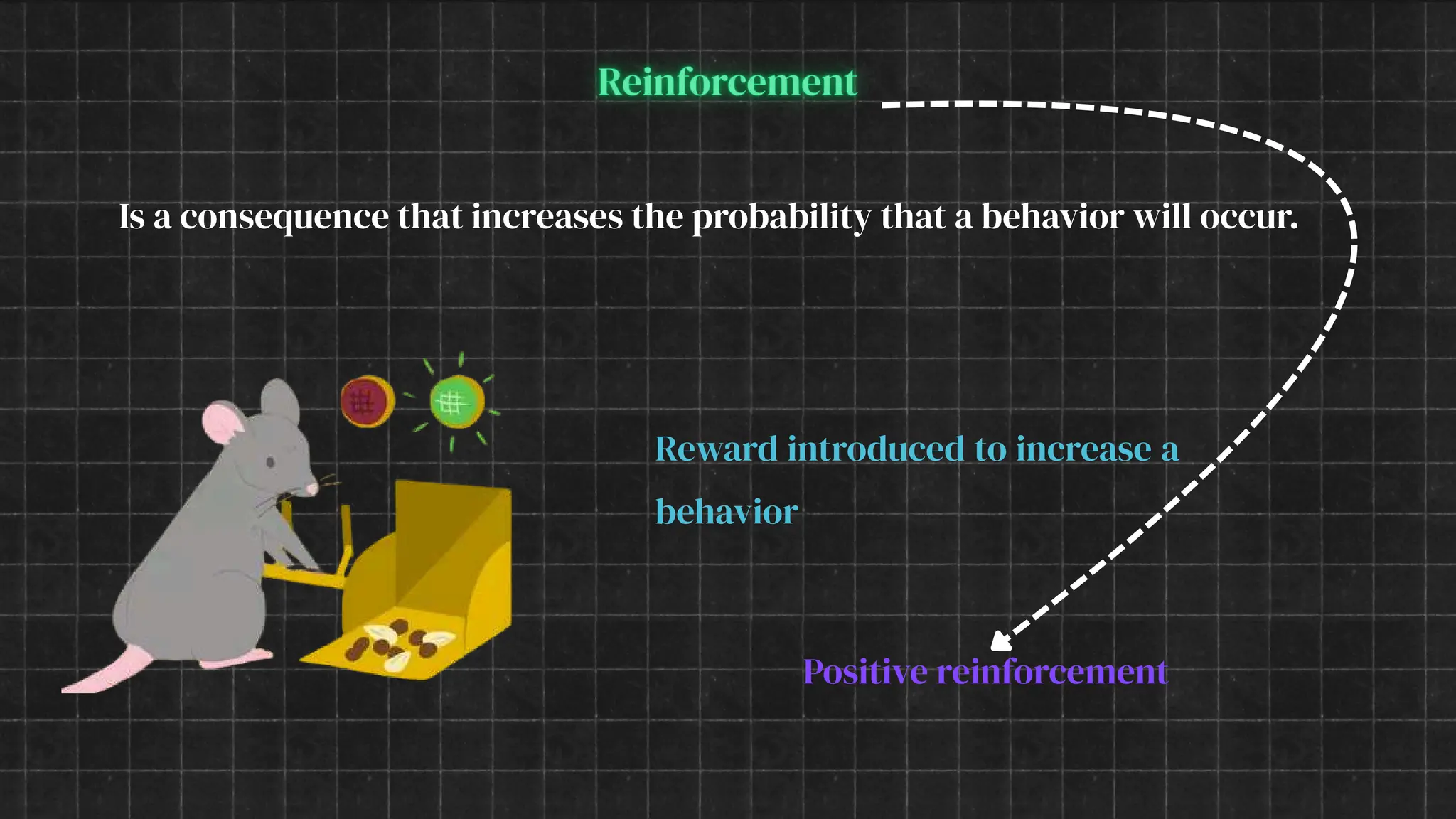
Is a consequencethat increases the probability that a behavior will occur.
Reward introduced to increase a
behavior
Positive reinforcement
31.
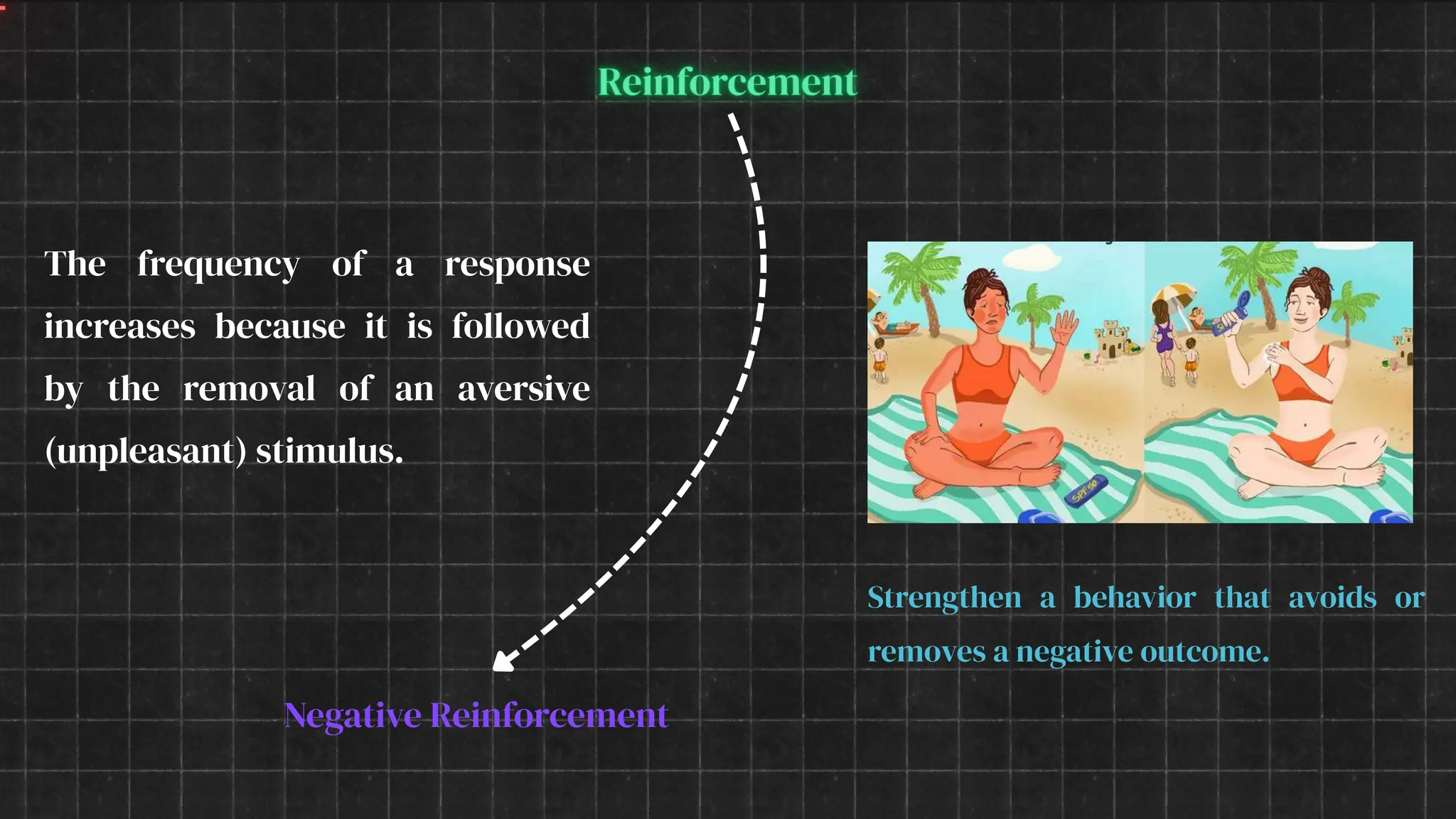
The frequency ofa response
increases because it is followed
by the removal of an aversive
(unpleasant) stimulus.
Strengthen a behavior that avoids or
removes a negative outcome.
Negative Reinforcement
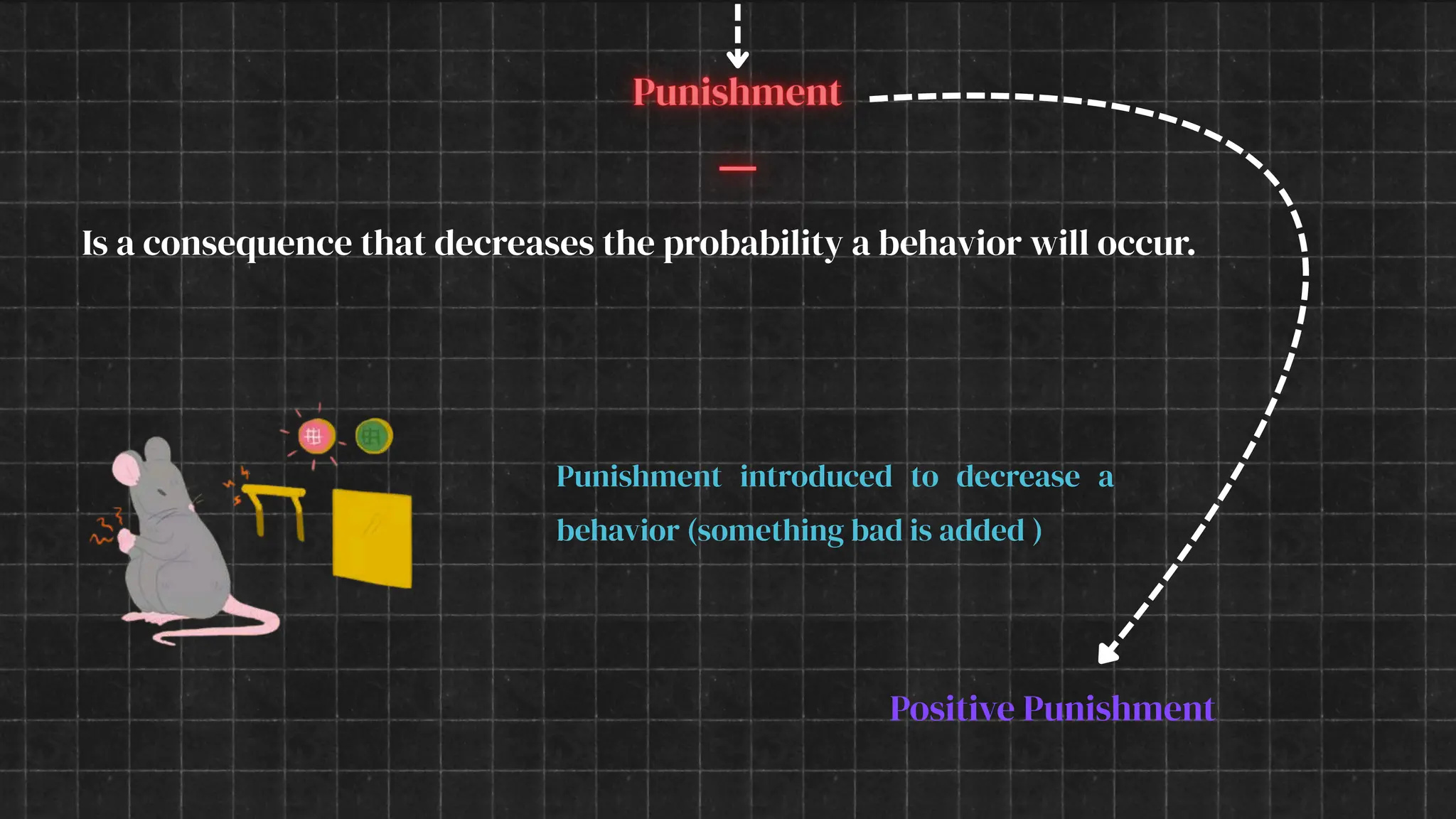
Is a consequencethat decreases the probability a behavior will occur.
Punishment introduced to decrease a
behavior (something bad is added )
Positive Punishment
34.
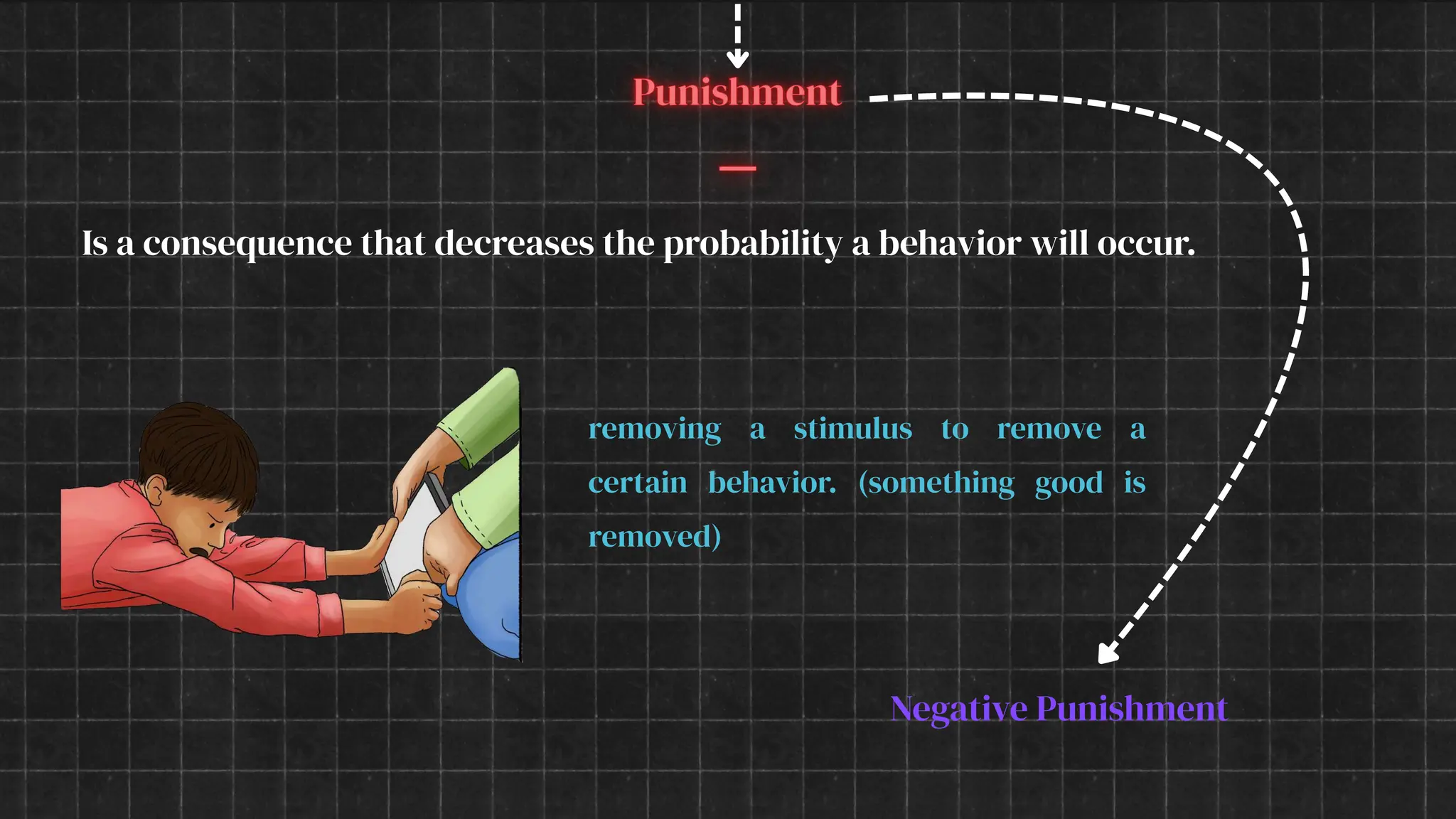
Is a consequencethat decreases the probability a behavior will occur.
removing a stimulus to remove a
certain behavior. (something good is
removed)
Negative Punishment
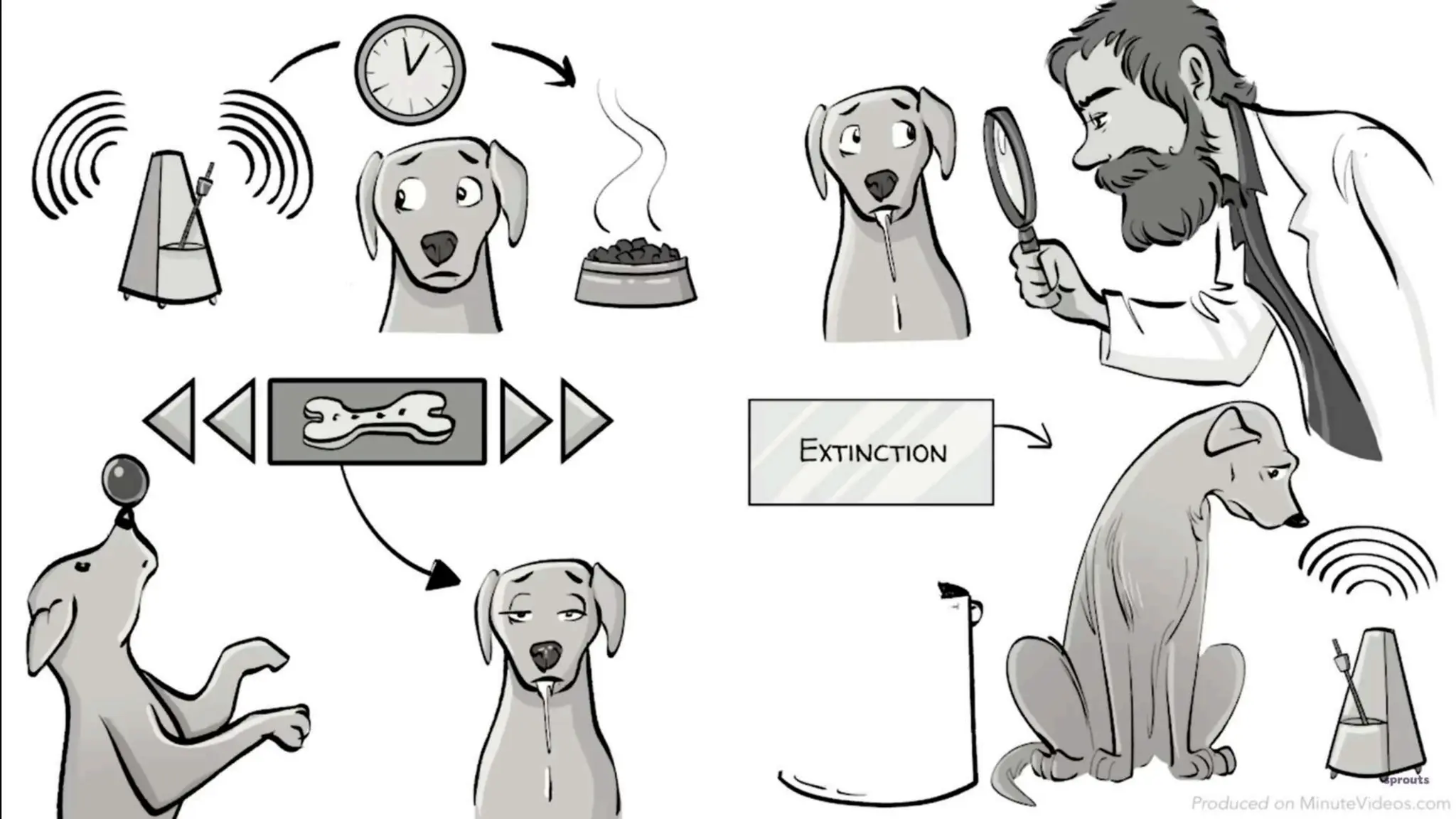
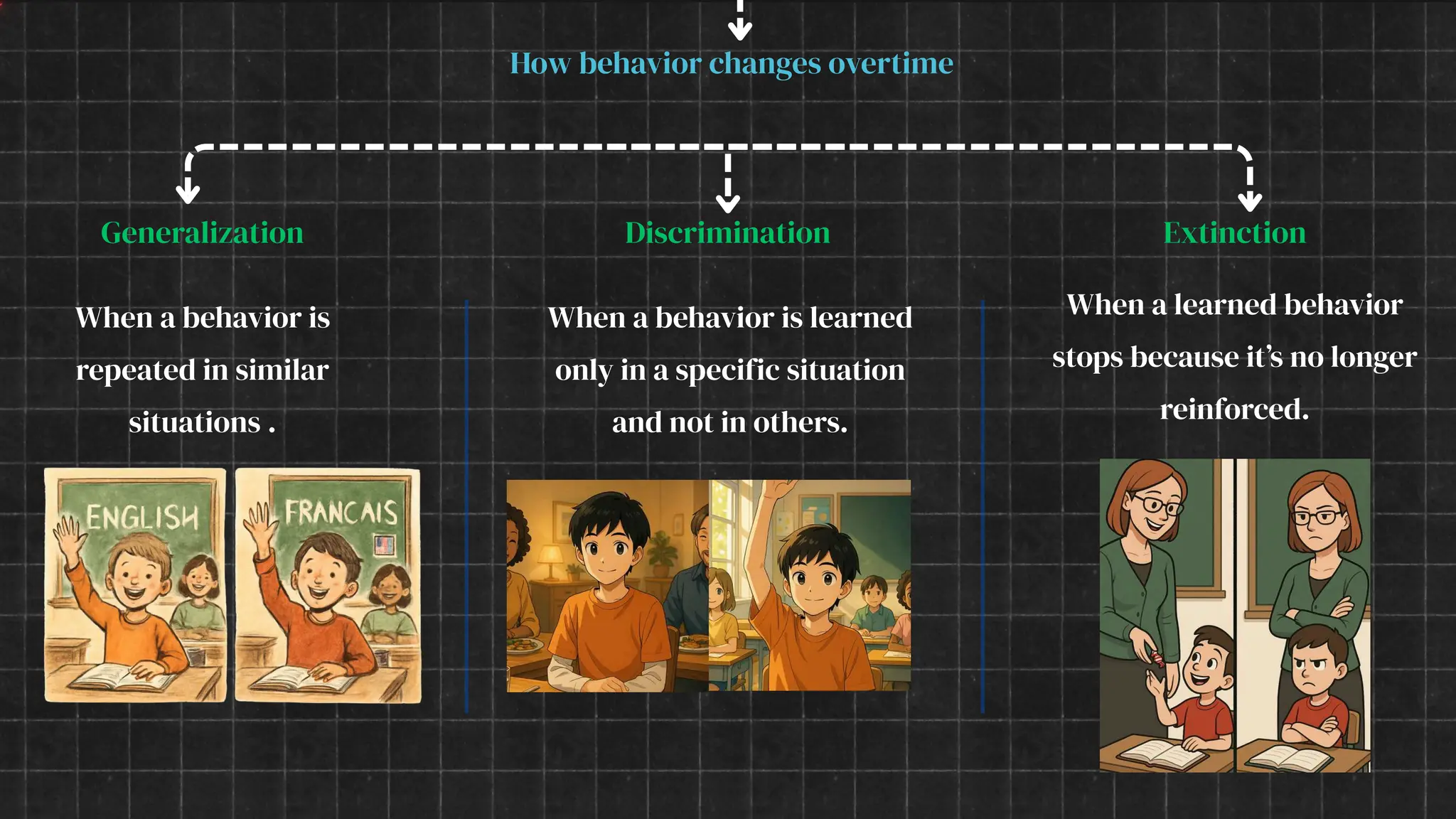
How behavior changesovertime
Generalization Discrimination Extinction
When a behavior is
repeated in similar
situations .
When a behavior is learned
only in a specific situation
and not in others.
When a learned behavior
stops because it’s no longer
reinforced.
39.
How They WorkTogether in Language
Teaching
In a classroom setting, you can use classical conditioning to create
a positive emotional environment, and use operant conditioning
to reinforce specific language behaviors.
Classical: If students feel relaxed and successful when speaking in
English due to a supportive environment, they'll associate
speaking English with positive emotions.
Operant: If a student forms correct English sentences and gets
praise or points, that behavior is reinforced and more likely to
happen again
40.
🧑🏫Situation:
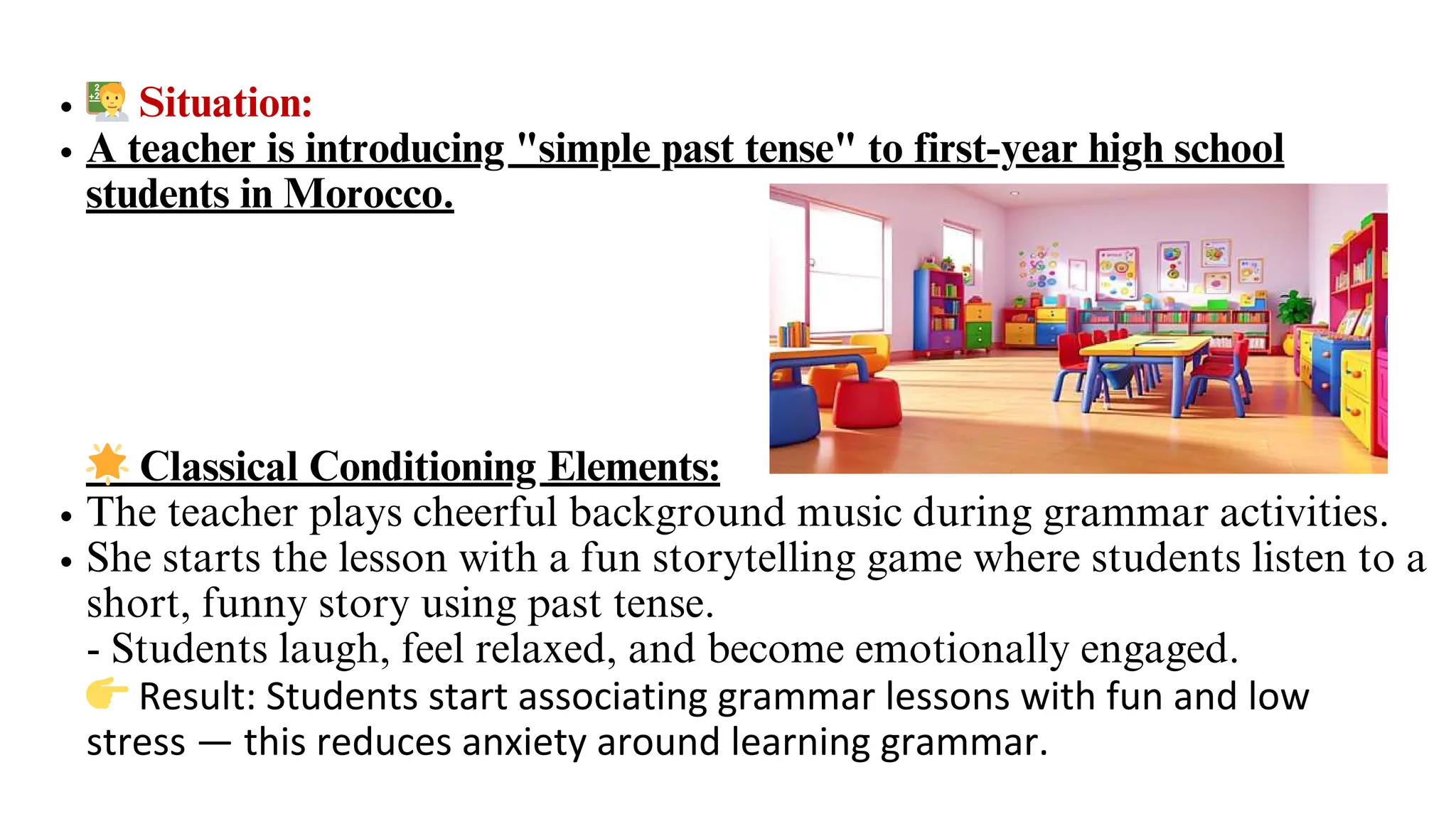
A teacher isintroducing "simple past tense" to first-year high school
students in Morocco.
🌟Classical Conditioning Elements:
The teacher plays cheerful background music during grammar activities.
She starts the lesson with a fun storytelling game where students listen to a
short, funny story using past tense.
- Students laugh, feel relaxed, and become emotionally engaged.
👉Result: Students start associating grammar lessons with fun and low
stress — this reduces anxiety around learning grammar.
41.
Operant Conditioning Elements:
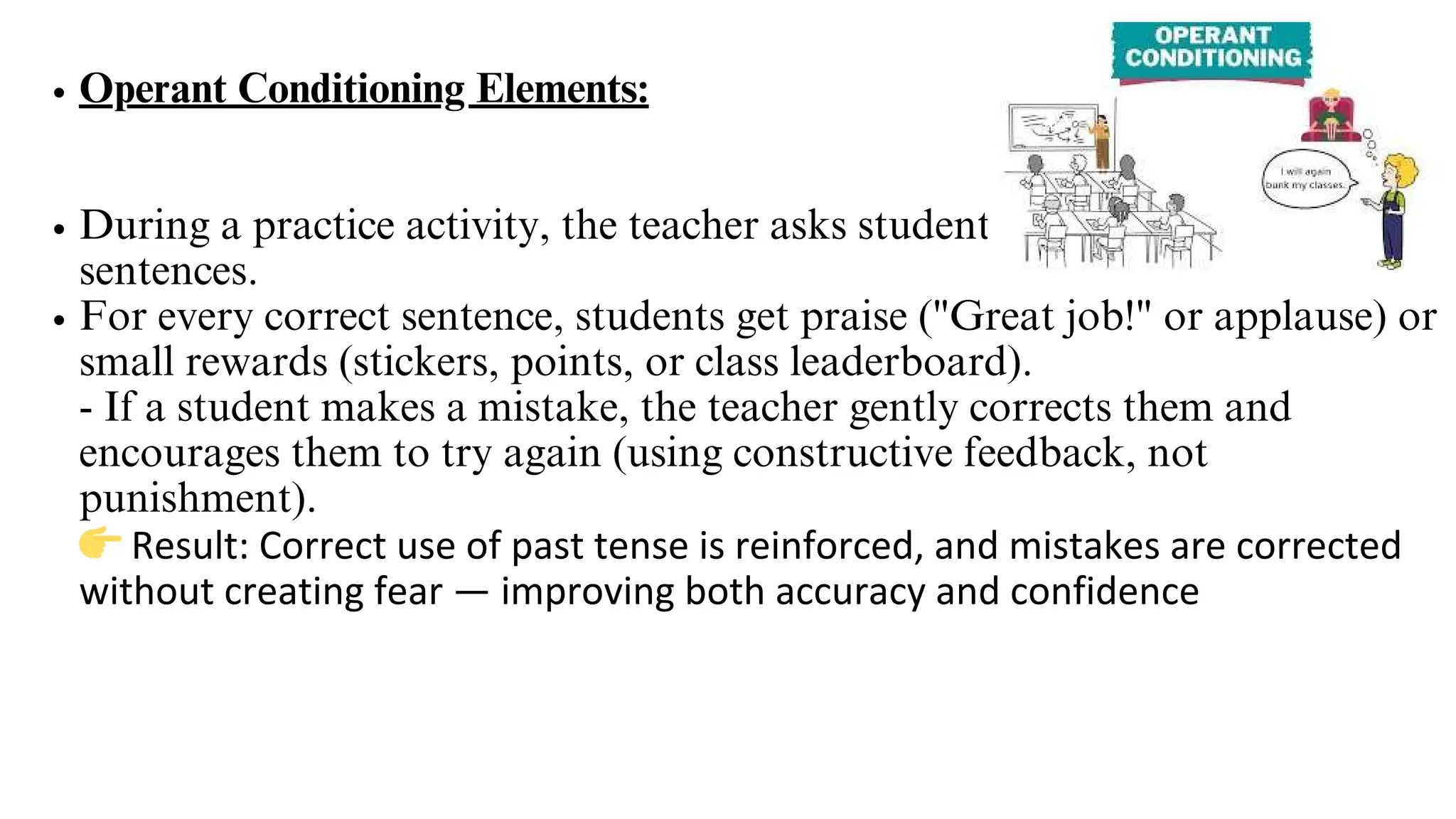
Duringa practice activity, the teacher asks students to form past tense
sentences.
For every correct sentence, students get praise ("Great job!" or applause) or
small rewards (stickers, points, or class leaderboard).
- If a student makes a mistake, the teacher gently corrects them and
encourages them to try again (using constructive feedback, not
punishment).
👉Result: Correct use of past tense is reinforced, and mistakes are corrected
without creating fear — improving both accuracy and confidence
42.
✅Summary:
Classical conditioning setsthe stage for positive emotional learning, while
operant conditioning shapes specific linguistic behaviors. When used together,
they:
Reduce classroom anxiety
Promote motivation
Reinforce correct language use-
Help build positive habits
Simple and effective
Itworks well for clear, observable
behaviors.
Used in real life
Education, parenting, animal training,
therapy.
Measurable
Easy to test, observe, and apply.
✅Strengths (Why it works):
45.
Doesn’t explain thinking
Itcan’t explain imagination, decision-making,
or emotions.
Too focused on behavior
it looks at what people do, not why they do it.
Can feel controlling
People may behave just for rewards, not
because they understand or care.
❌Limitations (Why it doesn’t always work):
Resources
Skinner, B. F.(1953). Science and human behavior. Macmillan.
Watson, J. B. (1930). Behaviorism (Revised edition). University of Chicago
Press. (Originally published 1924)
The book of Educational Psychology by Steven R. Wininger , Antony D.
Norman, and Bruce W. Tuckman
"Simple YouTube videos explaining Pavlov's Dogs or Skinner's Box." (e.g.,
CrashCourse Psychology on YouTube)
"Introductory psychology websites or textbooks." (Mention specific,
accessible ones if possible).
"Educational websites like Simply Psychology or Khan Academy
(Psychology section)."