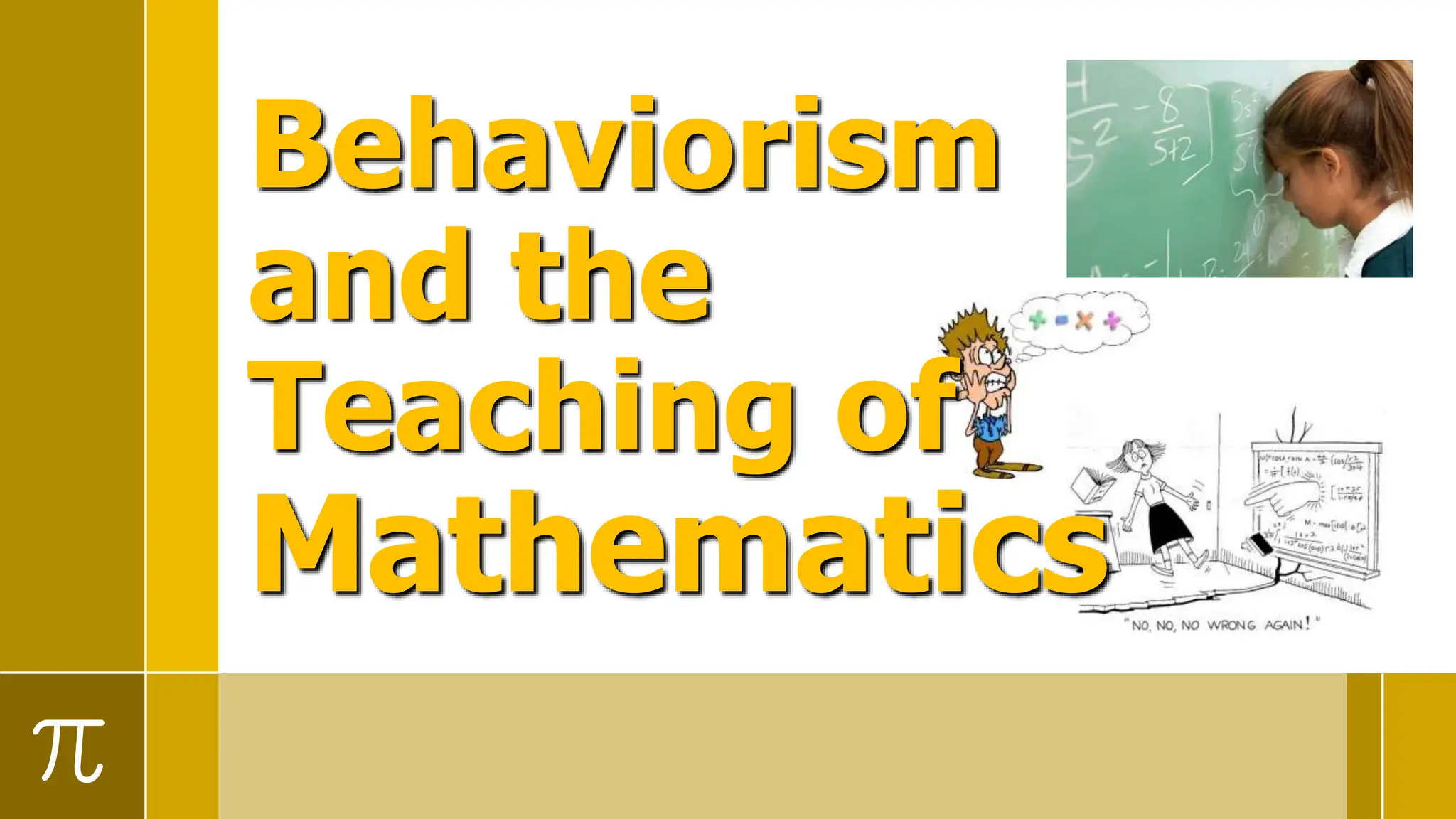
Behaviorism
and the
Teaching of
Mathematics
What is behaviorism all about?
• Behavioral psychology is the study of
external behavior
• Behavior is objective and observable,
where as what goes on in one’s mind can
never really be known or measured (the mind
is a “black box”)to a behaviorist!
• Behavior is the response of an organism to
stimuli.
History of Behaviorism
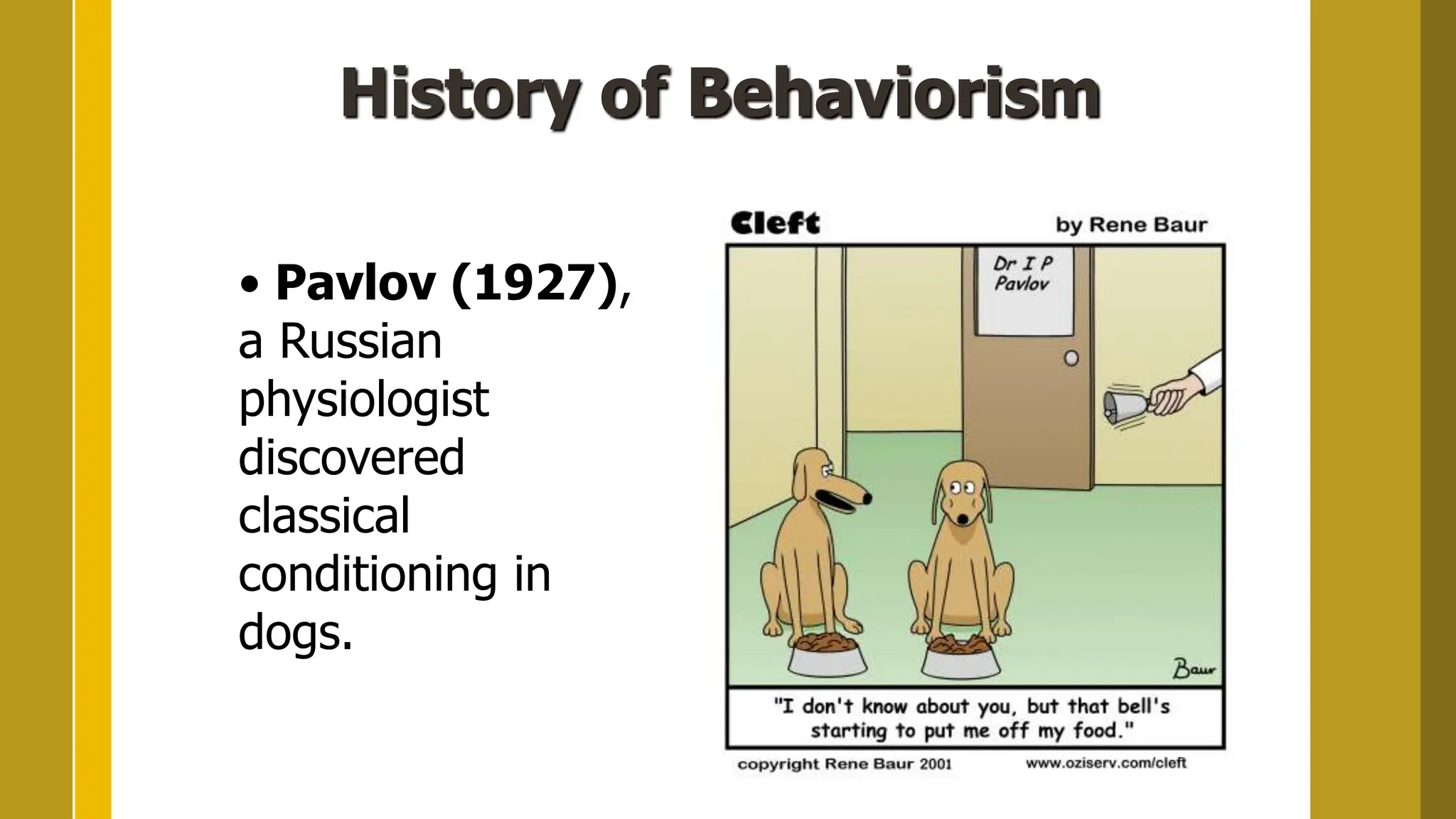
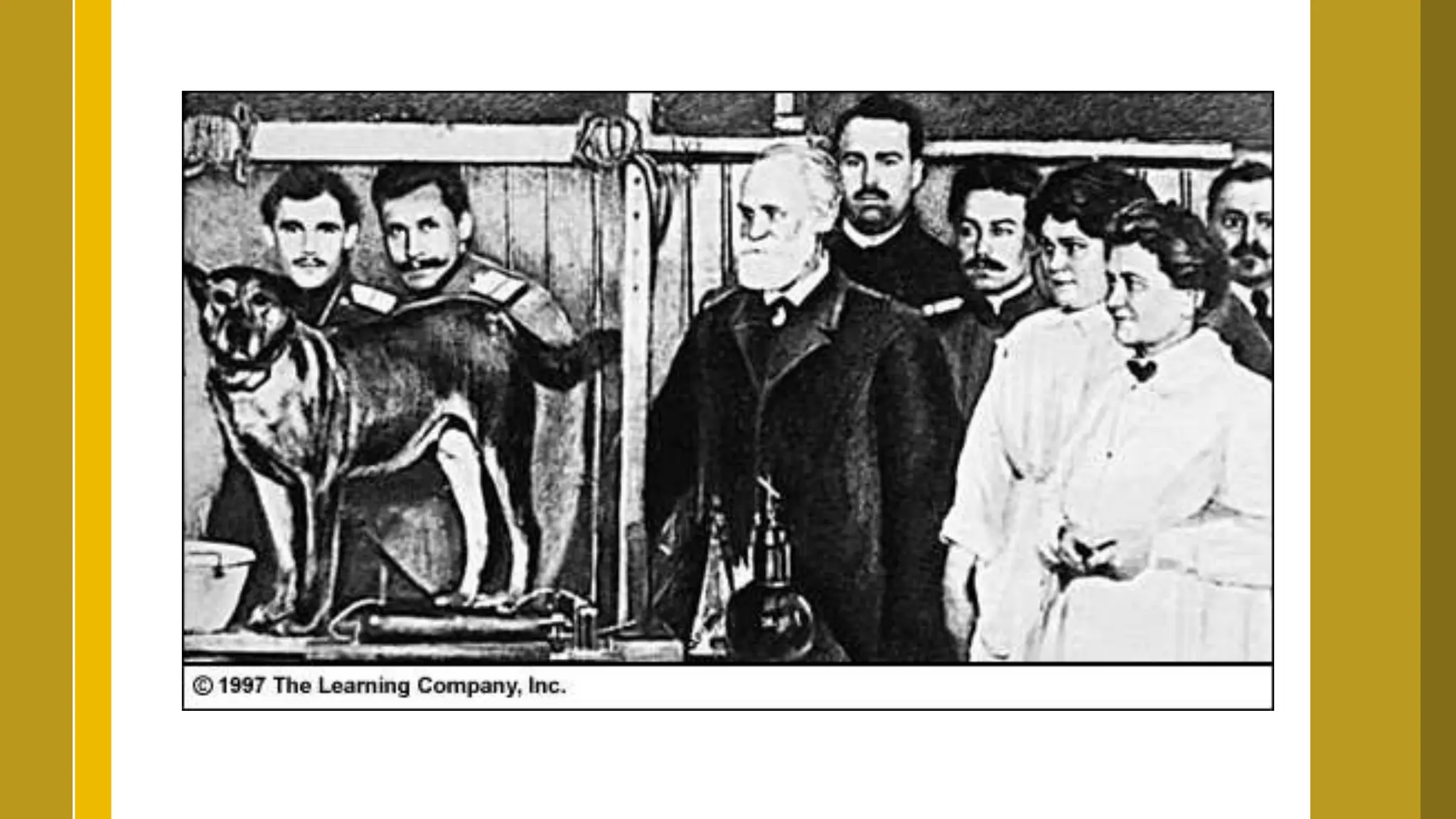
• Pavlov (1927),
a Russian
physiologist
discovered
classical
conditioning in
dogs.
Classical Conditioning
› Explains some learning of involuntary
emotional and physiological responses.
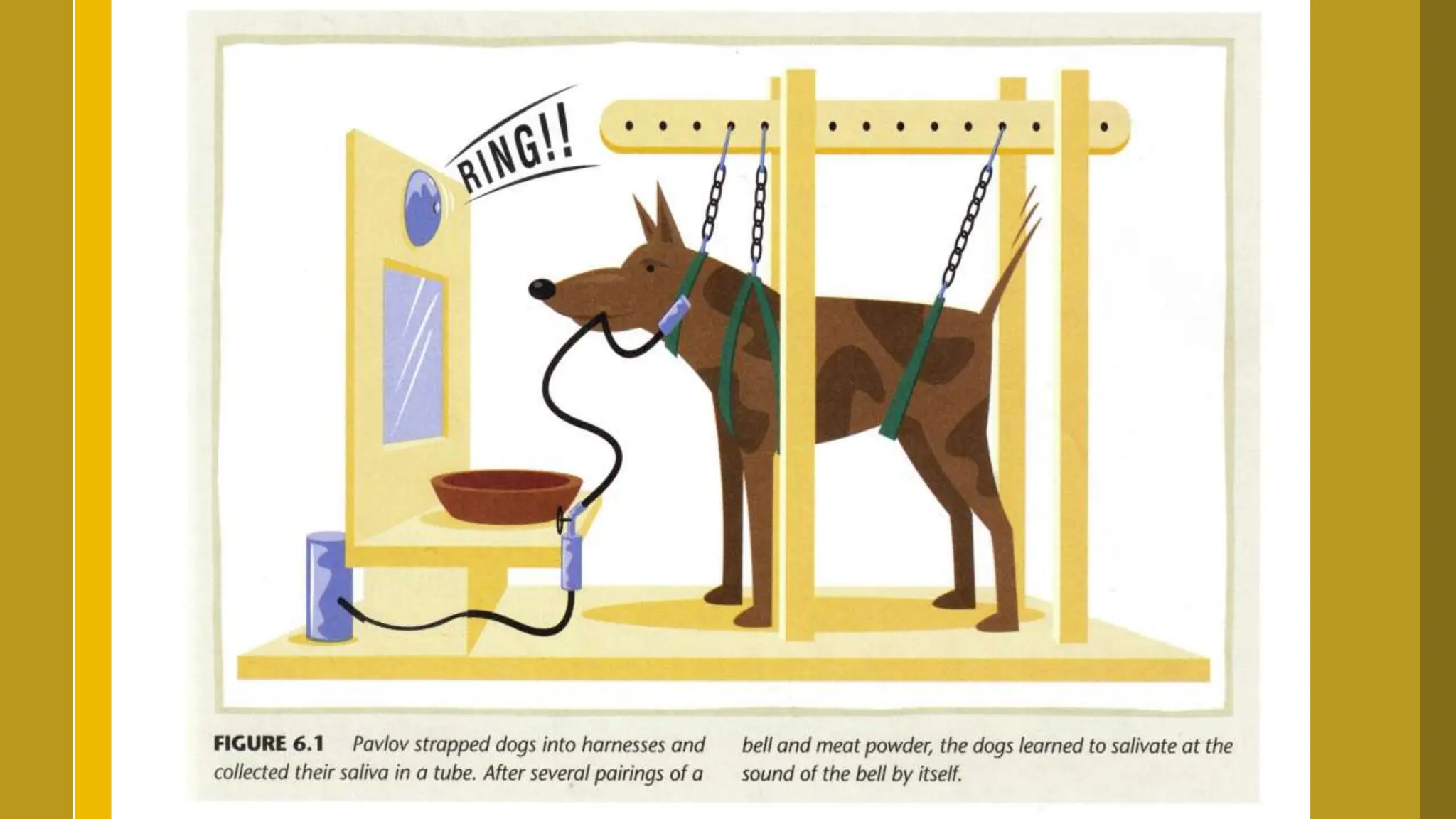
–Dog drooling when it smells food and later
when it hears a bell.
› It’s important for us as teachers to
understand since school is often the
cause of unintentional learning through
classical conditioning, especially anxiety.
–Test anxiety conditions us to have general
school anxiety.
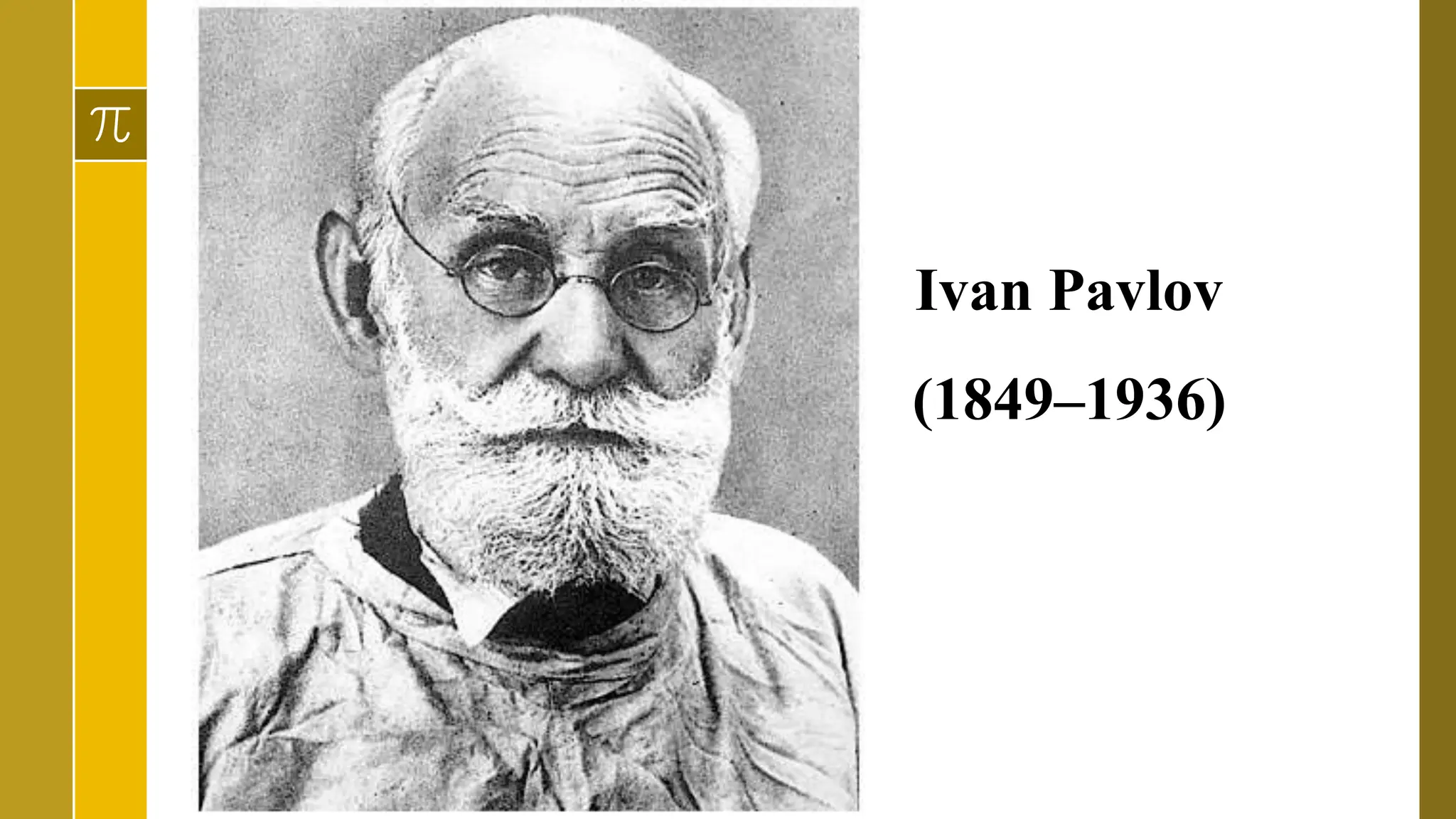
Ivan Pavlov
(1849–1936)
Classical Conditioning
• basic learning process discovered
by Pavlov that involves repeatedly
pairing a neutral stimulus with a
response-producing stimulus until
the neutral stimulus triggers the
same response
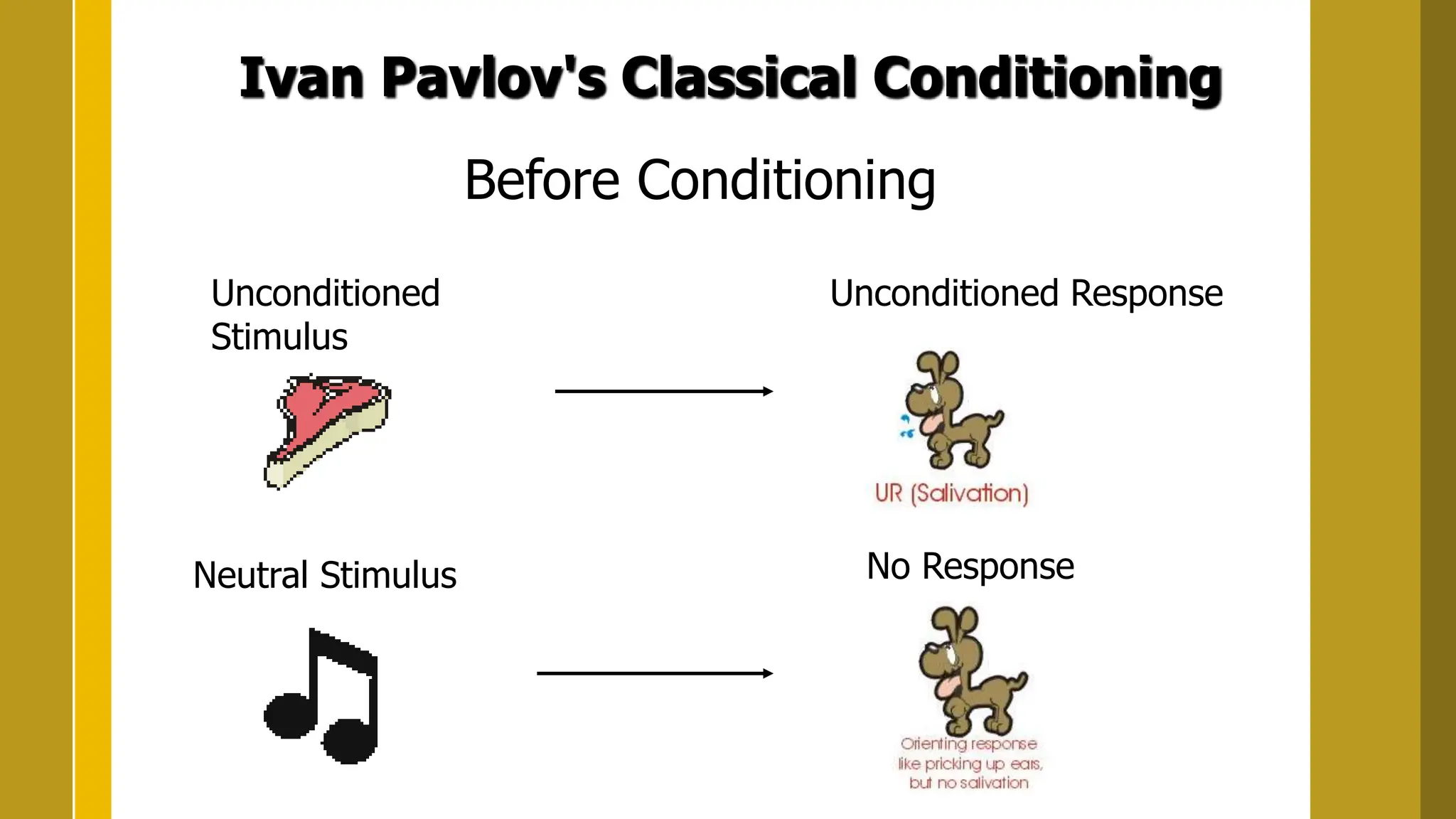
Ivan Pavlov's Classical Conditioning
Before Conditioning
Unconditioned
Stimulus
Unconditioned Response
Neutral Stimulus No Response
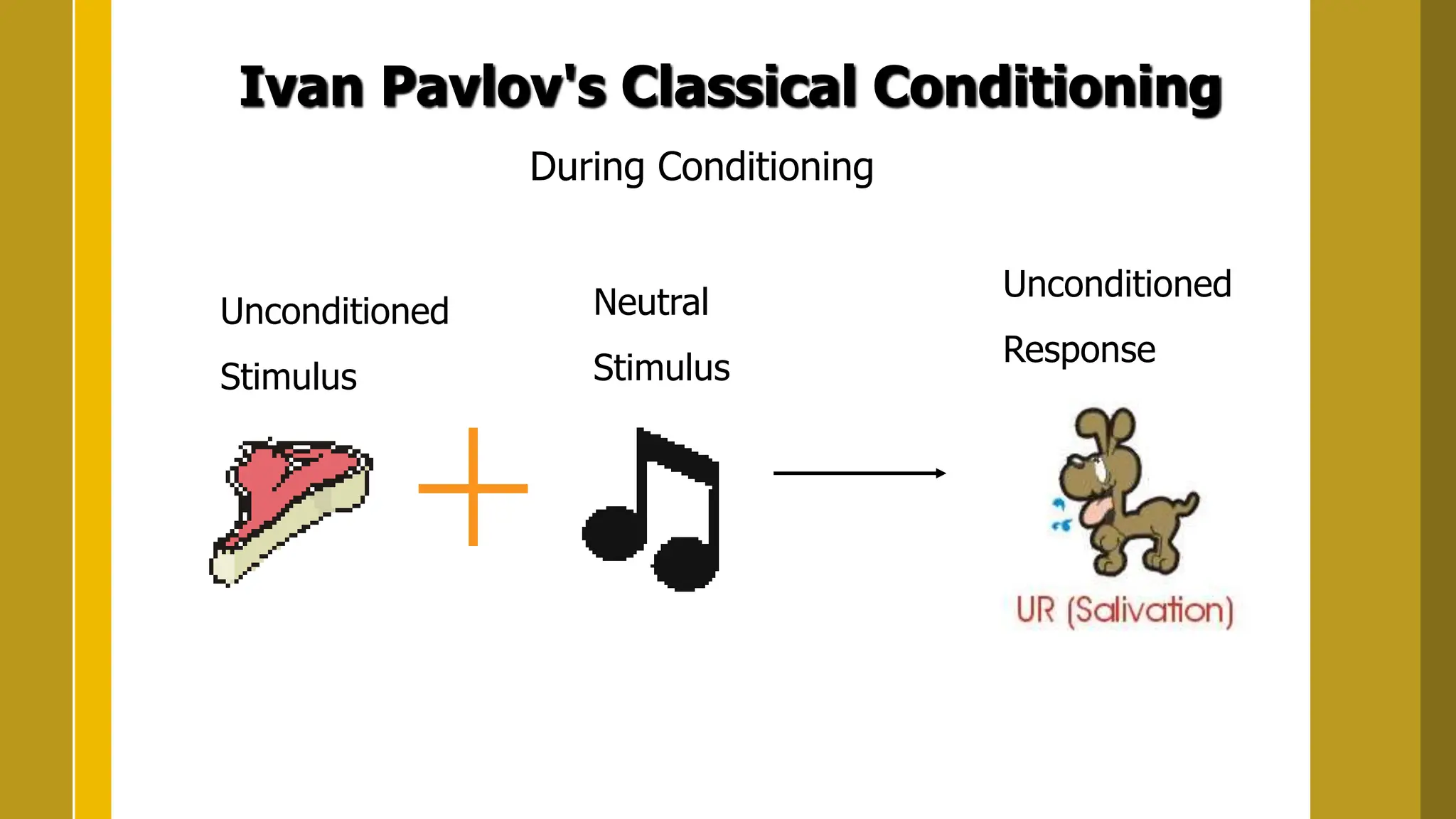
Ivan Pavlov's Classical Conditioning
During Conditioning
Unconditioned
Stimulus
Neutral
Stimulus
Unconditioned
Response
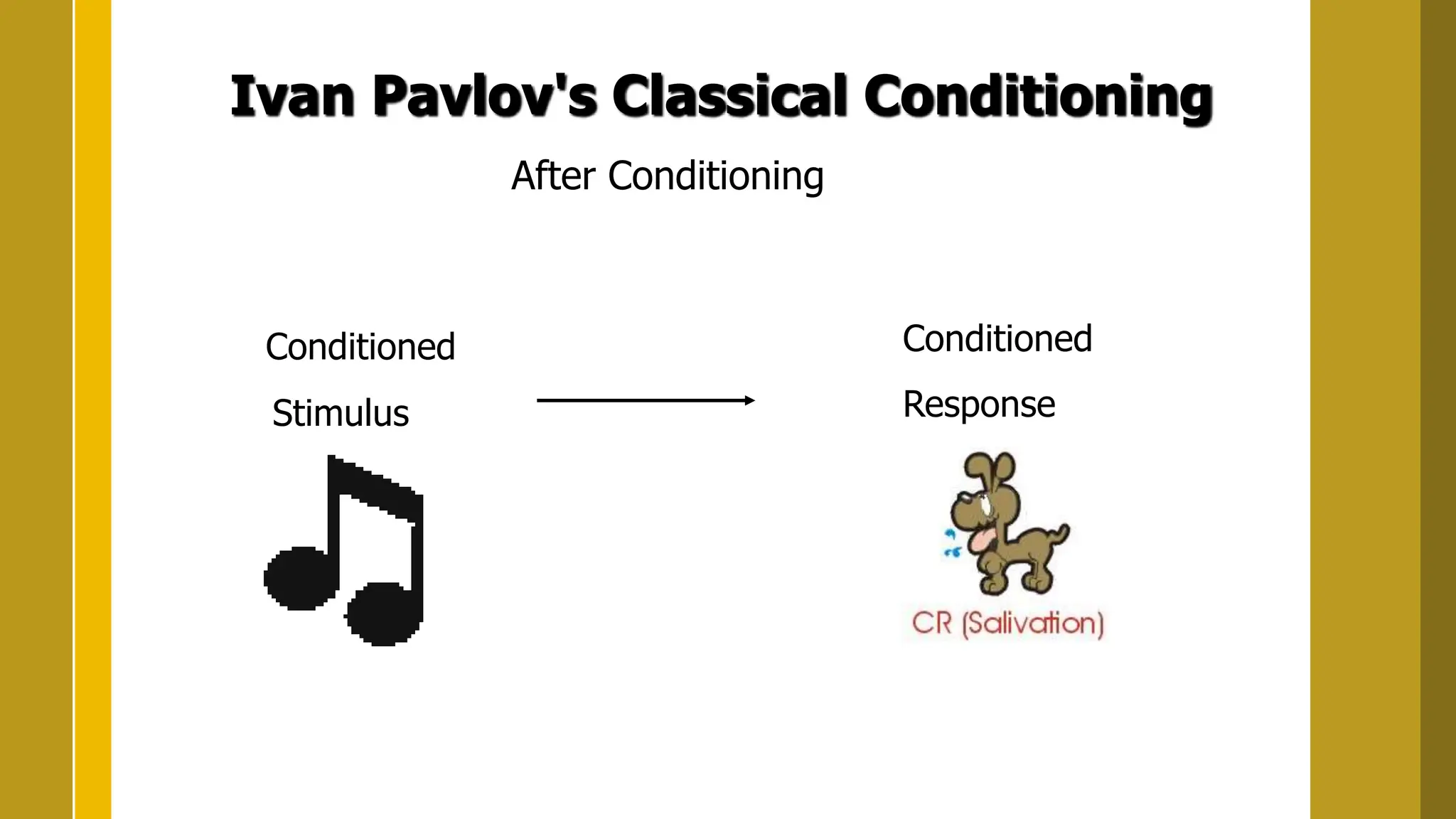
Ivan Pavlov's Classical Conditioning
After Conditioning
Conditioned
Stimulus
Conditioned
Response
More Examples of Classical Conditioning
› Kids who often get strep throat, after much
swabbing of their throat, begin to gag as soon as
they see the doctor with the swab.
› Hearing a teacher, roommate, boyfriend/girlfriend
say to you, “We need to talk”. Upon hearing this
phrase your stomach “flutters”.
› The point is, we learn to associate a stimulus
with a response, and eventually our body does this
automatically in the presence of the stimulus.
In CC, the response is involuntary.
Shoulder Partner Discussion topic:
Examples of Classical Conditioning
in the Mathematics Classroom:
Classical Conditioning …..
› Classical conditioning can face “extinction”,
where the learning is undone.
–This can happen naturally (the dog stops getting
meat when music is played)
–Or can happen through some type of therapy in
the case of severe anxiety reactions
› Ex: people who are afraid to fly….
› Remember: Classical conditioning is more
than forming an association – it is an
involuntary, physiological response
Classical Conditioning in the Classroom
› Playing soothing music, dimming the lights
to calm and relax students
› Unintentional classical conditioning:
–Test anxiety
–Math anxiety
–Public speaking anxiety
–General school anxiety
B.F. Skinner (1904 –1990)
• American psychologist - influential from the 1930’s -
60’s – developed ‘Operant Conditioning’
• Skinner was interested in education
– He believed that behavior is sustained by
reinforcements or rewards, not by free will.
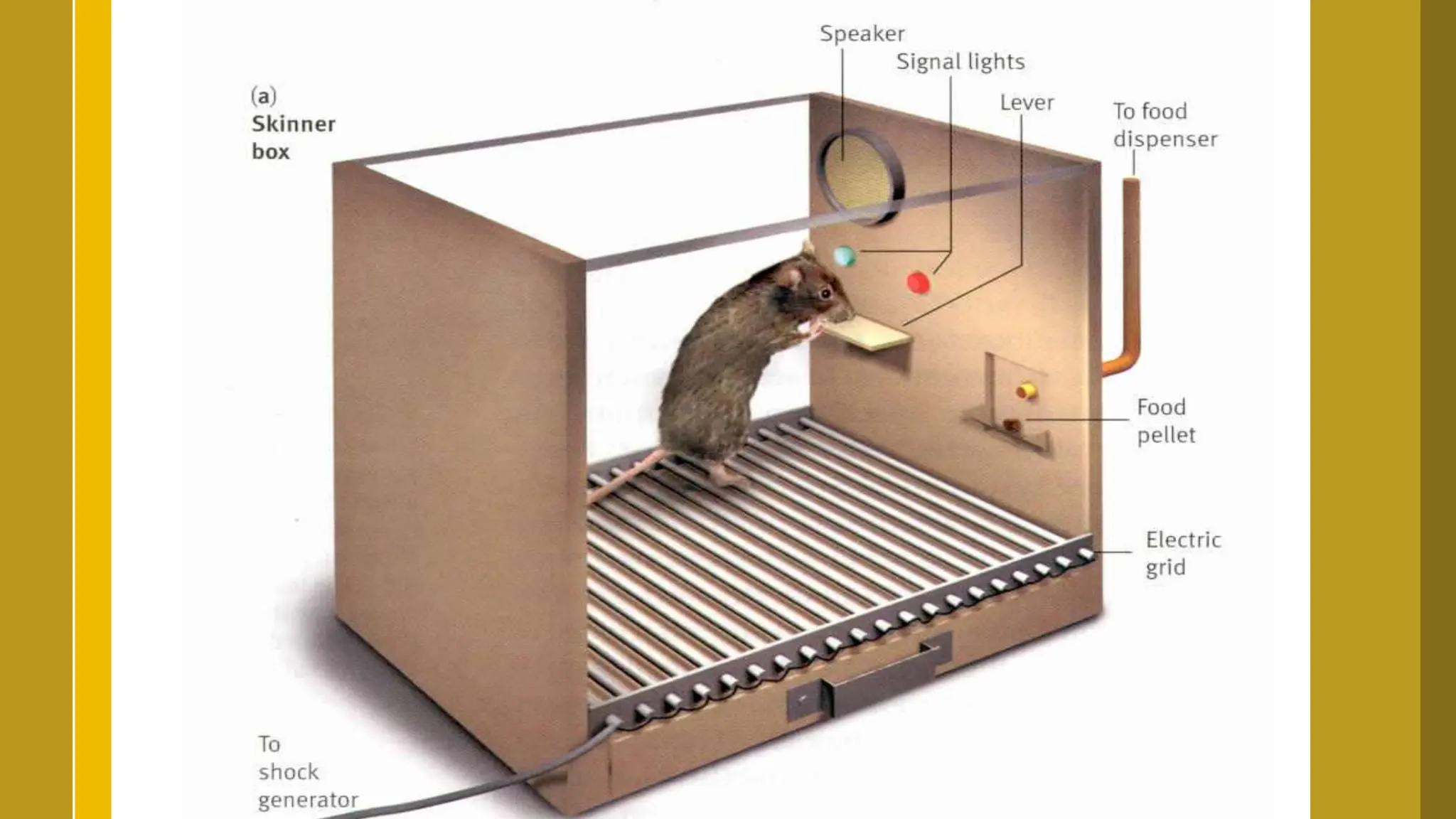
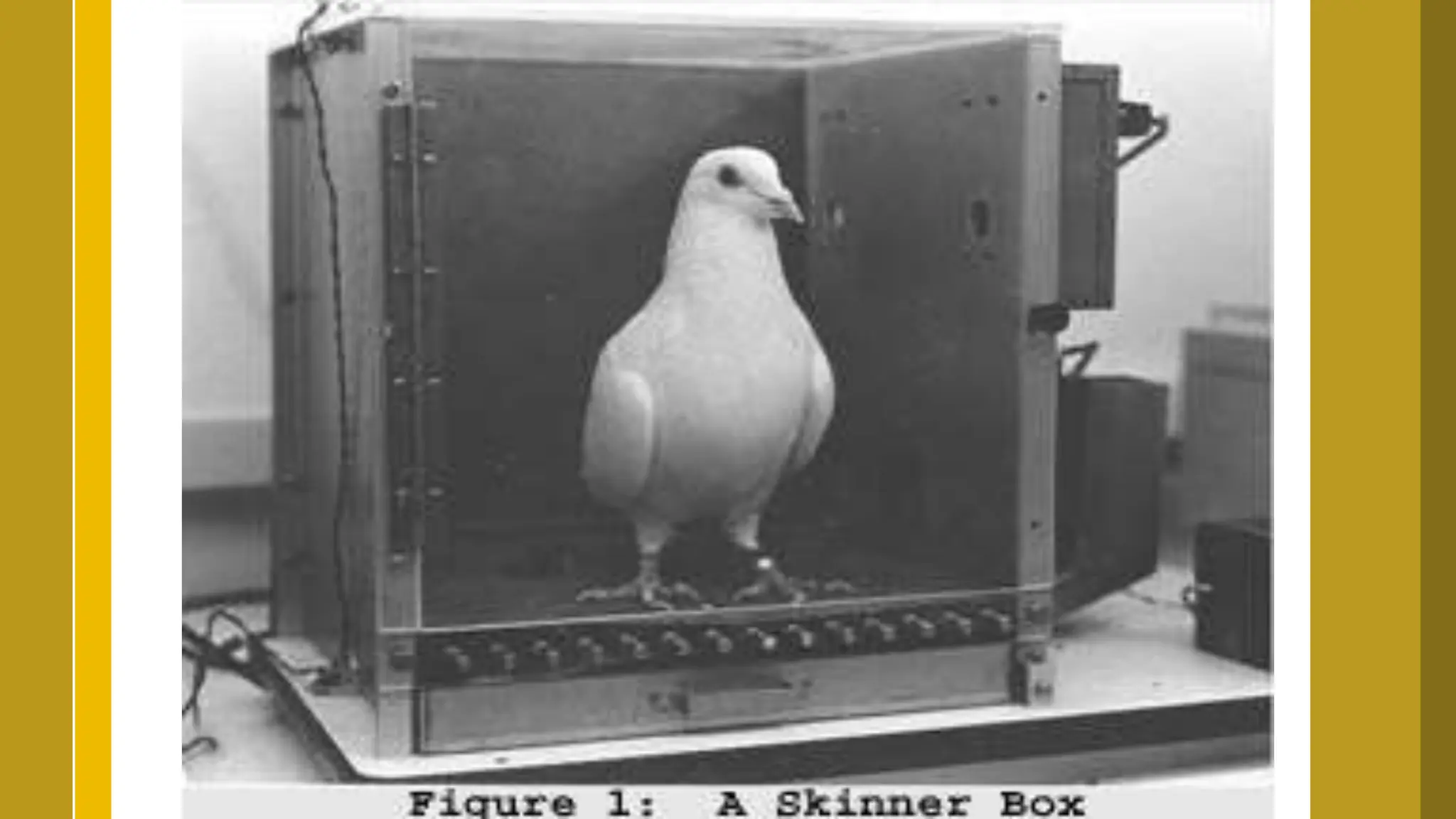
• Famous for the Skinner box & the teaching machine
• Often worked with pigeons
& rats and applied what he learned
with these animals to human learning.
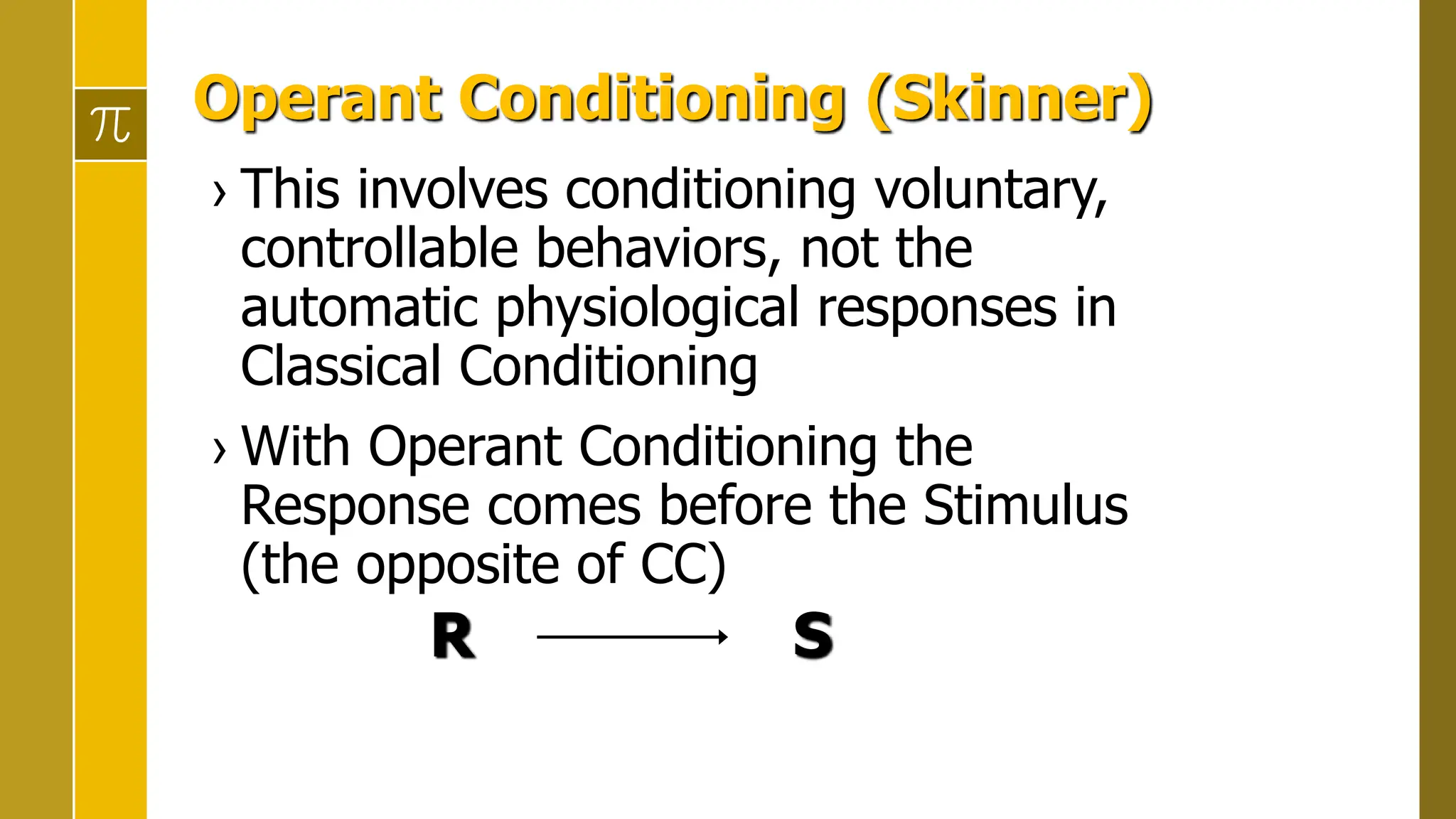
Operant Conditioning (Skinner)
› This involves conditioning voluntary,
controllable behaviors, not the
automatic physiological responses in
Classical Conditioning
› With Operant Conditioning the
Response comes before the Stimulus
(the opposite of CC)
R S
Operant Conditioning
› Teachers can deliberately use operant
conditioning with their students (training)
› How someone reacts to our behaviors
determines whether or not we continue the
behavior
–if we are rewarded for something we will likely
do it again - do you do this as a teacher?
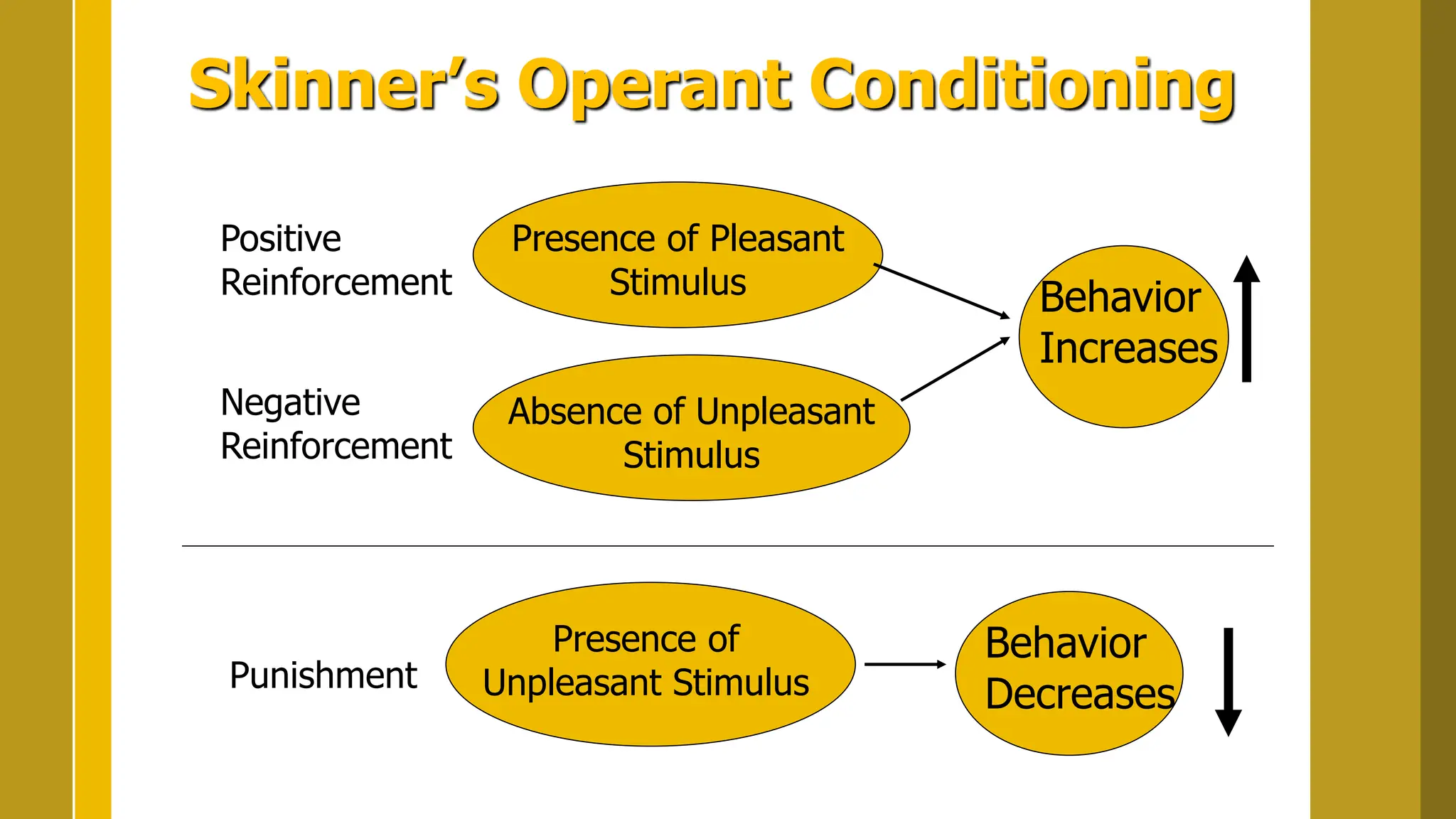
Skinner’s Operant Conditioning
Behavior
Increases
Behavior
Decreases
Positive
Reinforcement
Negative
Reinforcement
Punishment
Presence of Pleasant
Stimulus
Absence of Unpleasant
Stimulus
Presence of
Unpleasant Stimulus
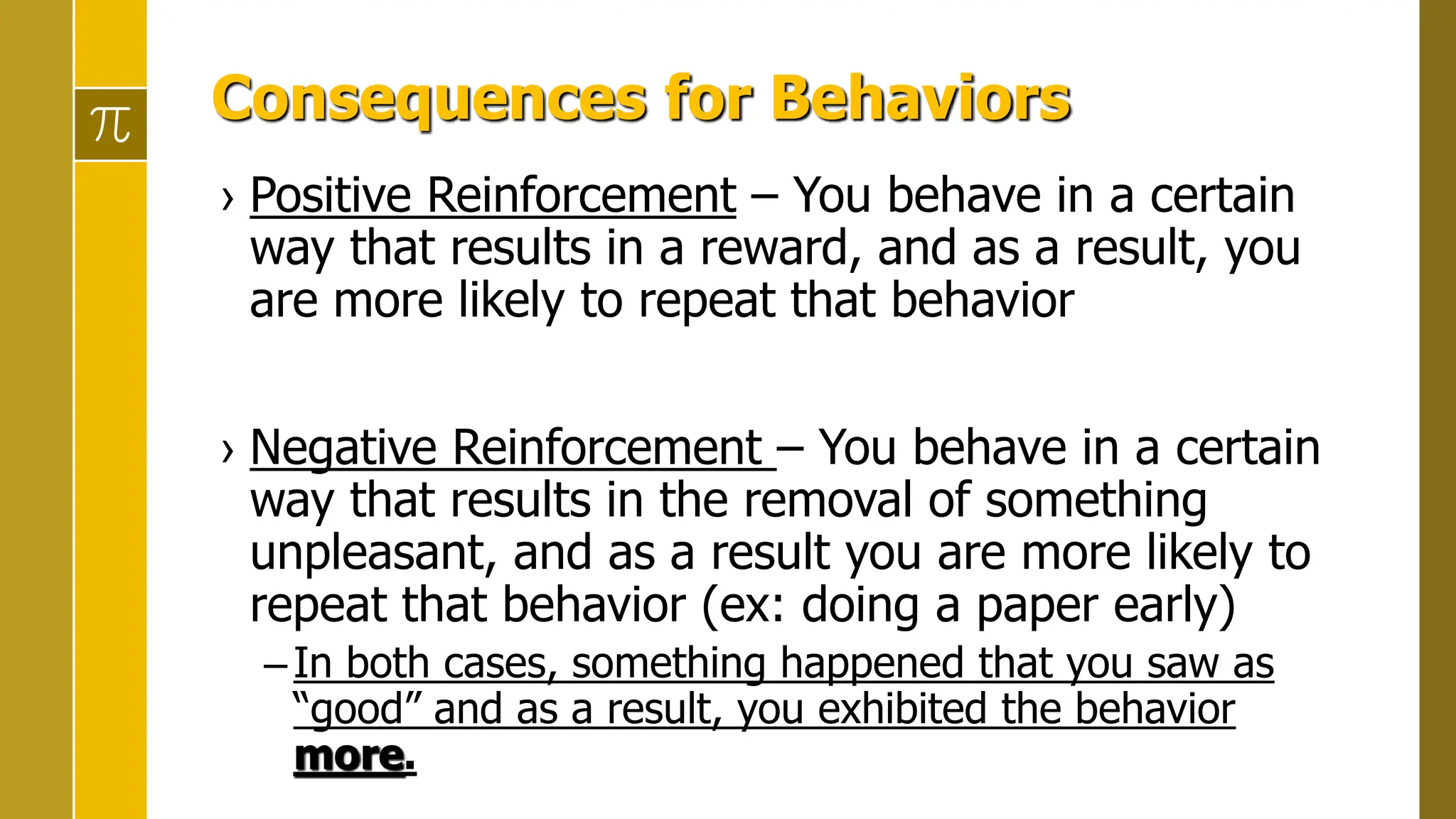
Consequences for Behaviors
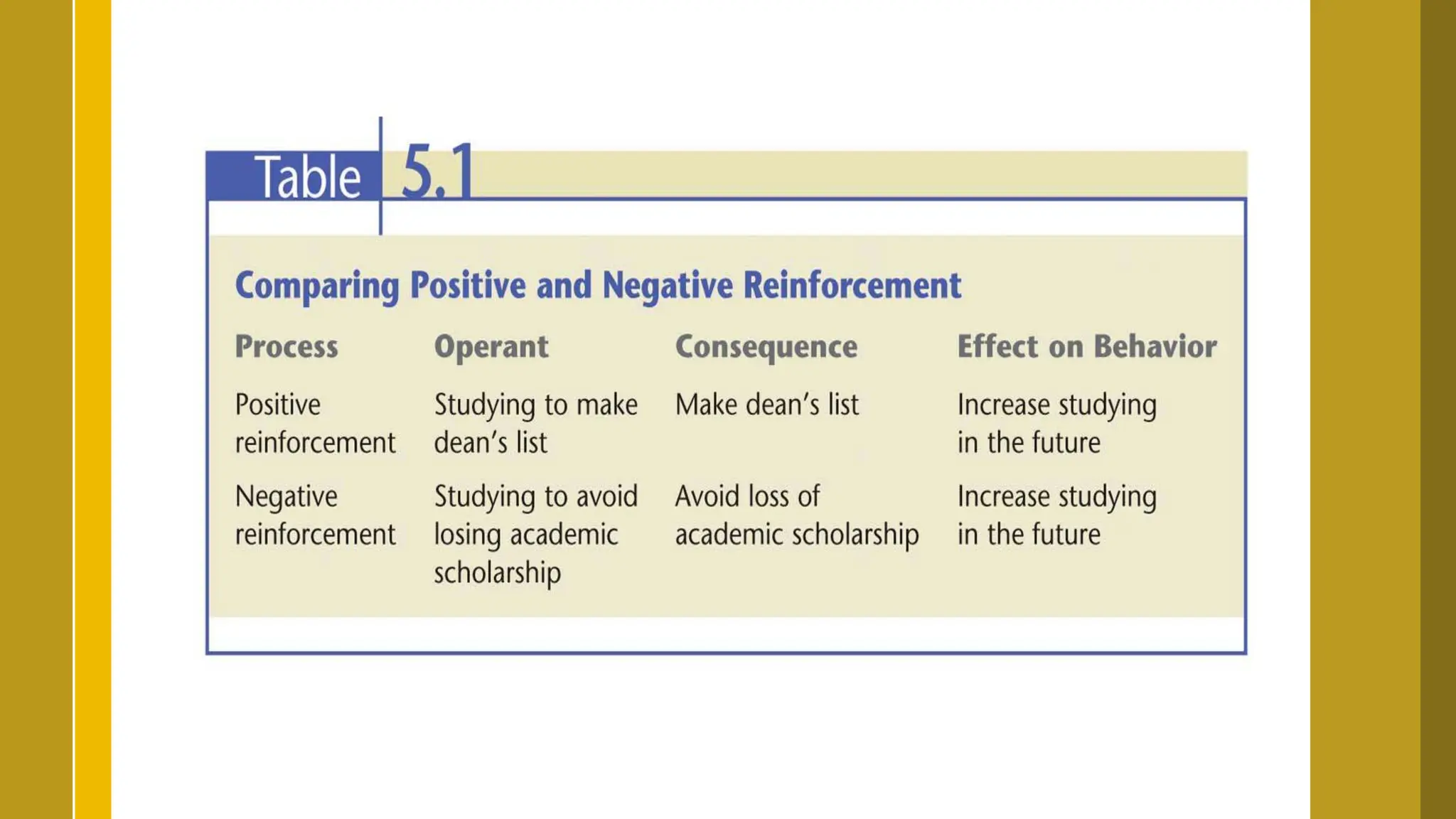
› Positive Reinforcement – You behave in a certain
way that results in a reward, and as a result, you
are more likely to repeat that behavior
› Negative Reinforcement – You behave in a certain
way that results in the removal of something
unpleasant, and as a result you are more likely to
repeat that behavior (ex: doing a paper early)
–In both cases, something happened that you saw as
“good” and as a result, you exhibited the behavior
more.
Consequences for Behaviors
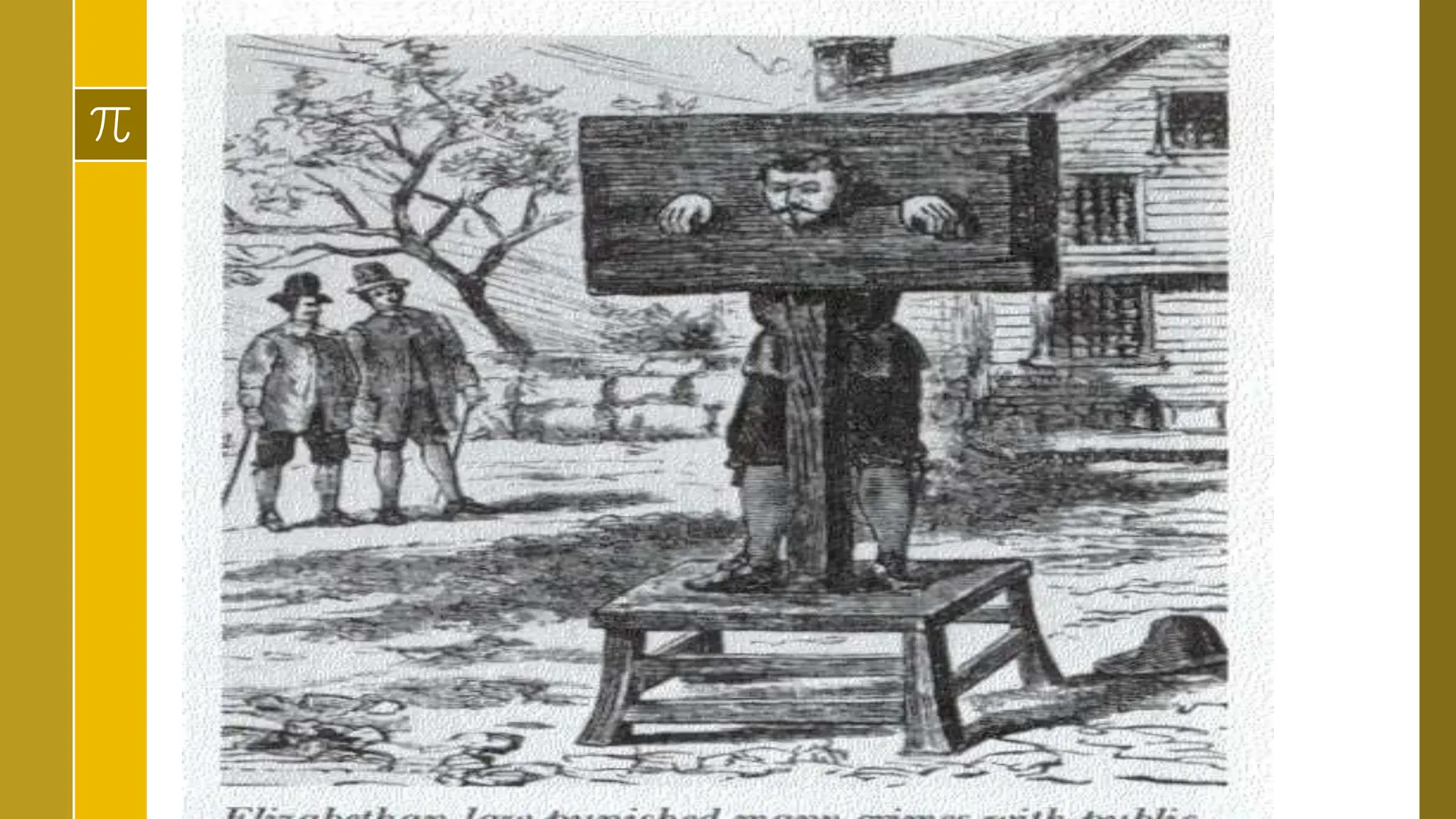
› Punishment – A consequence that follows a
behavior so that you do the behavior less
often in the future.
–Punishment can involve adding something
(paying a fine, staying after school) or involve
removing something you like (losing recess
time, leaving your friends)
–In both cases, adding something or removing
something, you perceive it as “bad” and as a
result, you exhibit the behavior less.
Differences Between Negative
Reinforcement & Punishment
› Negative reinforcement: Something unpleasant
is removed & as a result you are more likely to
do it again
–Something happened that was “good”
› Punishment: A consequence happens that you
don’t like and you are less likely to do it again.
The punishment can add something or take
something away.
–Something happened that was “bad”
Shaping New Behaviors
› Shaping is a process of reinforcing a series of
responses that increasingly resemble the desired
final behavior
› When a desired behavior occurs rarely or not at
all, we use shaping
–First reinforce any response that in some way
resembles the desired behavior, then one that is
closer etc.
–Think of animal training or the hyper kid who can’t sit
in his chair in class – do things in small steps
Operant Conditioning
› learning process in which behavior is
shaped and maintained by manipulating
its consequences
› Operant conditioning involves voluntary
behaviors.
› Operants are actions upon the
environment, which may lead to
reinforcement or punishment
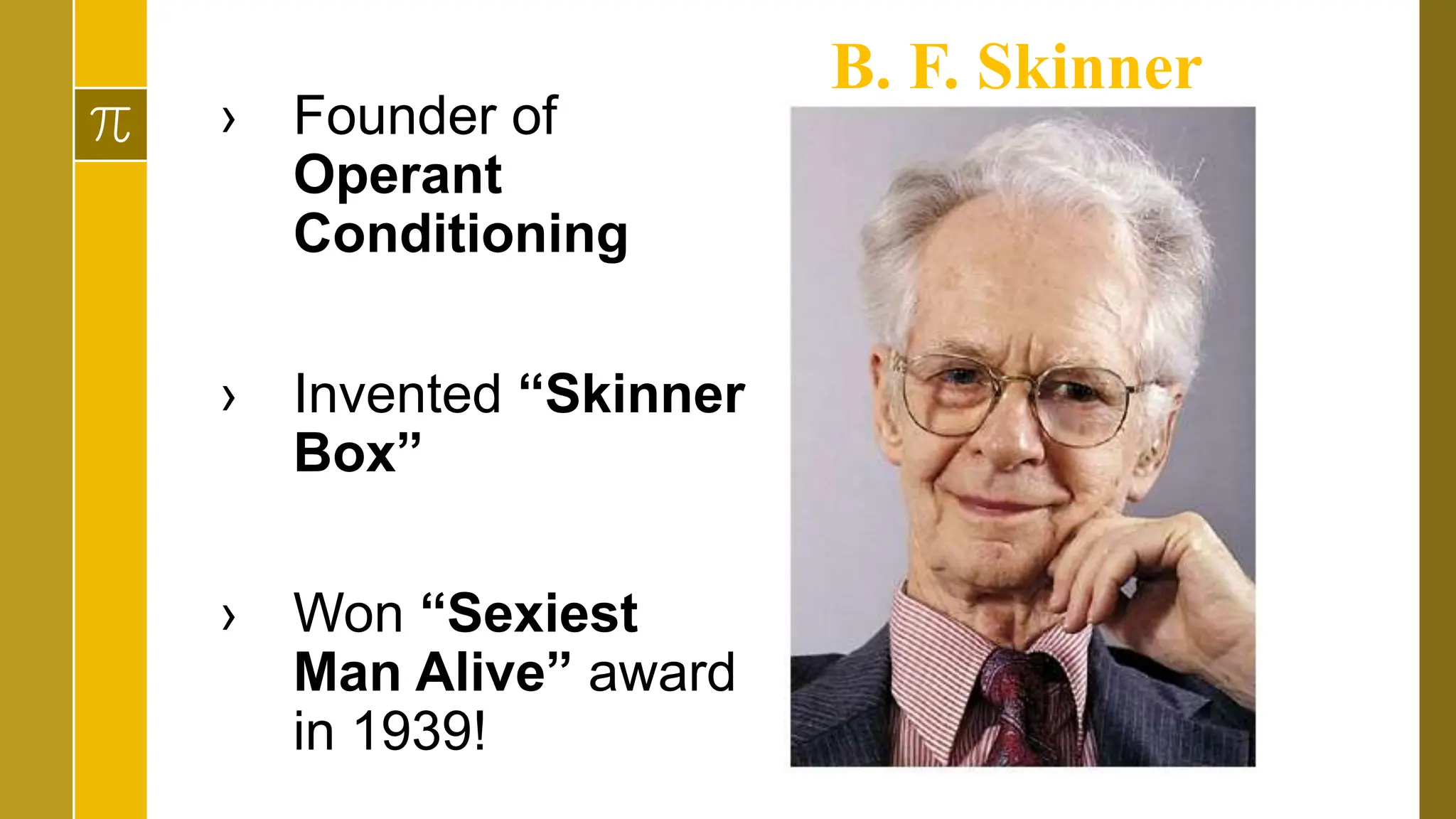
› Founder of
Operant
Conditioning
› Invented “Skinner
Box”
› Won “Sexiest
Man Alive” award
in 1939!
B. F. Skinner
Reinforcement
› anything that strengthens a response or
increases ( ) the chance that it will
occur
› almost anything can act as a reinforcer –
food, sex, vacation, etc.
› Remember: Reinforcement INCREASES
( ) behavior.
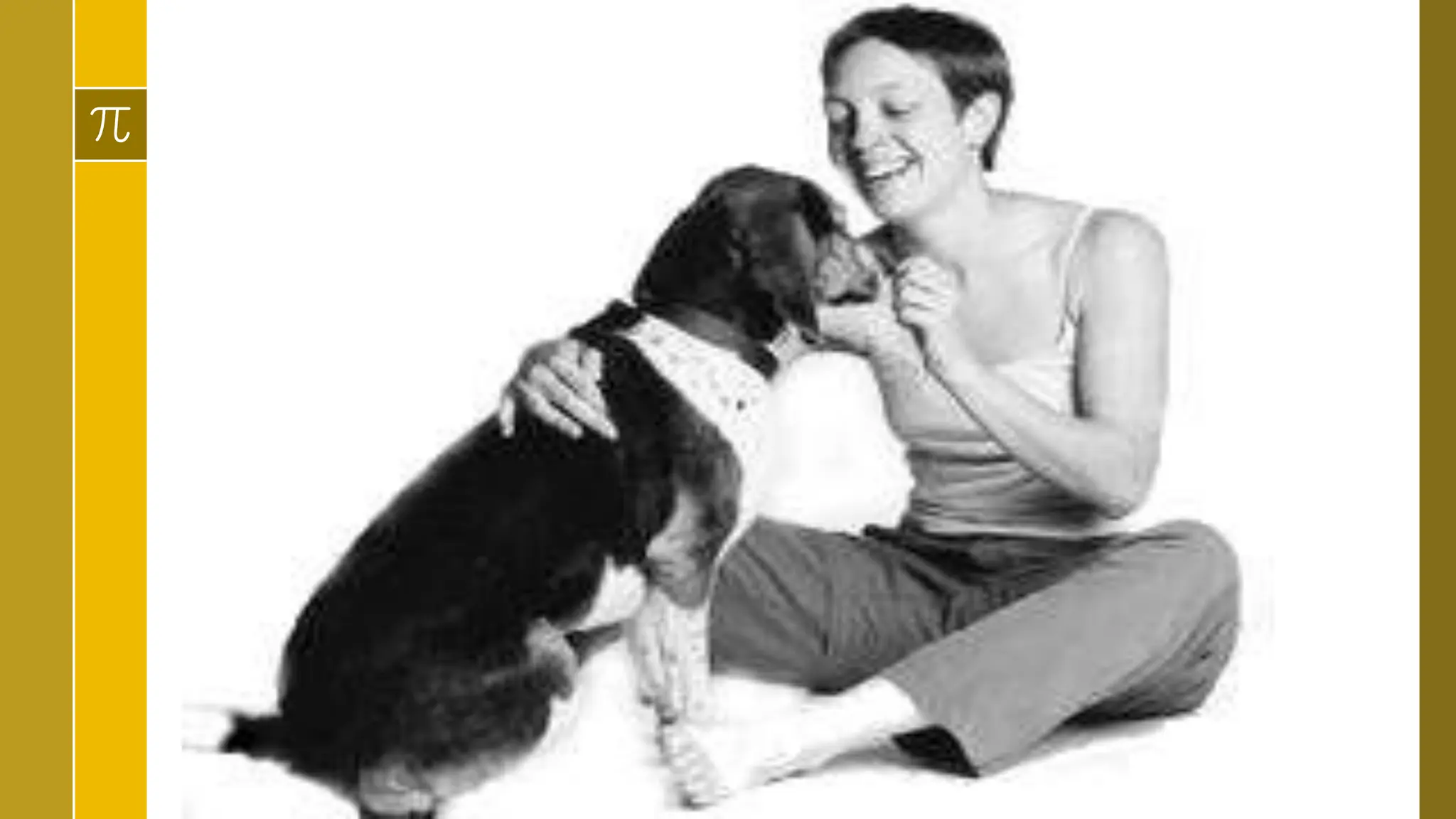
Positive Reinforcement
• Positive consequence that increases
the chance of desired behavior
because something is added (+) or
presented.
• Can be thought of as a reward
• Represented by: + positive (+),
reinforcement ( )
Negative Reinforcement
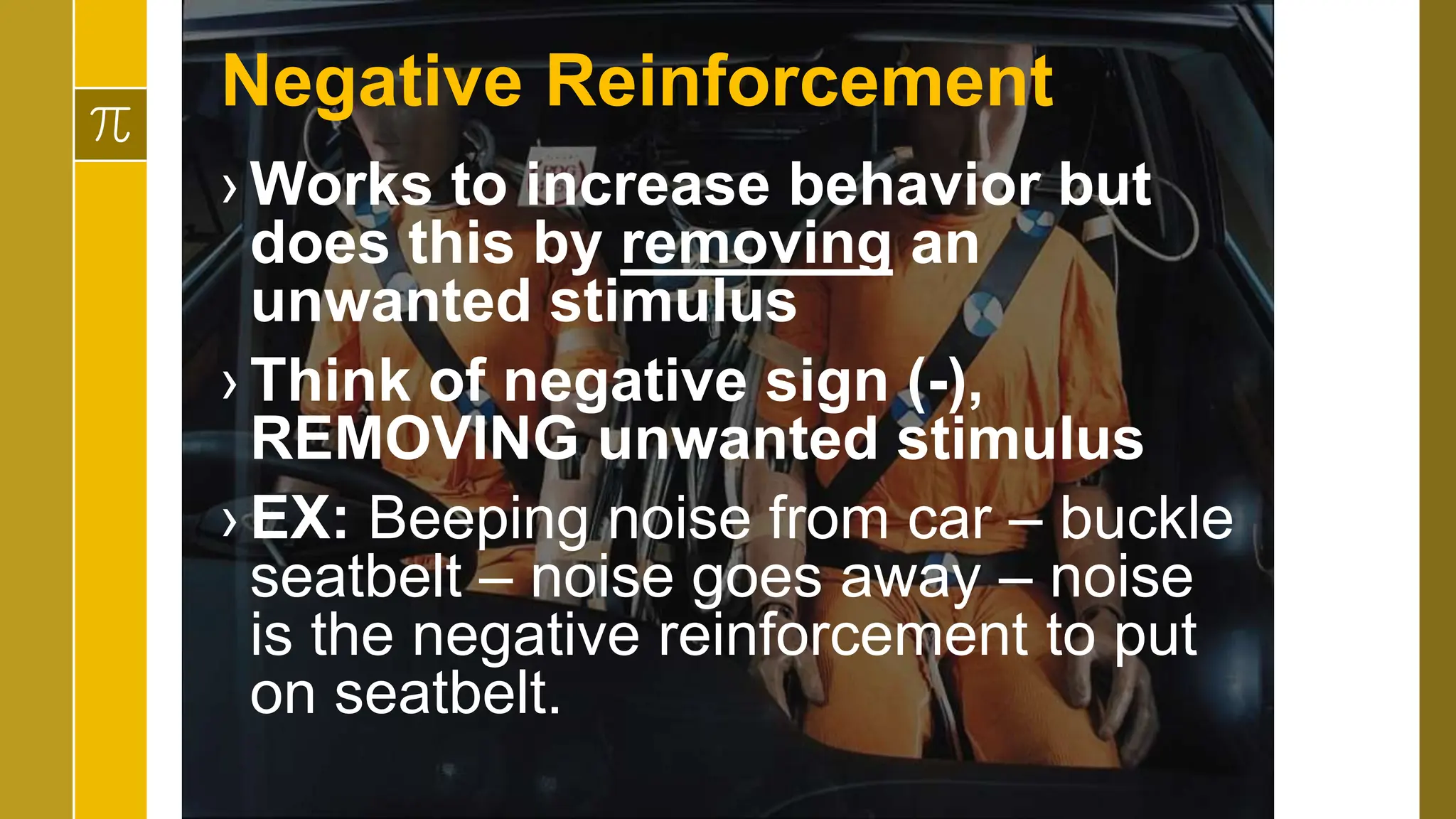
› Works to increase behavior but
does this by removing an
unwanted stimulus
› Think of negative sign (-),
REMOVING unwanted stimulus
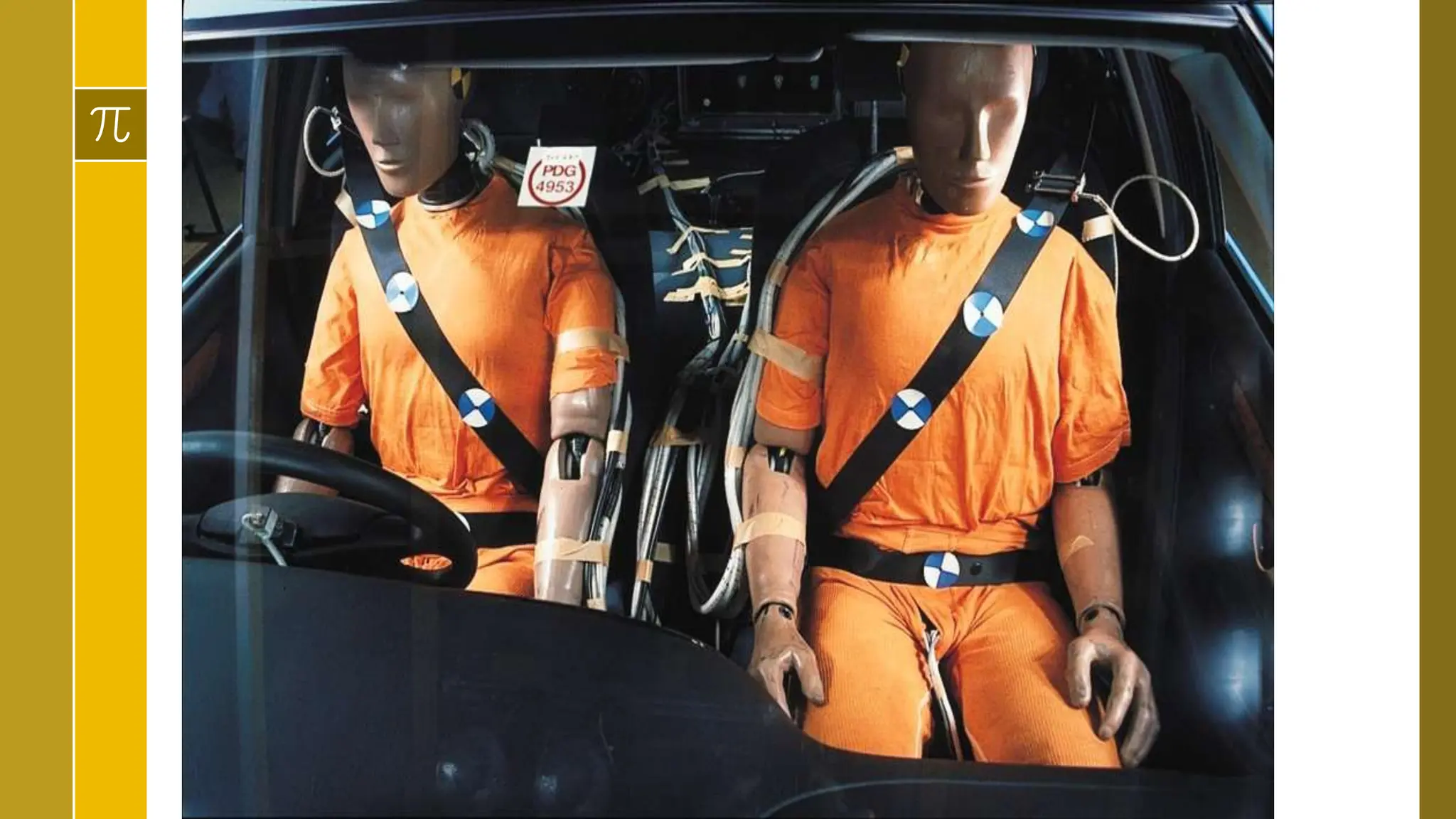
› EX: Beeping noise from car – buckle
seatbelt – noise goes away – noise
is the negative reinforcement to put
on seatbelt.
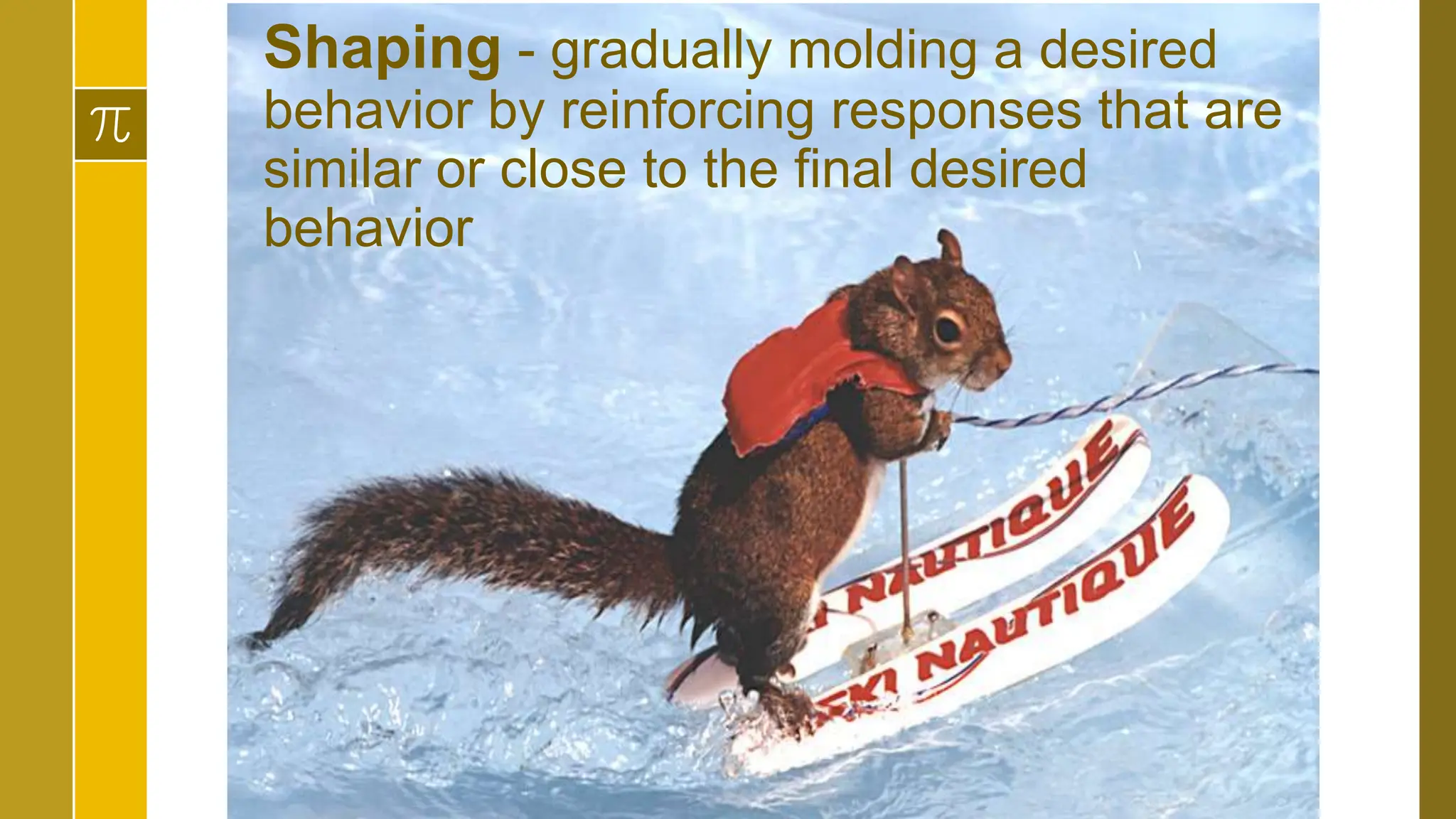
Shaping - gradually molding a desired
behavior by reinforcing responses that are
similar or close to the final desired
behavior
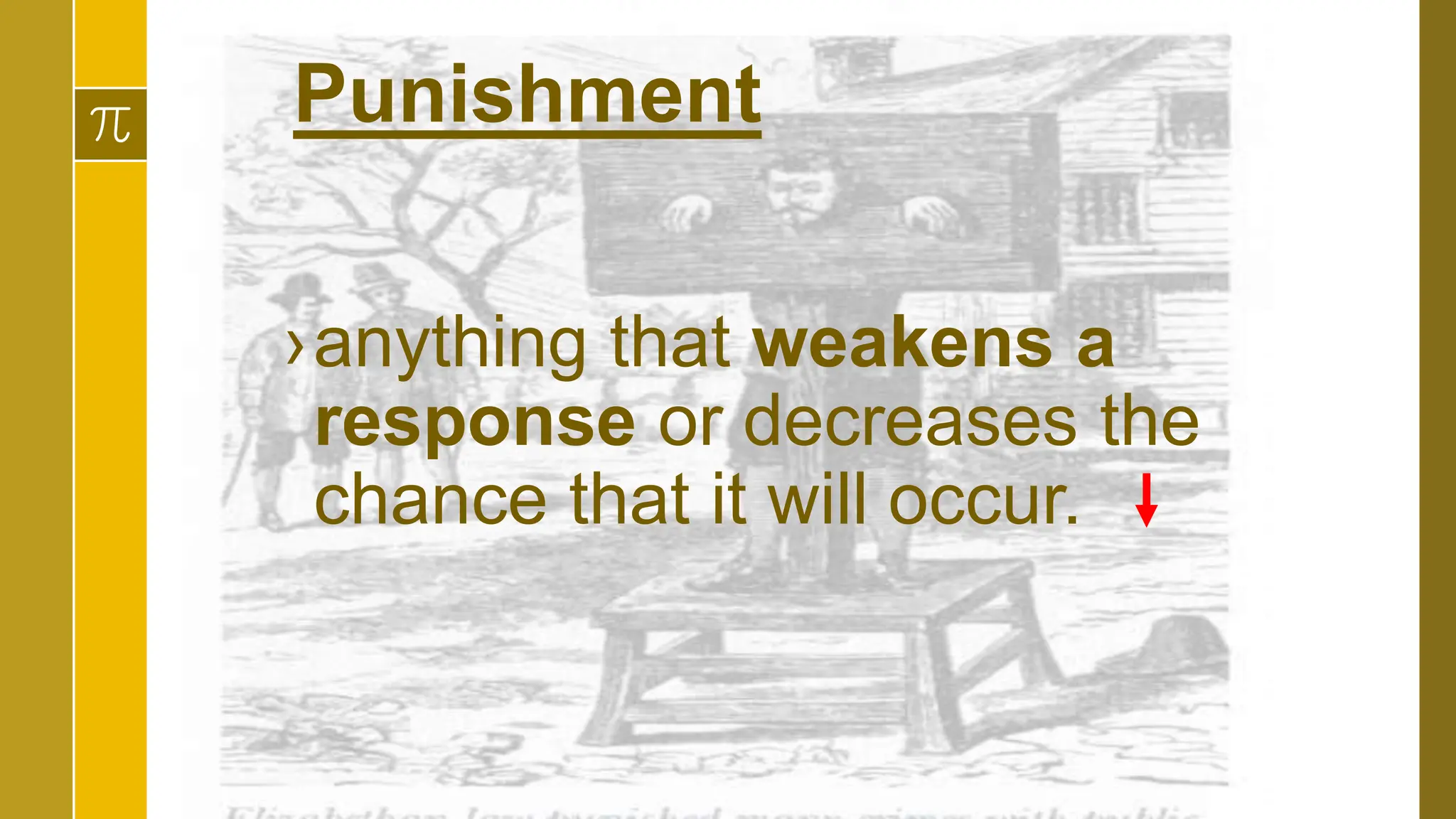
Punishment
›anything that weakens a
response or decreases the
chance that it will occur.
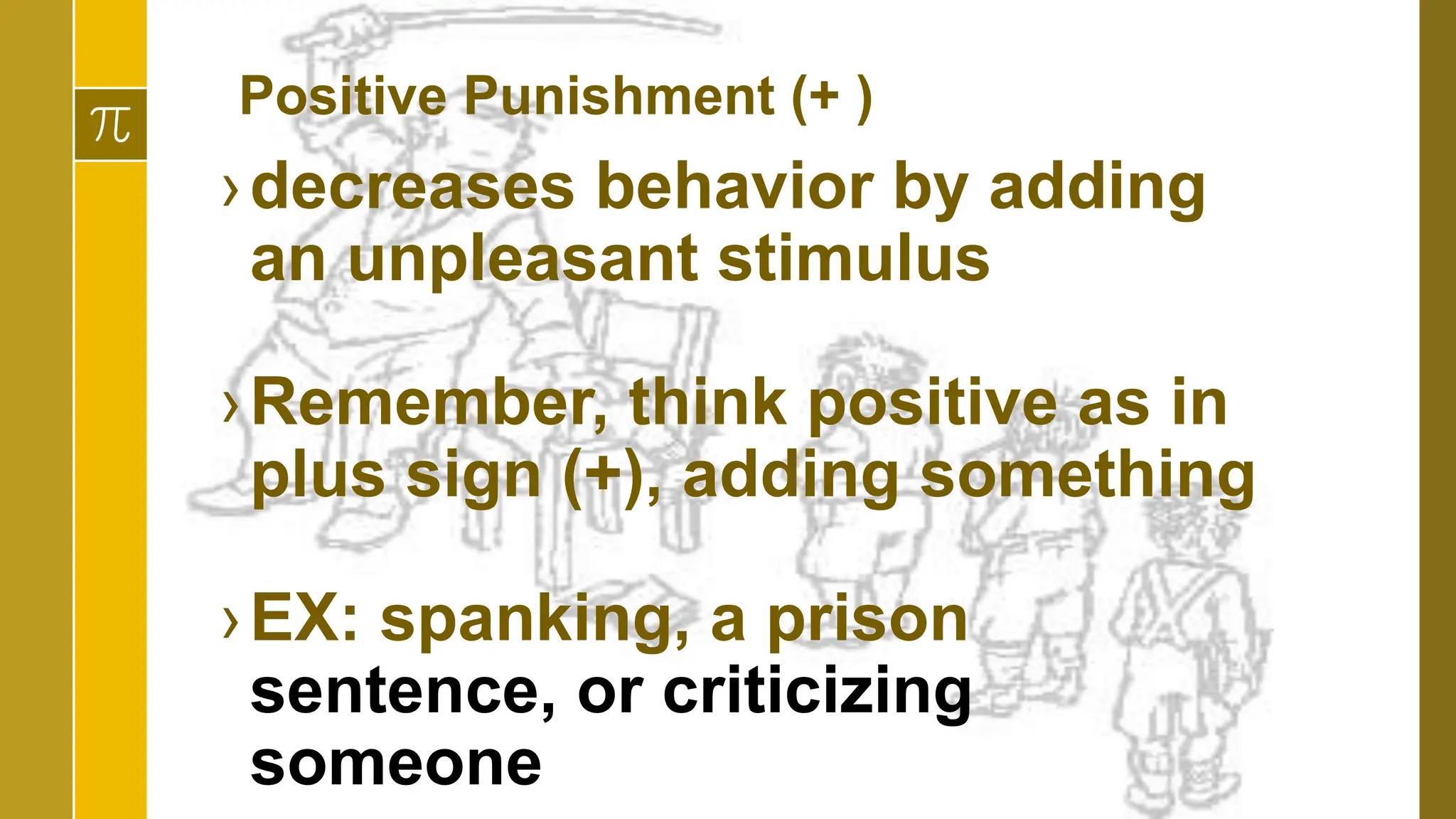
Positive Punishment (+ )
›decreases behavior by adding
an unpleasant stimulus
›Remember, think positive as in
plus sign (+), adding something
›EX: spanking, a prison
sentence, or criticizing
someone
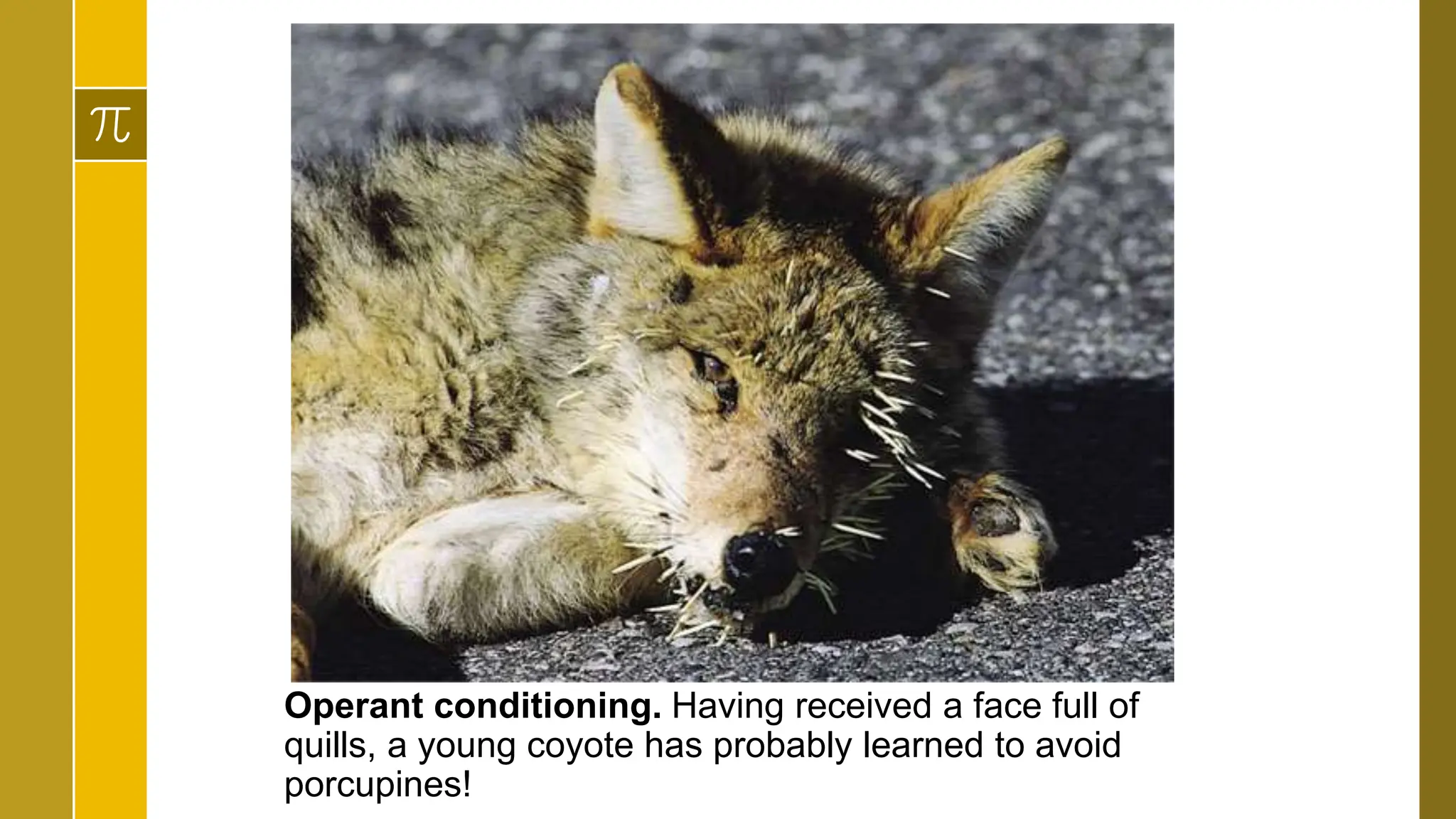
Operant conditioning. Having received a face full of
quills, a young coyote has probably learned to avoid
porcupines!
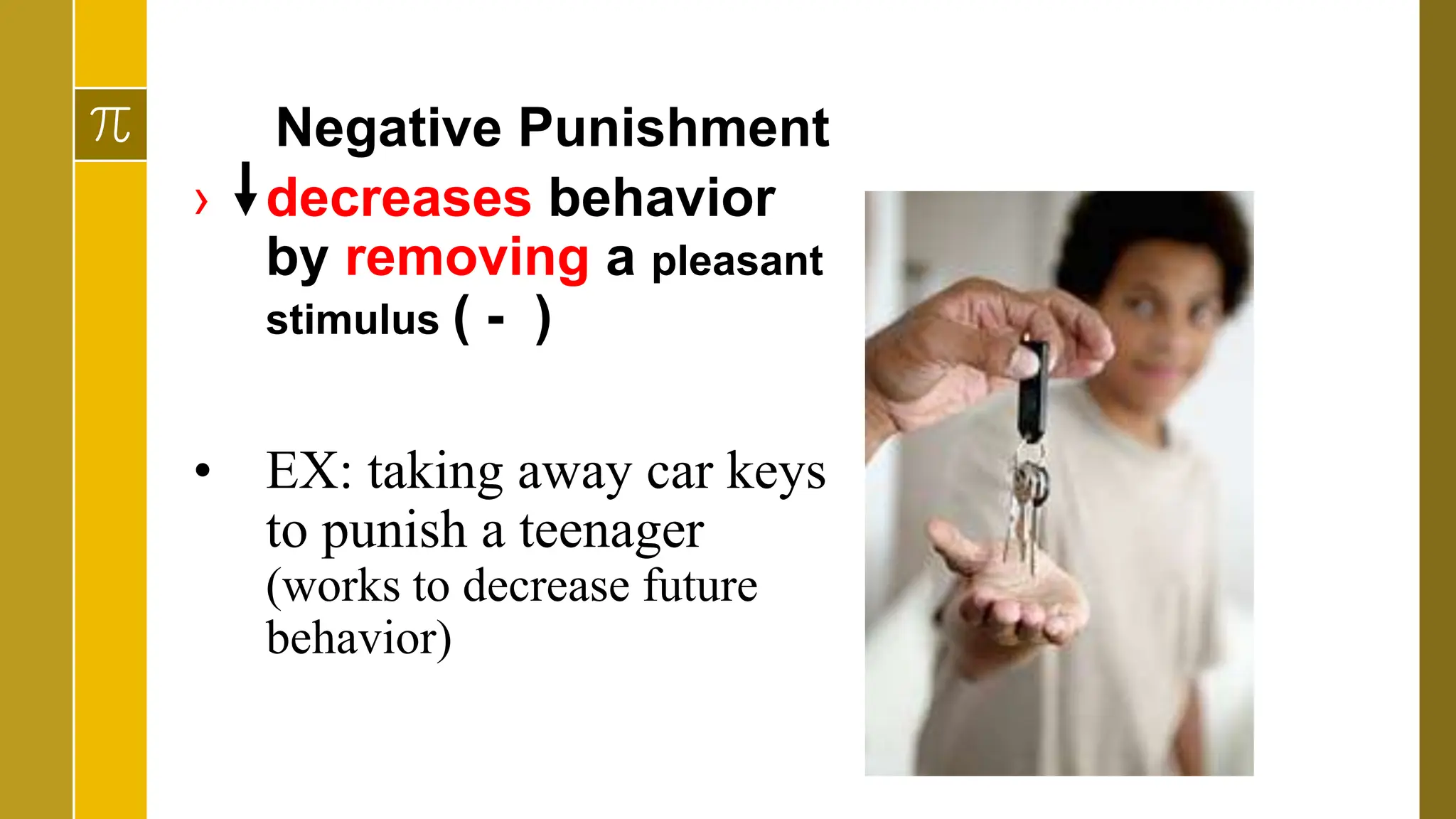
Negative Punishment
› decreases behavior
by removing a pleasant
stimulus ( - )
• EX: taking away car keys
to punish a teenager
(works to decrease future
behavior)
Negative Reinforcement v.
Punishment
›Many people confuse negative
reinforcement and punishment.
›Negative Reinforcement always
increases behavior
›Punishment always decreases
behavior.
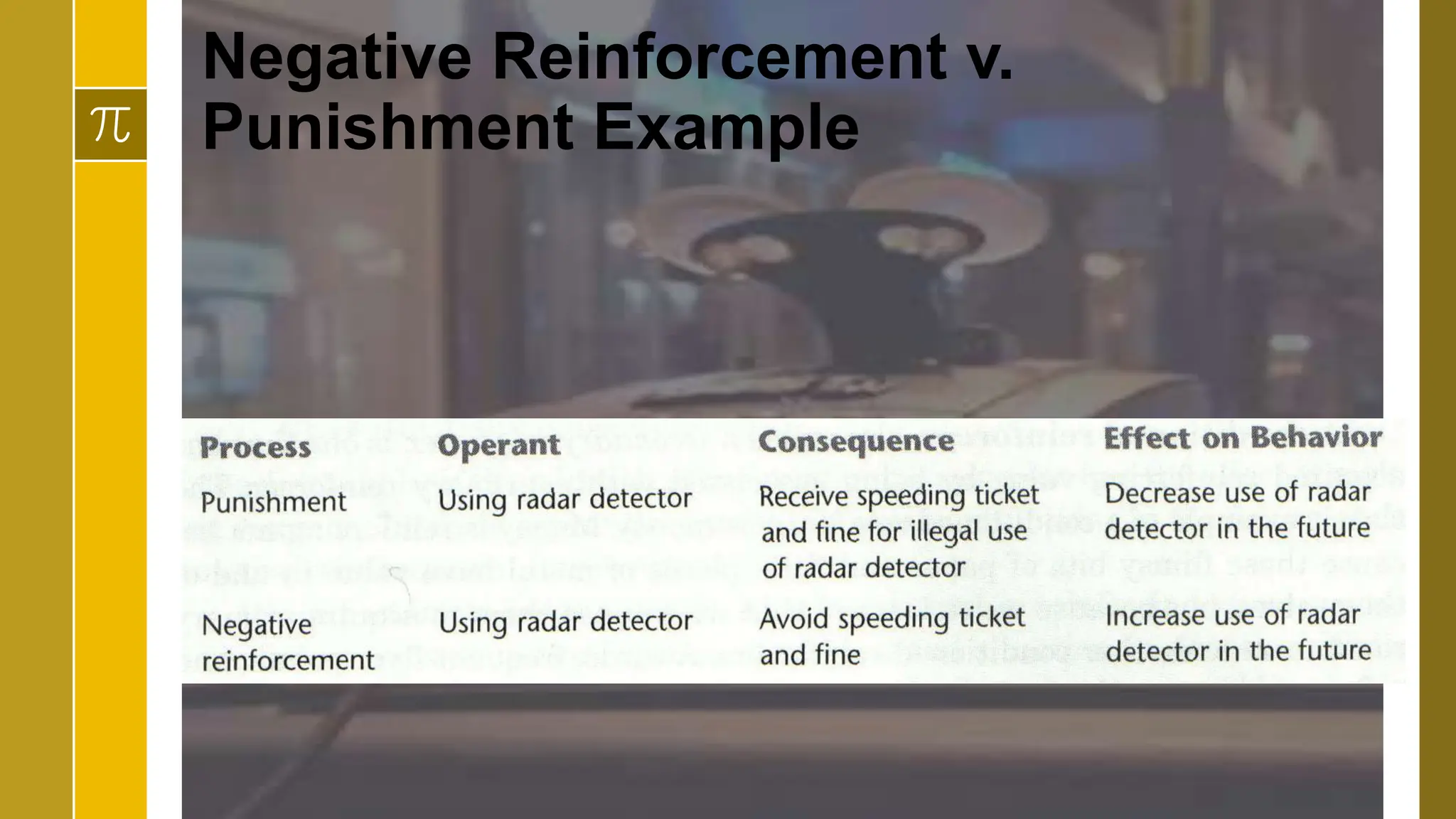
Negative Reinforcement v.
Punishment Example
Practice Problems
› When you were still together, you and
your ex used to love the same hit song.
Now when you hear that song, you feel
sad.
›CC or OC?
›CC!
Practice Problems
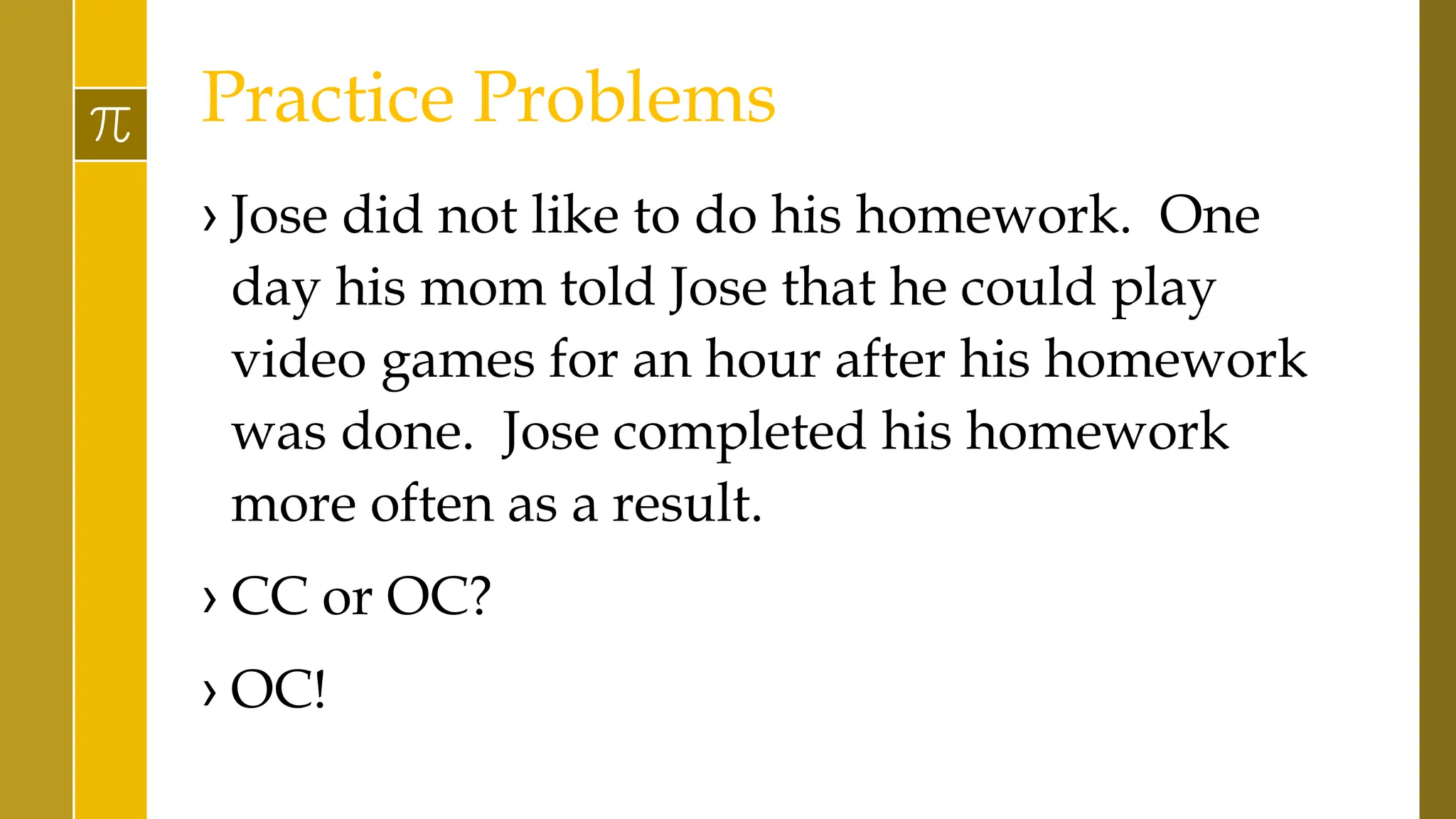
› Jose did not like to do his homework. One
day his mom told Jose that he could play
video games for an hour after his homework
was done. Jose completed his homework
more often as a result.
› CC or OC?
› OC!
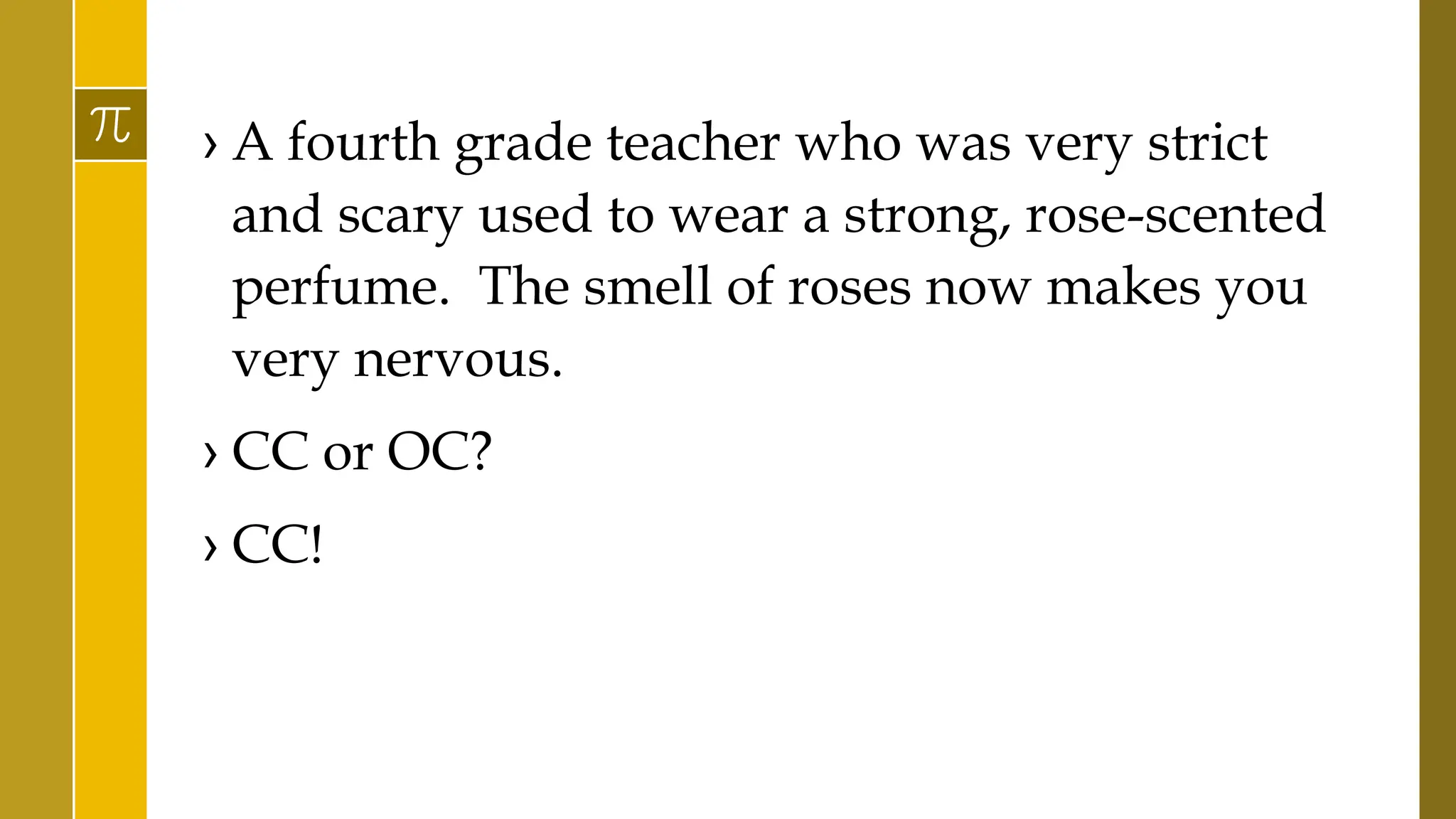
› A fourth grade teacher who was very strict
and scary used to wear a strong, rose-scented
perfume. The smell of roses now makes you
very nervous.
› CC or OC?
› CC!
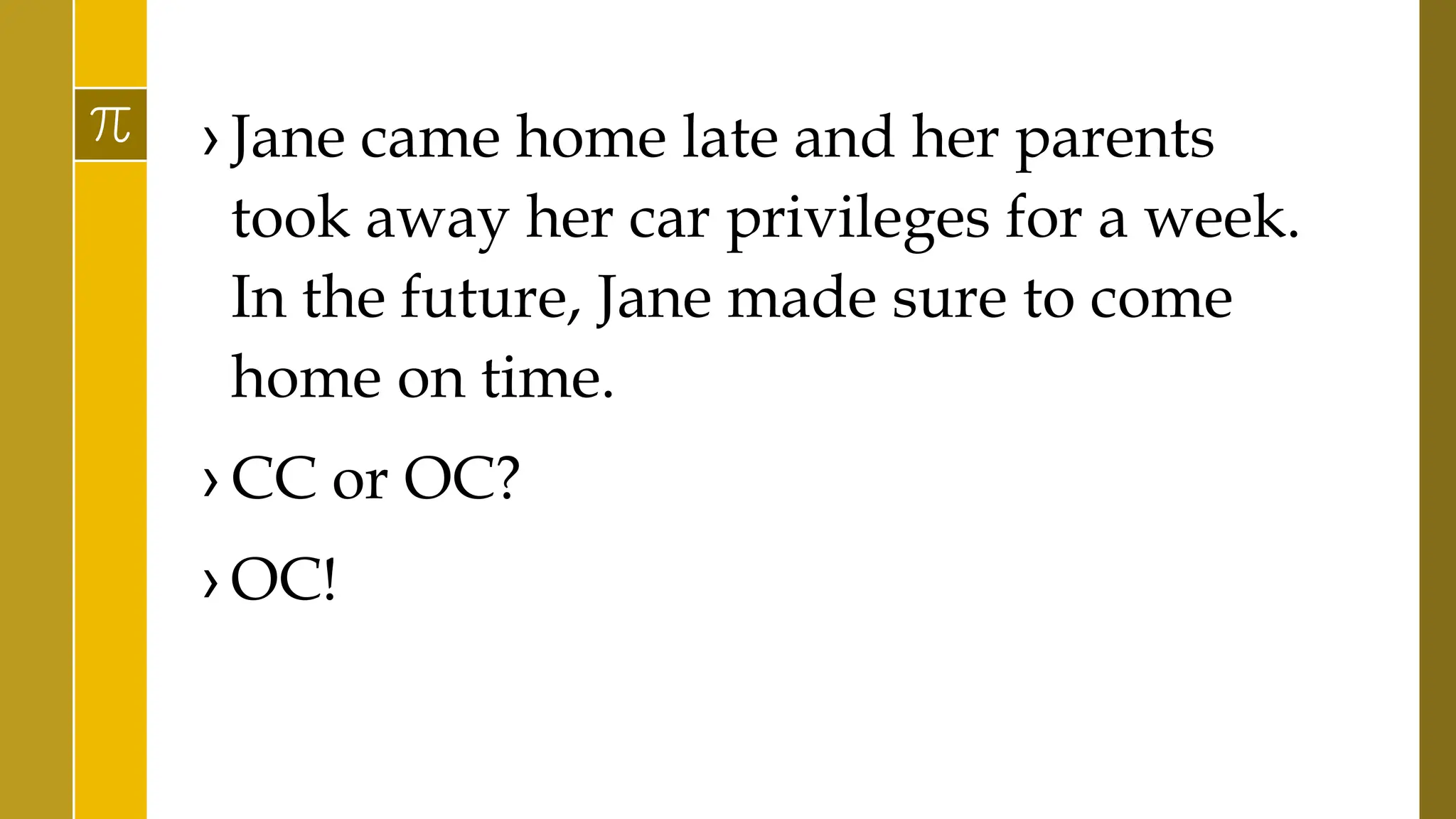
› Jane came home late and her parents
took away her car privileges for a week.
In the future, Jane made sure to come
home on time.
› CC or OC?
› OC!
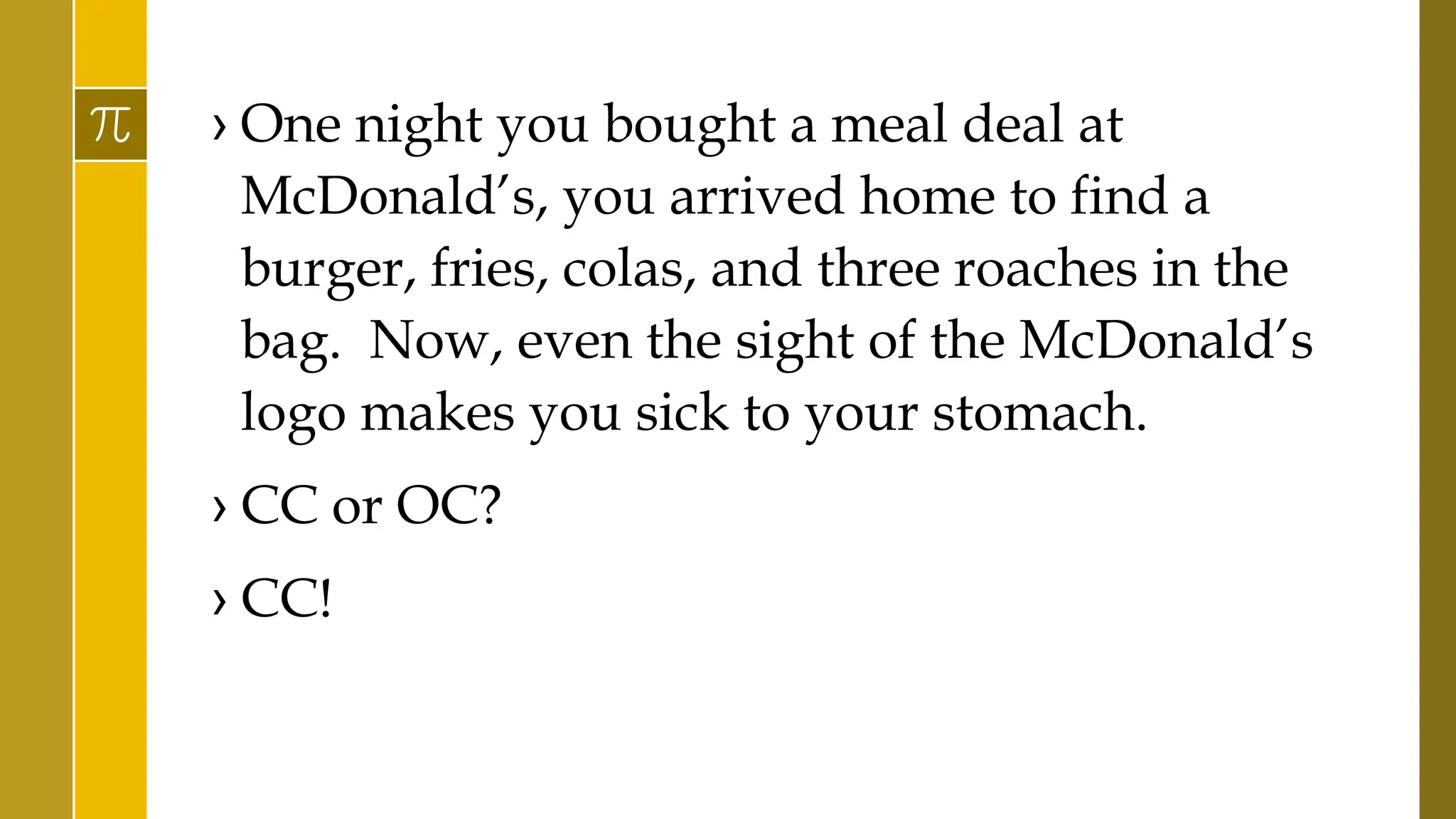
› One night you bought a meal deal at
McDonald’s, you arrived home to find a
burger, fries, colas, and three roaches in the
bag. Now, even the sight of the McDonald’s
logo makes you sick to your stomach.
› CC or OC?
› CC!
› Clare studies hard and gets an A on her
Biology test. The teacher praises her in
front of the class. As a result, Clare stops
studying earns a failing grade on the next
two exams.
› CC or OC?
› OC!
›Mike was more likely to return his
rental DVD’s on time after the video
store raised their late charges.
›CC or OC?
›OC!
Critiques of Behaviorism
• External rewards may diminish intrinsic motivation
–Studies where participants work on an interesting task
(ex: puzzles) - experimental group is given a reward when
finished while the control group is not.
– After initial period, during a non-rewarded time
participants are given a choice between continuing to work
on the task or switching to another activity. Typical result is
that participants in the experimental group spend less time
on the activity than the control group. This is taken as
indicating that reward reduces intrinsic motivation. Pizza
Hut used to give away free pizza to kids who read a certain
number of pages. This practice was discontinued as it
actually eroded students intrinsic motivation to read!
More Critiques …
› Behaviorism doesn’t account for anything that
isn’t an observable behavior
–There has to be more going on than what is
observable - doesn’t there?
› Behaviorism only accounts for learning
through direct experience with the
environment (not observational learning)
› Based on your experience and observations,
write and reflect on at least one classroom
example related to the teaching of mathematics
for each below:
–Classical Conditioning
–Positive Reinforcement
–Negative Reinforcement
–Positive Punishment
–Negative Punishment
–Shaping

behaviorism and the teaching of mathematics.pptx

  • 1.
  • 2.
    What is behaviorismall about? • Behavioral psychology is the study of external behavior • Behavior is objective and observable, where as what goes on in one’s mind can never really be known or measured (the mind is a “black box”)to a behaviorist! • Behavior is the response of an organism to stimuli.
  • 3.
    History of Behaviorism •Pavlov (1927), a Russian physiologist discovered classical conditioning in dogs.
  • 4.
    Classical Conditioning › Explainssome learning of involuntary emotional and physiological responses. –Dog drooling when it smells food and later when it hears a bell. › It’s important for us as teachers to understand since school is often the cause of unintentional learning through classical conditioning, especially anxiety. –Test anxiety conditions us to have general school anxiety.
  • 5.
  • 8.
    Classical Conditioning • basiclearning process discovered by Pavlov that involves repeatedly pairing a neutral stimulus with a response-producing stimulus until the neutral stimulus triggers the same response
  • 9.
    Ivan Pavlov's ClassicalConditioning Before Conditioning Unconditioned Stimulus Unconditioned Response Neutral Stimulus No Response
  • 10.
    Ivan Pavlov's ClassicalConditioning During Conditioning Unconditioned Stimulus Neutral Stimulus Unconditioned Response
  • 11.
    Ivan Pavlov's ClassicalConditioning After Conditioning Conditioned Stimulus Conditioned Response
  • 13.
    More Examples ofClassical Conditioning › Kids who often get strep throat, after much swabbing of their throat, begin to gag as soon as they see the doctor with the swab. › Hearing a teacher, roommate, boyfriend/girlfriend say to you, “We need to talk”. Upon hearing this phrase your stomach “flutters”. › The point is, we learn to associate a stimulus with a response, and eventually our body does this automatically in the presence of the stimulus. In CC, the response is involuntary.
  • 14.
    Shoulder Partner Discussiontopic: Examples of Classical Conditioning in the Mathematics Classroom:
  • 15.
    Classical Conditioning ….. ›Classical conditioning can face “extinction”, where the learning is undone. –This can happen naturally (the dog stops getting meat when music is played) –Or can happen through some type of therapy in the case of severe anxiety reactions › Ex: people who are afraid to fly…. › Remember: Classical conditioning is more than forming an association – it is an involuntary, physiological response
  • 16.
    Classical Conditioning inthe Classroom › Playing soothing music, dimming the lights to calm and relax students › Unintentional classical conditioning: –Test anxiety –Math anxiety –Public speaking anxiety –General school anxiety
  • 17.
    B.F. Skinner (1904–1990) • American psychologist - influential from the 1930’s - 60’s – developed ‘Operant Conditioning’ • Skinner was interested in education – He believed that behavior is sustained by reinforcements or rewards, not by free will. • Famous for the Skinner box & the teaching machine • Often worked with pigeons & rats and applied what he learned with these animals to human learning.
  • 18.
    Operant Conditioning (Skinner) ›This involves conditioning voluntary, controllable behaviors, not the automatic physiological responses in Classical Conditioning › With Operant Conditioning the Response comes before the Stimulus (the opposite of CC) R S
  • 19.
    Operant Conditioning › Teacherscan deliberately use operant conditioning with their students (training) › How someone reacts to our behaviors determines whether or not we continue the behavior –if we are rewarded for something we will likely do it again - do you do this as a teacher?
  • 20.
  • 21.
    Consequences for Behaviors ›Positive Reinforcement – You behave in a certain way that results in a reward, and as a result, you are more likely to repeat that behavior › Negative Reinforcement – You behave in a certain way that results in the removal of something unpleasant, and as a result you are more likely to repeat that behavior (ex: doing a paper early) –In both cases, something happened that you saw as “good” and as a result, you exhibited the behavior more.
  • 22.
    Consequences for Behaviors ›Punishment – A consequence that follows a behavior so that you do the behavior less often in the future. –Punishment can involve adding something (paying a fine, staying after school) or involve removing something you like (losing recess time, leaving your friends) –In both cases, adding something or removing something, you perceive it as “bad” and as a result, you exhibit the behavior less.
  • 23.
    Differences Between Negative Reinforcement& Punishment › Negative reinforcement: Something unpleasant is removed & as a result you are more likely to do it again –Something happened that was “good” › Punishment: A consequence happens that you don’t like and you are less likely to do it again. The punishment can add something or take something away. –Something happened that was “bad”
  • 24.
    Shaping New Behaviors ›Shaping is a process of reinforcing a series of responses that increasingly resemble the desired final behavior › When a desired behavior occurs rarely or not at all, we use shaping –First reinforce any response that in some way resembles the desired behavior, then one that is closer etc. –Think of animal training or the hyper kid who can’t sit in his chair in class – do things in small steps
  • 25.
    Operant Conditioning › learningprocess in which behavior is shaped and maintained by manipulating its consequences › Operant conditioning involves voluntary behaviors. › Operants are actions upon the environment, which may lead to reinforcement or punishment
  • 26.
    › Founder of Operant Conditioning ›Invented “Skinner Box” › Won “Sexiest Man Alive” award in 1939! B. F. Skinner
  • 29.
    Reinforcement › anything thatstrengthens a response or increases ( ) the chance that it will occur › almost anything can act as a reinforcer – food, sex, vacation, etc. › Remember: Reinforcement INCREASES ( ) behavior.
  • 31.
    Positive Reinforcement • Positiveconsequence that increases the chance of desired behavior because something is added (+) or presented. • Can be thought of as a reward • Represented by: + positive (+), reinforcement ( )
  • 32.
  • 33.
    Negative Reinforcement › Worksto increase behavior but does this by removing an unwanted stimulus › Think of negative sign (-), REMOVING unwanted stimulus › EX: Beeping noise from car – buckle seatbelt – noise goes away – noise is the negative reinforcement to put on seatbelt.
  • 35.
    Shaping - graduallymolding a desired behavior by reinforcing responses that are similar or close to the final desired behavior
  • 37.
    Punishment ›anything that weakensa response or decreases the chance that it will occur.
  • 38.
    Positive Punishment (+) ›decreases behavior by adding an unpleasant stimulus ›Remember, think positive as in plus sign (+), adding something ›EX: spanking, a prison sentence, or criticizing someone
  • 39.
    Operant conditioning. Havingreceived a face full of quills, a young coyote has probably learned to avoid porcupines!
  • 40.
    Negative Punishment › decreasesbehavior by removing a pleasant stimulus ( - ) • EX: taking away car keys to punish a teenager (works to decrease future behavior)
  • 41.
    Negative Reinforcement v. Punishment ›Manypeople confuse negative reinforcement and punishment. ›Negative Reinforcement always increases behavior ›Punishment always decreases behavior.
  • 42.
  • 43.
    Practice Problems › Whenyou were still together, you and your ex used to love the same hit song. Now when you hear that song, you feel sad. ›CC or OC? ›CC!
  • 44.
    Practice Problems › Josedid not like to do his homework. One day his mom told Jose that he could play video games for an hour after his homework was done. Jose completed his homework more often as a result. › CC or OC? › OC!
  • 45.
    › A fourthgrade teacher who was very strict and scary used to wear a strong, rose-scented perfume. The smell of roses now makes you very nervous. › CC or OC? › CC!
  • 46.
    › Jane camehome late and her parents took away her car privileges for a week. In the future, Jane made sure to come home on time. › CC or OC? › OC!
  • 47.
    › One nightyou bought a meal deal at McDonald’s, you arrived home to find a burger, fries, colas, and three roaches in the bag. Now, even the sight of the McDonald’s logo makes you sick to your stomach. › CC or OC? › CC!
  • 48.
    › Clare studieshard and gets an A on her Biology test. The teacher praises her in front of the class. As a result, Clare stops studying earns a failing grade on the next two exams. › CC or OC? › OC!
  • 49.
    ›Mike was morelikely to return his rental DVD’s on time after the video store raised their late charges. ›CC or OC? ›OC!
  • 50.
    Critiques of Behaviorism •External rewards may diminish intrinsic motivation –Studies where participants work on an interesting task (ex: puzzles) - experimental group is given a reward when finished while the control group is not. – After initial period, during a non-rewarded time participants are given a choice between continuing to work on the task or switching to another activity. Typical result is that participants in the experimental group spend less time on the activity than the control group. This is taken as indicating that reward reduces intrinsic motivation. Pizza Hut used to give away free pizza to kids who read a certain number of pages. This practice was discontinued as it actually eroded students intrinsic motivation to read!
  • 51.
    More Critiques … ›Behaviorism doesn’t account for anything that isn’t an observable behavior –There has to be more going on than what is observable - doesn’t there? › Behaviorism only accounts for learning through direct experience with the environment (not observational learning)
  • 52.
    › Based onyour experience and observations, write and reflect on at least one classroom example related to the teaching of mathematics for each below: –Classical Conditioning –Positive Reinforcement –Negative Reinforcement –Positive Punishment –Negative Punishment –Shaping