BEHAVIORISM THEORY
OF
LEARNING
WHAT IS BEHAVIORISM?
Idea that behavior is acquired through
conditioning.
 Measures behavior by a learners’ response to
stimuli
 Learners’ response to stimuli can be reinforced
using positive or negative feedback
 Reinforcement, positive or negative increases
the possibility of an event happening again.
 Punishment, both positive and
negative, decreases the possibility of an event
happening again.

IMPORTANT PEOPLE IN BEHAVIORISM
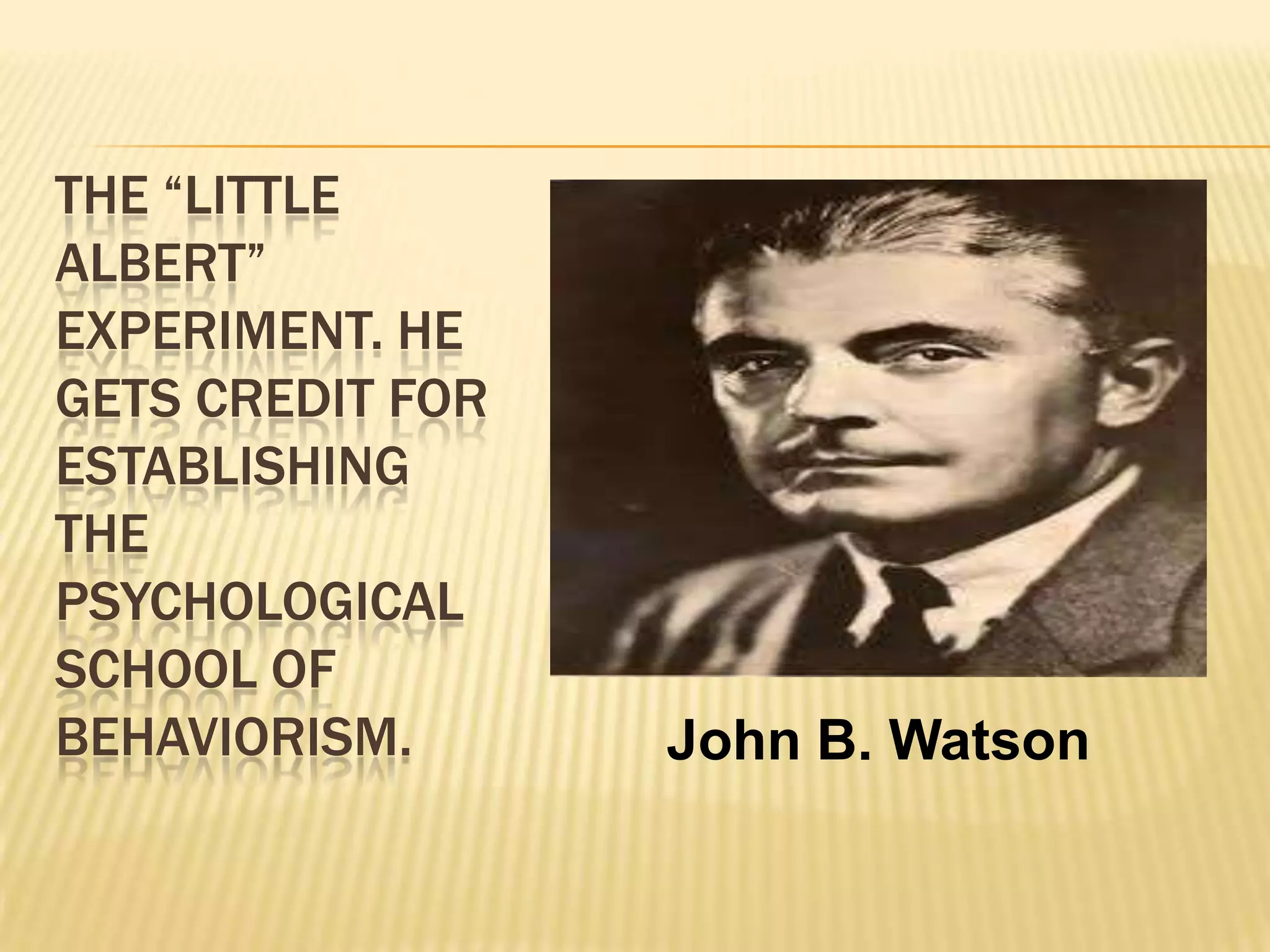
THE “LITTLE
ALBERT”
EXPERIMENT. HE
GETS CREDIT FOR
ESTABLISHING
THE
PSYCHOLOGICAL
SCHOOL OF
BEHAVIORISM.

John B. Watson
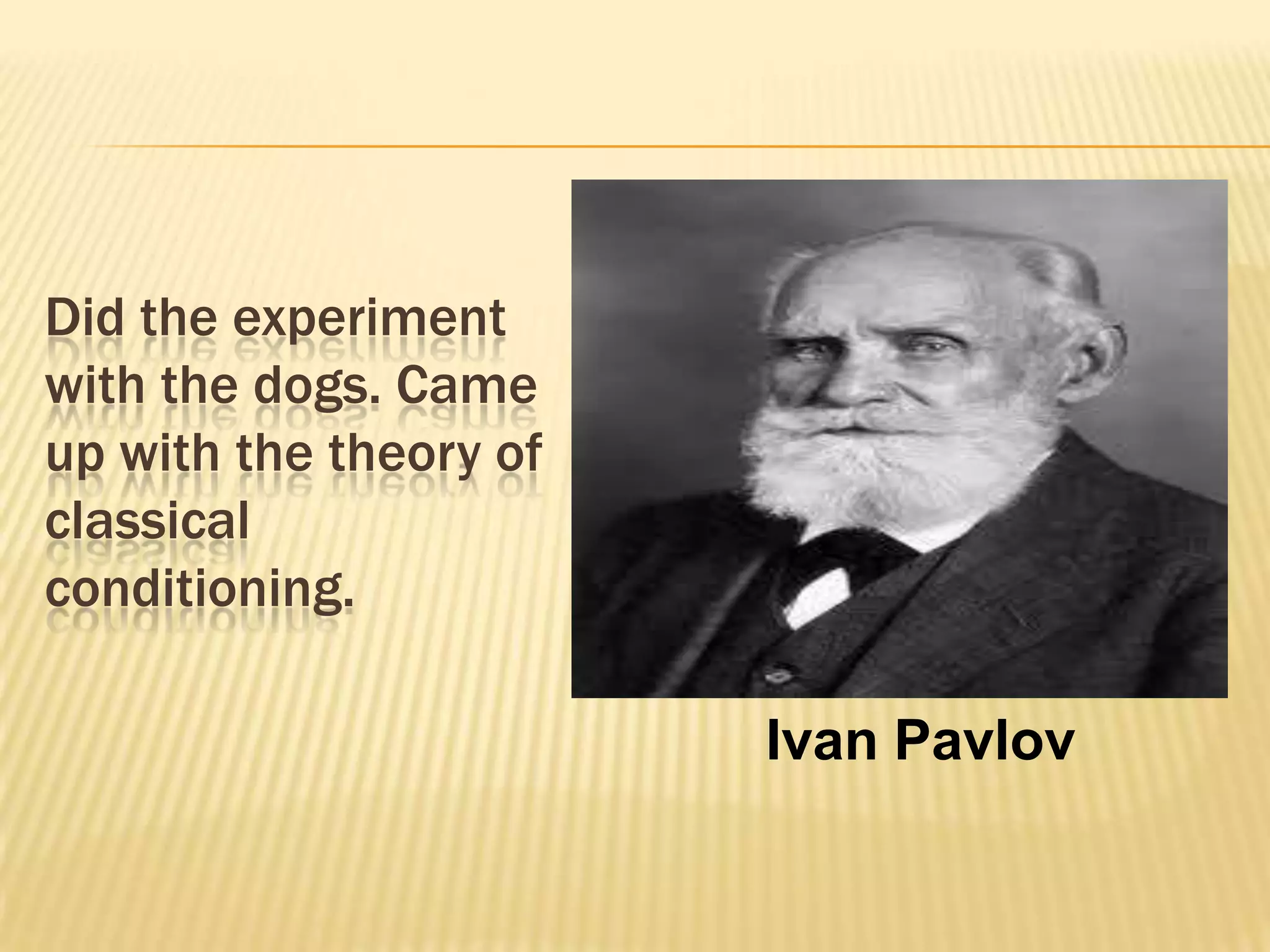
Did the experiment
with the dogs. Came
up with the theory of
classical
conditioning.
Ivan Pavlov
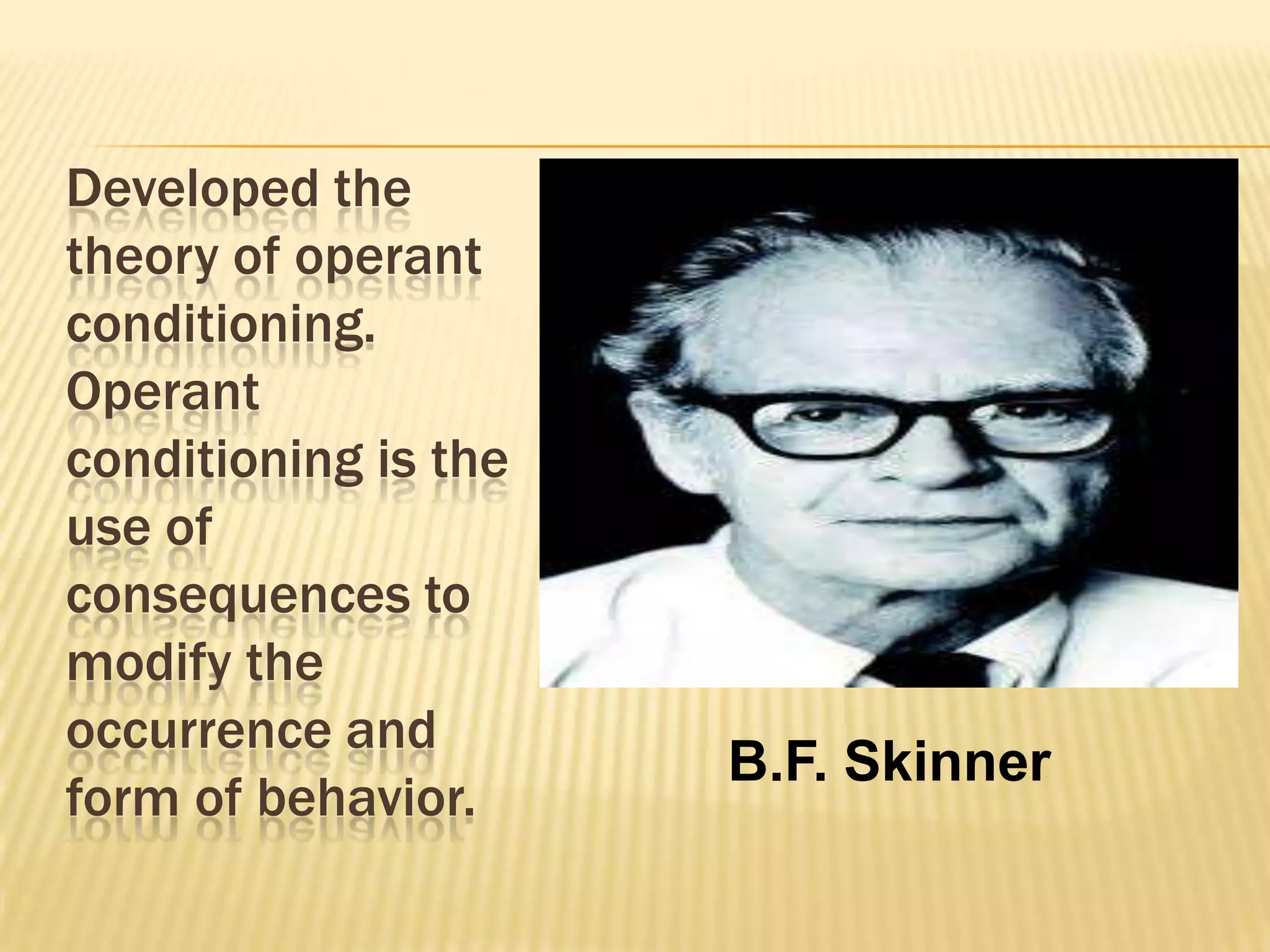
Developed the
theory of operant
conditioning.
Operant
conditioning is the
use of
consequences to
modify the
occurrence and
form of behavior.

B.F. Skinner
BEHAVIORISM AND TEACHERS


Behaviorism is seen when teachers use the
following methods:
a. Testing specific skills
b. More individual work than group
learning
c. Using positive and negative
reinforcement
BEHAVIORISM AND STUDENTS
Students learn through experiences and
practices.
 Learning is also modified with positive and
negative reinforcements.
 Students begin to give predicted responses
to a stimulus

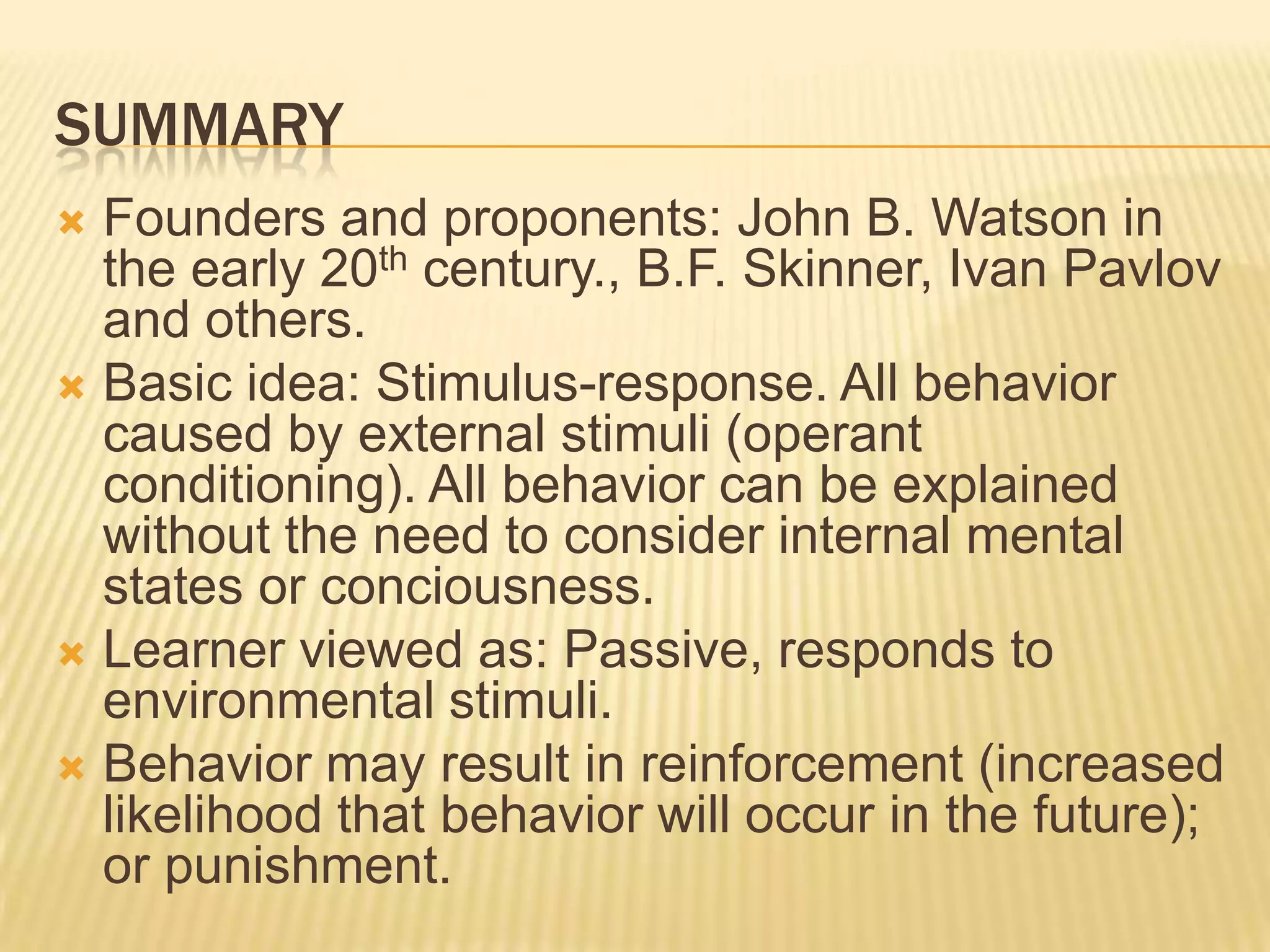
SUMMARY
Founders and proponents: John B. Watson in
the early 20th century., B.F. Skinner, Ivan Pavlov
and others.
 Basic idea: Stimulus-response. All behavior
caused by external stimuli (operant
conditioning). All behavior can be explained
without the need to consider internal mental
states or conciousness.
 Learner viewed as: Passive, responds to
environmental stimuli.
 Behavior may result in reinforcement (increased
likelihood that behavior will occur in the future);
or punishment.


Behaviorism theory of learning

  • 1.
  • 2.
    WHAT IS BEHAVIORISM? Ideathat behavior is acquired through conditioning.  Measures behavior by a learners’ response to stimuli  Learners’ response to stimuli can be reinforced using positive or negative feedback  Reinforcement, positive or negative increases the possibility of an event happening again.  Punishment, both positive and negative, decreases the possibility of an event happening again. 
  • 3.
  • 4.
    THE “LITTLE ALBERT” EXPERIMENT. HE GETSCREDIT FOR ESTABLISHING THE PSYCHOLOGICAL SCHOOL OF BEHAVIORISM. John B. Watson
  • 5.
    Did the experiment withthe dogs. Came up with the theory of classical conditioning. Ivan Pavlov
  • 6.
    Developed the theory ofoperant conditioning. Operant conditioning is the use of consequences to modify the occurrence and form of behavior. B.F. Skinner
  • 7.
    BEHAVIORISM AND TEACHERS  Behaviorismis seen when teachers use the following methods: a. Testing specific skills b. More individual work than group learning c. Using positive and negative reinforcement
  • 8.
    BEHAVIORISM AND STUDENTS Studentslearn through experiences and practices.  Learning is also modified with positive and negative reinforcements.  Students begin to give predicted responses to a stimulus 
  • 9.
    SUMMARY Founders and proponents:John B. Watson in the early 20th century., B.F. Skinner, Ivan Pavlov and others.  Basic idea: Stimulus-response. All behavior caused by external stimuli (operant conditioning). All behavior can be explained without the need to consider internal mental states or conciousness.  Learner viewed as: Passive, responds to environmental stimuli.  Behavior may result in reinforcement (increased likelihood that behavior will occur in the future); or punishment. 